The Pattern Room · a side-by-side pattern
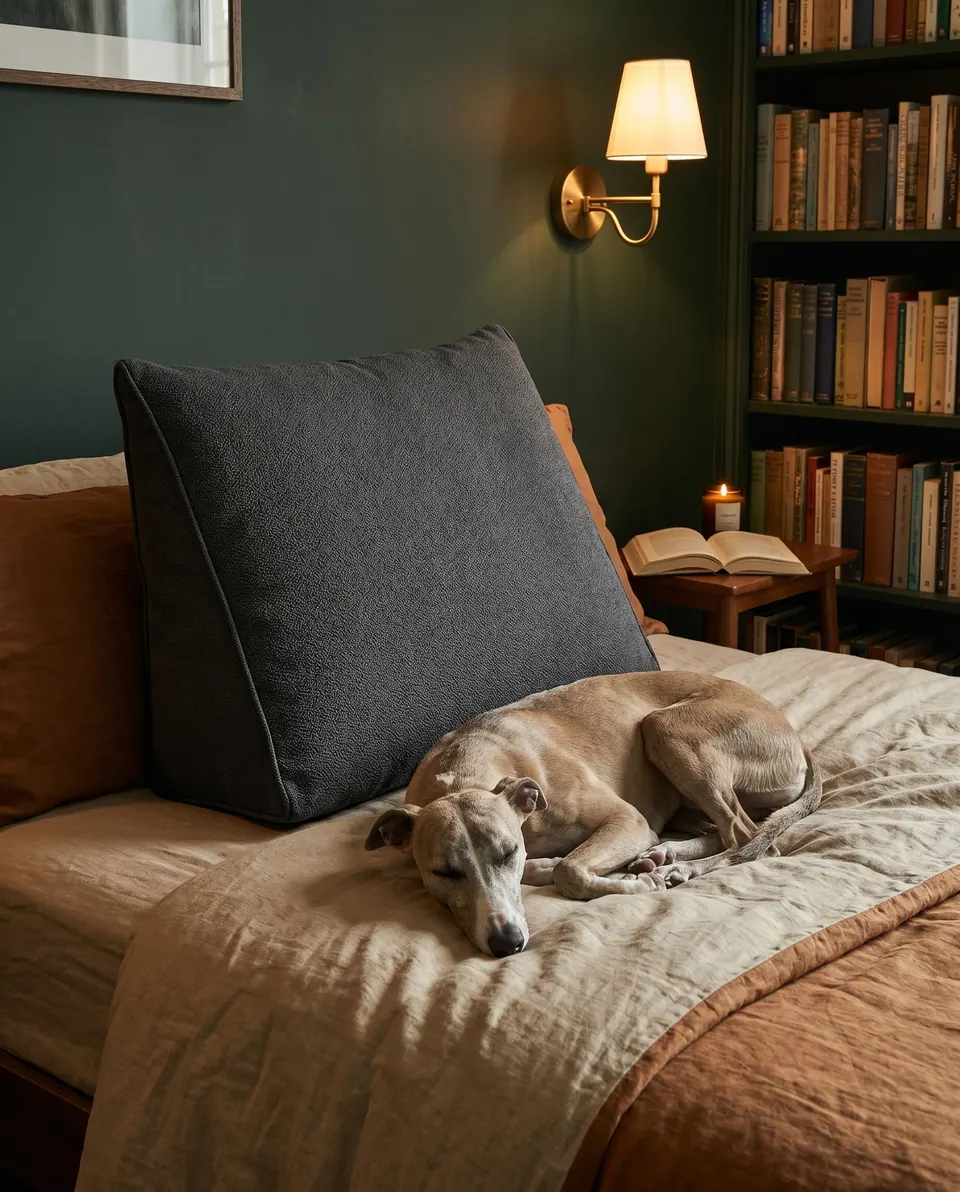
Back cushion filling compared: shredded foam, a solid wedge or fiber
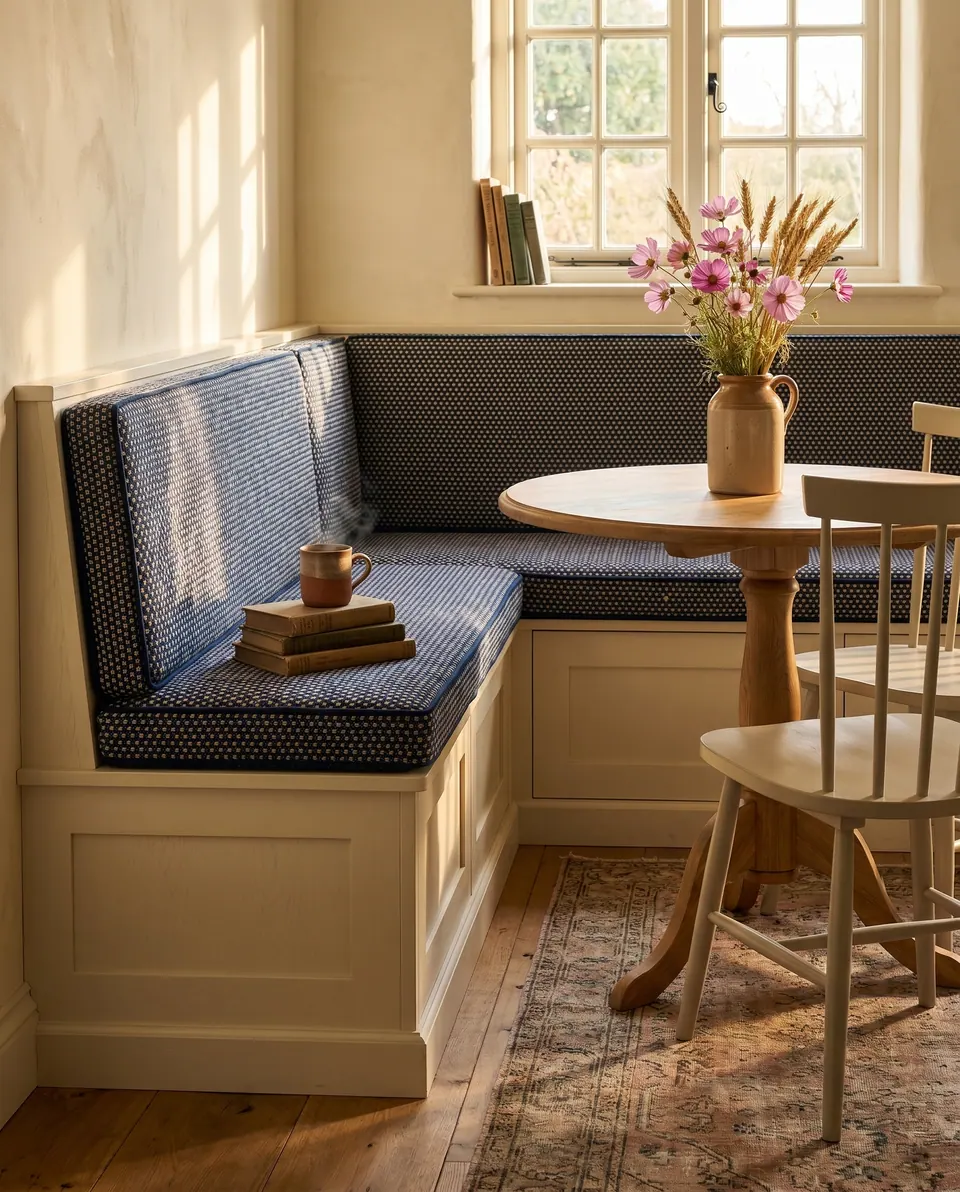
A seat carries your weight; a back only has to catch it. Here are the three ways the workshop fills a back cushion, and why a firm seat under a softer back is where every set begins.
 Save
The quick answer
For most benches and banquettes, a shredded-foam back pillow over a firm foam seat is the right default: soft to lean on, yet it keeps its shape against a wall. Choose a fiber-wrapped solid foam wedge for upright sitting, deep seats or a tailored look. Fiber-filled pillows are the softest and most relaxed, but they need the most plumping.
The cushion nobody sits on
A surprising share of cushion questions turn on the back cushion, and it is the one piece nobody sits on. People ask how tall, how thick, one piece or three. Under all of it sits a single question: what goes inside?
The seat is settled. It takes your whole weight, so it gets solid 32 kg/m³ foam, about 2.0 lb/ft³, firm enough to hold its shape and resist sagging. A back only takes your lean. Fill it as hard as the seat and it pushes you forward; fill it softer and it gives where your shoulders land. So by default the workshop's backs are softer than its seats, though a back can be made just as firm on request. The web guides land in the same place: a back one step softer than the seat.
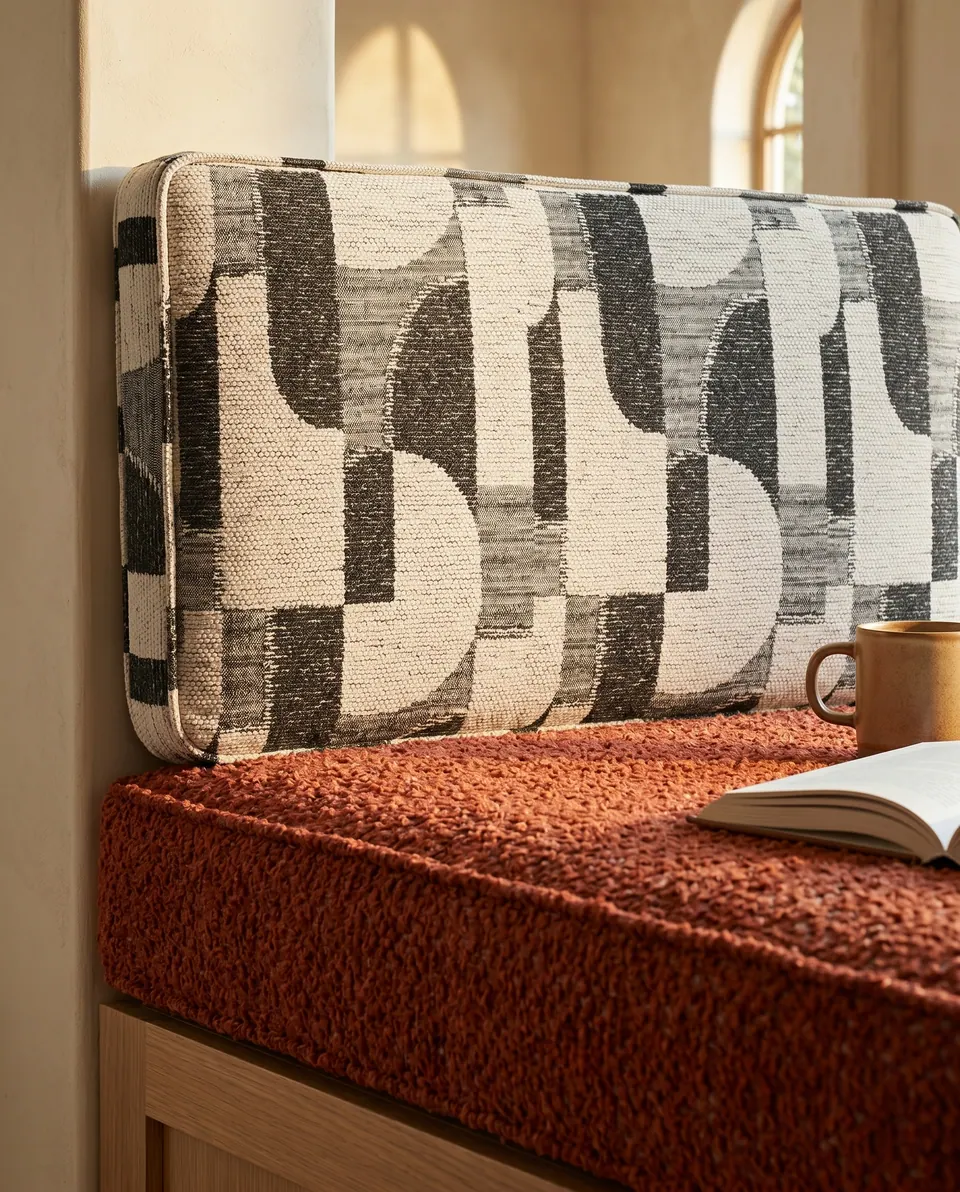
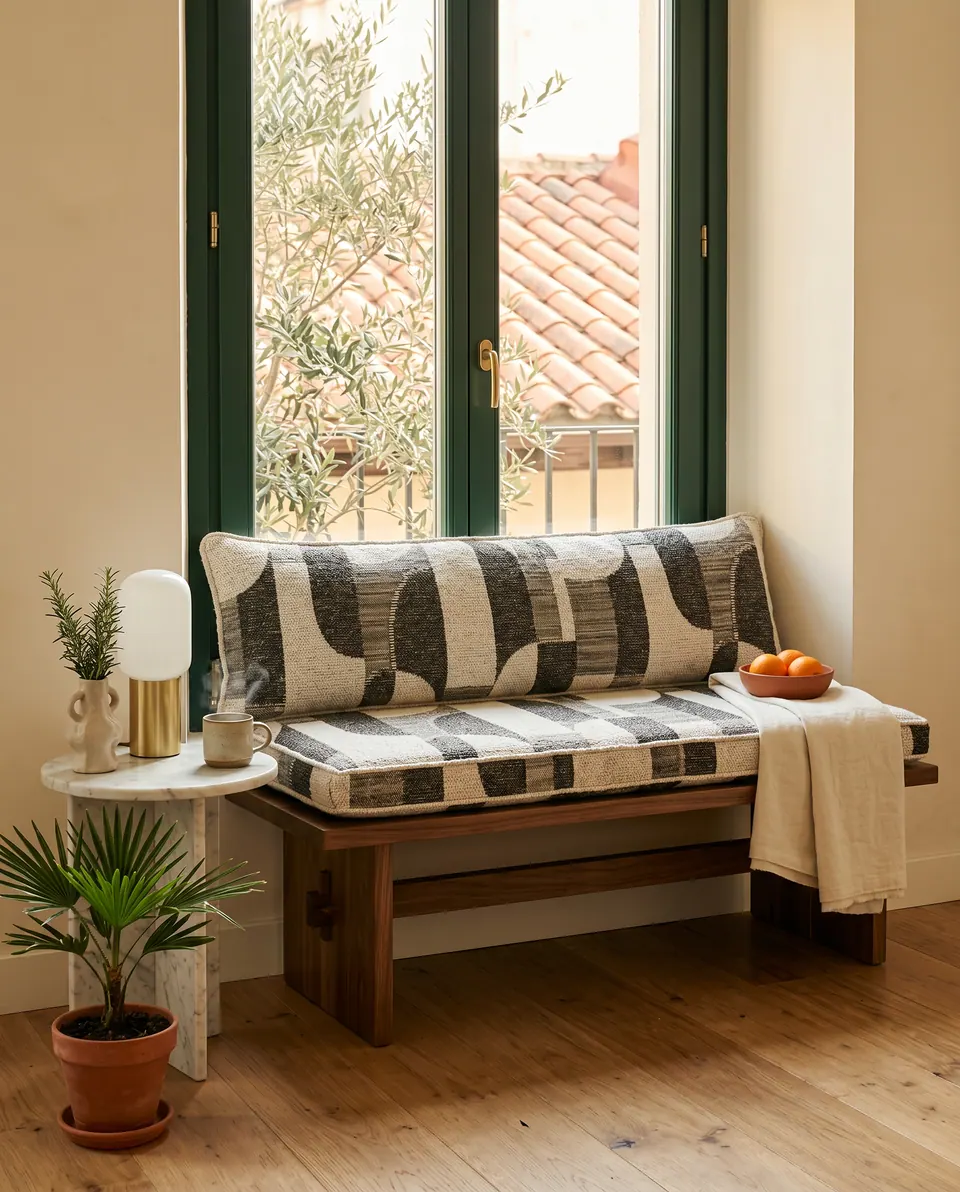
Many buyers go further, with a thicker, firmer seat and a thinner back, 4 in (10 cm) backs on an 8 in (20 cm) seat, which keeps the cost down as well. There are three ways to fill that back, and the backrest cushions collection shows each of them at work.
Three back cushion fills, side by side
| Shredded-foam pillow | Fiber-wrapped foam wedge | Fiber-filled pillow | |
|---|---|---|---|
| What is inside | Foam broken into small pieces on the workshop's own machine, in its own inner case | A solid foam block cut thicker at the bottom, wrapped in polyester batting | Loose polyester fiber or silicone ball fiber |
| How it feels | Softer than solid foam, but not very soft | Firm and structured, like a short seat cushion | The softest and most relaxed |
| How it looks | Relaxed, gently rounded | Tailored, with flat faces and crisp edges | Plump and slouchy |
| Holds an angle | Partly Leans on the wall and shifts a little with use | Yes A wedge stays put without hook-and-loop | No Cannot hold a 12 to 14 in (30 to 35 cm) profile |
| Upkeep | Plump and turn it; shifted fill works back by hand | Little; zip off the cover to wash it | Plump it often; fiber packs down with use |
| What you send | Width and height; it finds its own 4 to 6 in (10 to 15 cm) thickness | Width, height, and the thickness at top and bottom | Width and height |
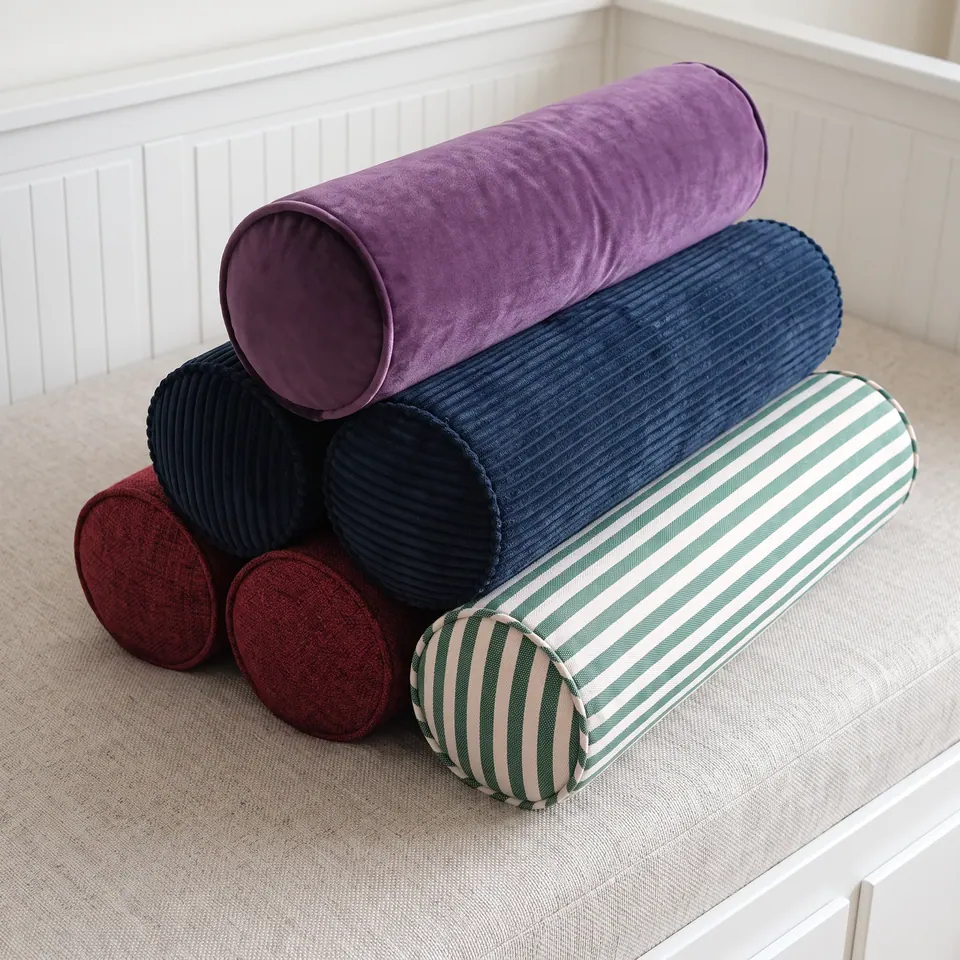
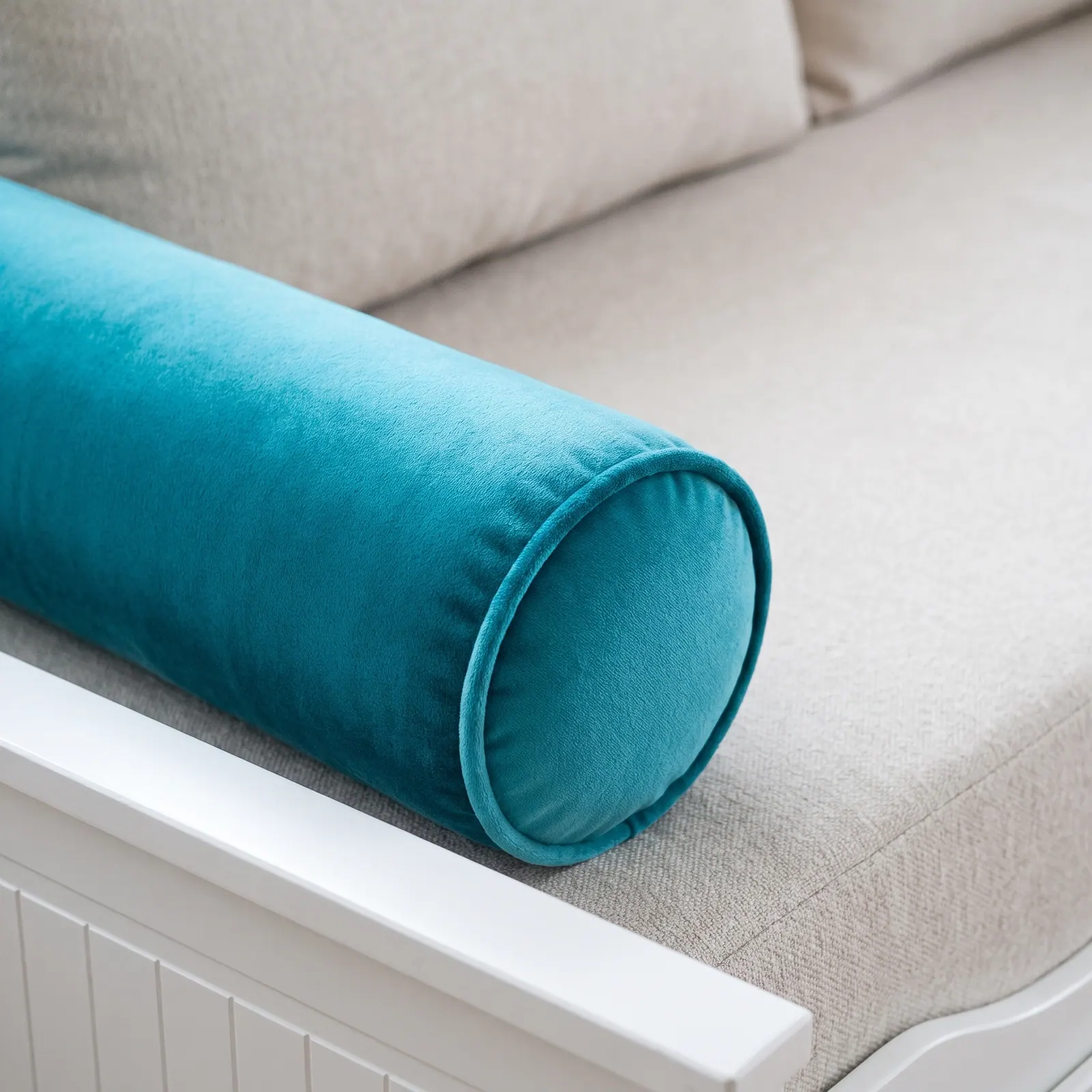
| Where it shines | Dining benches, window seats, floor sofas | Deep lounge seats, upright sitting, outdoor sets | Round arm bolsters and tightly packed tufted pieces |
When the wedge earns its keep
A wedge is a foam back cut thicker at the bottom than at the top, so it tips you back against a flat wall. For deep lounge seats it is what the workshop recommends. Its standard wedge is 35 1/2 in (90 cm) long and 16 in (40 cm) high, 6 in (15 cm) thick at the bottom and 4 in (10 cm) at the top. A thicker one runs from about 8 3/4 in (22 cm) down to 6 in (15 cm). On a banquette that needs more support, a wide-bottomed wedge is the answer again.
Thick backs follow one rule. A non-tufted back 12 to 14 in (30 to 35 cm) thick cannot hold its shape on fiber, so it is cut from foam as a wedge, for example 12 in (30 cm) at the bottom and 8 in (20 cm) at the top. A single curved back in one piece is another matter: one small measuring error and it never sits right, so the workshop steers people to wedges. The shape is described under wedge cushion.
A buyer in the US using a twin daybed as a sofa asked for one long back cushion firm enough to sit upright against. The workshop offered a foam-filled back and armrest rather than loose fiber. If you sit up straight, the back needs a spine.
One long back, or two or three?
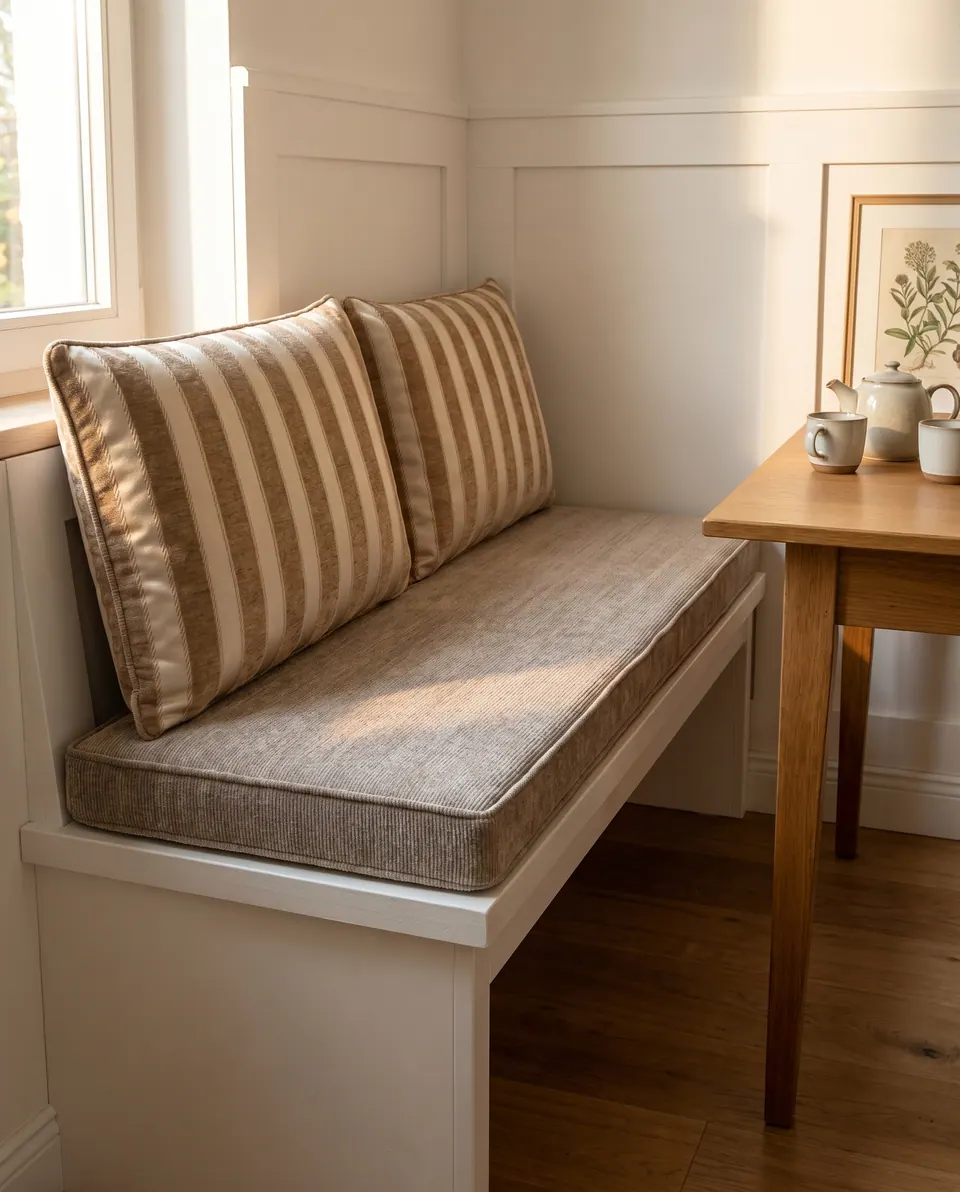
Usually two or three. Several back cushions per wall sit better and stay in place, and one long back costs no less. A single soft pillow much past 40 in (102 cm) sags in the middle, so an 88 in (224 cm) banquette back was made as two 44 in (112 cm) pillows, and a 79 in (200 cm) span becomes two pieces of 39 1/2 in (100 cm). Foam backs come in one, two or three pieces.
On an L-shaped banquette, measure each wall's back line on its own, split it into two or three pillows about 16 in (40 cm) tall, and leave roughly 1 1/2 in (4 cm) of allowance for plump pillows so they do not fight in the corner. The seat side of that story lives with the banquette cushions.
An L-shaped velvet banquette, and the question of the wall
A buyer in the US had an L-shaped banquette, 60 x 84 in (152 x 213 cm) and 24 in (61 cm) deep. They wanted two seats of 60 x 24 in (152 x 61 cm) and channel-tufted backrests 24 in (61 cm) tall in velvet, with the 84 in run shortened by the depth of the back it meets at the corner. They asked for high-density foam with medium firmness.
The workshop explained that density and firmness are two different measures and both could be had; the difference is laid out in foam density vs firmness. Then the workshop asked the question that decides a back like that: how will it hang? They chose a French cleat. A French cleat only works on a back built around a solid board, and a channel back of upright rolls cannot be held by foam alone. So the mounting had to be settled before any foam was cut.
- What it taught
- Decide how wall backrests will be mounted before they are built.
Try the back against the seat first
Before you write to the workshop, set the seat and its back side by side in the bench cushion builder. It draws both in 3D, lets you set the back's height and thickness, divides a long wall into equal back pieces and writes a cutting ticket with every edge. Send that ticket with one word added: shredded, wedge or fiber. Which of the three would you lean on every evening, my friend?
Back cushion mistakes
- Sizing the seat to the full bench depth, then adding a back. Seat depth is the bench depth minus the back's thickness.
- Assuming the back matches the seat. Give seat and back sizes separately.
- Leaving a back nothing to lean on. Backs need a wall, a cabinet or a frame; ties work against slats, a non-slip backing against a flat wall. More in keeping back cushions upright.
- Expecting soft fill to act like a board. A channel back or a cleat-hung panel needs a rigid backing, which foam and fiber are not.
- Judging a shredded-foam back on day one. Shake it, pull it from both sides and give it 3 to 4 days out of the vacuum pack.
- Calling a bumpy back worn out. Shredded fill shifts; work it back into place by hand before asking for a new insert.
A shredded-foam back pillow finds its own thickness, about 4 to 6 in (10 to 15 cm), so give the maker only its width and height.
Harlan
Buyer questions
- A common question
Is the back pillow filled with the same foam as the seat cushion?
The workshop's answerNo. Seats are firm, solid 32-density foam. Back pillows are usually shredded foam, broken into small pieces on the workshop's own machine, or fiber: softer and more pillow-like to lean on, yet they hold their shape against a rail. A solid-foam back is possible too, and the workshop confirms your choice before production. The fill sits in its own insert, and the zippered cover washes at 86°F (30°C) on a gentle cycle.
- A common question
Why is my sofa's backrest full of foam pieces instead of one solid block?
The workshop's answerThat is on purpose. Backrests and armrests are filled with shredded foam or layered foam pieces so they stay soft and flexible instead of rigid, and they last longer in use. The pieces are part of the build, not offcuts. If the cushion feels bumpy, the filling has shifted and can be worked back into shape by hand; tired arm inserts can be replaced.
- A common question
Can the back cushion for my bench be firm like the seat, or does it have to be soft?
The workshop's answerEither. Backs are made to any size in the seat's fabric, with firm foam inside like the seat, structured and upright, or as a soft filled pillow, plumper and more relaxed. Say which look you want along with your sizes. A matching back can be added later by quoting your original fabric code, as one buyer did for a window-seat back 90 in long, 11 in high and 3 in deep.
- A common question
Could you build my banquette back around a board so it hangs on the wall?
The workshop's answerNormally not. The workshop's backs have no rigid board, so they cannot be screwed to the wall or hung on a French cleat. They are made like back pillows, a piped cover over shredded foam about 4 in (10 cm) thick, or a solid foam core wrapped in fiber for a firmer, flatter panel, fixed with hook-and-loop, loops on a rod or ties at the top corners. A channel back of upright rolls would need upholstering onto a thin board.
- A common question
Do you make wedge backs that are thicker at the bottom than the top?
The workshop's answerYes, often. Send the width, the height and the thickness at the top and the bottom, or a photo or diagram with dimensions; one was 28 x 24 in, tapering from 9 in to 4 or 5 in. Wedges can be split into several pieces, and for an angled dining bench the bottom edge of the back can be shaped to sit better on the seat.
Have it made
Measured it? Have Harlan’s workshop make it
The best cushions I have known began with somebody asking one more question. Ask yours here. — Harlan
Leave your details and the workshop will call you to confirm measurements, fabric, foam and piping. No prices, dates or payment on this page: it is a request, not an order.
Short answers on back cushion fill
Which back cushion fill keeps the crispest shape?
A solid foam wedge wrapped in fiber. It keeps flat faces and a steady angle, indoors and out, and needs little more than a wash of its cover. Shredded foam holds up well but shifts and wants plumping; loose fiber packs down fastest and needs the most attention.
How thick does a finished back cushion come out?
The standard back is 16 in (40 cm) tall and 4 in (10 cm) thick, made the same length as the seat. Shredded-foam pillows settle at about 4 to 6 in (10 to 15 cm) on their own. A wedge is given two thicknesses, such as 6 in at the bottom and 4 in at the top.
Will a back cushion stay upright with nothing behind it?
No. Standard backrests lean on a wall, a cabinet or a frame. On floor-cushion sets with nothing behind them, metal frames can be added, and a wooden back frame can be built on request. Against a wall, a wedge-shaped foam back stays put without hook-and-loop.
Pillow back or foam back for a patio bench?
A foam back. The workshop generally recommends foam wherever shape matters, and outdoors most of all, where a soft pillow back has more working against it. A wedge-shaped foam back also stays in place without hook-and-loop. Pair it with an outdoor fabric and let everything dry fully after rain.