The Cutting Table · compared on the table
For a bolster or a very thick backrest, should I choose foam or silicone ball fill?
Also asked as:Foam filling or silicone ball filling?What would you recommend?
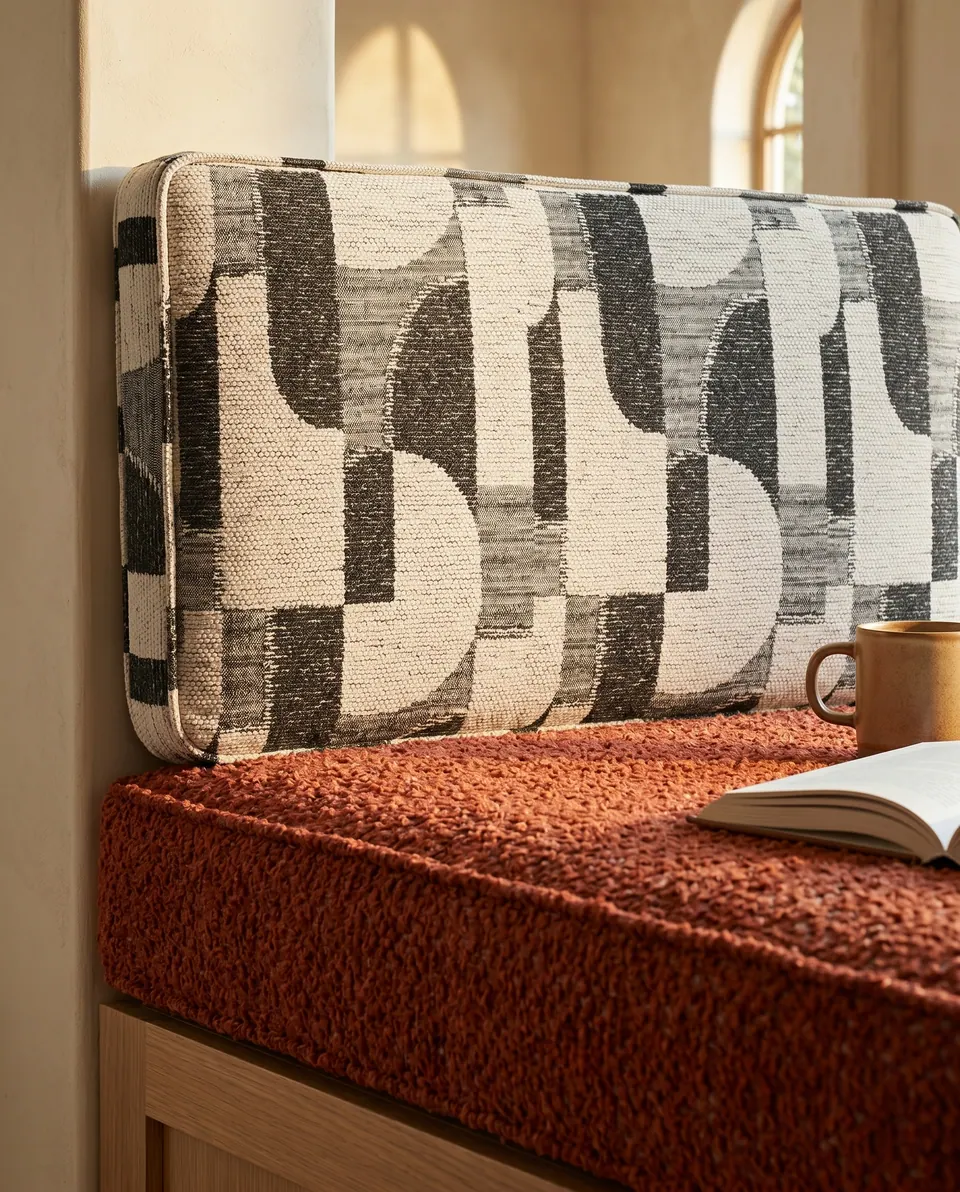
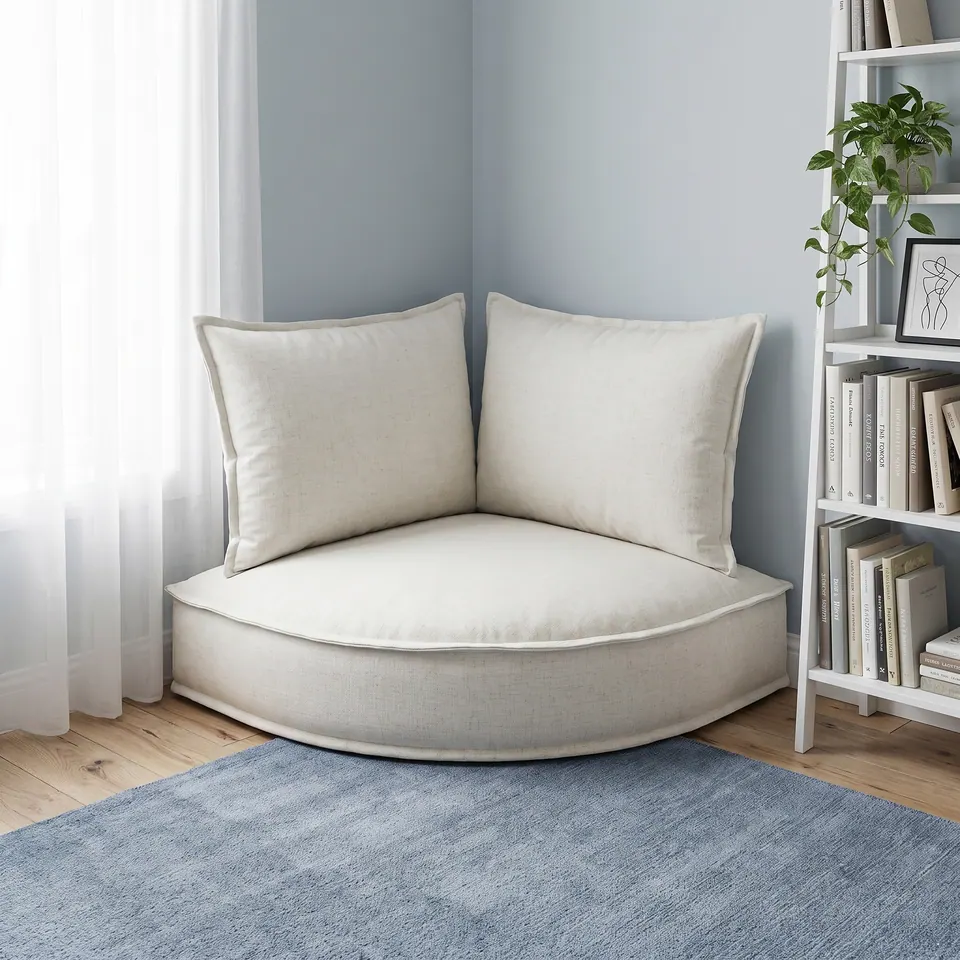
Filling is a shape decision before it's a comfort decision. The thicker and flatter the piece, the more it needs foam to hold its line.

 Save
The quick answer
Choose foam for a non-tufted backrest 12-14 in (30-35 cm) thick, often cut as a wedge, and silicone ball fill for round arm bolsters, because silicone balls can't hold a backrest that thick. For a neck roll, the workshop recommends shredded foam, which supports without being very soft, and the filling is included in the price.
Get a quote for a bench seat and back cushion
Filling by shape, on one sheet
| Piece | Filling | Why |
|---|---|---|
| Non-tufted backrest, 12-14 in (30-35 cm) thick | Foam, often cut as a wedge | Silicone balls can't hold that shape |
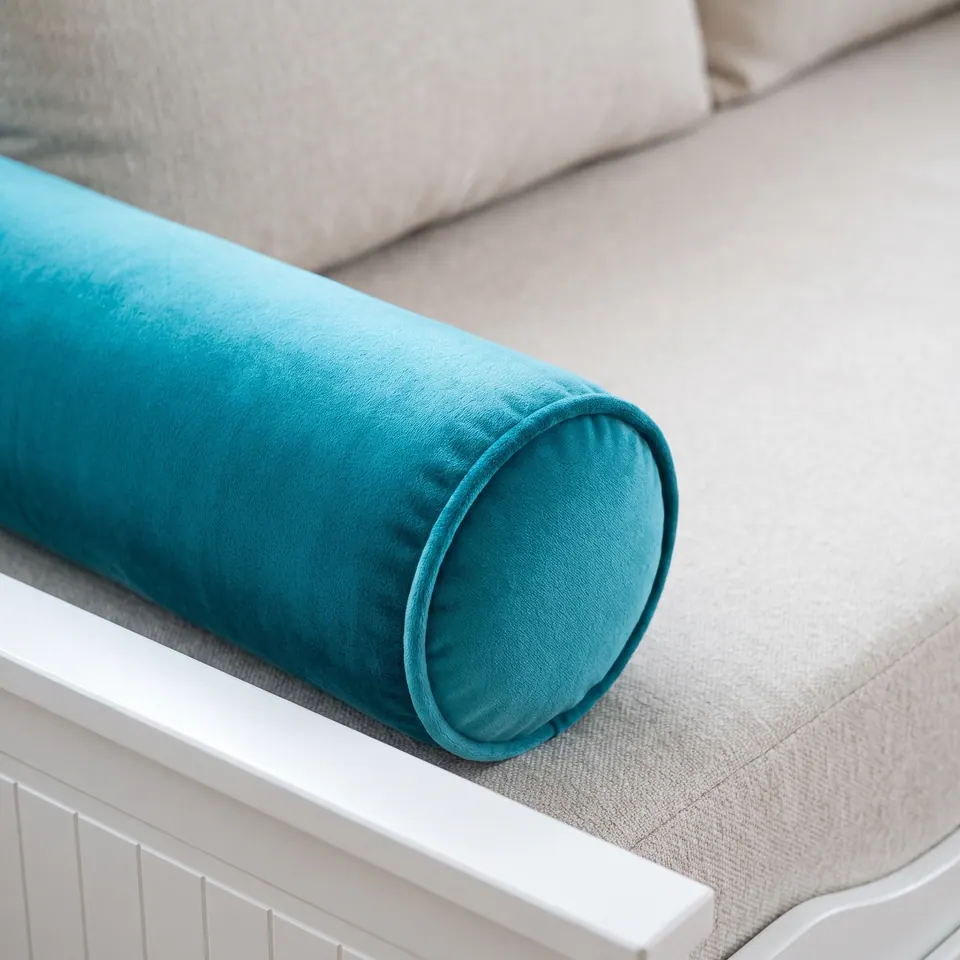
| Round arm bolster | Silicone ball fill | Suits the round form |
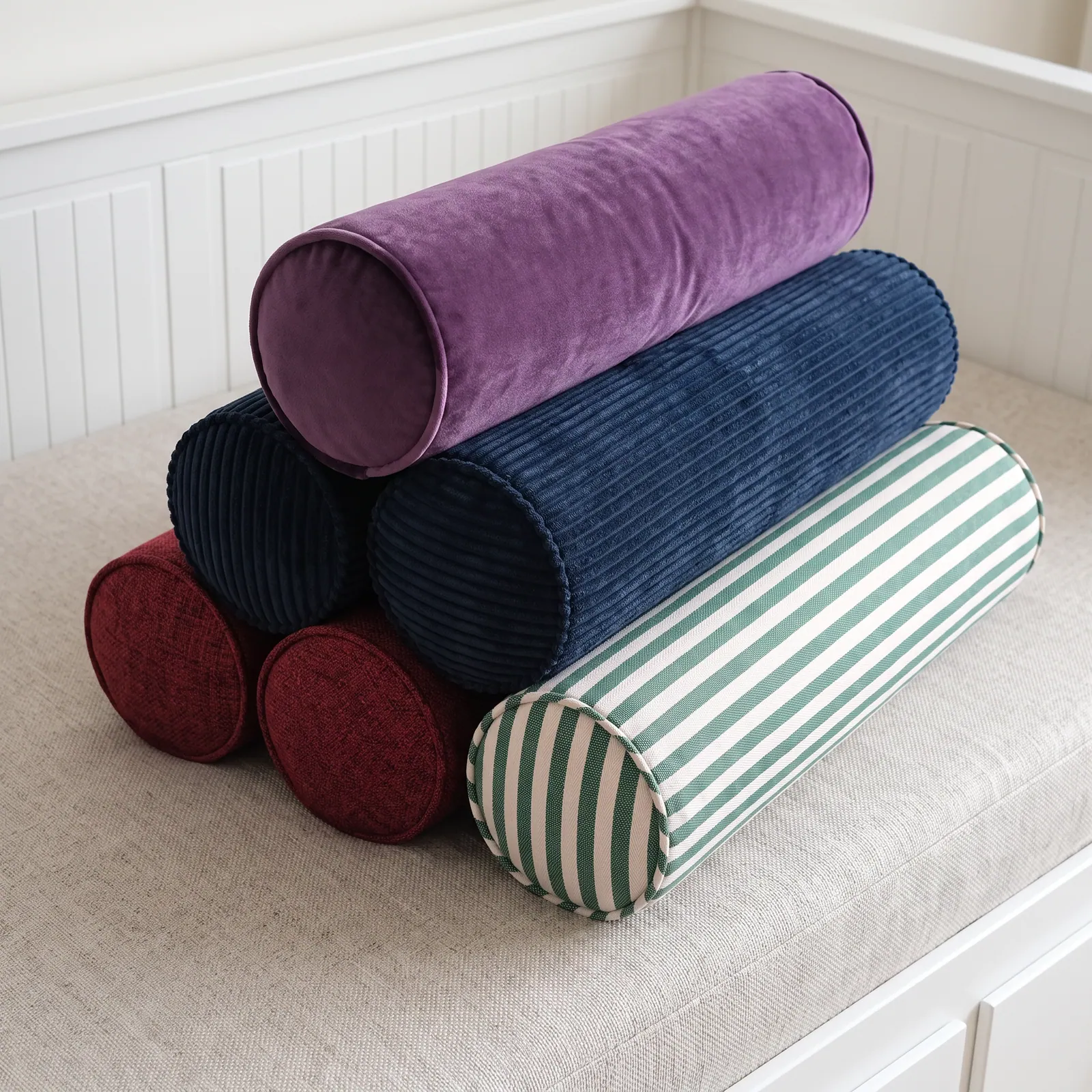
| Neck roll | Shredded foam (recommended) or solid firm foam | Shredded is supportive, not very soft |
Key facts
- Silicone ball fill can't hold a 12-14 in (30-35 cm) non-tufted backrest.
- Thick backrests are filled with foam.
- Wedge backrest example: 12 in (30 cm) at the bottom, 8 in (20 cm) at the top.
- Silicone ball fill suits round arm bolsters.
- Neck rolls can take shredded foam or solid firm foam.
- Shredded foam is the workshop's pick for neck rolls.
- Filling is included in the price of a neck roll.

Have it made
Have Nate’s workshop cut this for you
Precision starts on the phone. Give the workshop your measurements and they will read them back to you, edge by edge. — Nate
Leave your details and the workshop will call you to confirm measurements, fabric, foam and piping. No prices, dates or payment on this page: it is a request, not an order.
The wedge backrest, dimensioned
| Measurement | Value |
|---|---|
| Thickness at the bottom edge | 12 in (30 cm) |
| Thickness at the top edge | 8 in (20 cm) |
| Taper, bottom to top | 4 in (10 cm) |
Why loose fill suits round, and foam suits flat
Silicone ball fill is loose by design: the balls slide past each other. In a round arm bolster that works, because the cylinder of fabric is the shape. In a flat, non-tufted backrest 12-14 in (30-35 cm) thick, the balls can't hold the shape, so the workshop uses foam.
Cutting that foam as a wedge, 12 in (30 cm) at the bottom and 8 in (20 cm) at the top, tips the sitter back at an angle instead of propping them bolt upright. Angles are just lengths in disguise, partner: two thicknesses and a height define the whole piece.
Neck rolls sit in between. Shredded foam or solid firm foam both work; the workshop recommends shredded because it isn't very soft and makes a good roll. What will yours lean against, a wall or a frame?
More in backrest cushions, shredded foam vs wedge backs, bolster size and diameter and the glossary's cluster fiber.
Silicone ball fill suits a round arm bolster; a flat backrest 12-14 in thick needs foam to hold its shape.
Nate Kowalski
Buyer questions
- A common question
For a very thick backrest, foam or silicone ball filling?
The workshop's answerFoam. A non-tufted backrest 12-14 in (30-35 cm) thick can't hold its shape with silicone balls, so the workshop cuts foam as a wedge, for example 12 in (30 cm) deep at the bottom and 8 in (20 cm) at the top. Silicone ball fill suits the round arm bolsters.
- A common question
Should my neck roll be shredded foam or firm foam?
The workshop's answerEither works. The workshop recommended shredded foam: it isn't very soft and makes a good neck roll. The filling is included in the price.
- A common question
Does a cushion come with the foam, or only the cover?
The workshop's answerThe foam is included. Standard custom cushions ship complete with a high-density foam insert in a zippered, washable cover; covers-only is a separate option with no filling.
Questions buyers ask next
Is silicone ball fill the same thing as fiberfill?
Close cousins. Silicone ball fill is polyester fiber rolled into small, often silicone-coated balls that slide past each other instead of matting, so it stays springy longer than plain fiberfill. That looseness is why it suits round bolsters.
How does a wedge backrest differ from a straight one?
A wedge is thicker at the bottom than at the top, for example 12 in (30 cm) tapering to 8 in (20 cm). As a backrest it tips you back at an angle instead of sitting you upright against a flat block.
What foam density is used, in US terms?
About 2.0 lb/ft³ (32 kg/m³), above the usual 1.8 lb high-density threshold. It is high-resilience cold foam at roughly ILD 42, though no official ILD certificate is issued.