The Cushion Atlas · Benches, window seats & banquettes
A bench cushion with backrest, seat and back sized as one piece of furniture
A seat with no back is a perch. Set a proper backrest behind it and a bench becomes a place folks stay after supper. Here is how the workshop sizes, fills and fastens a back so it earns its keep.
- 3readings
- 29answers
- 12photographs
 Save
The quick answer
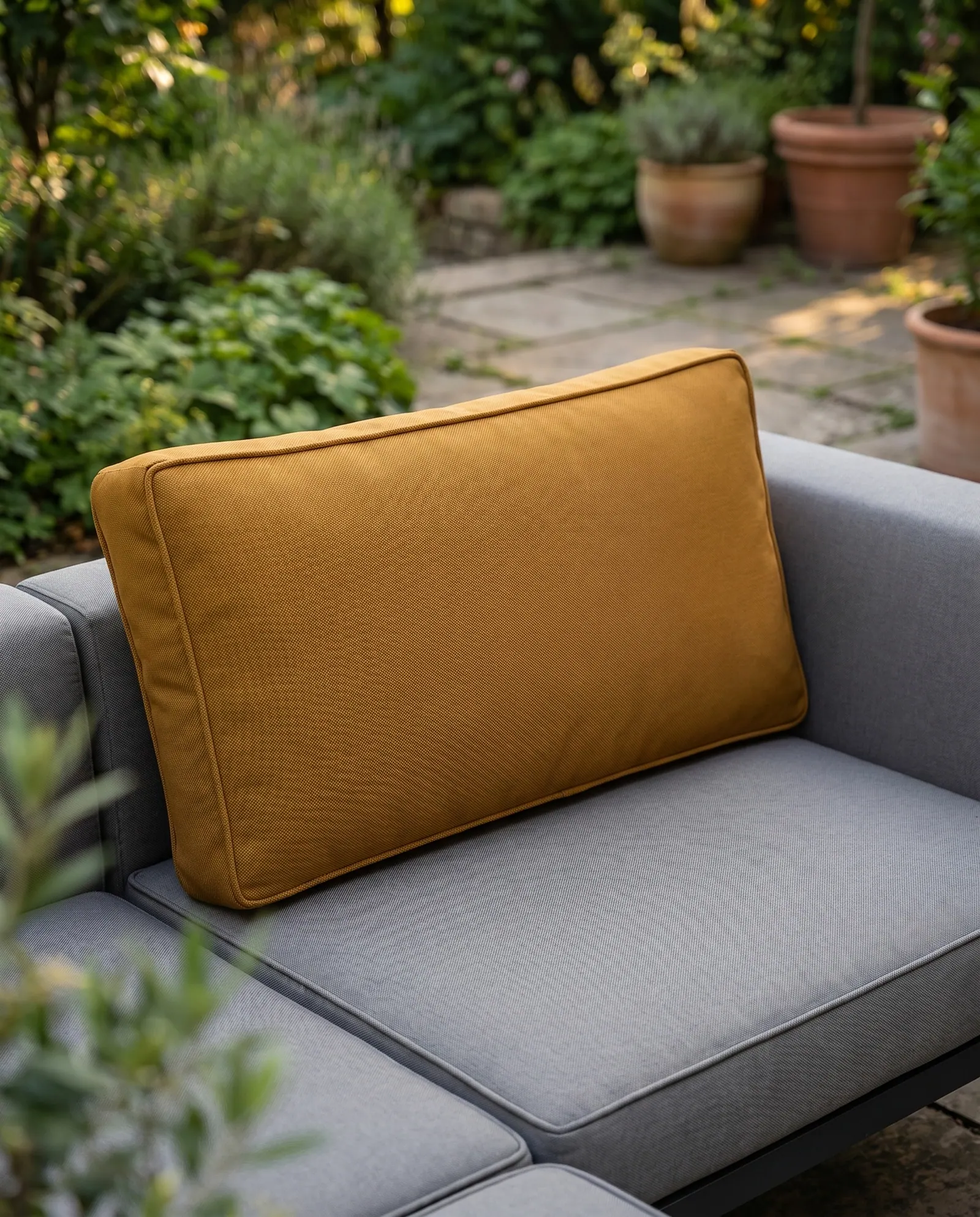
A bench seat and back cushion is a matched pair: the seat cut to the bench, and a backrest made the same length, about 16 in (40 cm) tall and 4 in (10 cm) thick, measured from the top of the seat cushion. Backs come in firm foam for a structured look or soft shredded foam for a relaxed one, and wedge backs taper thicker at the bottom.
Shapes to choose from
- Bench394 readings
- Window seat261 readings
- Bay window43 readings
- Trapezoid18 readings
- Banquette51 readings
- L-shaped48 readings
- U-shaped2 readings
- Piano bench3 readings
- Seat & back3 readings
- Window Seat
Every one is cut to your measurements. The number is how many readings the atelier has published for that shape.
Sizes & measuring
Backrest sizes the workshop cuts most
Height is measured from the top of the seat cushion, not from the bench. Everything else follows from that one line.
| Standard backrest | About 16 in (40 cm) tall and 4 in (10 cm) thick, made the same length as the seat |
|---|---|
| Daybed sets | Backrests about 20 in (50 cm) tall |
| Lower backs | The workshop recommends 16 in over 12 in (30 cm) for real support; 14 in backs have been made for banquettes and under windows |
| Straight floor-sofa backrest | 39 x 15 x 15 in (100 x 39 x 39 cm), sold on its own |
| L-shaped corner backrest | 39 x 39 in (100 x 100 cm) along the L, about 15 in high; two span a 39 x 79 in sofa |
| Wedge backs | Give width, height and the thickness at top and bottom, such as 28 x 24 in tapering from 9 in to 4-5 in |
| Fill | Firm foam like the seat (upright, structured) or soft shredded foam (plumper, relaxed) |
| Cover | Zippered and removable on plain backs; a tufted back cannot take a zipper |
| Staying put | Ties at the top corners or tied down to the seat; two-sided hook-and-loop strips only on request |
What a backrest does, and who needs one
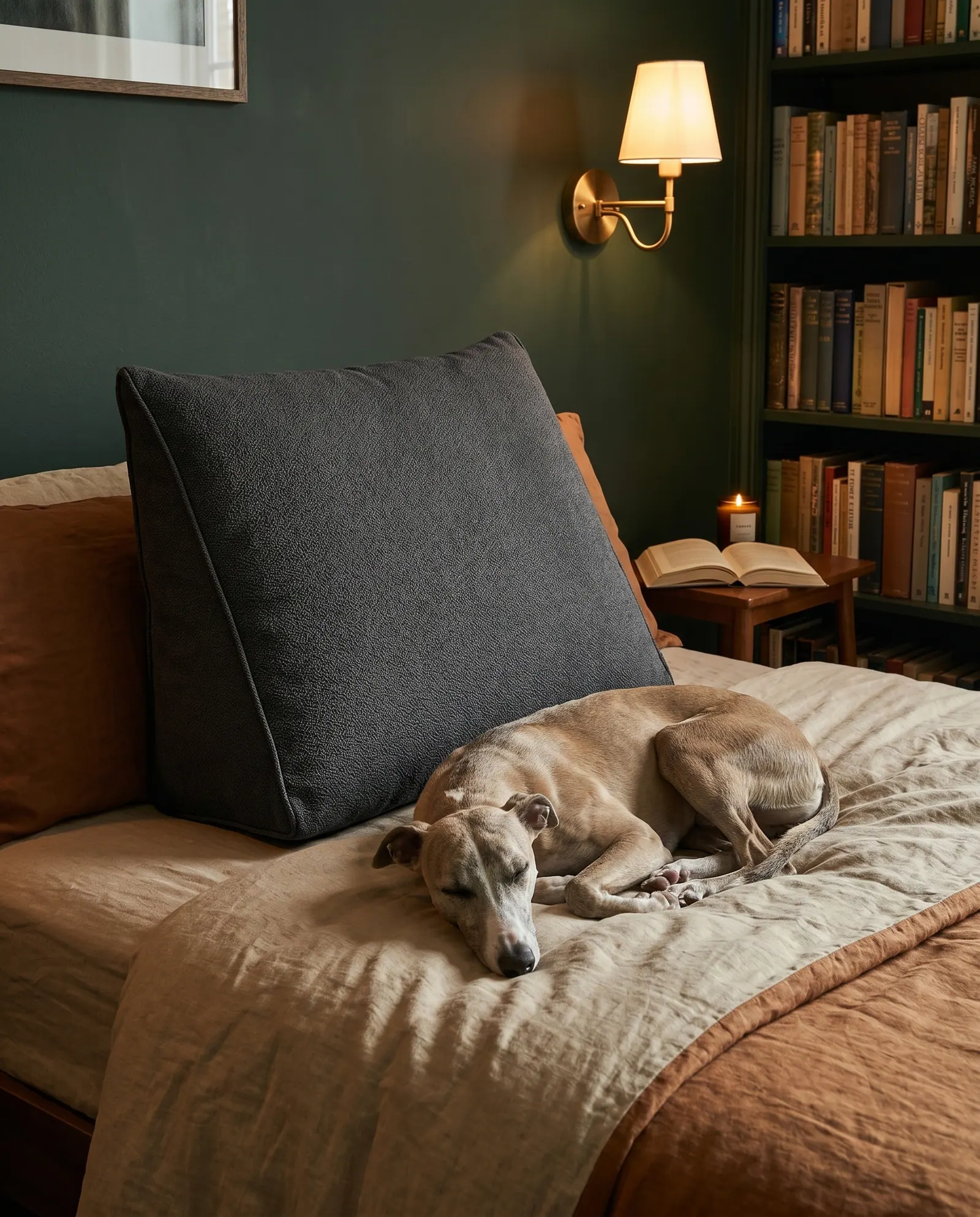
A backrest is the cushion you lean on, not the one you sit on. It rides above a bench cushion, a banquette, a window seat or a floor sofa, and it is made and priced as its own piece. Order it with the seat, at its own size with the word 'backrest' in the note, and both get cut from the same roll.
Folks come to the workshop with a hard wall behind a long bench, a daybed that wants to sit like a sofa, or an old set that lost its back years ago. For the seat itself, start at bench cushions; for a sofa built low on the floor, see modular floor sofas.
Straight, L-shaped, wedge or scalloped
The plain straight back is the workhorse: a rectangle, piped top and bottom, leaning on a wall, with sharp or rounded corners. The L-shaped back wraps the corner of a floor sofa or daybed; two of them turn a pair of twin mattresses into a sofa.
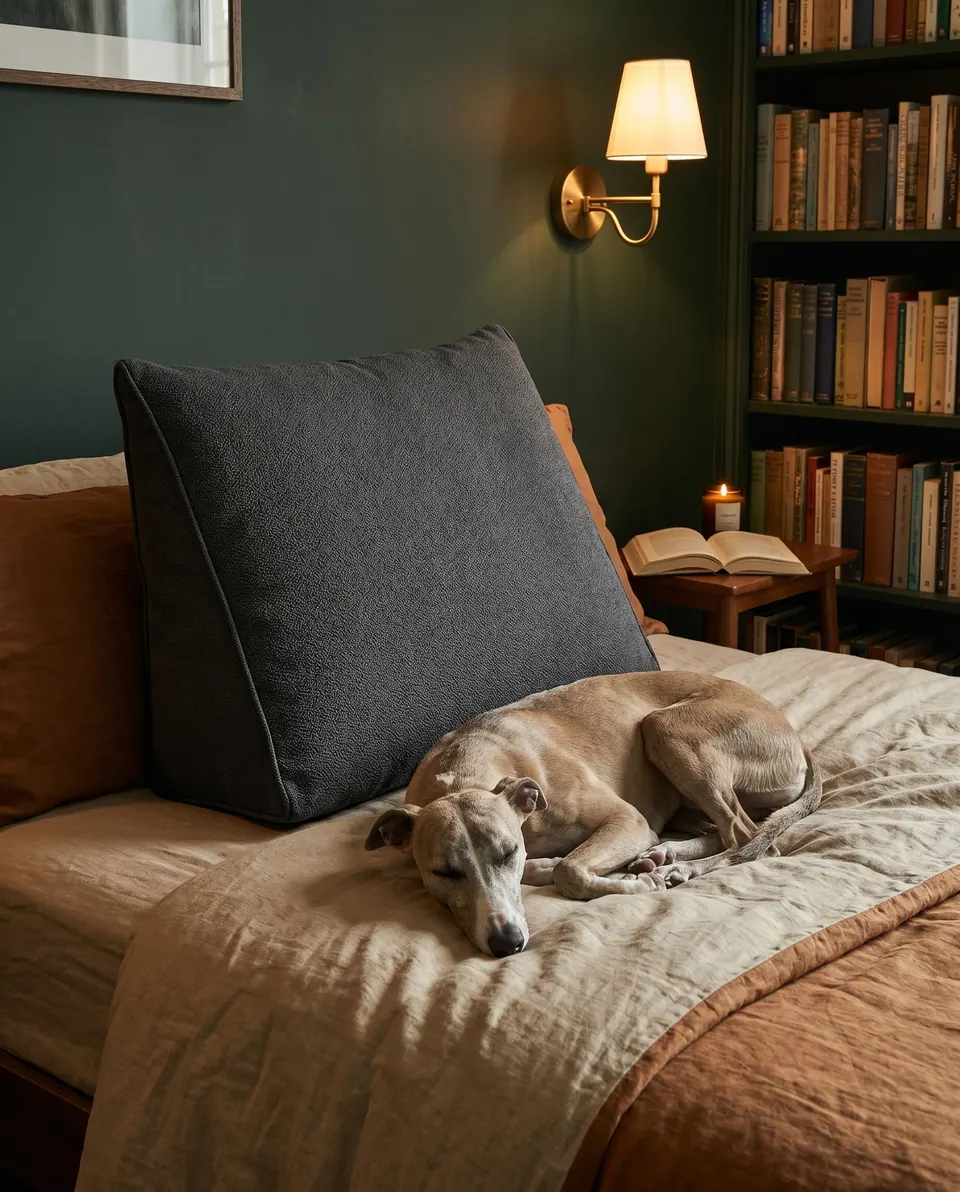
A wedge is thicker at the bottom than the top, so it tips you back a little. One reading-nook wedge ran about 25.5 in wide, 27.5 in tall and 8 in at the base (65 x 70 x 20 cm). Wedges can be split into pieces, and on an angled dining bench the bottom edge can be shaped to sit flush.
Scalloped backs are the dressy ones. A channel back of vertical rolls can't hold its lines on foam alone; it has to be upholstered onto a thin board fixed to the banquette.
Fabrics for a back that gets leaned on
A backrest takes shoulders, heads and the rub of a wool sweater, and it sits in the window light longer than anything else in the room.
- Velvet is the classic banquette back. Velvet remembers: brush it the way the pile runs and it keeps its glow.
- Corduroy suits floor-sofa backs and looks warmer the longer it is used.
- Linen-look weaves are the quiet choice for window seats and reading nooks.
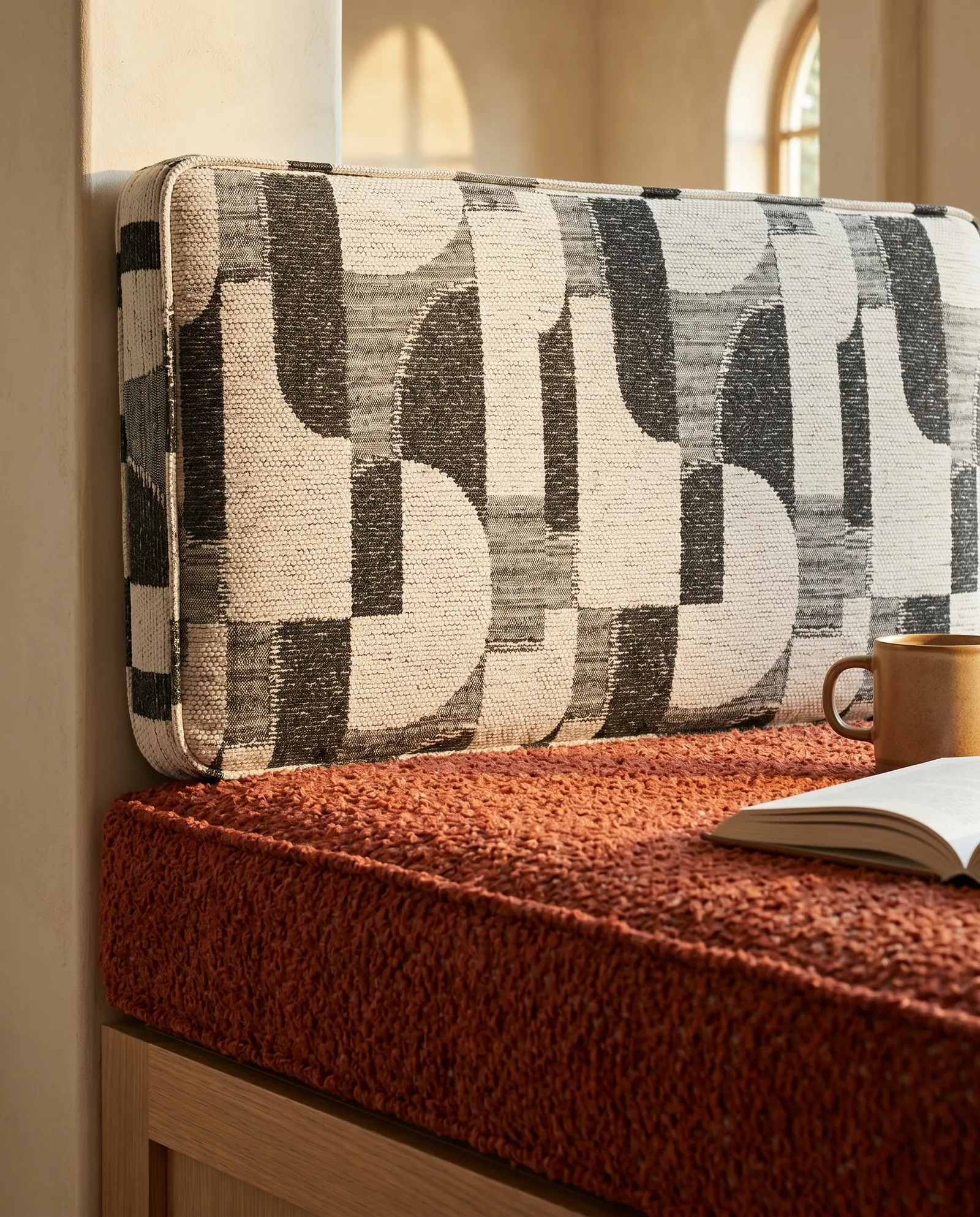
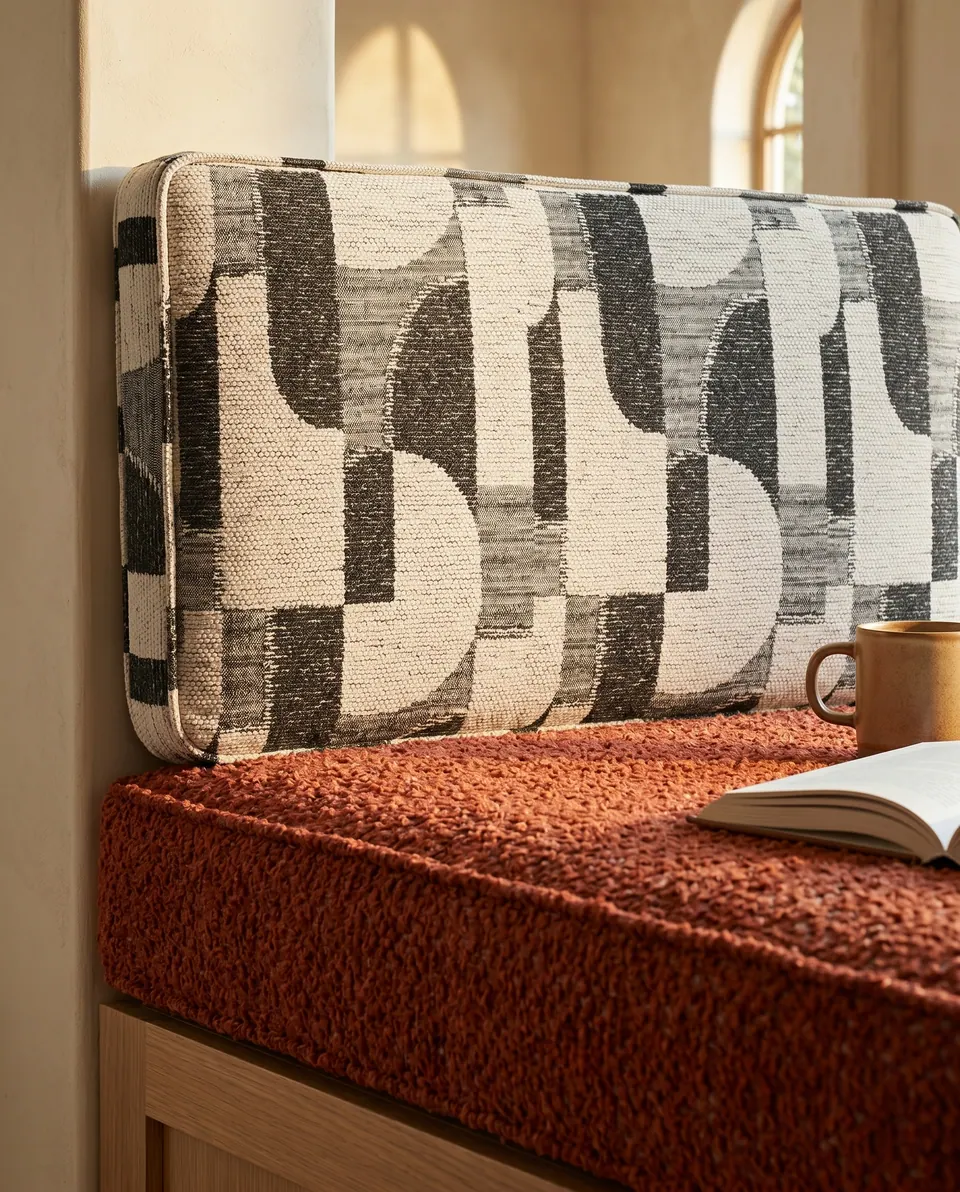
- Jacquard makes a patterned back over a plain seat, like the black-and-cream geometric over terracotta bouclé in our gallery.
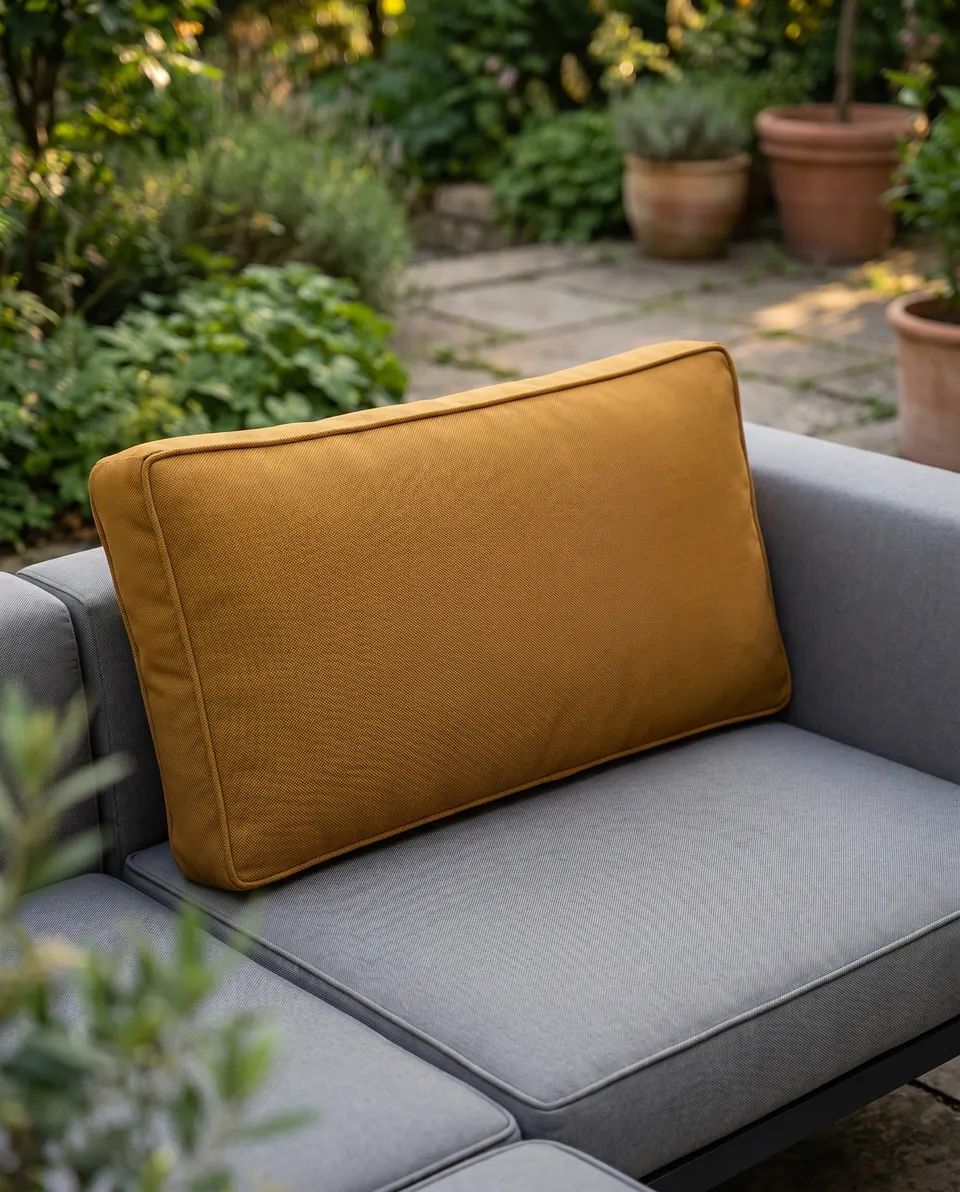
- Outdoors, use the outdoor chart: outdoor acrylic.
Order the back with the seat when you can, because each roll is dyed in its own batch. Adding one later, quote the original fabric code.
Open a swatch family
- VelvetDense pile, deep color
- CorduroySoft ribs, cozy hand
- Linen-Look WeavesWoven texture, easy care
- Jacquard & Damask1 reading
- Outdoor Acrylic & Solution-Dyed1 reading
The count is how many published readings use each family. Open a family for its swatch book, care notes and neighbors.
Firm back or soft back
By default a backrest is a touch softer than the seat under it. If you want the two to read as one piece of furniture, ask for the back in the same firm foam and it will stand straight and flat.
The standard soft back is a removable piped cover filled with shredded foam, about 4 in thick; for a firmer, flatter panel, the core is solid foam wrapped in fiber. Neither has a rigid board inside, so neither can be screwed to a wall or hung on a wall cleat. They hang from hooks by ties at the top corners, ride a rod through sewn loops, or simply lean.
Tufted backs hold no foam at all, only silicone-ball fiber packed tight, firm at about 6-7 on a 10-point scale. More in shredded foam, solid wedge or fiber.
Two velvet backs that would have met nose to nose
A buyer in the US ordered a corner banquette in velvet: two scalloped backs 24 in high, one 80 in long and one 53 in, over seats of 16 x 80 in and 16 x 37 in. After paying, she switched from a pale pink to graphite gray with off-white piping. Nothing had been cut yet, so the change cost her nothing but a message.
The seats were 4 in thick and the backs were filled with shredded foam. Then the cutting table caught the trouble. Both backs had been measured wall to wall, so in the corner they would have collided. The workshop shortened one of them by 4 in, and the two met clean.
- Measured
- Backs 24 x 80 in and 24 x 53 in; seats 16 x 80 in and 16 x 37 in, 4 in thick
- What it taught
- Where two backrests meet in a corner, shorten one of them by the depth of the other.
Where backrests go wrong
- Measuring the back's height from the bench top. It counts from the top of the seat cushion.
- Measuring two corner backs wall to wall. Shorten one, or they collide where they meet.
- Sizing to the wall and forgetting the window. Trim, latches and levers set the height; a back 14-16 in tall kept one lever clear.
- Expecting a floor-sofa backrest to stand alone. Floor-cushion backs lean on a wall unless a frame is ordered.
- Writing one thickness for every piece in a mixed order. List the seat and the back separately.
- Leaving bare metal sofa bars on a hardwood floor. Put felt pads under them and a rug under the sofa.
A backrest is measured from the top of the seat cushion, not from the bench. The standard back is about 16 in (40 cm) tall and 4 in (10 cm) thick.
Harlan
Photographs from the workbench
Open any photograph large; each one has its own link and a Save button.
 Save
 Save
 Save
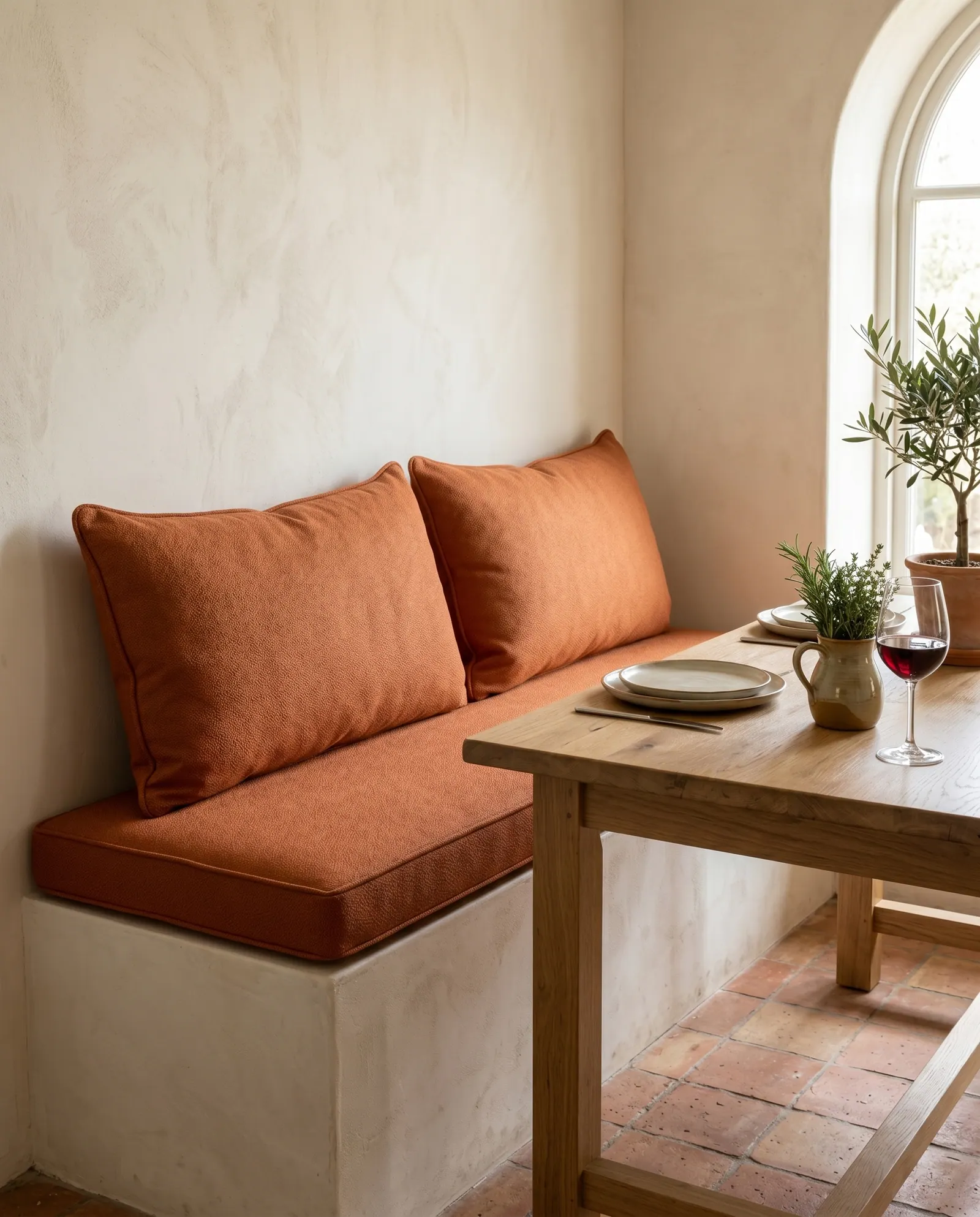 Save
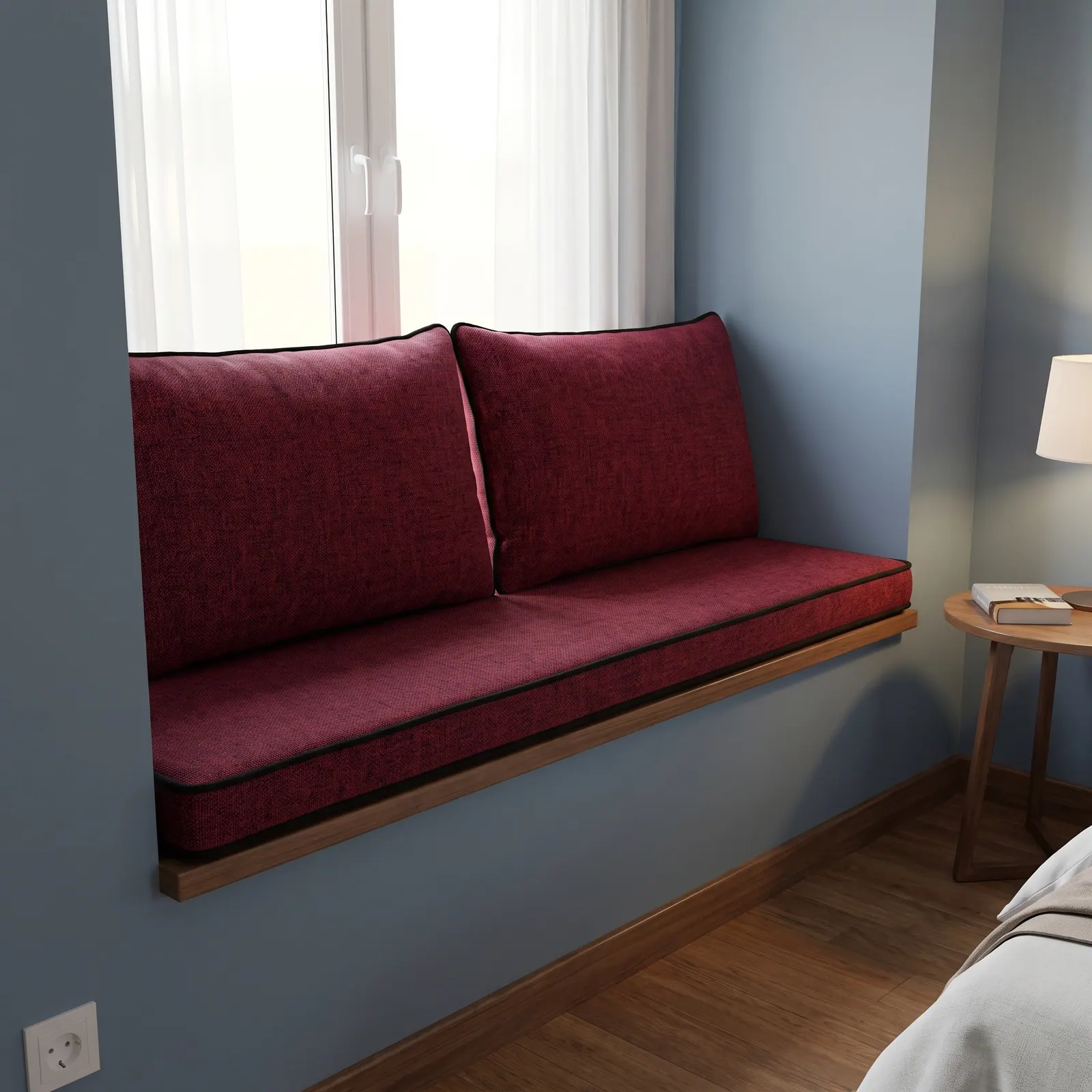 Save
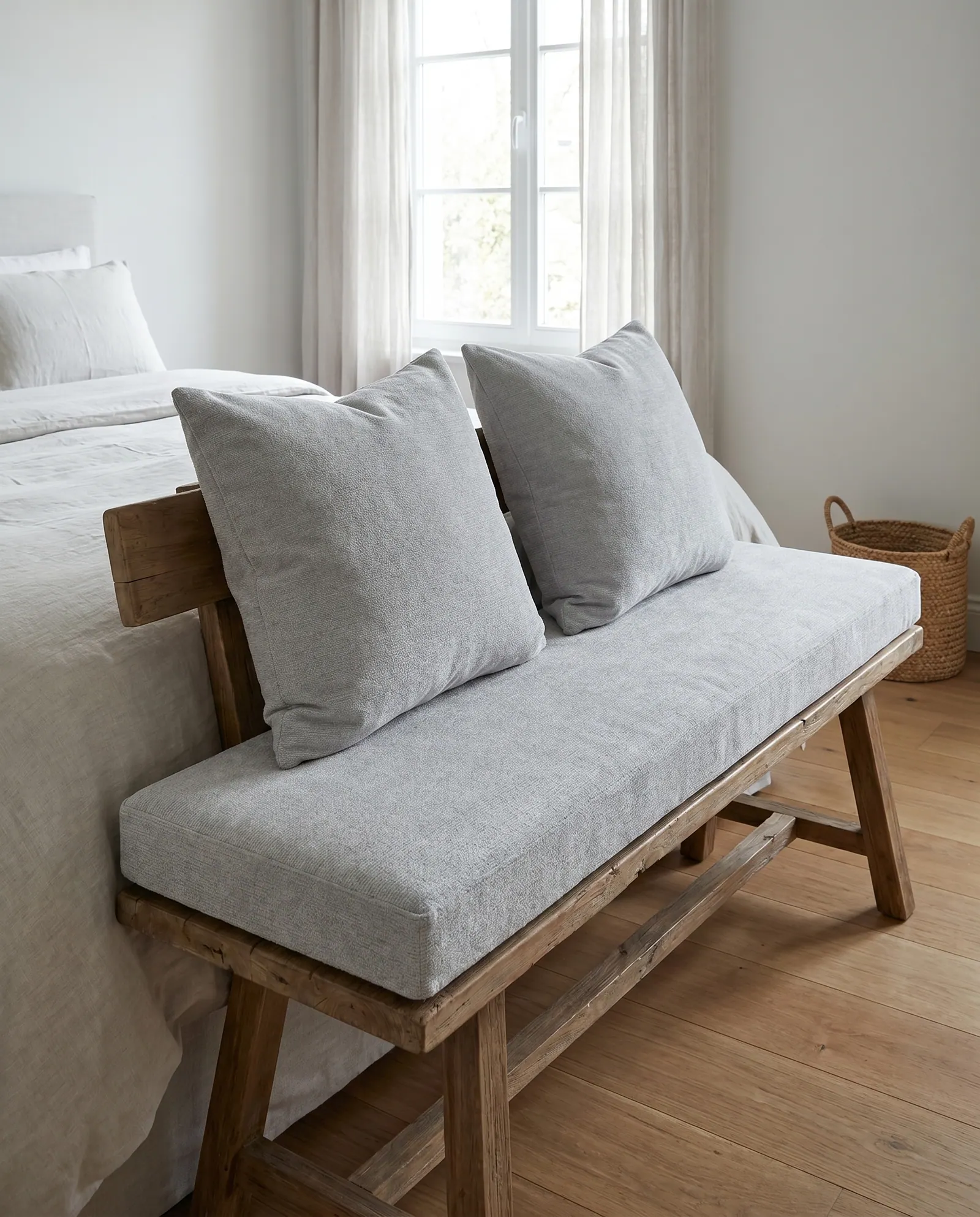 Save
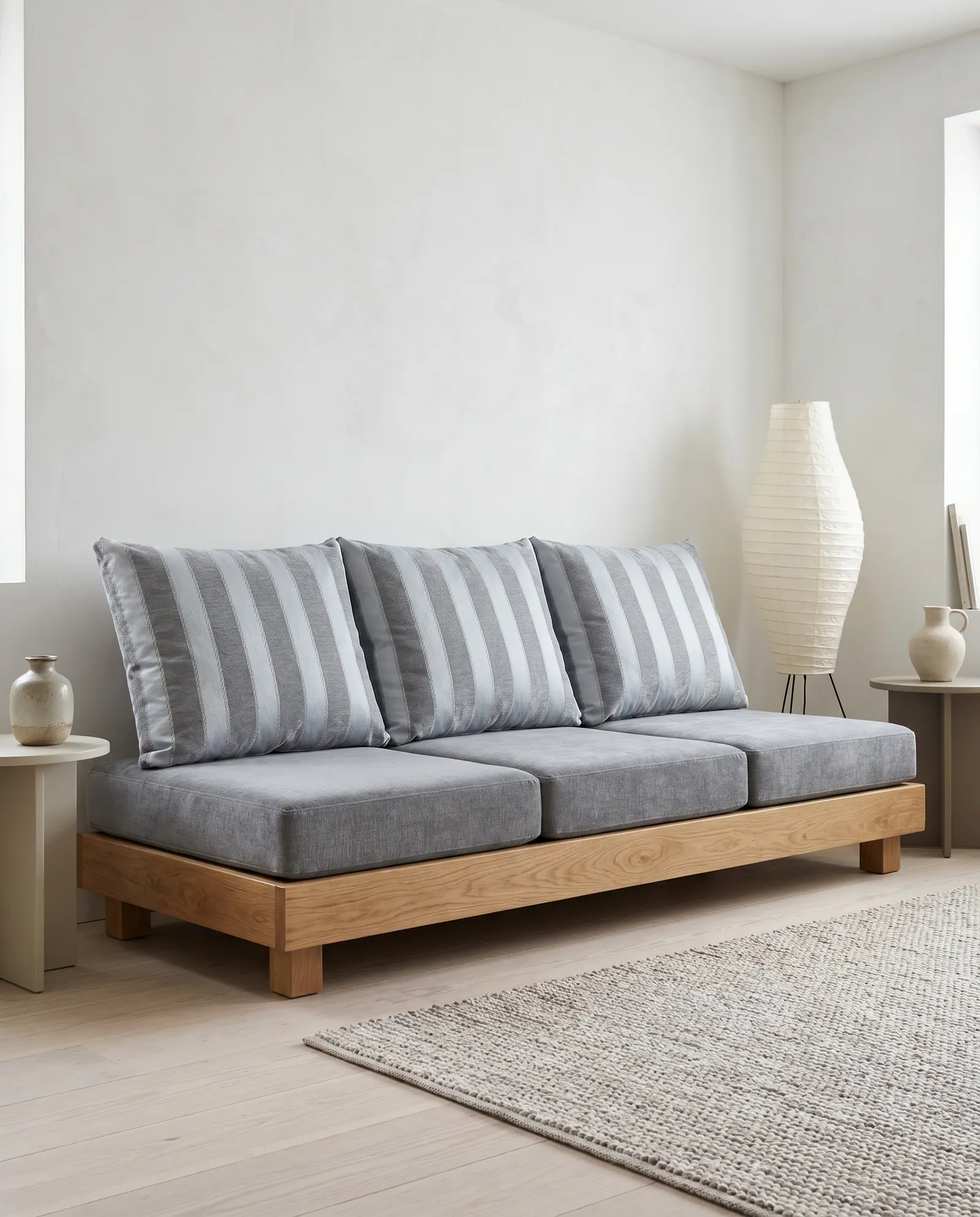 Save
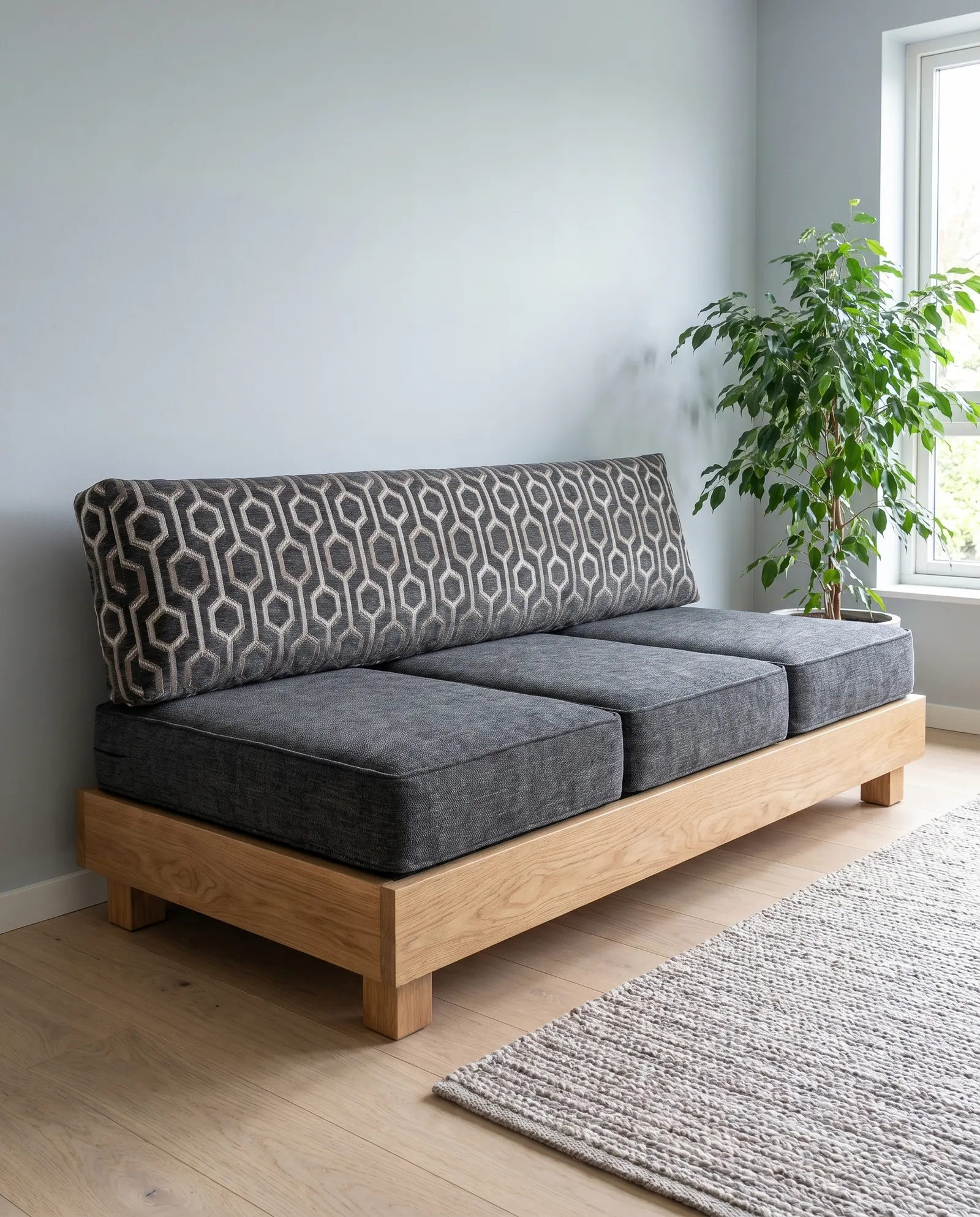 Save
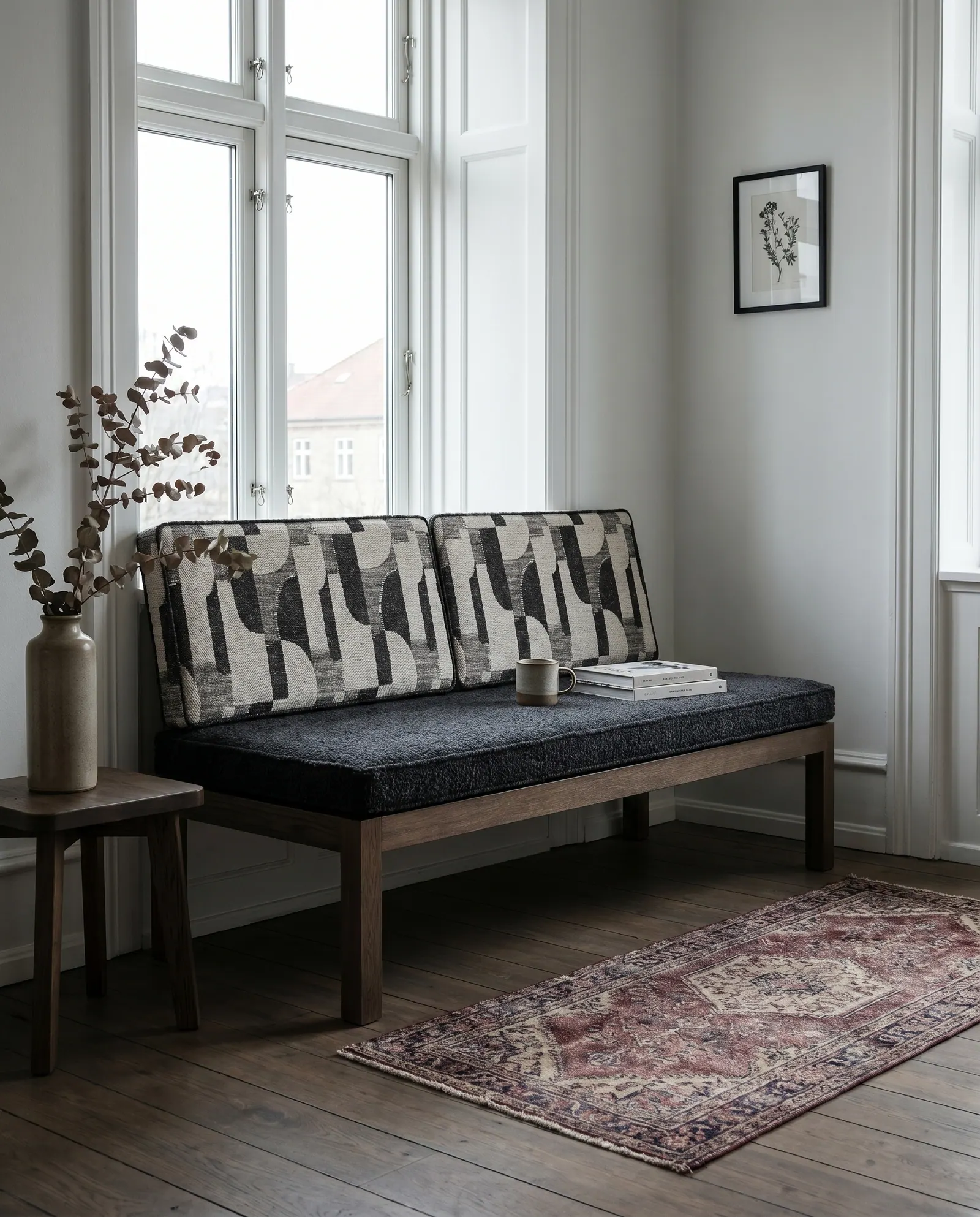 Save
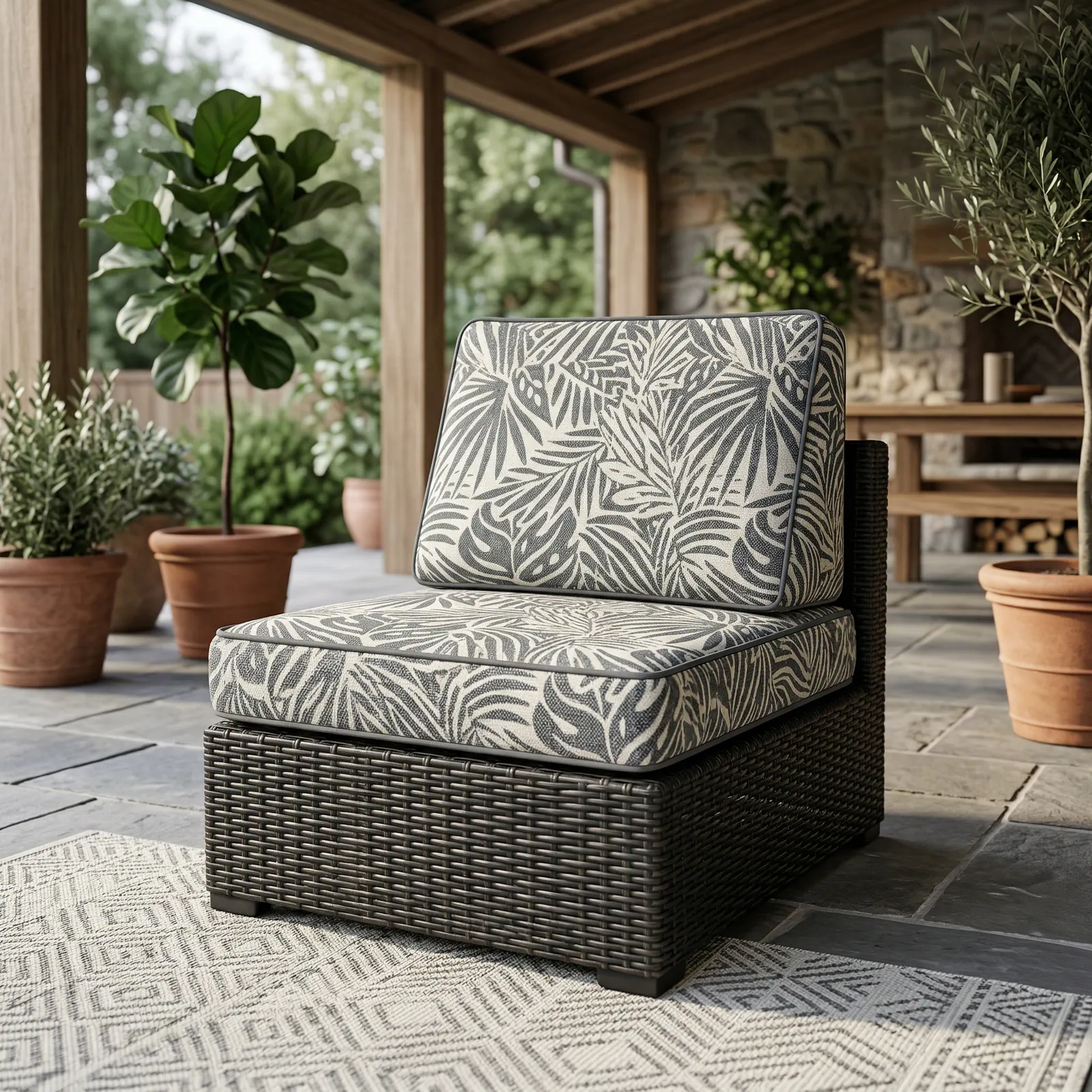 Save
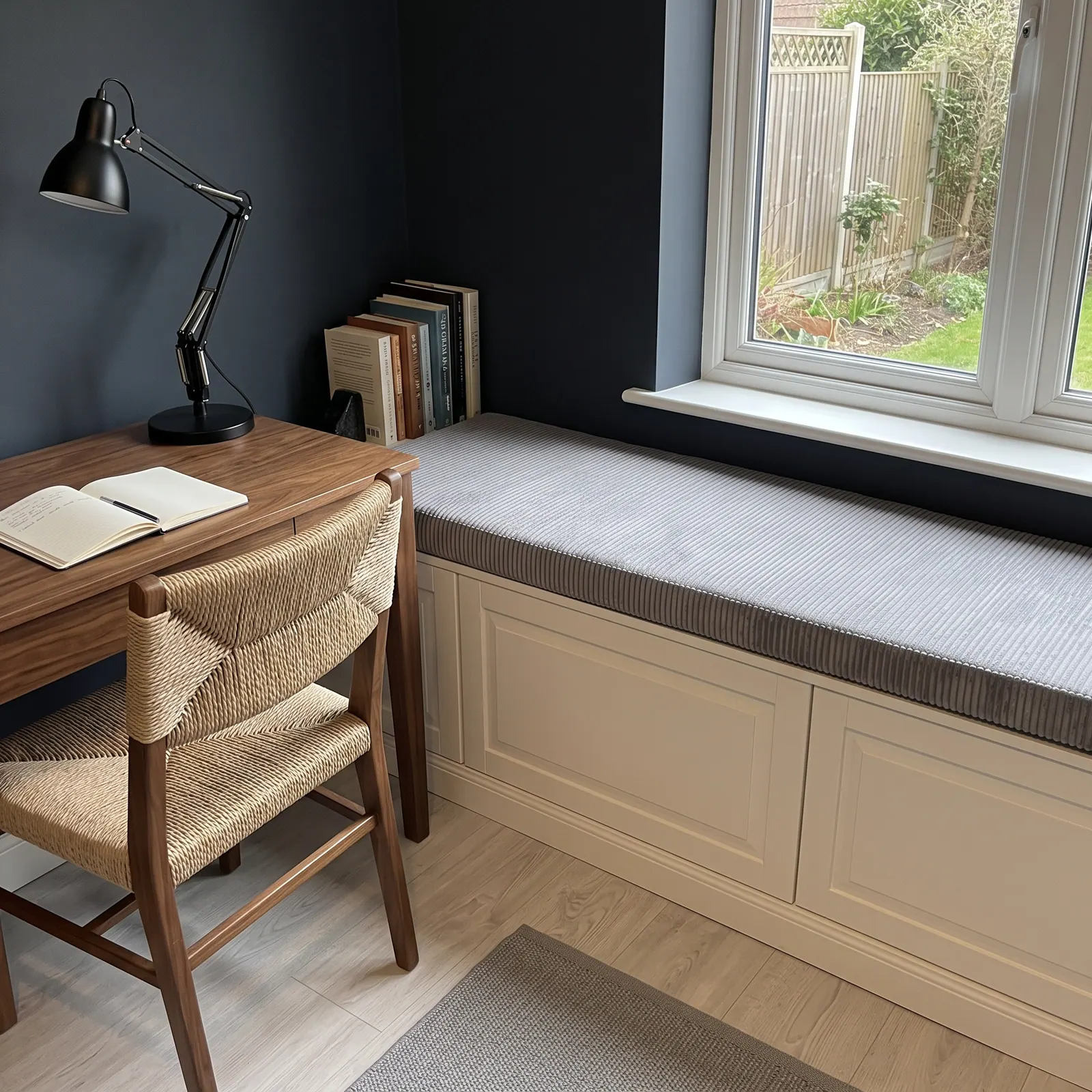 Save
Styling a back, and planning one
Let the back be the quiet one or the loud one, never both at once with the seat. A patterned back over a plain seat reads like a painting over a mantel; contrast piping on both pieces ties them into a set.
My friend, a tufted floor cushion stood on end makes a fine soft headboard, and a pair of L-shaped backs turns a daybed into a sofa by day. See daybed cushions and styling a daybed like a sofa.
Before you order, set seat and back side by side in the bench cushion builder, then check back cushion height and keeping back cushions upright. What stands behind your bench right now: a wall, a window, or nothing at all?
Banquette back styles side by side
| Back style | Look | How it stays up | From the workshop |
|---|---|---|---|
| Loose back pillows | Soft and relaxed | Leans on the wall; ties or a grip backing help | Yes: shredded-foam or fiber-filled |
| Fixed rectangular foam back | Crisp, tailored line | Leans on the wall; ties to a rail | Yes: firm foam, about 16 in tall and 4 in thick as standard |
| Wedge back | Tailored, with a built-in lean | Its shape keeps it upright on deep seats | Yes: standard or custom wedge |
| Long round bolster | Relaxed, daybed-like | Rests along the wall | Yes: made to the bench length |
| Channel or fluted back | Vertical ribs, restaurant style | Varies by build | Ask first |
| Wall-hung board panel | Upholstered headboard look | Screws or a cleat into the wall | Usually not; soft backs on hook-and-loop or rod loops instead |
Benches that already have a wooden back
Plenty of dining benches, garden benches and settles come with a slatted or solid wooden back, and the question is how to pad it without eating the seat. Choose a thinner back cushion, 2 to 3 in, so the seat keeps most of its depth, and ask for ties at the top corners to loop around the top rail or through the slats; on a solid back with nothing to tie to, a back cushion that rests on the seat and leans on the wood usually stays put on its own. Order the seat and back together in one fabric, or add the back later by quoting the fabric code from your first order. Mark the tie positions on a photo of the bench so they land on the rail, not in a gap.
Buyer questions
- A common question
I already have a bench cushion. Can you make a back cushion to match it?
The workshop's answerYes. Backrests are made to any size in the same fabric as the seat, for indoor benches, outdoor sofas and window seats. Choose firm foam, which stands upright like the seat, or a soft filled back that looks more relaxed. If the seat came from the workshop, quote its original fabric code; one buyer added a window-seat back 90 in long, 11 in high and 3 in deep that way.
- A common question
Can I order only the back cushion, with no seat?
The workshop's answerYes. Back-only orders are made in any size and color, such as a single 13 x 50 in back, or a run of banquette backs 14 in high and 3 in thick in lengths of 21, 26 and 27 in. A back can come with two armrests and no base, and round bolsters are sold separately. A zippered cover is possible only on a non-tufted back.
- A common question
Do you make wedge backs that are thicker at the bottom than the top?
The workshop's answerOften. Send the width, the height and the thickness at top and bottom, or a photo or diagram with those numbers; one was 28 x 24 in, tapering from 9 in to 4-5 in. Wedges can be split into several pieces and paired with seats, and for an angled dining bench the bottom edge can be shaped so it sits better.
- A common question
Could the backrest have a board inside so I can mount it on the wall like a headboard?
The workshop's answerNot as standard. The workshop's backrests have no rigid board, so they can't be screwed down or hung on a wall cleat. They come as a removable piped cover with shredded foam about 4 in (10 cm) thick, or a solid foam core wrapped in fiber, and fasten with hook-and-loop, loops on a rod, or ties at the top corners for hooks or a rail. A channel back of vertical rolls is the exception: it needs upholstering onto a thin board.
- A common question
Can I buy just the L-shaped corner backrests, without the rest of the floor sofa?
The workshop's answerYes. Each L-shaped backrest covers a 39 x 39 in (100 x 100 cm) corner and stands about 15 in high; two span a 39 x 79 in sofa or turn a twin mattress or daybed into one. They have no attachments, so they sit on your own mattresses, and the metal bars are sold separately. Covers alone are available too.
- A common question
Will you put Velcro on the back cushion instead of ties?
The workshop's answerThe workshop usually suggests ties or a non-slip base instead. Velcro tabs and snaps aren't made, but a two-sided strip has been added on request at extra cost: one side sewn under the cushion, the other sent to you for the bench. Write it in the personalization box with your fabric code and piping, and wait for confirmation.
Have it made
Have your bench seat and back cushion made — ask Harlan’s workshop
Old upholsterers will tell you the real cutting happens in the conversation, long before the shears come out. Tell the workshop what you sit on, and they will talk it through with you. — Harlan
Leave your details and the workshop will call you to confirm measurements, fabric, foam and piping. No prices, dates or payment on this page: it is a request, not an order.
Questions about backs, asked next
How tall should a bench back cushion be?
About 16 in (40 cm), measured from the top of the seat cushion, is the workshop standard and the height it recommends over 12 in (30 cm) for real support. Daybed sets use backs about 20 in (50 cm) tall. Under a low windowsill, 14 in backs have been made.
Does a floor-sofa backrest stand up without a wall behind it?
No. Floor-cushion backrests and backrest sets are built to lean against a wall. If the sofa floats in the middle of the room, ask for a back-supported version or a metal frame so the backrest stands on its own.
Are a seat and its backrest priced as one item?
No. Each cushion is priced on its own, so a seat and its back are two items in the cart. Add the back at its own size and write 'backrest' in the note. The exception is the tufted floor-cushion set, whose price covers the seat, the back and two bolsters.
How do I keep a back cushion from slumping down the seat?
Ties are the simplest fix. They can be sewn at the corners or along the back, in any position, to tie the back to the seat or to the bench frame. Double piping also stiffens a back enough to stand without straps. Ties are never added unless you ask.
Can a backrest be as firm as the seat?
Yes. Backs are made a little softer than seats by default, but a back can be built in the same firm foam. High-density foam gives the flat, structured look of upholstered furniture; a shredded-foam back looks plumper and more relaxed.
Which way will stripes run on a long backrest?
Across the short way by default. The fabric roll is about 55 in (140 cm) wide, so a long piece with stripes running its full length needs a seam. Stripes are matched on the front face only, so say which direction you want before anything is cut.
Sit well. — Harlan
Readings
Photographs read by the masters: backrest & seat-and-back cushions
Real cushions made for real rooms, each read for proportion, fabric and fit.
The Cutting Table
Buyers asked about backrest & seat-and-back cushions
- Can you make wedge-shaped back cushions?Answered by Harlan
- The floor sofa seat is too low. How can I make it higher?Answered by Maggie
- Do I subtract the seat cushion thickness when measuring for back cushions?Answered by Callum
- Are the back cushions the same foam as the seat?Answered by Hana
- Do you make slipcovers, headboards, bed frames or tablecloths?Answered by Maggie
- How do I measure backrest height: from the top of the seat cushion or from the bench?Answered by Harlan
- Can I wash the whole cushion, or only the cover?Answered by Harlan
- Should my back cushion be foam, or soft like a pillow?Answered by Harlan
- How do I keep back cushions from sliding or falling off?Answered by Maggie
- I ordered only the backrest instead of the whole floor sofa. Can you fix it?Answered by Maggie
The Pattern Room
Patterns and sketches
- The Pattern RoomReplacement cushions for a nursery glider, piece by piece
- The Pattern RoomSoft headboard cushions that hang from a rail, not a board
- The Pattern RoomSpecifying custom cushions for a client, line by line
- The Pattern RoomReplacing a discontinued cushion by copying the one you have
- Concept SketchesVan conversion cushions: build the frame, then measure seat, back and bed
- Concept SketchesCushions for storage benches, quilt boxes and blanket chests