The Cutting Table · compared on the table
Do I subtract the seat cushion thickness when measuring for back cushions?
Also asked as:Does the thickness of the seat need to be deducted?Height of back minus the cushion depth?
You do. Skip it, and a new set of cushions spends its first season shoving itself around like two boats tied too close.
 Save
The quick answer
Yes: measure the total back height, then subtract the seat cushion thickness, because the backrest sits on top of the seat cushion. With a standard 4 in (10 cm) seat, a 21 in (53 cm) back area takes a 17 in (43 cm) backrest. Skip the deduction and the seat and back cushions push each other out of place.
Get a quote for a bench seat and back cushion
Back height minus seat: worked examples
| Back area measured | Seat cushion | Backrest to order |
|---|---|---|
| 21 in (53 cm) | 4 in (10 cm), standard | 17 in (43 cm) |
| 22.5 in (57 cm) | 4-5 in (10-13 cm) | About 17.75 in (45 cm), as one buyer chose |
| 21 in (53 cm) | 5 in (13 cm) | 16 in (41 cm) |
| Any height | 4 in (10 cm) | Take 4 in (10 cm) off |
Key facts
- Backrest height = total back height minus seat cushion thickness.
- The standard seat cushion thickness is 4 in (10 cm).
- With a 4 in seat, a 21 in (53 cm) back area needs a 17 in (43 cm) backrest.
- Without the deduction, seat and back cushions push each other out.
- The same rule applies to futons and built-in seats.
- A quick sketch helps confirm the final sizes.

Have it made
Have Callum’s workshop cut this for you
Tell them where it lives. Porch, deck or boat: the weather picks the fabric and the foam before anyone else does. — Callum
Leave your details and the workshop will call you to confirm measurements, fabric, foam and piping. No prices, dates or payment on this page: it is a request, not an order.
Why the seat takes a bite out of the back
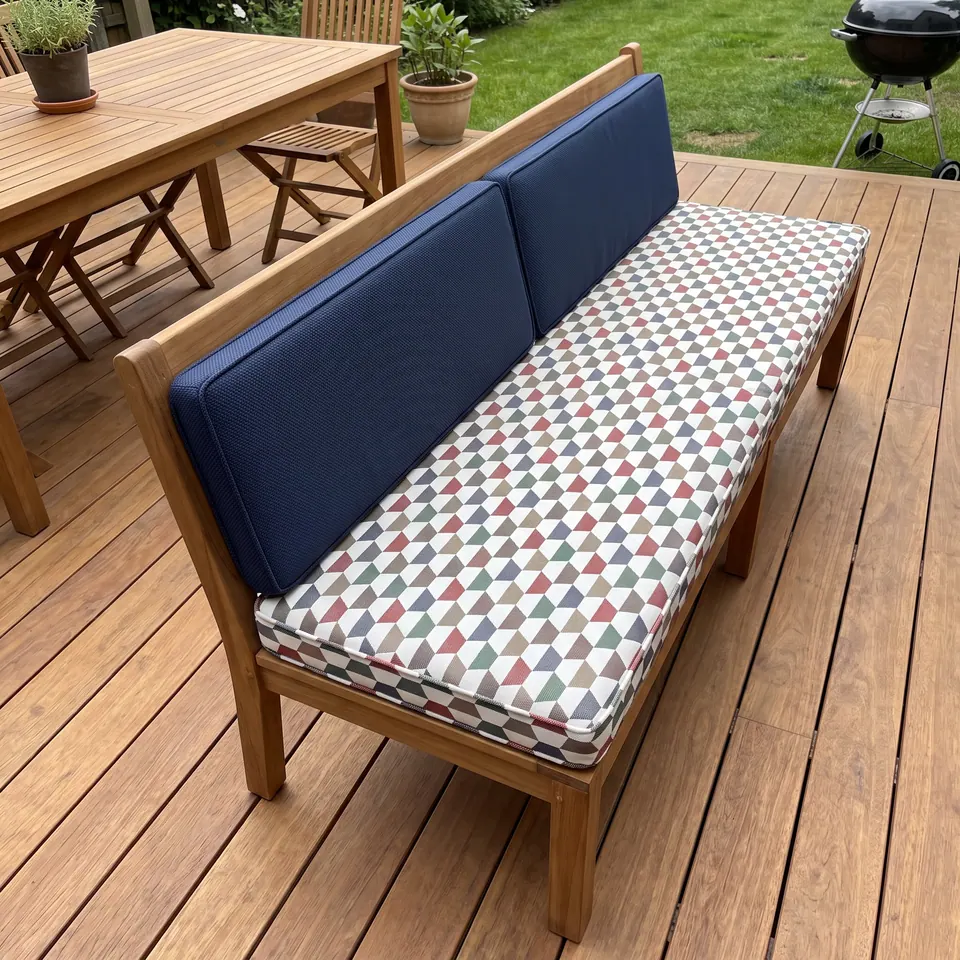
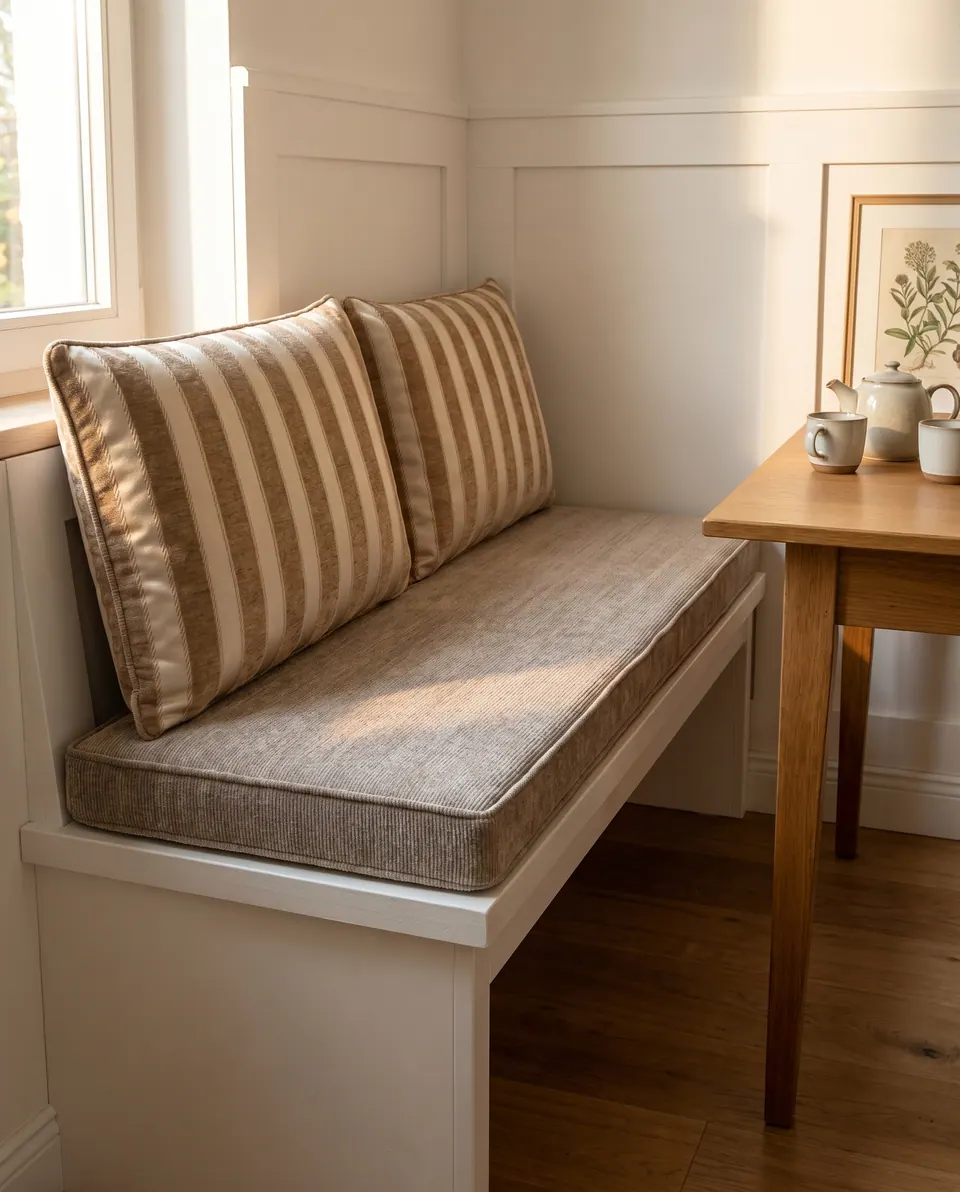
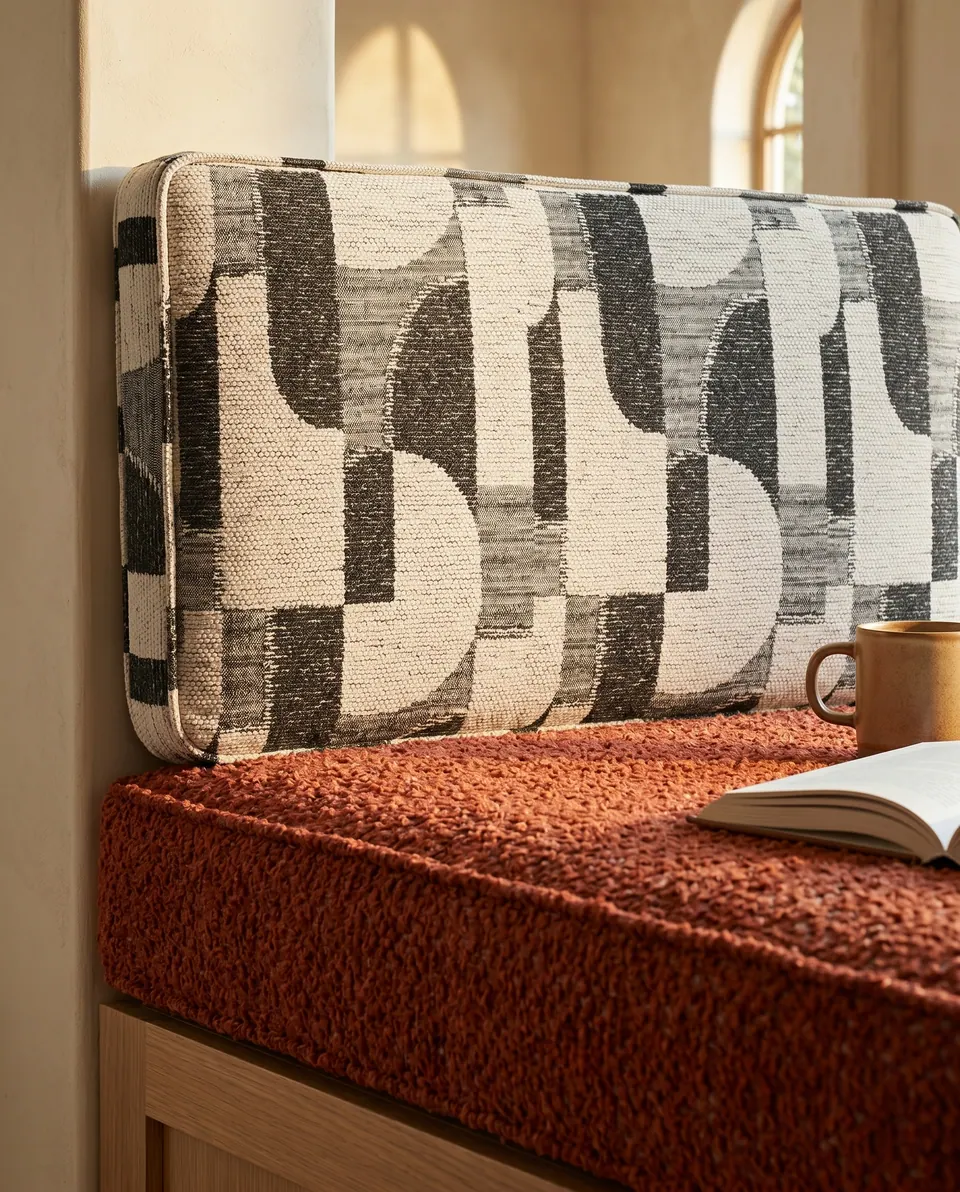
A backrest doesn't start at the frame. It starts where the seat cushion ends. Lay a 4 in seat down and the first 4 in of your back area is already spoken for.
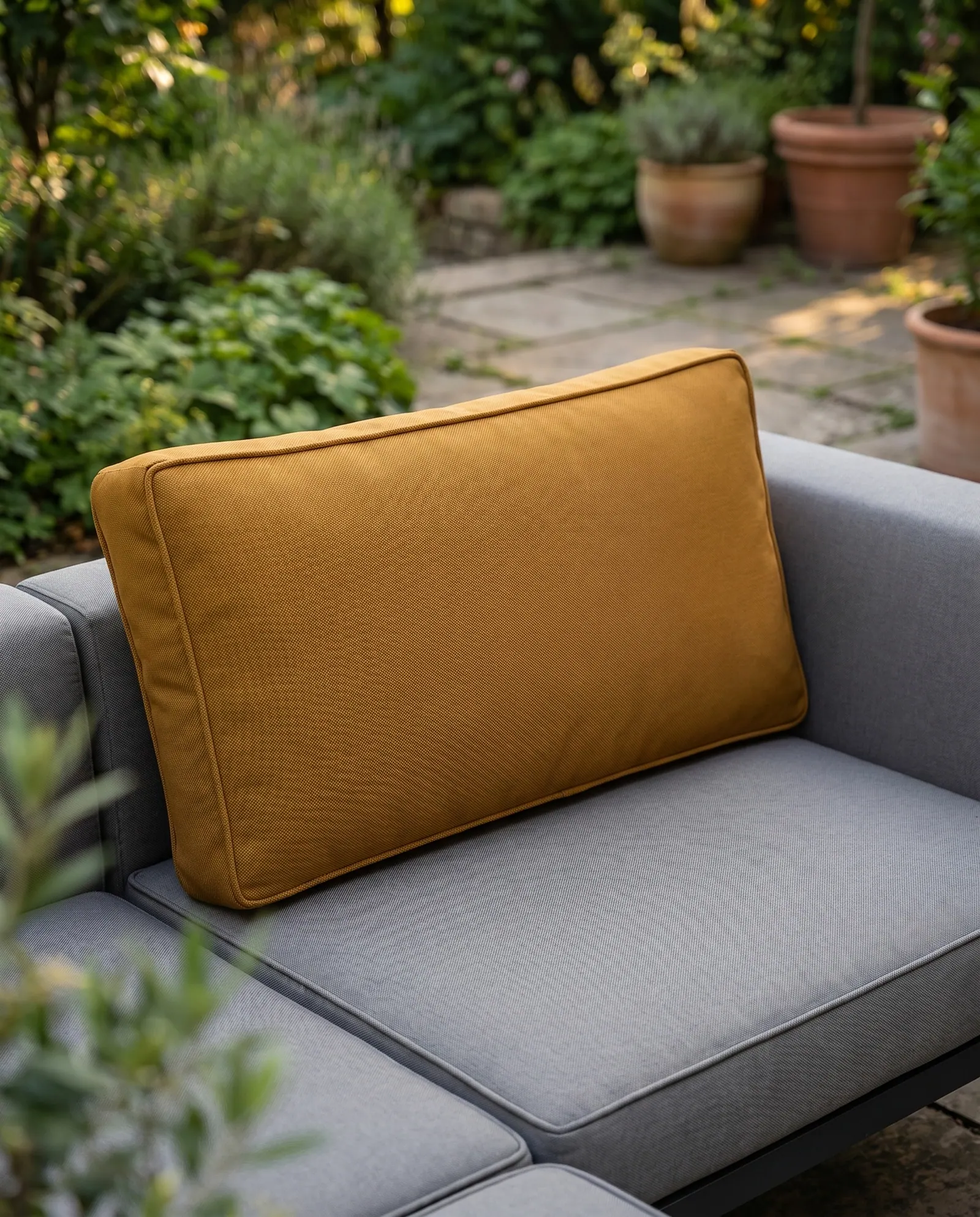
Order the full height anyway and the back cushion has nowhere to go. It rides up, tips forward, or shoves the seat toward the front edge. Every time someone sits down, the two pieces argue, and nobody wins.
One buyer measured a 22.5 in (57 cm) back area, learned the seat would be 4-5 in thick, and cut the backrest order to about 17.75 in (45 cm). That's the whole trick, friend.
Measure it in four moves
Measure the back
Take the total back height from the frame, from the seat deck up to where you want the cushion to stop.
Find the seat thickness
Use the thickness you are actually ordering. Standard is 4 in (10 cm); some floor couches run 4-5 in.
Subtract
Back height minus seat thickness is your backrest height.
Sketch and send
Draw the seat and back with every number on it. The workshop confirms the final sizes from the sketch.
Futons and built-ins play by the same rule
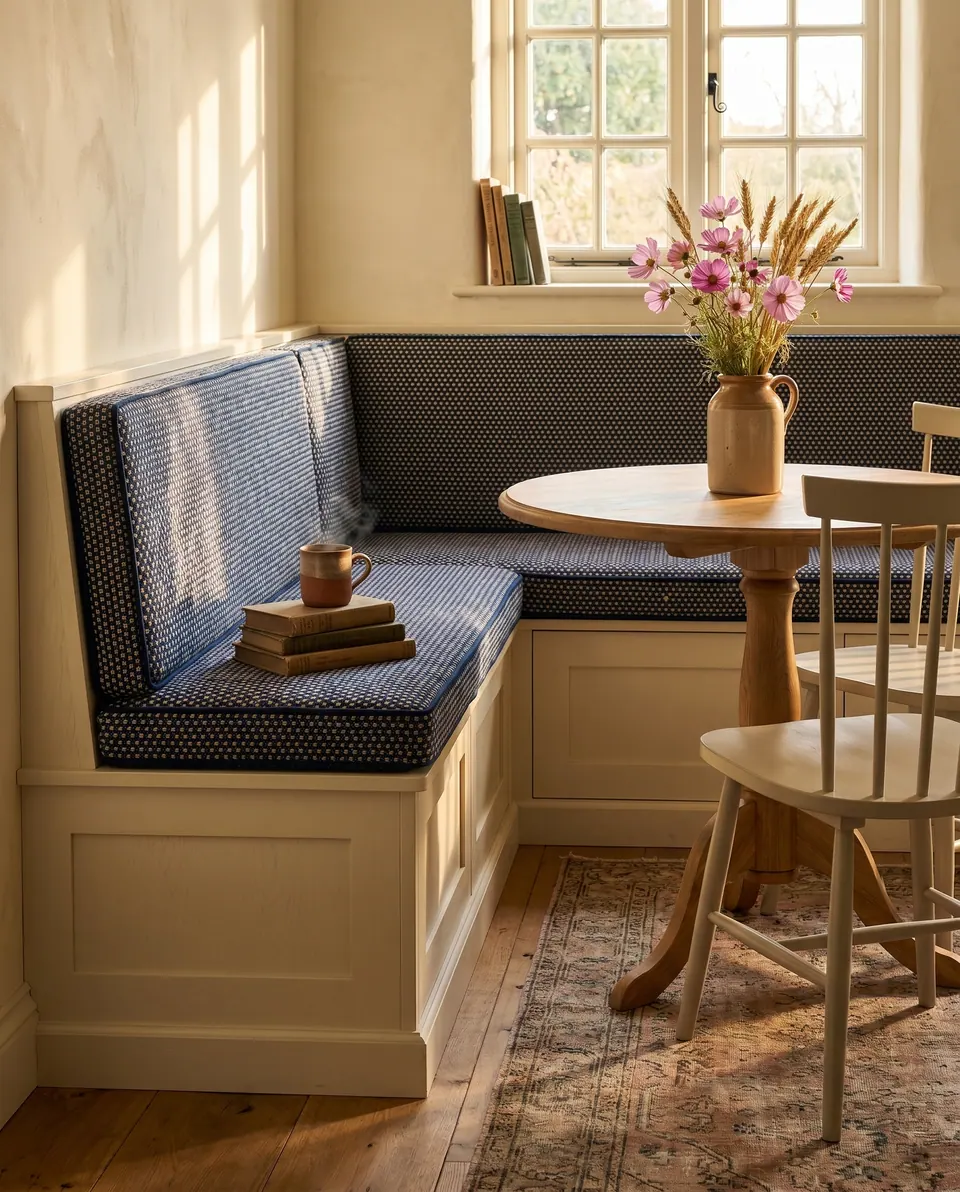
The rule holds on a futon frame or a built-in bench. One futon set was a 23 x 66 in (58 x 168 cm) seat with two 23 x 33 in (58 x 84 cm) backrests, side pillows included.
On the patio it matters twice: outdoor cushions that fight each other hold water in the gap. The back cushion height Pattern has more layouts, and the backrest cushions page shows the shapes. What does your back area measure at the seat line?
Measure back cushions from the top of the seat cushion, not the frame; a 4 in seat takes the first 4 in of back height.
Callum
Buyer questions
- A common question
Sizing backrests to sit above a seat cushion: do I take off the seat thickness?
The workshop's answerYes. The seat cushion's thickness, for example 4 in (10 cm), comes off the backrest height so the pieces fit without pushing each other out. A quick sketch helps confirm the final sizes.
- A common question
How should I measure the back cushion height on my futon or built-in seat?
The workshop's answerMeasure the total back height from the frame, then subtract the seat cushion thickness, standard 4 in, because the seat cushion takes up part of the back. One futon set was a 23 x 66 in seat with two 23 x 33 in backrests, side pillows included.
- A common question
Should the seat cushion thickness come off the wall height when I measure for a backrest?
The workshop's answerYes. The backrest sits on top of the seat, so deduct its thickness: with a 4 in seat, a 21 in back area needs a 17 in backrest. One buyer with a 22.5 in (57 cm) back area reduced the backrest to 17.75 in (45 cm) after learning the seat would be 4-5 in thick.
- A common question
What do you need from me to make seat and back cushions for my chairs?
The workshop's answerThe width between the armrests, the seat depth and the back height you want, plus a photo of the chair. Overall chair dimensions alone aren't enough for a good fit.
Questions buyers ask next
Does the rule change if my seat cushion is thicker than 4 inches?
Only the number changes. Subtract your actual seat thickness: a 5 in seat under a 21 in back area leaves a 16 in backrest. Always use the thickness you are ordering, not the standard figure.
What goes wrong if I order the backrest at the full back height?
The back cushion has no room. It sits on the seat cushion, runs too tall for the space, and the two pieces push each other out of place.
Do back cushions need to be as thick as the seat?
No. Many sets pair a 4 in seat with a 2 or 3 in back; state each thickness separately. Keep a foam backrest at 2 in (5 cm) or more, since thinner foam flattens against the back.