The Cutting Table · compared on the table
Should back cushions be the same thickness as the seat cushions?
Also asked as:Should the back cushions be the same as the seat?Does the backrest have to be as thick as the seat?
A seat carries you all day. A back only has to catch your shoulders. Two cushions with two different jobs rarely need the same inches.

 Save
The quick answer
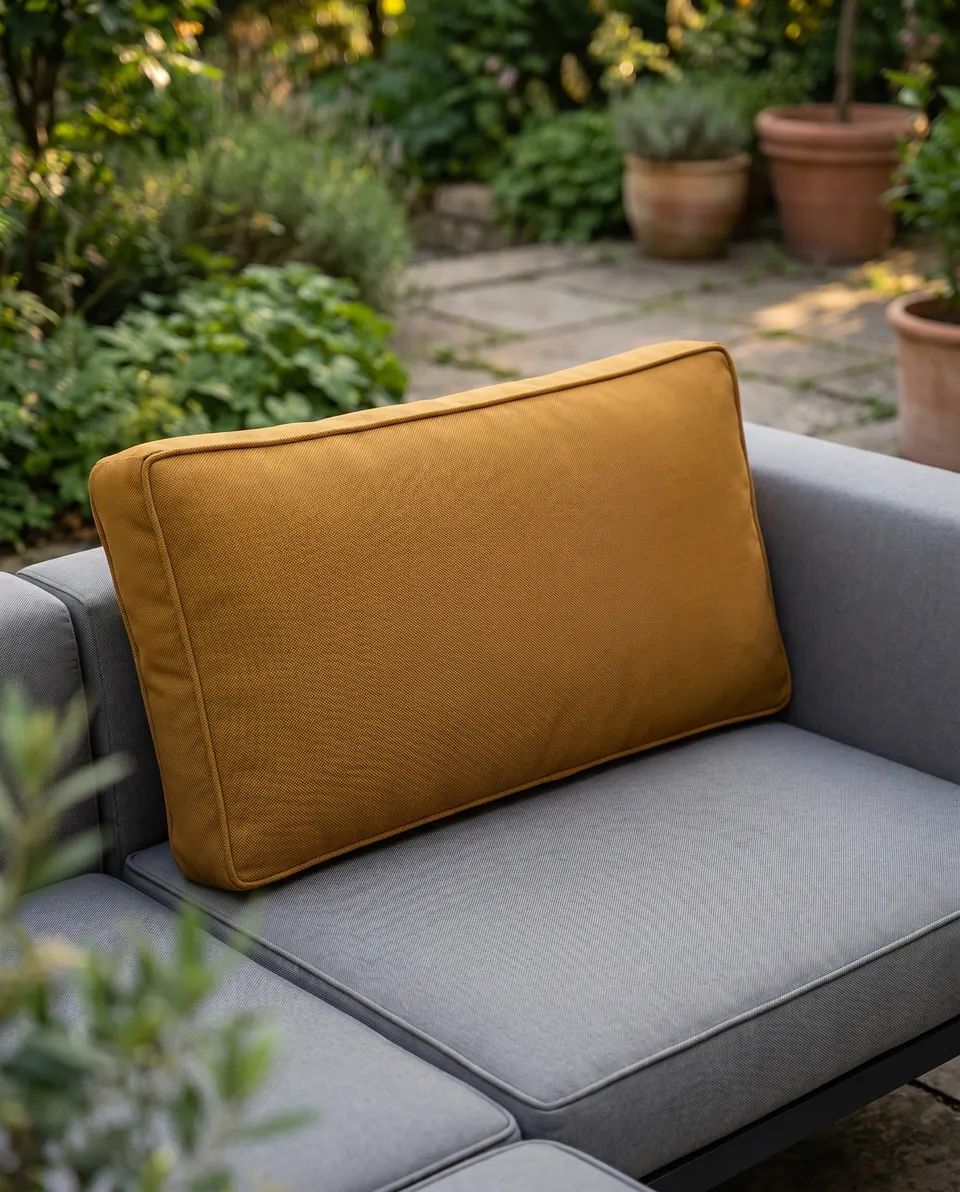
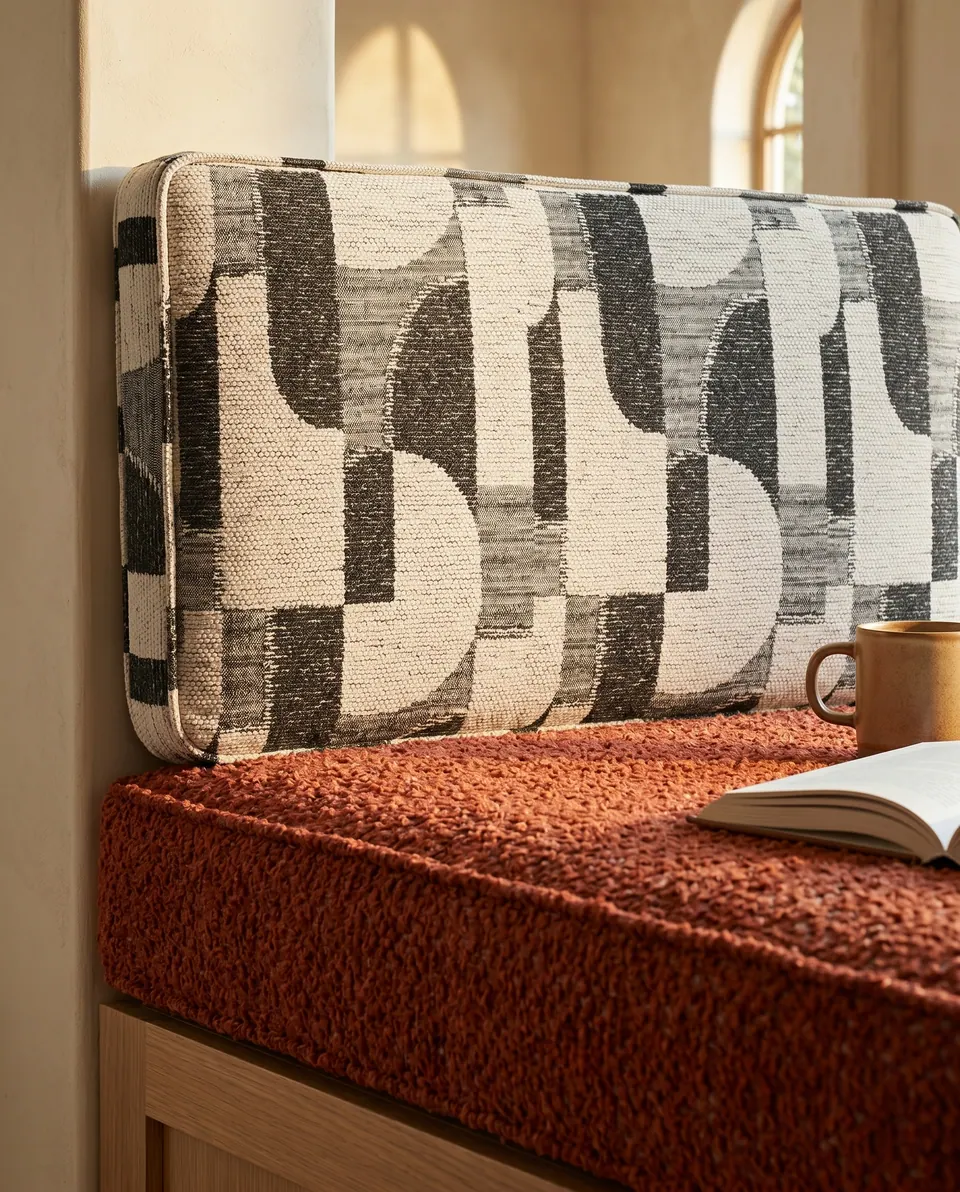
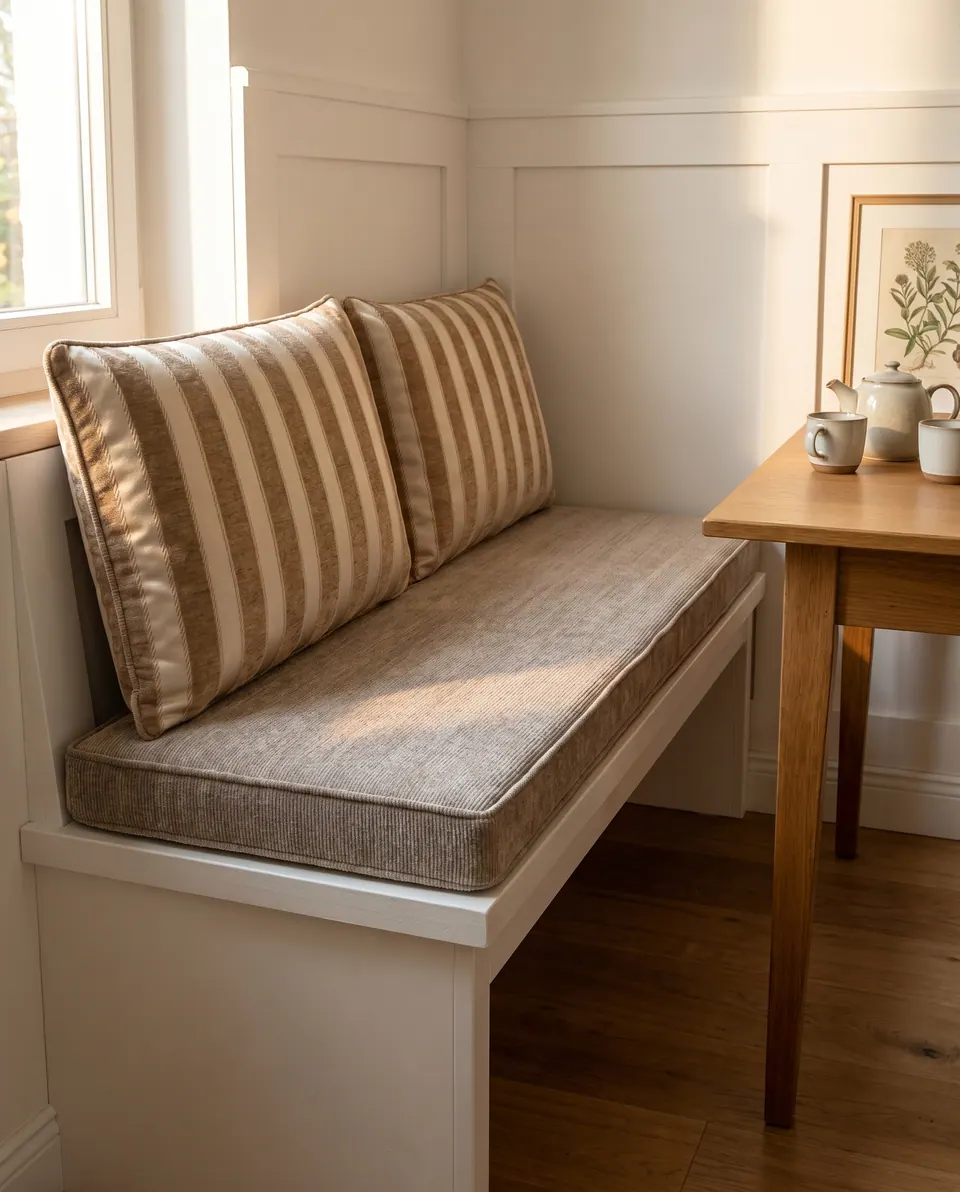
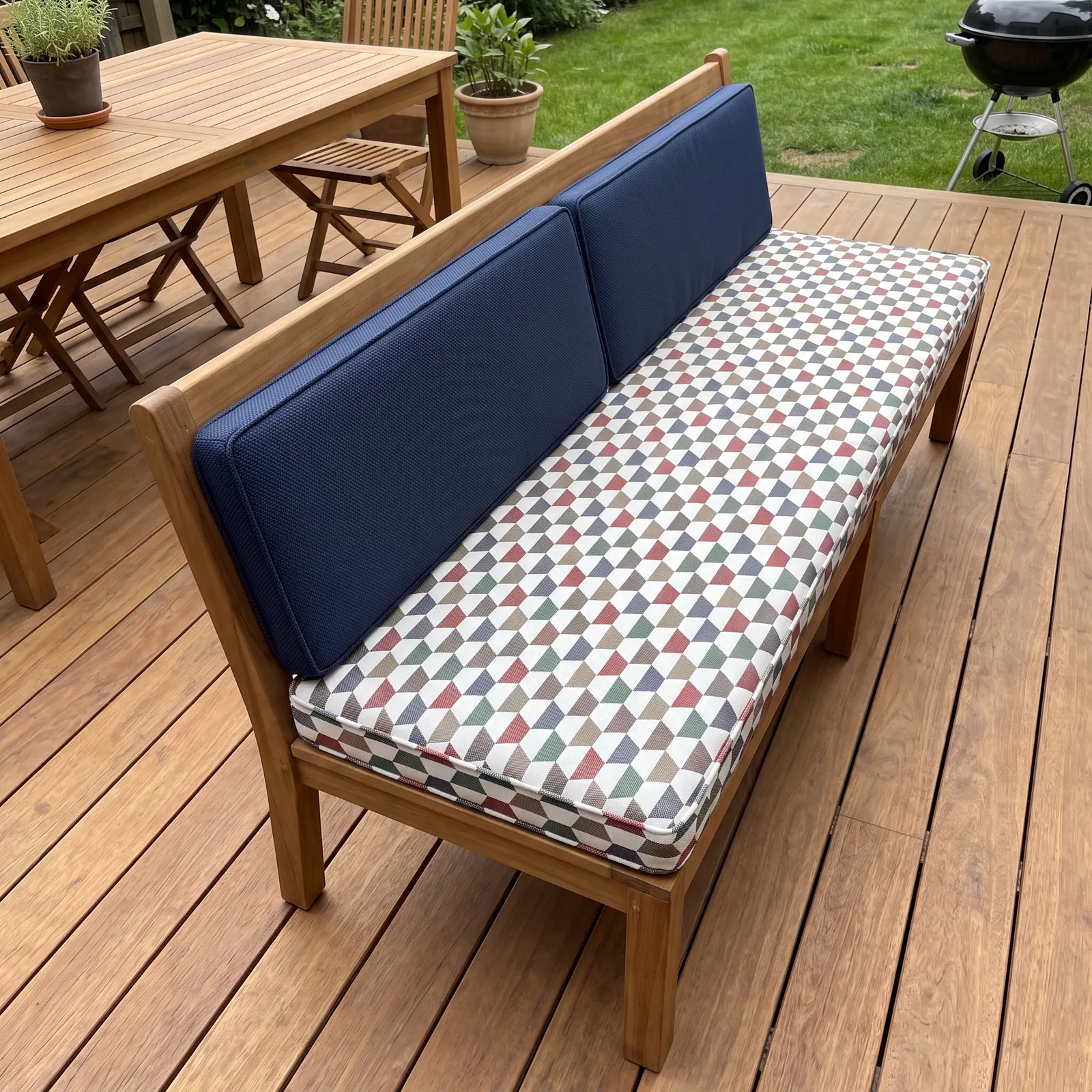
Back cushions don't have to be as thick as the seat cushions. Each cushion is sold separately, and many buyers pair a thicker, firmer seat with a thinner or softer back, such as 4 in (10 cm) backs on an 8 in (20 cm) seat. The thinner back costs less and leaves more of the seat's depth for sitting.
Get a quote for a bench seat and back cushion
Matching thickness or a thinner back: what changes
| Back as thick as the seat | Back thinner than the seat | |
|---|---|---|
| Example | 8 in (20 cm) seat, 8 in (20 cm) backs | 8 in (20 cm) seat, 4 in (10 cm) backs |
| Seat depth left for sitting | Less: a thick back eats into it | More |
| Feel | Same firmness front and back | Firm seat, softer back if you like |
| Price | Higher | Lower |
Key facts
- Seat and back cushions are sold separately and can differ in thickness.
- A common pairing is an 8 in (20 cm) seat with 4 in (10 cm) backs, or 6 in (15 cm) backs instead of 8 in.
- A thinner backrest costs less than a thick one.
- Back cushions are usually a little narrower than the seat.
- A back that rests on the seat cushion loses the seat's thickness: a 17 in (43 cm) back on a 4 in (10 cm) seat fills a 21 in (53 cm) frame.
- Seat and back can be separate pieces or connected so they fold.
- Backrests can run along both the long and the short sides.

Have it made
Have Harlan’s workshop cut this for you
Old upholsterers will tell you the real cutting happens in the conversation, long before the shears come out. Tell the workshop what you sit on, and they will talk it through with you. — Harlan
Leave your details and the workshop will call you to confirm measurements, fabric, foam and piping. No prices, dates or payment on this page: it is a request, not an order.
Why a back cushion gets by on fewer inches
The seat takes your full weight every time you sit, so it earns the thick, firm foam. The back only leans against you. Make it as deep as the seat and it pushes you forward, stealing the depth you paid for.
That is why most backrest cushions leave the atelier a little thinner and a little narrower than the seat beneath them. They stand upright better that way, my friend, and they cost less to make. The back cushion height pattern covers the rest of the sizing.
What does your frame measure from the seat deck to the top of the back?
Sizing a back that stands on the seat cushion
Measure the frame's back height
One real order had 21 in (53 cm) of frame to fill.
Take off the seat thickness
21 in minus a 4 in (10 cm) seat leaves a 17 in (43 cm) back cushion.
Pick the back's thickness
4 in (10 cm) is the usual backrest thickness; go thinner or softer if you like.
Choose separate or connected
Seat and back can be loose pieces or joined so they fold, with backs on the long side, the short side or both.
Back cushions don't need the seat's thickness: 4 in backs on an 8 in seat is a common pairing, and the thinner back costs less.
Harlan
Buyer questions
- A common question
Can I order both the seat and the back cushions, and how should the backs be sized?
The workshop's answerYes, many buyers order both. Backs are usually slightly thinner and a little narrower than the seat so they sit upright and don't eat seat depth. If a back rests on the seat cushion, subtract the seat thickness: a 17 in (43 cm) back on a 4 in (10 cm) seat for a 21 in (53 cm) frame.
- A common question
Do the back cushions have to be the same as the seat cushions?
The workshop's answerIt's up to you. Each cushion is sold separately, so they can match or differ; many buyers choose a thicker, firmer seat and a slightly thinner or softer back.
- A common question
Does my backrest need to be as thick as the seat?
The workshop's answerNo. 4 in (10 cm) backs with an 8 in (20 cm) seat work well, or 6 in (15 cm) instead of 8 in to bring the cost down. Backrests can also run along both the long and short sides.
- A common question
How tall should a back cushion be?
The workshop's answerThe standard backrest is about 16 in (40 cm) high and 4 in (10 cm) thick. The workshop prefers 16 in over 12 in (30 cm) for back support, but custom heights such as 14 to 15 in are no problem.
Questions buyers ask next
Can a backrest be made too thin?
Thinner is possible, with a trade-off. When floor sofa backrests were slimmed from about 15 in (39 cm) to 7 in (18 cm) deep, the workshop noted that thinner backs are less durable. Height stayed, because it supports the sitter.
How many back pillows go across a daybed?
Divide the full span. A 79 in (200 cm) daybed takes two back pillows of about 39 x 16 in (100 x 40 cm). 16 in is the standard backrest height; 28 in (70 cm) is too tall for a backrest.
How do I split back pillows on an L-shaped banquette?
Measure each wall's back line: the short wall is its seat length plus the long side's seat depth, minus the corner pillow. Split each line into 2 or 3 pillows about 16 in (40 cm) high, and allow about 1.5 in for plump pillows.