The Pattern Room · a measuring pattern
Foam density vs firmness: why a dense foam can still feel soft
Density tells you how long foam will last; ILD tells you how it feels under you, and mixing them up is how people order a brick or a marshmallow. Here are both numbers, the bands that matter, and the workshop's own foams as test pieces.

 Save
The quick answer
Foam density and firmness are two different numbers: density is weight per cubic foot and signals durability, while ILD (also called IFD) is the pounds of force needed to press a 4 in sample down 25% and signals feel. A dense foam can be medium or firm. Daily sofas and dining chairs sit around ILD 35–45; back cushions around 15–25.
Two numbers, two jobs
32 kg/m³ is 2.0 lb/ft³, and neither figure tells you how a cushion feels when you sit on it. That's foam density vs firmness in one sentence.
Density is weight per volume: pounds per cubic foot in the US, kilograms per cubic meter elsewhere, sometimes written T28 or 28 DNS. Divide kg/m³ by 16.02 to get lb/ft³. It's a durability signal: published ranges put 1.5 lb foam at 1–3 years before permanent impressions, 2.0 lb at 5–7, and 2.5 lb high-resilience foam at 10 or more.
ILD, also written IFD, is a feel signal: the pounds of force needed to press a 4 in (10 cm) thick sample down 25% with a round foot of 50 sq in (323 cm²).
The two travel together loosely, never exactly; the same density can be made soft or hard. The conversion table lives in foam density in lb/ft³ and kg/m³, and the glossary defines ILD, foam density and cold foam.
ILD bands, from pillow-soft to heavy-duty
| ILD (lb) | Feel | Where it usually goes |
|---|---|---|
| 8–15 | Very soft | Pillow tops, soft backs |
| 15–25 | Soft | Back cushions |
| 25–35 | Medium | Most sofa seats |
| 35–45 | Medium-firm | Daily sofas, dining chairs |
| 45–55 | Firm | Heavy use, sitters over 200 lb (91 kg) |
| 55+ | Very firm | Beyond most home seating |
The workshop's own foams, measured honestly
| Foam | Density | ILD on file | How it's described |
|---|---|---|---|
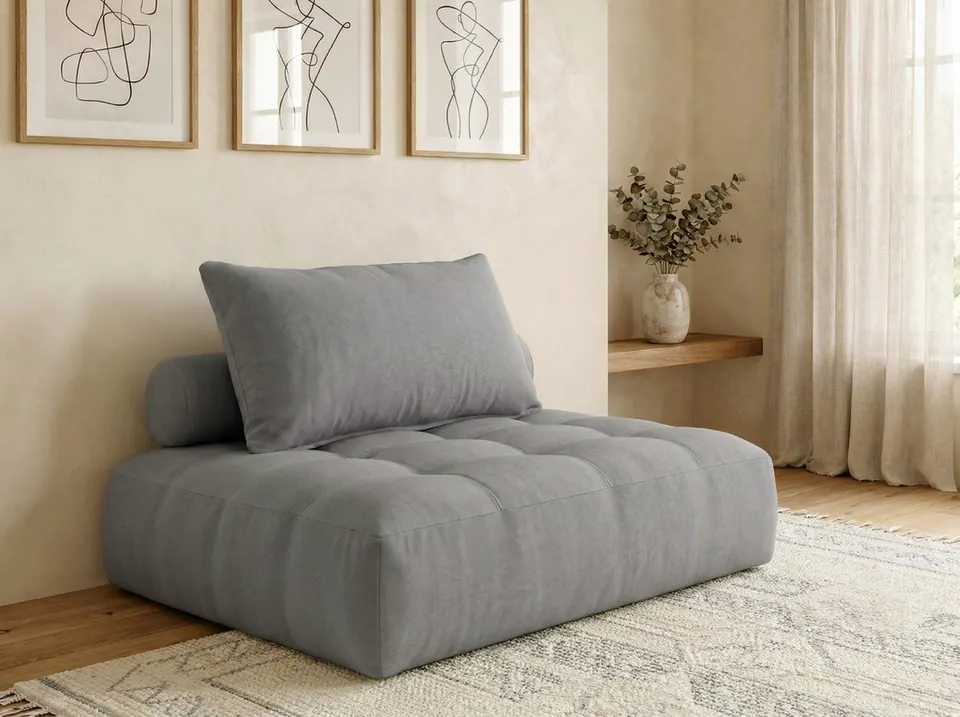
| Floor-sofa seat mattress | about 1.75 lb/ft³ (28 kg/m³), quoted as T28 | 42 | Medium-hard HR cold foam; softens slightly with use |
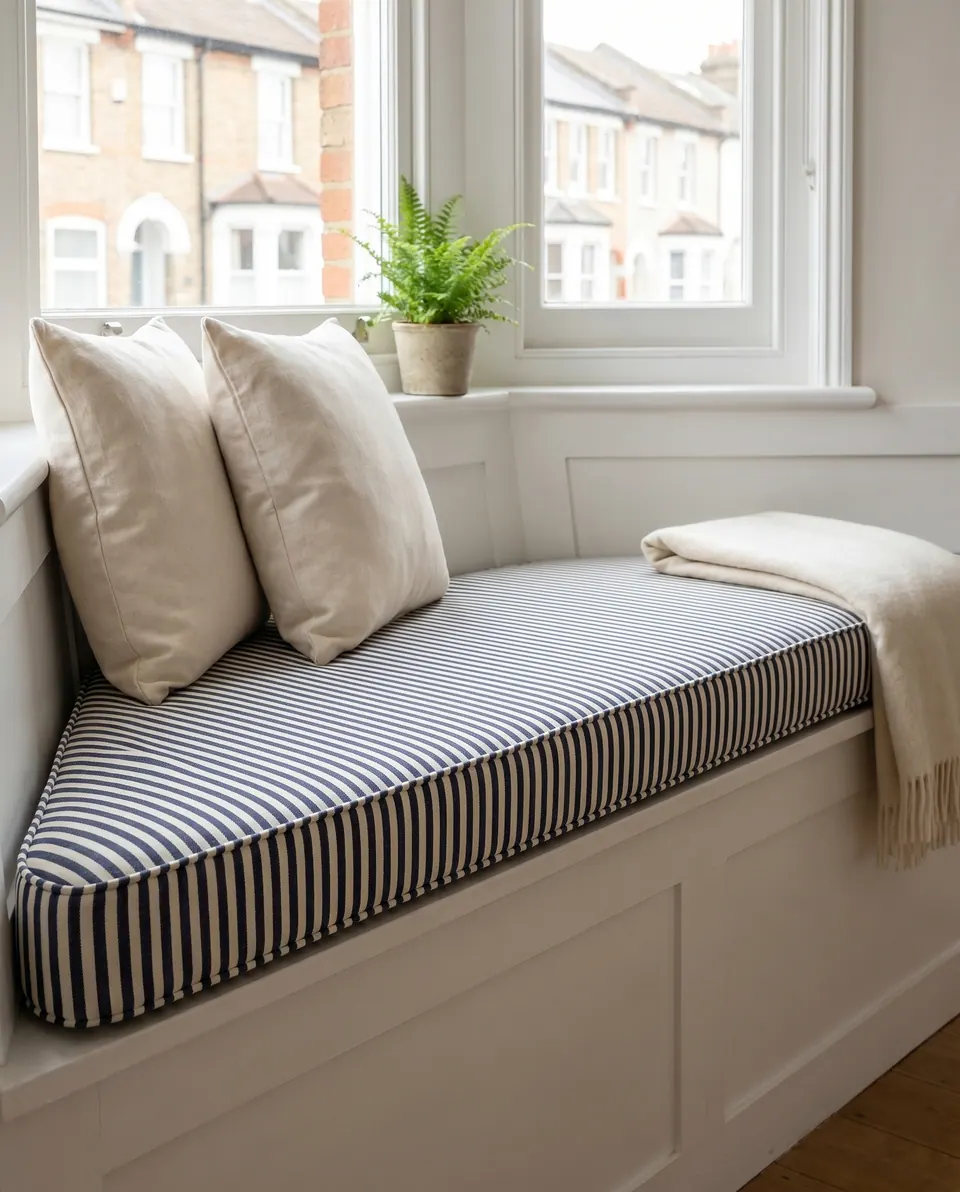
| Bench, window-seat and seat cushions | about 2.0 lb/ft³ (32 kg/m³) | None on file | Firm high-density foam, firmer than the 28 grade |
| Designer original floor sofa, as cited by buyers | about 1.87 lb/ft³ (30 kg/m³), T30 | 45 | Firmer on paper; almost no difference in feel, the workshop says |
| Back pillows and soft backrests | Shredded foam | Not rated | Softer than solid foam, but not very soft |
Spec a seat foam in eight steps
Name the job: seat, back or bed
Seats want support, backs want give, and a floor-sofa mattress must handle sitting and sleeping. By default the workshop makes backrests softer than seats, though a back can be made equally firm.
Choose density for lifespan
For daily seating, 2.0 lb/ft³ (32 kg/m³) is the workshop's standard and a sound floor. Published ranges give 1.5 lb foam only 1–3 years before it holds impressions.
Choose ILD for feel
Daily sofas and dining chairs sit around ILD 35–45; back cushions around 15–25. Pick the band from the table, not from the density.
Adjust for thickness
Thin seats need firmer foam because there's less depth before you meet the board. One foam supplier's rule of thumb: under 4 in (10 cm), about ILD 50; 4–6 in (10–15 cm), about 44; backs, about 24.
Adjust for the sitter
Sitters over 200 lb (91 kg) are usually steered to ILD 40–55. If two very different people share a bench, spec for the heavier one.
Compare like with like
Some sellers quote hardness in newtons, often at 40% compression instead of 25%. 1 lbf is 4.45 N, so ILD 42 is about 187 N only at the same indentation. For deep support, the support factor (IFD at 65% divided by IFD at 25%) typically runs 1.5–2.6; higher resists bottoming out.
Ask what's on file, then press a sample
If a maker has no ILD for a foam, the honest answer is density plus a description, not an invented number. Ask for a small piece of foam to travel with your fabric samples.
Give new foam a week
Vacuum-packed foam needs 48–72 hours to recover and 3–4 days to reach full size. Judge firmness after that, not on unboxing day.

Have it made
Measured it? Have Nate’s workshop make it
Precision starts on the phone. Give the workshop your measurements and they will read them back to you, edge by edge. — Nate
Leave your details and the workshop will call you to confirm measurements, fabric, foam and piping. No prices, dates or payment on this page: it is a request, not an order.
A 78-inch seat and a request for ILD 44
A buyer in the US wanted a long indoor seat, 25 x 78 x 6 in (64 x 198 x 15 cm), that adults would sit on every day. The spec: foam of at least 1.8 lb density and ILD 44, so nobody would sink through.
The workshop answered straight. Its 32 kg/m³ foam is about 2.0 lb/ft³, so the density ask was met with room to spare, and the foam is firm. But there's no official ILD rating on file, so the reply gave a description, not a number. The buyer went ahead with the 6 in seat.
I'll take that answer over a guessed 44 any day, partner. A guessed number is a tolerance nobody can hold.
Common foam mix-ups
- Treating density as firmness. A 2.0 lb/ft³ foam can be medium or firm, so ask for both numbers.
- Quoting one ILD for every thickness. A 2 in pad and a 6 in seat need different numbers.
- Comparing newtons with ILD pounds without checking the test point: 25% and 40% compression aren't the same test.
- Judging on unboxing day. One 78 x 39 x 6.5 in (198 x 99 x 17 cm) floor-sofa seat still sat flat in a corner after a week; that was a foam fault, and the workshop sent a replacement insert.
- Letting a compressed set wait for weeks. If a move delays delivery, ask the maker to hold the order and make it fresh.
Foam density tells you how long a cushion lasts; ILD tells you how it feels. ILD 42 means 42 lb of force to press a 4 in foam sample down 25%.
Nate
Run your seat through the numbers
Before you pick a foam, run your seat through the foam firmness finder; if height matters as much as feel, the seat height calculator shows what 3 in against 4 in does to the sit.
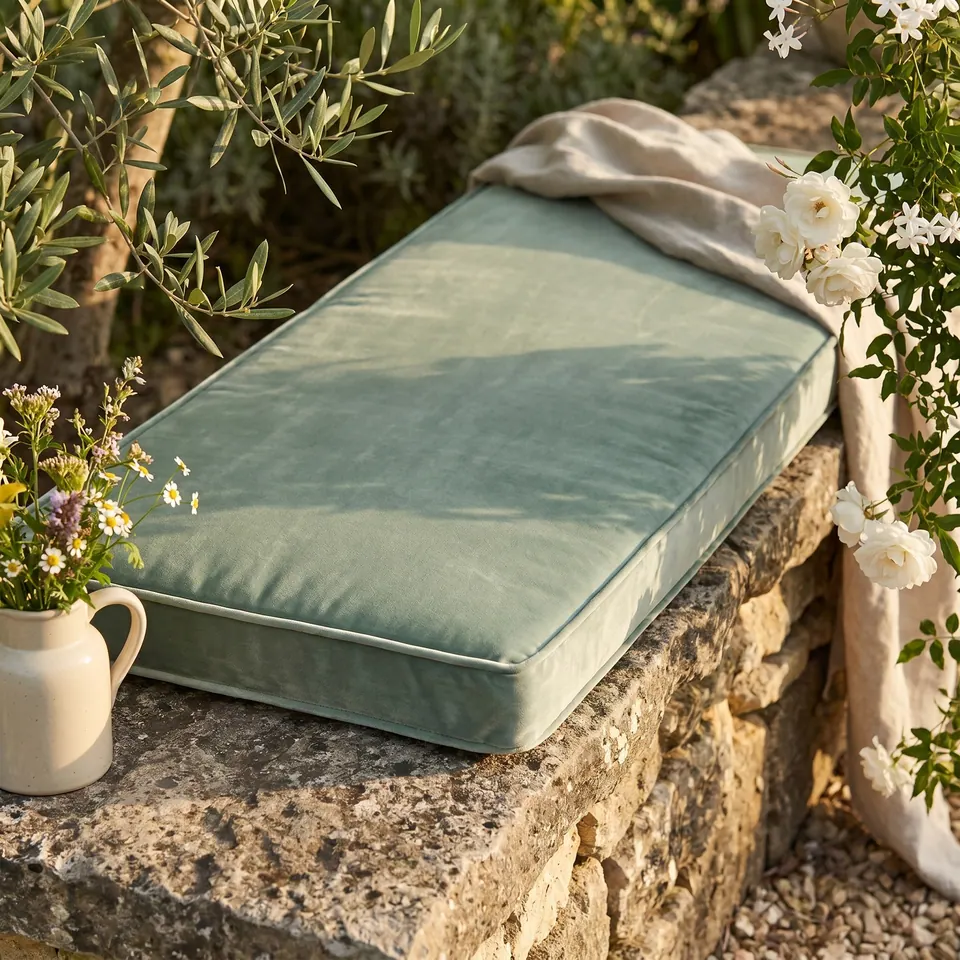
4 in (10 cm) is the standard for everyday seating and 3 in (7.5 cm) sits trimmer. Firm foam is cut slightly larger than its cover so the cover looks full, whether it's velvet or linen-look. Measure twice; the fabric remembers.
What's your seat thickness, and who sits there most? The rest is arithmetic. Further reading: the 1-to-10 firmness scale, high-density foam vs memory foam and latex, and the foam inserts and modular floor sofas hubs. Hana covers how a floor sofa sleeps.
Buyer questions: density, ILD and feel
- A common question
Is T28 foam at ILD 42 softer than the T30, ILD 45 foam in the original designer floor sofa?
The workshop's answerSlightly, on paper. The floor-sofa seats are high-resilience cold foam at T28 (28 kg/m³, about 1.75 lb/ft³) with ILD 42, which the workshop calls firm but comfortable. The original is cited at T30 / ILD 45, but the workshop says the difference in feel and wear is almost nothing.
- A common question
Is foam density the same thing as firmness? Can I choose how firm my cushion is?
The workshop's answerNo, they're separate. Density is the foam's weight and quality, which drives durability; firmness is how it feels. A high-density foam can be medium or firm, and a small piece of foam can be sent with your fabric samples so you can feel it before ordering.
- A common question
What density foam goes into your bench cushions?
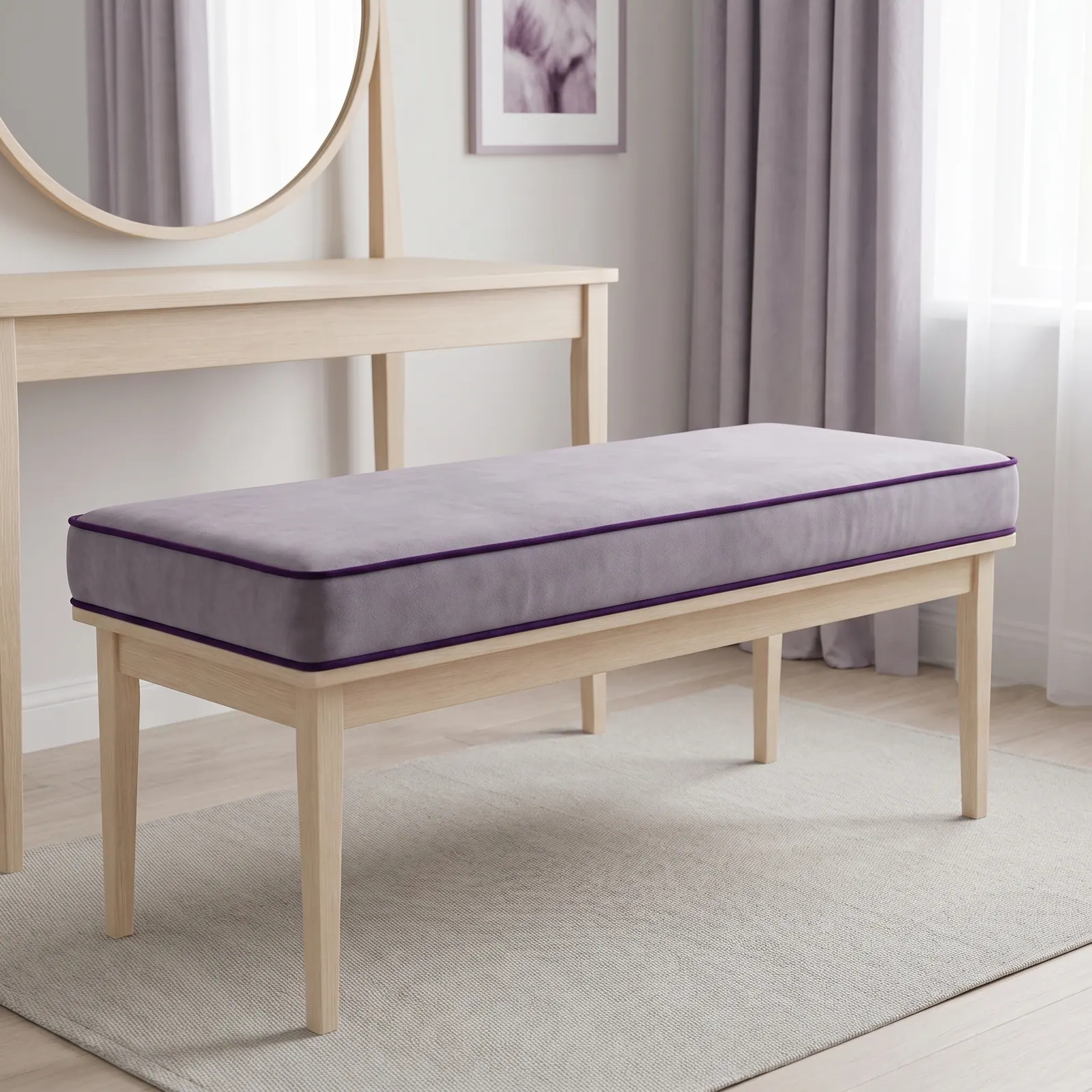
The workshop's answer32 kg/m³, about 2.0 lb/ft³: high-density polyurethane with a medium-firm to firm feel. It's firmer and longer-lasting than the 28 kg/m³ foam often specified, and every custom cushion gets it as standard unless you ask for a softer one.
- A common question
Will the floor sofa feel firm or soft?
The workshop's answerIn between. The seat and ottoman mattresses are medium-hard 28-density foam, comfortable for sitting and sleeping, built as an everyday living-room sofa. It keeps its shape for years without sagging and softens slightly with use.
- A common question
Is the floor sofa cold foam or regular high-density foam?
The workshop's answerBoth labels fit. The base mattresses are HR cold foam at T28 with ILD 42, which also counts as high-density foam. When a buyer spotted 'cold foam' on one page and 'high density' on another, the workshop confirmed cold foam and corrected the listing.
Foam numbers, briefly
What ILD should a dining bench cushion be?
Published bands put daily sofas and dining chairs at about ILD 35–45. Thin pads under 4 in (10 cm) need a firmer number, around 50 by one foam supplier's rule, because there's less depth before you bottom out.
How do I convert kg/m³ to lb/ft³?
Divide by 16.02. That makes 28 kg/m³ about 1.75 lb/ft³, 32 kg/m³ about 2.0 lb/ft³, and 40 kg/m³, a common 'high density' threshold in US product copy, about 2.5 lb/ft³.
What makes foam high resilience?
Bounce and support rather than a single density. Retailers point to a high support factor, the ratio of force at 65% to 25% compression, usually quoted above 2.0 or 2.4. Sources disagree on HR density, so ask for the support factor when a maker uses the term.
Does firm foam get softer over time?
A little. The workshop's floor-sofa foam is described as softening slightly with use. Published fatigue data shows low-density foam losing far more: one 1.0 lb, 30 IFD foam fell to about 16 IFD after roughly ten years.