The Pattern Room · a side-by-side pattern
High-density foam, memory foam, latex or fiber: which cushion fill?
I judge a fill the way you'd judge an old porch step: not by how it looks new, but by how it holds after ten summers of people sitting on it.

 Save
The quick answer
For most seat cushions, high-density polyurethane foam is a better fill than memory foam: it springs back, holds a crisp edge and suits window seats and benches. Memory foam needs at least 3 in (7.5 cm) and stiffens in a cool room; latex lasts longest but costs far more; fiber fills feel soft but settle and need plumping.
Every fill is comfortable on the first day
Every fill feels good the day it arrives. The difference shows up around year five, when one cushion still has its edge and another has taken the shape of whoever sits there most.
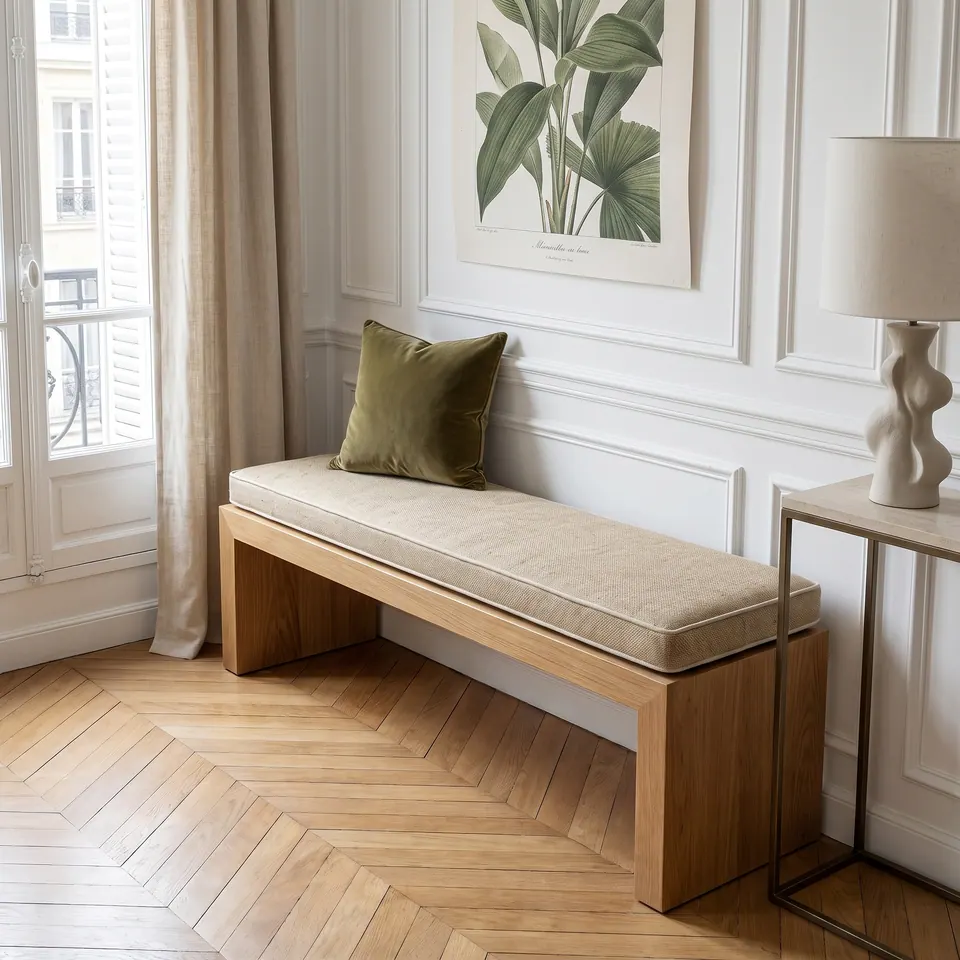
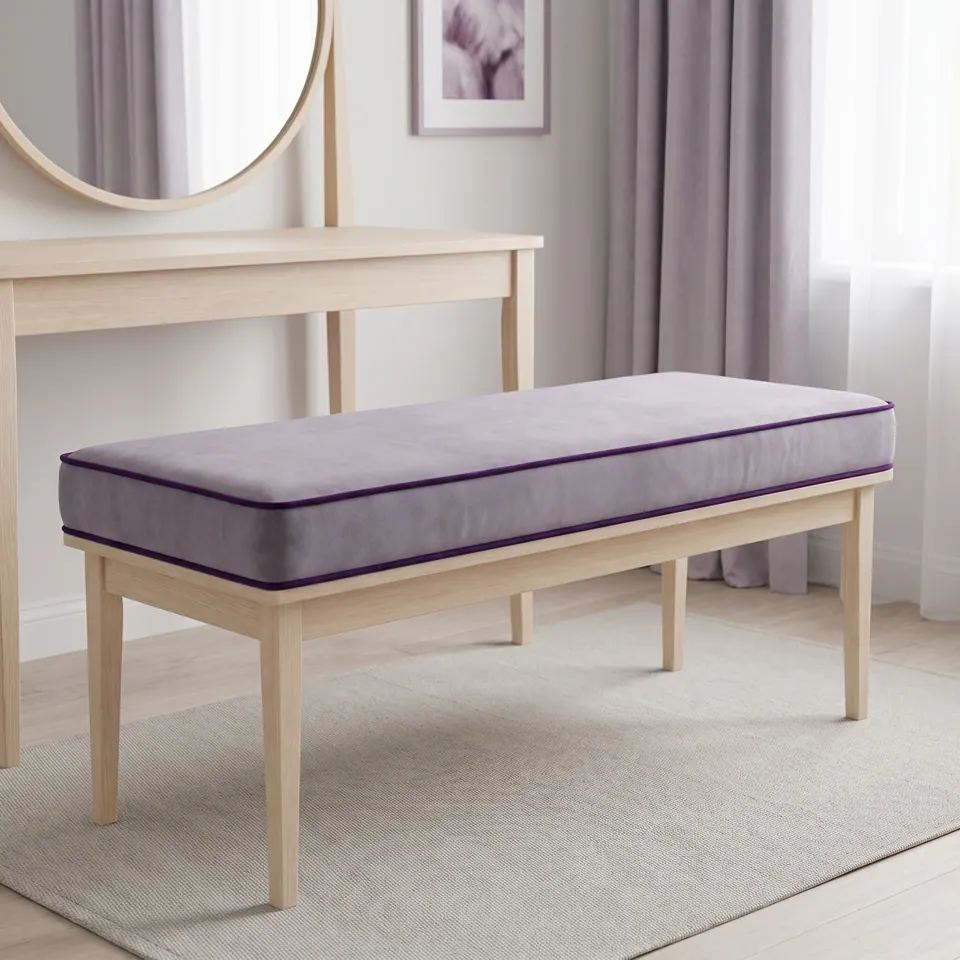
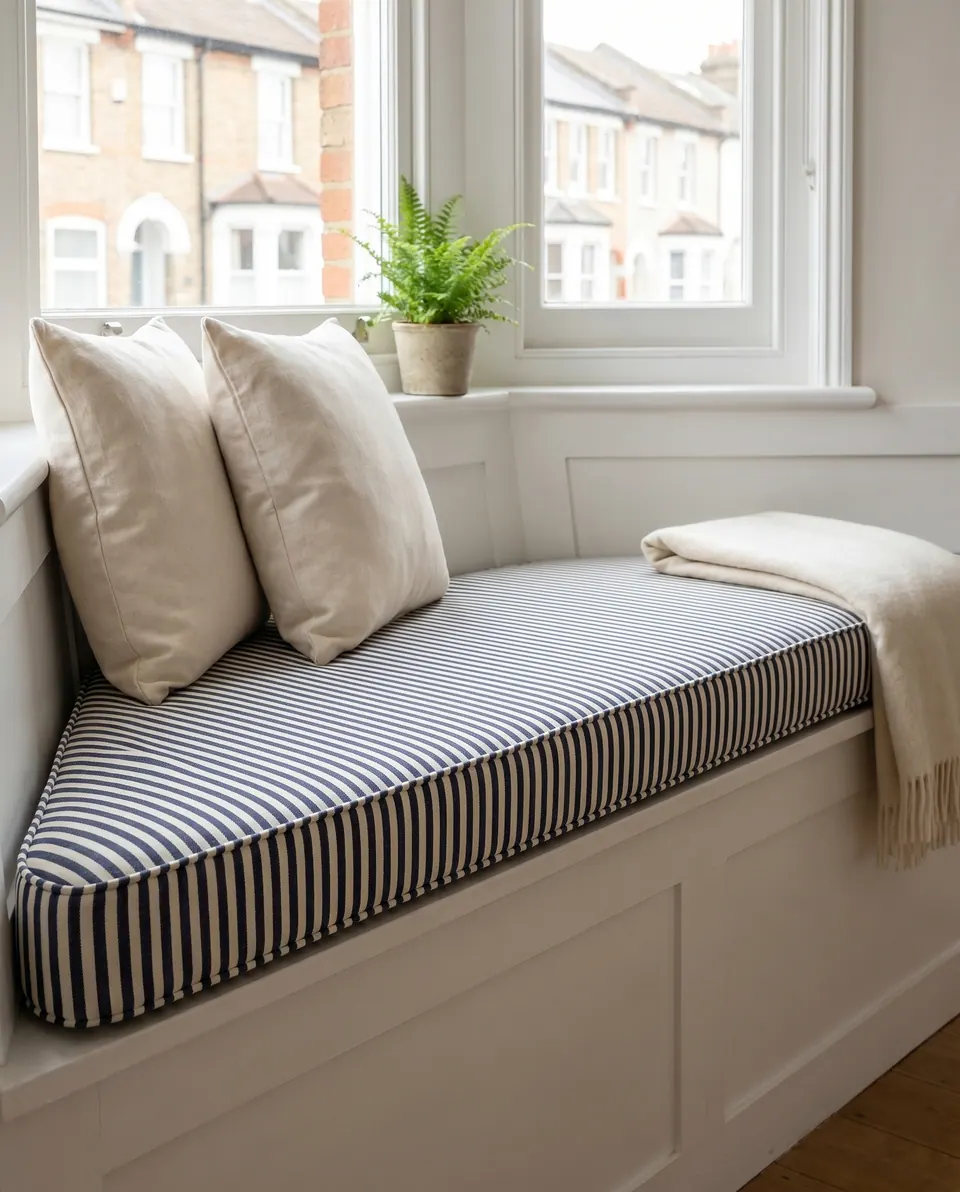
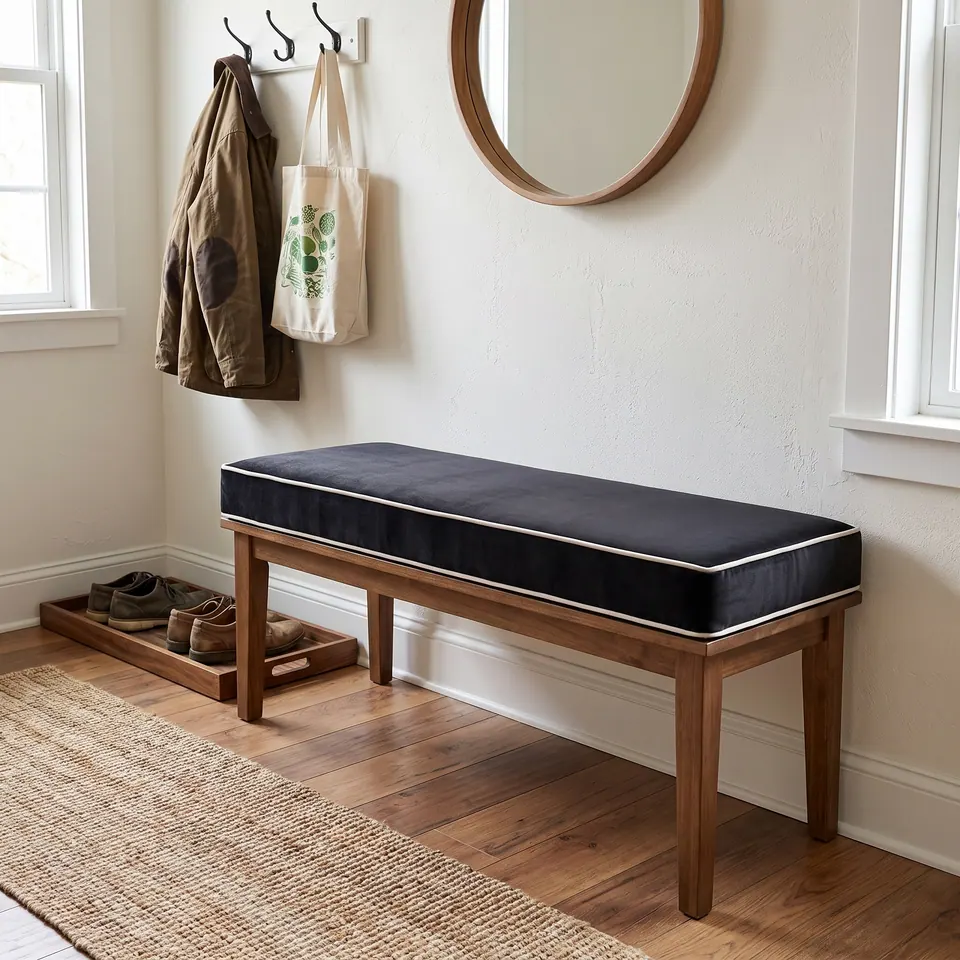
That's the honest way to weigh high-density foam vs memory foam, latex and fiber: not by the first squeeze, but by how each one ages under a person. The question we hear most is a short one: is it memory foam? For seat cushions from this workshop, no. Seats, benches and window seats are cut from about 2.0 lb/ft³ (32 kg/m³) high-density polyurethane, medium-firm to firm, the kind that springs back.
At the cutting table we say a good seat forgets you the moment you stand up. The foam inserts hub covers sizes; here we look at what goes inside.
Six fills, and how each one ages
| Fill | How it feels | How it ages | Best for | Watch for |
|---|---|---|---|---|
| High-density polyurethane, about 2.0 lb/ft³ (32 kg/m³) | Medium-firm to firm; springs straight back | Holds a crisp, flat shape for years without going lumpy | Seats, benches, window seats, dinettes | Needs 48 to 72 hours to recover from vacuum packing |
| Softer high-density foam, about 1.75 lb/ft³ (28 kg/m³) | Medium, with a slight sink-in sofa feel | Keeps its shape; softens slightly with use | Floor sofas, lounging, sleeping | Less edge than the 32 foam |
| Memory foam | Slow and sink-in | Stiffens in a cool room; thin pads bottom out | Thick seats of 3 in (7.5 cm) or more, toppers | Not the workshop standard |
| Latex | Springy and buoyant | The longest-lived; published lives run about 10 to 25 years by type | A floor sofa core, on request | A large surcharge, quoted as the difference |
| Fiber clusters | Soft like cotton; firm when packed tight | Settles; needs shaking and plumping | Tufted floor cushions, pillows, soft backs | Rounds off and slides when stacked |
| Shredded foam | Soft and pillow-like | Shifts inside the cover; plump it | Back cushions and neck rolls | Too soft to carry a seat |
Why memory foam isn't under the seat
Memory foam is a fine material in the right place. On a seat, it asks a lot. Published guidance wants it at least 3 in (7.5 cm) thick, because thinner pads bottom out, and about 3.5 lb/ft³ (56 kg/m³) or denser for daily sitting. It also stiffens noticeably when a room drops from 68°F (20°C) to 61°F (16°C), which is a sunroom in January.
Many foam cutters use it only as a thin topper over a firmer core. That's where it belongs: a soft top over a seat that holds its shape.
The workshop's own answers on memory foam haven't always matched, and one reply offered high-density memory foam for a custom build. So if you want it, get it confirmed in writing before you pay. The numbers behind all this are in foam density in lb/ft³ and kg/m³.
Latex, fiber and the jacket around the core
Latex is the long runner. Dunlop latex is denser and firmer-feeling, with published lives of about 20 to 25 years; Talalay is lighter and bouncier, at about 10 to 15. Here it's made on request: natural latex can replace the high-density foam in a floor sofa, at an extra charge quoted as the difference for your size.
Fiber is the soft one. Tufted floor cushions are filled with polyester hollow fiber rolled into small clusters, packed so tight the workshop rates them about 6 to 7 out of 10 for firmness. No foam core, and they're heavy. Loose fiber settles, though, so give it a shake and a plump.
Then there's the jacket. Foam here is wrapped in polyester fiber before it goes into the cover, which rounds the edge into a full, crowned look. A ½ to 1 in (1.3 to 2.5 cm) wrap is typical. It doesn't rebound like foam, and it holds water, so keep it off outdoor cushions. Fine sofas go further with a down-wrapped foam core, which wants fluffing every week of daily use. More in fiber-wrapped foam.
A nursery bench built from a stack
A buyer in the US wanted a low bench under a nursery window, made by stacking floor cushions the way modular stacking seats are built. Her question was simple: how tall is each cushion, so she'd know how many to stack?
The workshop answered the question under the question. The cushions in her picture were foam-filled, it pointed out, and a stack needs that. It offered foam for a firmer shape that would stack.
Fiber would have felt softer to the hand. It would also have rounded off at the edges and let the stack slide apart. A bench is a structure. Build it from blocks, not pillows.
- What it taught
- Stacked bench cushions need foam cores; fiber-filled cushions round off and slide.
Common mistakes with foam and fill
- Judging a vacuum-packed cushion on day one. Foam needs 48 to 72 hours to recover and 3 to 4 days to reach its ordered size. Measure after that, with the tape flush against a wall.
- Sitting on it straight out of the bag. Unpack right away, lay it flat, and keep off it for the first 48 hours.
- Waiting forever on a flat corner. If one area is still flat after a week, send photos. One floor-sofa seat, 78 x 39 x 6.5 in (198 x 99 x 16.5 cm), got a replacement foam insert that way.
- Assuming high-density means memory foam. It doesn't: high-density describes weight per cubic foot, not the slow sink of memory foam.
- Stacking fiber-filled cushions. They round off and slide. Stacks and benches want foam.
- Floor seating on a bare floor. Lightweight foam on a smooth floor moves when you sit. Put a rug or grip mat under it.
Match the fill to the job, then test the firmness
The short version, by job. Seats, benches and window seats: high-density foam, 4 in (10 cm) as standard. Back cushions: shredded foam for a soft, pillow-like back, or a fiber-wrapped solid core for a firmer, flatter one. Bolsters: 8 in (20 cm) across as standard, solid when you mean to lean on them. Tufted floor cushions: packed fiber. Stacks and floor sofas: foam.
Firmness is the other half. Density tells you how long foam lasts, not how hard it feels, and the same density can be made softer or harder. Try the foam firmness finder with the seat, the sitter and the hours in mind, and read the 1 to 10 firmness scale beside it.
Who sits there most, my friend, and for how long each day?
Memory foam needs at least 3 in (7.5 cm) on a seat and stiffens in a 61°F (16°C) room; choose it for sink-in comfort, not for a crisp edge.
Harlan
Memory foam on a chair pad or bench
Chair-pad and bench searches keep turning up memory foam, because the same word sells office and car seat cushions. On furniture it behaves differently from firm seat foam: it's viscoelastic, softening with body warmth and recovering in several seconds rather than about one, it holds heat on a long sit, and it firms up in a cool room. Foam suppliers therefore recommend at least 2 in of firm foam for dining seats and use memory foam only as a thin top layer, for example about 1 in over 3 in of high-density foam. The workshop's standard seats are 32 kg/m³ high-density foam, not memory foam; for a softer top it offers an extra layer of polyester wadding or a softer 28-density foam, and a memory-foam layer should be asked about first.
Buyer questions: what's inside
- A common question
Is the foam in your cushions memory foam?
The workshop's answerNo. Bench and window-seat cushions use high-density foam at about 2.0 lb/ft³ (32 kg/m³), and floor and modular sofas use cold foam at about 1.75 lb/ft³ (28 kg/m³); neither is memory foam. Both spring back rather than sink, so they hold their shape over time. If you specifically want memory foam, name it in your first message.
- A common question
Could the floor sofa be made with natural latex instead of foam?
The workshop's answerYes. Natural latex can replace the high-density foam for an extra charge, quoted as the price difference for your size. Raw cotton or wool isn't offered for the foam-built floor sofa, whose core stays foam for its shape, but the cover can be cotton and linen, so your skin touches only natural fibers.
- A common question
What's inside the tufted floor cushions? They don't feel like foam.
The workshop's answerPolyester hollow fiber rolled into small clusters, often called silicone balls, packed densely and often mixed with some cotton filler. There's no foam core, the cushions are sewn by hand, and the fill feels soft like cotton. The workshop can send a photo of the filling if you'd like to see it.
- A common question
For stacking cushions or a headboard, which is firmer: foam or fiber?
The workshop's answerFoam. It makes a firmer, more solid block that stacks well, which is why stacked modular floor cushions are foam-filled; fiber is softer and pillow-like. For a headboard insert around 60 in (152 cm) wide and 2 in (5 cm) deep, silicone fiber gives a very soft result and foam a firm one.
- A common question
Are the tufted floor cushions firm, or squishy like a bean bag?
The workshop's answerFirm. The workshop rates them about 6 to 7 on a scale where 1 is very plush and 10 is a bed you barely sink into. The fiber is packed so tight they feel soft to the touch but hold up to daily sitting and sleeping, and they're heavy, not squishy.

Have it made
Measured it? Have Harlan’s workshop make it
Fabric has a temper and foam has a memory. Better to settle both in a conversation than to guess at them alone. — Harlan
Leave your details and the workshop will call you to confirm measurements, fabric, foam and piping. No prices, dates or payment on this page: it is a request, not an order.
Fill questions, briefly
What does 32-density foam mean in pounds?
32 kg/m³ is about 2.0 lb/ft³. Divide kilograms per cubic meter by 16.02 to get pounds per cubic foot, so 28 kg/m³ comes out near 1.75 lb/ft³. Density is weight per volume, not firmness; the same density can be made softer or harder.
How thick does a memory foam seat need to be?
At least 3 in (7.5 cm), because thinner pads bottom out under a seated person. Published guidance puts daily-seat memory foam at about 3.5 lb/ft³ (56 kg/m³) or denser, and many foam sellers use it only as a thin topper over a firmer core.
Is a fiber wrap on foam worth having?
Indoors, yes. A ½ to 1 in (1.3 to 2.5 cm) polyester fiber wrap softens the edge and gives a full, crowned look. It doesn't rebound like foam and flattens a little over the years, and it holds water, so leave it off outdoor cushions.
Why does a new foam cushion look flat out of the box?
It traveled vacuum-compressed. High-density foam needs 48 to 72 hours to recover and 3 to 4 days to reach its ordered size, and fabric creases can take up to a week. Unpack it straight away and don't sit on it for the first 48 hours.
Is memory foam good for a dining chair pad?
On its own, usually not. Memory foam can feel too soft for a chair, recovers slowly and firms up in a cool room. Foam suppliers suggest at least 2 in of firm foam for dining seats and use memory foam only as a thin top layer. The workshop's standard seats are high-density foam, not memory foam.
Can a cushion have a firm core with a softer top layer?
Some makers build exactly that, for example about 3 in (7.5 cm) of high-density foam under 1 in (2.5 cm) of memory foam. From the workshop, the confirmed routes to a softer top are an extra layer of polyester wadding over the firm foam, or a softer 1.75 lb/ft³ (28 kg/m³) foam throughout; a memory-foam layer hasn't been among them.
Does memory foam feel hot on a long sit?
It can. Memory foam is viscoelastic: it molds to you by softening with body warmth, and it holds that heat, which some people notice on a long sit. It also stiffens when the room is cold, so it behaves differently in winter and summer. Resilient high-density seat foam springs back in about a second and feels much the same all year.