The Cushion Atlas · Pillows, covers & foam
Foam inserts and cushion fillings, by the numbers
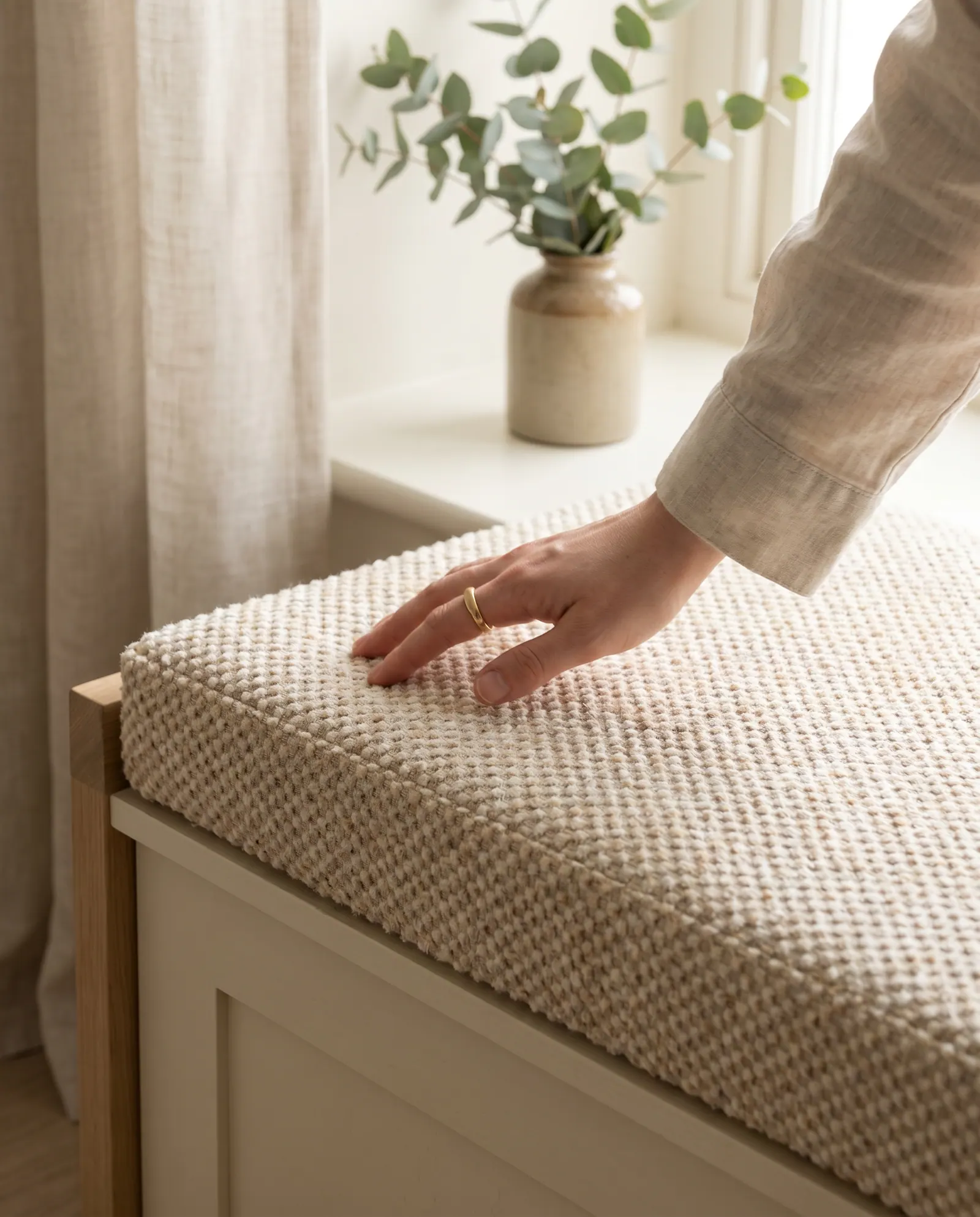
A cushion is a cover wrapped around a number. The number is the foam: its density, its thickness and how much bigger it was cut than its cover. Here are the numbers, tolerances included.

- 1answer
- 12photographs
 Save
The quick answer
A foam insert is the solid core inside a zippered cushion cover, and it can be bought on its own in any size. Custom seat cushions use high-density foam of about 2.0 lb/ft³ (32 kg/m³), medium-firm at roughly 6-7 on a 10-point scale. The thinnest standard insert is 2 in (5 cm); shredded foam, fiber and memory foam are the alternatives.
Shapes to choose from
Every one is cut to your measurements. The number is how many readings the atelier has published for that shape.
Sizes & measuring
Thickness and measuring, on the cutting table
The limits the workroom cuts to. Write your own numbers to the nearest 1/4 in.
| Thinnest standard | 2 in (5 cm) |
|---|---|
| Thinner still | 1 in (2.5 cm) or 3/4 in (2 cm) only without piping; 1 1/4 in (3 cm) can take piping |
| Thicker builds | 6, 7 and 8 in (15, 18, 20 cm), 12 in (30 cm) floor couches, and stacked layers of about 10 1/2 to 15 3/4 in (27-40 cm), at a surcharge |
| Fit to cover | Firm foam is cut slightly larger than its cover so the cover looks full; it takes two people to insert |
| Front overhang | Up to about 2 in (5 cm) past the front of a bench when an inner support wrap is added |
| Measuring a delivered insert | Wait 3-4 days after unpacking; then length edge to edge, width seam to seam, thickness straight up |
Fabrics that work
- Linen-Look WeavesWoven texture, easy care
- VelvetDense pile, deep color
- Bouclé & TeddyLooped, cloud-soft texture
- Outdoor Acrylic & Solution-DyedMade for sun and weather
Open a family for its swatch book, care notes and neighbors.
What a foam insert is, and when you buy one alone
Every custom cushion ships complete: a foam insert inside a removable zippered cover. You buy a foam insert on its own when the cover is fine and the core is not, or when you have covers and nothing to put in them. Buyers ask for four kinds:
- Small pillow fillings, 14 x 14 in (36 x 36 cm) and 10 x 10 in (25 x 25 cm).
- Foam-only L-shaped backrest inserts for floor sofas.
- Full sofa foam sets: two seat mattresses and two armrest foams, plus the 4 metal supports in the photograph if you need the frame.
- Replacement pieces for a single seat that stayed flat.
Sofa fillings bought alone cost less than a complete filled sofa. Covers are sold separately under custom cushion covers; the frames belong to modular floor sofas.
Odd shapes: the numbers have to close
Angles are just lengths in disguise. A trapezoid insert needs four numbers, and they have to agree before anything is cut. A real check from a past order: front 106 in (269 cm), back 56 in (142 cm), two angled sides of 35 in (89 cm).
- Front minus back: 106 in minus 56 in = 50 in.
- Half of that is each side's offset: 25 in.
- Depth = √(35² − 25²) = √600 ≈ 24.5 in (62 cm).
If the depth does not come out of your own numbers, one of them is wrong, and it is cheaper to find out now. A drawing with every edge measured is enough; don't post a paper template, photograph it. The trapezoid cushion calculator runs the same arithmetic.
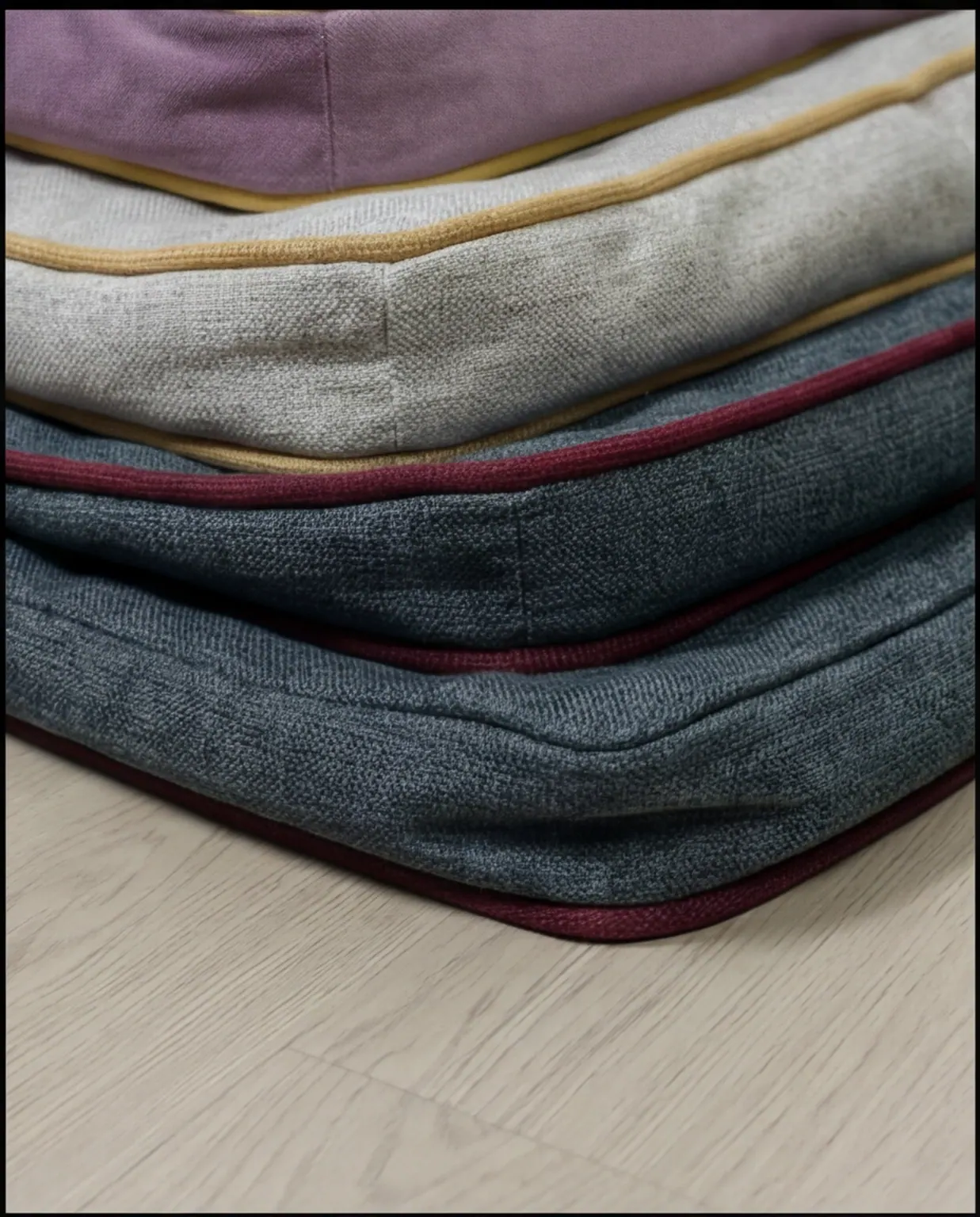
Edges follow thickness. A piped box edge works from 1 1/4 in (3 cm) up; below that, the seam goes plain.
Foam and fill, in both units
| Where it goes | What it is | Density | Feel |
|---|---|---|---|
| Bench, banquette and seat cushions | High-density polyurethane, high-resilience cold foam | About 2.0 lb/ft³ (32 kg/m³) | Medium-firm, about 6-7 of 10; a flat, structured top |
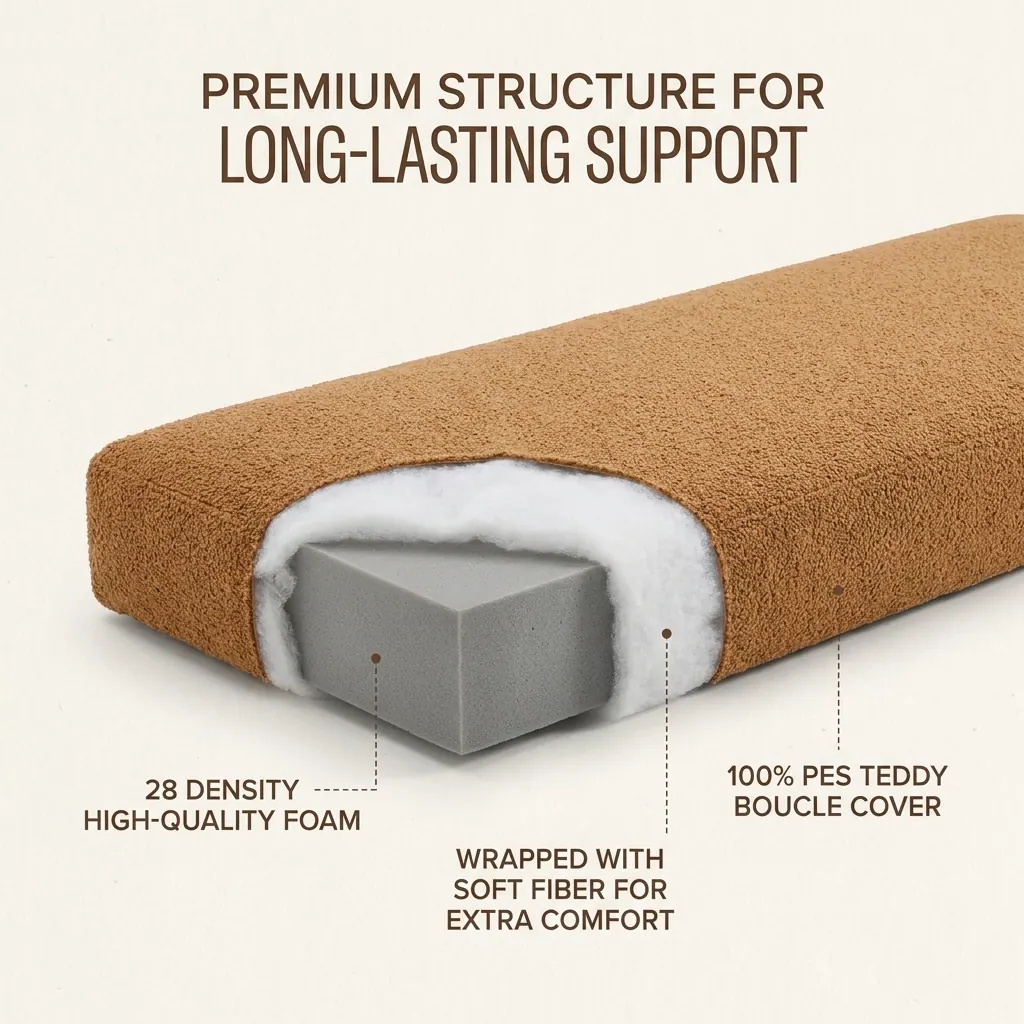
| Floor and modular sofa seat mattresses | High-density cold foam | About 1.75 lb/ft³ (28 kg/m³); some quoted up to 32 kg/m³ | Medium-hard; softens slightly with use |
| Throw pillows, back pillows, soft backrests | Shredded foam in its own inner cover | — | Softer than solid foam, not very soft |
| Thick backrests | Foam wedge in 1-3 pieces | — | Holds a 12-14 in (30-35 cm) profile that fiber cannot |
| On request | Silicone fiber, high-density memory foam, cotton or organic cotton, latex on some models | Varies | Fiber soft, foam firm; cotton and latex cost extra |
Firmness, backrests and what the foam does to the look
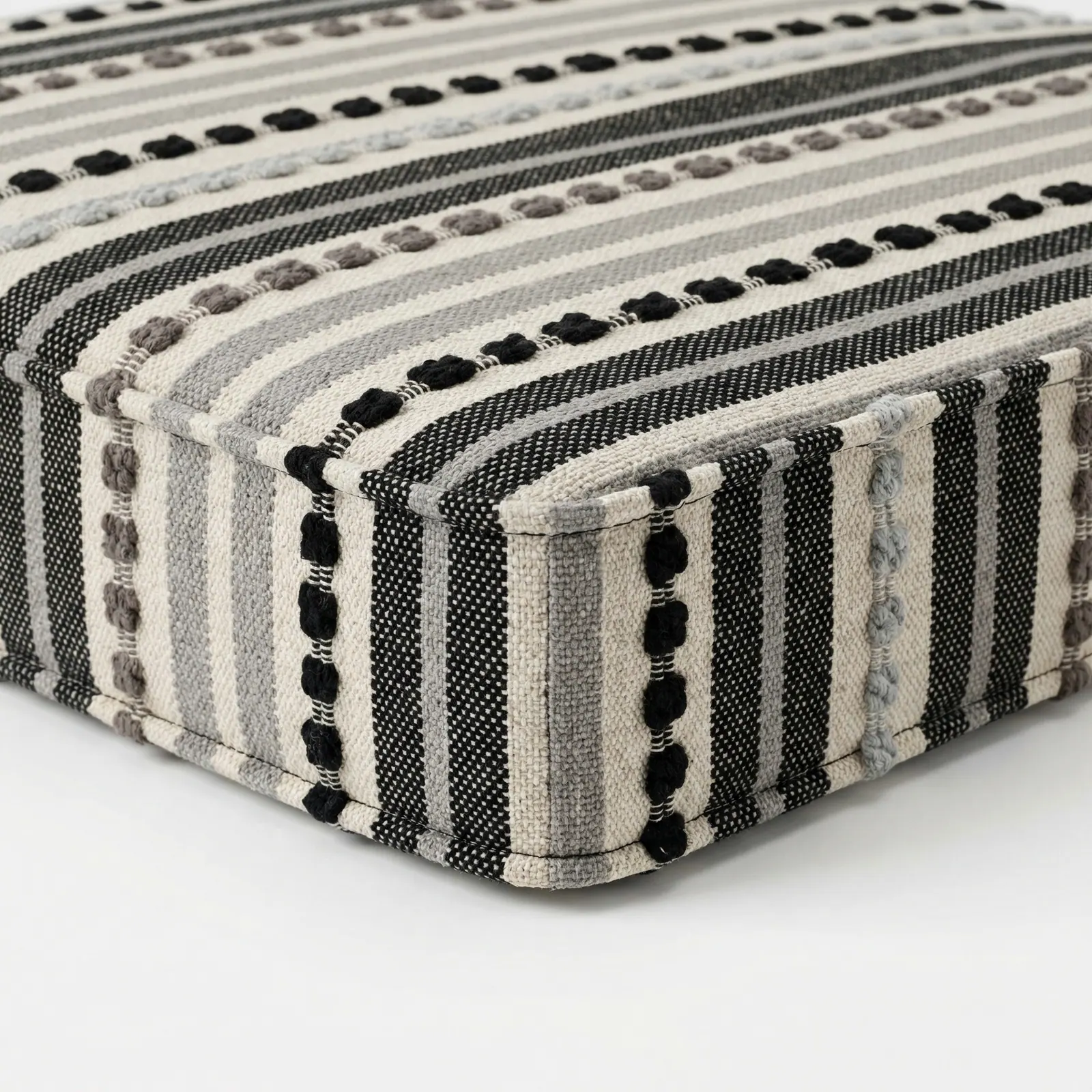
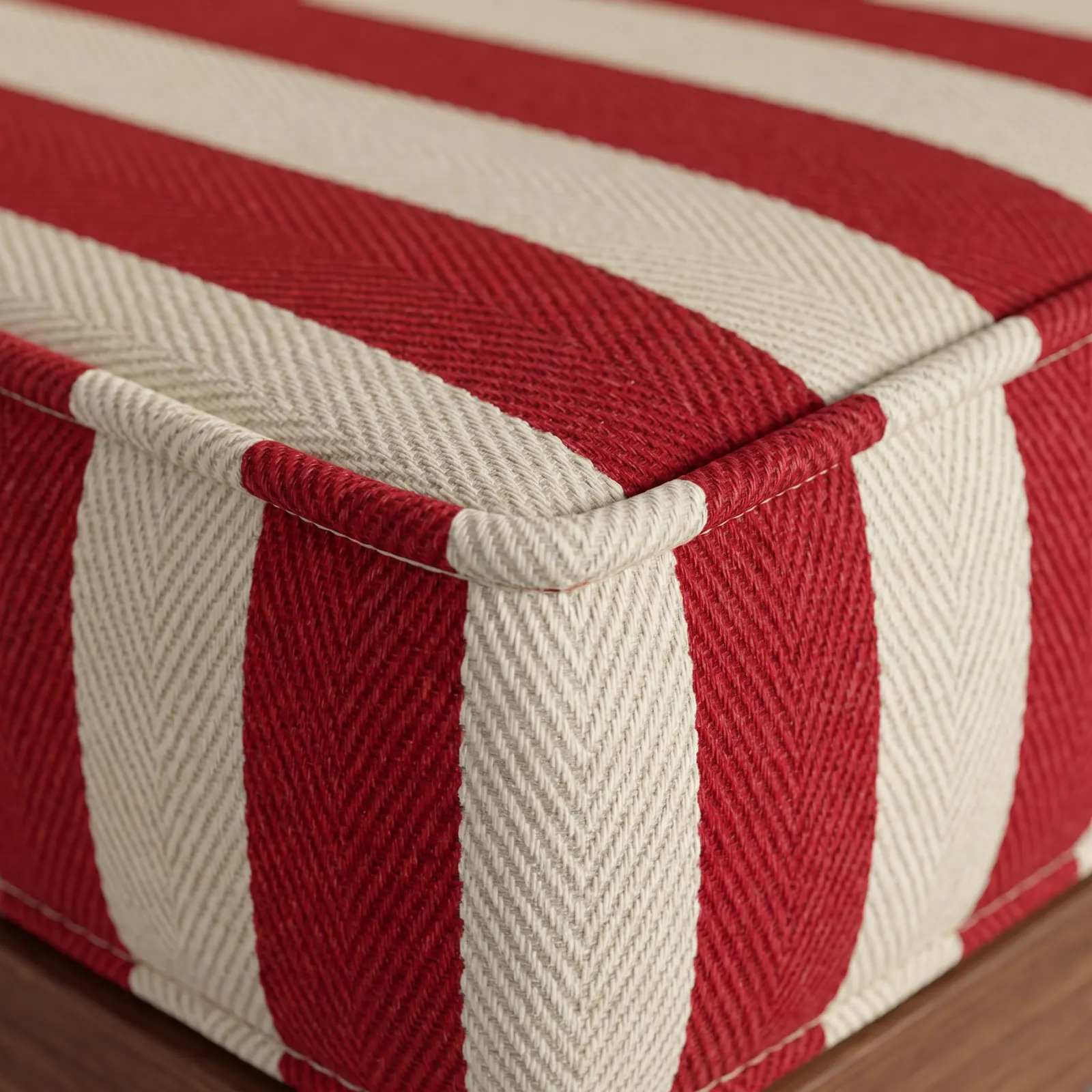
Seats and backs do different jobs. By default a backrest is softer than its seat; ask, and it can be made equally firm. High-density foam gives a structured, flat top, the tailored look in most of our photographs, while shredded foam gives a pillow its plump face.
That difference shows through the cover. A crisp box edge in a linen-look weave or velvet needs a firm insert to hold its corners; a soft back pillow in bouclé is happy with shredded fill. Filling can also be supplied for outdoor sets in outdoor acrylic covers.
What do you want the seat to feel like at minute forty, partner, not minute one? The foam firmness finder asks the same question with sliders, and the seat height calculator checks what thickness does to your knees.
The corner that would not rise
A buyer in the US unpacked a vacuum-compressed floor sofa. Everything rose except one seat cushion, 78 x 39 x 6.5 in (198 x 99 x 17 cm), which stayed flat in one corner. The workshop asked for a few more days. After about a week the corner was still down, and on that side a foot sank to the floor.
Photos from several angles settled it. A replacement foam insert went out for that one cushion, in one piece, and the existing cover zips onto it. One part, swapped through the zipper.
- Measured
- Seat cushion 78 x 39 x 6.5 in
- What it taught
- Allow a few days for recovery; if one area is still flat after a week, photograph it and ask the workshop about replacement foam.
Mistakes that cost an insert
- Measuring a vacuum-packed insert the day it arrives. Give it 3-4 days, then measure with the tape flat and readable.
- Trying to wash the insert. Inserts are not washed; unzip the cover and wash that at 86°F (30°C).
- Returning a covers-only order you meant as a full cushion. Ask for the foam, and the metal supports if needed, instead.
- Asking fiber fill to hold a thick backrest. A 12-14 in (30-35 cm) profile needs a foam wedge.
- Setting bare metal support bars on hardwood. Fit felt pads or fabric under them so they neither slide nor scratch.
Photographs from the workbench
Open any photograph large; each one has its own link and a Save button.
 Save
 Save
 Save
 Save
 Save
 Save
 Save
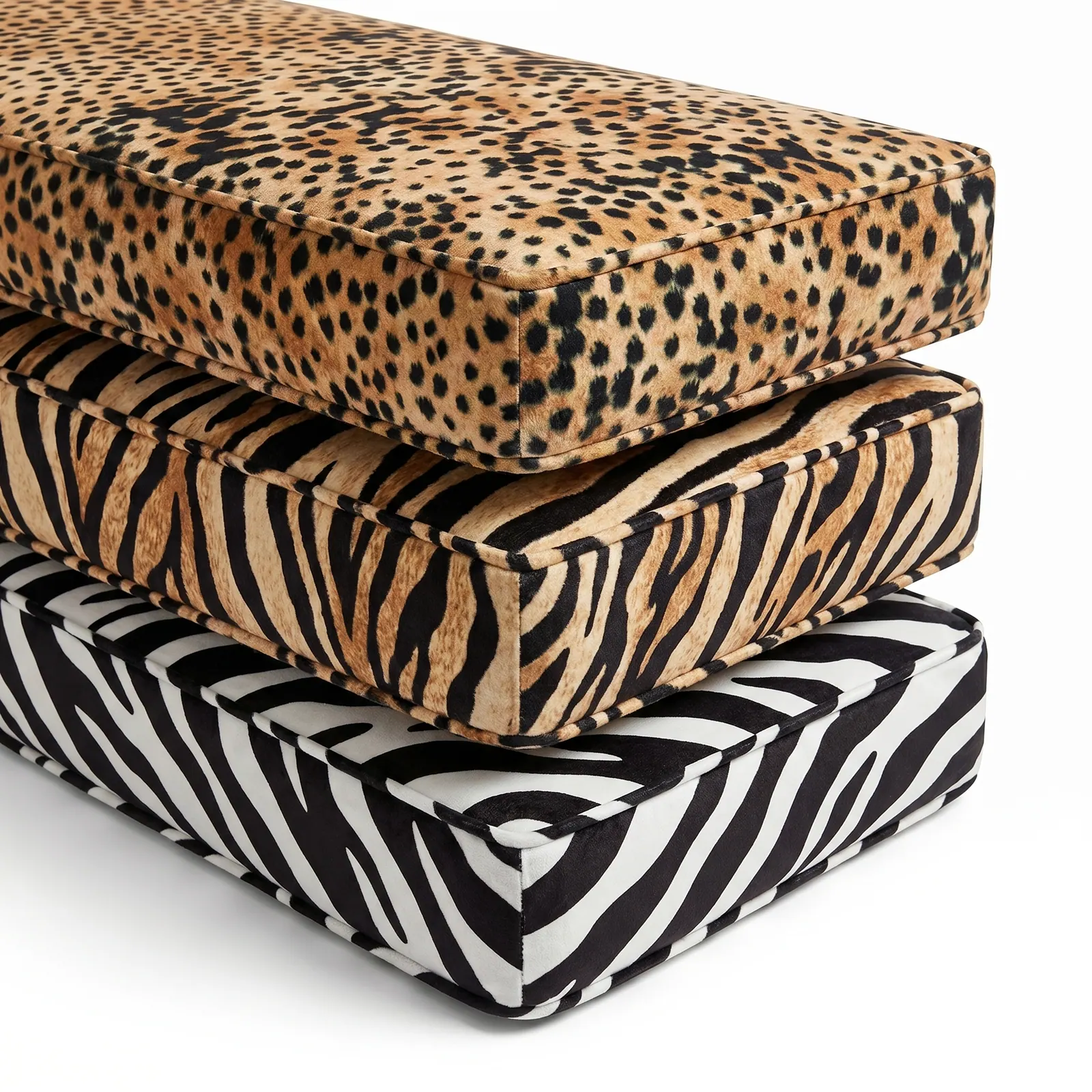 Save
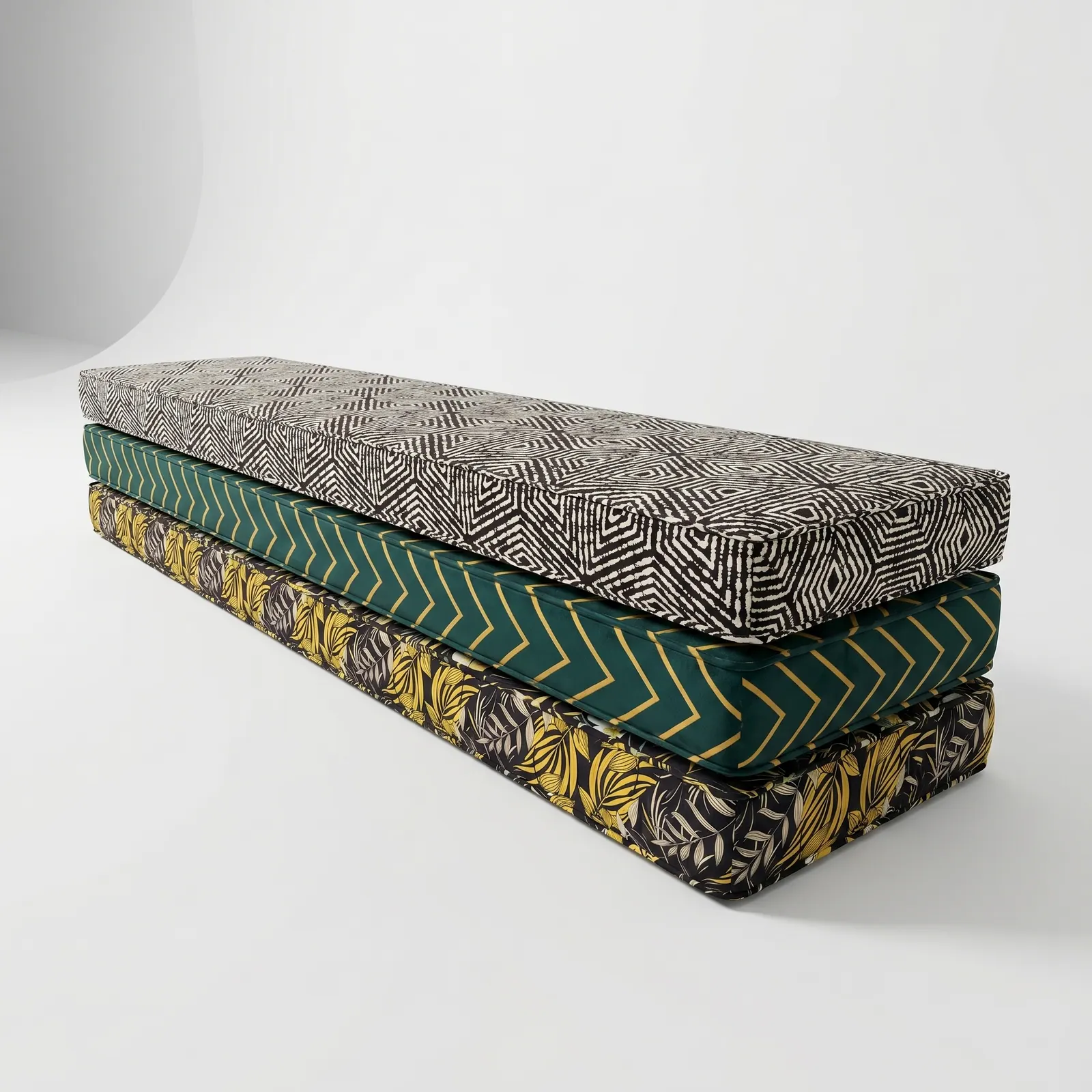 Save
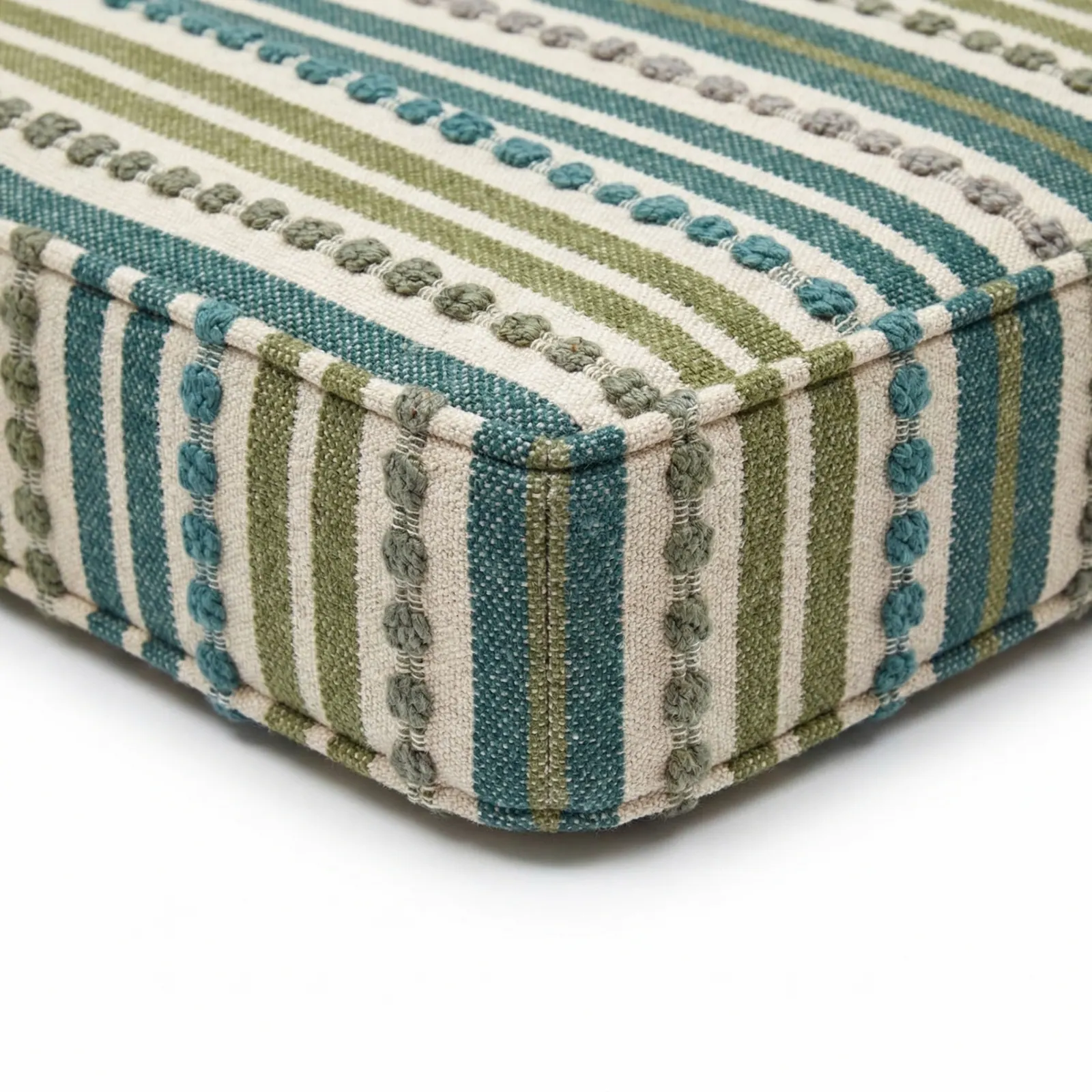 Save
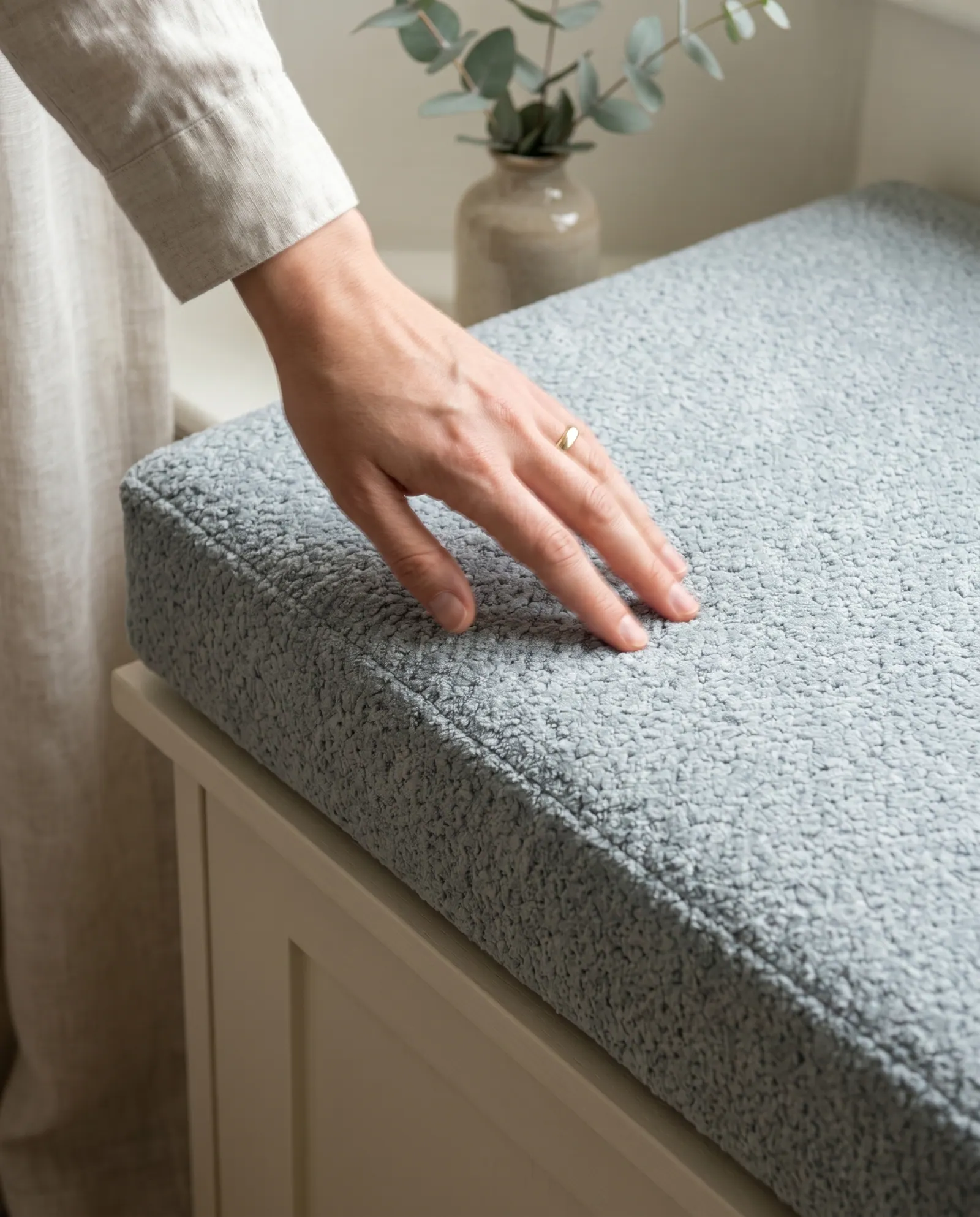 Save
Bench cushion foam at 2.0 lb/ft³ (32 kg/m³) holds its shape for years; floor sofa mattresses at 1.75 lb/ft³ (28 kg/m³) soften slightly with use.
Nate
Patterns to read before you order
Four Patterns carry the rest of the arithmetic. Foam density in lb/ft³ and kg/m³ has the full conversion table. Density vs firmness explains why a dense foam can still feel soft. High-density foam vs memory foam, latex and fiber compares the alternatives, and the first 72 hours covers unpacking a compressed insert. Terms such as high-resilience foam are in the glossary.
Buyer questions
- A common question
Can I buy just the foam inserts, without covers?
The workshop's answerYes. Fillings and foam inserts are sold on their own: small pillow fillings such as 14 x 14 in and 10 x 10 in, foam-only L-shaped backrest inserts, and full sofa foam sets with two seat mattresses and two armrest foams, plus the 4 metal supports if you need the frame. They go through a dedicated link, quoted as a set for your sizes, and cost less than a complete filled sofa.
- A common question
What density is the foam in a custom bench cushion?
The workshop's answer32 kg/m³, about 2.0 lb/ft³: high-density polyurethane, a high-resilience cold foam with a medium-firm feel. It is firmer and longer-lasting than the 28 kg/m³ foam often specified, and on a 3 in cushion it stays comfortable while holding its shape for years. Every custom cushion gets it as standard unless you ask for a softer one.
- A common question
What density foam is in the floor sofa mattresses?
The workshop's answer28-density high-density foam, 28 kg/m³, a medium-hard sponge foam that stays comfortable and lasts for years without collapsing. Some replies quote it as 28-32 density. The backrests are filled too, and replacement foam is sold on its own.
- A common question
One cushion still hasn't puffed up days after unboxing. What should I do?
The workshop's answerGive it a few more days and work the foam: take off the cover, shake, pull and pinch the filling, then refit the cover. Half-risen pieces often recover this way. If a section is still flat, dented or hard after several days while the rest has recovered, send photos from different angles. The shop treats it as faulty foam and ships a new piece with tracking; you move your cover onto it.
- A common question
The insert smells of cigarette smoke even after airing. Can it be washed?
The workshop's answerWashing the removable cover, several times if needed, clears the odor from the fabric, but the insert itself is too big for a home washing machine. When a backrest insert kept smelling of smoke after airing, the workshop sent a replacement filling for that backrest.
- A common question
My cushion measures differently from what I ordered. What photos do you need?
The workshop's answerWait 3-4 days after unpacking, because vacuum compression temporarily shrinks foam and cover. Then send a photo of the cushion in place, plus photos with a tape measure laid flat: full length edge to edge, full width seam to seam, and thickness measured straight up. The workshop checks them against its records; ask it to confirm in writing how it will handle a workshop error or an ordering error.

Have it made
Have your foam insert made — ask Nate’s workshop
Every edge and both diagonals, to the nearest 1/4 in. If the numbers do not close, the workshop will say so on the call. — Nate
Leave your details and the workshop will call you to confirm measurements, fabric, foam and piping. No prices, dates or payment on this page: it is a request, not an order.
Questions buyers ask next
How thin can a custom foam cushion be?
The thinnest standard foam is 2 in (5 cm). Cushions of 1 in (2.5 cm) or 3/4 in (2 cm) can be made only without piping, while 1 1/4 in (3 cm) can take piping. Tufted cushions cannot be made as thin as 1 in.
Why does new foam feel too big for its cover?
It is meant to. Firm foam is cut slightly larger than its cover so the cover looks full and the corners stay crisp, which is why fitting it takes two people. Foam-filled cushions get a protective layer instead of a separate inner cover.
Can I get memory foam or latex instead of standard foam?
Custom inserts can be silicone fiber (soft), foam (firm) or high-density memory foam. Latex is possible on some models at a large surcharge, and cotton or organic cotton fillings cost extra.
How firm is the standard seat foam on a 1-10 scale?
About 6-7. Backrests are softer than seats by default, but a backrest can be made equally firm if you ask. High-density foam gives a structured, flat look rather than a sink-in one.
Can a cushion hang over the front edge of a bench?
Yes, by up to about 2 in (5 cm), when an inner support wrap is added to the foam. Write the overhang into your order so the insert is cut and wrapped for it.
Is it cheaper to split a long backrest into sections?
Not in one real quote: four back cushions of about 18 x 21 5/8 in (45.5 x 55 cm) for a 72 in (182 cm) swing cost the same as one long backrest, foam inserts included. Separate pieces are easier to handle and to dry.
Is a pillow insert the same thing as a foam insert?
No. A pillow insert is a soft form for a throw pillow, filled with fiber, feathers or shredded foam. A foam insert is a cut block of seat foam for a bench, chair or mattress cover, sized by length, width and thickness. The workshop fills its pillows with shredded foam or fiber and cuts seat inserts from high-density foam.
How do I get a tight foam insert back into its cover?
Fold the foam, not the cover. Firm foam is cut slightly larger than its cover so the fabric looks full, and it takes two people to insert. Bend the foam lengthwise, feed one end into the far corners, then work the rest in bit by bit, with the zipper open around both corners. Never trim the foam to make it easier.
± 1/4 in — Nate
The Cutting Table
Buyers asked about foam inserts & cushion fillings
The Pattern Room
Patterns and sketches
- The Pattern RoomDown-wrapped or all-foam? Choosing the top of a seat cushion
- The Pattern RoomCut-to-size foam vs a finished cushion: the honest comparison
- The Pattern RoomChoosing a custom cushion maker online: twelve questions first
- The Pattern RoomOrdering new cushion covers for foam you already own
- Concept SketchesPallet sofas and daybeds: cushions cut to the stack you built