Bolster pillows, turned to the diameter your seat needs
A bolster is the oldest pillow in the shop and the easiest to get wrong by an inch. Here is how we size one, fill it and match it to the cushion it leans on.
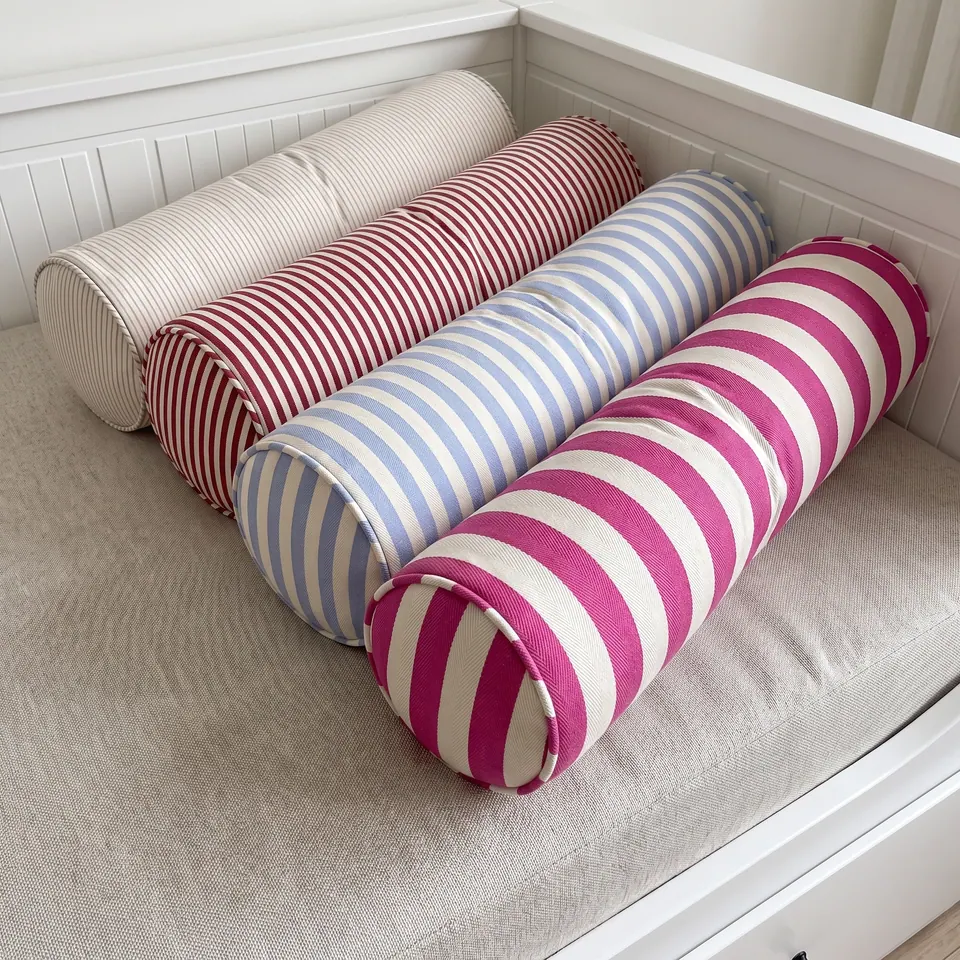
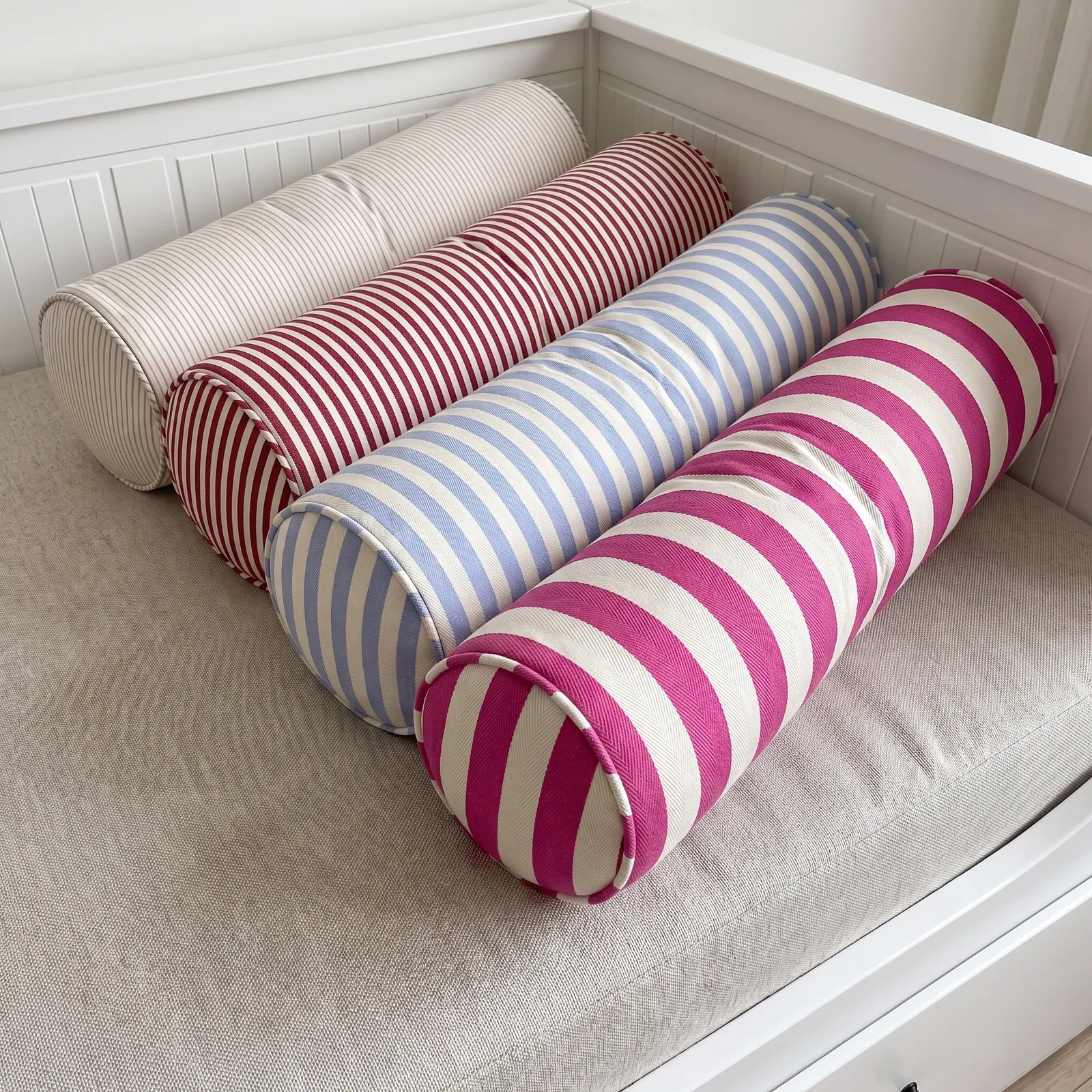
SaveThe stripe widens from back to front, a quick visual guide to how scale changes the mood of a bolster.
The quick answer
A bolster pillow is a long cylinder sized by diameter x length, and 8 in (20 cm) across is the standard. Armrest bolsters usually run the depth of the seat, so a 21 in deep seat takes a 21 in bolster. Any size can be made, from slim 4 in rolls for 2 in cushions to a fuller 10 in, in the same fabric and piping as your seat.
Every one is cut to your measurements. The number is how many readings the atelier has published for that shape.
Sizes & measuring
Standard sizes, and how to measure a bolster
Two numbers make a bolster: the diameter across the round end and the length from end to end. Measure the seat depth first; the length usually follows it.
Standard diameter
8 in (20 cm)
Fuller
10 in (25 cm) on request
Slim
6 in (15 cm) for a lighter roll; 4 in (10 cm) to sit with a 2 in thick bench cushion
Armrest length
Follows the seat depth: a 21 in (53 cm) deep seat takes a 21 in bolster; shorter on request
Back bolsters
Made to the seat length, e.g. 70 in (178 cm) behind a 70 in seat
Very long runs
Up to about 75 in (190 cm) in one piece, or split into two shorter rolls
Unusually large
20 in (51 cm) across is more drum than pillow
Fill
Soft-filled for back support; ships filled unless you order the cover only
Fastening
Loose by default; a strap or hook-and-loop fastener on request
A bolster that runs longer than the seat is deep looks like it wandered in from another room. Get that one number right and most of the job is done.
A bolster is a long round pillow, sized by diameter and length. It sits at the arm of a daybed, along the back of a window seat or at both ends of a bench, and it does two jobs at once: it gives an elbow somewhere to rest, and it draws a firm line under the room.
Most of the bolsters the workshop makes are matched to a cushion, same fabric and same piping. A seat cushion with two bolsters is one of the most common custom sets that crosses the workshop's cutting table. If you are dressing a daybed or a window seat, start there, and come back here for the rolls.
Ends, edges and piping on a round pillow
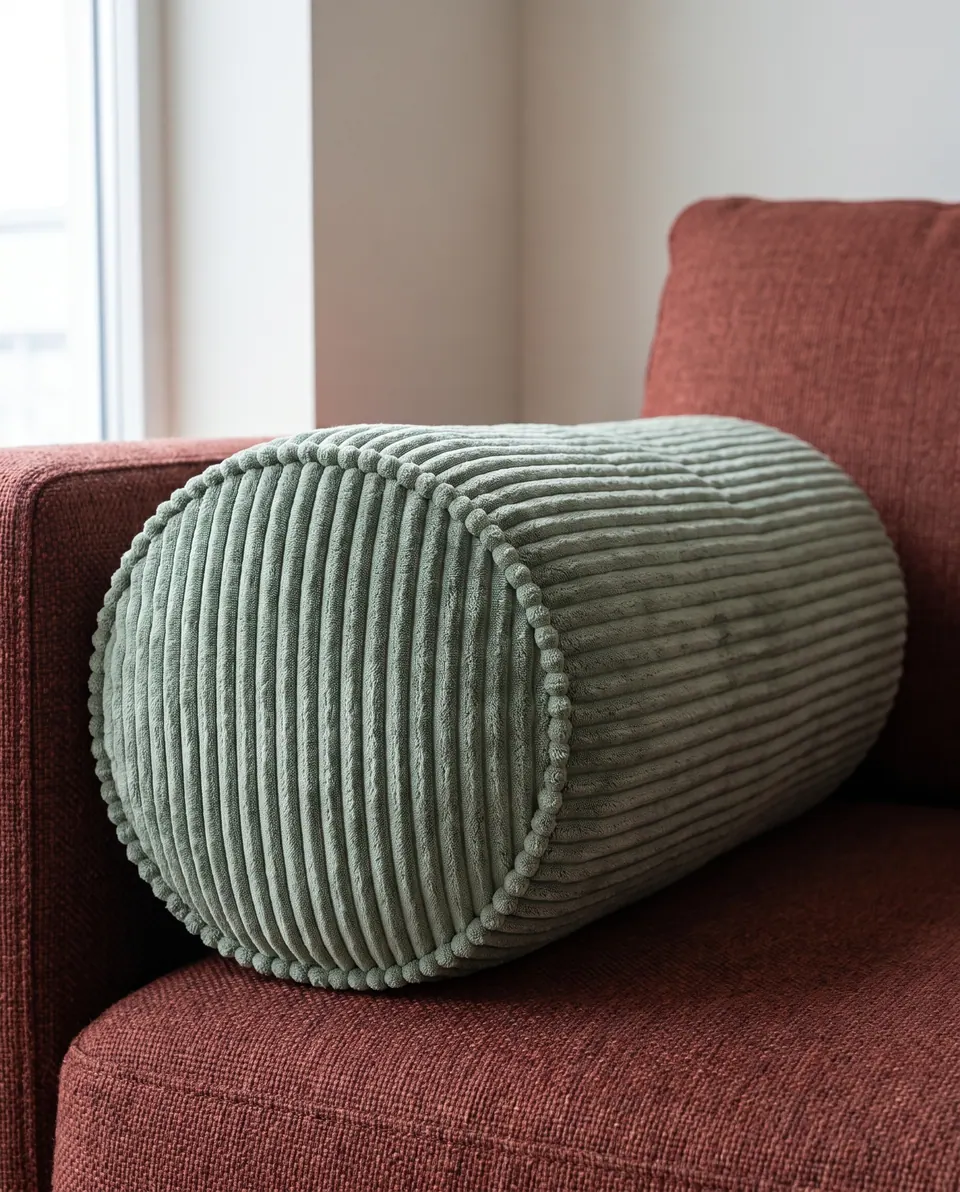
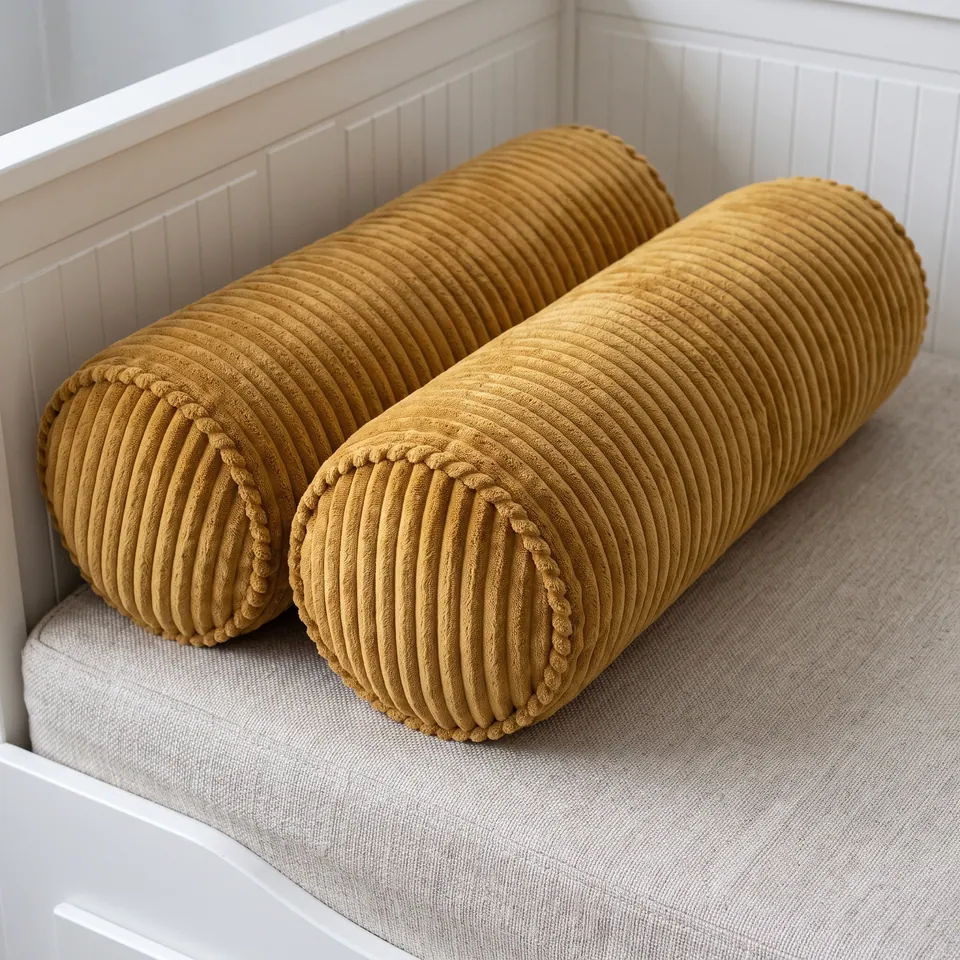
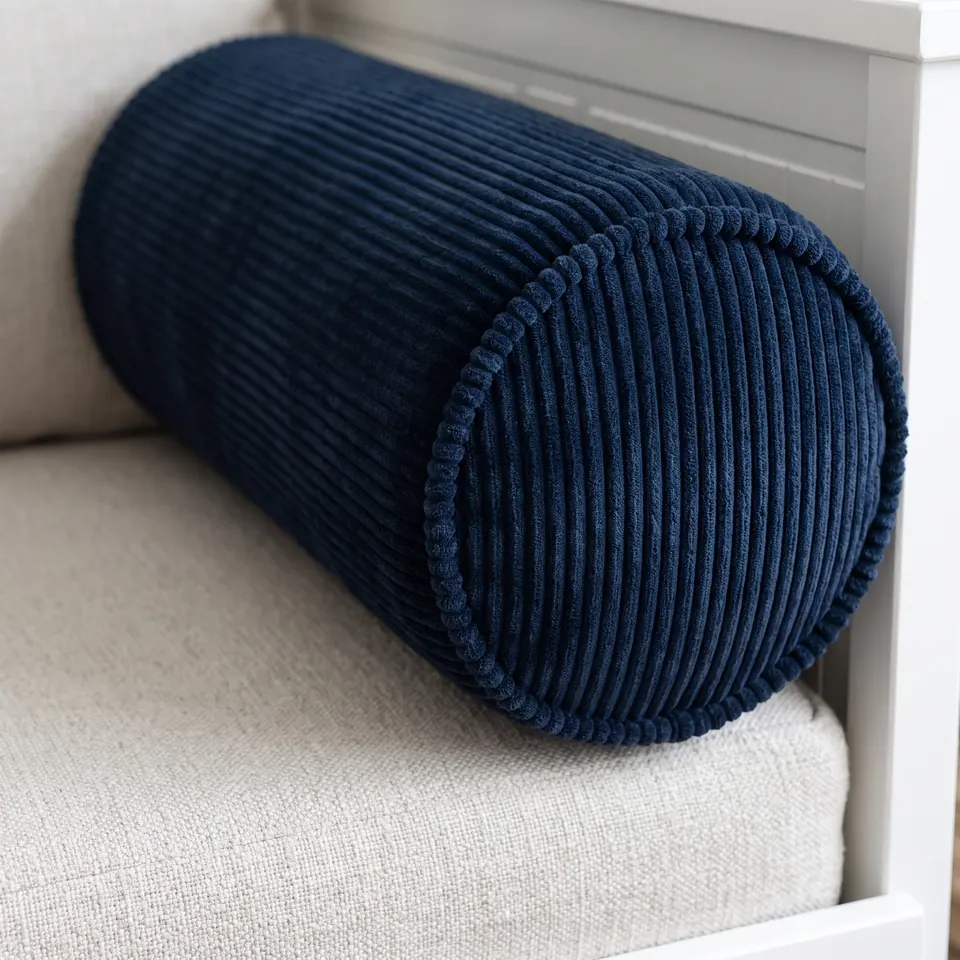
The ends of a bolster are where a maker shows his hand. Most of the workshop's carry self piping, a cord covered in the same cloth, which gives the round end a clean, drawn line. The wide-wale corduroy rolls in the workshop's photographs wear a beaded corded edge instead, and the navy pinstripe has piping cut so its stripes line up.
A seam is a promise, so here is an honest one: a perfectly flat bolster end is close to impossible. The filling inside pushes each end into a gentle dome, and that is how a well-filled bolster ought to look.
A French edge is made only on tufted pieces, and where a bolster normally carries French trim, it can be left off. Order the cover alone for your own insert and it comes round and plain, not tufted, with piping if you like, because tufting needs the workshop's own filling inside.
Fabrics that suit a bolster
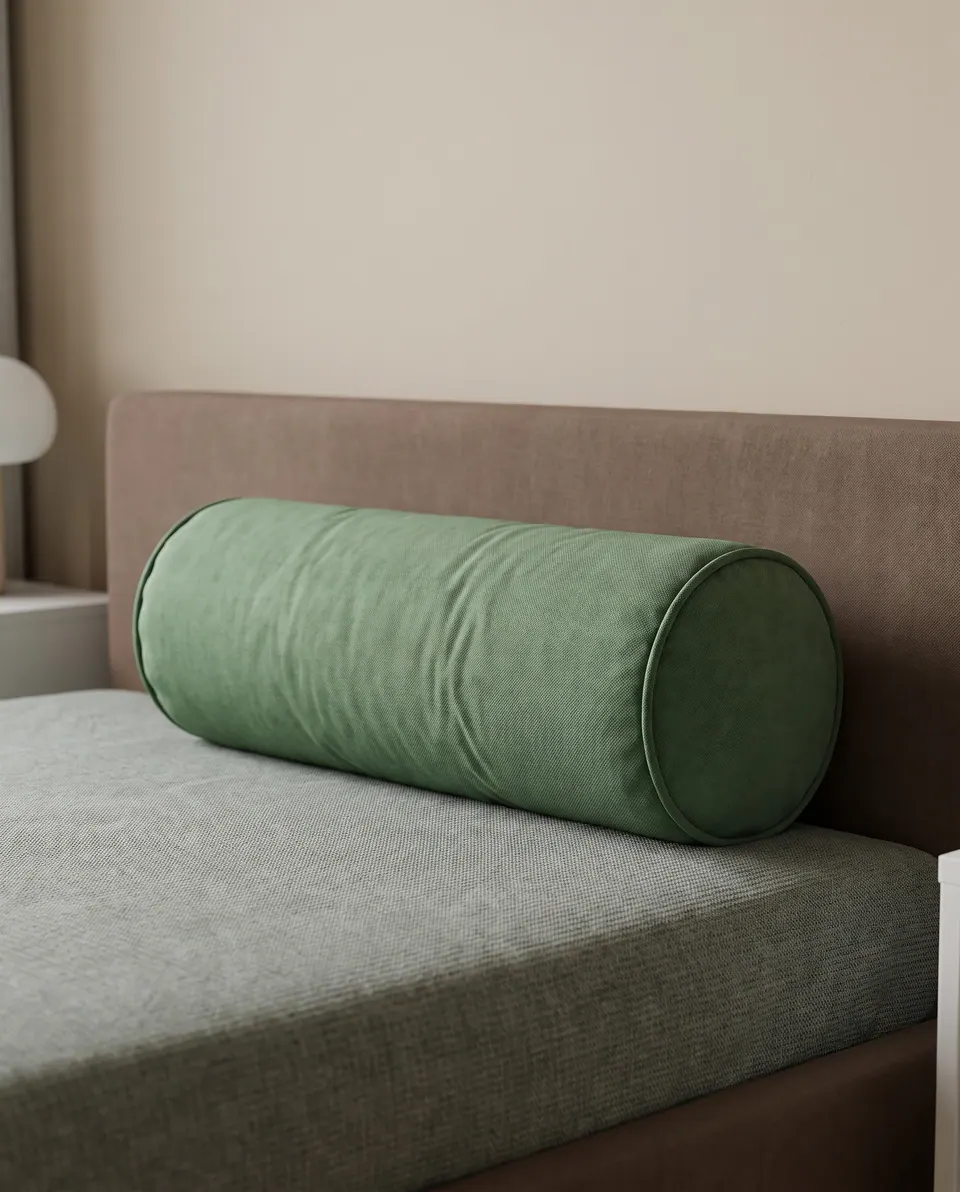
A bolster shows off fabric the way a sleeve shows off a wrist. Light runs along the curve, so a velvet bolster in forest green, cocoa or teal reads richer than the same color on a flat cushion.
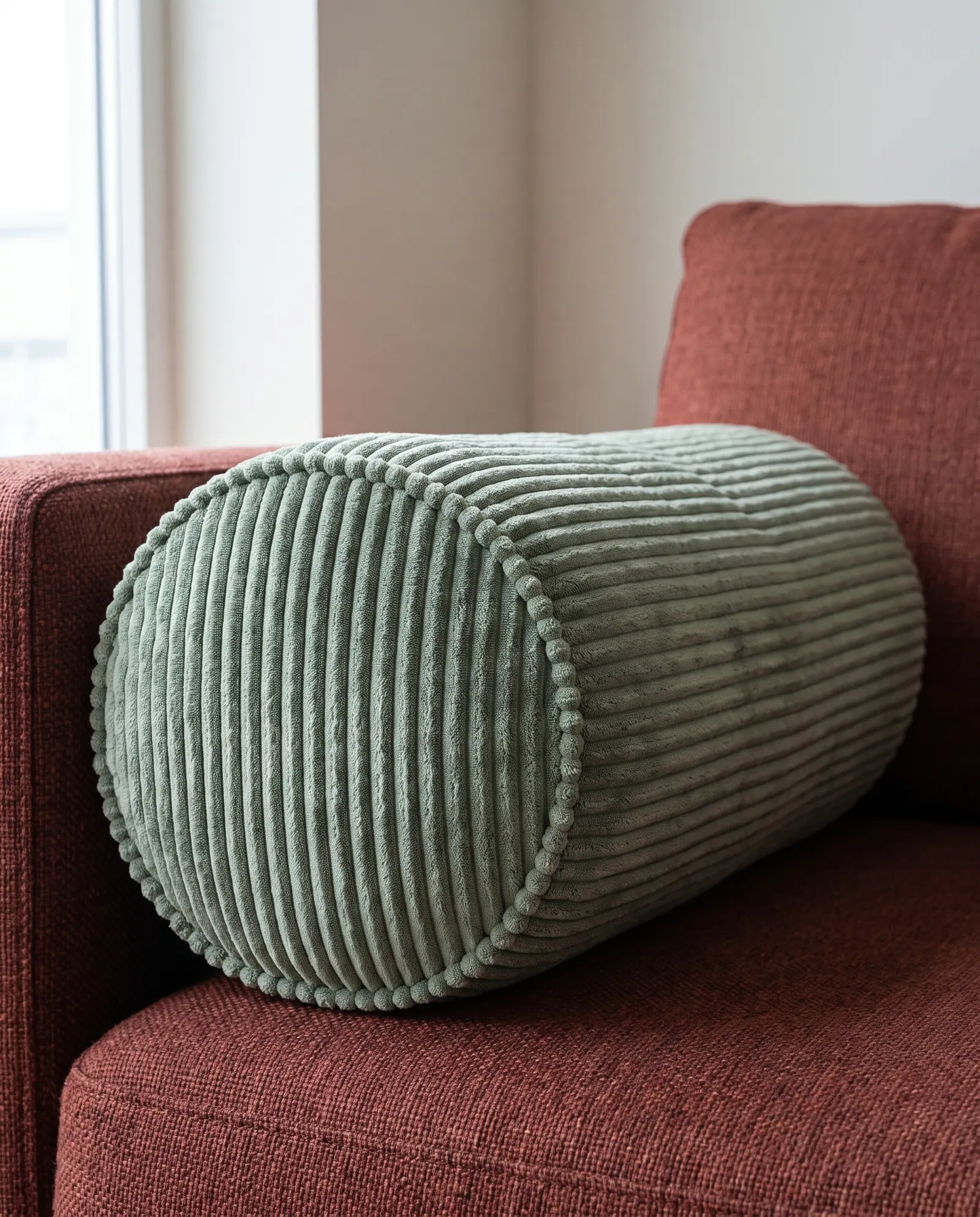
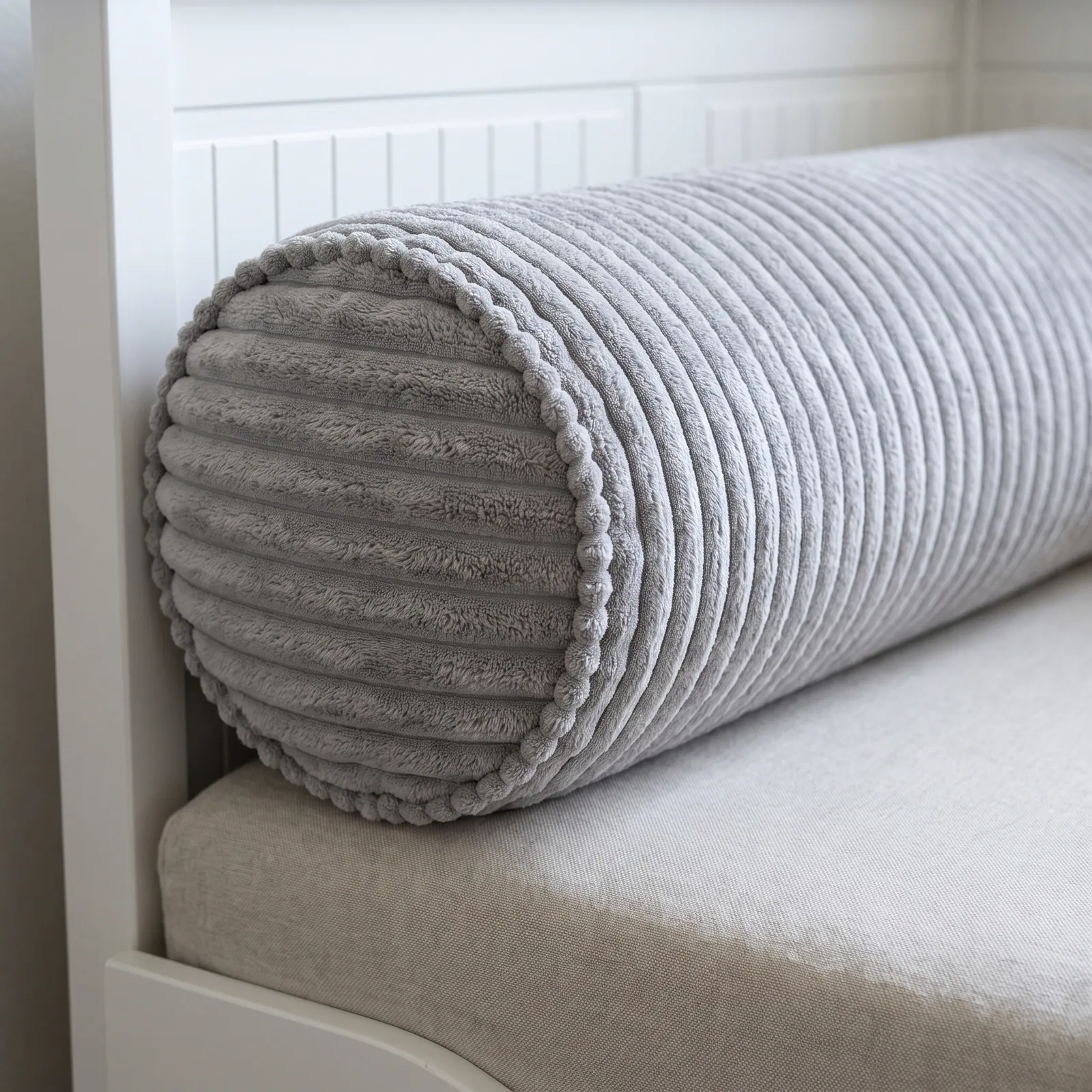
Wide-wale corduroy gives a roll a soft, ribbed look, in sage on a rust sofa or silver gray against white beadboard. Stripes are the other old friend: four widths on one daybed, from a fine ecru pinstripe to a bold magenta, change the whole mood; see striped cotton and ticking.
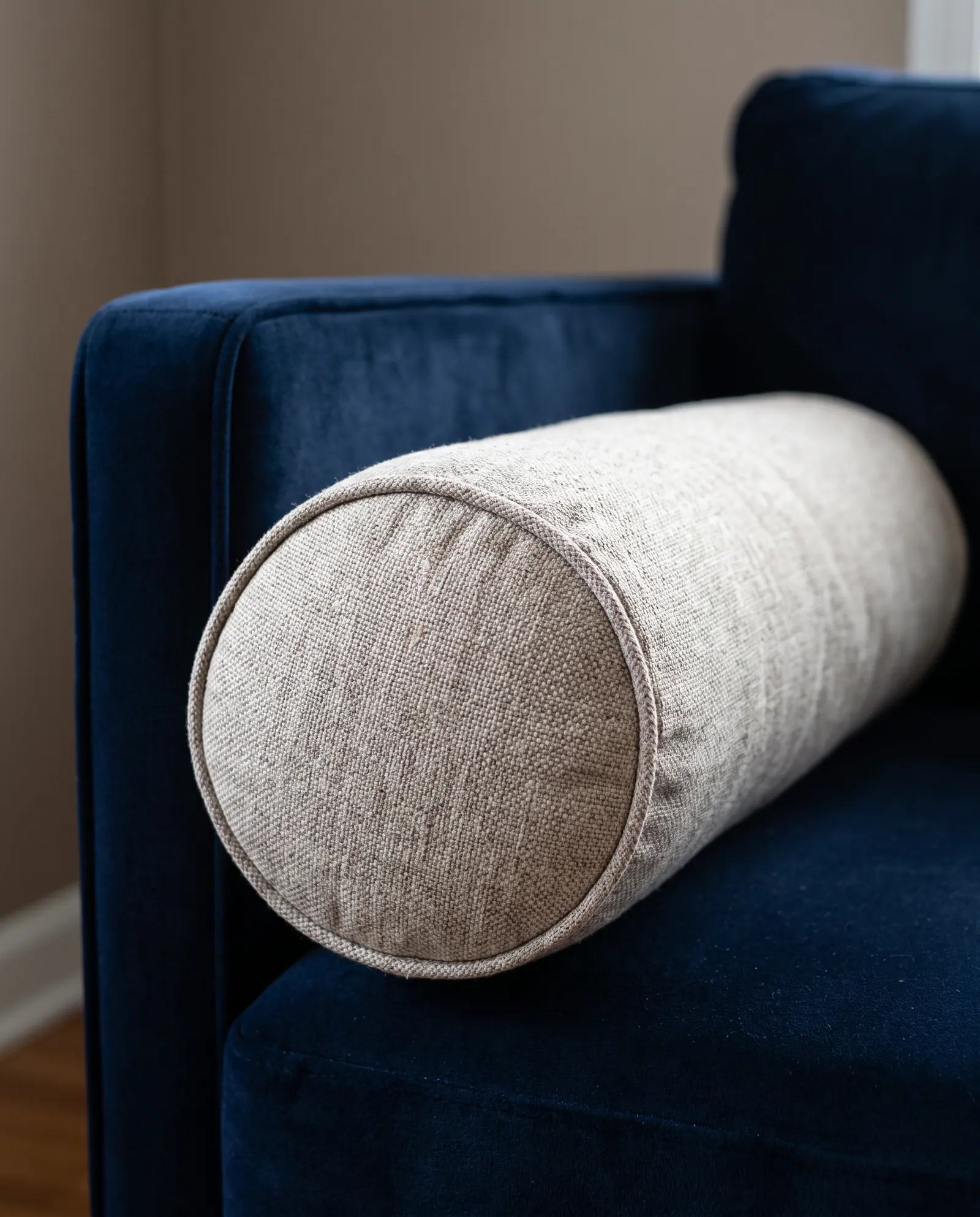
For a quiet contrast, an oatmeal linen-look weave against the arm of a navy velvet sofa does the work without raising its voice.
The count is how many published readings use each family. Open a family for its swatch book, care notes and neighbors.
Fill, firmness and your own inserts
Bolsters meant for leaning are soft-filled. The workshop's back pillows and soft backrests take shredded foam made on its own machine, softer than solid foam but not very soft, sitting in its own insert with an inner cover so the outer cover can come off to wash. Daybed armrests and backrests ship filled; tufted ones have no zippers.
Bringing your own insert? Measure the bare insert, never the old cover. A soft fiber insert needs about 1 in more than the cover to look full; skip that inch and the cover bags in the middle. Covers only: measuring foam you already own goes through it step by step.
A real project
An alcove floor bed with the seam under the bolsters
An interior designer in the US wrote to the workshop for a client's alcove, a floor-level reading area. The plan was a single bottom cushion, first 72 x 40 in, then confirmed at 98 x 40 in and 8 to 10 in thick, with bolster pillows running around the sides.
A cushion that long and that deep can only ship in two pieces, and the workshop said so before anything was cut. The designer took it back to the client. The good answer was already in the brief: put the join where a bolster lies across it, and nobody ever sees the seam.
Measured
98 x 40 in (249 x 102 cm), 8 to 10 in thick, in two pieces
What it taught
A very long, deep floor cushion ships in sections; plan the seam where a bolster will cover it.
Mistakes that make a bolster look wrong
Measuring an old cover instead of the bare insert when you order a cover only.
Forgetting the extra inch for a soft fiber insert. It needs about 1 in more than the cover, or the cover bags.
Ordering an armrest bolster longer than the seat is deep. Let the seat depth set the length.
Expecting a bolster to stay put on its own. Ask for a strap or hook-and-loop fastener when you order.
Letting a long roll or cushion be folded for shipping. Ask for rolling, and report a flat spot within the first week.
Ordering matching bolsters a year later without the fabric code. Send the code from the first order.
Photographs from the workbench
Open any photograph large; each one has its own link and a Save button.
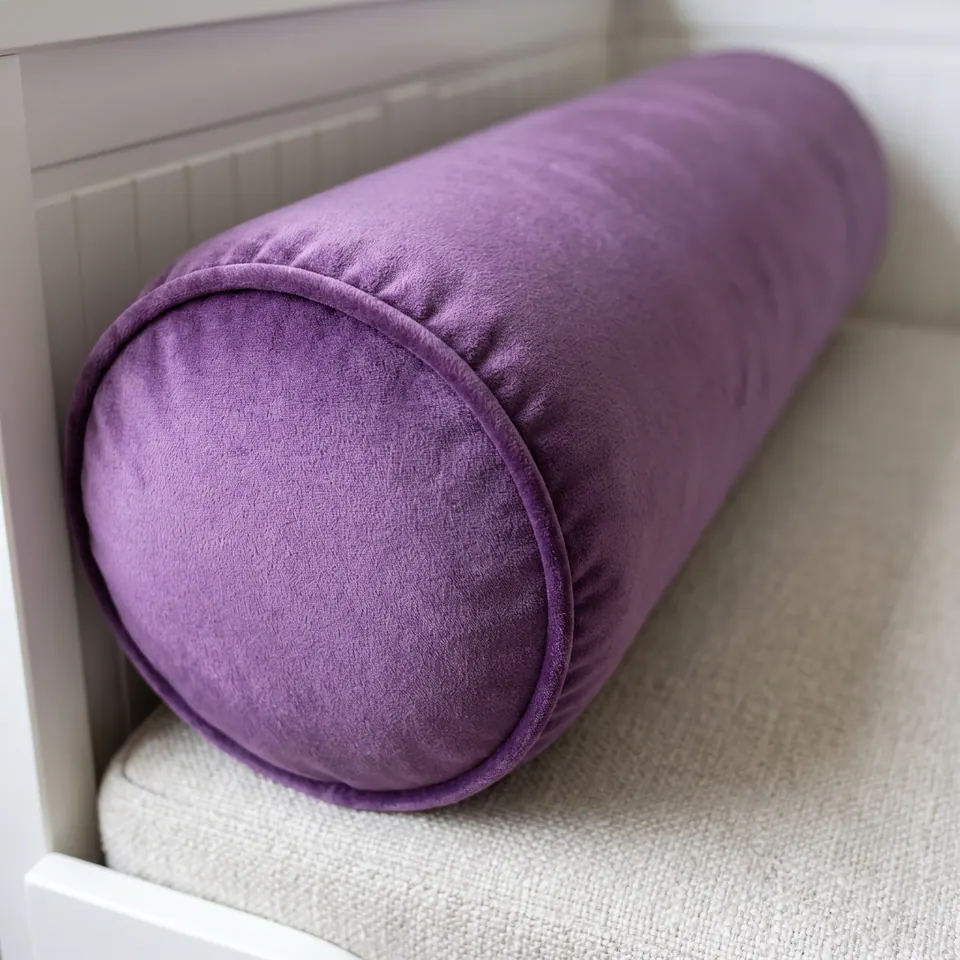
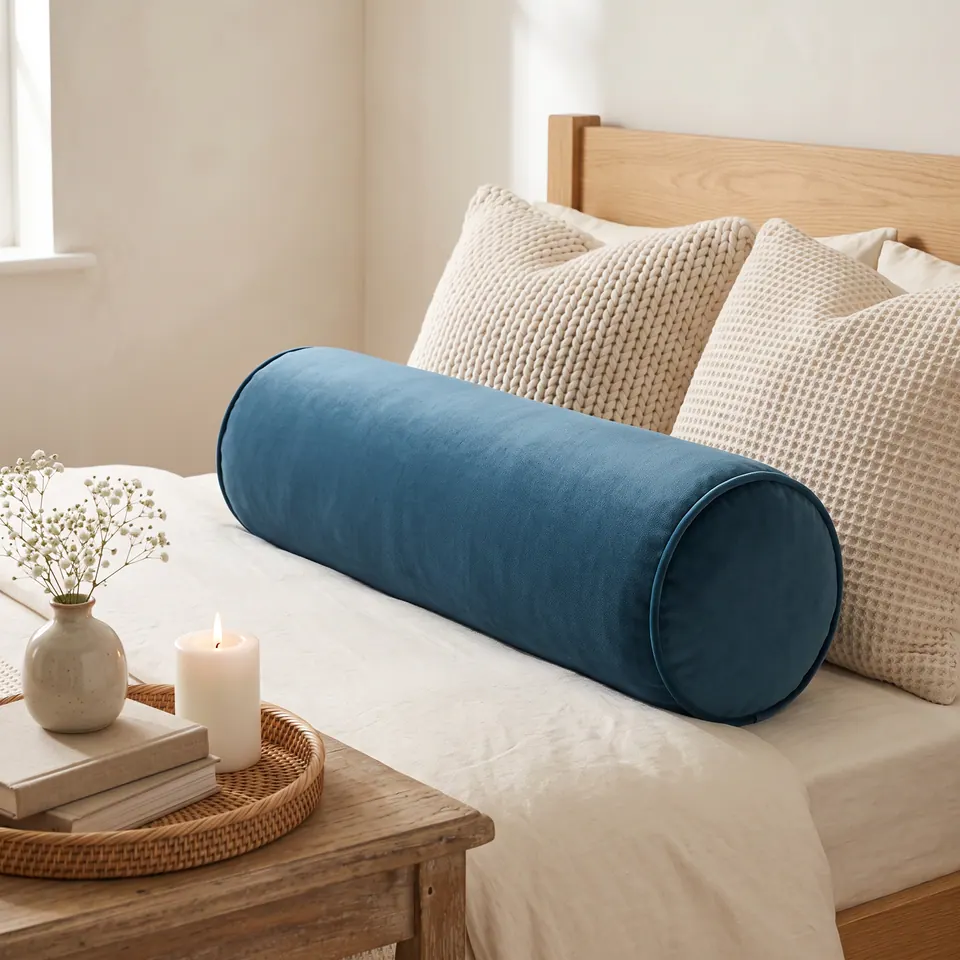
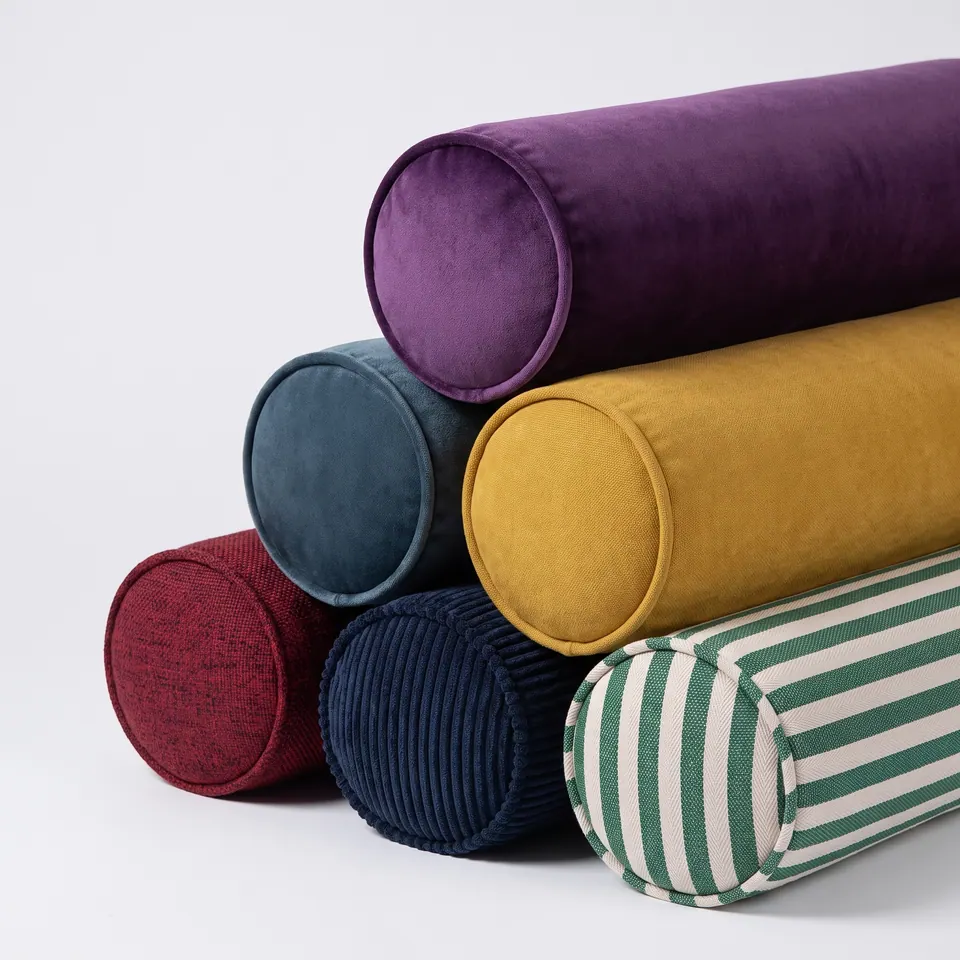
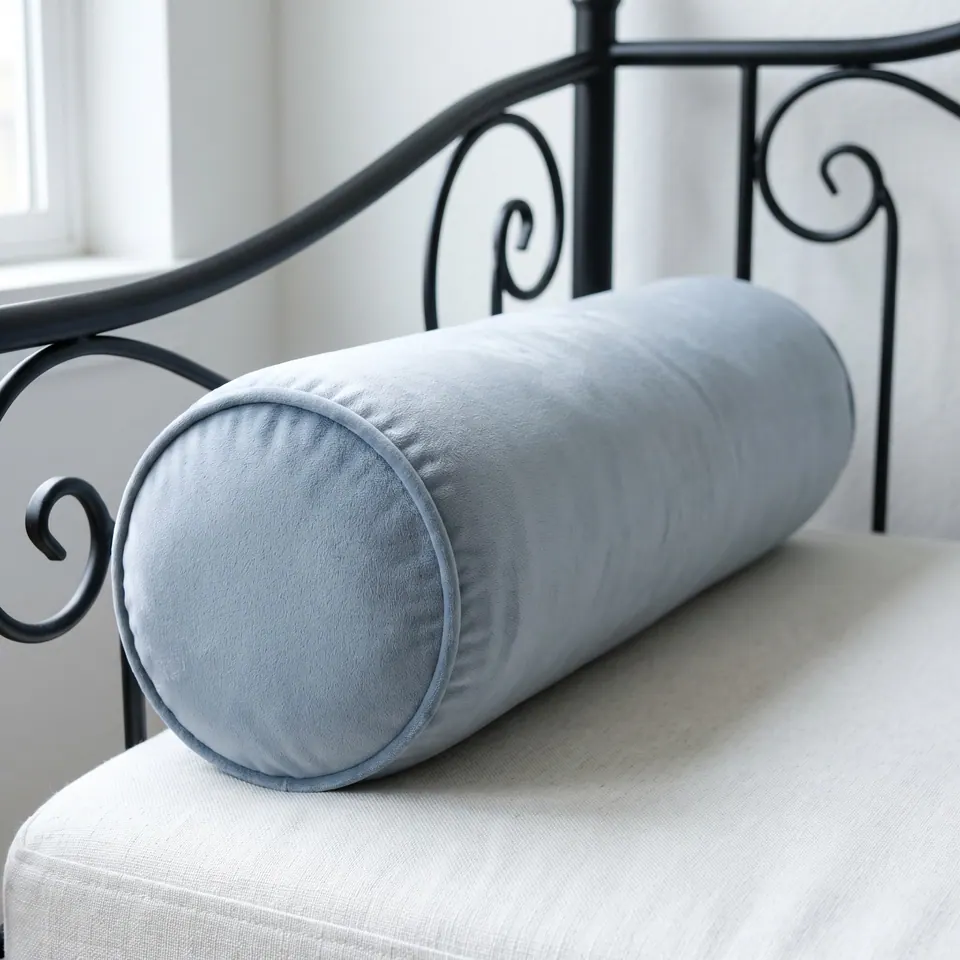
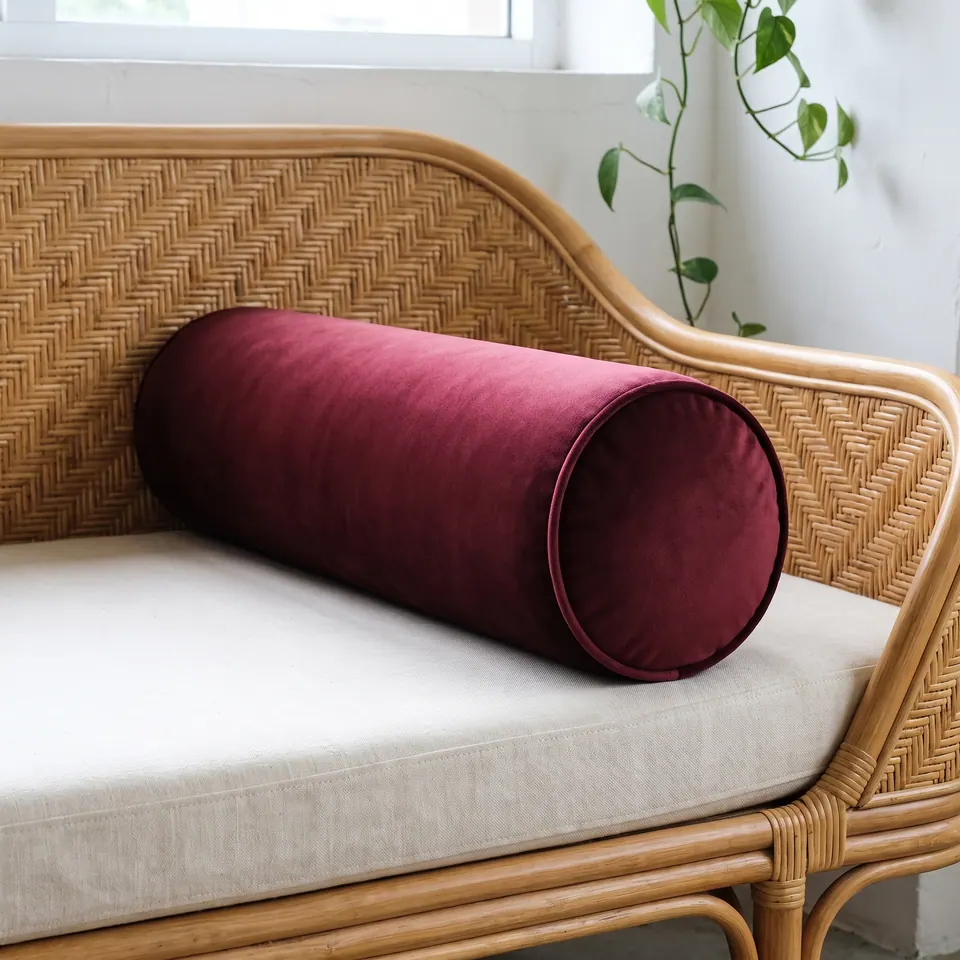
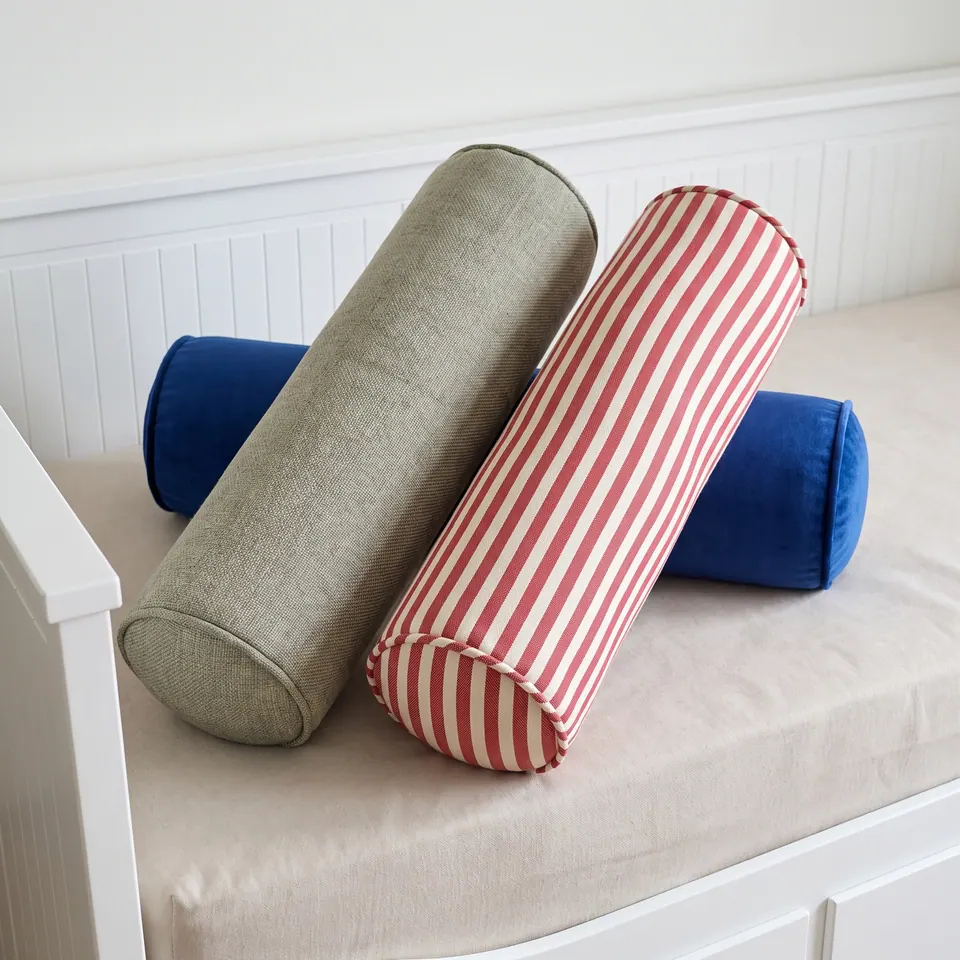
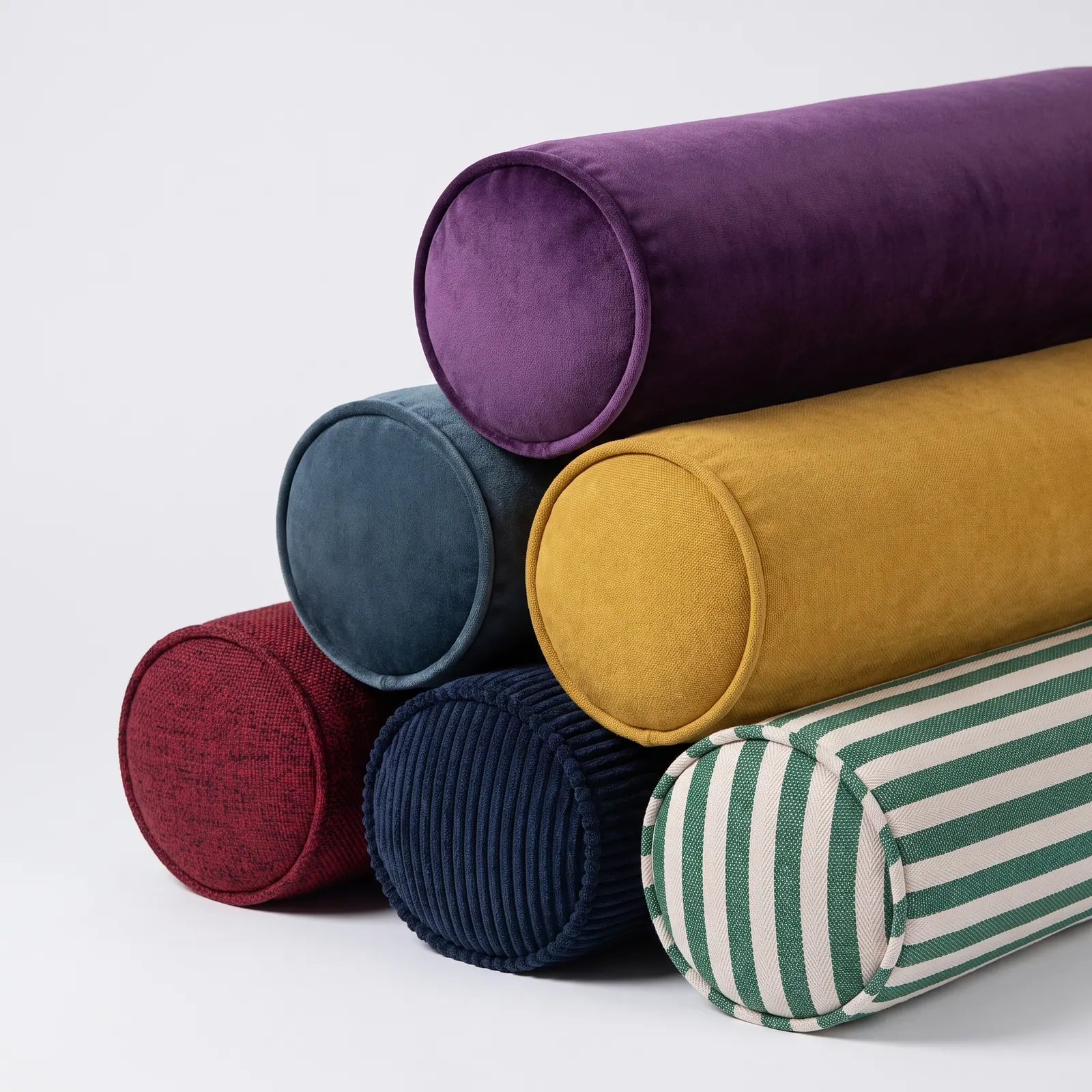
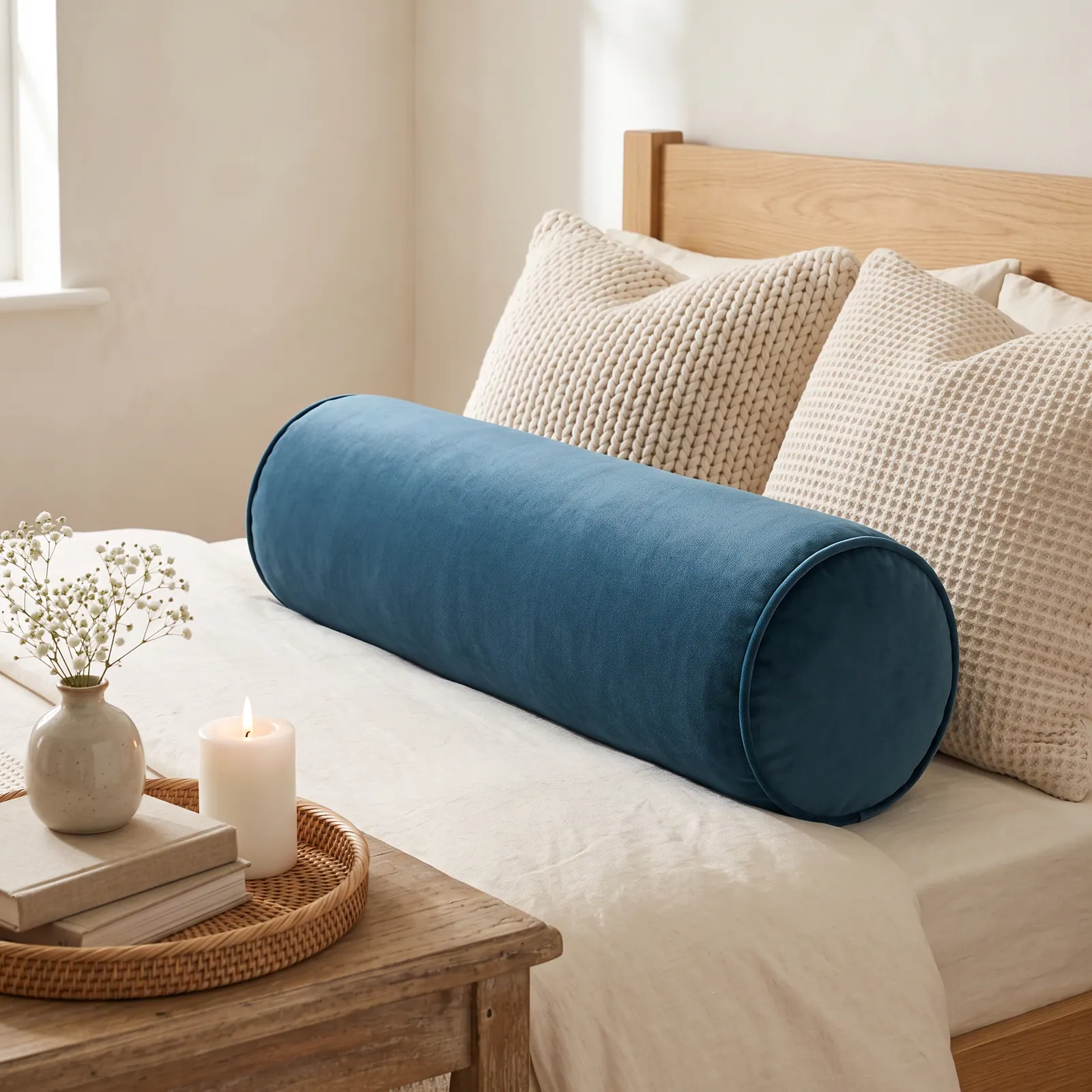
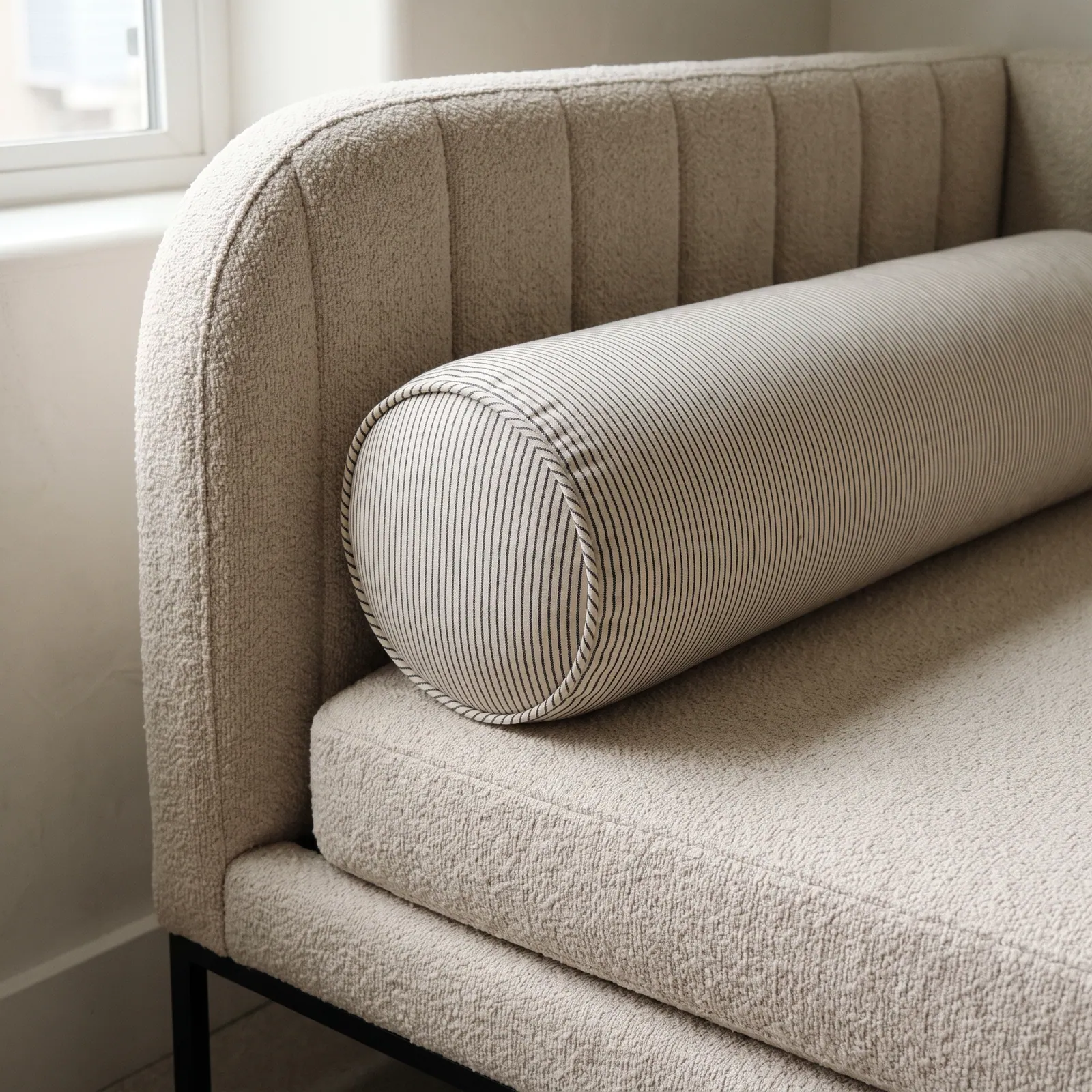
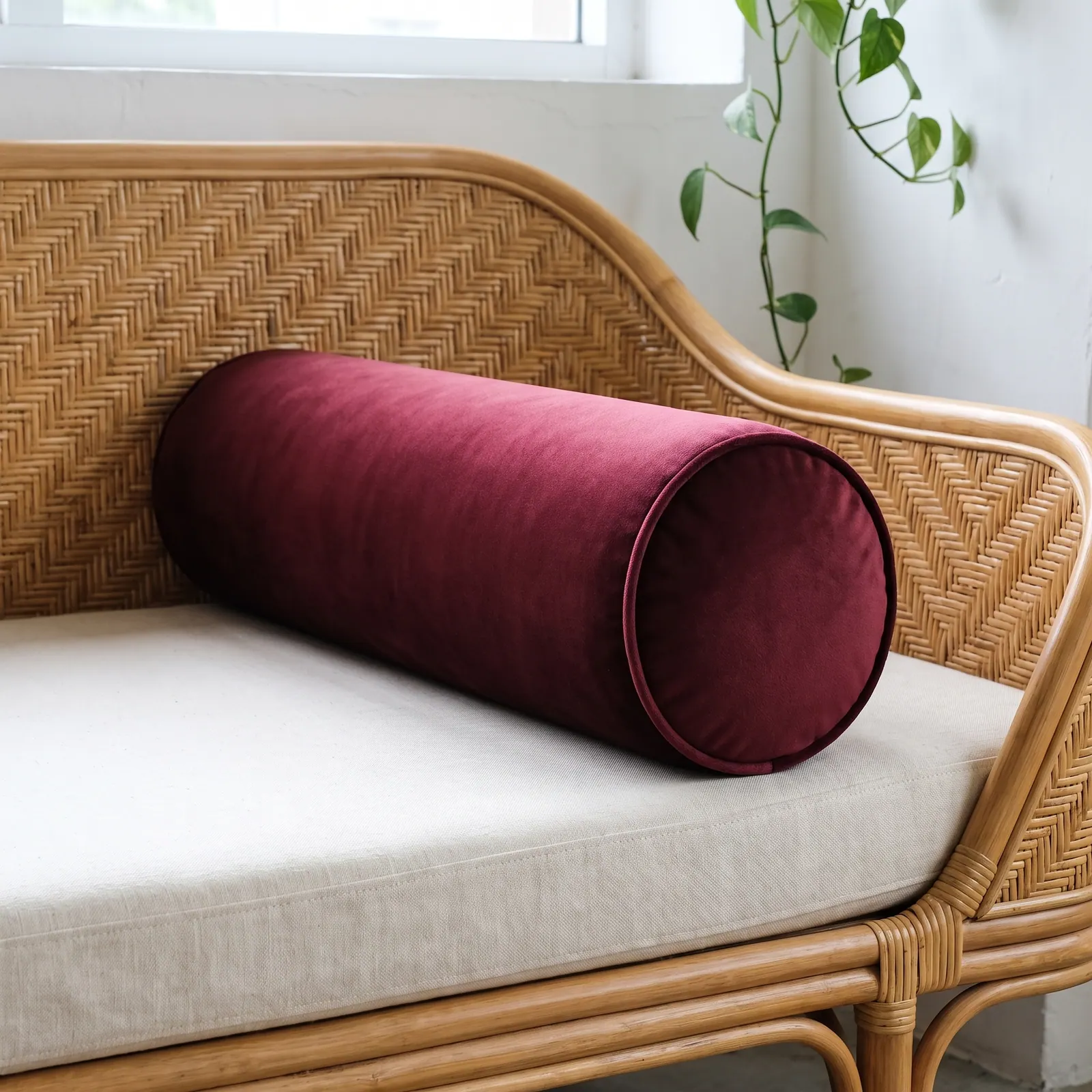
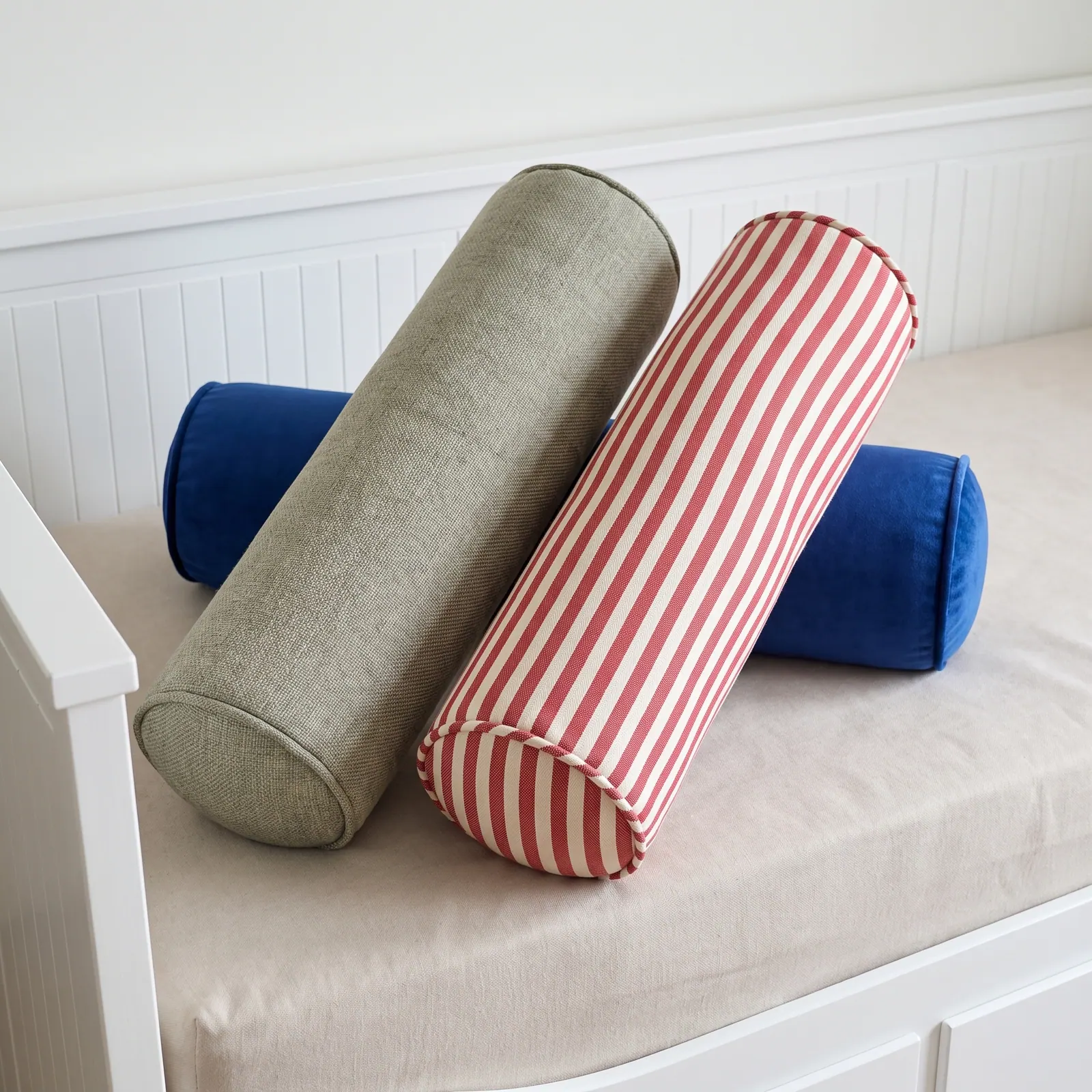
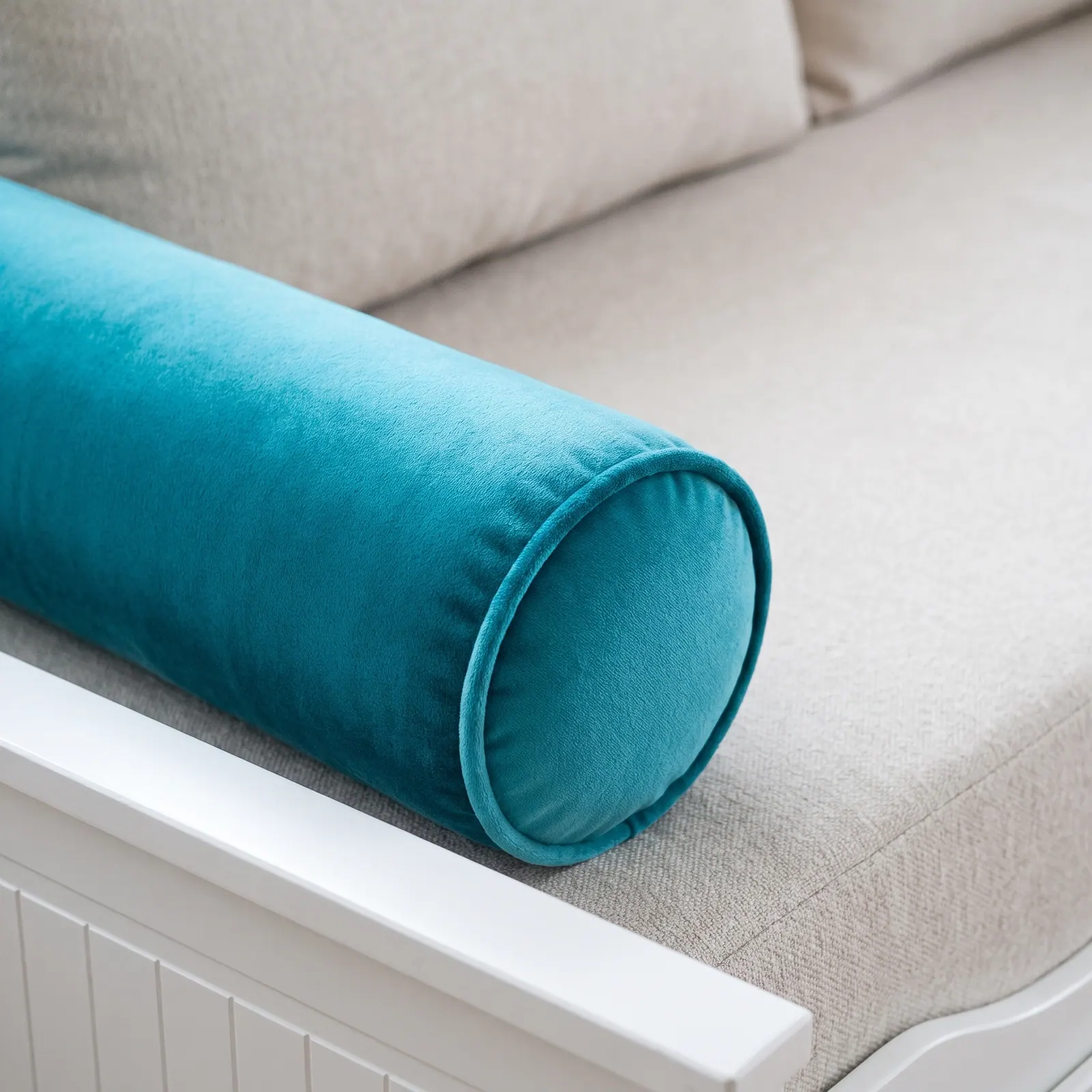
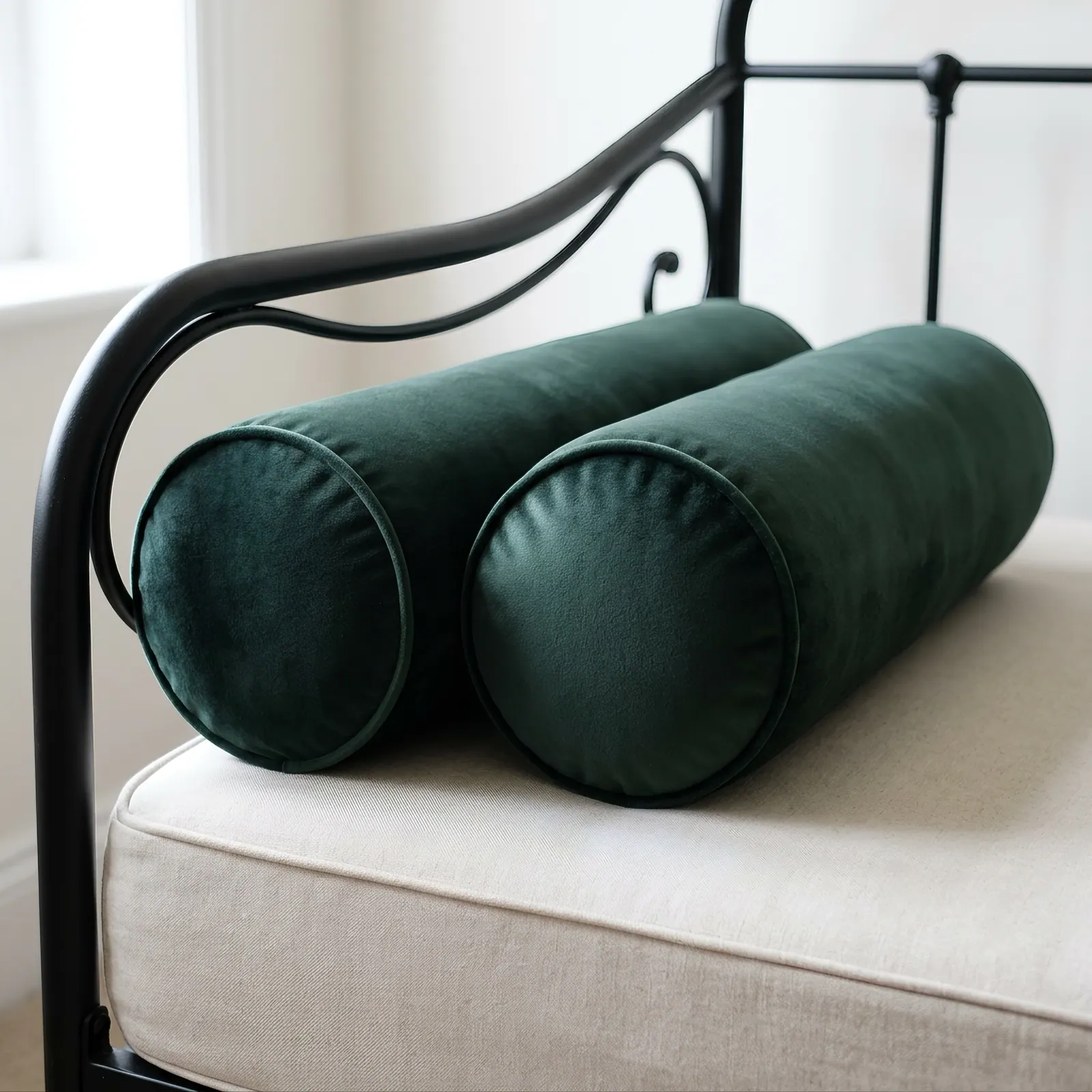
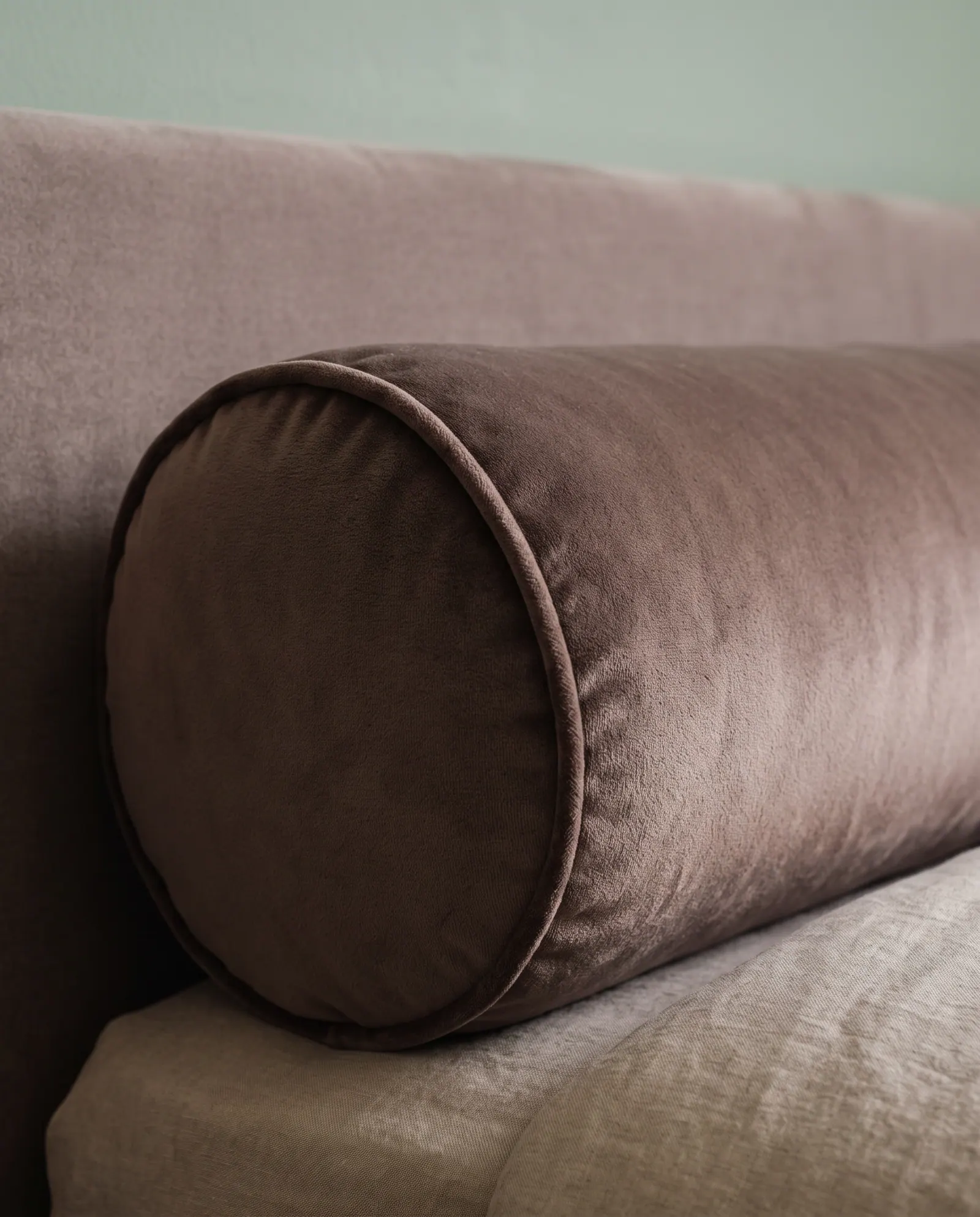
SaveOne bolster pattern, six very different cloths: two velvets, a mustard weave, a burgundy tweed, a chunky corduroy and a green stripe, each piped in its own fabric.SaveA long teal velvet bolster with piped ends lies across a linen-dressed bed, framed by cream waffle pillows and a candle on the nightstand.SaveA crisp ticking-style pinstripe cutting through the soft loops of a cream bouclé daybed.SaveDeep wine against honey rattan, with a trailing pothos in the window adding a touch of green.SaveThree textures and three colors thrown together on one daybed: a sage herringbone, a candy stripe and a cobalt velvet.SaveA jewel-bright teal velvet that picks up every bit of daylight, set against oatmeal seat and back cushions.SaveA light, dry-textured bolster on deep navy velvet, the reverse of the usual dark-cushion-on-pale-sofa formula.SaveDeep green velvet against black ironwork and an ivory box cushion, lit by a side window.SaveCocoa velvet with a pinkish cast, chosen to melt into a mauve headboard and rumpled linen sheets.SaveEnd-on view of a sage corduroy bolster, its ribbed cap and bobbled seam set against rust-red upholstery.SaveChunky corduroy ribs run the length of the roll and wrap the end cap, finished with a bobbled cord at the seam.
The standard bolster pillow is 8 in across, and an armrest bolster runs the depth of the seat: a 21 in deep seat takes a 21 in bolster.
Lay one bolster at each arm of a daybed and the bed becomes a sofa. Cross two or three in different cloths, a sage weave, a red stripe and a cobalt velvet, and it becomes a room somebody lives in. On a slim seat, bolsters do the work a thick cushion would: a 2 in x 70 in cushion pairs well with an 8 in and a 6 in bolster, both 70 in long.
Can you make bolsters to match the bench cushion I'm ordering?
The workshop's answer
Yes, in the same fabric and piping. A seat cushion with two bolsters is one of the workshop's most common custom sets. Send the cushion's width x length x thickness, each bolster's diameter x length, how many, and your fabric. Order the bench cushion from its listing, and the bolsters are added through a custom link. The workshop has made 6 in bolsters under 18 in long, a pair of 8 x 26 in corduroy rolls, and an 18 x 50 in linen bolster with matching piping.
A common question
What diameter should my bolster be?
The workshop's answer
Eight inches (20 cm) is the standard, and it looks right on most bolsters. For a fuller look the workshop makes 10 in (25 cm). An interior designer ordered slim 4 in bolsters to sit with 2 in bench cushions, while 20 in across would be unusually large. Armrest bolsters normally follow the seat depth, and very long benches can have the bolster split in two.
A common question
Can you make a neck roll for my daybed mattress?
The workshop's answer
Yes. Neck rolls and bolsters are made to any length and diameter in the same fabric as the mattress cover, with filling included; one was about 31½ in long and 8¾ in across (80 x 22 cm) for a 31½ x 79 in (80 x 200 cm) mattress. You can order the backrest and bolsters on their own; ask for the making and delivery time with the quote.
A common question
Can I buy just a bolster cover for an insert I already have?
The workshop's answer
Yes. Covers alone have been made for a 13 in x 32 in bolster and as a 9 x 22 in zippered bolster cover, among others. A cover-only bolster comes round and plain rather than tufted, since tufting needs the workshop's own filling, and piping can be added. Send the bare insert's diameter and length.
A common question
Will the bolster stay where I put it, or can it be attached?
The workshop's answer
Bolsters come loose, with no straps, as standard. If you want one to stay, ask when you order: the workshop can add a strap to hold a bolster to a mattress, or hook-and-loop fasteners to fix armrests to the base. One thing no maker can promise is a perfectly flat end; the filling inside rounds it slightly.
A common question
I bought a cushion from you last year. Can I still get matching bolsters?
The workshop's answer
Usually, yes. The workshop keeps fabric stock, so matching bolsters, round armrests and neck pillows have been made in the same fabric and color, even a year later. Send the diameter and length, how many you need and the fabric code from your first order, and the workshop adds them to a quote or sends a custom link. A single bolster is fine.
Have it made
Have your bolster pillow made — ask Harlan’s workshop
The best cushions I have known began with somebody asking one more question. Ask yours here. — Harlan
Leave your details and the workshop will call you to confirm measurements, fabric, foam and piping. No prices, dates or payment on this page: it is a request, not an order.
Fabric · Foam · Pipingwhat the workshop will confirm with you
How long should a bolster be for the back of a window seat?
As long as the seat, in most cases. Bolsters up to about 75 in (190 cm) have been made in one piece, and long ones are often split into two shorter rolls, which are easier to move and to wash.
Can a tufted daybed bolster have piping?
No. Tufted daybed armrests and backrests do not take piping. If you want piping on every piece, those parts are switched to a plain, non-tufted style, and the workshop sends an example photo of that look before making it.
Do bolsters arrive filled or empty?
Filled. Bolsters and neck rolls ship with their filling unless you ask for covers only, and back-support bolsters are soft-filled for comfort. Plain bolsters have zippered covers; tufted daybed rolls have no zippers.
Is one big bolster cheaper than two small ones?
Usually the other way round. A pair of small side bolsters, such as two 22 in rolls, costs far less than one large 18 in x 50 in bolster. Each piece has a minimum custom price, and ordering bolsters with the main cushion keeps shipping down.
How do I order a mix of cushions and bolsters that isn't on any listing?
Ask for an offer or a custom link. One buyer in the US wanted two 18 x 37 in rectangles and three 32 in cylinders in dark brown; the cart made no sense for five custom pieces, so the whole set was priced as one offer.
Can a bolster have a French edge instead of piping?
Only on tufted pieces, because a French edge is made on tufted work. Bolsters that normally carry French trim can be made without it, and covers sold on their own always come with piping.
What bolster size suits a queen or king bed?
One size chart puts bolsters for queen beds and sofas at about 36 to 40 in long and 8 to 10 in across, and king-bed bolsters at 48 to 60 in long and 10 to 12 in across. Measure your bed's width and the look you want, then order the exact length and diameter; any combination can be made.
Should a bolster be firm or soft?
It depends on its job. Round armrest bolsters are usually filled with siliconized polyester fiber, soft to lean on but full enough to hold their shape; neck rolls work better with shredded foam, which supports without feeling hard. A long bolster used as a bench backrest should be firmer, and very thick backs need foam rather than fiber.
Sit well. — Harlan
Share this atlas entry
Readings
Photographs read by the masters: bolster pillows
Real cushions made for real rooms, each read for proportion, fabric and fit.

 Save
 Save
 Save
 Save
 Save
 Save
 Save
 Save
 Save
 Save
 Save
 Save