A Reading by HarlanBolster Pillows
A Sage Corduroy Bolster on a Terracotta Sofa Arm, and Where the Money Goes
A letter from Harlan about one wide-wale bolster, the beaded seam at its end, and why the cheapest comfort in a living room is often a single pillow on a hard arm.
 Save
The quick answer
A bolster pillow is the cheapest way to make a hard, boxy sofa arm comfortable for lying down, because it fixes the arm without new seat cushions. Spend on the part that shows workmanship, the cut of the end cap and a covered cord seam, and save with a zippered cover-only order if your own filling still holds its shape.
High Point ·
My friend,
A letter about one sage bolster and a hard sofa arm
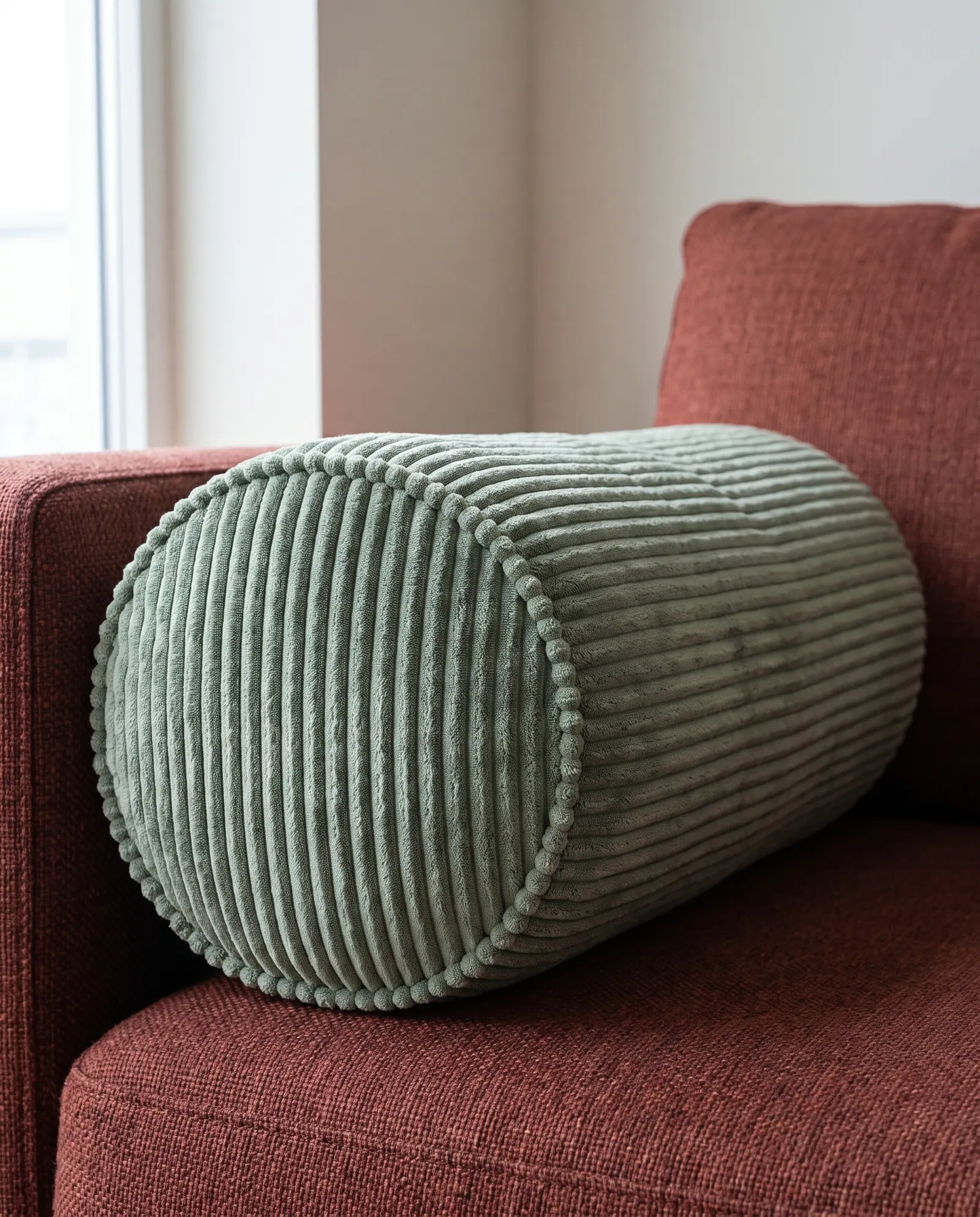
Here is a sage corduroy bolster lying on the arm of a rust-red woven sofa, photographed end-on in bright side light. Before you look at the color, look at the end. The round cap is where a bolster tells you whether it was cut with care.
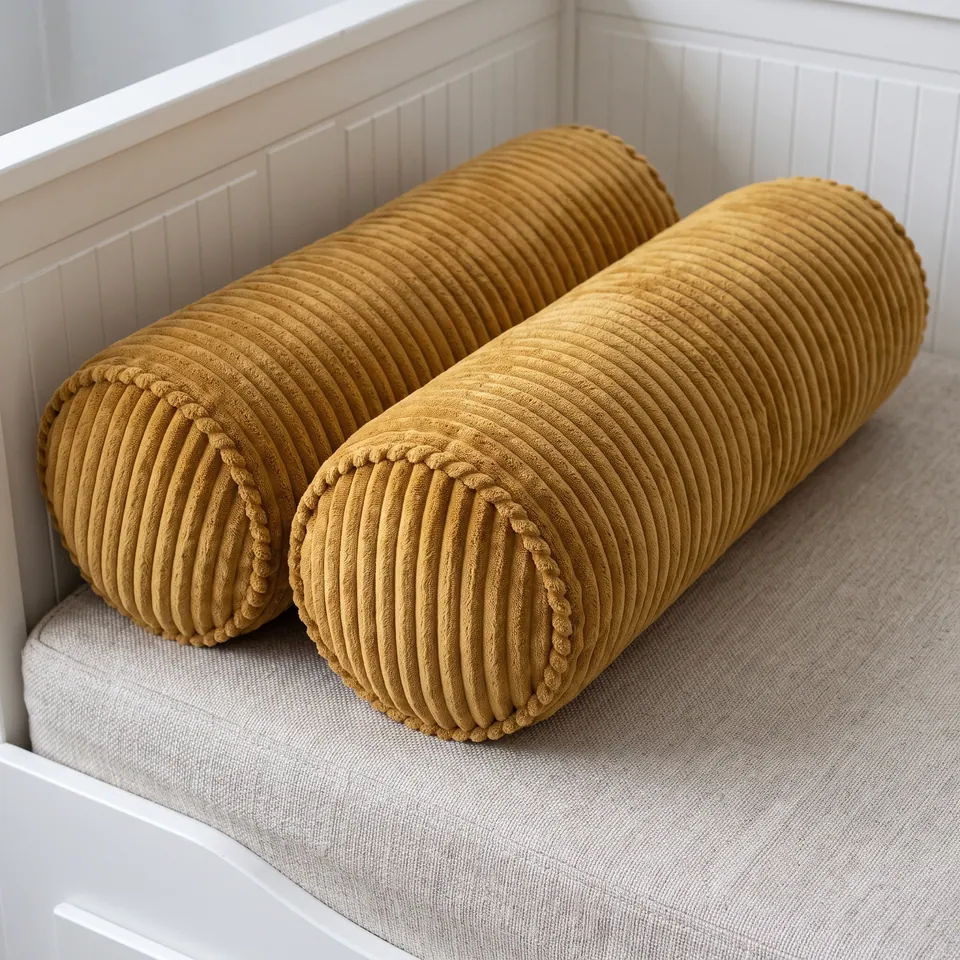
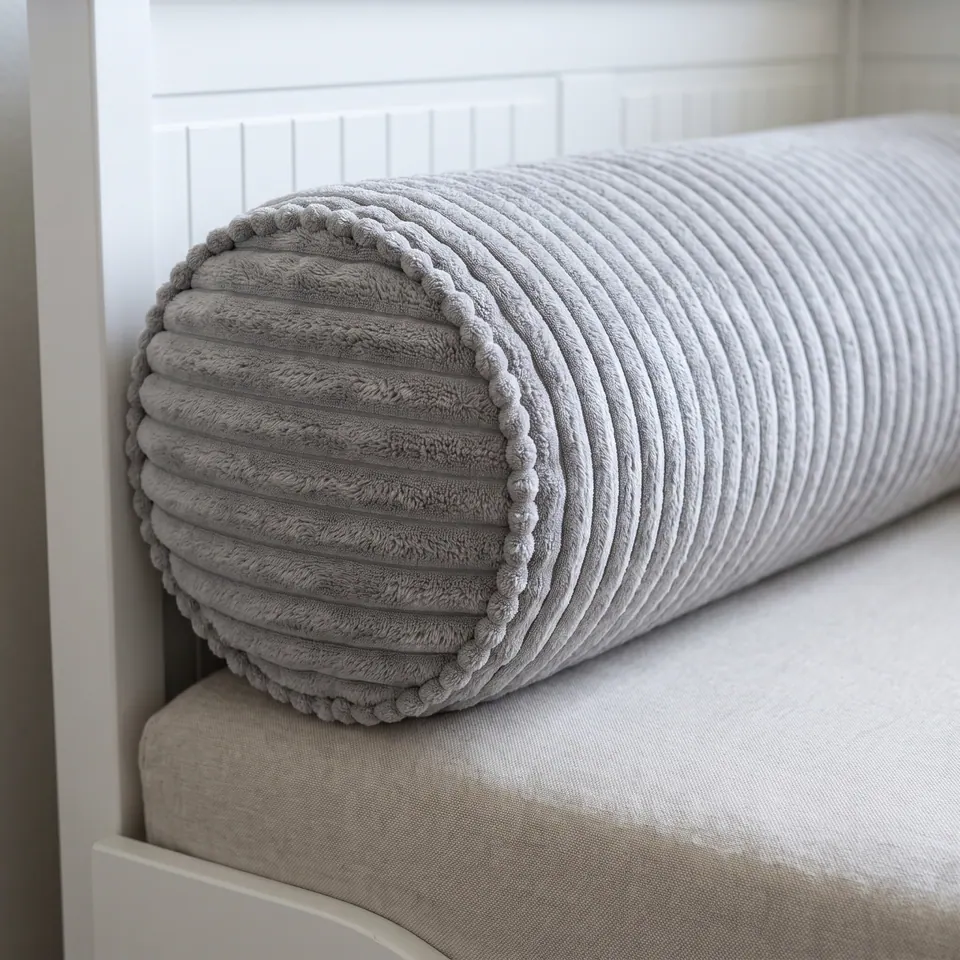
The ribs on the cap run across. The ribs on the body run the length of the roll. Where the two meet, a covered cord goes around, and it beads a little each time a rib crosses it. That bobbled line is softer than flat piping, and on wide-wale corduroy it is honest work: the cord shows you the cut instead of hiding it. The wale and nap Pattern explains why the ribs change direction.
Then the color. Sage and terracotta are near-complements: the green looks fresher against the rust, and the rust looks warmer against the green. No pattern is needed when two colors get along like that.
Now the job it does, which is where your money comes in. That arm is square and firm, the kind nobody can lay a head on. One bolster pillow turns it into a pillow for lying down. No new seat cushions, no new sofa. When folks ask me where to start spending, I point at the arm.
When they ask where the money lasts, I point at the end cap again. A seam cut true and closed firm is what you live with for years; color is a choice you can make again later.
Pinned by Harlan: five marks on a bolster, read end-on
Five pins, from the ribbed end cap to the rust sofa back, showing how one bolster was cut and why it earns its place on a hard arm.
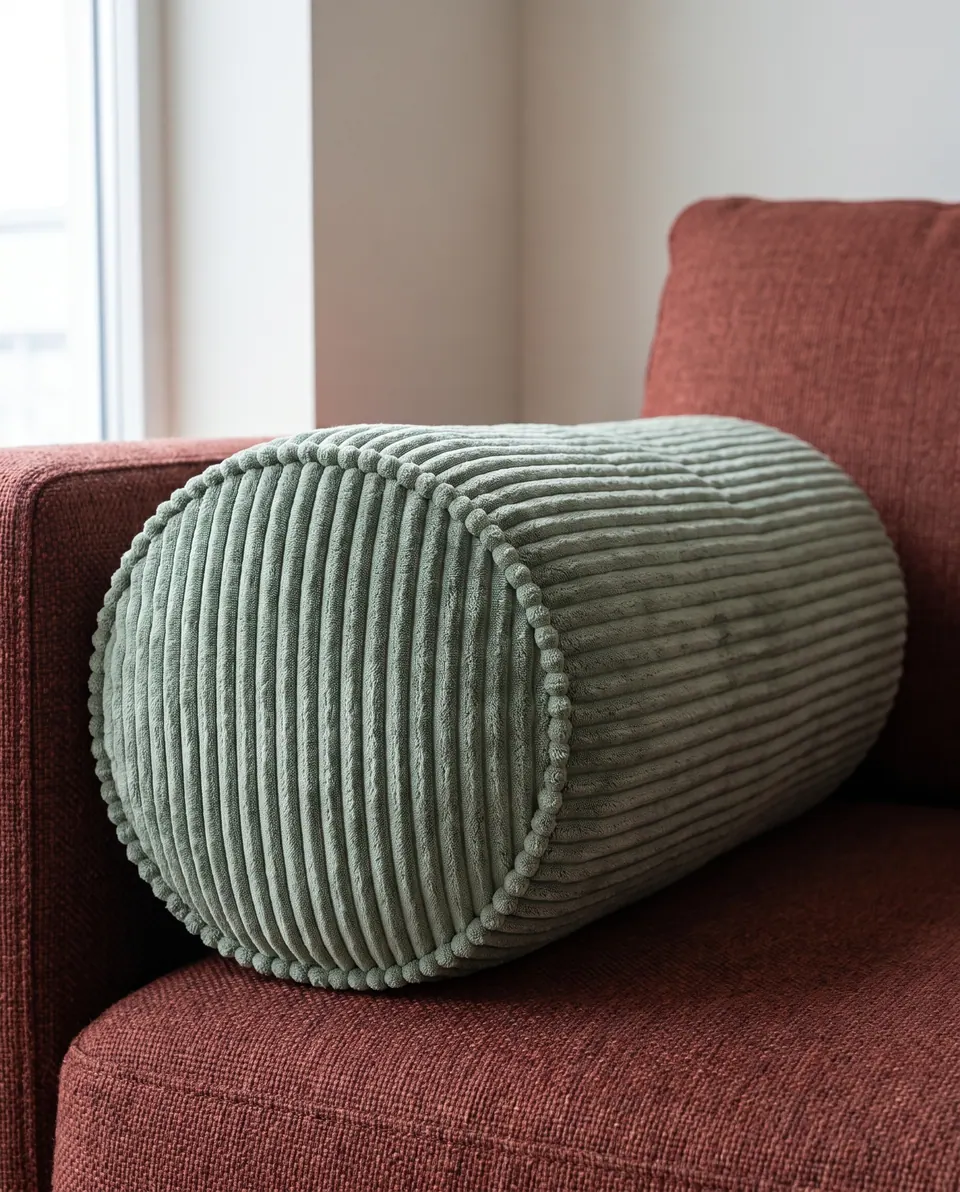
- Ribbed end cap
End-on, the horizontal ribs of the cap show exactly how the circle is cut.
- Beaded cord seam
The covered cord bobbles where each rib crosses it, a soft alternative to flat piping.
- Lengthwise wale
Body ribs run along the roll, the opposite direction to the cap.
- Rust sofa arm
Resting here, the bolster turns a hard boxy arm into a pillow for lying down.
- Sofa back cushion
Sage and terracotta are near-complements, so each makes the other look richer.
- Ribbed end capEnd-on, the horizontal ribs of the cap show exactly how the circle is cut.
- Beaded cord seamThe covered cord bobbles where each rib crosses it, a soft alternative to flat piping.
- Lengthwise waleBody ribs run along the roll, the opposite direction to the cap.
- Rust sofa armResting here, the bolster turns a hard boxy arm into a pillow for lying down.
- Sofa back cushionSage and terracotta are near-complements, so each makes the other look richer.
Where to spend and where to save on a bolster
| Decision | Spend here | Save here |
|---|---|---|
| The hard sofa arm | One well-made bolster laid along it | New seat cushions you don't need |
| End caps and seam | A cleanly cut cap with a covered cord | Extra trim; the cord already finishes the edge |
| The filling | A full cushion if you have nothing to fill it with | A zippered cover only, if your own insert still holds its shape |
| The fabric | Linen, velvet or soft performance, made to order when the room asks for it | Stock corduroy covers, which ship sooner |
| Personal touches | Clear sizes in the personalization box | Names and monograms, which aren't offered anyway |
Eleven pink corduroy pieces, planned one at a time
A buyer got in touch after sampling fabrics, with a floor sofa planned down to the last piece: an L-shaped layout with an ottoman, all in pink corduroy.
Four floor seats at 79 x 39 x 6 3/4 in (200 x 100 x 17 cm). Two L-shaped backrests at 39 x 39 x 15 1/2 in (100 x 100 x 39 cm). Three straight backrests at 39 x 15 1/2 x 15 1/2 in (100 x 39 x 39 cm). Two ottoman seats at 39 x 39 x 6 3/4 in (100 x 100 x 17 cm).
Then one more instruction, and it's the part I admire: no support bars on the long end facing out into the room. The workshop sent the listings to add to the cart, piece by piece, and the buyer wrote back that it all looked great straight out of the package.
That was time well spent: samples first, every piece on paper before a single cut. A modular floor sofa is eleven decisions, not one, and the support bar Pattern shows where the bars go. How many pieces does your own corner need?
Buyer questions: covers, names and other fabrics
- A common question
I already have filling I like. Can you make custom zippered covers without the foam?
The workshop's answerYes. Covers without foam are one of the workshop's core products, ordered through the zippered cover listing and priced below a full cushion. Choose the size range, then write the exact size, the fillable depth and your fabric code in the personalization box, and add corner ties if you need them. Place one order per cover size.
- A common question
What am I supposed to write in the personalization box? Could you put a name on the pillow?
The workshop's answerThe box is only for custom sizes, a delivery phone number and requests for other fabrics. The workshop doesn't print or embroider names on cushions.
- A common question
My replacement sofa covers come in corduroy. Could I have linen or velvet instead, and how long would that take?
The workshop's answerCorduroy covers are in stock, so they ship sooner. Velvet, linen or soft performance fabric covers are made to order at extra cost and take longer; ask for production and delivery times in writing.
On the cutting table: one sage bolster
| Piece | Bolster pillow, rolled |
|---|---|
| Fabric | Sage green wide-wale corduroy |
| Seam | Covered cord in the same corduroy, beaded where ribs cross |
| Wale | Across the end caps, lengthwise on the body |
| Resting on | The arm of a rust-red woven sofa |
| Job | Turns a square, firm arm into a pillow for lying down |
| Cover only | Zippered cover without filling, priced below a full cushion |
| Personalization box | Custom sizes, delivery phone and other fabric requests only |
Have it made
Have this made — ask Harlan’s workshop
Old upholsterers will tell you the real cutting happens in the conversation, long before the shears come out. Tell the workshop what you sit on, and they will talk it through with you. — Harlan
Leave your details and the workshop will call you to confirm measurements, fabric, foam and piping. No prices, dates or payment on this page: it is a request, not an order.
One corduroy bolster on a boxy sofa arm turns a hard, square edge into a pillow for lying down, and it needs no new seat cushions.
Harlan
Questions buyers ask next
Can a bolster replace new seat cushions on a sofa with hard arms?
Often, yes. If the seats are fine and only the arm is uncomfortable, one bolster laid along a square, firm arm gives you somewhere to rest your head when lying down. It is a small fix that leaves the rest of the sofa as it is.
Why do the ribs on a corduroy bolster run two different ways?
The body is cut with the wale running along the roll, while the round end cap shows its ribs running across. Where the two meet, a covered cord finishes the join and beads slightly at each rib.
Does sage green go with a terracotta or rust sofa?
Yes. Sage and terracotta are near-complementary earth tones, so the green looks fresher and the rust looks warmer when they sit together. A plain sage corduroy is enough; the pairing does the work a pattern otherwise would.
Is a cover-only bolster order cheaper than a full one?
Yes, covers without filling are priced below a full cushion. That saving makes sense while your own insert still holds its shape; a flat insert in a new cover is still a flat pillow.
Sit well. — Harlan