The Pattern Room · a measuring pattern
Ordering new cushion covers for foam you already own
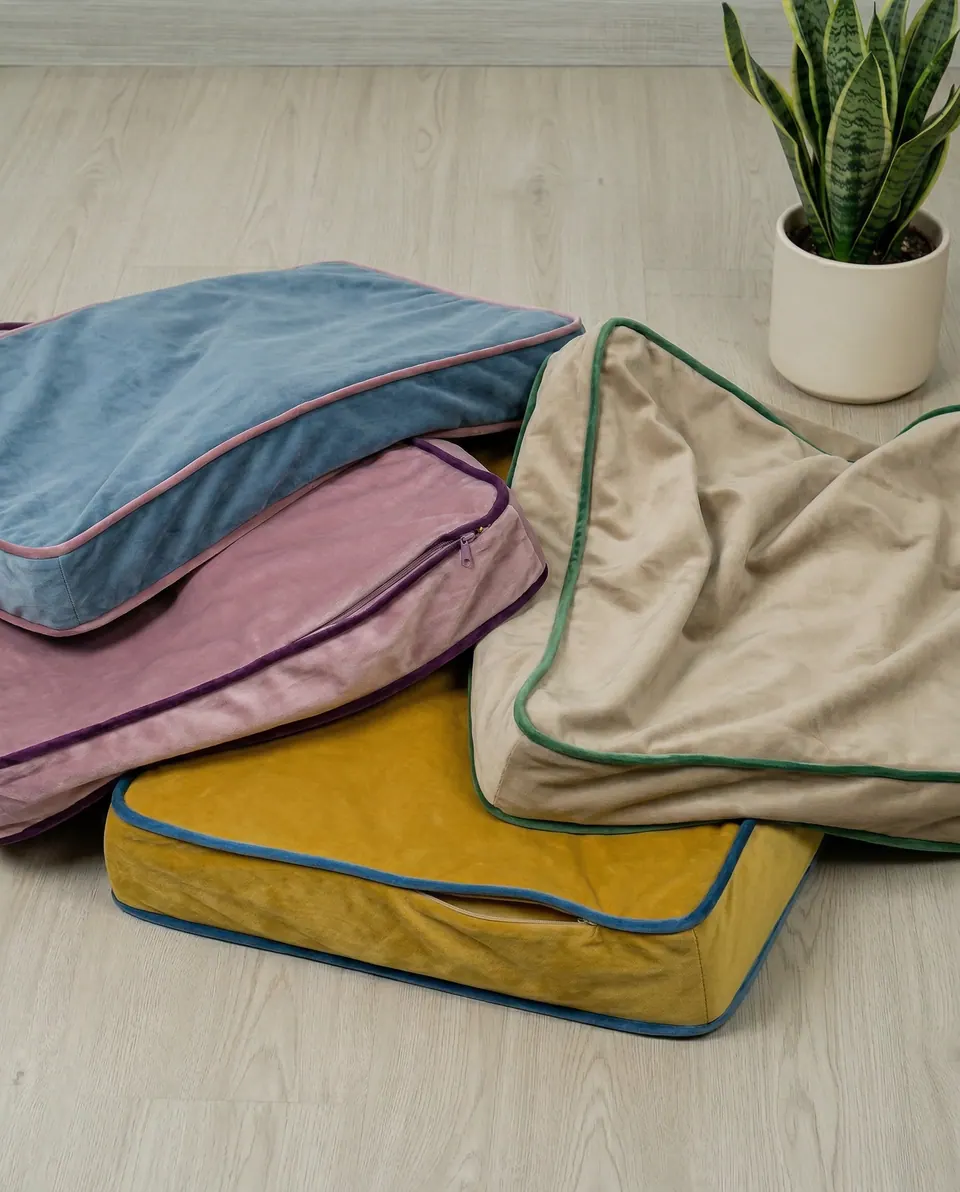
Good foam deserves a second dress. The trick is to measure the insert the way the new cover will meet it: bare, relaxed, and honest about its thickness.

 Save
The quick answer
To order replacement cushion covers, measure the bare insert seam to seam while it lies relaxed, record its true thickness without rounding, and say whether it is foam, fiber or a mattress. The cover is sewn to sit snugly over exactly those numbers, so a cover sized from the old cover, or about 1 in too small, will fit badly.
The cover that came out one inch short
One inch was all it took. In one past order, a new cover came out about 1 in (2.5 cm) smaller than the foam it was made for. The cushion bulged at every edge and sat harder than it should, like bread that rose past its tin.
That is the quiet risk of replacement cushion covers. A cover is sewn to the numbers you send, so it is only as true as your tape. With covers for a buyer's own insert, the same slips come back: the old cover measured instead of the foam, a thickness rounded to the nearest option, a fill type left unsaid.
Measure well and the reward is lovely: the foam you trust, in a new color, for less than a filled cushion. Start at the cushion covers hub, or at foam inserts if the old foam has given up.
Measuring the insert, seam to seam
Undress the insert
Unzip the old cover and lift the insert out. Measure the bare foam or filling, never the old cover: covers stretch, relax and change in the wash, and a copy of a tired cover is a tired cover. One exception: if the new cover will go over an inner cover you are keeping, measure with that cover on and say so.
Let it lie relaxed
Lay the insert flat on a table, not squeezed into its frame. Measure seam to seam across the top at the widest point, resting the tape on the surface rather than pressing it in. A mattress is measured at its widest and thickest point.
Take length and width to the nearest 1/8 in
Measure each side twice. A taper needs the back edge, the front edge and the depth. Anything that isn't a rectangle gets a drawing with every side labeled, such as a slight trapezoid with rounded front corners, plus a photo.
Give the true thickness, not the nearest option
Thickness is the height of the side band, the gusset of a box cushion. If your foam is 5 1/2 in (14 cm), write 5 1/2; odd thicknesses are no problem for covers only. Leave it out, and a mattress cover can come back sized for a double layer.
Name the fill
Foam, fiber and mattresses meet a cover differently. Firm foam fills a snug cover crisply; a soft fiber insert should be about 1 in (2.5 cm) larger than its cover to look full. If you don't know what is inside, say so, and the workshop may suggest its own insert instead.
Photograph the tape, then type the numbers
Photograph the tape on each dimension, and write the numbers out as well, because tape photos get misread. Keep one unit for the whole order and put it after every number.
Write 'cover only, no foam'
Choose the nearest size range on the zippered cover listing, and type the exact length, width, thickness and fabric code in the personalization box. Then write cover only, no foam in plain words. The workshop double-checks every covers-only order, because some buyers believe they are buying a filled cushion.
Choose the zipper and the extras
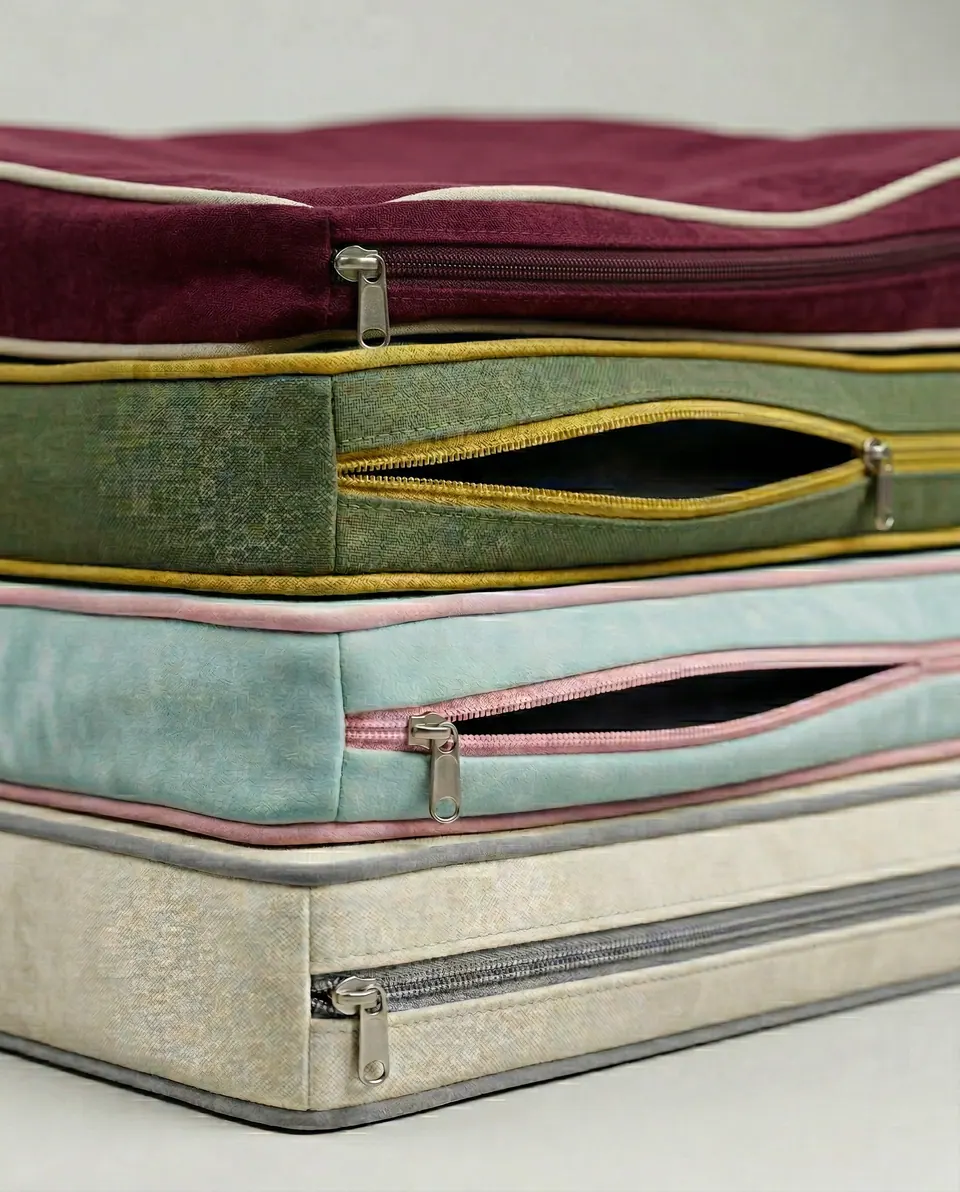
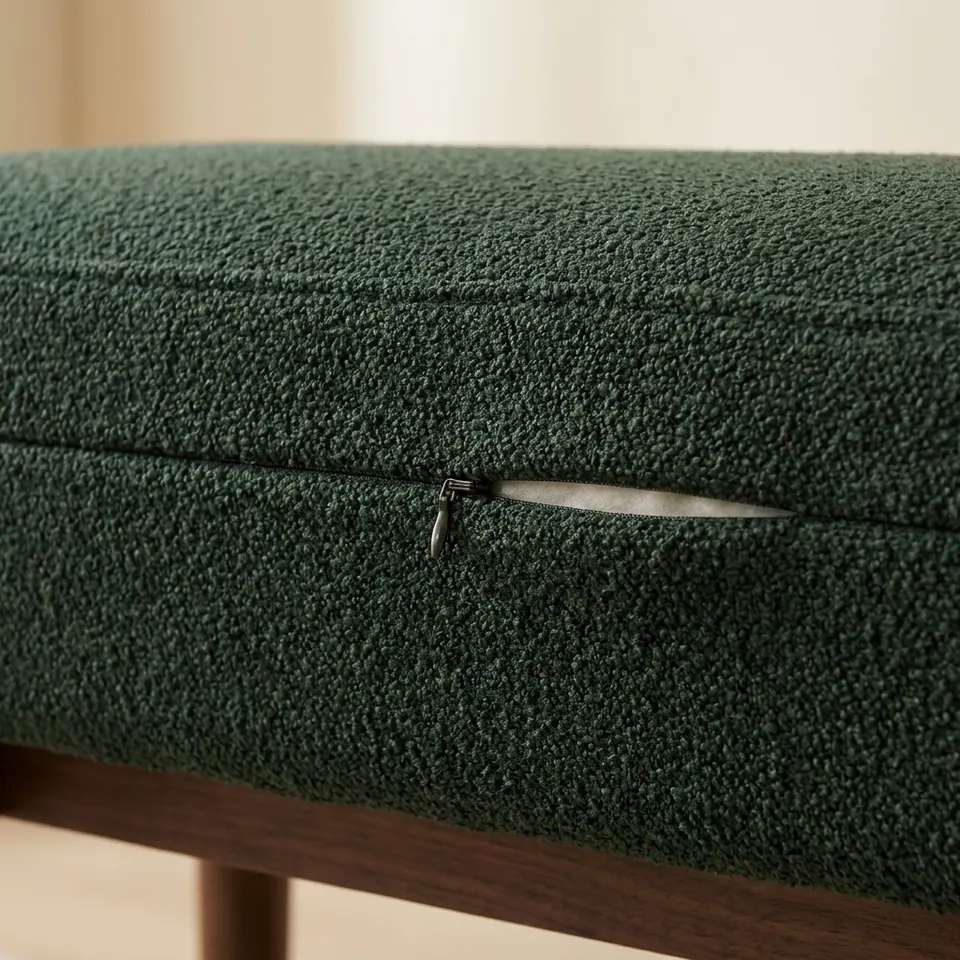
Every cover zips fully off, with the zipper hidden on the back edge or the underside; on bench and mattress covers it often wraps two corners so the insert slides in. Ask in writing for extra-strong zippers, corner ties or a non-slip base.

Have it made
Measured it? Have Élodie’s workshop make it
Describe the room at four in the afternoon: the floor, the wall, the one color you love. That is where a good fabric choice begins. — Élodie
Leave your details and the workshop will call you to confirm measurements, fabric, foam and piping. No prices, dates or payment on this page: it is a request, not an order.
What to send for each kind of insert
| Insert | Measure | How the cover meets it | Tell the maker |
|---|---|---|---|
| Firm foam block | Bare foam, seam to seam, true thickness | Yes Sewn to your numbers so it sits snug; foam runs slightly larger than its cover to look full | Foam, and its exact thickness |
| Soft fiber insert | Relaxed, at the widest point | Partly The insert should be about 1 in (2.5 cm) larger than the cover | That it is fiber-filled |
| Mattress | Widest and thickest point | Yes Fitted covers run about 1/2 to 3/4 in (1 to 2 cm) under the measured thickness, since the fabric stretches | The mattress model, if you know it |
| Two stacked mattresses | Their combined thickness | Partly One cover around the stack, or one each | Which of the two you want |
| Insert with a cover you're keeping | With that cover on | Yes Sized over the existing cover | That you measured over a cover |
| Tufted cushion | Not applicable | No Tufting needs the workshop's own filling, so covers only can't be tufted | Ask for a plain zippered version |
Mattress covers are zipper-only; there is no elastic, fitted-sheet version.
A tapered chair cushion, measured twice
A buyer in the US had a tapered chair cushion and wanted a new cover only. The first numbers: 17 in (43 cm) across the back, 19 in (48 cm) across the front, 19 in (48 cm) deep and 3 1/2 in (9 cm) thick.
Before quoting, the workshop asked for the cushion to be measured again, with a photo. On a taper, half an inch at the front edge changes the angle of both sides, and a cover cut to the wrong angle never quite settles on its foam. The re-measured numbers and the photo came back together.
The buyer chose one linen for both the body and the piping. Tonal self-piping lets the shape speak instead of the trim, which is exactly right on a small seat. The foam stayed; only the dress changed.
- What it taught
- Re-measure old cushions; a half-inch change in front width matters on a tapered cover.
A spare set in a second color
Here is my favorite reason, my friends, to own good foam: it can change clothes. The workshop keeps your exact sizes, so extra covers can be ordered with the cushion or later, in the same cloth or a new one. Ordered alongside the cushion, a second cover costs roughly half as much as the cushion itself.
People use spares three ways. They change with the seasons, a washed-denim linen for July and a deep cinnamon velvet for December. They rotate on laundry day, so the seat is never bare. Or they quietly retire a color they regret. Let one color speak and the others listen: if the room already has a loud rug, the second set can be the calm one.
It works outdoors too. A buyer in the US had sound foam for a hanging porch swing, a 55 1/4 x 27 3/4 x 4 in (140 x 70 x 10 cm) seat and a 50 x 13 x 4 in (127 x 33 x 10 cm) back, and ordered cinnamon covers only, with extra-strong zippers.
Before you commit to a new shade, order swatches and look at them by a window at noon and again under a lamp. See fabric swatches before ordering, then browse velvet or linen-look fabrics in the Swatch Library.
What color would you dress your foam in next, if the choice were free?
Where cover-only orders go wrong
- Measuring the old cover instead of the insert. Covers stretch and relax; the foam keeps the true size.
- Rounding the thickness to a menu option. A 3 1/2 in insert in a 4 in cover sits loose; in a 3 in cover it bulges. Write the real number.
- Leaving the thickness out. A mattress cover can come back made for a double layer, twice as tall as the mattress.
- Forgetting the fill type. Foam and fiber meet the same cover differently; a soft fiber insert needs about 1 in more than the cover.
- Not saying 'cover only'. One buyer ordering corduroy covers for two twin mattresses, 74 x 38 x 10 in and 74 x 38 x 8 in, was first asked for a balance because the payment looked like a full cushion. Plain words fix it.
- Expecting a new cover to firm up a tired insert. A fresh cover over slouchy original filling stays slouchy. The insert decides the final look.
- Typing ties into the size box. Extras typed there get overlooked. Ask in writing, then check the pre-dispatch photo.
Try the cover first in the pillow cover studio
Throw pillows are the gentlest place to practice. The pillow cover studio lets you choose a size, an edge and a cloth for a throw, lumbar or bolster cover, shows it on a sofa, and lists every cut piece. Measure your insert first, then build the cover around it.
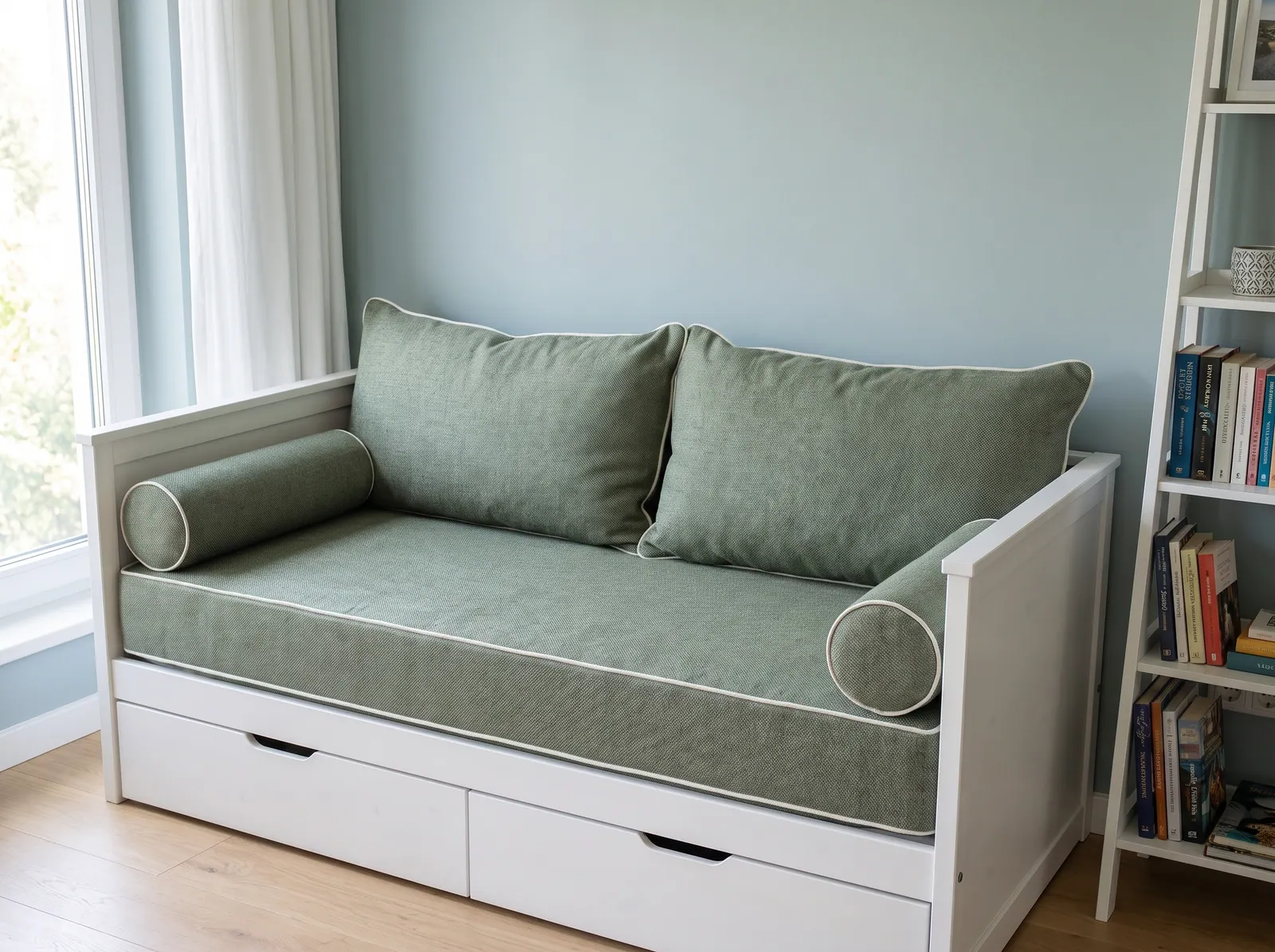
For daybeds and stacked mattresses the numbers grow but the rules stay the same; daybed mattress cover measurements walks through them, and where the zipper goes explains the wrap-around zipper. When the new cover comes home, wash it at 86°F (30°C) on a delicate cycle.
A replacement cover about 1 in smaller than its foam makes the cushion bulge and sit over-firm, so measure the bare insert seam to seam.
Élodie
Two allowance rules you'll read online, and which one applies
Replacement-cover guides give opposite advice, and both are right for their own method. One tells you to round the cover up by about 1/2 in so it slides on easily; foam cutters say the reverse, cutting foam slightly larger than its cover so the fabric stays taut and the cushion looks full, with a little bulge at the zipper opening. The difference is who adds the allowance. When you order a cover here, send the insert's true length, width and thickness and add nothing: covers are cut to the insert, a little under the measured thickness because the fabric stretches, so a snug fit is intended. Adding your own half inch on top produces a loose, wrinkled cover.
Buyer questions: covers for the foam you kept
- A common question
If I send my insert's size, will the new cover actually fit snugly?
The workshop's answerYes, if the numbers are right. The fabric has a little stretch, so fitted covers are made about 1/2 to 3/4 in (1 to 2 cm) under the measured thickness; a mattress stack measured at 9 1/2 in (24 cm) would get an 8 3/4 in (22 cm) cover. Photograph the tape on each dimension, and say whether the insert is foam or fiber-filled.
- A common question
What do you need from me to make a daybed mattress cover?
The workshop's answerThe length, width and thickness of the mattress, in inches or centimeters, for example 39 x 75 x 12 1/2 in for a twin. Always give the thickness: without it the shop may assume a double-layer mattress and make the cover twice as thick. Two mattresses stacked in one cover need their combined thickness.
- A common question
Can you make a zippered cover for a mattress I already own, even an odd size?
The workshop's answerYes. Box-style zippered covers are made to any mattress size, from a standard twin at 38 x 75 x 8 in (97 x 190 x 20 cm) to a twin XL at 38 x 80 x 12 in (97 x 203 x 30 cm) and well beyond. The zipper can run along the long edge and piping is optional. Two mattresses of different heights go in as one order per size and can ship together.
- A common question
Could the cover have elastic like a fitted sheet instead of a zipper?
The workshop's answerNot on mattress covers; those are zipper-only. For a cover you take on and off daily, an open-bottom skirted daybed cover can be made, with a skirt that covers the front and tucks between mattress and base. Elastic covers over sofa cushions can be quoted, but they may not sit snugly on cushions that aren't square or sharp-edged.
- A common question
I'm ordering a floor sofa. Can I add a second set of covers so I can swap colors?
The workshop's answerYes. After the sofa order, the shop sends a separate link for an extra cover set in any chart color; it can ship with the sofa or be bought later. The covers zip on and off over fillings that have their own inner covers, so you can change with the seasons or keep one set in the wash.
Covers only, briefly
Can a tufted cushion get a new zippered cover?
Not as a tufted cover. Tufted cushions are filled, buttoned through the filling and hand-stitched closed, so there is no zipper, and tufting only works when the workshop makes the filling. The same size can be made as a plain foam cushion with a zippered, removable cover instead.
Are covers without foam cheaper than full cushions?
Yes. Covers only are sold in any size through the zippered-cover listing at a lower price than filled cushions. Spare covers for cushions the workshop made also fit the existing foam, and the workshop keeps your sizes for repeat orders.
Should a new cover be bigger or smaller than the foam?
Very slightly smaller, for a crisp, full look. Firm foam is cut a little larger than its cover; the trade drafting rule is about 1/4 in per side. A cover about 1 in too small has gone too far: the foam bulges and feels over-firm.
Can the new covers go in the washing machine?
Yes. Every foam cushion cover zips fully off, with the zipper hidden on the back edge or the underside. Wash covers at 86°F (30°C) on a delicate cycle. The inserts themselves are not washed, which is why fillings carry their own inner covers.
What if my old foam turns out to be the real problem?
Then a new cover won't fix it; a fresh cover over slouchy filling stays slouchy. New inserts can be made along with the covers, and when a buyer's thickness or fill was unknown, the workshop has included its own inserts so the fit was predictable.