 Save
- Plum velvet crown
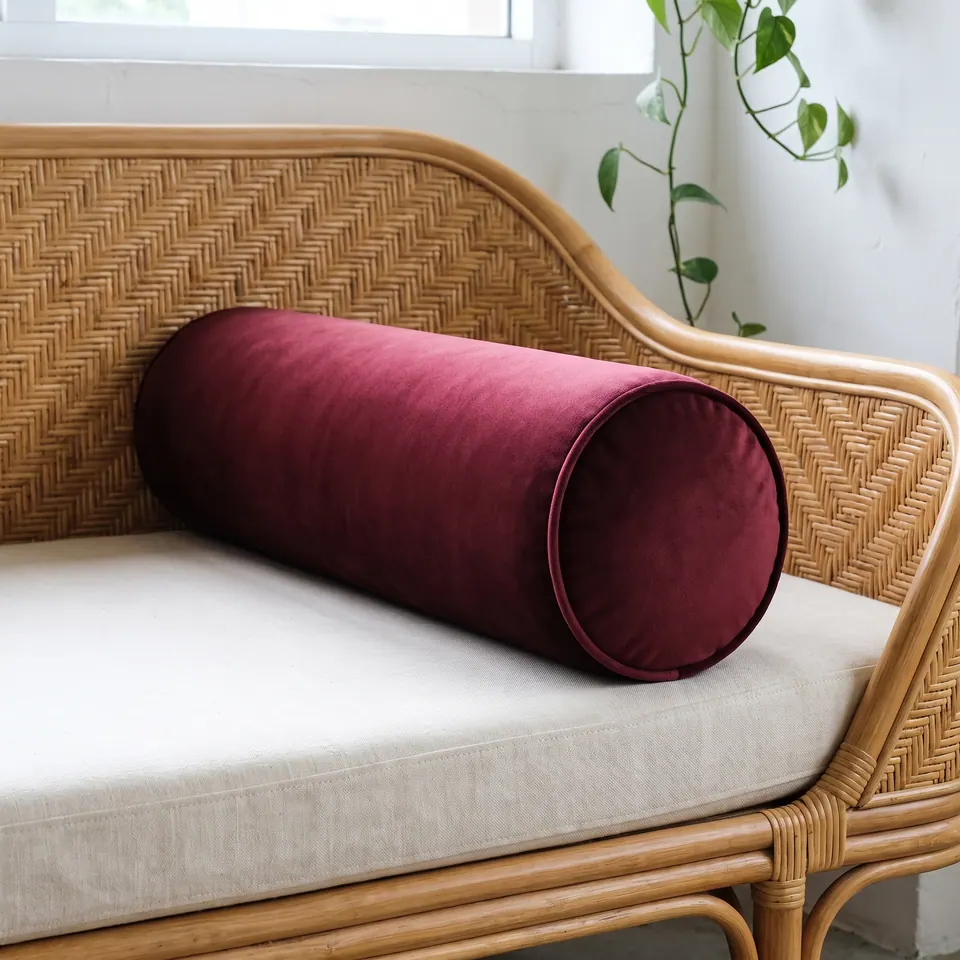
The deepest velvet goes on top so its sheen is the first thing the eye catches.
- Slate blue velvet end
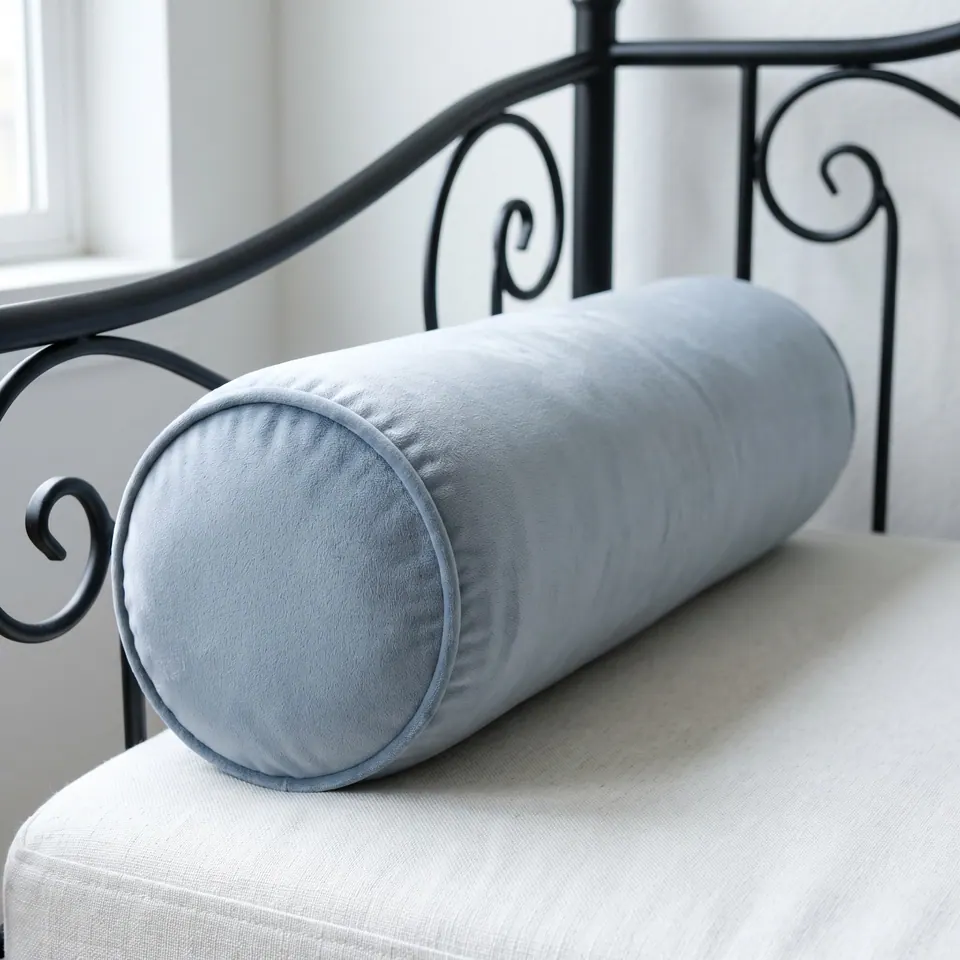
A cool muted velvet sits between the plum and mustard so the two warm colors never touch.
- Burgundy tweed weave
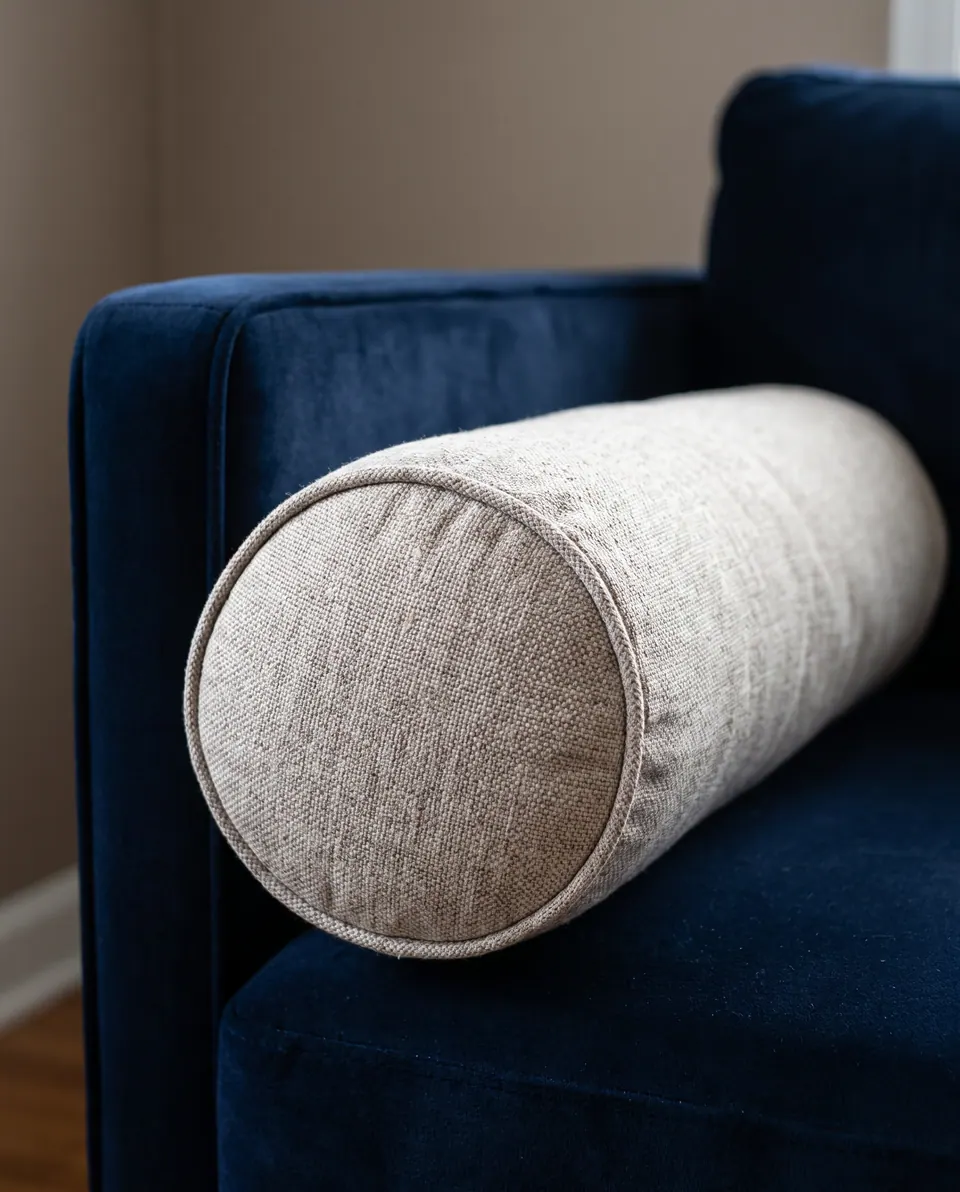
Flat-woven tweed reads slightly smaller than velvet of the same diameter because it has no pile.
- Navy corduroy ribs
Wide-wale ribs wrap the end cap too, so the circle shows horizontal lines instead of a smooth face.
- Green deckchair stripe
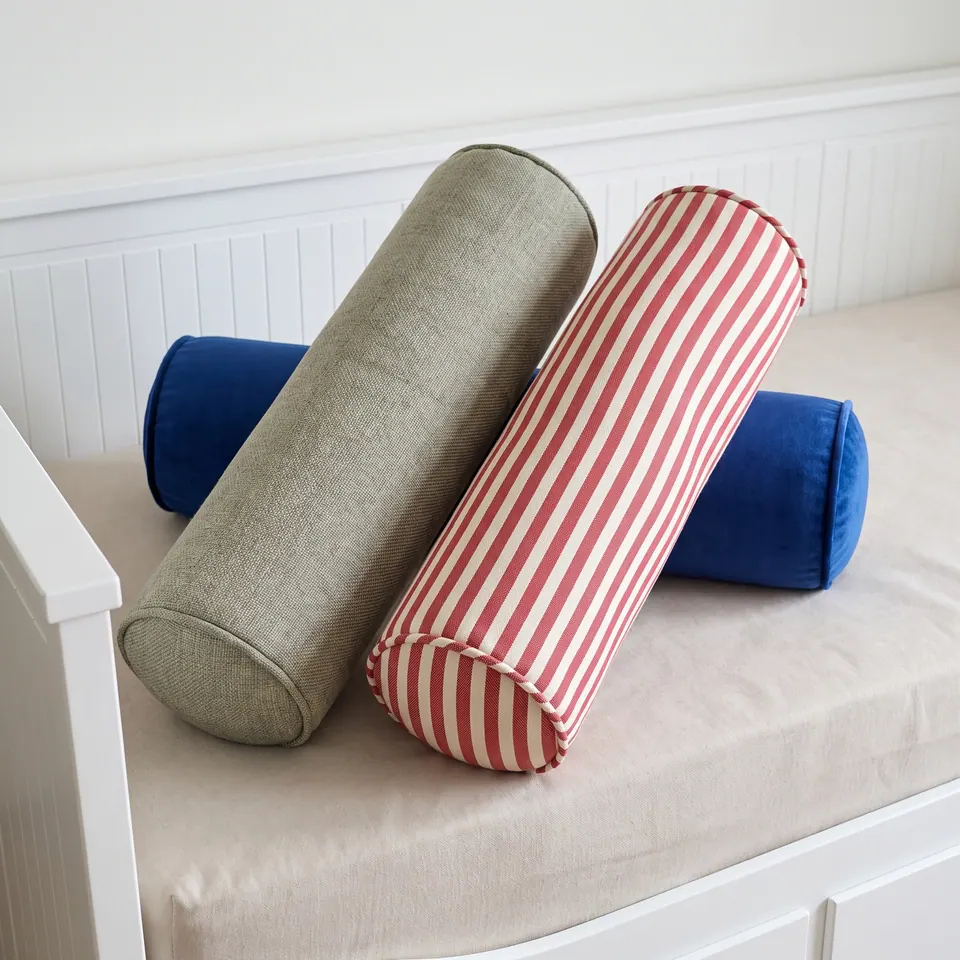
One pattern among solids breaks up the block and keeps the stack from looking like a swatch book.
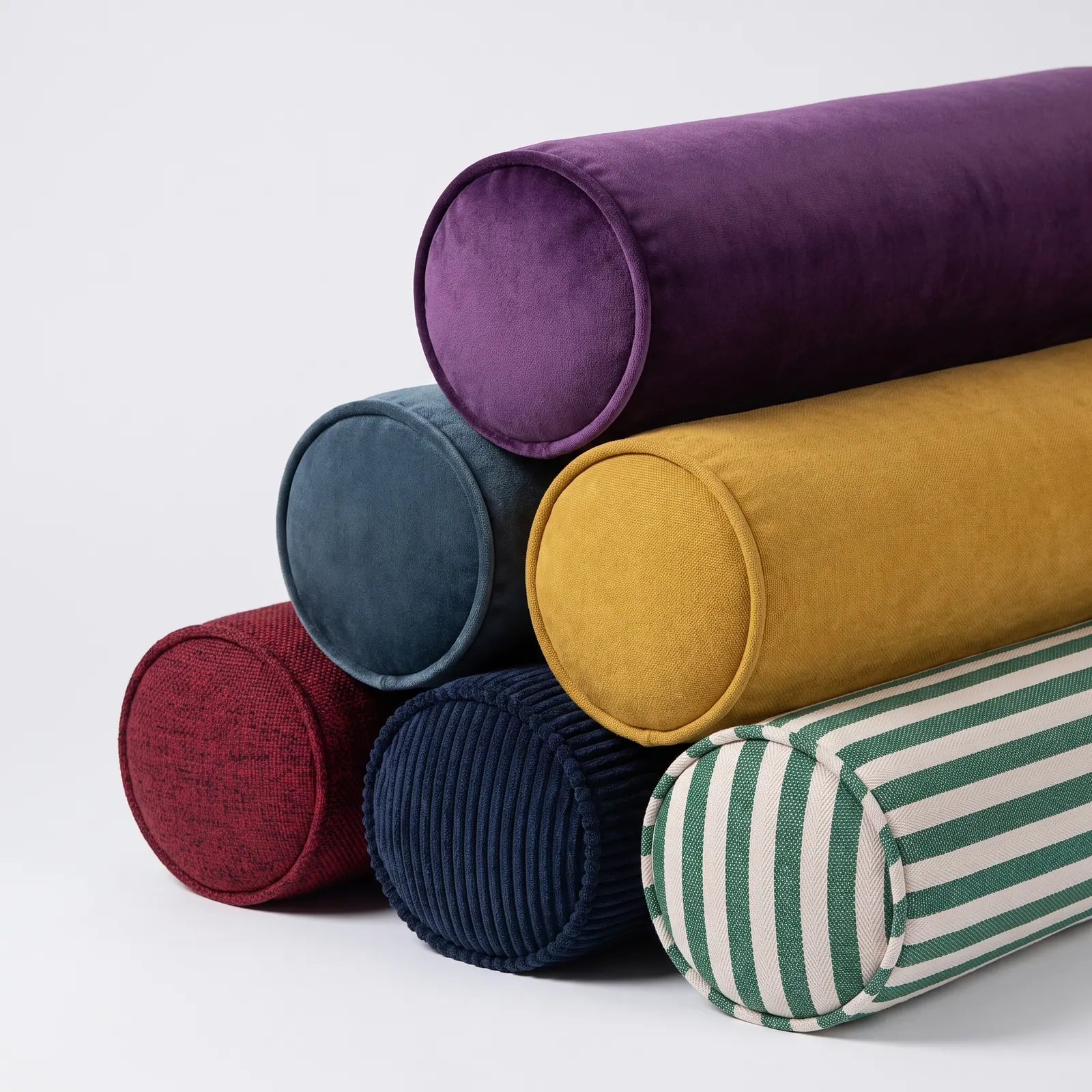
Plate Six Bolster Pillows Stacked: Velvet, Corduroy, Tweed and Stripe
One bolster pattern, six very different cloths: two velvets, a mustard weave, a burgundy tweed, a chunky corduroy and a green stripe, each piped in its own fabric.
A Reading by HarlanBolster Pillows
Six bolster pillows in velvet, corduroy, tweed and stripe, and the order message that gets them right
One round pattern, six cloths, one pale gray sweep. A stack like this teaches more about ordering than any price list, because every fabric changes how the same shape looks.
The quick answer
To order a bolster pillow right the first time, give the workroom the length, the diameter and the exact fabric code, not a color name. Ask for larger photos of any code you are unsure of before you order. If you are buying covers for inserts you already own, measure the insert's height as well as its length and width.
Pinned by Harlan: five cloths, top of the pyramid to the front corner
Five pins run from the plum crown down to the green stripe, each one a lesson in how cloth changes the same round shape.
The numbers match the pins on the plate.
- Plum velvet crownThe deepest velvet goes on top so its sheen is the first thing the eye catches.
- Slate blue velvet endA cool muted velvet sits between the plum and mustard so the two warm colors never touch.
- Burgundy tweed weaveFlat-woven tweed reads slightly smaller than velvet of the same diameter because it has no pile.
- Navy corduroy ribsWide-wale ribs wrap the end cap too, so the circle shows horizontal lines instead of a smooth face.
- Green deckchair stripeOne pattern among solids breaks up the block and keeps the stack from looking like a swatch book.
One pattern, six cloths: what the stack shows
Every bolster in this stack was cut from the same round pattern. Look how differently they sit.
The plum velvet crowns the pyramid, and it has earned the place. Deep velvet catches even flat studio light along its whole curve, so the eye lands there first and then travels down.
Slate blue velvet sits between the plum and the mustard weave, so the two warm colors never touch. That is the whole trick of a mixed stack: put a cool, quiet cloth between two loud ones.
Now set the burgundy tweed beside the velvets. Same diameter, yet the tweed reads a touch slimmer, because a flat weave has no pile to round out the silhouette. The navy wide-wale corduroy does something else again. Its ribs carry onto the end cap, so that circle shows lines instead of a smooth face. Our notes on corduroy wale and nap direction explain why the ribs matter.
The green-and-cream deckchair stripe is the only pattern among five solids. One pattern keeps the stack from reading like a sample card. Every end cap is self piped, so no seventh color walks into a palette already carrying six.
For a daybed, take the lesson home plain: one velvet to anchor, one stripe to accent, self piping on both. The bolster pillows in the Atlas show more lengths and diameters, and the velvet shelf of the Swatch Library shows the pile up close.
What will your bolster lean against, a daybed arm, a window seat end or a sofa corner?
The order message, line by line
- Copy the fabric code for each bolster straight from the chart. Plum and mustard are descriptions; the code is what gets cut.
- Give the length and the diameter of every bolster, measured on the daybed, window seat or sofa where it will lie.
- Say what you want at the end caps: self piping, contrast piping with its own code, or none.
- Say whether the workshop makes the filling or you want covers only. For covers only, add the insert's height to its length and width.
- Name the codes you are torn between and ask for larger photos of each. Small chart swatches show color better than texture.
Covers that fit, fillings that didn't
One buyer wrote in about a floor sofa she already owned. She wanted covers only, to go over the inserts she had. The seat covers went on and fit perfectly. The backrest covers seemed a couple of inches too big.
The workshop checked its own numbers first. The L-shaped backrest covers matched the listed size, 39 x 39 x 15 1/4 in (100 x 100 x 39 cm). The trouble was underneath: her fillings were the wrong height for those covers. The cloth was right, the seams were right, and the cushions still looked slack.
The shop offered matching fillings at cost, came down on that price twice, and also offered a return at the buyer's own expense. Nobody enjoys that kind of exchange, my friend, and one line in the first message would have spared it: the height of the inserts.
A seam is a promise, but it can only promise what it was told. When you order covers for foam you already own, measure all three dimensions of the insert, not two.
Buyer questions: a smell, a fitted sheet and a zebra
- A common question
My new foam has a strong smell. What should I do about it?
The workshop's answerWash the covers and let the foam air out for several days first. In one case where the smell stayed, the workshop checked replacement foams itself and sent two new seat foams and an ottoman foam at below its own cost. It noted that was the only smell complaint in about 3,000 sofa orders.
- A common question
Could you make one fitted cover with elastic, like a fitted sheet, that goes over my sofa's seat and back together?
The workshop's answerIt can be made, but the craftsmen warned it may not sit snug, because the existing cushions aren't squared and have soft edges. The workshop tells you about a fit risk like that before you commit, not after.
- A common question
Do you have animal prints, like zebra or cow, for chair cushion covers?
The workshop's answerYes. The patterned chart includes animal prints, among them a zebra-style design, P-02. Name the codes you are weighing and the workshop sends better photos of each before it quotes.
On the cutting table: the six-bolster stack
| Product | Six round bolster pillows cut from one pattern |
|---|---|
| Velvets | Plum and slate blue |
| Weaves | Mustard textured weave and burgundy tweed |
| Corduroy | Navy wide-wale, ribs carried onto the end caps |
| Pattern | Green and cream deckchair stripe, the only print |
| Edge | Rolled body with flat round end caps |
| Piping | Self piping on every end cap |
| Order with | Length, diameter, fabric code, piping choice, filling or covers only |
| Best for | Daybeds, window seat ends and sofa corners |
Have it made
Have this made — ask Harlan’s workshop
Fabric has a temper and foam has a memory. Better to settle both in a conversation than to guess at them alone. — Harlan
Leave your details and the workshop will call you to confirm measurements, fabric, foam and piping. No prices, dates or payment on this page: it is a request, not an order.
A bolster pillow order needs the length, the diameter, the insert height if you own the insert, and the fabric code copied off the chart, not a color name.
Harlan
Questions buyers ask next
Why does a wide-wale corduroy bolster show stripes on its round ends?
On wide-wale corduroy the ribs continue onto the end cap, so each circle carries lines instead of a smooth face. If you want calm round ends, choose velvet or a flat weave; if you like the graphic look, corduroy gives it without extra work.
Can every bolster in a mixed set be piped in its own fabric?
Yes, and that is how this stack was made: each end cap is self piped. It keeps every circle crisp without bringing another color into a set that already carries six fabrics, which matters more as the palette gets busier.
Do small chart swatches show a fabric's texture well enough to choose from?
They show color better than texture. Pile, wale and weave are easier to judge in a larger picture, so name the codes you are comparing and ask for bigger photos of each before the order goes in.
Sit well. — Harlan