The Pattern Room · a side-by-side pattern
The best foam for a bench cushion depends on the bench
Two numbers decide how a bench cushion feels and how well it keeps its height, and most listings print neither. Here they are for eight benches, with the workshop's own foam on the table.

- High-density foam
- Softer 1.75 lb/ft³ (28 kg/m³) foam
- Memory-foam top layer
- Dry-fast foam
 Save
The quick answer
For most indoor bench cushions, the best foam is high-density polyurethane of at least 1.8 lb/ft³ (29 kg/m³), medium-firm, 3 to 4 in (7.5 to 10 cm) thick and wrapped in polyester fiber. Go thinner on dining, piano and mudroom benches, add a soft top layer only if you want to sink in, and use dry-fast foam where cushions stay out in the rain.
Two numbers, and most listings print neither
The best foam for a bench cushion is not one foam. A mudroom bench that takes a boot heel twice a day and a window seat where somebody naps on Sundays want different thicknesses and a different feel, even when the density stays the same.
Two numbers do the work. Density, in lb/ft³ or kg/m³, is how much foam is packed into the block, and it predicts how well the cushion keeps its height. ILD (indentation load deflection, also written IFD) is the force it takes to press the foam down, and it predicts the feel. The density conversion table and the ILD Pattern go deeper. This page puts both numbers to work.
Which bench are you padding, partner: the one by the back door or the one under the kitchen window?
Foam for eight benches, side by side
Thickness first, because it changes seat height. Density second, because it decides how the cushion holds up. Feel and cover last.
| Bench | Thickness | Density | Feel | Wrap and cover |
|---|---|---|---|---|
| Dining banquette or kitchen nook | 3 in (7.5 cm); 2 in (5 cm) if the bench is already at seat height | 2.0 lb/ft³ (32 kg/m³) or denser | Medium-firm, ILD about 35 to 45 | Fiber wrap; zip-off cover for spills |
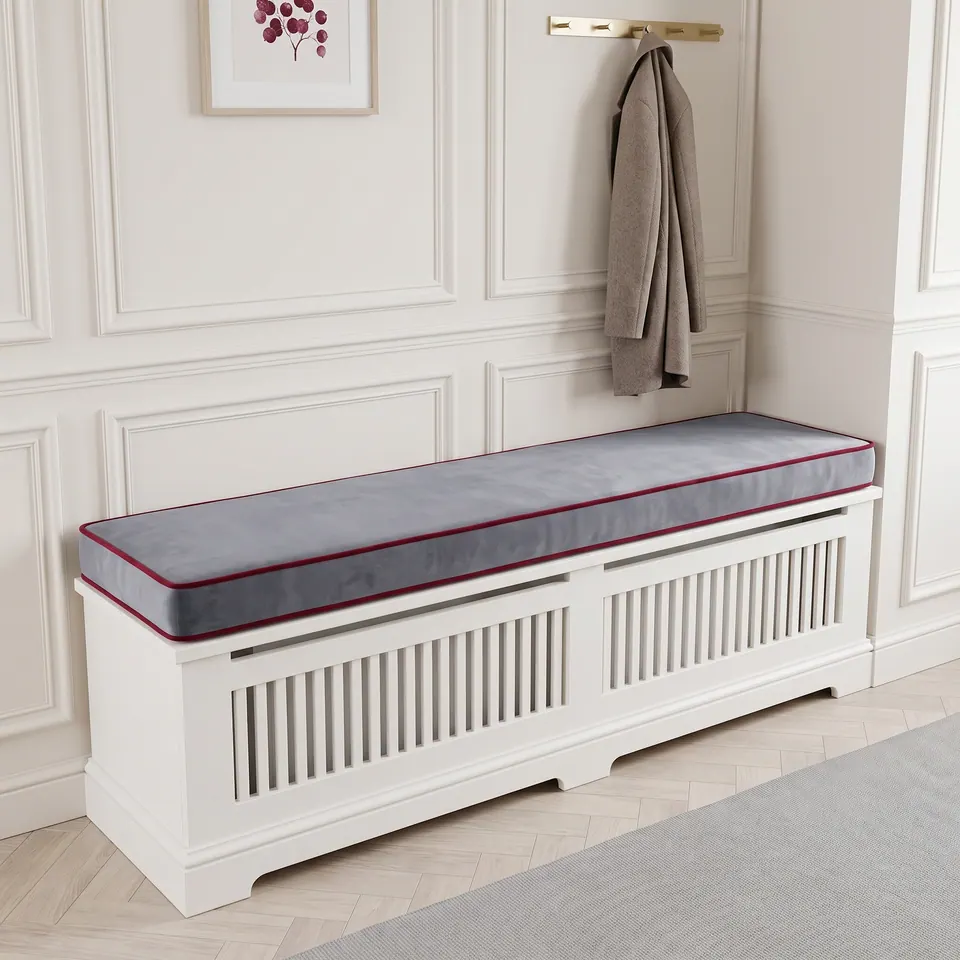
| Window seat | 4 in (10 cm); 2 to 3 in (5 to 7.5 cm) under a window that must open | 2.0 lb/ft³ (32 kg/m³) or denser | Medium-firm | Fiber wrap rounds the front edge; up to 2 in (5 cm) of overhang |
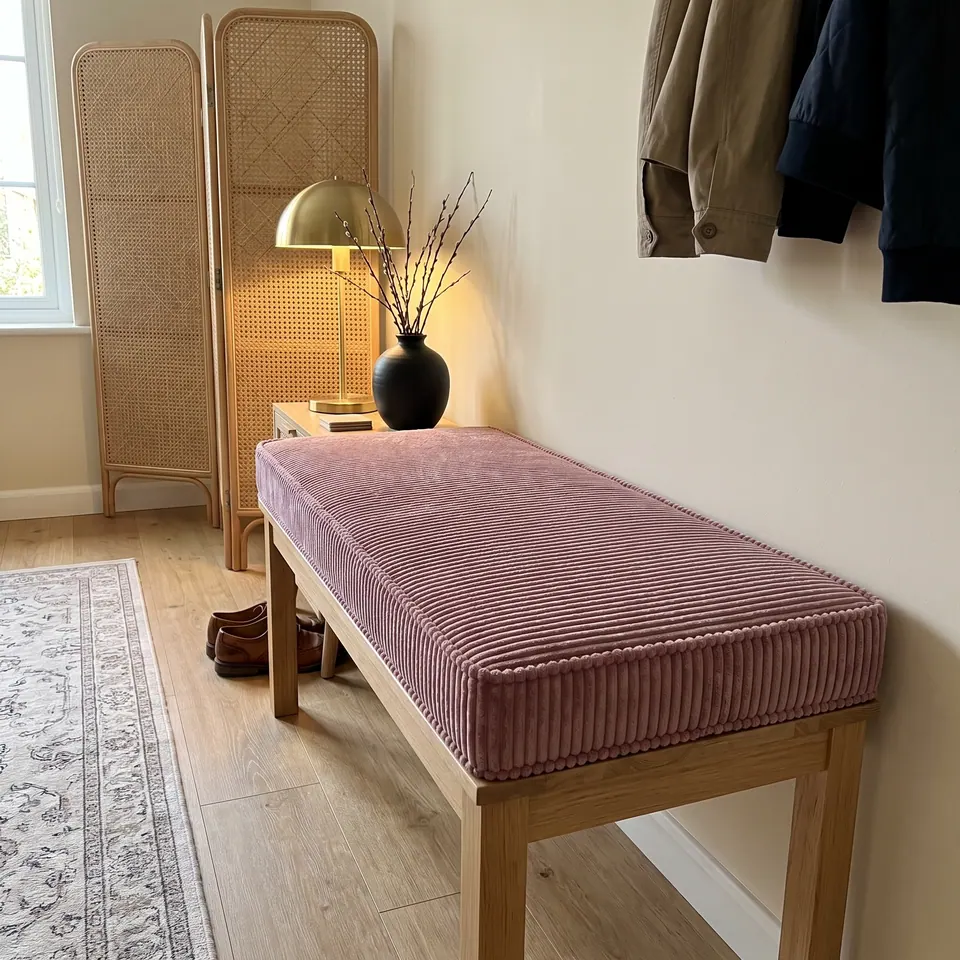
| Entry or mudroom bench | 2 to 3 in (5 to 7.5 cm); aim for an 18 in (46 cm) seat | 1.8 lb/ft³ (29 kg/m³) or more | Firm: sit, pull a boot, stand | Non-slip base or ties; a dark or patterned cover |
| Piano bench | 2 in (5 cm); 1 in (2.5 cm) pads come without piping | 2.0 lb/ft³ (32 kg/m³) | Firm, so the player's height holds | Thin wrap; ties under the lid |
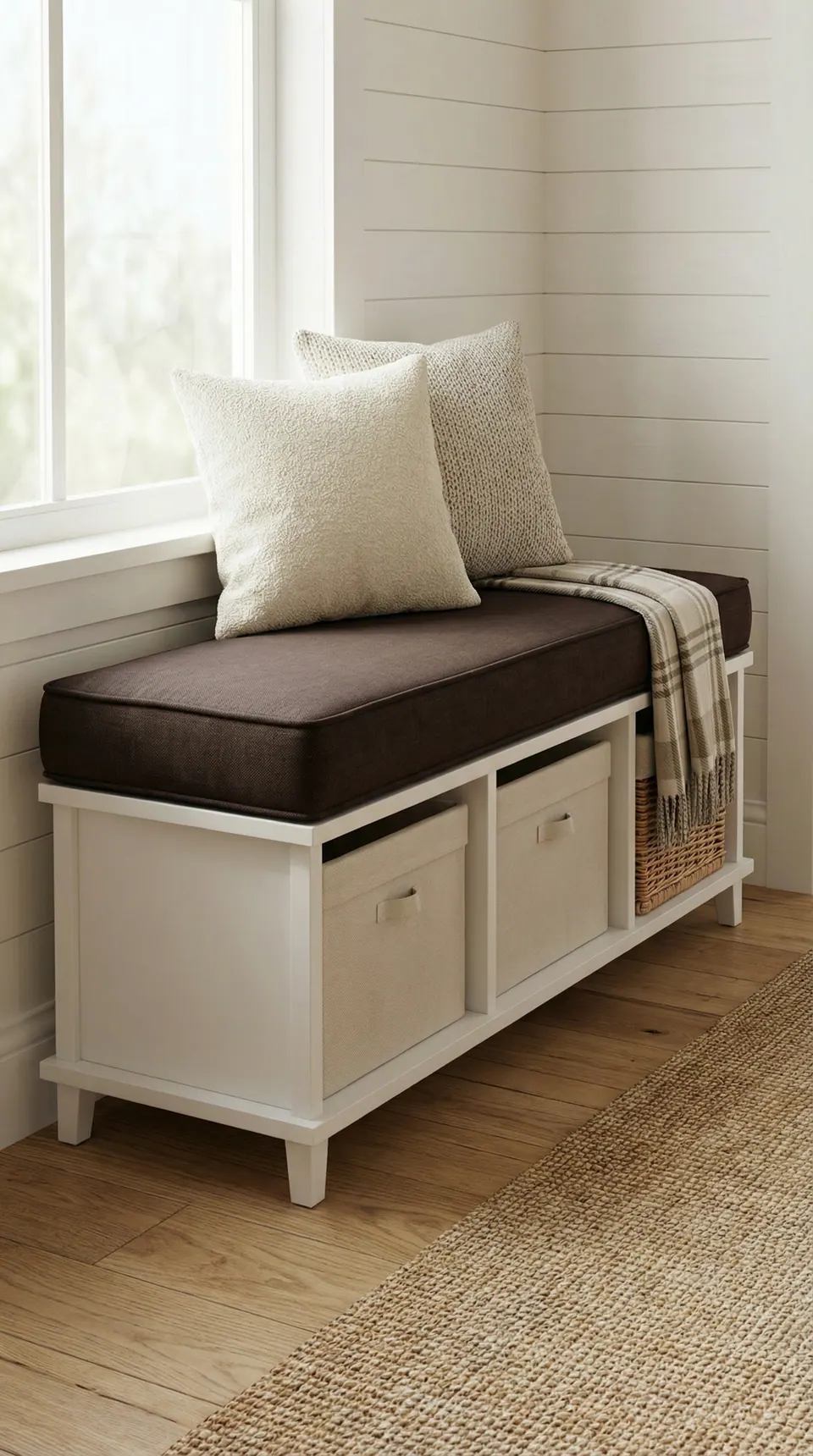
| Storage-lid bench | 2 to 3 in (5 to 7.5 cm), so the lid still opens fully | 1.8 lb/ft³ (29 kg/m³) or more | Medium-firm | Split at each lid break; ties on the hinge side |
| Kids' reading bench | 3 to 4 in (7.5 to 10 cm) | 2.0 lb/ft³ (32 kg/m³) | Medium-firm | Fiber wrap; a cover that unzips and washes at 86°F (30°C) |
| Covered porch bench | 4 in (10 cm) | 1.8 lb/ft³ (29 kg/m³) or more | Medium-firm | Water-repellent outdoor fabric; bring it in for winter |
| Open deck bench | 3 to 4 in (7.5 to 10 cm) | Dry-fast (reticulated) foam, about 1.8 lb/ft³ (29 kg/m³) | Firm; one spec sheet lists ILD 60 | Drains through the foam; ask the workshop |
ILD bands follow one published foam guide: 25 to 35 medium, 35 to 45 medium-firm, 45 to 55 firm. Seat height = bench height + cushion thickness; check it in the seat height calculator.
Why 1.8 lb is a floor, and why lifespans disagree
Foam sellers usually draw the high-density line at 1.8 lb/ft³ (29 kg/m³). One furniture retailer calls anything above 1.5 lb/ft³ (24 kg/m³) high-density. The word has no single cut-off, so ask for the number, not the adjective. One ranking foam guide goes further and suggests 2.5 to 2.8 lb/ft³ (40 to 45 kg/m³) for window seats and benches.
ILD is measured by pressing a round foot of 50 sq in (323 cm²) into a 4 in (10 cm) sample until it gives 25%, and reading the force in pounds. Two foams of the same density can land in different ILD bands. Density tells you about the years; ILD tells you about the first sit.
Published lifespans are a mess. One guide gives conventional 1.8 lb/ft³ foam 1 to 2 years in a seat; another gives 1.8 lb/ft³ high-density foam 8 to 10 years. Different foams, different hours of sitting, different sellers. We don't print a years figure for the workshop's foam; its density and feel are what we can stand behind. The foam lifespan Pattern explains what shortens and stretches it.
On the cutting table: the workshop's bench foam
| Standard foam | about 2.0 lb/ft³ (32 kg/m³) high-resilience polyurethane, used in every custom bench, banquette and seat cushion |
|---|---|
| Feel | Medium-firm, roughly ILD 42; no lab ILD certificate, and ILD varies slightly by batch |
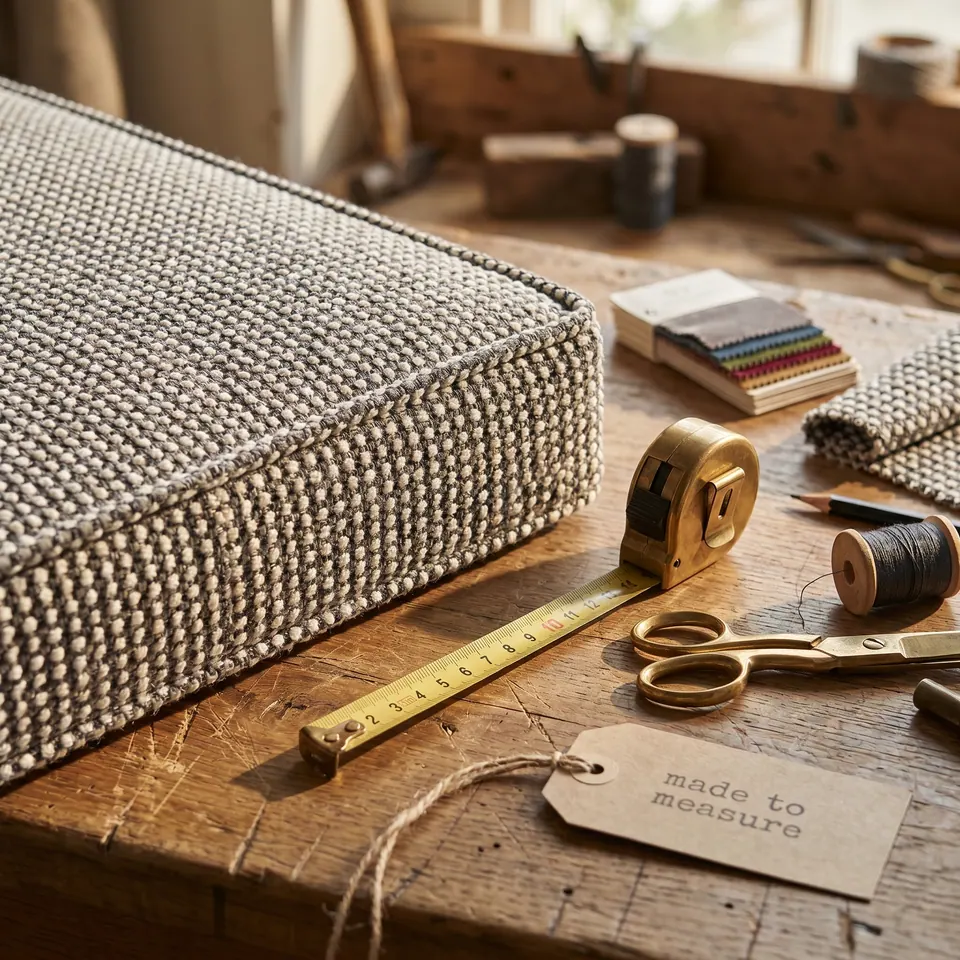
| Wrap | Polyester fiber wadding around the block; it rounds the edges and softens the surface |
| Softer option | about 1.75 lb/ft³ (28 kg/m³) foam, a plusher sit with a slight sink; ask for it in the order note |
| Extra loft | A 3/4 in (2 cm) layer of wadding over the foam, on request |
| Thickness | 4 in (10 cm) standard; 2 in (5 cm) thinnest standard; 6 in (15 cm) and up on request |
| Not standard | Memory foam, dry-fast foam and a mesh drainage bottom; ask the workshop |
| Not offered | Feather-wrapped foam; soft, draped seat pads |
Memory foam on top, dry-fast foam outside
Memory foam is viscoelastic polyurethane, and bedding grades run about 3 to 4.5 lb/ft³ (48 to 72 kg/m³). It holds body heat and stiffens in the cold; one window-seat maker cites firming below about 50°F (10°C), and by its count high-density seat foam springs back in about a second, memory foam in 3 to 8. A foam supplier says memory foam alone can feel too soft on a seat and works best as a top layer; that same window-seat maker suggests 1 in (2.5 cm) of it over a 3 in (7.5 cm) high-density base. The memory foam comparison goes further, and the workshop's foam is not memory foam. For a layered memory-foam top, ask the workshop; the confirmed softer routes are 1.75 lb/ft³ (28 kg/m³) foam or an extra wadding layer.
Dry-fast foam is reticulated: the cells are open, so water runs through instead of soaking in. That matters on an open deck, where cushions sit through the rain. Under a porch roof, standard foam in a water-repellent outdoor fabric does the job, as long as the cushions come in for winter. The workshop's standard foam isn't quick-dry, so for an open deck, ask the workshop first and read the dry-fast foam Pattern.
The buyer who asked for ILD 44
A buyer in the US wrote to the workshop about a long, deep seat that adults would use every day. The request was precise: foam of at least 1.8 lb density and ILD 44, so nobody would sink through to the wood.
The workshop gave the numbers it could stand behind. Its foam is about 2.0 lb/ft³ (32 kg/m³), so the density line was cleared. On ILD it was straight: no official lab rating, but firm, and it didn't claim 44. The cushion went ahead at 25 x 78 x 6 in (64 x 198 x 15 cm), with trim to match.
That is the right shape for a foam conversation. Hard numbers where they exist, honest ranges where they don't.
- Measured
- 25 x 78 x 6 in (64 x 198 x 15 cm)
- What it taught
- Ask for density as a number and treat ILD as a band; a 6 in (15 cm) firm cushion on a deep seat keeps adults off the wood.
Foam mistakes that reach the cutting table
- Buying "high-density" without a number; on some pages the word starts at 1.5 lb/ft³.
- Reading density as firmness. A dense foam can be medium or firm.
- Choosing thickness before checking seat height. A 15 in (38 cm) mudroom bench plus 3 in (7.5 cm) of foam gives 18 in (46 cm).
- Ordering 5 in (13 cm) of plush foam for a dining bench and losing the table.
- Putting memory foam alone on a bench in a cold mudroom or sunroom.
- Leaving indoor foam uncovered on an open deck through the rainy season.
- Asking for softer foam when the real complaint is a hard edge; a fiber wrap rounds the edge and leaves the support alone.
Density tells you how long a bench cushion keeps its height. ILD tells you how it feels. Ask for both as numbers, then pick the thickness your seat height allows.
Nate
Buyer questions: density, ILD and softer seats
- A common question
What density foam goes into your custom bench cushions?
The workshop's answerBench, banquette and seat cushions are made with about 2.0 lb/ft³ (32 kg/m³) foam: high-density, high-resilience polyurethane with a medium-firm feel. It's firmer than the 1.75 lb/ft³ (28 kg/m³) foam often specified and holds its shape under daily sitting. It's the standard in every custom cushion, so there's no grade to pick unless you want softer.
- A common question
I need at least 1.8 lb foam. What's yours in lb/ft³, and what's the ILD?
The workshop's answerAbout 2.0 lb/ft³ (32 kg/m³), above the usual 1.8 lb high-density line, so adults don't sink through. It's high-resilience foam at roughly ILD 42, in the firm range. There's no official lab ILD certificate to quote, and ILD can vary slightly from batch to batch.
- A common question
Can I have a plusher cushion with more of a sofa feel instead of firm foam?
The workshop's answerYes, within limits. Ask for the softer 1.75 lb/ft³ (28 kg/m³) foam in the order note; it sits noticeably plusher, with a slight sink, and gets the same polyester fiber wrap. An extra 3/4 in (2 cm) layer of wadding over the foam is another route. Feather-wrapped foam isn't offered, and soft draped seat pads can't be made from firm foam.
- A common question
Is the foam in your cushions memory foam?
The workshop's answerNo. Bench and window-seat cushions use about 2.0 lb/ft³ (32 kg/m³) high-density foam, and floor sofas use a 1.75 lb/ft³ (28 kg/m³) high-resilience foam. Both are resilient foams that spring back. If you specifically want memory foam in a custom build, get it confirmed in writing before you order.
- A common question
Can I leave my outdoor bench cushions out through rain and snow all year?
The workshop's answerNot uncovered. The outdoor fabrics are water-repellent and UV-resistant and handle sun and showers, but the foam isn't quick-dry and there's no mesh drainage bottom as standard. In a climate with hot summers and snowy winters, keep them on a covered porch or store them indoors over winter.

Have it made
Measured it? Have Nate’s workshop make it
Precision starts on the phone. Give the workshop your measurements and they will read them back to you, edge by edge. — Nate
Leave your details and the workshop will call you to confirm measurements, fabric, foam and piping. No prices, dates or payment on this page: it is a request, not an order.
Bench foam, answered in numbers
Is 1.8 lb foam good enough for a bench cushion?
It is the usual floor for high-density seat foam, 1.8 lb/ft³ (29 kg/m³), and it suits everyday seats. A bench sat on several times a day gets more margin from 2.0 lb/ft³ (32 kg/m³) or denser. Always ask for the number; the phrase 'high-density' starts lower on some pages.
What ILD should a seat cushion on a bench have?
Medium-firm, roughly ILD 35 to 45 in published bands, suits most bench seats. Back cushions sit softer, around ILD 15 to 25. The workshop's standard seat foam is roughly ILD 42, near the firm end of medium-firm.
How thick should the foam be on a dining bench?
3 in (7.5 cm) for most dining benches and breakfast nooks; 4 in (10 cm) looks and feels plusher. If the bench already sits at chair height, go to 2 in (5 cm) so knees still clear the table. Check the total in the seat height calculator.
Can a bench cushion hang over the front edge?
Yes, by up to about 2 in (5 cm) with high-density foam, which keeps the front edge square. For more edge support the workshop can make the foam slightly firmer and add an inner support wrap. Beyond that, extend the bench, not the cushion.