The Pattern Room · a measuring pattern
New foam cushion smell: how long it lasts and how to air it out
New foam has weather of its own: a front that blows through in the first few days and clears with moving air. Here is how to ride it out, and how to tell ordinary off-gassing from a smell that needs a new insert.

 Save
The quick answer
New foam cushion smell is strongest in the first one to three days after unpacking and usually fades over one to four weeks with airflow. Unzip the covers, stand the pieces apart, and air them in a ventilated room or a screened porch on a dry day, out of direct heat. A smoky, musty or sharp smell that airing doesn't touch is worth reporting.
Off-gassing is weather, not climate
New foam cushion smell behaves like a squall line: it hits hardest right after you open the hatch, then eases every day the air keeps moving. Foam and fabric sealed in plastic for the trip off-gas for a few days once they're out, and that is the smell most people notice.
Most buyers never mention it, and the workshop says smell complaints are rare. Still, no maker can honestly promise a new cushion will have no smell at all, and I won't pretend otherwise. What I can give you is a routine that clears ordinary off-gassing fast, and a way to spot the rare smell that airing won't fix.
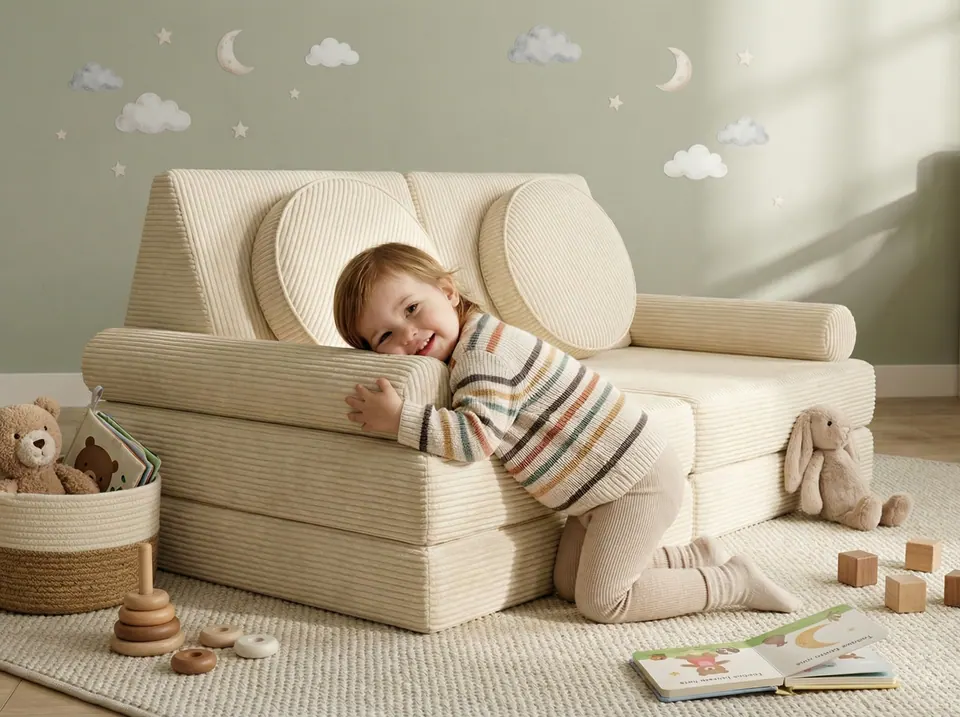
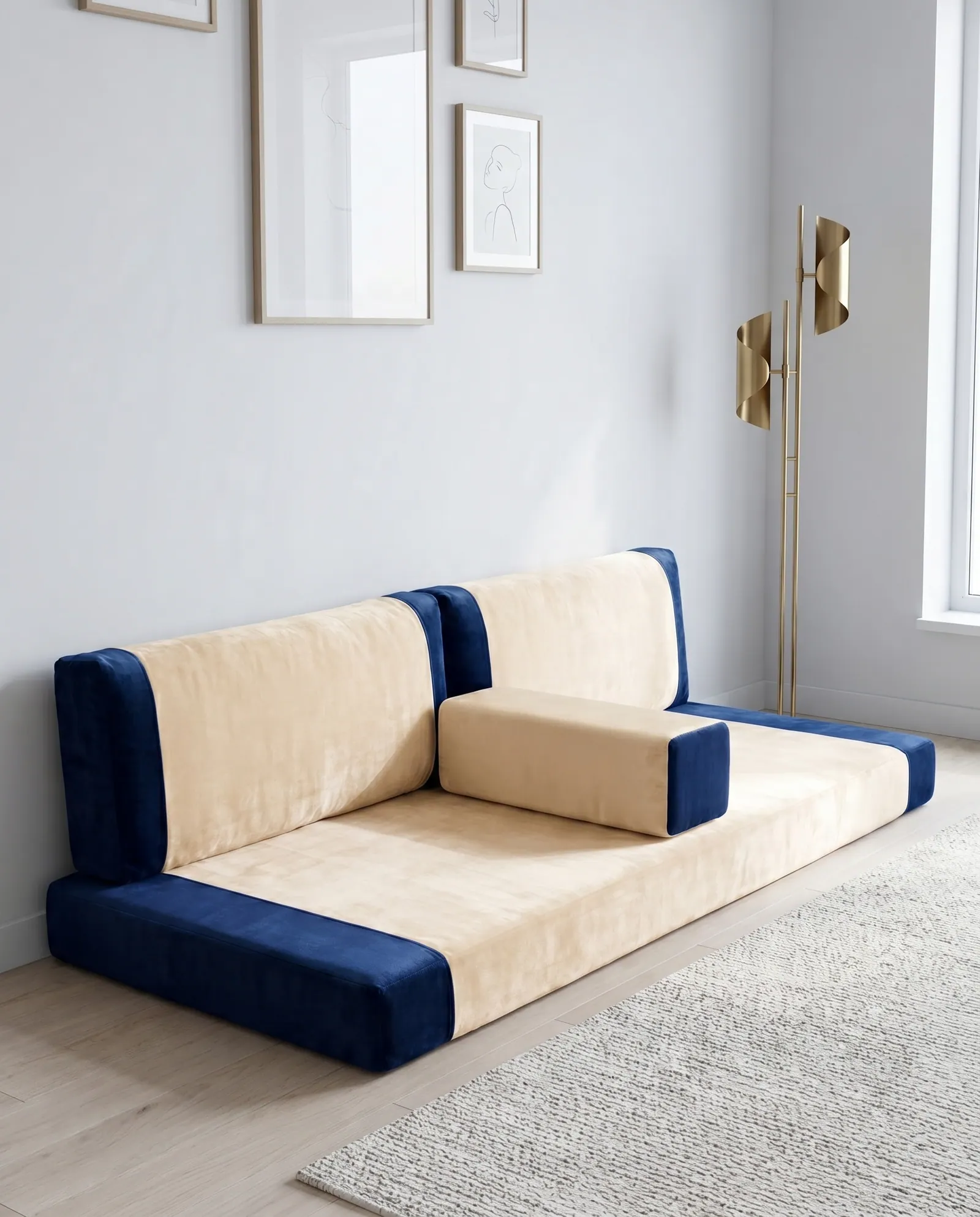
It matters most for foam inserts and modular floor sofas, which carry a lot of foam and often arrive vacuum-packed.
How long new foam smell lasts, day by day
| When | What you'll notice | What to do |
|---|---|---|
| Days 1 to 3 | The strongest smell; vacuum-packed foam still rising | Unpack, unzip the covers, stand the pieces apart |
| Days 3 to 4 | Foam close to its ordered size; creases still in the covers | Keep the air moving; measure only now |
| Weeks 1 to 2 | A big drop in the smell | Everyday use, windows open when you can |
| Weeks 2 to 4 | Faint, then gone | Nothing more to do |
| Any time | A smoky, musty or sharp smell that airing doesn't touch | Not ordinary off-gassing: report it early |
The airing routine, from bag to bench
Unpack it the day it lands
Don't leave cushions sealed in their vacuum bag; unpack within a few days at most. Cut only the outer plastic, and shallowly. One buyer in the US opened a tightly shrink-wrapped pair with a knife and cut straight through the new covers.
Unzip the covers and stand the pieces apart
Unzip the outer covers so air reaches the foam. On a floor sofa, each foam block has its own inner cover under the outer one; leave that on. Stand the cushions apart, on edge, for the first 24 to 48 hours.
Make a cross-breeze
Open windows on two sides of the room and let a fan push air across the foam. A carbon filter helps in a small room. Moving air carries the smell out; still air just holds it.
Use the screened porch on a dry day
Outdoors is better still: in shade, off damp ground, under a roof. A screened porch on a dry day is ideal. Rain doesn't negotiate, so bring the foam in before the weather turns.
Keep heat off it
No space heater, no hair dryer, no closed car in the sun, no afternoon on a hot deck. Heat is the one thing not to add to new foam. Shade and moving air do the work.
Wash the covers on their own
The covers wash out; the inserts don't fit a home machine. Wash covers at 86°F (30°C) on a gentle cycle, air dry them, and refit them slightly damp once the foam has calmed down. The full routine is in how to wash cushion covers.
Give it several days before you judge
Air the foam for several days before you decide anything. The worst of an ordinary smell is usually behind you inside the first week or two.
Report a smell that won't fade, and name the piece
If the smell is smoky, musty or sharp and several days of airing haven't touched it, write to the maker early and say which piece smells: a seat, a back, the cover. The fix is usually a new insert, not a new cover.

Have it made
Measured it? Have Callum’s workshop make it
Short list: size, sun hours, how fast it has to dry. The workshop goes through it with you. — Callum
Leave your details and the workshop will call you to confirm measurements, fabric, foam and piping. No prices, dates or payment on this page: it is a request, not an order.
Rubber, mildew and three new foams
A buyer messaged the workshop about a brown corduroy floor sofa with an ottoman, plus an extra L-shaped backrest and a spare metal bar. The foam arrived with a strong rubbery smell, with a note of mildew in it.
The buyer did everything right. The covers were washed. The foam went outside to air for several days. The smell didn't budge.
That's the point where airing stops being the answer. The workshop checked the replacement foams itself before sending, and shipped two new seat foams and a new ottoman foam at below cost. The buyer stayed, and later ordered a dark brown straight backrest to go with the set.
Another case ran the same way on a smaller scale: a backrest insert kept a cigarette-smoke smell after airing, and the workshop sent a replacement filling for that one back.
- What it taught
- Air newly unpacked foam for several days before judging the odor; covers can be washed separately.
Airing mistakes, and what they cost
- Judging on the first evening. The smell peaks in the first one to three days. Give it several days of moving air.
- Leaving the foam in its bag until the weekend. Unpack within a few days; compressed foam needs air and room to rise.
- Adding heat to hurry it. Heaters, hair dryers and hot cars are out. Shade and a breeze do the job.
- Stacking every piece in one corner. Stand them apart so air reaches every face.
- Washing the cover and expecting the insert to follow. A smell living in the foam stays in the foam. Covers wash out; inserts don't fit a home machine.
- Waiting a month to mention it. If airing hasn't touched a smoky or musty smell, report it early; the fix is usually a new insert.
What's in the foam, and what the paperwork covers
Knowing what you bought helps you judge what you smell. Custom bench and seat cushions use about 2.0 lb/ft³ (32 kg/m³) high-density polyurethane foam. Floor sofa bases are HR cold foam at T28 density and ILD 42. Back pillows are filled with shredded foam inside their own inner cover.
The fabrics come from a mill certified to OEKO-TEX Standard 100 (03.T.3239), and the workshop shares the certificate documents on request. A fabric certificate is about tested limits in the cloth; it is not a promise about how a new cushion smells on day one. If odor is your main worry, ask which filling your specific product uses before you order. For more, read OEKO-TEX Standard 100 explained and high-density foam vs memory foam and latex. If your cushion arrived rolled tight, the first 72 hours of a vacuum-packed cushion covers the rise.
Here's my question for you, friend: do you have a room with windows on two sides? That room is where your new cushions should spend their first three days.
Wash the cover and air the foam; if a smoky or musty smell outlasts several days of airing, the fix is a new insert, not a new cover.
Callum
Buyer questions: smells, foam and fillings
- A common question
Will the new foam smell when it comes out of the box?
The workshop's answerRarely; the workshop says smell complaints are uncommon. If new foam does smell, wash the covers and air the foam for several days first. In that one case the smell stayed, so the workshop checked replacement foams itself and resent the two seat foams and the ottoman foam at below cost.
- A common question
Our new couch has a strong chemical smell. What should we try first?
The workshop's answerWash the removable covers, which is the workshop's first step for odor; the fabrics come from a mill certified to OEKO-TEX Standard 100 (03.T.3239). If the smell persists, message the maker: in one case the workshop offered a replacement cover in another color at a heavily reduced price instead of a return.
- A common question
The back cushion insert still smells of cigarette smoke after airing. What now?
The workshop's answerWash the removable cover, several times if needed; that clears odor from the fabric. The insert itself is too big for a home washing machine, so when a backrest insert kept its smoke smell after airing, the workshop sent a replacement filling for that backrest.
- A common question
Is the floor sofa foam cold foam or high-density foam?
The workshop's answerBoth labels are accurate. The base mattresses are HR (high-resilience) cold foam at T28 density and ILD 42, which also counts as high-density foam. Each foam block has its own inner cover under the removable outer cover, and the backrests are filled with shredded foam.
- A common question
What density foam goes into a custom bench cushion?
The workshop's answer32 kg/m³, about 2.0 lb/ft³: a high-density, high-resilience polyurethane foam with a medium-firm feel, firmer than the 28 kg/m³ foam often specified. It holds its shape without going lumpy, and it's standard in every custom cushion unless you ask for a softer one.
Foam smell, briefly
Can a space heater or hair dryer speed up off-gassing?
No. Heat is the one thing to keep off new foam. Moving air does the work: windows open on two sides, a fan, the covers unzipped and the pieces standing apart. Shade and patience beat warmth every time.
Is it worth airing new foam outdoors?
Yes, on a dry day, in shade and off damp ground; a screened porch is ideal. If a smell survives several days outdoors, as one did on a floor sofa, stop airing and report it: that case ended with new foams, not more fresh air.
Will washing the cover get rid of a smell in the foam?
No. Washing clears odor from the fabric, and covers can be washed more than once, but the insert is too big for a home machine. A smell living in the foam is fixed with a replacement insert, which the workshop has sent in such cases.
How long before a vacuum-packed cushion can be judged for size and smell?
Give it three to four days. The workshop's guidance is 36 to 72 hours to fully rise and 3 to 4 days to reach the ordered size, with shipping creases taking up to a week. Judge the smell over the same stretch, with the air moving.