The Pattern Room · a measuring pattern
Pet-friendly cushion fabric: what holds up to claws, hair and muddy paws
I've re-covered cushions for families whose dogs outnumbered their chairs, and the lesson never changes: a tight weave buys you years, and a loop costs you a Saturday. Here's how to choose, with the honest limits left in.
 Save
The quick answer
The best pet-friendly cushion fabric is a tight, flat, loop-free weave in a mid-tone, sewn as a zip-off cover that washes at 86°F (30°C). The workshop's pet weave is 100% polyester, and the supplier reports about 88,000 Martindale cycles. Velvet resists stains best, corduroy holds hair, and looped bouclé snags most. No fabric is immune to claws.
Kids and dogs are the real quality control
No fabric is immune to claws. People search for scratch resistant fabric for cats and dog proof cushion fabric every day, and somebody will always sell them a miracle. A cat proves them wrong by Tuesday.
A good pet friendly cushion fabric simply loses slowly. It gives a claw nothing to hook, lets hair wipe off instead of weaving in, and zips off the foam when the dog tracks the backyard indoors. On my grandmother's porch, the best cushion always belonged to whichever dog got there first. Kids and dogs are the real quality control, and they don't read labels.
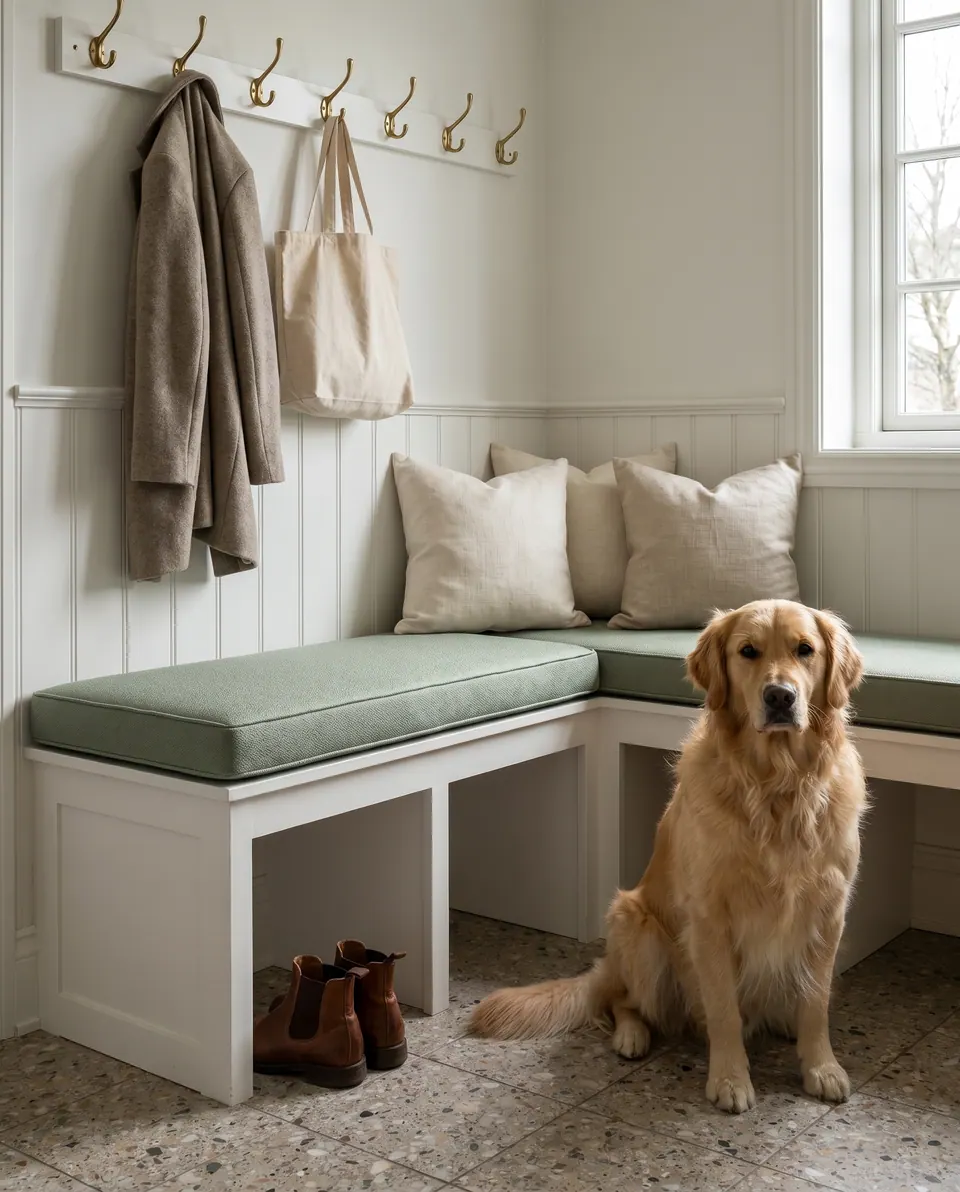
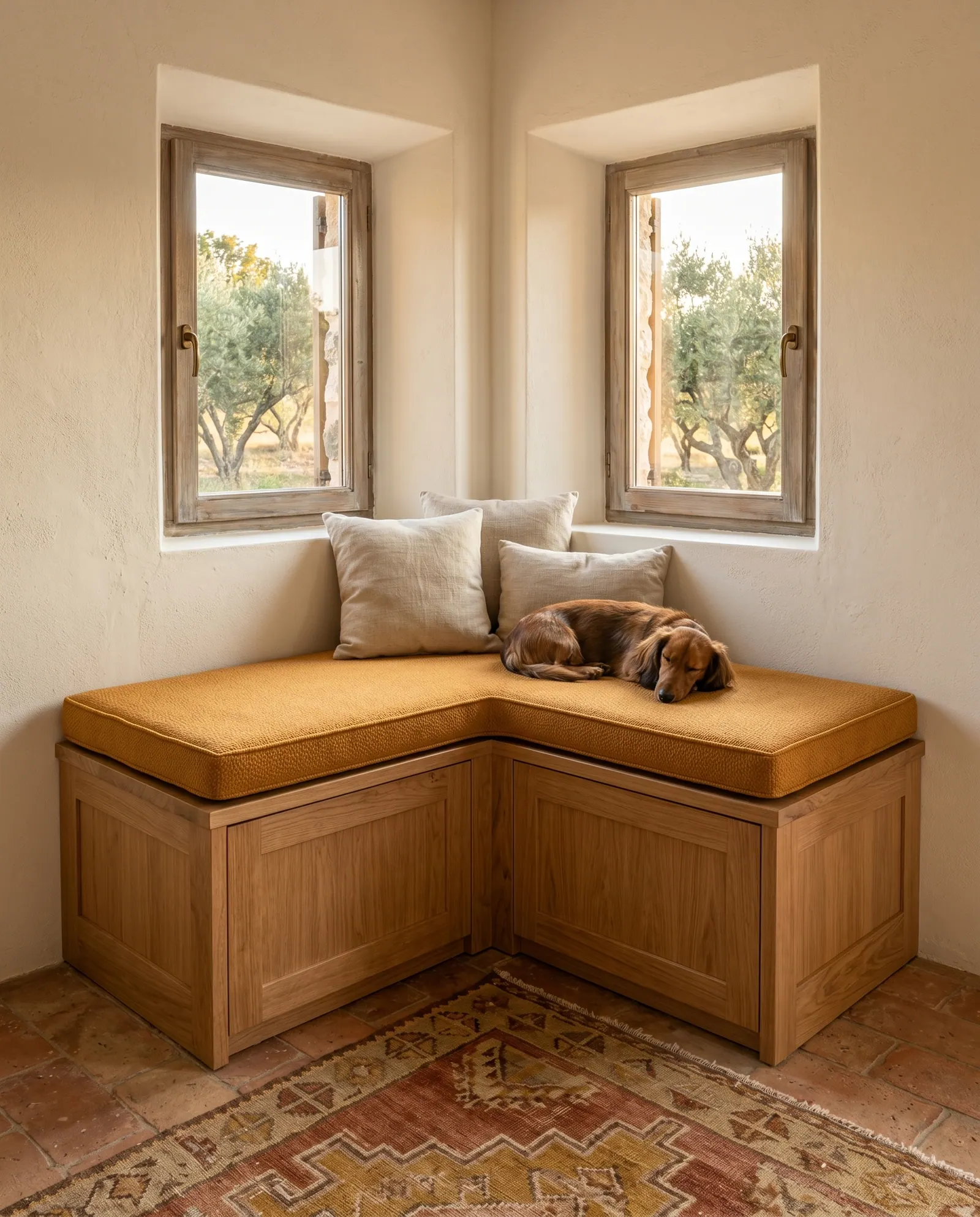
The workshop's pet answers settle into three rules: a tight, flat weave with no loops, a mid-tone that forgives fur, and a cover you can wash. The pet-friendly cushions in the Atlas show those rules built.
So, neighbor, what's the animal, and what does it do to furniture?
Velvet with pets, corduroy with pets, and the rest of the chart
| Fabric | Claws | Hair | Cleaning | Rosa's call |
|---|---|---|---|---|
| Pet weave (100% polyester) | Flat, tight, no loops; about 88,000 Martindale per the supplier | Wipes off | Wipe-clean; washes at 86°F (30°C) | First pick for dogs |
| Velvet | No loops, but a claw can pull pile | Pile holds some fur | Most stain-resistant; spot-cleans | Good with cats, after a swatch test |
| Corduroy | Ribs can split under hard use | Clings to the wales | Zip-off, machine-wash | Light use only |
| Linen-look blend | Medium weight | Pick a mid-tone | Easy-clean; washes at 86°F (30°C) | Not first for dogs |
| Bouclé and teddy | Loops snag most | Holds fur | Spot-clean | Playroom, not the cat's perch |
| Striped cotton | 100% cotton | Flat face | Stains more easily; indoor only | Away from muddy paws |
| Outdoor fabric | Rugged weave | Flat face | Water-repellent; wipes down | Entry bench for big dogs |
Choosing pet-friendly cushion fabric, one decision at a time
Name the animal and the habit
A cat that scratches, a dog that jumps, a dog that sleeps there all day and a shedder on a dark bench are four different problems. Write down which one you have, and where it happens.
Choose a flat weave with no loops
Claws catch on loops, so looped bouclé snags most, and high piles hold hair. The performance and pet-friendly chart exists for exactly this: tightly woven fabrics with no loops, about three of them set aside for pets.
Read the rub count, then ask for a snag grade
Martindale counts rubs until two threads break; published bands put a busy home with pets at roughly 25,000 to 35,000. The supplier reports about 88,000 for the pet weave, at 370 g/m² (about 10.9 oz per square yard). Rub counts don't measure claws. A snag test comes closer, grading from 5 (no snags) down to 1 (severe). More in Martindale versus double rubs.
Let the cat audition the swatch
Order swatches before anything is cut and put them where the animal lives, so you and your cats can test the texture. Our swatch notes cover ordering by code.
Pick a tone that forgives fur
Mixed tones and mid-tones hide fur and paw prints; stark white and near-black show everything. Hold the swatch next to your animal, not next to the paint.
Make the cover come off
Ask for zippered covers that machine-wash at 86°F (30°C) on a delicate cycle, then line dry. A quilted sofa topper protects a couch you already own. Care steps live in how to wash cushion covers.
Line the foam for beds and damp spots
For a dog bed or anywhere accidents happen, ask for a waterproof inner cover between foam and fabric. The custom dog beds and cat corners sketch shows the builds.
Stop the slide before the first jump
Ask for a non-slip base or ties when you order, then confirm the add-on in writing; extras typed into the size box get overlooked. Ask whether the non-slip backing is washable, too.

Have it made
Measured it? Have Rosa’s workshop make it
Swings sway, rockers rock, dogs circle three times. Tell the workshop what your seat goes through, and they will plan for it. — Rosa
Leave your details and the workshop will call you to confirm measurements, fabric, foam and piping. No prices, dates or payment on this page: it is a request, not an order.
Two dogs, an oatmeal room and a charcoal accent
A buyer in the US wrote to the workshop about a bench their two dogs share, in an oatmeal and charcoal room. Linen had caught their eye, and they asked the honest question: would linen survive dogs jumping on it?
The workshop steered them to the pet weave instead: 100% polyester, about 88,000 Martindale by the supplier's figure, 370 g/m², wipe-clean. Then it matched shades to the room: G-47 or G-48 for the oatmeal, G-61 for the charcoal, and a warning that G-62 runs nearly black.
They ordered G-48 with contrasting G-60 piping and added the non-slip base. The pretty choice turned out to be the tough one too.
- What it taught
- For pets, choose a high-Martindale polyester over natural linen.
A banquette, a cat and a foster dog
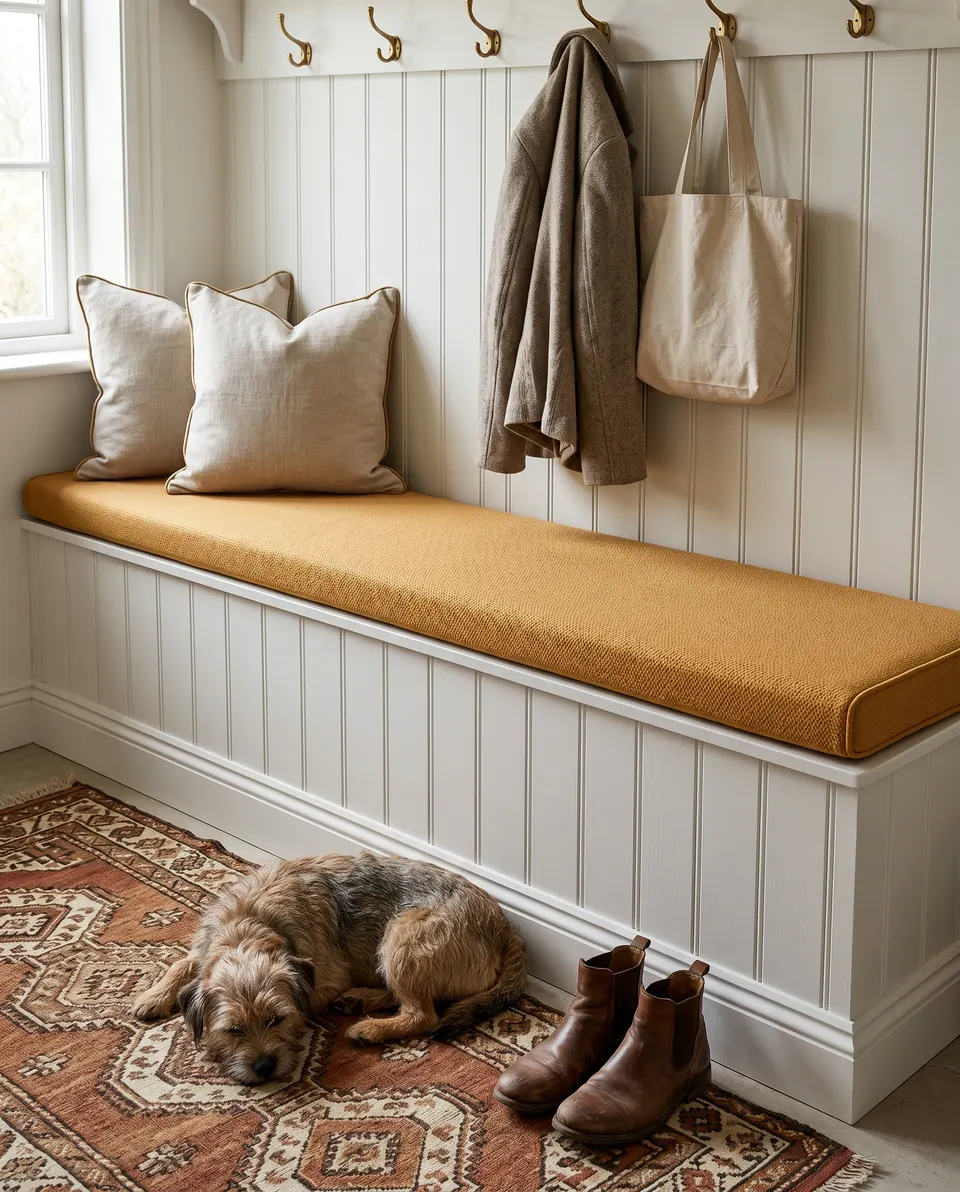
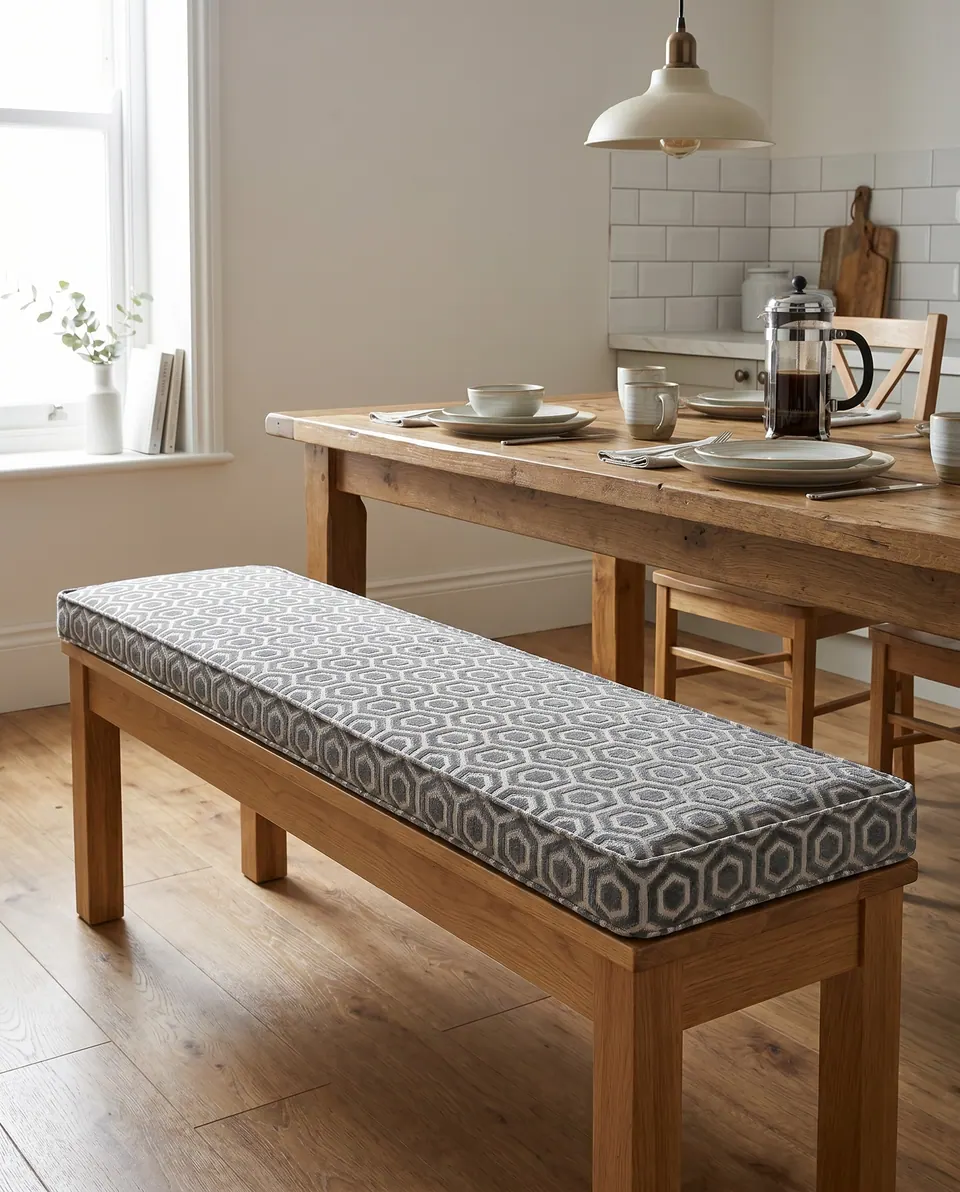
The taupe banquette. A buyer in the US needed a taupe, pet-friendly fabric with welting for a U-shaped banquette: two 63.5 x 21.5 in (161 x 55 cm) side cushions and a 93.5 x 21.5 in (237 x 55 cm) back, all 2 in (5 cm) thick. Each run was ordered as its own cushion, piping standard. The U-shaped banquette Pattern and pet-friendly banquette and bench cushions show the method.
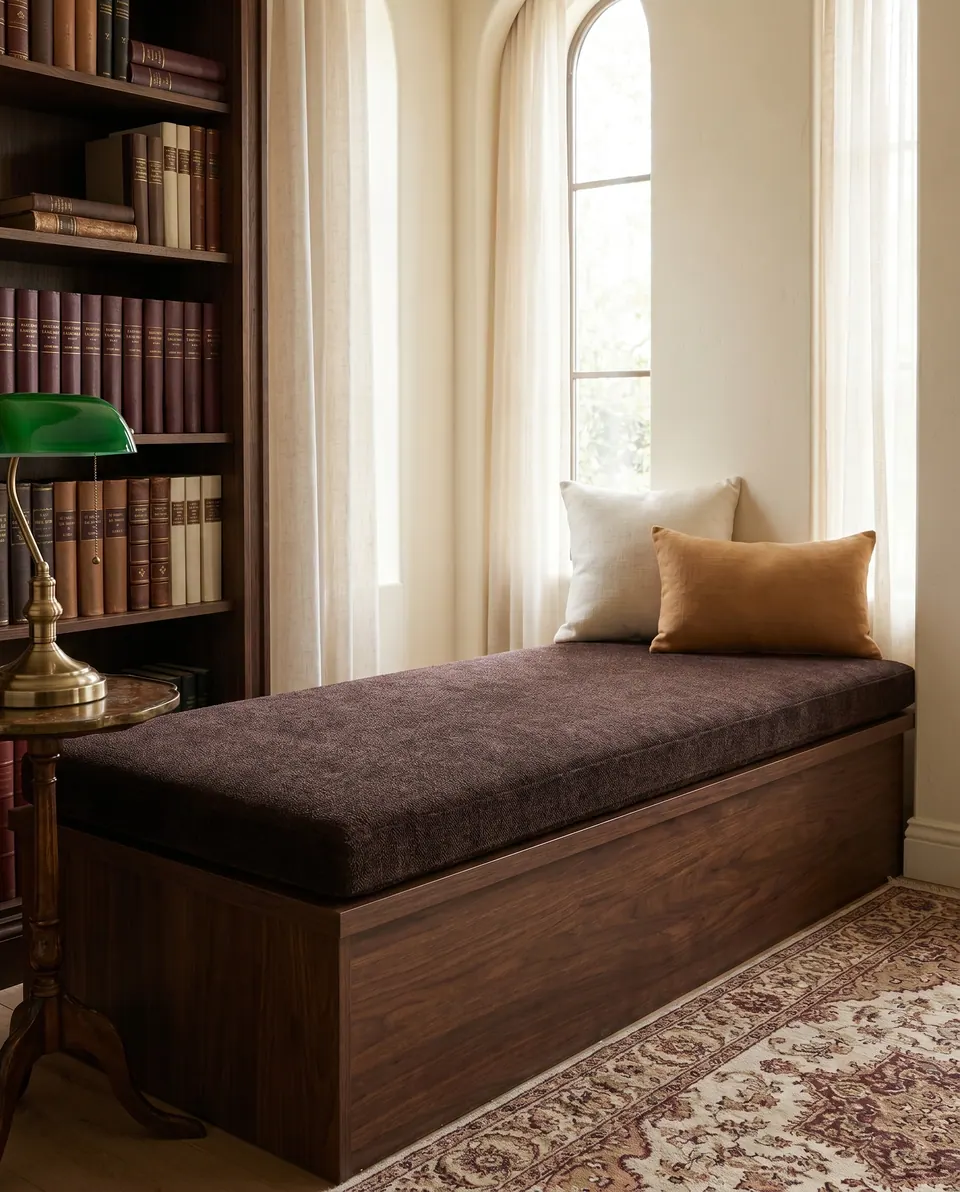
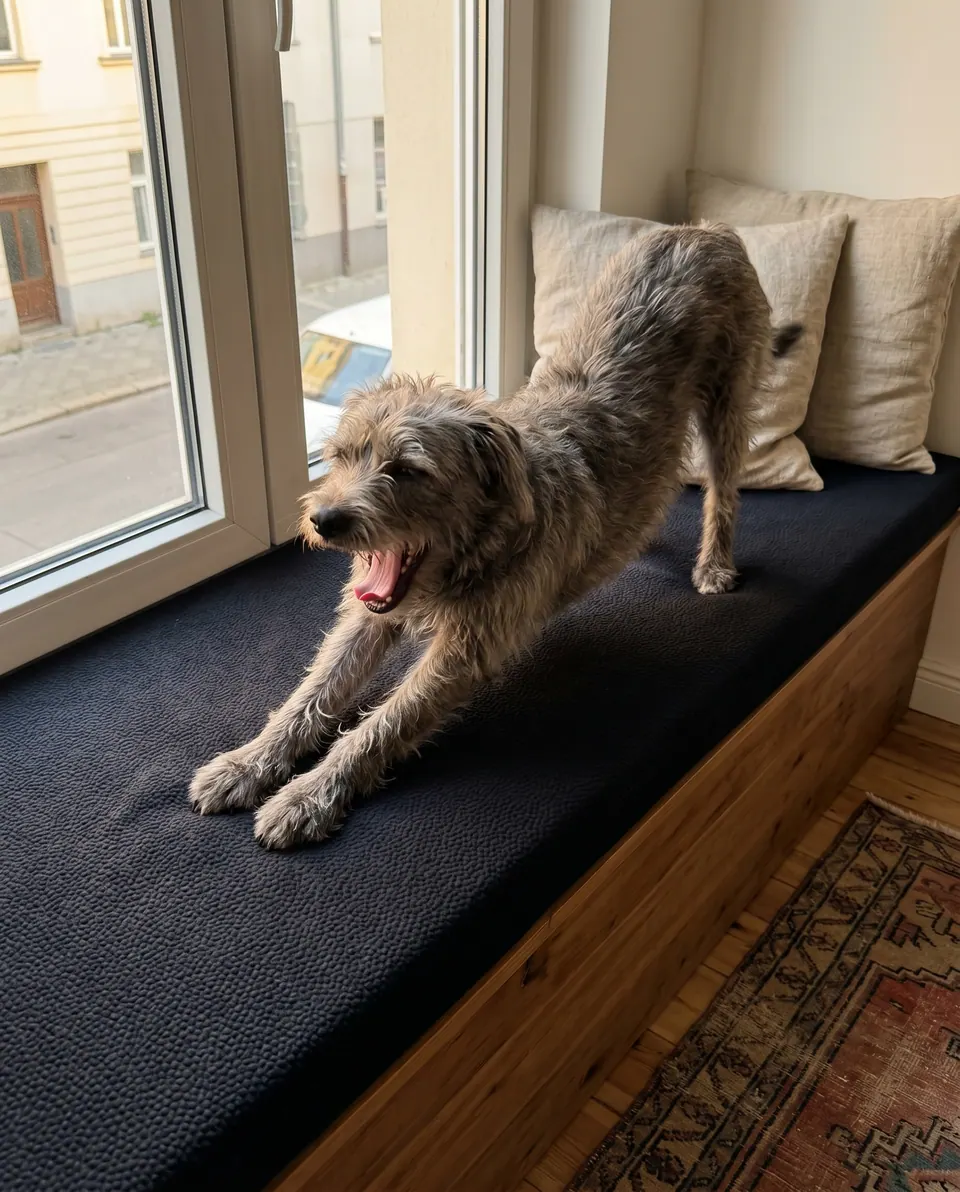
The cat and the mauve velvet. A cat owner ordered swatches and chose a mauve-taupe velvet for a 19.5 x 105.25 x 2 in (50 x 267 x 5 cm) window bench. On arrival it measured about 103 in (262 cm). Nothing was wrong: vacuum-packed foam needs about a week to recover before you measure.
The foster dog. One owner wrote after a foster dog tore a 23 x 20 x 6.5 in (58 x 51 x 16.5 cm) chenille back cushion, and asked for the closest linen. Chenille holds hair and snags at friction points, and linen isn't the first pick for dogs either. For a dog's favorite spot, the workshop points to the pet weave.
Where pet cushions go wrong
- Choosing for looks alone: light linen under a shedding dog, picked for color rather than fur and daily wear.
- Corduroy on a dog's favorite spot: the ribs hold hair and can split under hard use.
- A pet bed with no zipper and no waterproof liner: one accident reaches the foam.
- Ties or a non-slip base left off: extras typed into the size box get overlooked.
- Trusting a label's scratch promise: ask for the rub count and a snag grade instead.
- Measuring a vacuum-packed cushion on day one: foam needs about a week to recover.
No fabric is immune to claws. A tight, loop-free weave with a high rub count and a zip-off cover washed at 86°F (30°C) is as close as a pet home gets.
Rosa
Cats and dogs want different things from a fabric
| Cats | Dogs | |
|---|---|---|
| Main risk | Claws hooking loops and loose weaves | Hair, mud, drool and rubbing |
| Look for | Tight, flat weaves with nothing to hook | Smooth faces that release hair and wipe clean |
| Avoid | Bouclé and open loops | Silk, leather and linen, per dog-focused guides |
| Swatch test | Drag a fingernail: do threads pull? | Rubber glove or tape: does hair let go? |
| From the workshop | The pet chart: tight polyester weave, no loops | Same chart; zip-off covers wash at 86°F (30°C) |
| Honest limit | No fabric holds up to claws completely | No fabric holds up to claws completely |
Buyer questions: pets, kids and fabric
- A common question
Which cushion fabric is easiest to keep clean with kids and pets around?
The workshop's answerThe first question back is indoors or out. Indoors, the soft fabric is the top easy-care pick: durable and smooth, it doesn't collect dust or lint and suits busy rooms. Velvet is also easy to clean, and wipe-clean water-resistant charts exist. Outdoors, choose the water-repellent range. Covers wash at 86°F (30°C).
- A common question
With small kids and a dog in the house, is velvet or the soft fabric the better bet?
The workshop's answerBoth are go-to picks for homes with kids and pets: velvet is the most stain-resistant, and the soft fabric is the easiest to spot-clean. The striped fabrics are 100% cotton and stain more easily. If a dog will use the cushion constantly, choose from the separate pet-friendly chart. Zippered covers machine-wash at 86°F (30°C) on a delicate cycle.
- A common question
Is a corduroy floor sofa a good idea with cats and dogs, and does the hair stick?
The workshop's answerThe corduroy covers come off and machine-wash, which helps, but pet hair does cling to corduroy. If that bothers you, the covers can be made in faux leather in several colors instead; its slight sheen looks lighter in strong light and deeper in soft light.
- A common question
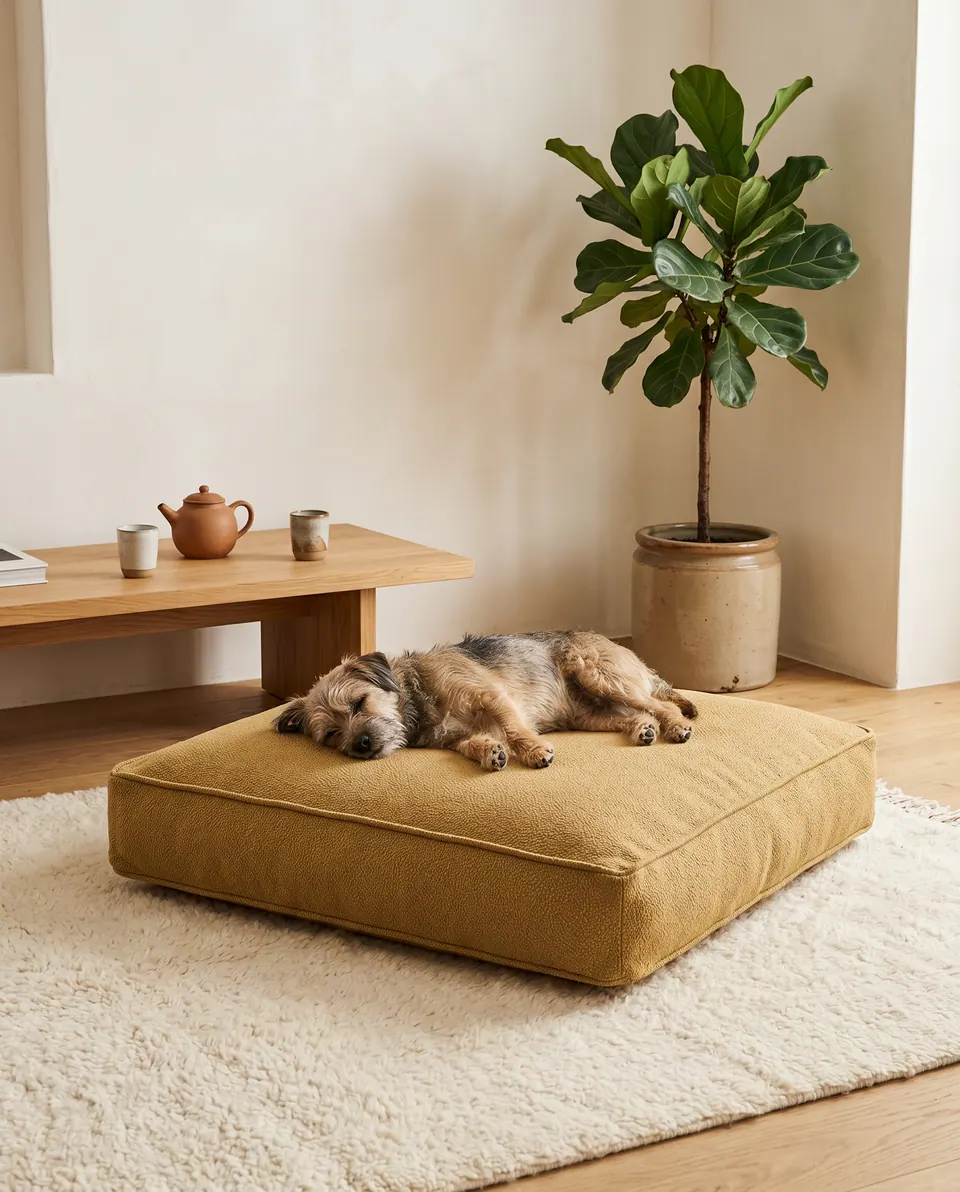
Can you make a custom dog bed, and which fabric should it be?
The workshop's answerYes. Dog beds are made to your measurements on a custom order link, with rounded corners, contrast piping or fabric matching your bench cushions. The workshop recommends the pet-friendly chart, washable at up to 86°F (30°C). For a person plus one large dog, about 28 x 64 in (71 x 163 cm) was suggested, and it can go bigger.
- A common question
Could you make a washable topper so the dog stops wrecking my couch?
The workshop's answerYes. The quilted sofa topper is a slim, reversible layer that sits on your couch cushions without adding height, sized to your couch in a linen look or velvet, and it machine-washes at 86°F (30°C). Each side can be a different color, and the workshop can match your couch from a photo. The dog sofa pad version is tufted, with no zipper.
Pet fabric questions, short answers
Will any cushion fabric hold up to a cat's claws for good?
No. A determined cat or dog can snag or tear any fabric. What helps is a tight, flat weave with no loops, a high Martindale count, a good snag grade and a zip-off cover you can wash or replace. Choose by those numbers, not by a label.
Is velvet a good choice if I have a cat?
It can be. The workshop's velvet has a short, tight polyester pile with no loops, resists stains best in the range and spot-cleans easily. Sources disagree about claws, since a claw can still pull pile fibers, so let your cat test a swatch first.
What Martindale rating suits a cushion in a home with pets?
Published bands put a busy home with pets and kids at roughly 25,000 to 35,000 Martindale cycles, with contract grade starting around 30,000 to 40,000 depending on the source. The supplier reports about 88,000 for the workshop's pet weave. Rub counts measure wear, not claws, so ask for a snag grade too.
Do I need a waterproof liner inside a dog bed cushion?
It's worth it anywhere accidents, drool or damp can reach. A waterproof inner cover sits between the foam and the fabric, so the outer cover goes in the wash and the foam stays dry. One dog-house order used liners on 16 x 20 x 3 in (41 x 51 x 7.5 cm) and 16 x 20 x 2 in cushions.
How can I test a fabric swatch for pet hair and snags at home?
Three quick tests. After your pet has lain on the swatch, run a damp rubber glove or a strip of tape across it to see how easily hair lets go. Drag a fingernail across it to see whether threads pull. Then put a few drops of water on it and watch whether they sit or soak in. Order two or three codes to compare.