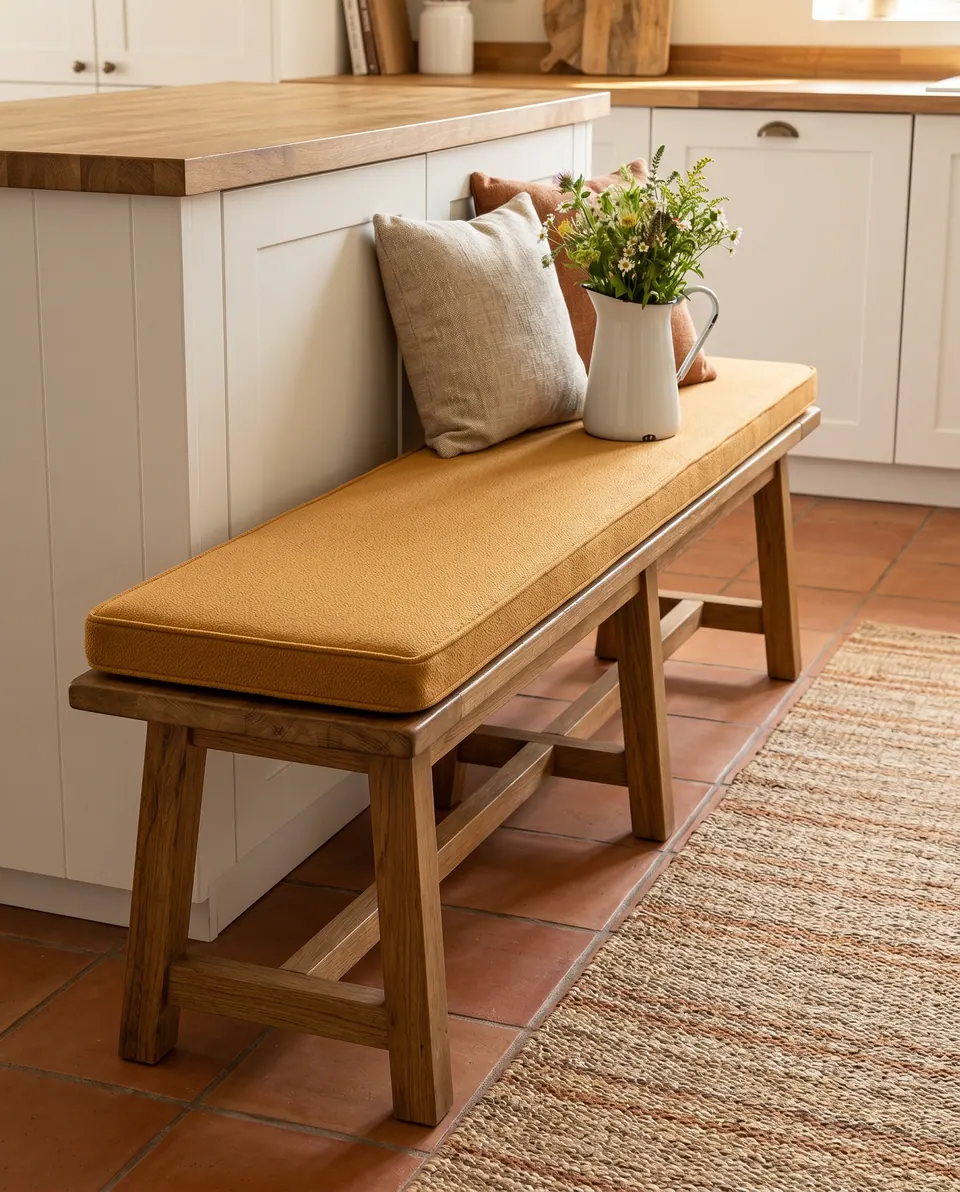
The Pattern Room · a measuring pattern
Performance fabric on a cushion: what the word does and doesn't promise
'Performance' is the most generous word on a swatch card. I read it the way I read a paint chip under a lamp: kindly, and then again in daylight.

 Save
The quick answer
Performance fabric cushions use cloth built to handle daily spills and wear, but the word covers three different things: a barrier built into the cloth, a surface finish that wears off and needs re-treating, or a fiber that resists stains by nature. None is stain-proof. Check the cleaning code (W, S, W/S or X) and whether the covers unzip and wash.
Three things one word can mean
'Performance' is printed on more swatch cards than any other word I know, and it is not a test result. It is a promise about behavior, and a cloth can keep it in three ways.
The first is a barrier built into the cloth during manufacture. Liquids bead on the surface and stay out, and the barrier is meant to last the life of the fabric. The second is a surface finish, usually a fluorocarbon-type coating. It works beautifully when new, then wears off and needs re-treating every one to three years. Some finishes bond to the fiber instead and are rated to last 50 washes or more.
The third is the fiber itself. Olefin resists stains by nature; liquids can reach the fibers, but the cloth can be cleaned with bleach. Acrylic, by contrast, needs a finish before it resists stains.
So when a buyer asks me whether a cushion is a performance fabric, I answer with a question of my own: which kind?
How each kind of performance ages on a cushion
| Kind | How it resists | How long it lasts | What it asks of you |
|---|---|---|---|
| Barrier built into the cloth | Liquids bead up and stay out | Meant to last the life of the fabric | Blot spills; follow the cleaning code |
| Surface finish (fluorocarbon-type) | A coating on the face of the cloth | Wears off; re-treat every 1 to 3 years | re-apply a protector as it wears |
| Fiber-bonded finish | Finish attached to each fiber | Rated for 50+ washes | Wash as labeled |
| Fiber that resists by nature (olefin) | Stain resistance comes from the fiber | Built into the fiber, not added | Liquids can penetrate; bleach-cleanable |
| The workshop's woven ranges | Polyester and poly-blend weaves, no coating | No finish to wear off | Wipe small spills; unzip and wash covers at 86°F (30°C) |
Where the linen-look weave and the velvet sit
The workshop calls its fabrics performance fabrics: made for daily use, machine washable, pre-shrunk. None carries a branded barrier or a stain-proof finish, and no coatings are applied. Their performance comes from the cloth and from the zipper.
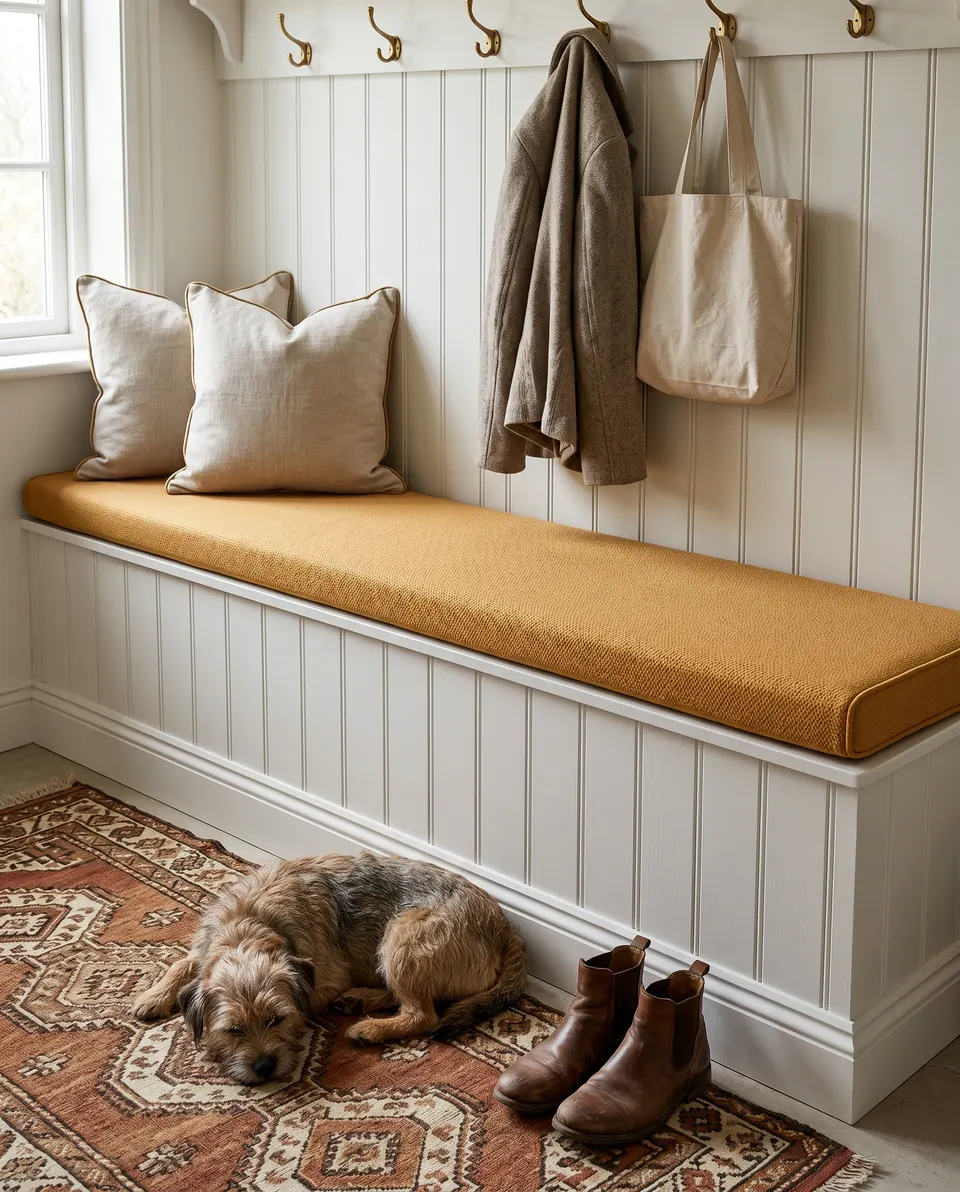
The best seller is what the workshop calls soft fabric, codes 901 to 946: a thick, linen-look performance weave with a soft hand. Replies have described it as a polyester-cotton blend and, earlier, as 100% polyester. It wipes clean easily, washes at 86°F (30°C), and is the pick for kids, rentals and daily sitting. It lives among the linen-look fabrics.
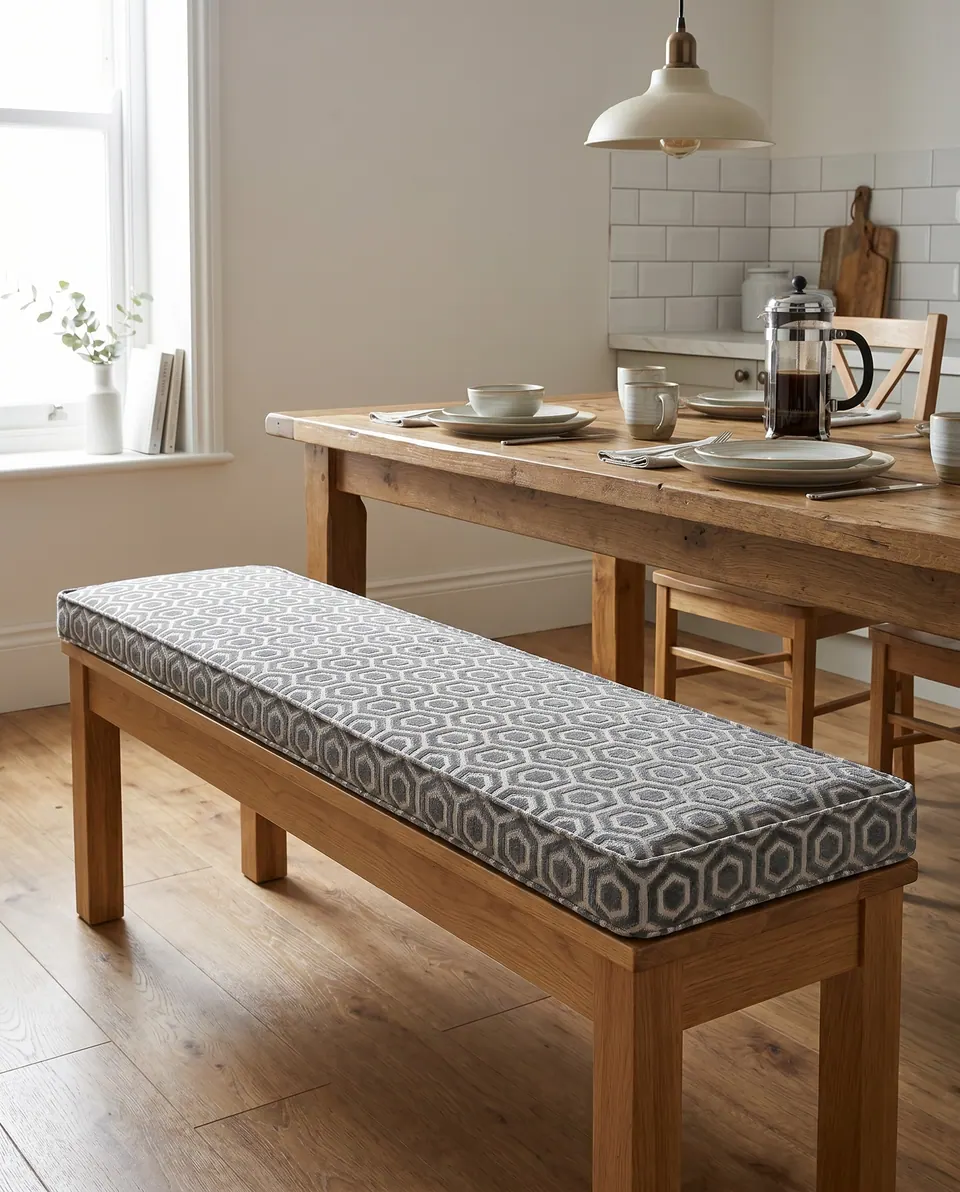
The velvet is a 100% polyester performance velvet, in cranberry, duck-egg blue, teal and a long row of others. In the workshop's experience it is the most stain-resistant of the range, because marks lift off the pile more readily than off a textured weave. It has no stain-repellent coating. Its good behavior is structural.
The honest outlier is the stripe. The striped and ticking fabrics are 100% cotton (one chart is 98% cotton, 2% polyester), indoor-only, and they stain more easily. I adore them in a guest room. I would not put one under a toddler with a juice cup.
Reading a cleaning code before the first spill
Find the code
Upholstery fabrics are often tagged W, S, W/S or X, and performance fabrics are usually W or W/S. If a swatch carries a code, write it down beside the color number. The glossary explains cleaning codes in full.
W: water-based cleaners
Mild soap and water, or a water-based upholstery cleaner. Most everyday cushion spills belong here.
S: solvent only
Water or steam can leave rings, browning or shrinkage on an S fabric. Use a solvent cleaner sparingly, or hand the job to a professional.
W/S: either, gentlest first
Start with water; move to solvent only if water fails.
X: vacuum or brush only
No liquid cleaner at all. On a seat cushion, an X fabric is a decorative choice, not a practical one.
Pretest, then blot
Try any cleaner or protector spray on a hidden area first, such as the underside. Blot with a white cloth, never rub, do not soak the cushion, and never steam an S or X fabric.
When in doubt, unzip
For zip-off covers the workshop's instruction is a machine wash at 86°F (30°C) on a delicate cycle, then line drying. The foam stays out of the machine. The cover-washing guide has the details.

Have it made
Measured it? Have Élodie’s workshop make it
A fabric reads one way at noon and another at dusk. Mention your light, and the workshop will weigh it with you. — Élodie
Leave your details and the workshop will call you to confirm measurements, fabric, foam and piping. No prices, dates or payment on this page: it is a request, not an order.
Two dogs, an oatmeal room and a question about linen
A dog owner in the US wrote with a bench to cover and a room in oatmeal and charcoal. The question was whether linen could survive two dogs jumping on and off it all day.
The workshop steered the order away from linen and toward its pet-friendly chart: a 100% polyester weave rated about 88,000 Martindale, at 370 g/m² (about 10.9 oz/yd²), tightly woven with no loops for claws to catch, and wipe-clean. Then came the part I love. It matched G-47 and G-48 to the oatmeal and G-61 to the charcoal, with a warning that G-62 reads nearly black.
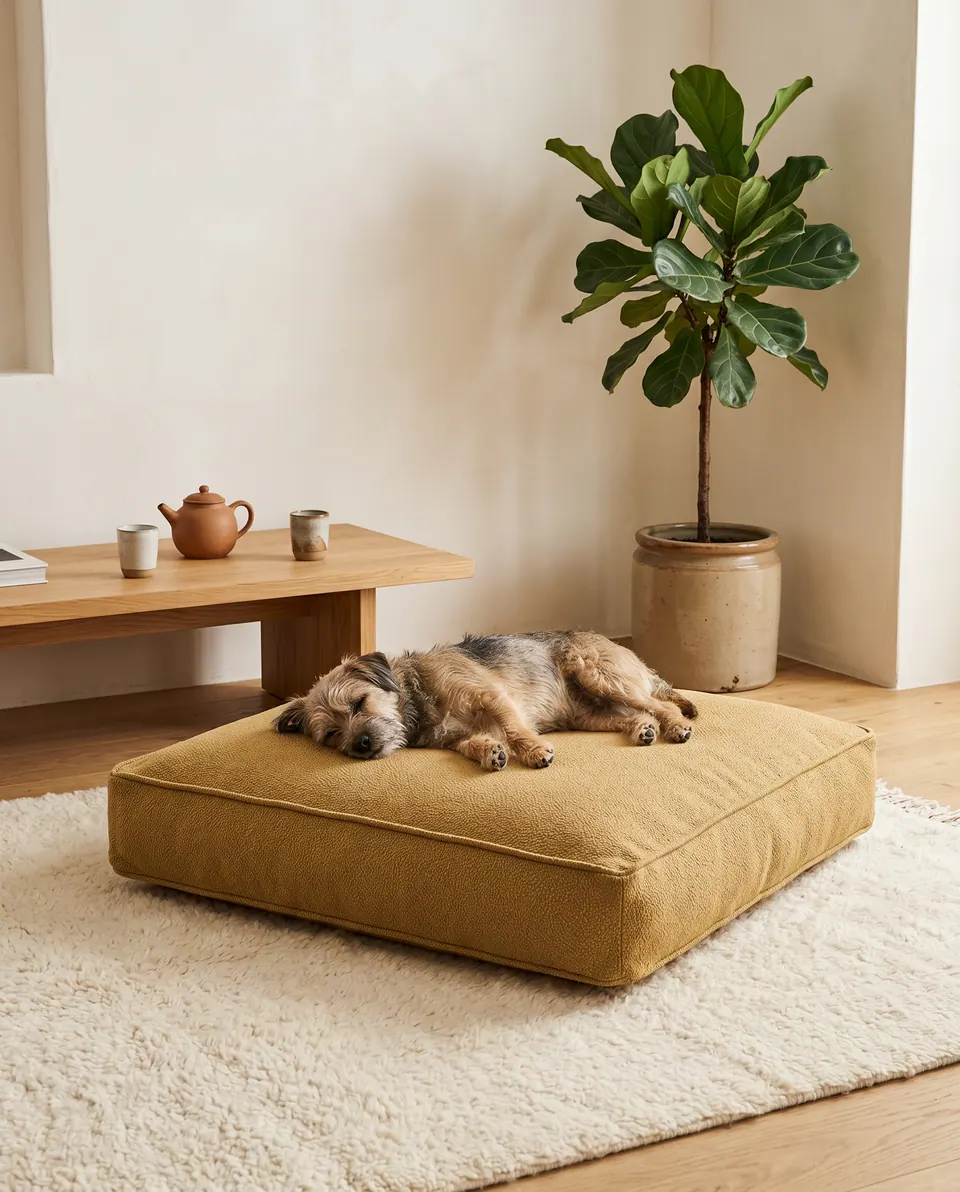
The buyer chose G-48 with contrasting G-60 piping and added a non-slip base. That is performance chosen for the life the cushion leads, not for the word on the card. For pets, a high-Martindale polyester outlasts natural linen. The pet-friendly fabric family, the pet-friendly cushions and the pet fabric guide carry the thread further.
Where 'performance' goes wrong in real homes
- Choosing by looks alone. Velvet at a messy family table, light linen in a rental, indoor fabric on an open patio: say where the cushion lives before choosing the color.
- Treating indoor performance as outdoor-ready. Wherever rain or damp can reach, use an outdoor-rated fabric; a fully covered porch can take a regular one.
- Putting corduroy on a hard-working seat. Ribs can split under heavy use; for rentals and daily wear, choose the performance linen-look or velvet.
- Judging velvet straight out of the box. New pile looks flatter and paler until it lifts, and pieces brushed different ways read as two shades. Brush every piece the same direction and compare them in the same light.
- Expecting a stain never to happen. Choose for how easily a stain comes out, in a mid-tone that forgives.
A fluorocarbon stain finish wears off and needs re-treating every 1 to 3 years; a barrier built into the cloth is meant to last the life of the fabric.
Élodie
The protector spray question
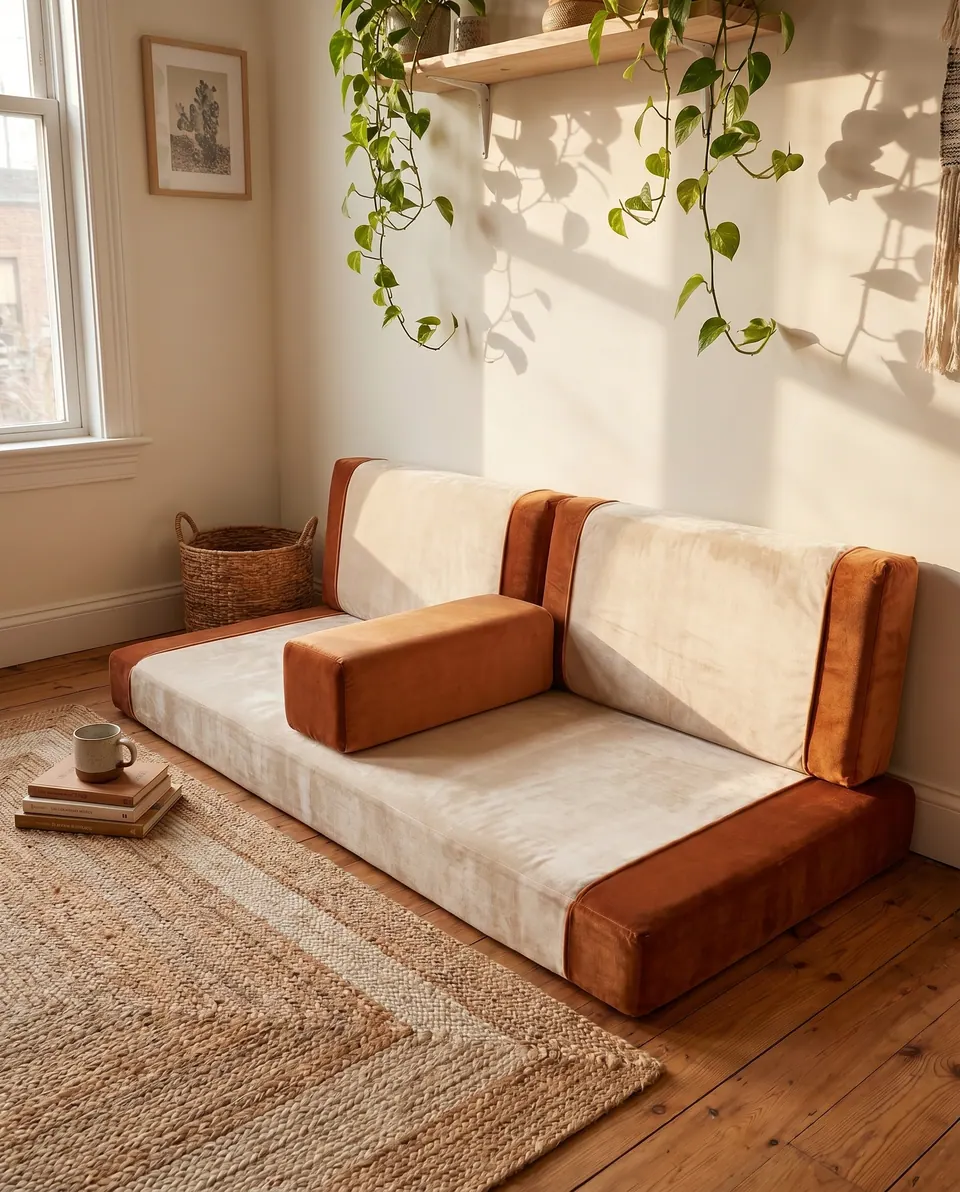
Buyers often ask whether they should spray. The workshop's main answer to stains is washability: the covers unzip and machine wash at 86°F (30°C). Its velvet has no stain-repellent coating. The teddy fabric on its floor sofas is the exception, with a water-repellent finish, and the foam blocks in those sofas sit in their own inner covers under the outer one.
A protector spray is optional. If you want one, apply it yourself once the covers arrive, and treat it like any surface finish: it wears, and it needs renewing. Test it first on a hidden area.
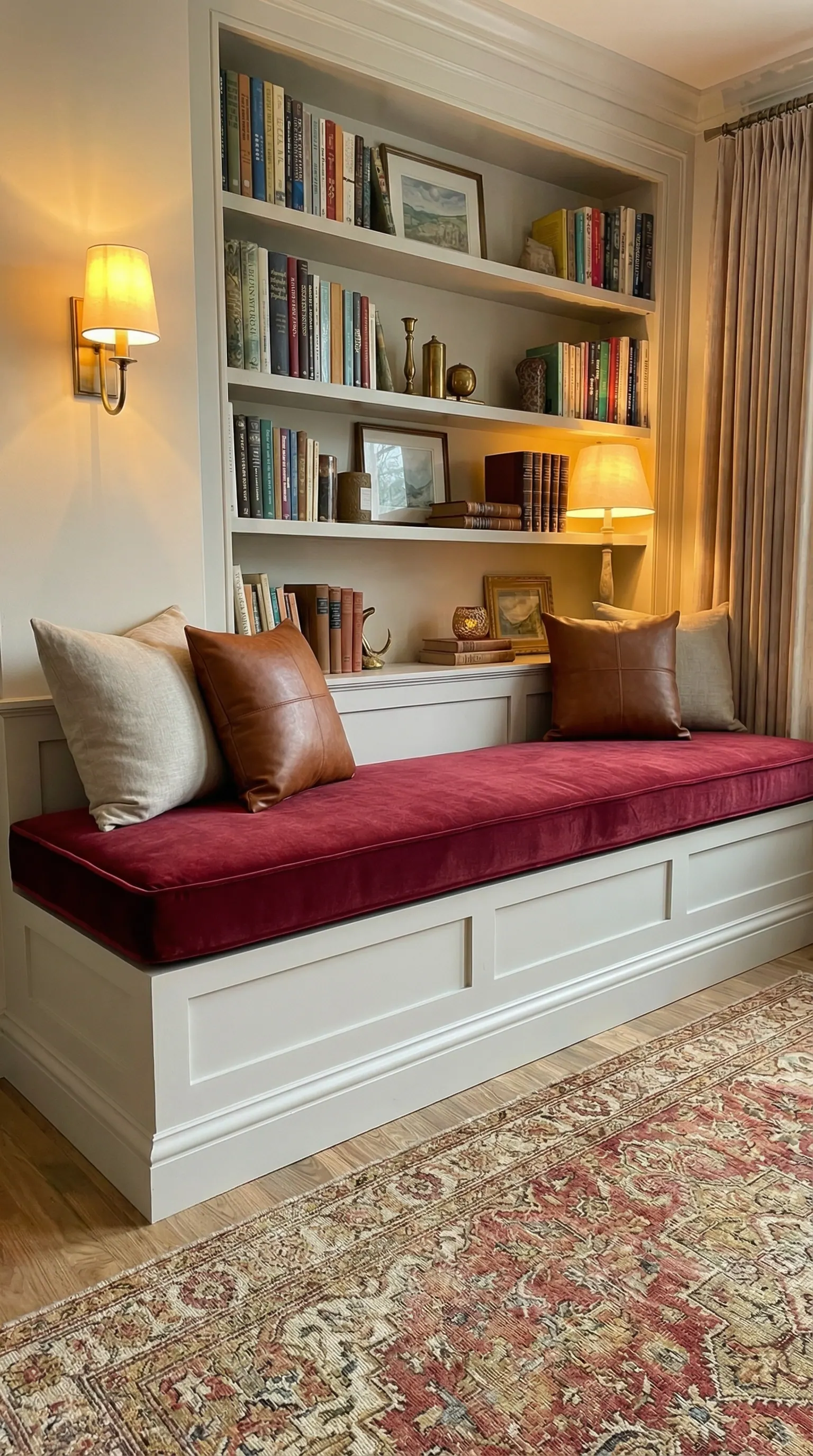
Then choose the color with the stain already in mind. A mid-tone forgives more than cream or near-black, and a cranberry velvet on a living room bench hides a coffee drip that ivory would announce. Daylight never lies; your screen sometimes does.
My friends, which spill does your house make most often: coffee, crayons or the dog?
Stain finishes and PFAS: what to ask
Many performance and stain-resistant fabrics get their spill-beading from a chemical finish, and some of those finishes are fluorinated, part of the PFAS family that buyers now ask about. A stain-proof label won't tell you which chemistry is used. Ask any maker three things in writing: the full fiber content, whether a stain or water-repellent finish was applied, and whether there's a test report or statement about PFAS. The workshop says its standard indoor fabrics have no added coatings; it hasn't supplied PFAS test documents, so this site makes no PFAS-free claim for them. Their practical protection is a zip-off cover that machine washes at 86°F (30°C), and you can apply a protector spray yourself if you want one.
Buyer questions: stains, sprays and velvet
- A common question
Are these performance fabrics, like the branded stain-proof kinds?
The workshop's answerThe workshop describes its fabrics as performance fabrics made for durable daily use: machine washable, pre-shrunk and suited to high-use rooms, with a performance velvet among them. The exception is the striped fabrics, which are 100% cotton and may not last as long. There is no branded stain-proof finish and no coating, so for families with small kids the easiest to wash and wipe are soft fabric and velvet.
- A common question
I have kids. Is the velvet stain resistant, and how do I clean it?
The workshop's answerIt is a 100% polyester performance velvet with good stain resistance and durability. Wipe or spot-clean quick messes, and machine wash the covers at 86°F (30°C) for a deeper clean. That makes it a practical choice for kitchen benches and window seats with children.
- A common question
Is it all right to spray the covers with a fabric protector?
The workshop's answerYes, if you want to. The workshop's main protection is washability: covers are removable and machine washable at 86°F (30°C). The teddy sofa fabric has a water-repellent finish and the foam inserts have extra inner covers, while the velvet has no stain-repellent coating. Any protector spray is applied by you, after the covers arrive.
- A common question
We have two kids and a dog. Which fabric should we pick?
The workshop's answerSoft fabric or velvet. Velvet resists stains best and soft fabric spot-cleans most easily, and both are among the most durable in the range. Skip the striped fabrics, which are 100% cotton and stain more easily. If a dog will live on the cushion, choose from the separate pet-friendly chart. Zippered covers machine wash at 86°F (30°C) on a delicate cycle.
Performance questions, answered briefly
How long does a sprayed-on stain finish keep working?
A fluorocarbon-type surface finish wears off with use and cleaning and generally needs re-treating every one to three years. A barrier built into the cloth during manufacture is meant to last the life of the fabric, and fiber-bonded finishes are rated for 50 washes or more.
Can outdoor fabric work as an indoor performance fabric?
Yes. The workshop says its outdoor fabrics work indoors and are the toughest in its range. Olefin, a common outdoor fiber, resists stains through the fiber itself; liquids can penetrate, but it can be cleaned with bleach. Acrylic needs a finish to resist stains.
What happens if water is used on an S-code fabric?
Water or steam can leave rings, browning and shrinkage on a solvent-only fabric. Use a solvent cleaner sparingly, pretest on a hidden area, blot with a white cloth rather than rubbing, and never steam it. If the code is X, use only a vacuum or a soft brush.
Why do cotton stripes stain more easily than the performance weaves?
The workshop's striped and ticking fabrics are 100% cotton (one chart is 98% cotton, 2% polyester), without the polyester that gives the soft fabric, velvet and linen blends their strength and easy care. They are indoor-only; choose them where spills are rare, such as a guest room.