The Pattern Room · a measuring pattern
Stain first aid for cushions: coffee, juice, mud and muddy paws
On my grandmother's porch the cushions kept every story, grape juice included. This is the first aid I give families before anybody reaches for a scrub brush.

 Save
The quick answer
To clean a cushion stain, blot it with a white cloth, never rub, then dab from the outside in with cool water and a drop of mild soap after testing a hidden seam. If a ring stays, unzip the cover and machine wash it inside out at 86°F (30°C) on gentle, then air dry. Button-tufted cushions are spot-clean only.
The scrubbing does more harm than the spill
Most cushion stains that end up permanent were made that way by somebody trying to help. A hand grabs a paper towel, scrubs in circles, and a juice drip the size of a quarter turns into a ring the size of a saucer.
When families ask how to clean cushion stains, I start where my grandmother did: nobody touches the spill until they have a clean white cloth in hand. It is one of the questions we get most, and it usually comes from a mudroom bench or a kitchen nook cushion. One buyer in the US ordered a 17 x 36 x 3 in linen cushion for a mudroom niche, sized so the seat top landed at 18 in. Seats like that meet wet boots, juice boxes and dog leashes every single day.
Kids and dogs are the real quality control. Here is how we answer it, step by step and fabric by fabric.
Stain first aid in seven steps
Blot with a white cloth, right away
Press a clean, dry white cloth onto the spill and lift; repeat with a fresh corner until nothing more comes up. White, so no dye transfers. Never rub. To clean a velvet cushion stain, speed is everything, because the pile has no stain-repellent coating. Mud is the one mess not to hurry: let it dry, then brush off the loose dirt before any water touches it.
Find out what you are working with
Look for a zipper on the back edge or underside; if it is there, the cover can come off later. A button-tufted cushion is spot-clean only, because the buttons are sewn through cover and filling. On a cushion from elsewhere, read the cleaning code on the tag first. The workshop's zip-off covers all take the same gentle 86°F (30°C) wash.
Test a hidden seam
Dab your cleaning mix on the underside or inside a seam allowance and let it dry. If the color moves or a mark appears, stop there and plan to wash the whole cover instead.
Cool water and one drop of mild soap
Stir a little mild soap into cool water, dampen a cloth and dab from the outside of the mark toward the center, so the edge doesn't creep outward. Don't pour. Oversaturating the fabric is how most rings are born.
Rinse by blotting
Go over the spot with a cloth dampened in plain water, then blot dry with a fresh one. Soap left in the fabric holds on to dirt and leaves a shadow of its own.
Dry it flat, then wake the pile
Let the spot air dry. On velvet or corduroy the wet pile clumps; once it is completely dry, brush against the nap and then with it, and the surface evens out.
Stop chasing the ring and wash the cover
If a ring or shadow stays, unzip the cover, turn it inside out and machine wash it at 86°F (30°C) at most, on a gentle cycle with mild detergent and no bleach. Air dry it instead of tumble drying. Washing the whole panel is how you get one even color back.

Have it made
Measured it? Have Rosa’s workshop make it
Tell the workshop who sits there: grandkids, the dog, a cup of coffee at six. The right fabric and foam follow from the people. — Rosa
Leave your details and the workshop will call you to confirm measurements, fabric, foam and piping. No prices, dates or payment on this page: it is a request, not an order.
How each cushion fabric takes a spill
| Fabric | First move | Watch for | Full clean |
|---|---|---|---|
| Velvet | Blot fast with a dry cloth; marks lift off the tight pile | No stain-repellent coating; wet pile clumps until brushed | Zip-off cover, 86°F (30°C) gentle |
| Linen-look | Dab with a soapy cloth | Synthetic fiber that can melt under a hot iron | 86°F (30°C) gentle, iron on low only |
| Natural linen | A soapy cloth, the way the workshop says works best to clean a linen bench cushion | Rings on light colors if you soak it | 86°F (30°C) or below, gentle, air dry |
| Striped cotton | Blot, then cool water and mild soap | 100% cotton stains more easily than the other ranges | 86°F (30°C) gentle |
| Pet-friendly polyester | Wipe clean with a damp cloth | Tight weave, though claws can still snag any fabric | 86°F (30°C) gentle |
| Outdoor acrylic canvas | Brush off dry dirt, then about 1/4 cup mild soap per gallon of lukewarm water | Water-repellent, not waterproof; mildew grows on dirt left on the fabric | Rinse and air dry only |
Fabric cleaning codes on a store-bought tag
- W: water-based cleaners are fine. Cool water and mild soap is your starting point.
- S: solvent only. Water or steam can leave rings, browning and shrinkage.
- W/S: either kind works. Start with the gentlest, which is water.
- X: vacuum or brush only. No liquid of any kind.
- Whatever the letter: pretest a hidden spot, use white cloths, don't oversaturate, and never steam an S or X fabric.
Two dogs, an oatmeal room and a question about linen
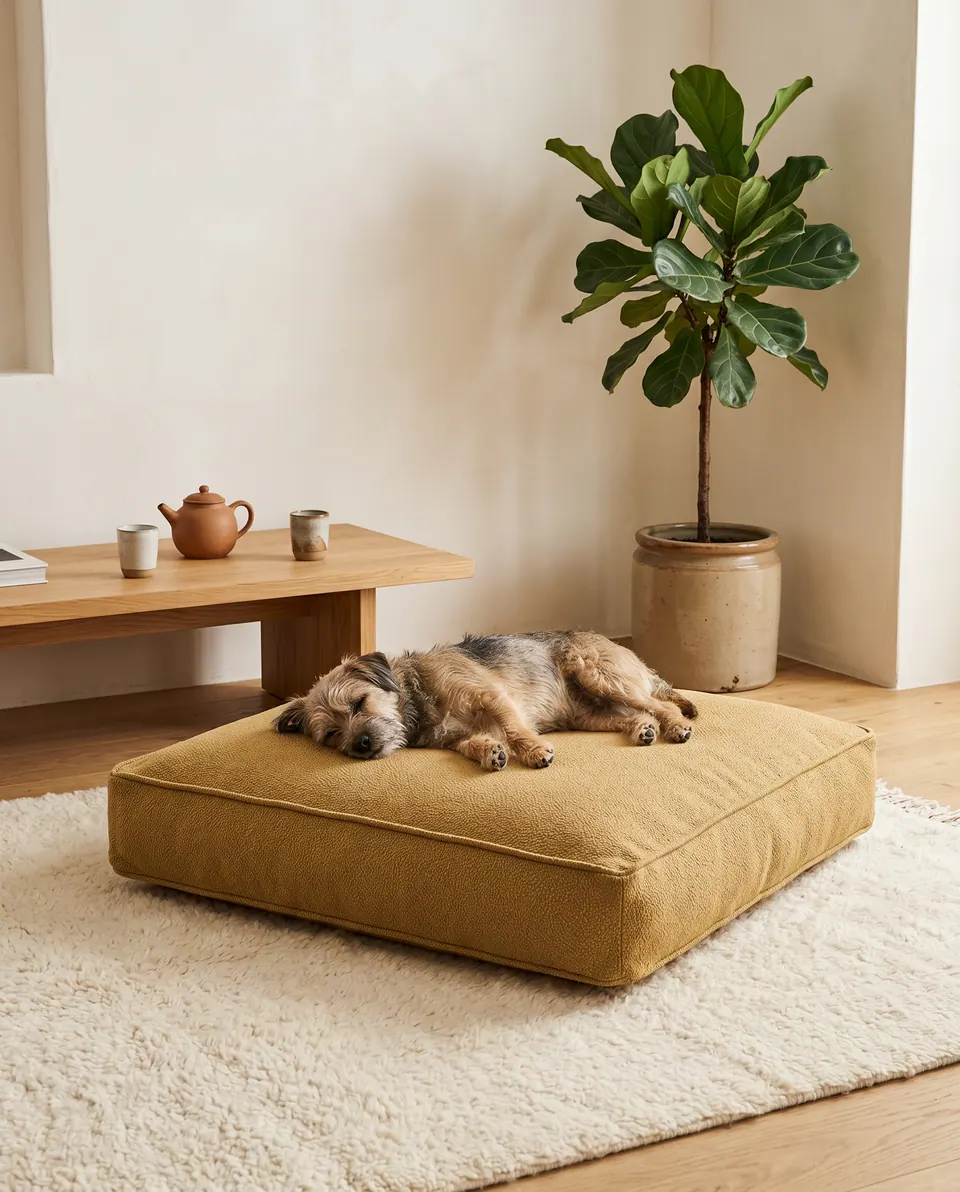
A buyer in the US wrote to the workshop about a bench shared with two dogs. The room was oatmeal and charcoal, and the question was honest: could linen survive dogs jumping on it every day?
The workshop steered them away from natural linen and toward its pet-friendly chart: a 100% polyester weave rated at 88,000 Martindale rubs, about 10.9 oz per square yard (370 g/m²), that wipes clean. The workshop matched two shades to the oatmeal and one to the charcoal, and warned that the darkest one in the family reads nearly black.
They chose an oatmeal body with contrasting piping and added a non-slip base. The lesson I keep from that one: for dogs, pick a high-Martindale polyester over natural linen, and let a damp cloth do the daily work.
When a protector spray earns its keep
The workshop's covers aren't sold stain-treated; their protection is that they unzip and wash. The teddy fabric carries a water-repellent finish, and velvet carries none. If you are shopping for stain resistant cushion fabric, velvet is the most stain-resistant in the workshop's range because marks lift off its tight pile, soft microfiber is the easiest to spot-clean, and the 100% cotton stripes stain more easily than either.
A fabric protector spray is something you can apply yourself once the covers arrive. It earns its keep on light colors at a breakfast table and on a velvet bench that meets sticky fingers. Test it on a hidden seam first, like any cleaner, and know that sprayed-on fluorocarbon-type finishes wear off and need re-treating every 1 to 3 years.
For real liquid, a spray is not the answer. Ask for a water-repellent fabric, or ask about an inner liner where spills, pets or damp are likely; the performance and pet-friendly fabrics are the place to start, and the pet-friendly cushions show them at work. The full routine lives in the Pattern on washing cushion covers, and the cleaning codes have their own glossary entry.
What spill does your household specialize in, neighbor? At my house it is sweet tea on the porch swing.
Common mistakes that turn a spot into a stain
- Scrubbing in circles with a colored towel. Blot with white, every time.
- Putting the white non-slip bottom in the washer. That anti-slip layer is wipe-by-hand only; in the machine or a warm dryer it can shrink or tear.
- Choosing button tufting for a family bench, then wanting to wash it. A tufted cover never comes off, so decide between the tufted look and a zip-off cover before you order.
- Using indoor fabric where rain reaches. Outdoor-rated fabric belongs anywhere damp gets in; a fully covered porch can take regular fabric.
- Mistaking a pressure mark on velvet for a stain. Packing and sitting press the pile into patches that look darker; brush every piece the same way and give the pile a few days to lift.
- Tumble drying the cover or ironing linen-look on high. Air dry, and keep the iron on low, because that synthetic can melt.
- Picking light linen for a rental or a family table. For kids and pets, choose a tight, washable weave in a mid-tone.
A coffee or juice spill on a cushion gets blotted with a white cloth, never rubbed, and cleaned from the outside of the mark toward the center.
Rosa
Buyer questions: soda, paws and the washing machine
- A common question
We spilled soda on the new cushion. How do I wash the cover, and does 30 degrees mean Fahrenheit?
The workshop's answerCelsius: the 30 means 86°F (30°C). Unzip the cover and take it off the foam, then machine wash it at 86°F (30°C) at most on a gentle, delicate or cold cycle, with a mild detergent and no bleach, inside out if you can. Air dry it and iron on low only if needed.
- A common question
Are your fabrics stain-resistant, or should I spray them with a protector?
The workshop's answerThe main protection is washability: the covers unzip and machine wash at 86°F (30°C). The teddy fabric has a water-repellent finish, while the velvet has no stain-repellent coating. If you want extra protection, you can apply a fabric protector spray yourself once the covers arrive.
- A common question
We have a toddler and a dog. Which fabric will survive both?
The workshop's answerSoft fabric or velvet. Velvet is the most stain-resistant and soft fabric is the easiest to spot-clean, and both are the most durable in the range. The striped fabrics are 100% cotton and stain more easily. If the dog lives on the cushion, choose from the pet-friendly chart.
- A common question
My tufted cushion can't go in the washer. How am I supposed to clean it?
The workshop's answerIn place, by hand: wipe the surface gently with a damp cloth, using mild soap and water for marks. If you would rather machine wash, choose the untufted foam version, which has a zippered, removable cover.
- A common question
Our linen bench cushions got dirty. What is the best way to clean them?
The workshop's answerFor natural linen, a soapy cloth works best. Removable linen covers can also be unzipped and machine washed at 86°F (30°C) or below on a gentle cycle with mild detergent, then air dried. Don't use a hot iron on linen-look fabric; it is synthetic and can melt.
- A common question
Can the white non-slip bottom go in the wash with the cover?
The workshop's answerNo. That white layer is what stops the cushions sliding, and it must never go in the machine. Unzip and remove it first, wash only the colored cover, and wipe the non-slip piece clean by hand, even with pets in the house.
Short answers for the next spill
Can bleach lift a stain from a light cushion cover?
Not on indoor covers. The care rule for zip-off covers is mild detergent and no bleach. Some solution-dyed outdoor acrylics and olefin fabrics tolerate a diluted bleach mix for mildew, but follow that fabric maker's instructions and test a hidden seam first.
Will a cover shrink if I wash it after a spill?
Not at the recommended setting. The fabrics are pre-shrunk, and covers washed at 86°F (30°C) on a gentle cycle keep their size. Heat is the risk, so skip the tumble dryer, and refit the cover while it is still slightly damp for an easier fit.
Is a steam cleaner safe for cushion marks?
Not on anything coded S or X, where water and steam cause rings, browning and shrinkage. On a zip-off cover a gentle machine wash is the safer route, and linen-look synthetics can melt under high heat, so keep irons on low.
Which cushion color hides everyday spills best?
For homes with kids and pets, the workshop points people to a tight, washable weave in a mid-tone, with zip-off covers. Light linen at a family table or in a rental is a classic mismatch between looks and the life the cushion leads.
Do I wash the whole cushion or only the cover?
Only the cover. Foam inserts have their own protective layer, so unzip the outer cover and wash it on its own. If the insert itself ever needs attention, spot-clean it by hand with a damp cloth rather than soaking it.