The Pattern Room · a measuring pattern
Faux leather seat cushions: easy to wipe, but know the trade-offs
Every porch has a vinyl story, and most of them end with somebody peeling the backs of their legs off a seat in July. Wipe-clean is a good reason to pick faux leather. It shouldn't be the only one.

 Save
The quick answer
A faux leather seat cushion wipes clean in seconds, but it has trade-offs: PU versions can peel in warm, humid rooms after two to three years, PVC stiffens near 32°F (0°C) and can crack in the cold, and both feel warm and sticky under bare legs. For kids and dogs, a tightly woven leather-look polyester or a performance weave is often the better seat.
What wipe-clean costs you on a hot afternoon
My grandmother's porch had one vinyl glider, and every summer somebody in shorts found out about it. A faux leather seat cushion is honest about one thing: spills wipe right off. It is quieter about heat, humidity and time.
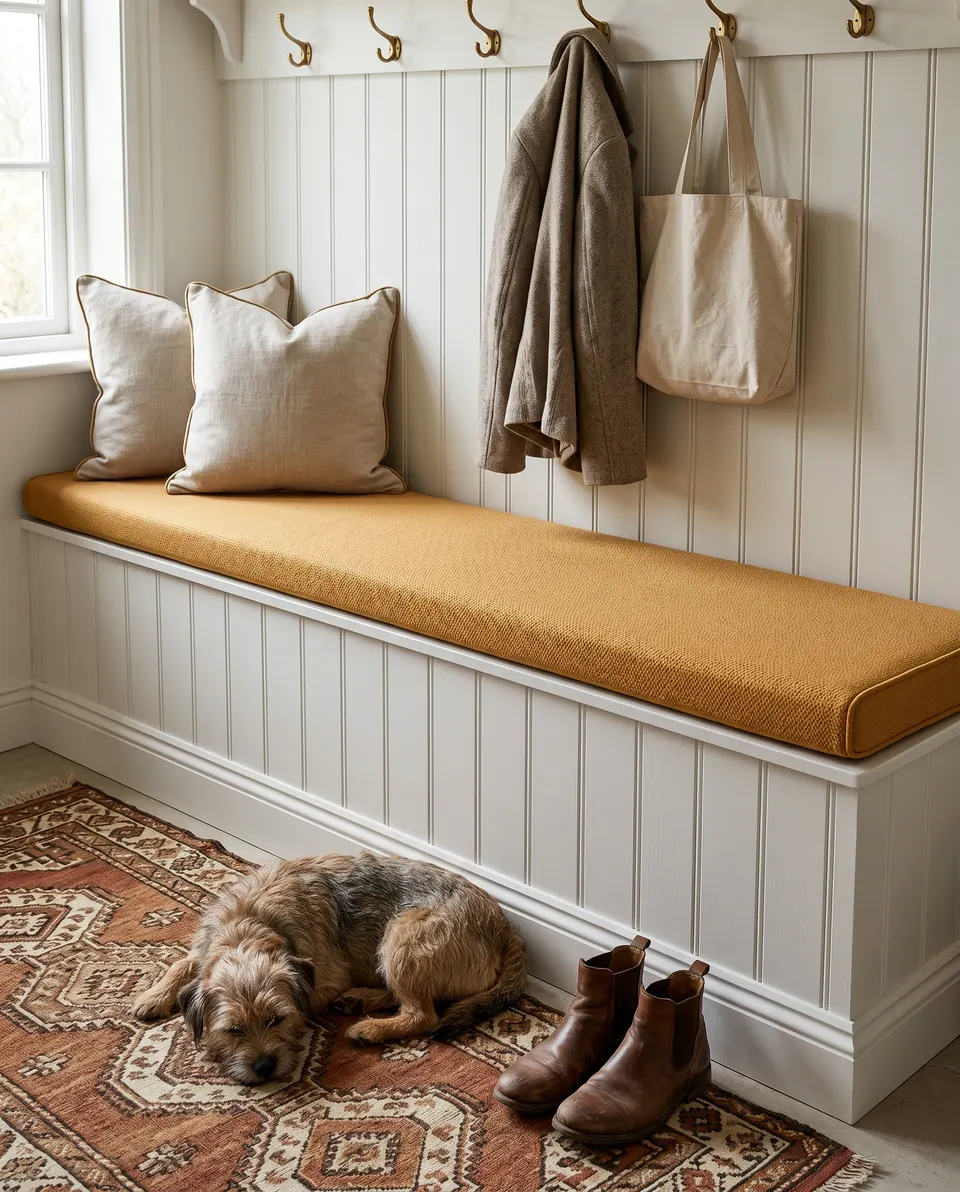
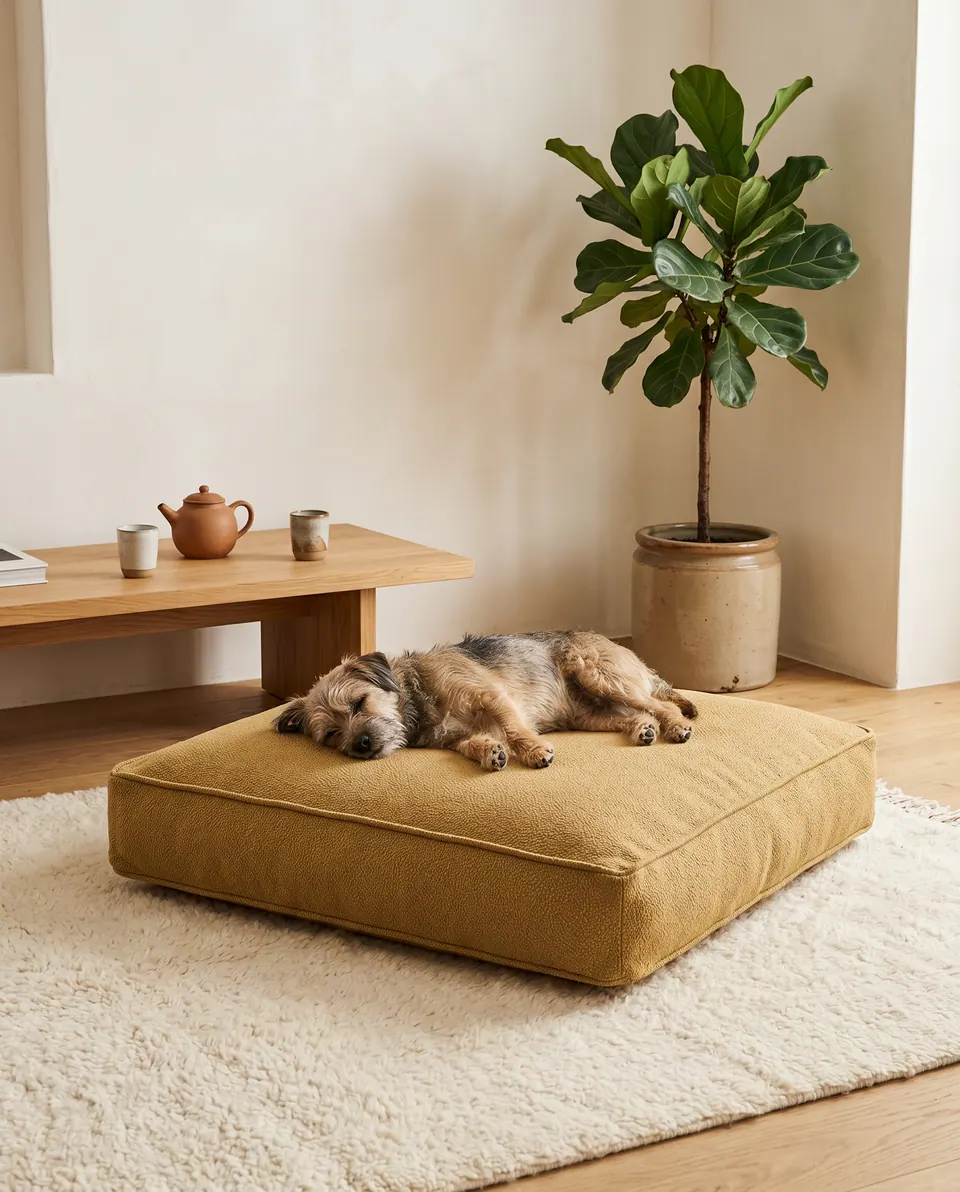
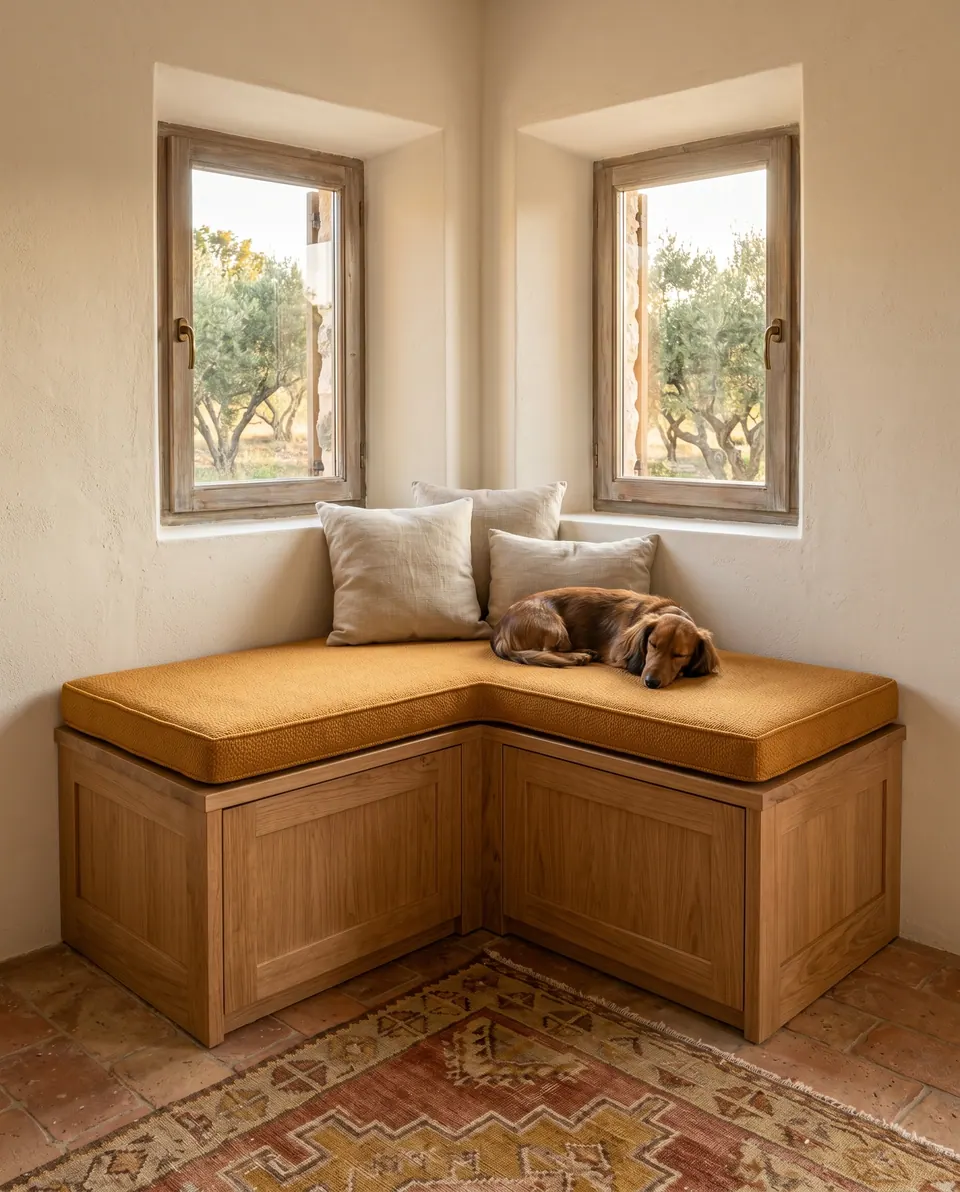
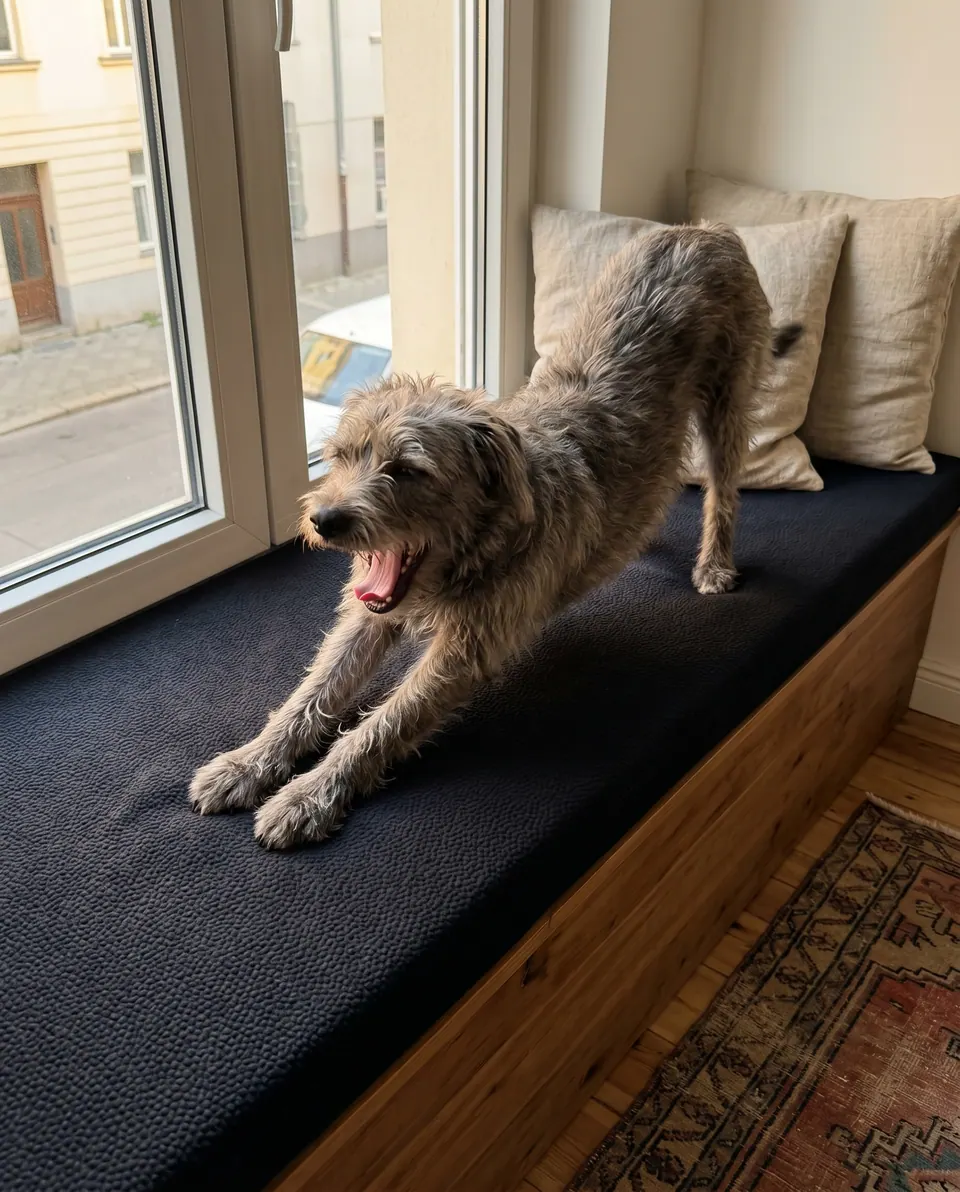
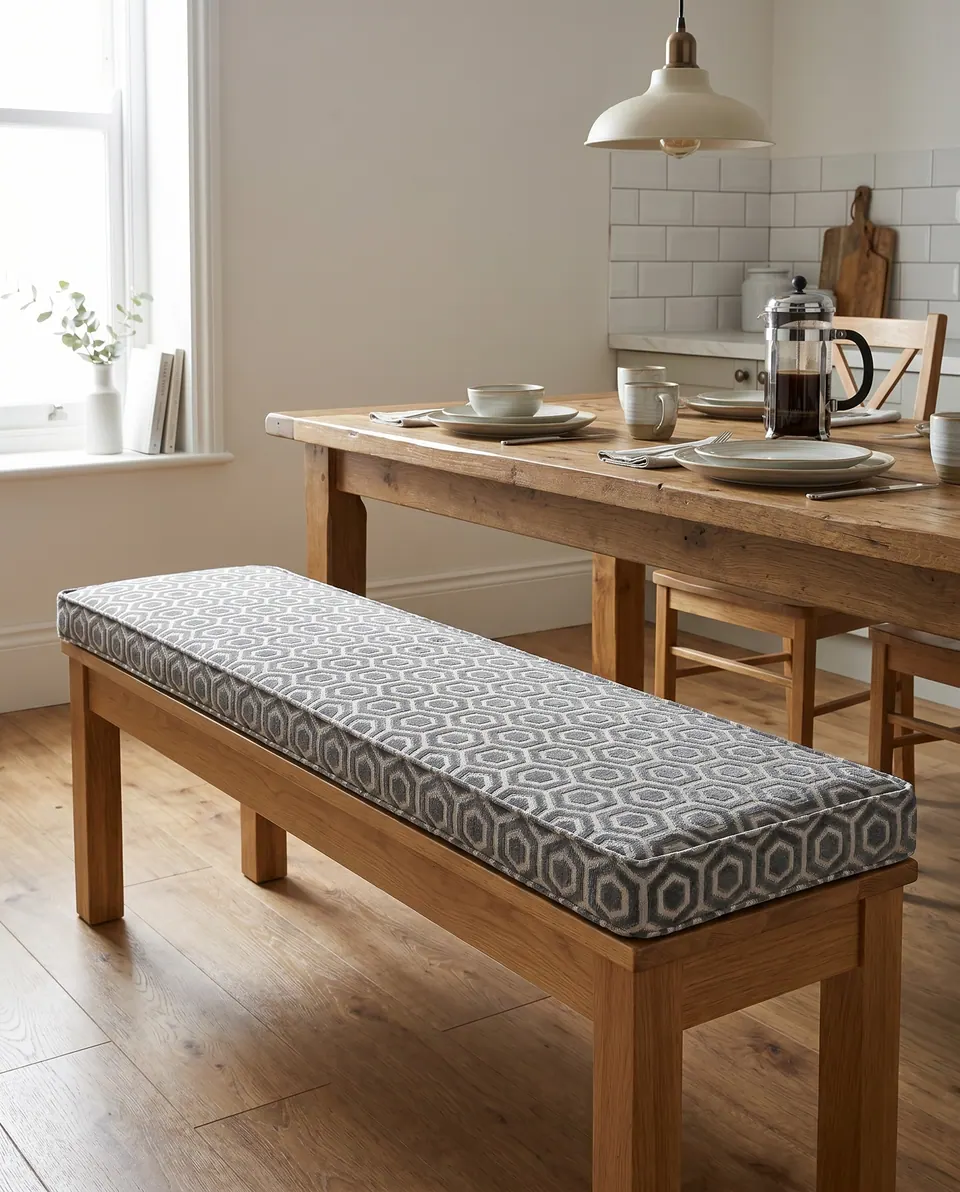
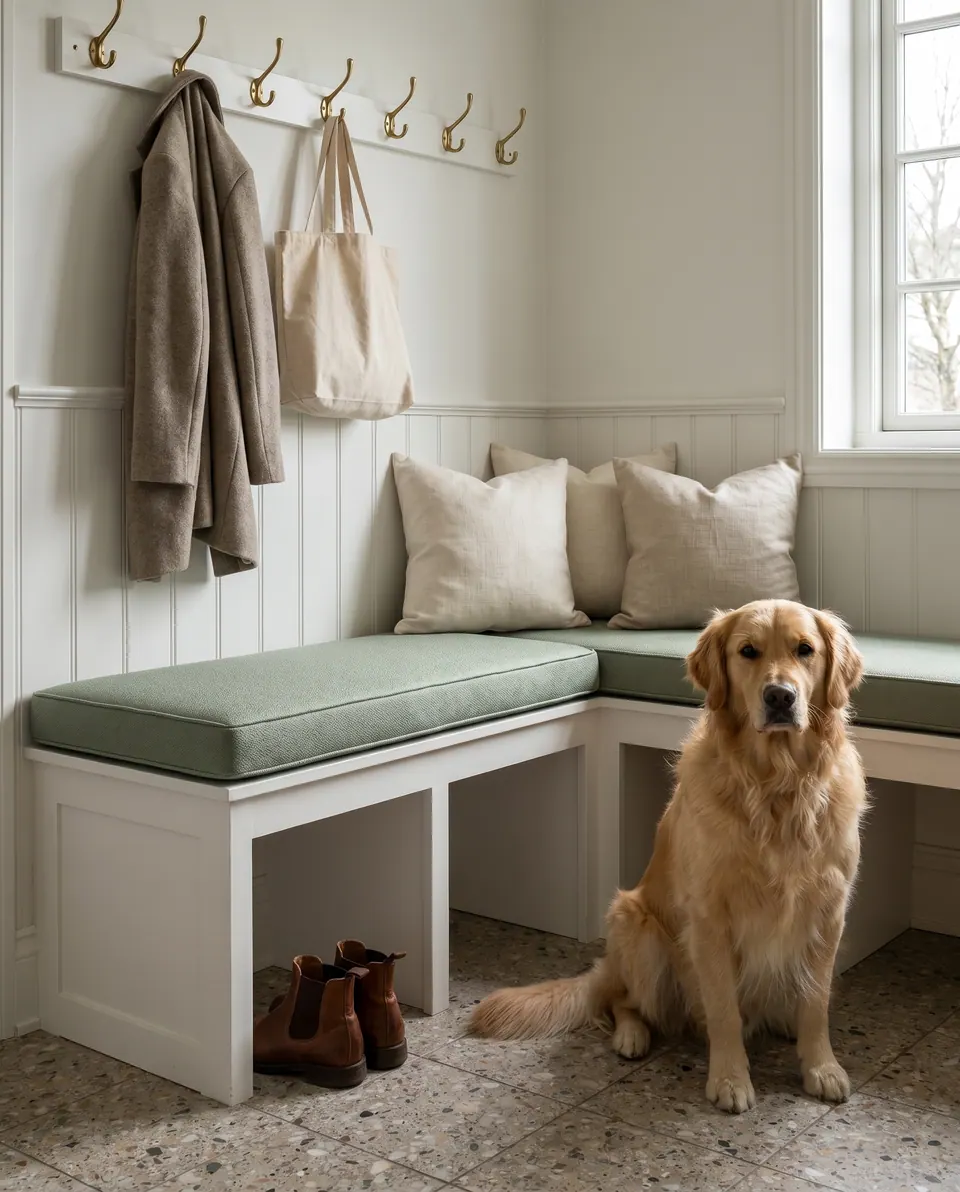
The request comes two ways: do you do leather, and I need a fabric that can be wiped down. The first is about a look. The second is about a kitchen bench, a toddler with a juice cup and a dog who thinks the bench is his.
The workshop makes faux leather cushions for a little more than the standard charts, with the cards sent on request, and it keeps a woven textile with a soft-leather feel for families with pets. Here is how to choose, neighbor, before the first spill decides for you.
PU, vinyl and the woven alternatives, side by side
| Question | PU faux leather | PVC faux leather (vinyl) | Leather-look woven (Giza) | Soft fabric and velvet |
|---|---|---|---|---|
| Wipes clean? | Yes | Yes | Yes | Yes; velvet resists stains best |
| Humid rooms | Moisture breaks PU down; peeling after 2 to 3 years is reported | Used for marine seating | A woven textile, not leather | No coatings applied |
| Cold porches | Not recommended outdoors | Stiffens near 32°F (0°C); may crack below 23°F (-5°C) | Indoor fabric; not waterproof | Indoor fabrics |
| Rub test | 30,000 to 80,000 cycles (published range) | 100,000+ cycles (published range) | 88,000 Martindale | Durable daily-use weaves |
| Under bare legs | Warm and sticky; the coating blocks airflow | Warm and sticky; the coating blocks airflow | Very smooth, close to soft leather | Soft hand |
| Where it earns its place | A dry, cool dining room | Boats and marine seating | Benches the dog jumps on | Kitchen benches and kids' seats |
Choosing a wipe-clean seat, one question at a time
Name the room's weather
Breakfast nook by the dishwasher, sunroom, three-season porch: write it down first. Moisture breaks polyurethane down, and PU faux leather in warm, humid rooms is reported peeling after two to three years, sometimes cracking within 18 months. PVC stiffens around 32°F (0°C); only cold-resistant grades go to -4°F (-20°C).
Count the bare legs
Coated surfaces block airflow, so they turn warm and sticky in heat. A kitchen bench where kids sit in shorts all summer is a different job from a dining chair used at supper.
Ask whether the card is PU or PVC
Faux leather cards sit outside the standard charts, so ask to see them and ask what each one is. Outdoors, PU is not recommended, PVC works for marine use, and silicone-faced leather does best of the three.
Weigh a woven leather-look for pets
For dogs, the workshop's pick is Giza: 100% polyester, 370 g/m² (about 10.9 oz/yd²), rated by its supplier at 88,000 Martindale cycles, not Wyzenbeek-tested. It has a leather-touch texture but it is a textile, tightly woven without loops to catch claws. No fabric fully resists claws; this one snags less. See pet-friendly fabrics and Martindale versus double rubs.
Order a sample of the surface
Leather-look faces change with light and angle; one pet fabric looked like velvet in a customer photo and like leather in the swatch. Order a sample of any textured code before a large piece, and ask for its fiber content.
Write the add-ons into the order
A non-slip base and ties are not standard. Ask for them in writing, with tie positions and lengths, ask whether the backing is washable, and check the photo before it ships. Stopping a bench cushion from sliding helps you choose.

Have it made
Measured it? Have Rosa’s workshop make it
Tell the workshop who sits there: grandkids, the dog, a cup of coffee at six. The right fabric and foam follow from the people. — Rosa
Leave your details and the workshop will call you to confirm measurements, fabric, foam and piping. No prices, dates or payment on this page: it is a request, not an order.
A trapezoid bench, kids, dogs and a thinner second seat
Kids and dogs are the real quality control, and one family in the US had both. They asked for performance fabric for a trapezoid banquette, and the workshop pointed them to its smooth, leather-like Giza range.
The bench measured about 88.5 in (225 cm) along the top, 126 in (320 cm) at the bottom and 26.5 in (67 cm) on each slanted side, 19.25 in (49 cm) deep. The depth didn't add up, so the workshop redrew the shape and asked for a paper sketch before quoting. The first cushion went into light blue velvet, 128, and they came back for four soft-filled back pillows: two at 44 x 12.5 in (112 x 32 cm) and two at 26 x 12.5 in (66 x 32 cm), because one 88 in pillow would sag.
Later the 4 in (10 cm) seat felt too thick. The workshop made a new 2 in (5 cm) cushion with its own cover in pet-friendly G-45; thin foam in the old cover would have gone baggy. That is the wipe-clean answer for a house full of paws: a tight woven seat instead of a vinyl one.
Cleaning dos for faux leather and wipe-clean weaves
- Blot a spill with a white cloth; never rub it in.
- Wipe with a damp cloth and a little mild soap, test any cleaner on a hidden spot first, and don't soak the seat.
- Read the cleaning code: W means water-based cleaners, S solvent only, W/S either, X vacuum or brush only.
- For zip-off woven covers: unzip, turn inside out, wash at 86°F (30°C) at most on a gentle cycle, then air dry.
Faux leather mistakes worth avoiding
- Choosing a pet fabric from a customer photo without asking what it is. A leather-textured G-42 picked for a large dog was admired by a buyer with no pets; Soft or Velvet suited her better.
- Expecting a leather-look weave to be waterproof. For real water resistance, choose the outdoor range.
- Steaming an S- or X-code fabric. Water or steam leaves rings, browning and shrinkage on S fabrics.
- Tumble-drying a cover with a non-slip base. The backing doesn't tolerate the dryer.
- Asking for ties only in chat. Put add-ons in the order note and get them confirmed.
When the answer is real leather, or no leather at all
Some buyers want the real thing, and the workshop has made cowhide window seat cushions to order, natural tri-color hide rather than a print, from a hide it sources or one the buyer sends.
Others want the look without the upkeep. A dog owner in the US with an oatmeal-and-charcoal room asked whether linen would survive dogs jumping on it. The workshop steered her to Giza, matched G-47 and G-48 to the oatmeal and G-61 to the charcoal, and warned that G-62 reads nearly black. She ordered G-48 with contrasting G-60 piping and a non-slip base.
With messy toddlers and no pets, the answer may not look like leather at all: soft fabric and velvet wipe clean, B19 is the water-repellent option, and water-resistant premium charts exist for banquettes. See kitchen banquette cushion fabric, kitchen nook cushions and pet-friendly cushions. So who sits on yours most days: a child, a dog, or a Sunday guest?
If bare legs sit on it all summer, a coated faux leather seat cushion turns warm and sticky, because the coating blocks airflow.
Rosa
Buyer questions: leather, wipe-down and paws
- A common question
Do you make cushions in leather or faux leather?
The workshop's answerYes. Faux leather is available for a little more than the standard charts; ask to see those cards. The Giza textile has a very smooth feel close to soft leather while staying a fabric, and real cowhide window seat cushions have been made to order. If wipe-clean is the main goal, velvet wipes easily too.
- A common question
Is your pet-friendly fabric actually leather? It looks like it in the pictures.
The workshop's answerNo. Giza is a 100% polyester woven upholstery fabric, 370 g/m², rated by its supplier at 88,000 Martindale cycles. Its leather-touch texture is why a Giza cushion can look like velvet in a photo and like leather in a swatch. It wipes clean, which makes it the workshop's pick for pets; without pets, Soft or Velvet is more comfortable.
- A common question
Are your fabrics performance fabrics, like the big-name stain-proof brands?
The workshop's answerThe workshop calls them performance fabrics for daily use: machine washable, pre-shrunk and suited to busy rooms, except the striped fabrics, which are 100% cotton. There is no branded stain-proof finish and no coating, so for families with small kids, soft fabric and velvet are the easiest to wash and wipe.
- A common question
We have kids and a dog. Which cushion fabric should we pick?
The workshop's answerSoft fabric or velvet. Velvet is the most stain-resistant, soft fabric the easiest to spot-clean, and both are the most durable in the range. Skip the striped cottons, which stain more easily. If the dog lives on the cushion, choose from the pet-friendly chart. Zippered covers machine wash at 86°F (30°C) on a delicate cycle.
- A common question
Is there a waterproof or wipe-down fabric for a banquette with a messy toddler?
The workshop's answerThe standard indoor fabric isn't waterproof, but it is durable and easy to clean. For real liquid protection, B19 is the water-repellent option. For kitchen banquettes the workshop also sends water-resistant premium charts and a faux (vegan) leather chart, with close-up photos and videos of swatches on request.
Faux leather questions, answered short
Why does faux leather peel and flake?
Most peeling is hydrolysis: moisture breaks down polyurethane, especially the ester-based kind, and warm, humid rooms speed it up. Published sources report peeling after two to three years of that exposure, and some say cracking can start within 18 months.
Can a vinyl cushion stay out on a porch through the winter?
Not comfortably. PVC stiffens around 32°F (0°C) and may crack below 23°F (-5°C); only cold-resistant grades reach -4°F (-20°C). PU is not recommended outdoors at all. For porch seating, choose the water-repellent outdoor range and store the cushions for the cold months.
How long does a faux leather cushion last?
Published estimates run 3 to 5 years for standard PU and 5 to 10 for premium PU. Cheap PVC grades are put at 2 to 3 years and UV-stabilized outdoor PVC at 5 to 10. Humidity, sun and daily use decide where a seat lands in that range.
Which is tougher on paper, PU or PVC faux leather?
In published rub tests, PVC typically passes 100,000+ cycles and PU 30,000 to 80,000, though microfiber-backed PU can exceed 100,000. For fading, PVC typically rates grade 6 or above and PU grade 5 to 6. Ask for the test data on the exact card.