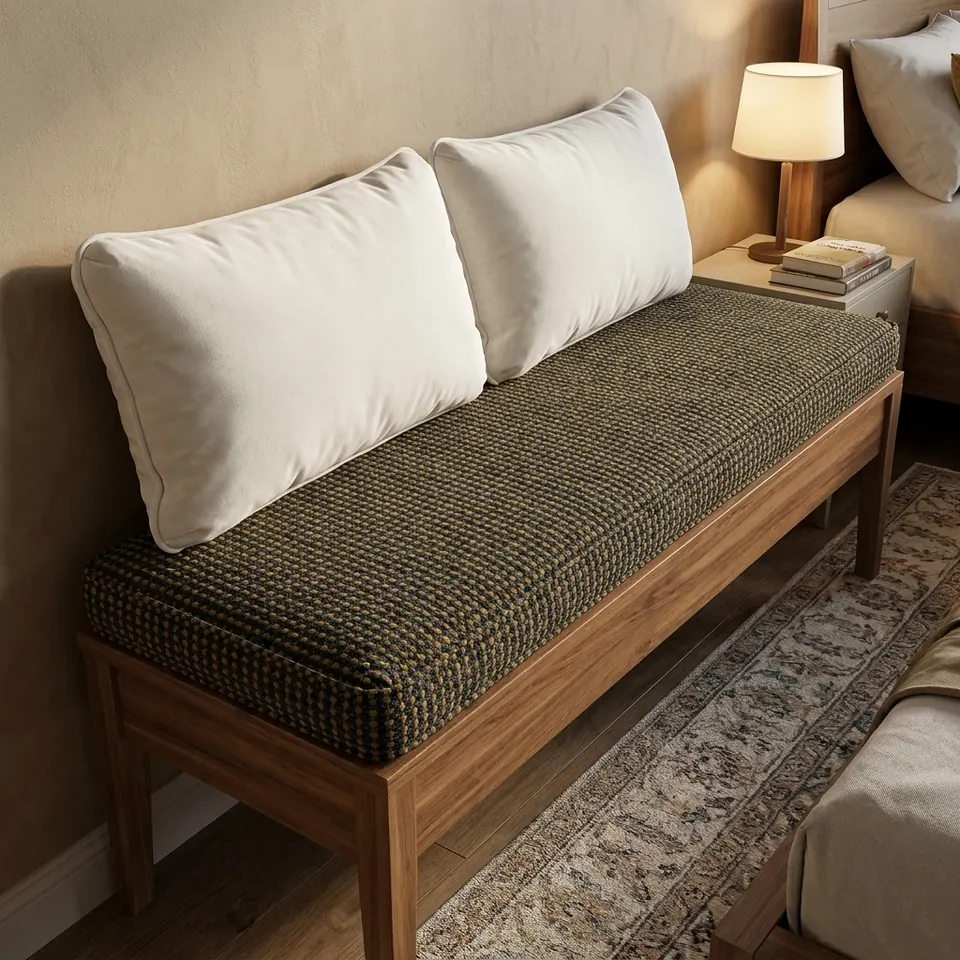
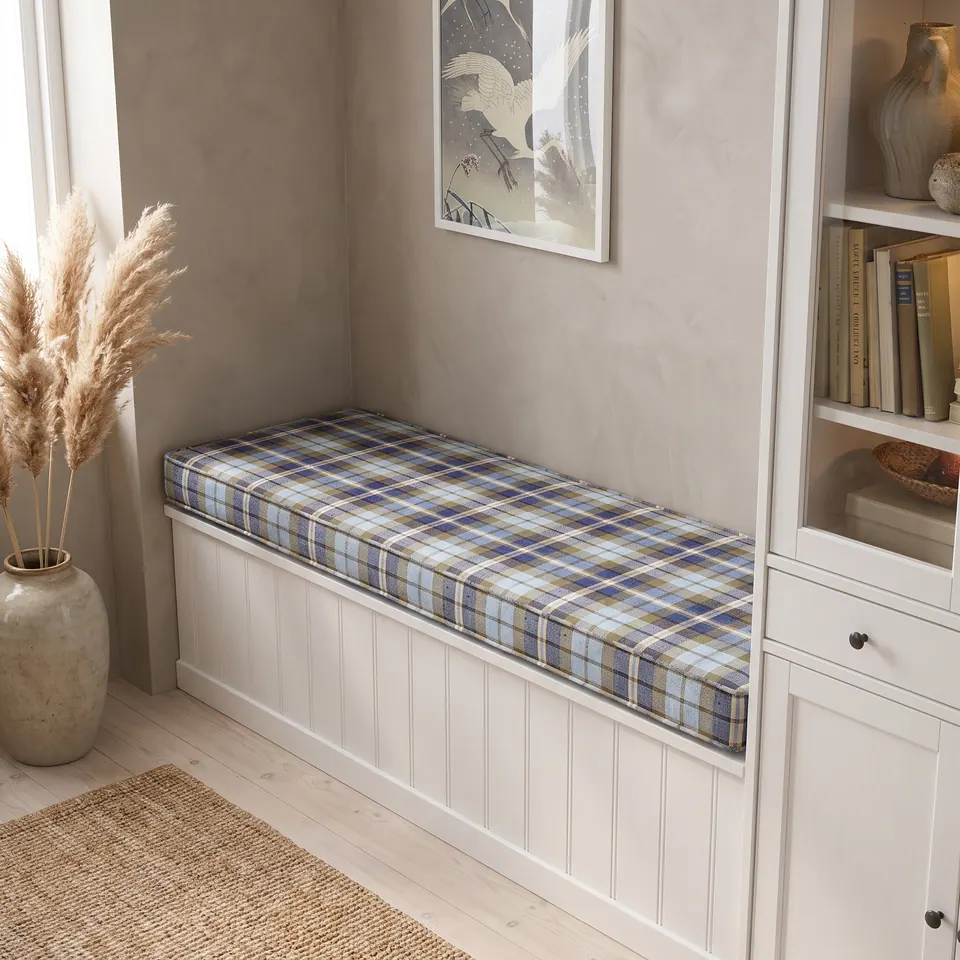
The Pattern Room · a side-by-side pattern
How to stop a bench cushion sliding: ties, a non-slip base or velcro?
A cushion that skates every time you sit isn't badly made. It's wearing the wrong fix for what's underneath it. Read the surface first, then choose ties, a grippy base or, rarely, velcro.

 Save
The quick answer
To stop a bench cushion from sliding, match the fix to the surface: a non-slip base for seats on smooth painted or wooden tops and backs against a flat wall, and fabric ties for slats, spindles, frames and hinged lids. The non-slip base is a grippy fabric bottom panel that holds by friction, not glue. Velcro strips are made only on request.
“It slides every time we sit”
“It slides every time we sit.” Some version of that sentence comes up all year long, usually about a window seat or a painted mudroom bench.
If you want to stop a bench cushion from sliding, don't start with the cushion. Start with what it sits on and what it leans against. A smooth top wants grip. Slats, spindles and hinges want something to tie to. Get that one decision right and the rest is paperwork.
I learned this the embarrassing way, years ago, on a dining bench I'd covered beautifully and fastened to nothing at all. Every time the smallest person at the table slid in for breakfast, the cushion went with him. Straight welt, crooked cushion. Right, then. Here is the table I wish I'd had.
Surface by surface: which fix holds the cushion
| What the cushion meets | Best fix | Why it works | Watch for |
|---|---|---|---|
| Seat on a smooth painted or wooden top | Non-slip base | Grippy fabric across the whole underside holds by friction | The cushion becomes one-sided and can't be flipped |
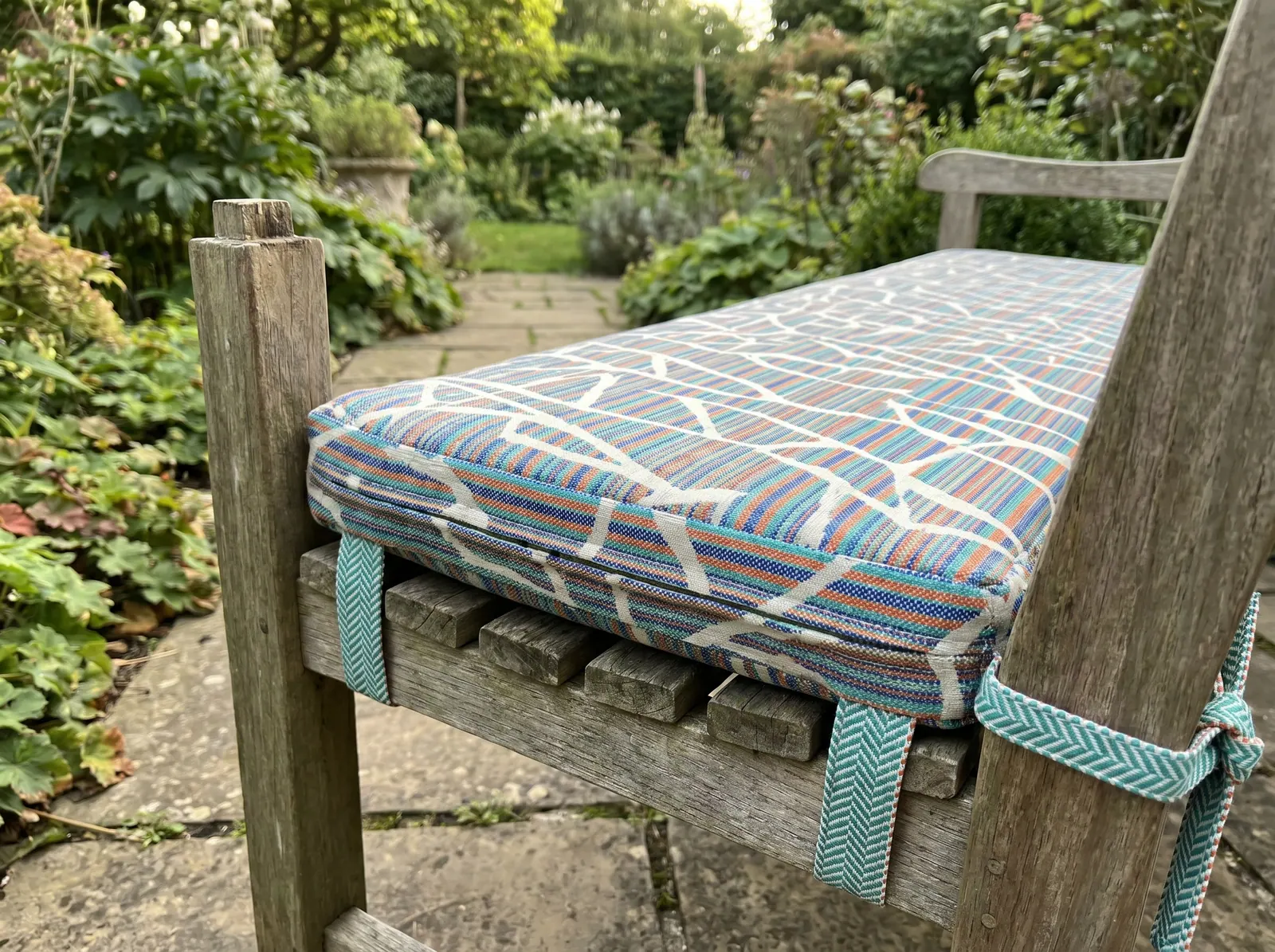
| Seat on slats, spindles or an open frame | Ties | Four corner ties knot together under the seat, or two tie around a rail | Give count, position and length in writing |
| Back cushion against a flat wall or solid panel | Non-slip backing | Friction against the wall stops the slow slump | Say which cushions in a set get it |
| Back cushion against slats, a railing or a frame | Ties near the top, on the back | Hidden ties hold the back up and double as a handle on a big backrest | Straps on back cushions carry a small extra cost |
| Seat on a hinged storage or RV bench lid | Ties on the hinge side only | The cushion stays attached when the lid opens | Give each hinge's position from a named end, its width and a photo |
| Shallow window seat with no wall behind | Non-slip base or a separate non-slip pad | A cushion cut exactly to a narrow seat has nothing else to grip | Two side bolsters beat a back bolster with nothing to lean on |
| Two cushions butting end to end | Ties on the meeting edges | The pair can't drift apart; side ties can fix them to the seat too | Specify ties on every cushion in the order |
| Outdoor back cushions | Double piping, plus ties where it's windy | Double piping often gives a back enough structure to stay put | Ask for extra-long ties for breezy spots |
Key facts
- A non-slip base replaces the whole bottom panel of the cover with grippy fabric; there is no strips-only or border-only version.
- The non-slip base holds by friction, not adhesive or rubber, and leaves no residue.
- Ties are sewn into the cushion seam only on request: four corner ties to knot under a seat, or two on the back edge for a rail.
- On a hinged lid, ties go on the hinge side only; a non-slip base cannot hold a cushion on a lid that lifts.
- Velcro tabs and snap fasteners are not made; two-sided velcro strips have been added on request at extra cost.

Have it made
Measured it? Have Maggie’s workshop make it
I once cut a lovely cushion two inches short, and I have not forgotten it. That is why the workshop goes over your measurements with you on the phone. — Maggie
Leave your details and the workshop will call you to confirm measurements, fabric, foam and piping. No prices, dates or payment on this page: it is a request, not an order.
What a non-slip base is, and what it isn't
A non-slip base isn't a mat and it isn't glue. The bottom panel of the cover is sewn from a grippy anti-skid fabric instead of your chosen fabric, so it covers the entire underside, not strips or dots. It holds by friction, leaves no residue and can't be seen once the cushion is down.
It's all or nothing. Buyers sometimes ask for grip in the middle with a 4 in (10 cm) border of the good fabric around it; that can't be made. You get a full non-slip base or none. It's an optional add-on for any shape, from bench and window seat to daybed and trapezoid, priced by cushion size, and it can go on covers-only orders too. One dog owner added it to a hard-wearing pet-friendly polyester cover on a bench two dogs jump on all day.
Two things to know before you tick the box. First, grip makes a cushion one-sided. A trapezoid once arrived fitting only when turned over, which put the grip on top, so draw odd shapes top side up, as seen standing in the room. Second, washability depends on the backing. The workshop's newer non-slip fabric keeps covers machine washable at 86°F (30°C) but can lengthen the lead time; older backings weren't machine washable, so ask which one your order gets and how it moves the date.
And the antique question. The base is a fabric backing, not rubber or adhesive, and the workshop has told owners of heirloom chests it won't damage wood. One buyer with a family cedar chest skipped it anyway to protect the old finish. That's a fair call, dear. It's your chest.
Why velcro rarely makes the cut
Buyers ask for velcro because it sounds final. In practice, ties and a non-slip base are the workshop's standard ways to hold a cushion, and it will usually suggest one of those first. Velcro tabs and snap fasteners on the underside aren't made.
Hook-and-loop tape has been added on request as a two-sided strip: one side sewn under the cushion, the matching side sent to you to fix to the bench. That second half lives on your woodwork for good, which is exactly why I'd try friction or a knot first. It's an extra-cost option, so some buyers fit their own. If you still want it, write the request in the personalization box with your fabric code and piping choice, and wait for confirmation before production.
Boats are the one place velcro earns its keep. Where hook strips are already on the boat, loop tape can be sewn to the bottom of new covers to meet them; send photos and a sketch of where the strips sit. For a kitchen banquette, expect to be asked for a photo of the bench, and probably steered back to ties or a non-slip base.
A 77 in quilt box with four hinges
A buyer in the US came back to the workshop after an earlier patio swing cushion, this time with a 77 in (196 cm) quilt box. The lid lifts, so a loose cushion would slide off every time someone went looking for a blanket, and a non-slip base can't hold a cushion on a lid that's tipped up.
The answer was ties on the hinge side only. Those usually carry a small extra charge; on this order they went on free. She sent the four hinge positions: 8 5/8, 29, 48 and 68 1/4 in. The workshop wrote back with one more question before cutting anything: measured from which end? Then it asked for photos and for each hinge's width, so every tie would land clear of the hardware.
A number without a starting point is half a number. Name the end you measured from, and the ties land where the hinges aren't. The storage bench and blanket chest sketches show more lids like this one.
Common mistakes that leave a cushion skating
- Assuming ties come standard. They're sewn on only when you ask, and so is a non-slip base.
- Typing the tie request into the size box. Put it in the personalization note, with count, position, length and color, where production reads it.
- Approving shipment without looking. Check the pre-dispatch photo for small extras; in one order the ties were missed, and the photo is where you catch it.
- Cutting a cushion exactly to a narrow window seat and adding nothing. A snug fit on a shallow seat has nothing to grip, so order a non-slip base or ties.
- Laying one cushion across a lift-up lid that has a break in it. Split the cushion at each lid break and tie each piece on.
- Expecting grip to beat gravity. A non-slip base holds in normal use, but a lifted lid will still shed the cushion.
- Opening the vacuum pack with a box cutter. The blade goes straight through the plastic into the cover and the non-slip base; cut only the outer plastic, at a corner, with blunt scissors.
- Asking whether it's non-slip but not whether it's washable. Confirm the backing before you order.
Writing the order note so the ties show up
Ties are sewn into the cushion seam, and they go exactly where you say, so say it plainly. Four corner ties let opposite ties knot together under a bench seat. Two ties on the back edge suit a back rail or spindles. Chair pads usually take ties on two corners. Positions can be as precise as 2 in (5 cm) in from each end, and ties can match the fabric or contrast with the piping.
A good note reads like a checklist: four corner ties, matching fabric, long enough to knot under the seat. Add a sketch or photo of the bench with the tie positions marked, and the workshop will confirm placement before it sews.
Size the cushion first in the bench cushion builder, then add the tie or non-slip line to your personalization note. For lids and hinges, the hinged storage bench guide walks through the split; for dining chairs and swings, see tie placement for chairs and swings. More shapes live under bench cushions and window seat cushions.
A non-slip base holds a bench cushion by friction on a smooth top, but no grip can hold a cushion on a lid you lift; that job needs ties on the hinge side.
Maggie Holloway
Joining a seat cushion to its back cushion
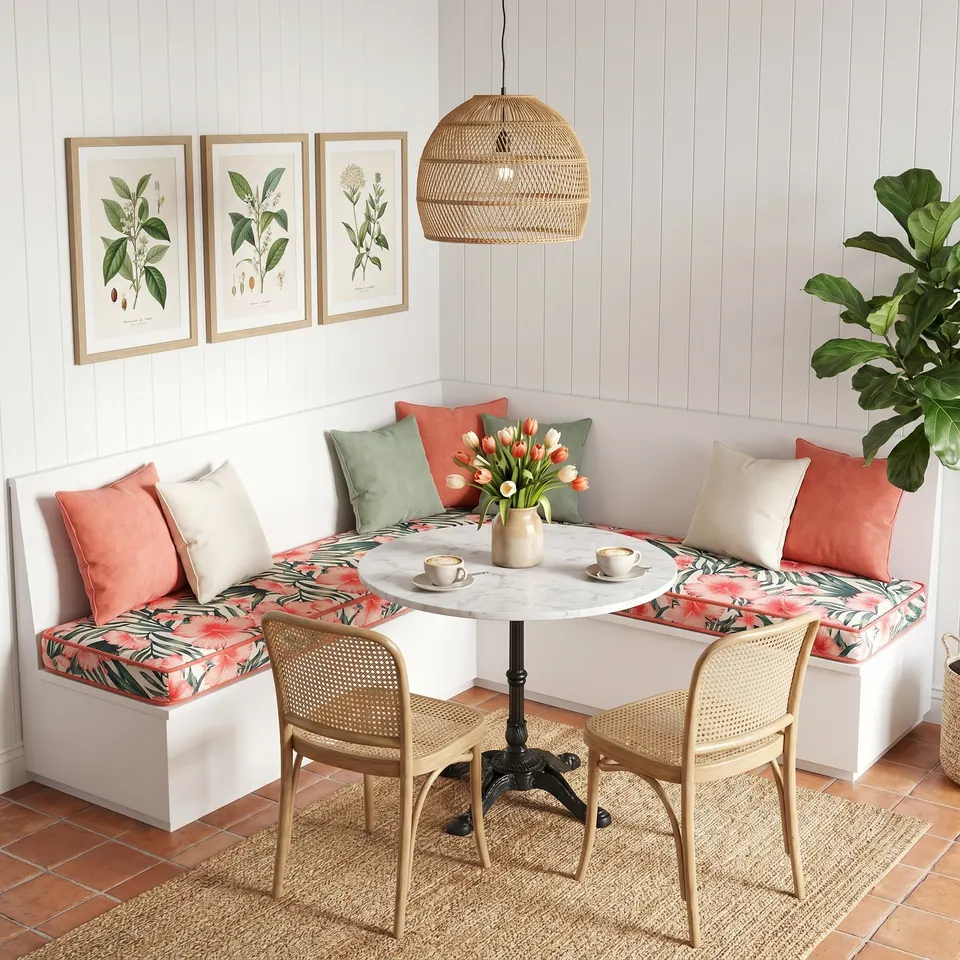
On a banquette, the seat and back often slide as a pair: the seat creeps toward the table and the back slumps after it. Upholstery workrooms solve this in several ways. One sews two wide fabric hinges between the seat and back so they act as one piece; another uses a grip panel on the back of the cushion; a third staples the hook side of hook-and-loop to the bench. From the workshop, the confirmed option is ties sewn into the seams wherever you mark them, which lets a back cushion be tied to its seat along the edge where they meet, or to a rail behind. Hook-and-loop is not a standard option, and a sewn hinge should be discussed before you order. A snug fit between walls also helps: cushions cut to fill the space have less room to wander.
Buyer questions: keeping it put
- A common question
What exactly is a non-slip base, and how does it keep the cushion from moving?
The workshop's answerThe bottom panel of the cover is sewn from a grippy anti-skid fabric instead of the regular fabric. It's built into the cover, not a separate mat, and covers the whole underside. It works by friction, not adhesive, so it keeps the cushion planted on smooth painted or wooden benches without leaving residue. Choose it in personalization; it can go on covers-only orders too, and it can be removed before production if you change your mind.
- A common question
Could you use velcro instead of ties to hold the cushion on my bench?
The workshop's answerTies and a non-slip bottom are the standard ways, and the workshop usually suggests one of those; velcro tabs and snap fasteners aren't made. Two-sided velcro strips have been added on request: one side sewn under the cushion, the matching side sent to you to fix to the bench. They cost extra, so some buyers fit their own. Write the request in the personalization box with your fabric code and piping choice, and wait for confirmation.
- A common question
My back cushions keep sliding down or tipping off. What stops that?
The workshop's answerIt depends on what they lean against. Against a frame, railing or slats, matching fabric ties are sewn on so you can tie them; they can sit near the top on the back, out of sight, which also makes a large backrest easier to lift. Against a flat wall or solid back, a non-slip backing works better; just say which cushions get it. Double-piped outdoor backs often stay put without straps, though straps can be added for a small extra cost.
- A common question
How many ties does a bench cushion need, and where should they go?
The workshop's answerStart with how you'll fix it. To knot it under the seat, you need a tie at each corner, four in all, so opposite ties meet underneath. Two ties on the back edge is the other common setup, for tying around a back rail or spindles. Any position can be specified, such as 2 in in from the ends. Send a sketch or photo with the positions marked, and check the pre-shipment photo too.
- A common question
Does the non-slip bottom come included, or is it extra?
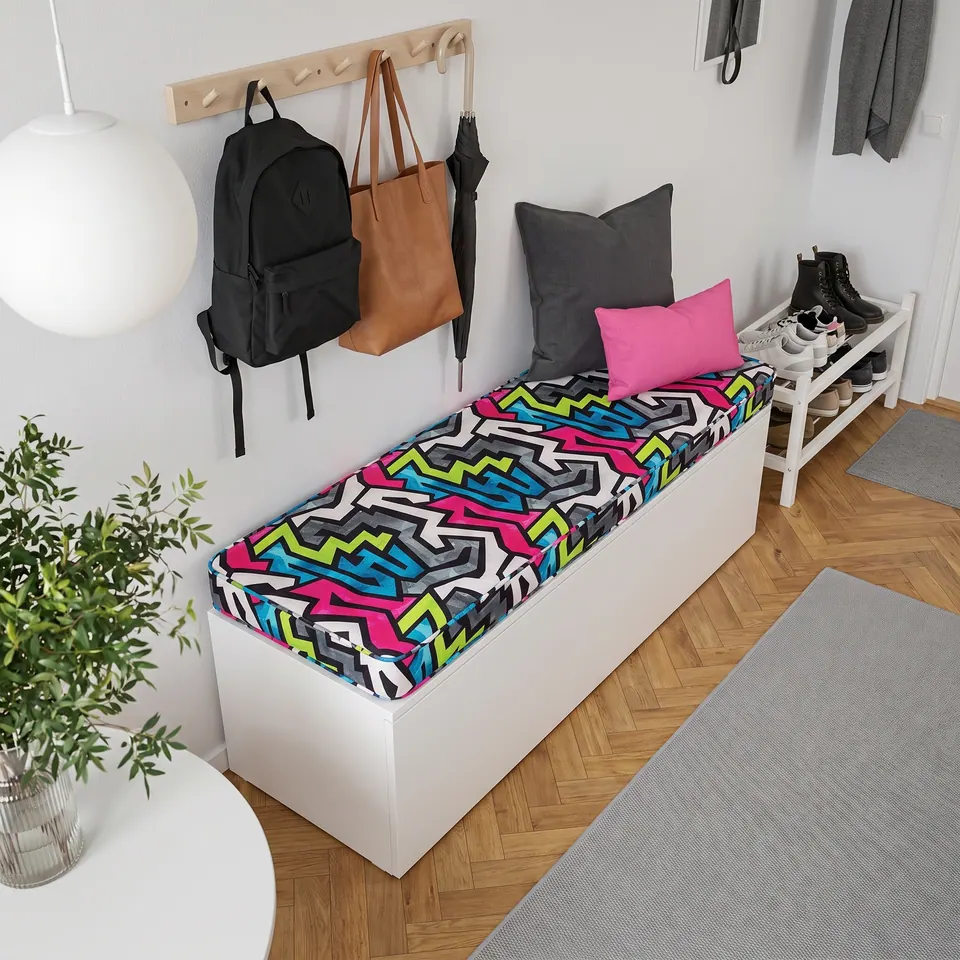
The workshop's answerIt's an optional add-on, not standard, and it's available on any shape: bench, entryway, window seat, daybed and trapezoid cushions, outdoor seats and banquettes. The cost scales with cushion size. Note 'non-slip base' with your exact size in personalization, and the workshop either includes it in your quote or sends an extra-payment link for the difference. You can choose it for some cushions in a set and not others.
Grip, ties and velcro, answered
Can a cushion with a non-slip bottom be flipped over to spread the wear?
No. The grippy panel only works face down, so a non-slip base makes the cushion one-sided. For a rectangle that simply means no flipping. For a trapezoid or another odd shape, draw it top side up, as seen standing in the room, so the grip ends up underneath.
Can I have non-slip fabric on only part of the underside?
No. The non-slip base always replaces the entire bottom panel. A partial version, such as grip in the middle with a 4 in (10 cm) border of the main fabric, can't be made. The choice is a full non-slip base or none at all.
Do heavy tufted cushions need ties or grip?
Usually not. The workshop reports that heavy tufted cushions generally stay where they're put, even on marble floors, and it has had no complaints about them sliding. Lighter foam seats on smooth tops are the ones that need a non-slip base or ties.
Can two bench cushions be tied to each other?
Yes. Ties sewn on the meeting edges or corners fasten two cushions end to end, and side ties can fix the pair to the seat as well. Specify the ties for every cushion in the order and say which edges meet, because each setup is made to order.
Will a separate grip pad work instead of a sewn-in base?
It can. The workshop lists a separate non-slip pad placed under the cushion as a third option alongside corner ties and a sewn-in anti-slip bottom, and it recommends non-slip fabric underneath for window seats that have no wall behind them.
Can banquette seat and back cushions be joined so they stop sliding?
Ties can do it: the workshop sews ties into the seams at any position, so a back cushion can be tied to its seat along the edge where they meet. Some upholstery workrooms instead sew wide fabric hinges between seat and back; ask the workshop before assuming that build is available, and send a photo of your banquette with the request.
Do loose banquette cushions need any fastening at all?
Not always. A cushion cut snugly between walls or side panels often stays put on its own, and one banquette owner reported loose cushions in a fabric with some grip staying in place for four years. Slippery fabric on smooth wood or paint is what creeps, so add a non-slip base or ties where you expect movement rather than everywhere.