The Cutting Table · a common question
What's the best way to stop a seat cushion sliding on a bench?
Also asked as:How do I stop these seat cushions sliding on a bench?Do you offer a non-slip pad?
Three fixes, and one of them needs no sewing. Pick by what's under the cushion and what's behind it.

The quick answer
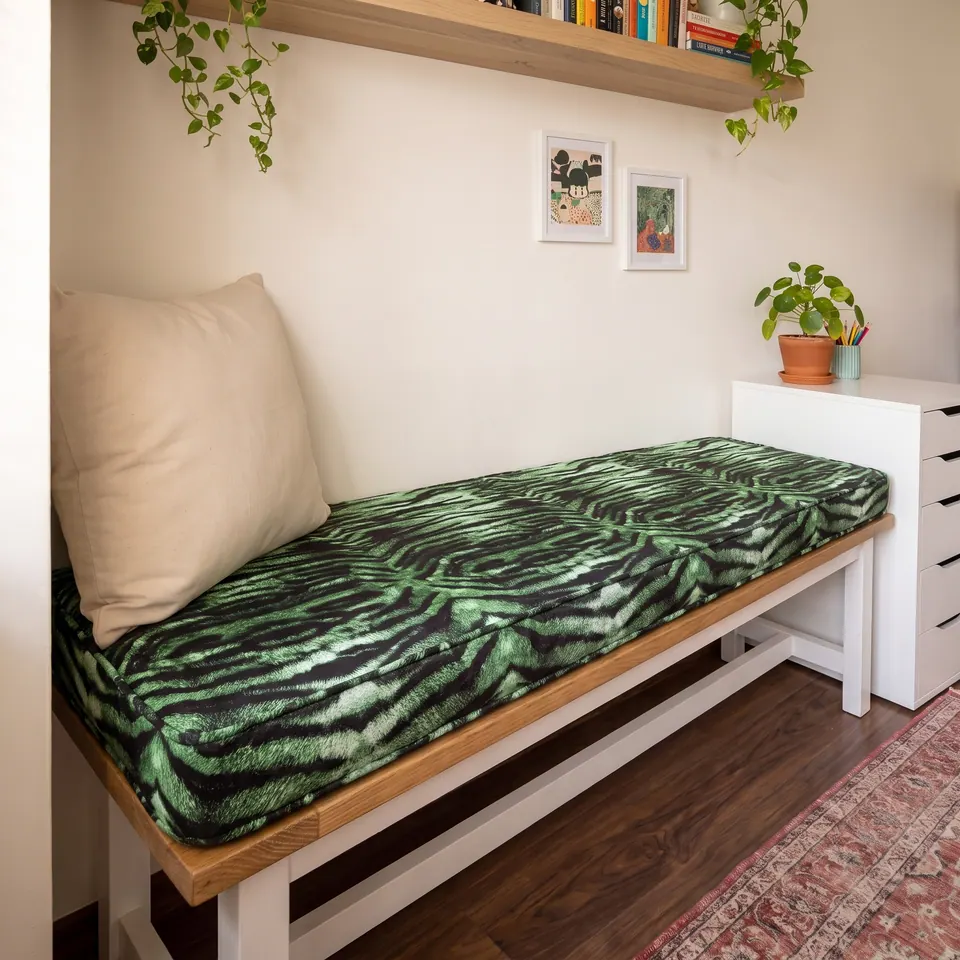
Stop a bench cushion from sliding with one of three fixes: ties sewn on the corners, an anti-slip fabric on the bottom of the cover, or a separate non-slip pad underneath. Heavy tufted cushions generally don't slide at all. On a window seat with no wall behind it, use a non-slip underlay and two side bolsters instead of a back bolster.
 Save
Key facts
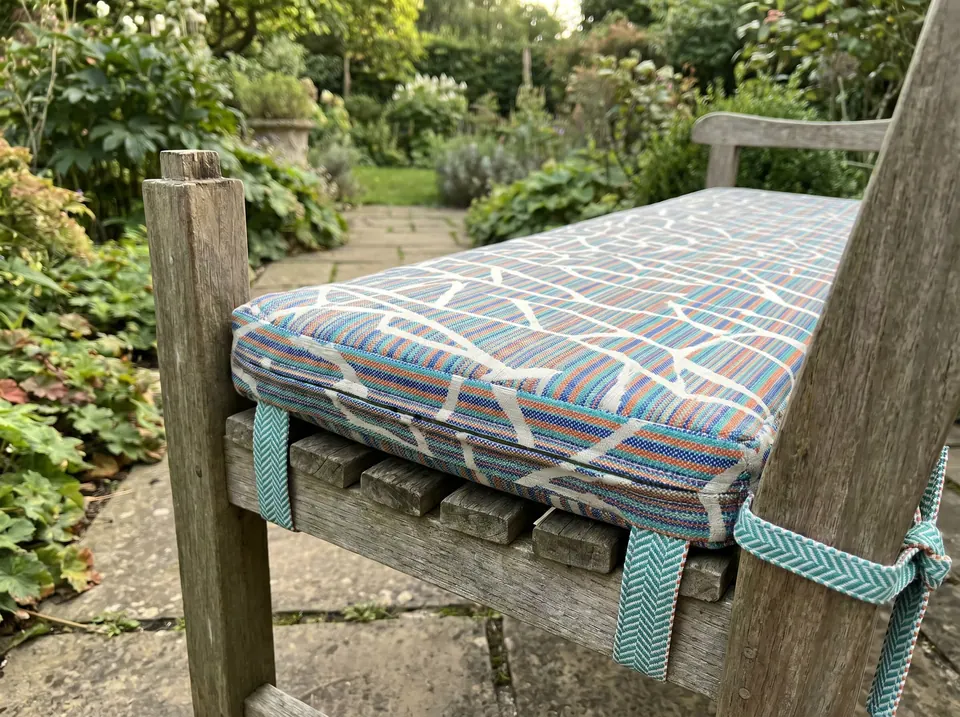
- Ties can be sewn on the corners of a seat cushion.
- An anti-slip fabric can be used on the bottom of the cover.
- A separate non-slip pad can go under the cushion.
- Heavy tufted cushions generally don't slide, even on marble floors.
- On a window seat with no back wall, a non-slip underlay stops the bottom cushion moving.
- Side bolsters can be made to your dimensions.
- Side bolsters are about 8 in (20 cm) across as standard, with 10 in (25 cm) possible, and are made to your length.
- Ties can sit anywhere you specify, for example 2 in (5 cm) in from each end.
- Bench cushions longer than about 79 in (200 cm) are usually made in 2 pieces, and each piece needs its own grip or ties.

Have it made
Have Maggie’s workshop cut this for you
Have the tape measure handy when they call. Old cushions shrink and sag; the seat underneath does not. — Maggie
Leave your details and the workshop will call you to confirm measurements, fabric, foam and piping. No prices, dates or payment on this page: it is a request, not an order.
Three fixes, and when each earns its keep
| Fix | Best when | How to ask |
|---|---|---|
| Corner ties | The bench has slats, legs or a frame to tie to | Note the tie positions in the order, with a sketch |
| Anti-slip fabric bottom | A smooth, flat seat with nothing to tie to | Ask for it as the bottom of the cover |
| Separate non-slip pad | You'd rather not change the cover | Place it under the cushion |
| Heavy tufted cushion | Floor seating, even on marble | Nothing extra; the weight holds it |
The window seat with no wall behind it
Right, then. A buyer wanted a back bolster fixed on with velcro or a zip, on a window seat with open air behind it. The workshop suggested something better: a non-slip fabric piece under the bottom cushion to stop it moving, and two smaller side bolsters made to size instead of a back bolster with nothing to lean against.
I'd have asked for the velcro too once, dear, before I watched a few window seats in use. Read the full ties, non-slip base or velcro pattern, browse window seat cushions, and size the ends from the bolster pillows page. What's under your cushion: painted wood, stone or slats?
Tick these before you order
- Say what the seat is made of, and whether it has slats or a frame.
- For ties, sketch where they go; they're often free, sometimes a small add-on.
- For a flat, smooth seat, ask for the anti-slip bottom fabric.
- For a window seat with no wall, order the underlay and side bolsters, not a back bolster.
- Put the request and your exact size in Add Personalization.
Heavy tufted cushions generally don't slide, even on a marble floor, and the workshop has had no complaints about them moving.
Maggie
Buyer questions
- A common question
What's the best way to keep a seat cushion from sliding on a bench?
The workshop's answerTies can be sewn on the corners, or choose an anti-slip bottom fabric, or put a non-slip pad underneath. Tufted cushions generally don't slide, and there have been no complaints.
- A common question
Will heavy floor cushions slip on a marble floor?
The workshop's answerThe shop says its tufted floor cushions are heavy and won't slide.
- A common question
My window seat has no wall behind it. Can the bolster be attached so it won't move?
The workshop's answerA non-slip fabric piece under the bottom cushion stops it moving, and two smaller side bolsters can be made to your dimensions.
- A common question
Is there velcro under the floor sofa to stop the cushions sliding apart?
The workshop's answerNo velcro. Each seat cushion has a white non-slip fabric underneath, and the metal bars and heavy cushions keep the pieces from drifting apart, so no connectors are needed.
Questions buyers ask next
Do ties cost extra on a custom cushion?
Often they're free; sometimes they're a small per-cushion add-on. Put the tie request and your exact size in Add Personalization, and if a charge applies, a separate payment link for the difference comes before production.
How do I keep back cushions from sliding down?
Use ties if the backs lean on a frame, railing or slats, and a non-slip backing if they lean on a flat wall. Double-piped outdoor back cushions often stay put without straps.
Can outdoor cushions get ties for windy days?
Yes. Ties, including extra-long ones for windy spots, can go on the back, corners or sides of outdoor seat and back cushions. Note the positions in the order, with a sketch.
Does shelf liner or a rug pad under a cushion stop it sliding?
Often, yes. Non-adhesive rubber rug underlay or PVC and silicone shelf-liner mesh grip best on smooth wood, stone and metal, though rubber loses its grip as it ages and needs replacing. A sewn-in non-slip base does the same job without a loose layer, and ties work better where the seat has slats or a rail to tie around.