The Pattern Room · a measuring pattern
Cushion tie placement for chairs, porch swings and benches
On a porch you learn fast that a cushion without ties spends half its life on the floorboards. Here is where every tie goes, and how to write it so it actually gets sewn on.
 Save
The quick answer
Cushion ties go where the furniture can hold them: two at the back corners of a chair pad, four at the corners of a bench cushion knotted underneath, two on the back edge for a rail. Ties are never standard, so write the count, each position measured from a named end, and the length in your order note, then check the pre-shipment photo.
A tie in the wrong spot is no tie at all
Cushion ties are the simplest thing the workshop sews: a strip of fabric caught in the seam. Set one an inch past the spindle, though, and it flaps there, useless, all summer.
Tie questions come down to three: how many, where, and how long. Every answer starts with the furniture. Look for what a tie can wrap: a spindle, a ladder rung, a back rail, swing slats, a hinge side, or another cushion. What will yours hold onto?
If you haven't yet chosen between ties and a non-slip base, start with the slide-stopping comparison.
Placing cushion ties, step by step
Name what each tie will hold
Find the anchor before anything else. No anchor, no tie; a smooth bench top wants a non-slip base instead.
Count by the job, not by habit
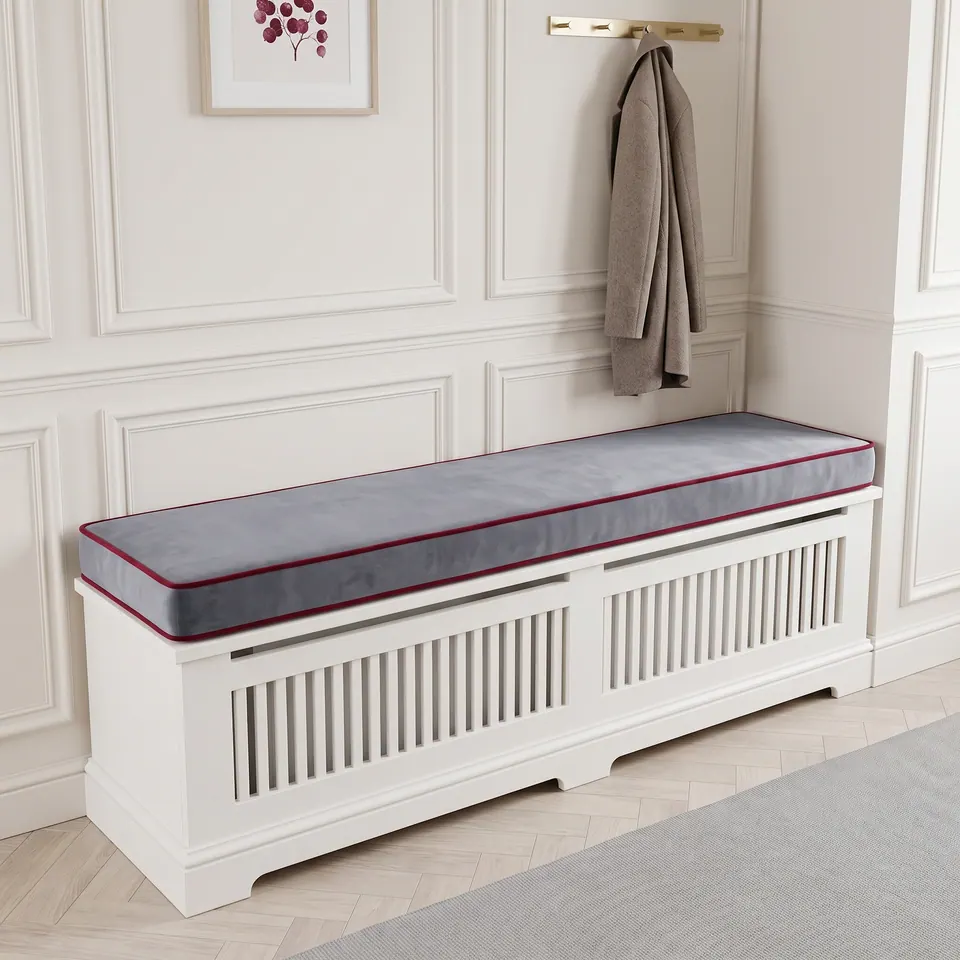
A dining chair pad takes two ties, one at each back corner. A bench cushion knotted underneath takes four, one per corner, so opposite ties meet under the seat. A cushion tied to a back rail takes two, on the back edge.
Measure every position from a named end
Write it the way buyers do: four ties, two on each side, set 2 in (5 cm) in from the ends. One buyer set patio pad ties 4.5 in (11.4 cm) in from the back corners so they met the chair braces.
Pattern sheet Front 18 in, back 16 in, depth 17 in. Ties sit at the back posts; the zipper runs along the back edge. Size the tie to what it wraps
Wrap a string around the spindle or rail, tie your usual bow, then measure the string and put that length in your note. Windy patios and beach houses get extra-long ties.
On a lift-up lid, tie the hinge side only
Hinge-side ties let the cushion ride up with the lid. One buyer with a 77 in (196 cm) quilt box listed hinges at 8 5/8, 29, 48 and 68 1/4 in; the workshop still asked which end they were measured from, and how wide each hinge was.
Tie two cushions to each other
For stacked cushions, a seat and back laid flat as a sleepover bed, or two bench cushions end to end, ties go on the meeting corners. Specify ties on every cushion and say which edges meet.
Write it where the sewing room reads it
Put count, positions, length and color in the personalization box, not the size box, with a sketch or photo marking each tie. Then find the ties in the pre-shipment photo before you approve it.

Have it made
Measured it? Have Rosa’s workshop make it
Tell the workshop who sits there: grandkids, the dog, a cup of coffee at six. The right fabric and foam follow from the people. — Rosa
Leave your details and the workshop will call you to confirm measurements, fabric, foam and piping. No prices, dates or payment on this page: it is a request, not an order.
Tie counts, seat by seat
| Seat | Ties | Where they go | What they wrap |
|---|---|---|---|
| Dining chair pad | 2 | Back corners | Spindles or a ladder back |
| Rocking chair seat | 2 | Back corners | Back spindles |
| Porch swing seat | 2 or 4 | Back edge, or all four corners | Back slats, or seat slats underneath |
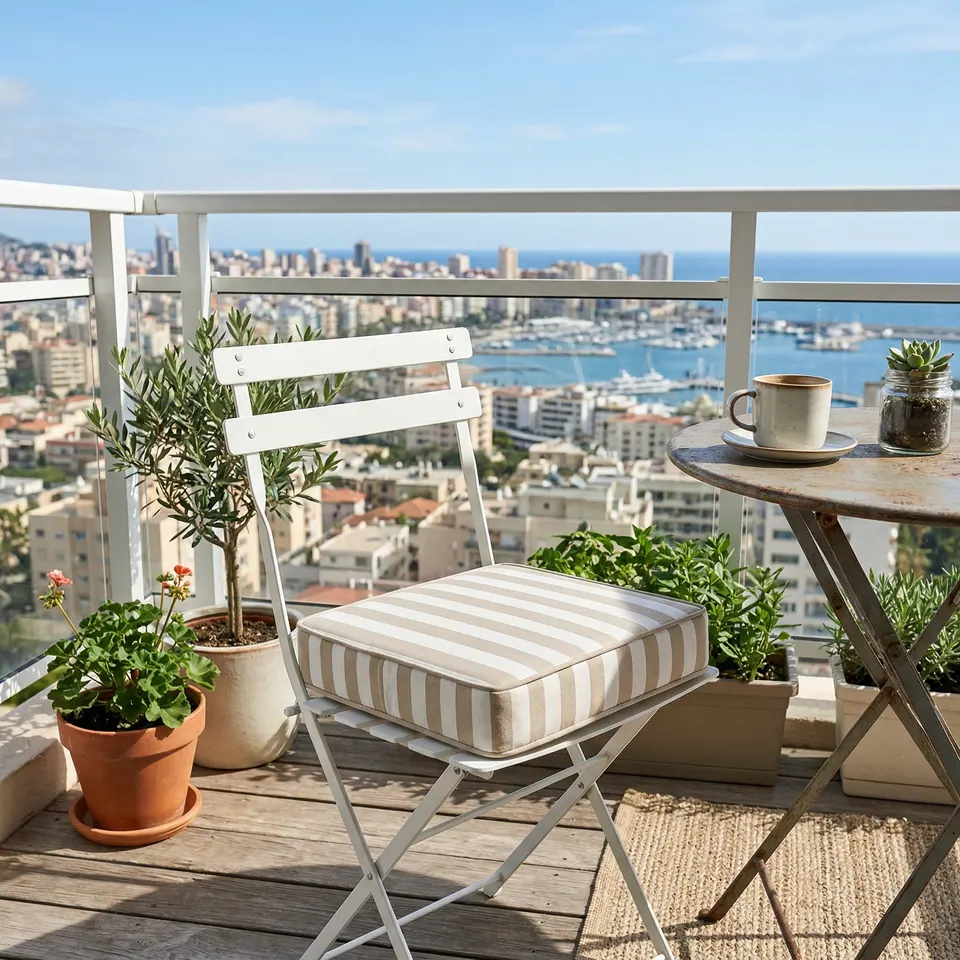
| Patio chair pad, windy spot | 2 to 4, extra-long | Inset to meet the braces | Chair braces or frame |
| Bench cushion knotted underneath | 4 | One at each corner | Each other, under the seat |
| Bench cushion on a back rail | 2 | Back edge only | The rail or spindles |
| Cushion on a lift-up lid | 2 or more | Hinge side, between hinges | The lid edge |
Bows, knots and a tie you can undo on wash day
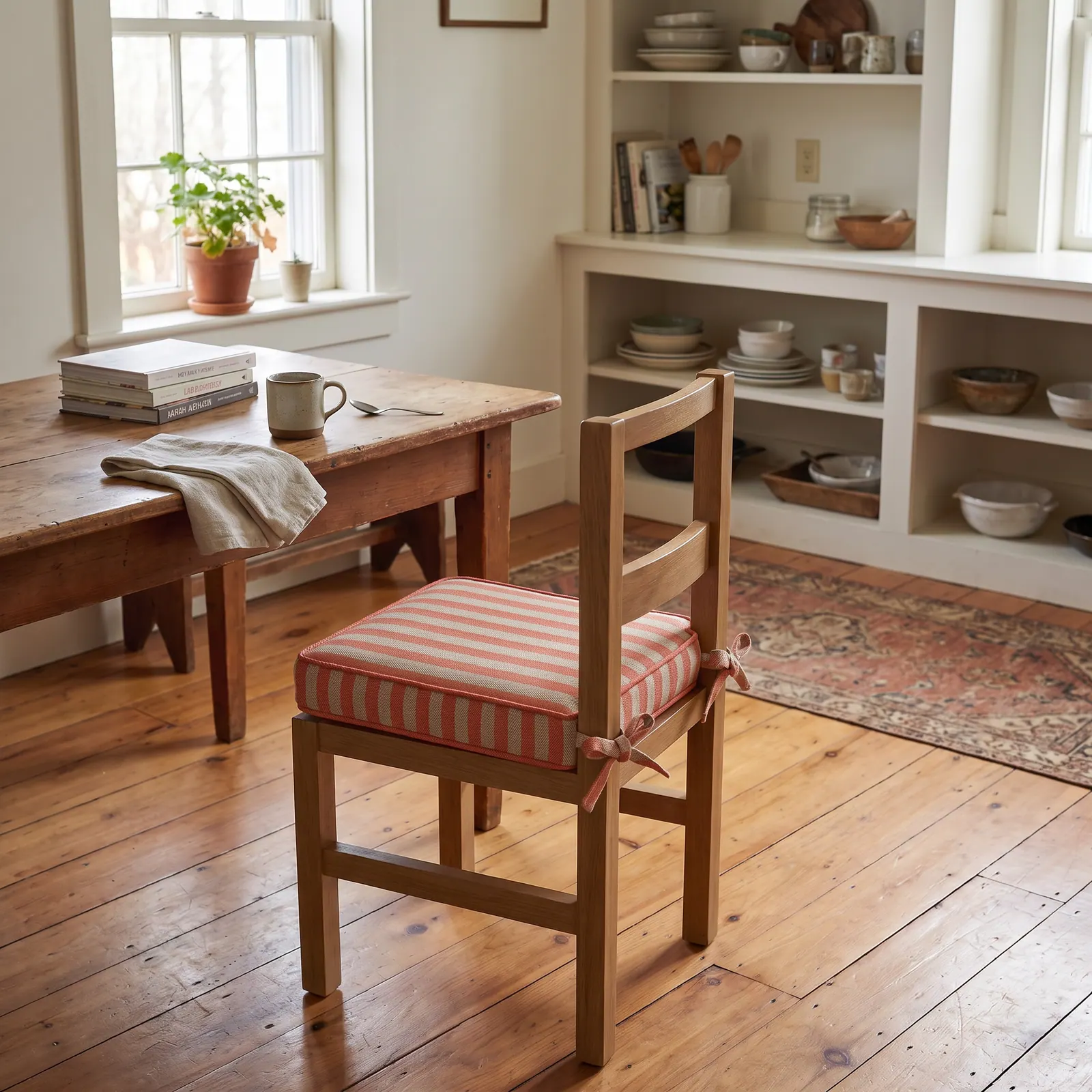
The coral stripe pad at the top is tied in bows to a pine ladder-back, the everyday choice at a farmhouse kitchen table. A bow comes loose with one pull on wash day, and every foam cushion has a zippered, removable cover.
Under a bench, where nobody looks, a square knot holds better than a bow. On a porch swing, ask for ties long enough to double-knot around the slats, because a swing cushion should never slide when you laugh.
Eight velvet seats, piped and tied, with a date on the calendar
A buyer in the US wrote to the workshop needing eight velvet seat cushions, 17 x 18 in (43 x 46 cm), piped, with ties, in about a week. The workshop's answer was plain: order the 18 x 18 in option and write 17 x 18 in the note, because the note is what gets cut. Eight matching pads earned a batch discount, and the ties were no trouble.
The week was the trouble: the earliest promise was about two weeks out. So here's my porch wisdom, neighbor: order chair pads before you set the date, and put the ties in writing that same day.
Draw it, write it, then check the photo
Try your seat numbers in the chair cushion builder, then send a drawing with every edge measured, both sides included, and the ties marked. For the seat itself, see measuring dining chair pads and dining chair cushions; for rockers, rocking chair cushions.
Then watch for the mistake that keeps turning up. Ties aren't standard, and a request typed into the size box can get missed; one buyer's cushion arrived with no ties at all and slid right off the seat. The workshop has put that right with matching fabric and thread, new covers, or help with a local tailor's bill. Better to message after you order and confirm the extras.
Tie mistakes we see from the porch steps
- Assuming cushion ties come standard. They're sewn on only when you ask.
- Writing 'ties, please' with no count or position.
- Typing the tie request in the size box instead of the personalization box.
- Tying a lift-up lid cushion on every side instead of the hinge side.
- Guessing a tie length for a thick rail. Measure it with string.
- Strapping outdoor back cushions before sending a photo of the chairs; double piping can hold a back on its own.
A dining chair pad needs two ties at the back corners; a bench cushion you knot under the seat needs four, one at each corner.
Rosa
Tie placement by chair style
| Chair back | Where the ties go | Tip |
|---|---|---|
| Windsor or spindle back | Back corners, around the outer spindles | Mark which spindles on a photo |
| Ladder back or Shaker | Back corners, around the two back posts | About 2 to 3 in in from each corner |
| Cross-back bistro | Back corners, around the posts below the cross | Longer ties if the posts are thick |
| Slat back or Mission | Back corners, around the back posts | Tie around the posts, not a slat |
| Captain's chair | Back corners, around the arm posts or rear posts | Measure inside the arms |
| Solid splat or metal cafe chair | Center of the back edge, around the single post | Use longer ties |
| Backless stool | All four corners, around the legs or rungs | Or a non-slip base |
Buyer questions: ties, asked plainly
- A common question
Where do the ties go on a bench cushion, and how many should I ask for?
The workshop's answerStart with how you'll fix it. To knot the ties together under the seat, you need four, one per corner; to tie around a back rail or spindles, two on the back edge. Any position works if you specify it, such as 2 in from the ends. Mark the spots on a sketch, and check the pre-shipment photo.
- A common question
Can you make dining chair cushions with ties for spindle-back chairs?
The workshop's answerYes. Chair pads are made to your seat with ties at the back for spindles or a ladder back; on the dining chair cushion listing, ties are a checkout option. For shaped seats, send a photo and a diagram with every edge measured, plus the quantity and thickness, such as 4 or 5 in.
- A common question
My cushion sits on a storage chest lid. How do I keep it on when the lid opens?
The workshop's answerAsk for ties on the hinge side only, with each hinge's position from a stated end, its width and a photo. If ties can't clear the hinges, the cushion can sit inside the lid's bevel, as on one 42 x 18 in cedar chest. A non-slip base helps day to day, but it can't hold a cushion on a lifted lid.
- A common question
Can two cushions be tied to each other so they don't drift apart?
The workshop's answerYes. Ties on the corners or meeting edges join stacked cushions, a seat and back laid flat as a sleepover bed, or two bench cushions end to end. Side ties can also hold the pair to the bench. Specify ties for every cushion and say which edges meet.
More tie questions from the kitchen table
Do cushion ties show once the pad is on the chair?
On a chair pad, yes: two bows at the back corners are part of the look. On a backrest, ties can sit near the top on the back side, hidden against the slats. Under a bench, knotted ties stay out of sight.
Can the ties match my piping instead of the cushion fabric?
Yes. Six trapezoid chair pads, 18 in at the front, 16 in at the back and 17 in deep, were made in brown velvet with cream piping and cream ties. Write the tie color in your note with the count and positions.
Can a round seat cushion have ties?
Yes. Round pads are made too, such as a 12 in (30 cm) diameter pad, 4 in thick, with a zippered cover and ties or a loop. Say where on the circle the ties belong, usually at the back.
What happens to the ties when I wash the cover?
They go with it. Ties are sewn into the cover's seam, and every foam cushion has a zippered, removable cover, so untie the bows, unzip, and wash the cover with its ties attached.
Where do ties go on a solid-back metal cafe chair?
At the center of the back edge, not the corners. A solid splat back has one wide post rather than two spindles, so a pair of longer ties sewn in the middle of the back edge wraps around it. Measure the post's girth, allow enough length for a bow, and write the position and length in the order note.
How long should cushion ties be?
Long enough to wrap the post and tie a bow with some tail left over. Builders and sewing guides commonly use ties around 10 to 14 in long. Test with a piece of string: loop it around your chair post or rail, tie a bow, and measure what you used. Extra-long ties can be requested for thick posts or windy porches.