Porch swing cushions for front-porch swings, swing beds and garden swings
A swing cushion should never slide when you laugh. That's the whole test on my porch. Here's how the workshop sizes the seat and back, ties them down, and picks a fabric that can take the weather.
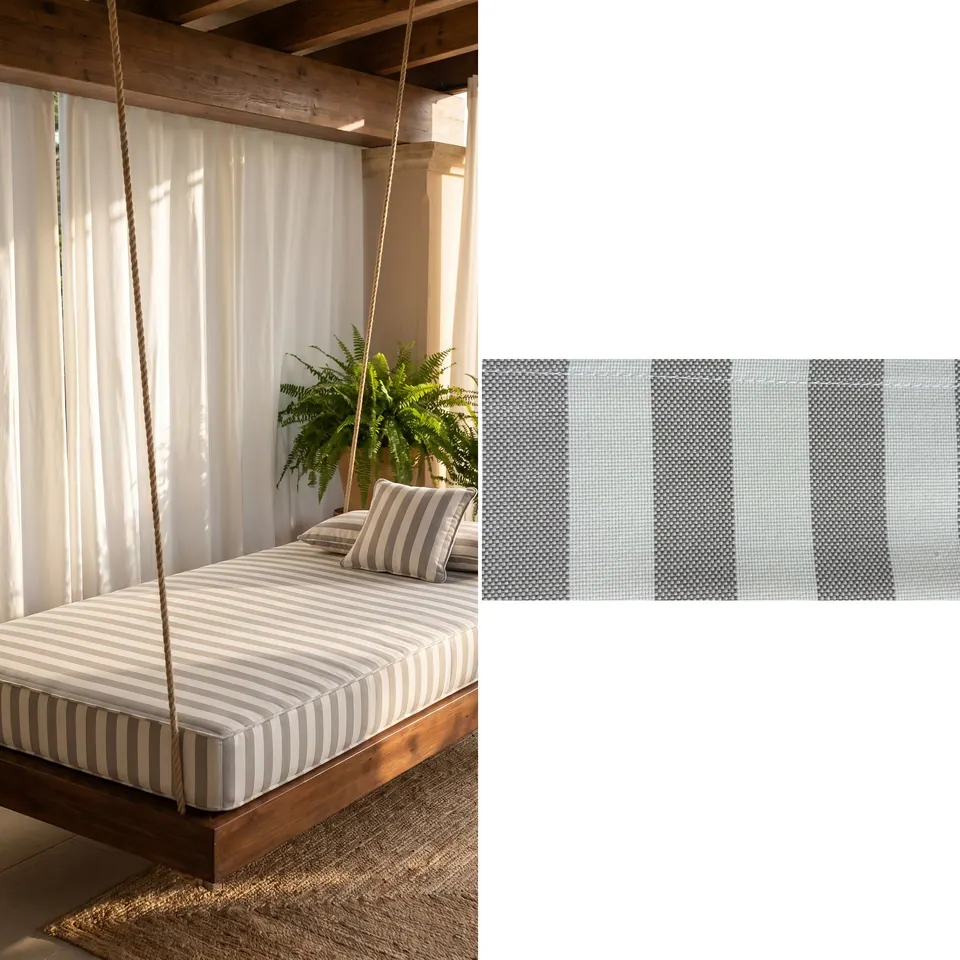
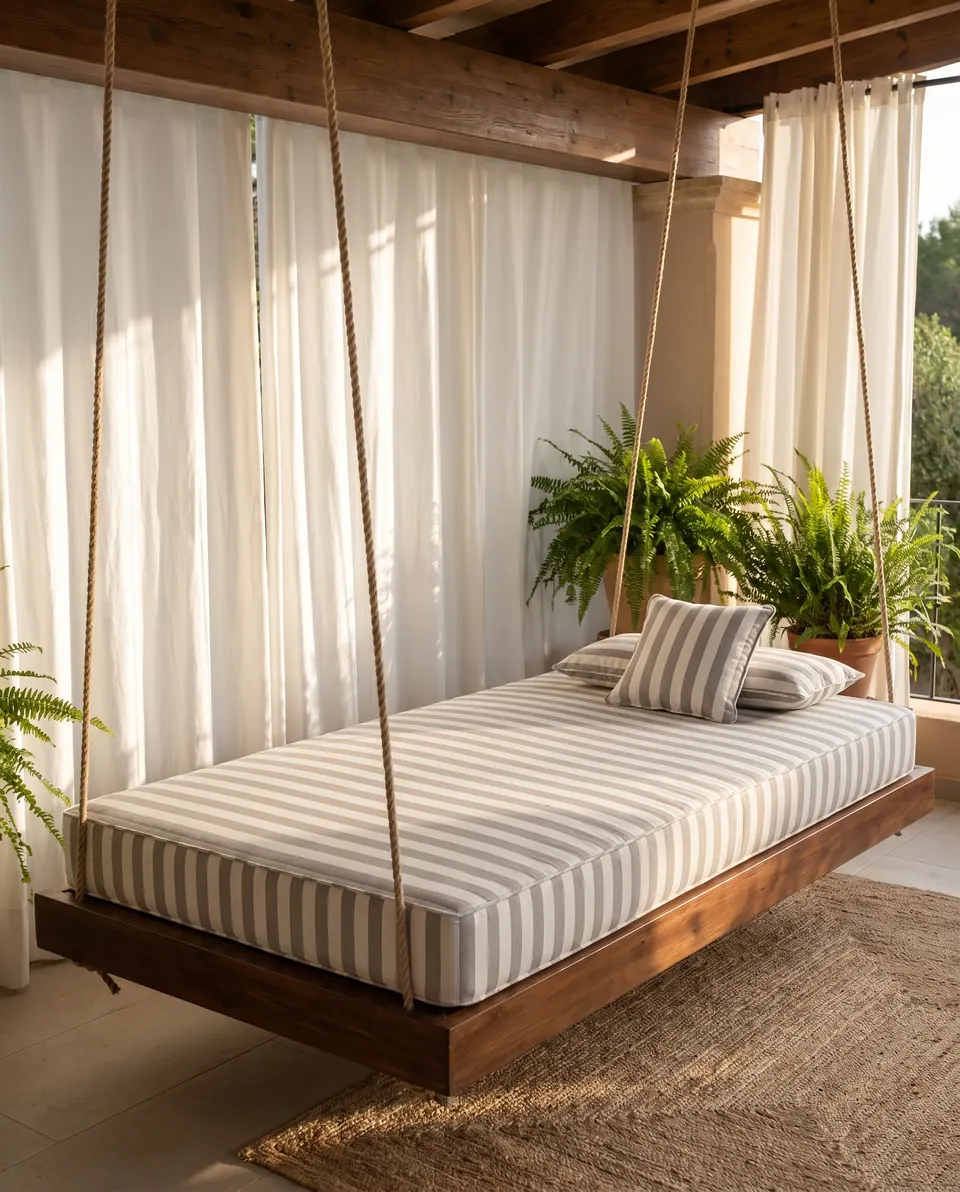
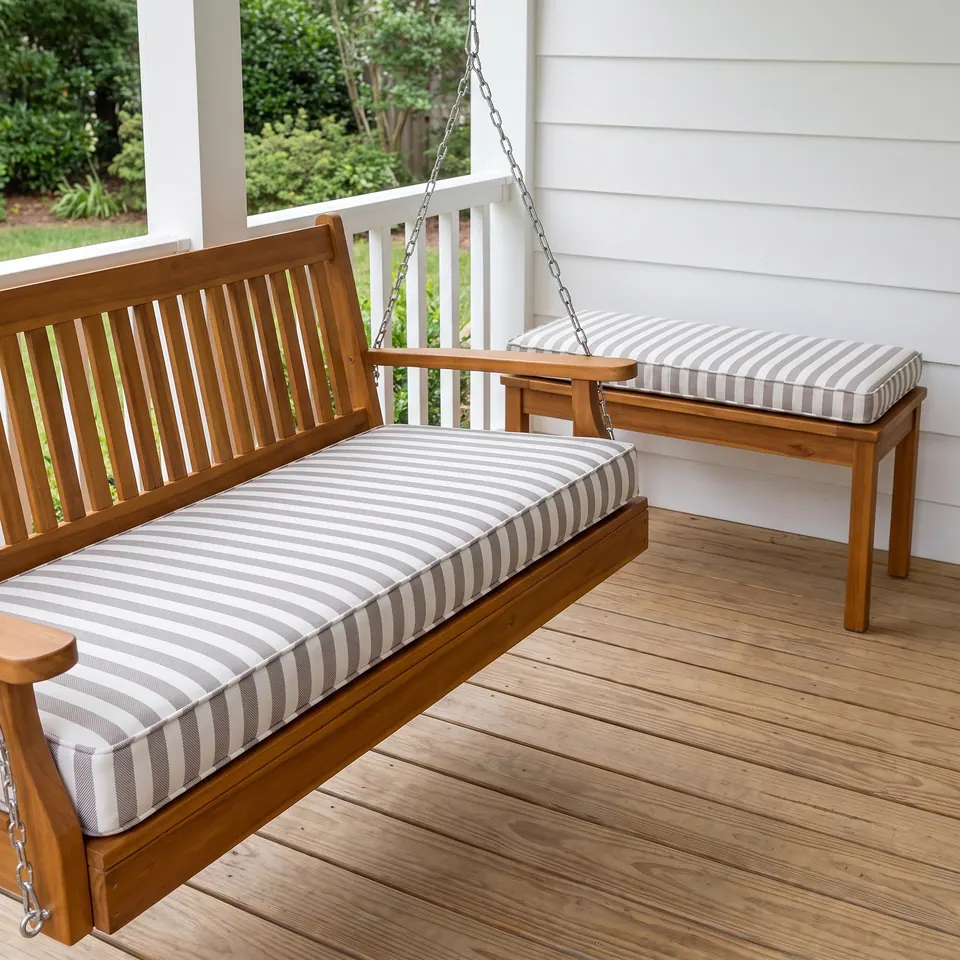
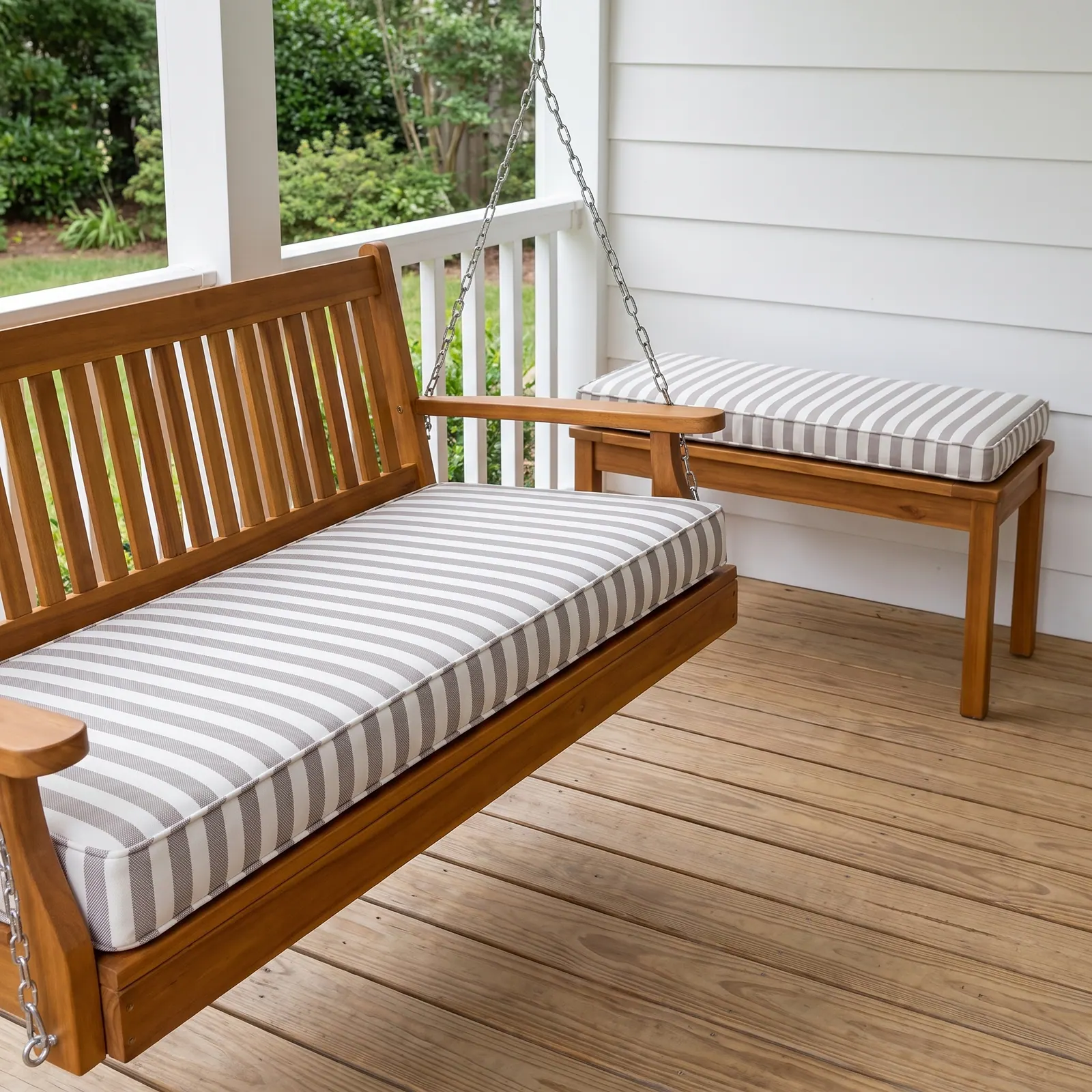
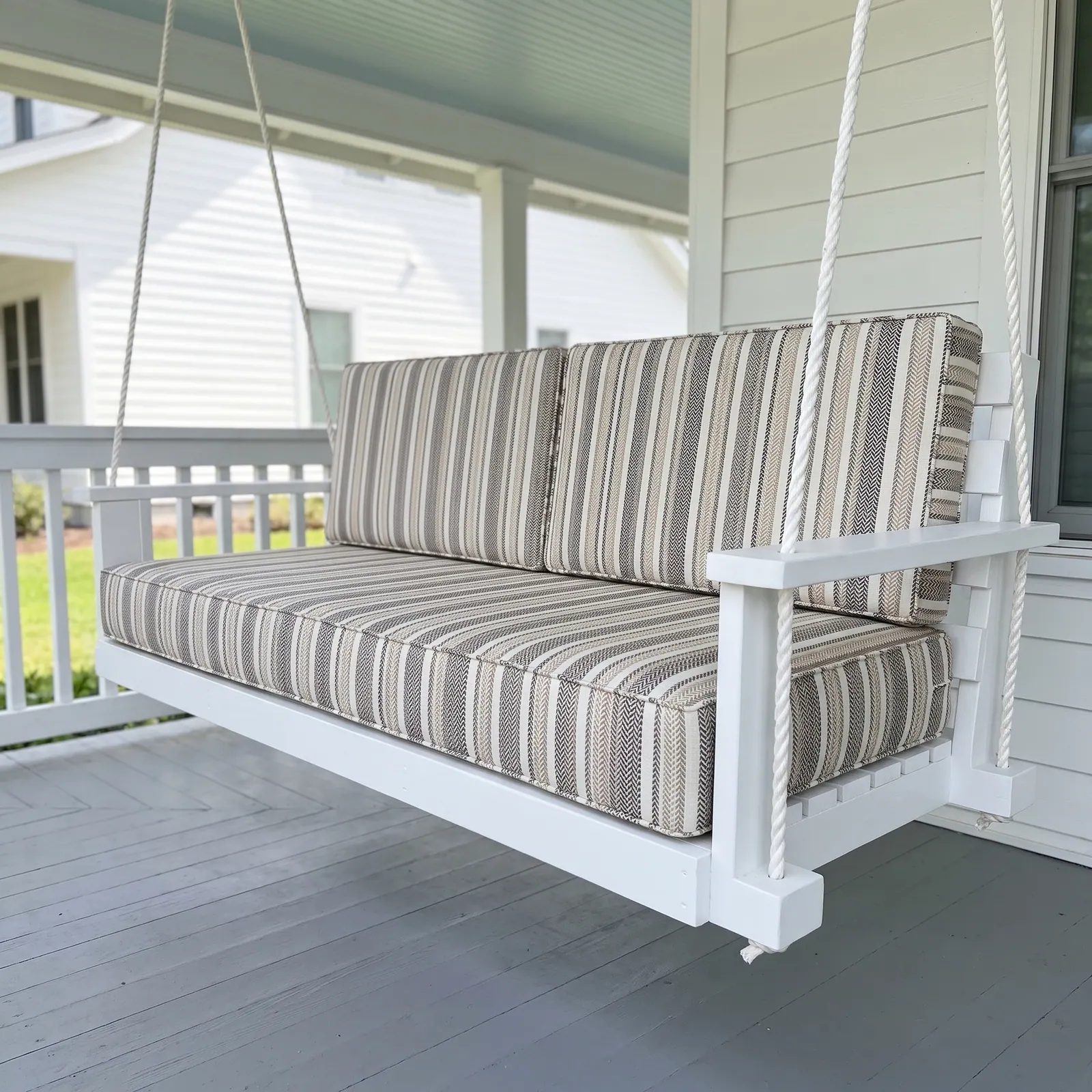
SaveOn a covered porch, a hanging swing and a small side bench share the same gray-taupe awning stripe.
The quick answer
A porch swing cushion is a seat pad cut to the swing's inside length and depth, usually paired with a separate back cushion and tied to the frame so it doesn't slide. Standard foam is 4 in (10 cm) thick. On long swings, two or three shorter back cushions sit better than one long one, and outdoor fabric handles showers but should winter indoors.
Every one is cut to your measurements. The number is how many readings the atelier has published for that shape.
Sizes & measuring
Swing sizes the workshop has cut, and how to measure yours
Measure the seat inside the arms, and the back from the top of the seat cushion up. Label every number on the drawing.
How to measure Seen from above, the cushion fills the frame: measure length and depth inside it, wood to wood. Seen from the front: the thickness you want.
Seat
Inside length between the arms by depth, to the nearest 1/4 in; one swing seat ran 55.25 x 27.75 x 4 in (140 x 70.5 x 10 cm)
Back cushion
Its own length, height and thickness; one swing back was 50 x 13 x 4 in (127 x 33 x 10 cm), another 63 3/4 x 18 x 3 in (162 x 46 x 7.5 cm)
Standard thickness
4 in (10 cm) for the seat; 2 in (5 cm) is the thinnest standard foam
Long swings
A 72 in (182 cm) swing was quoted four backs, each about 18 in wide and 21.5 in tall (45.5 x 55 cm)
Split backs
Two or three backs per swing sit better and, in past quotes, cost no more than one long back
Seat and back
Two separate items; a seat listing does not include the back
Ties
On request, sewn into the seam at the corners or along the back, in any position
Covers only
For foam you already own: give its exact length, width and thickness; extra-strong zippers on request
Approval
A drawing of your dimensions comes back for approval before cutting
Every porch has one seat everybody wants, and more often than not it's the swing. Its cushion moves all day, gets sat on sideways, and meets the weather from three open sides.
A swing set is usually two pieces: the seat pad and a back cushion that sits on top of the seat. Swing beds take a thicker, mattress-style cushion; see swing bed cushions. For humid Southern porches like the ones I grew up on, read Carolinas and Georgia, and for everything else outdoors start at patio and porch cushions.
Seat, back and bolsters: how a swing set goes together
The back sits on top of the seat cushion, so its height starts there, not at the swing slats. On long swings, split it. Two or three back cushions sit straighter and stay in place better than one long back, they're easier to carry in and dry when the sky turns, and on the swings the workshop has quoted they cost the same.
On an indoor hanging swing, a soft back is kinder than firm foam. One buyer who loved her swing seat added a soft back pillow and two bolsters in the same fabric for real back support. See bolster pillows for sizes.
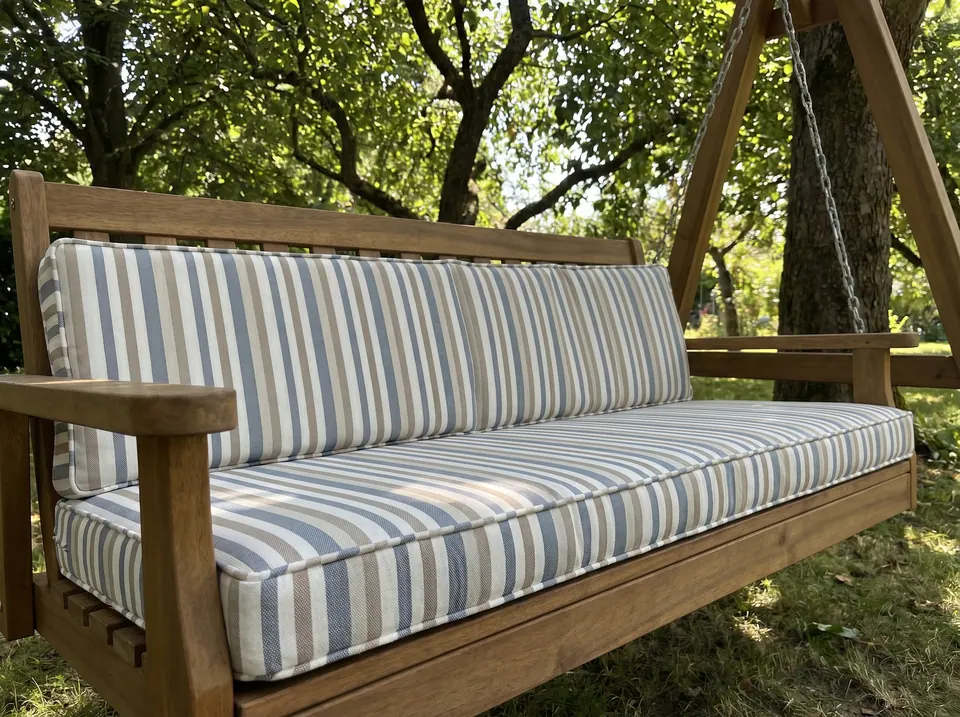
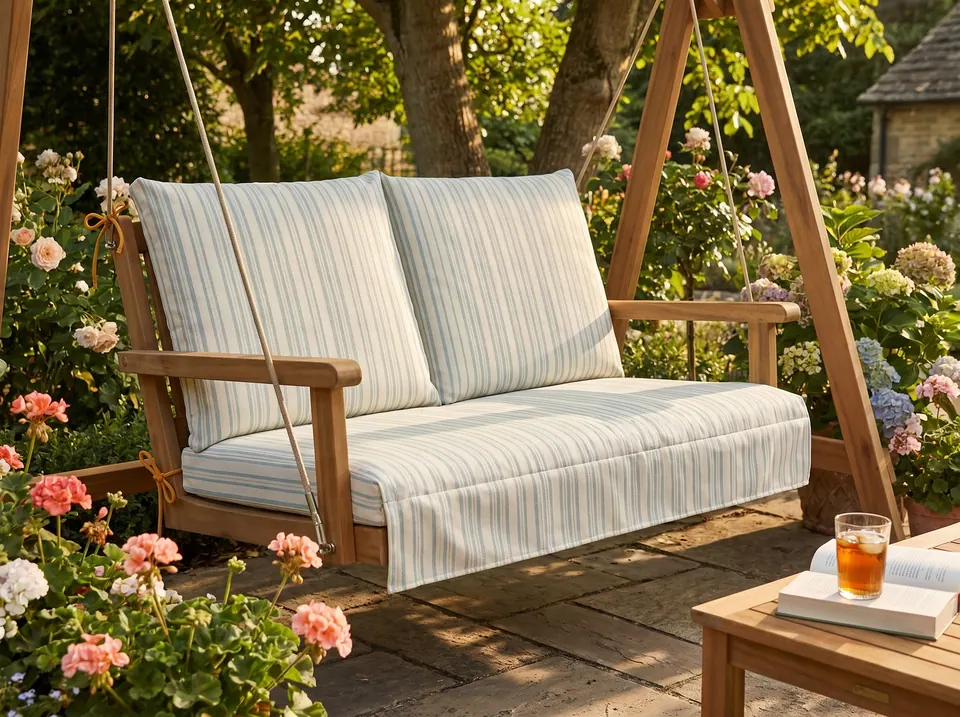
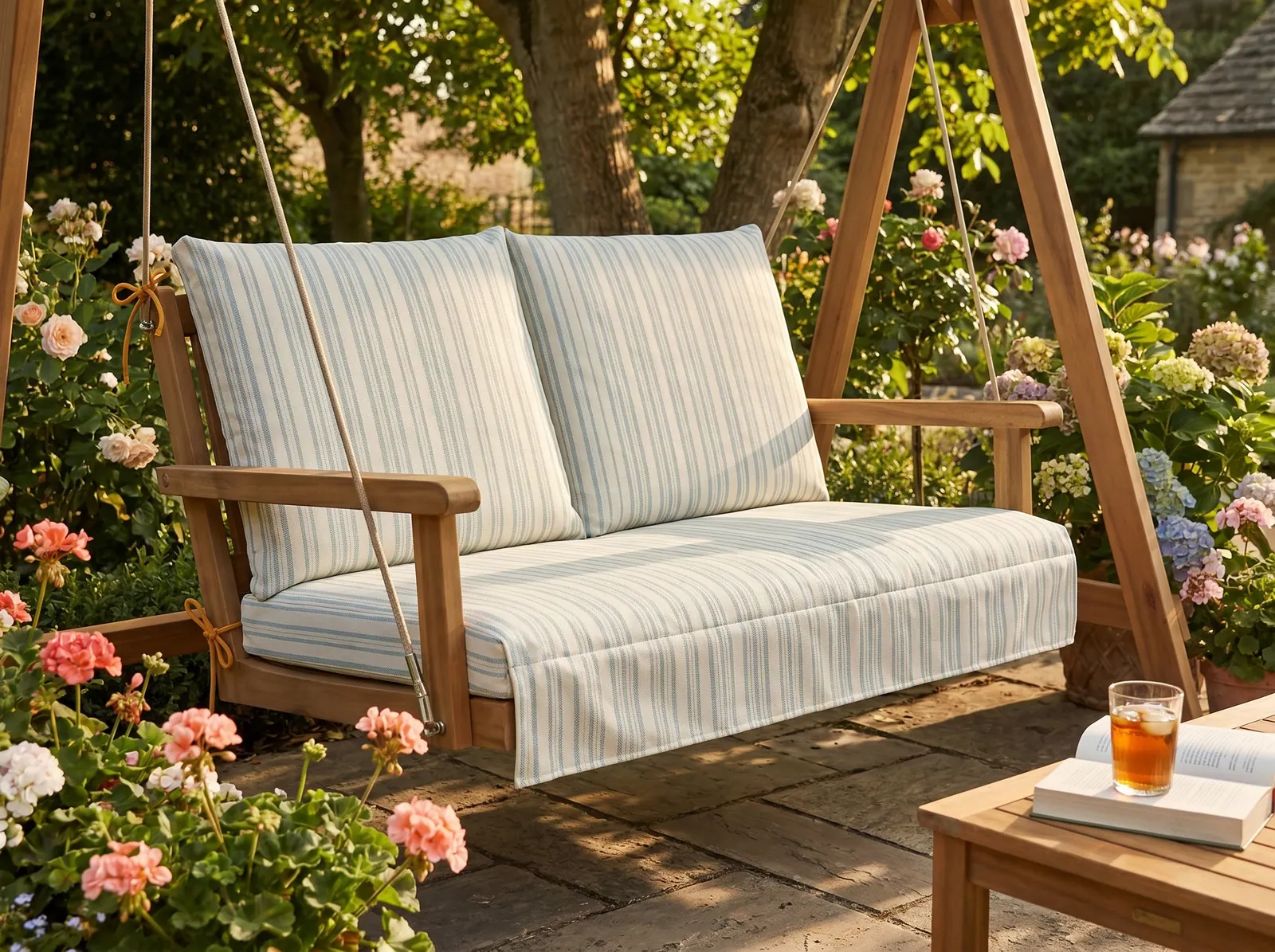
The front edge can be boxed with piping for a crisp line, or finished with a soft front drop like the blue ticking set in the gallery.
Fabric that can take the porch
Swings live outside, even under a porch roof. The workshop's outdoor range is water-repellent: it handles showers and spills and comes with outdoor-suitable inserts. It is water-resistant rather than sealed, so store the cushions indoors through the long off-season.
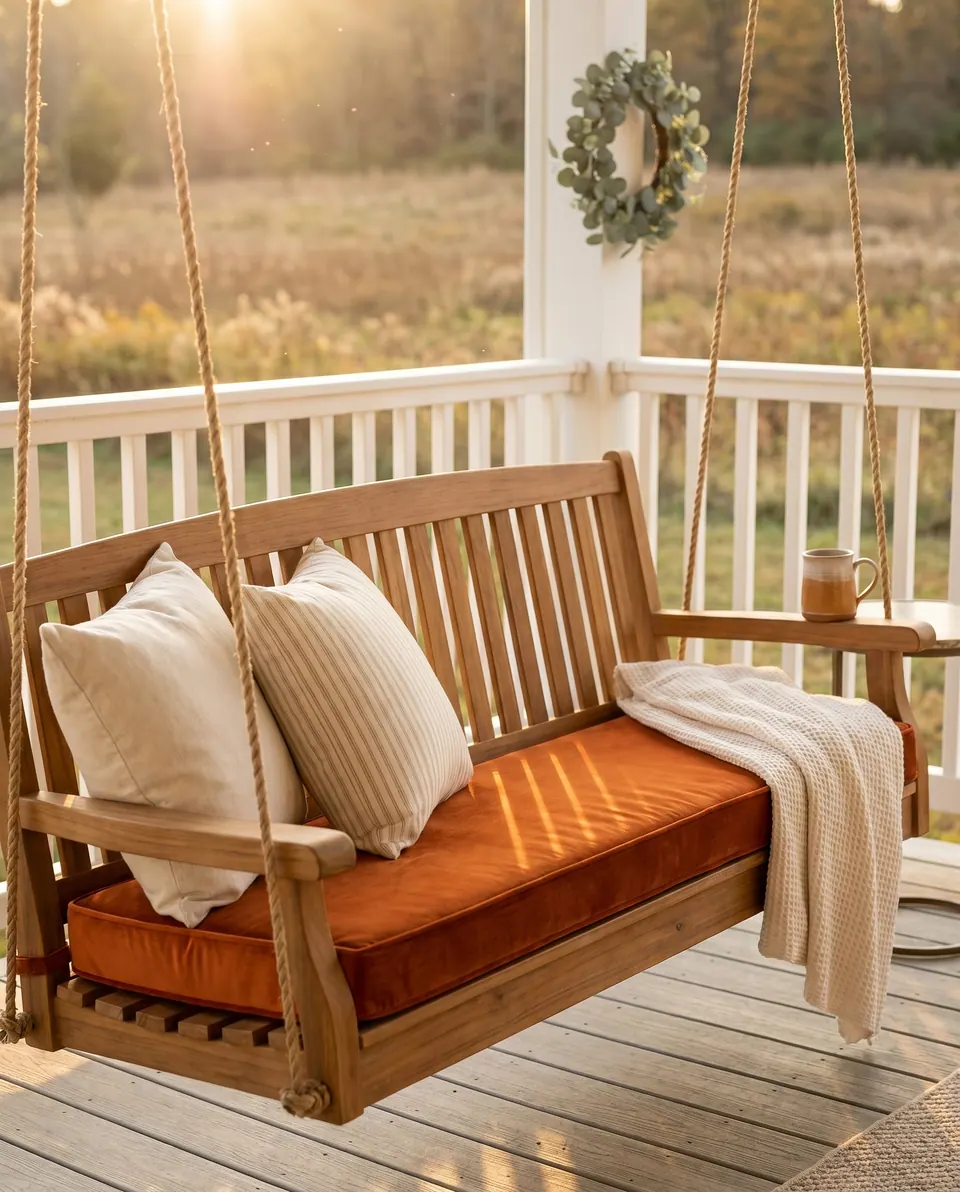
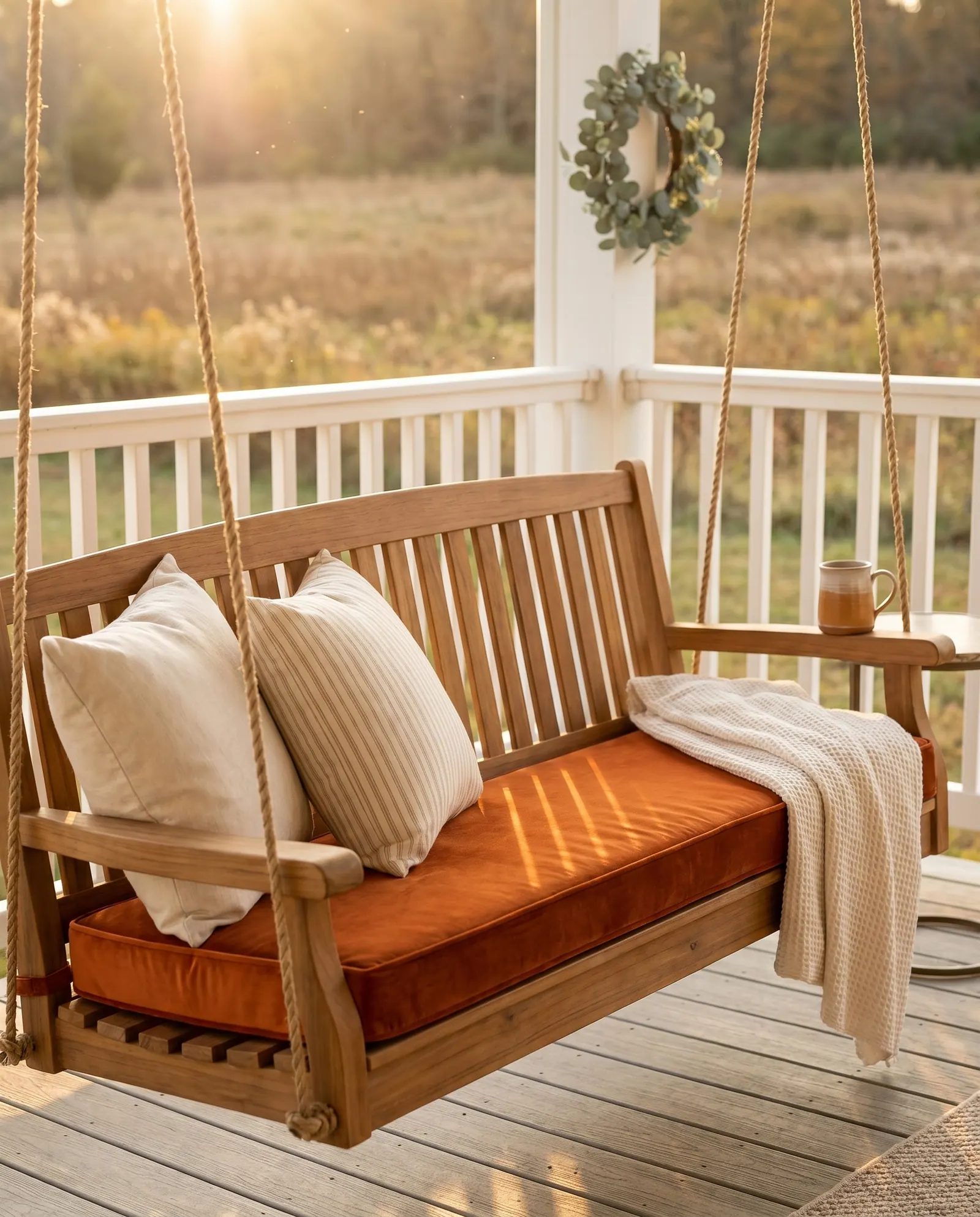
Velvet, like the burnt orange on the rope-hung swing in the gallery, only under a deep roof and out of blowing rain.
Stripes look right on a porch, so say which way they should run. The fabric roll is about 55 in (140 cm) wide, and stripes are matched on one face only.
The count is how many published readings use each family. Open a family for its swatch book, care notes and neighbors.
Foam and thickness for a seat that moves
The standard 4 in (10 cm) seat is what most buyers keep. Backs can run thinner; the two swing backs in this entry were 4 in and 3 in. Firm foam feels firmest when new and softens with use, and a cushion that arrived vacuum-packed should be fully recovered before you judge it.
If the person who'll use the swing every day is heavier, or an older sitter needs support, say so when you order; firmer or thicker foam beats a thin, soft pad. The foam firmness finder helps you choose.
A real project
The back pillow that came up 23 inches short
A buyer in the US ordered a seat and a back pillow for her porch swing. The back arrived 23 in shorter than the seat, because the workshop misread a number on her diagram. At first the workshop pointed to the approved drawing. Then the workshop looked again, owned the mistake, told her to keep the first one, and remade the back free.
The new back ran 63 3/4 x 18 x 3 in, with the stripes running top to bottom, and it sits on top of the seat pillow. It fit, and it looked just right out on her patio.
Measured
Back pillow 63 3/4 x 18 x 3 in (162 x 46 x 7.5 cm)
What it taught
Label every dimension on the diagram, and say which way the stripes should run.
Swing cushion mistakes, straight from my porch
Assuming the seat listing includes the back. It doesn't; order the back cushion as its own item.
Ordering one long back for a 6-foot swing. Two or three shorter backs sit straighter and are easier to carry in and dry.
Leaving a number on the diagram unlabeled. One unlabeled line cost a back pillow 23 in.
Forgetting to say which way the stripes run, for each piece separately.
Adding a cushion a season later from a new roll. Order seat, back and bolsters together so they share a dye lot.
Forgetting the ties. They're sewn on only when asked for, so write their position and length in the order note.
Leaving outdoor cushions out all winter. Water-resistant fabric still wants a dry closet off-season.
Photographs from the workbench
Open any photograph large; each one has its own link and a Save button.
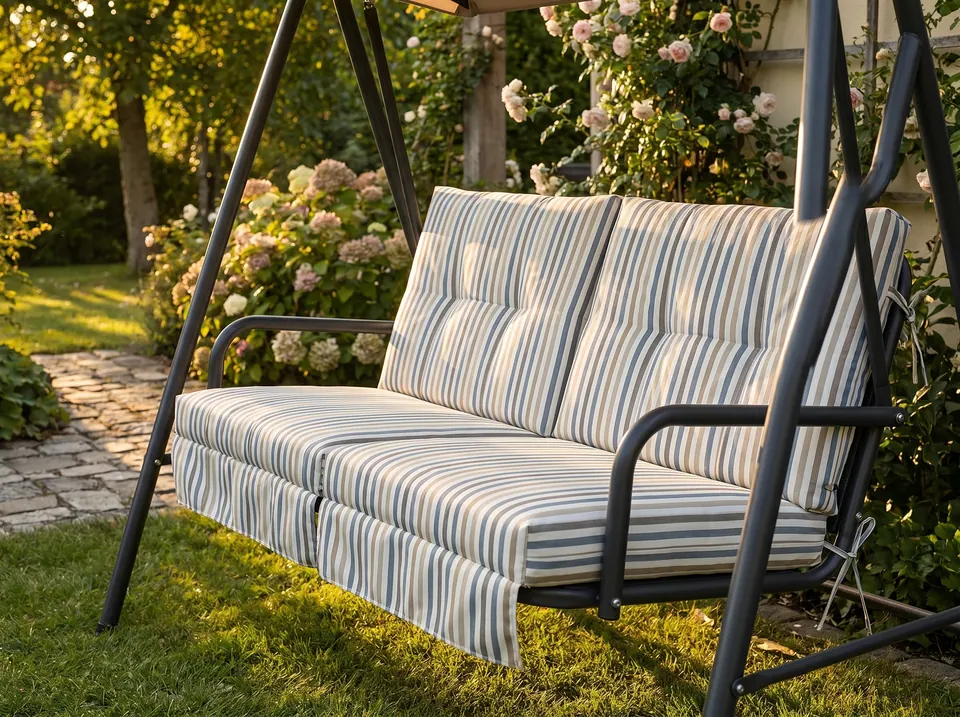
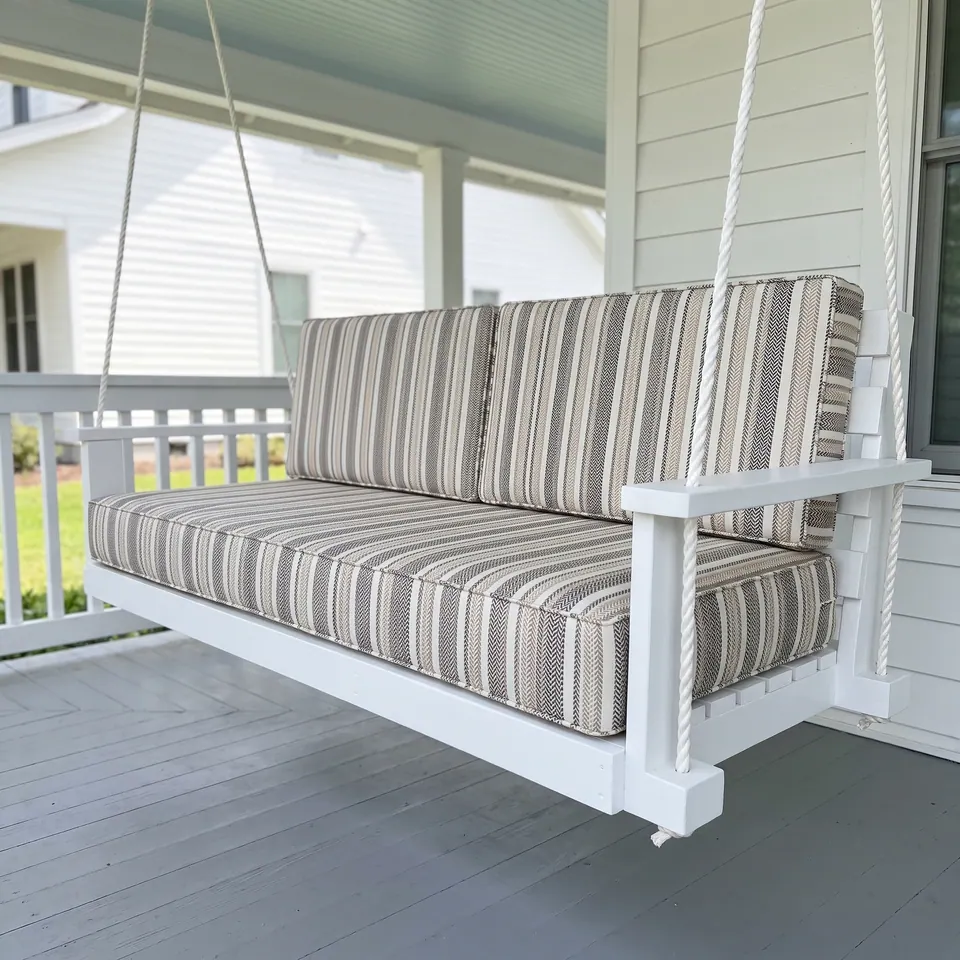
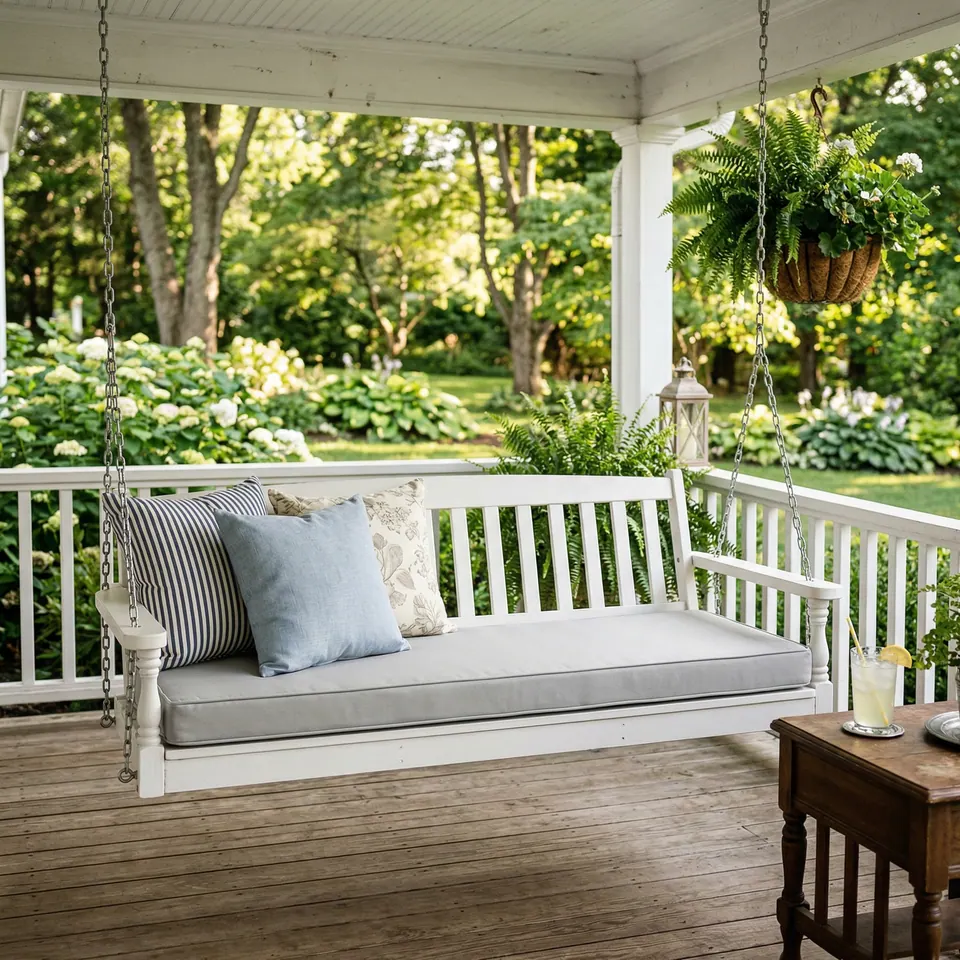
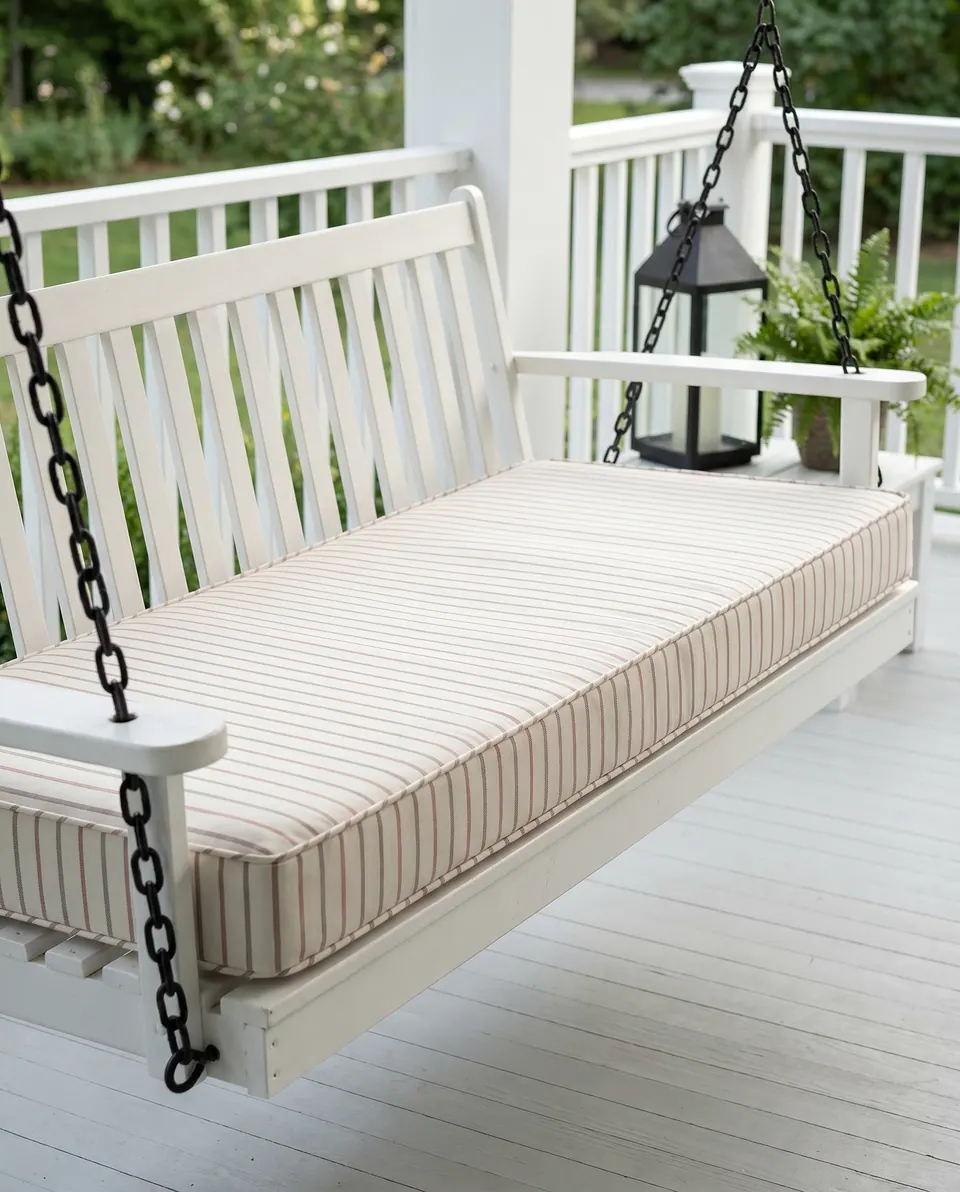
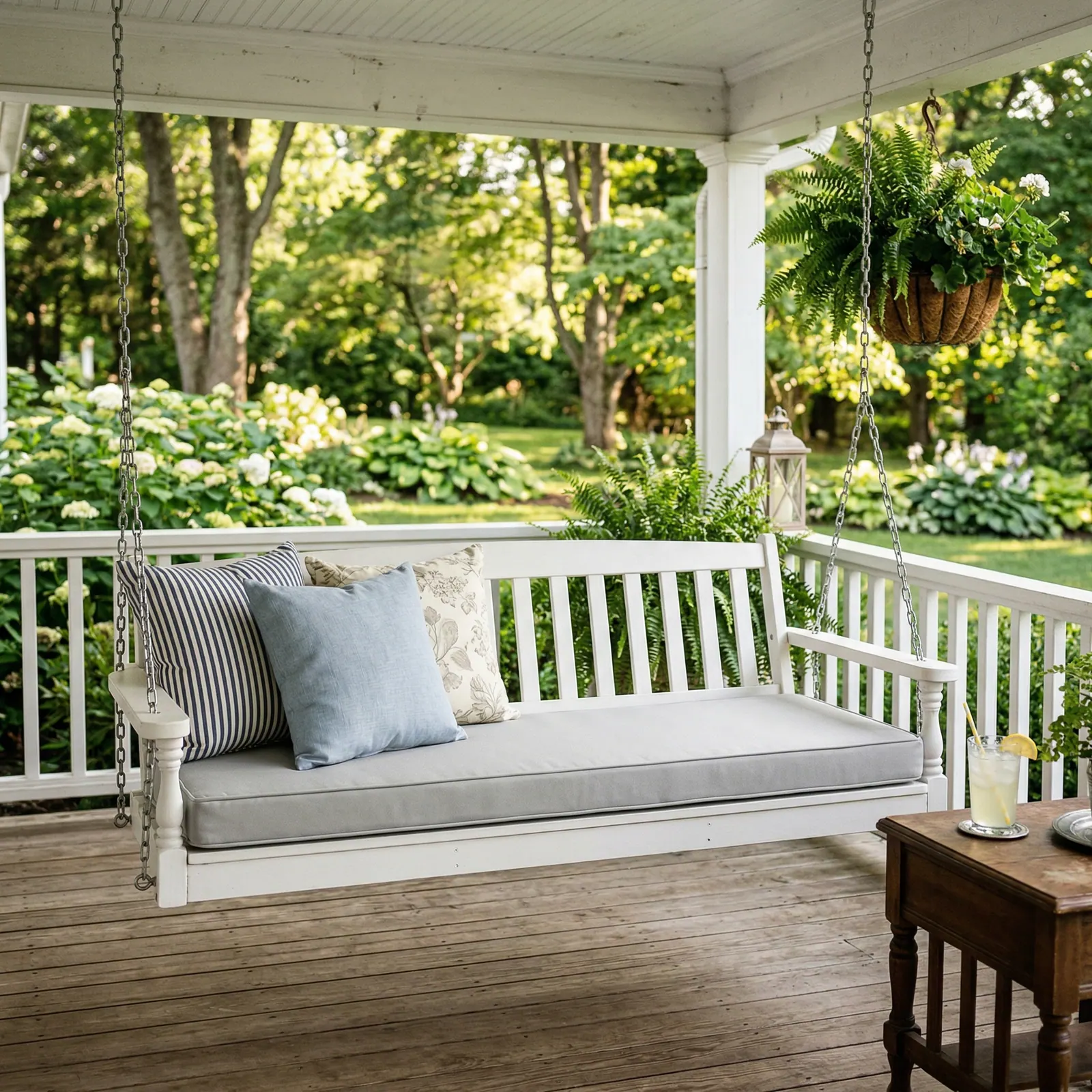
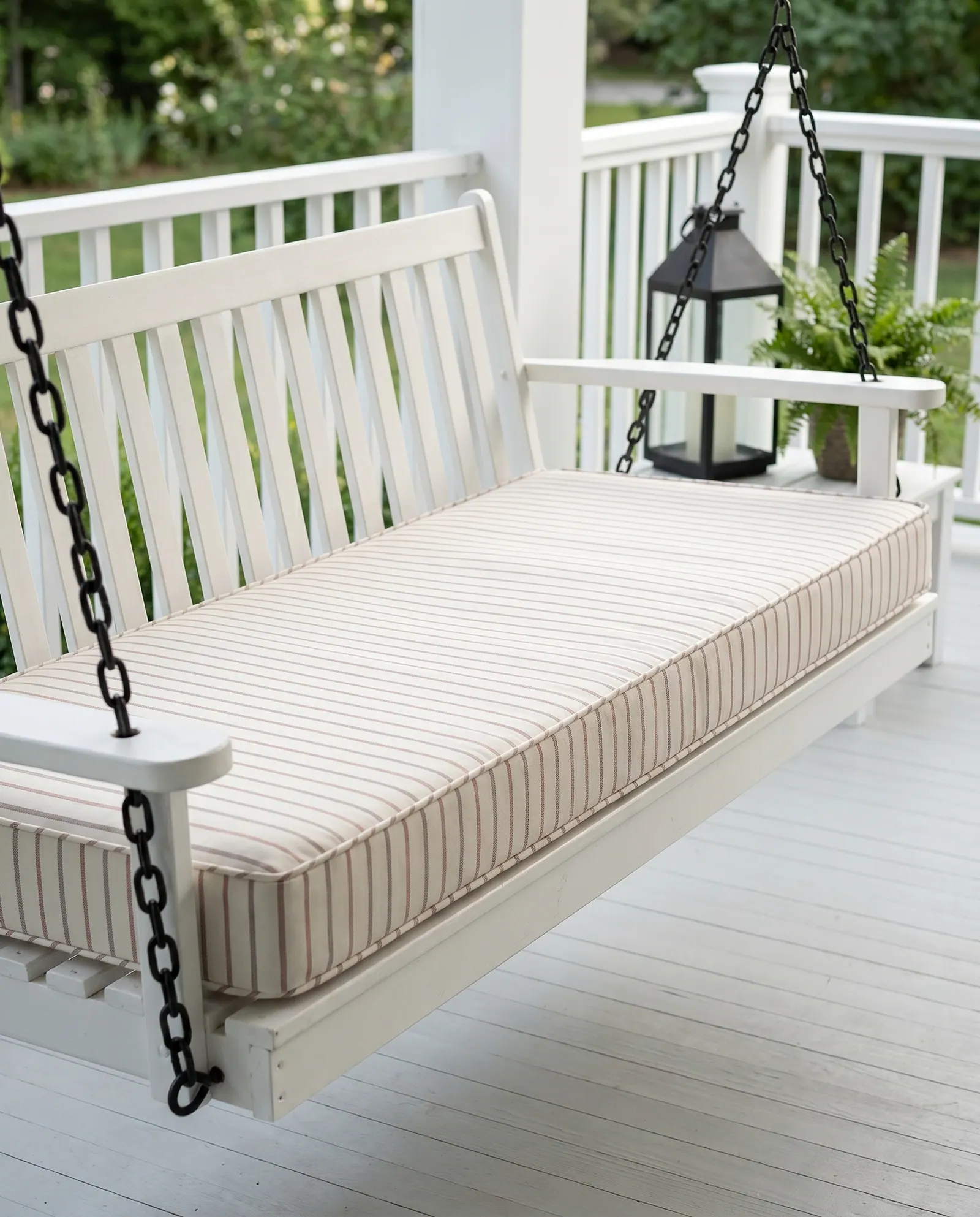
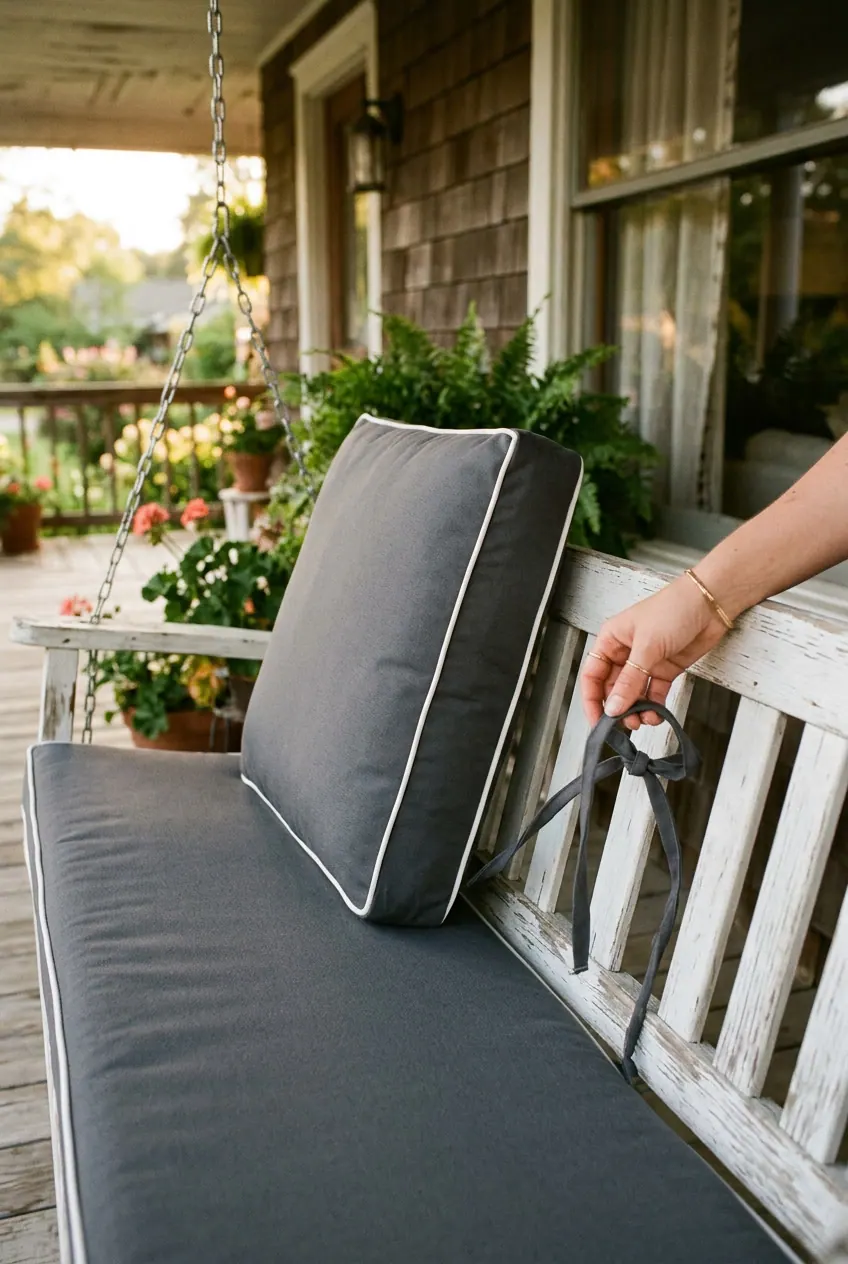
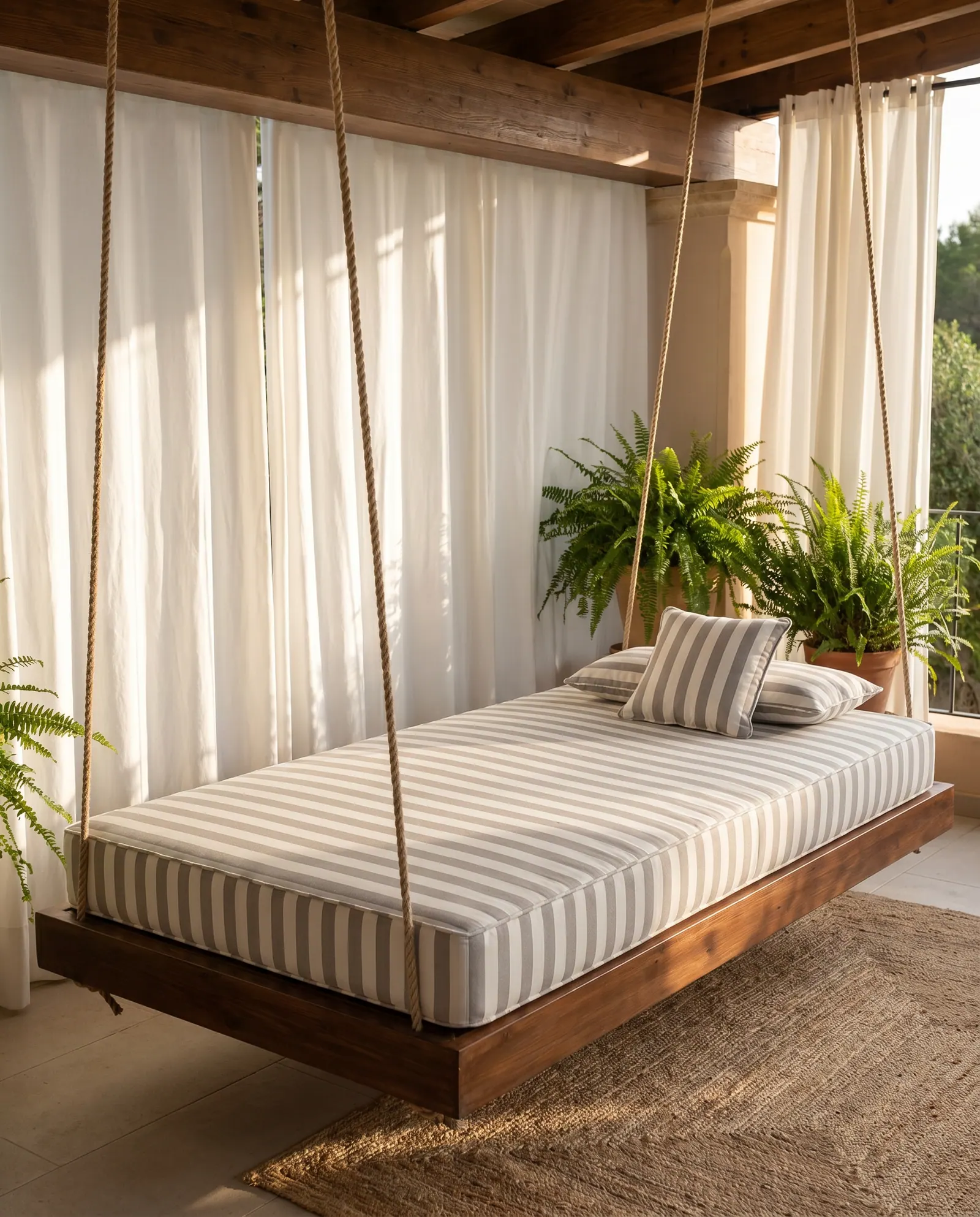
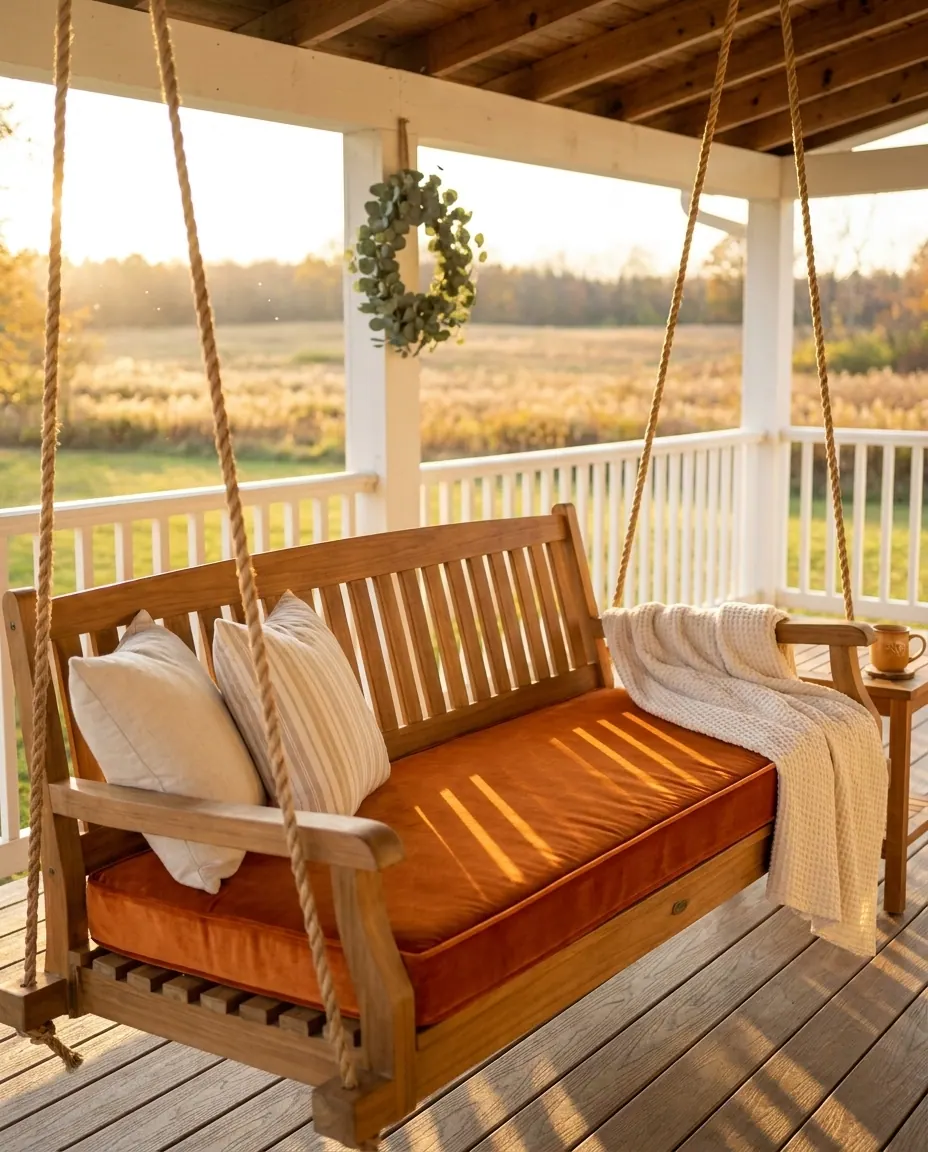
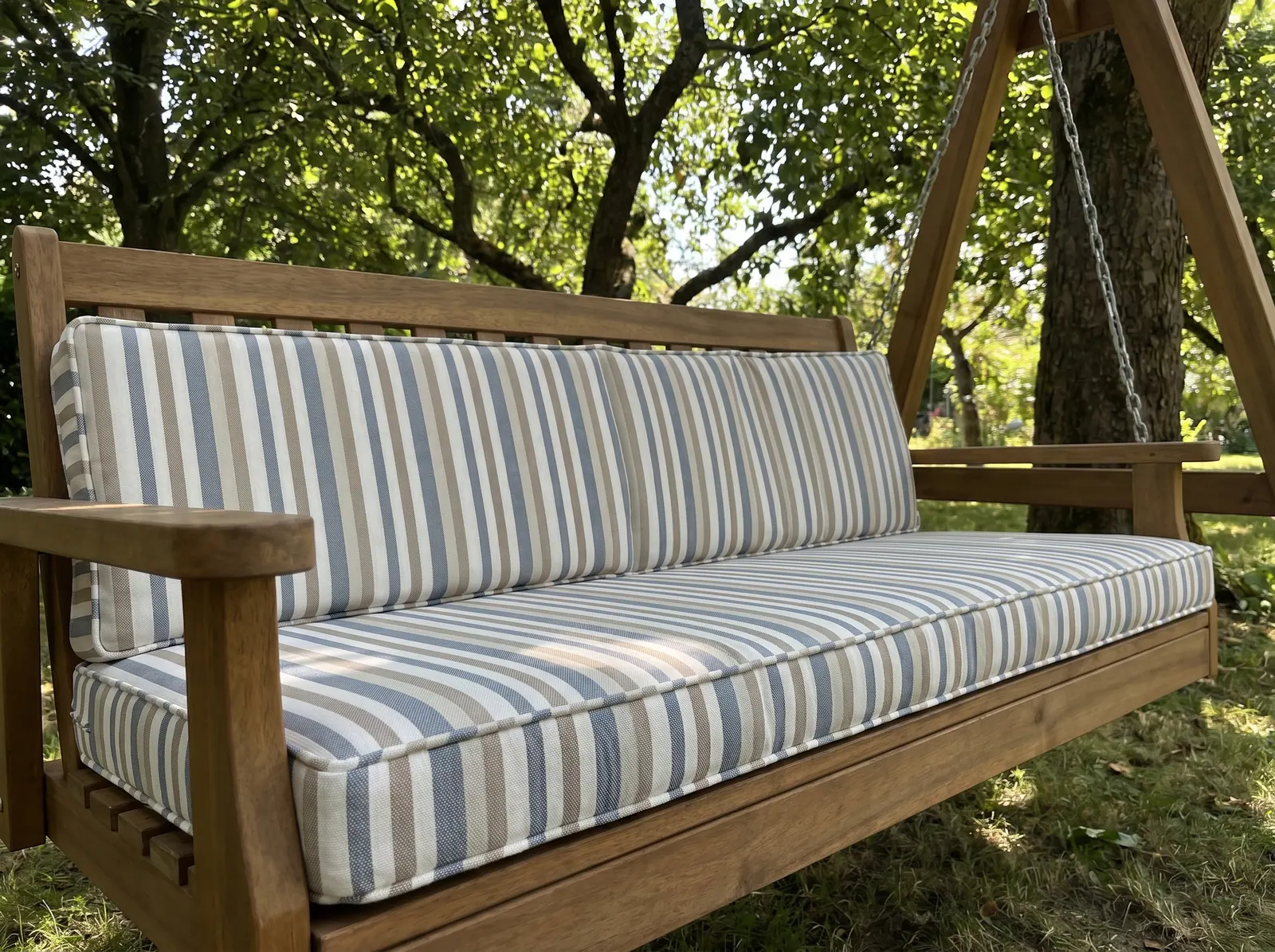
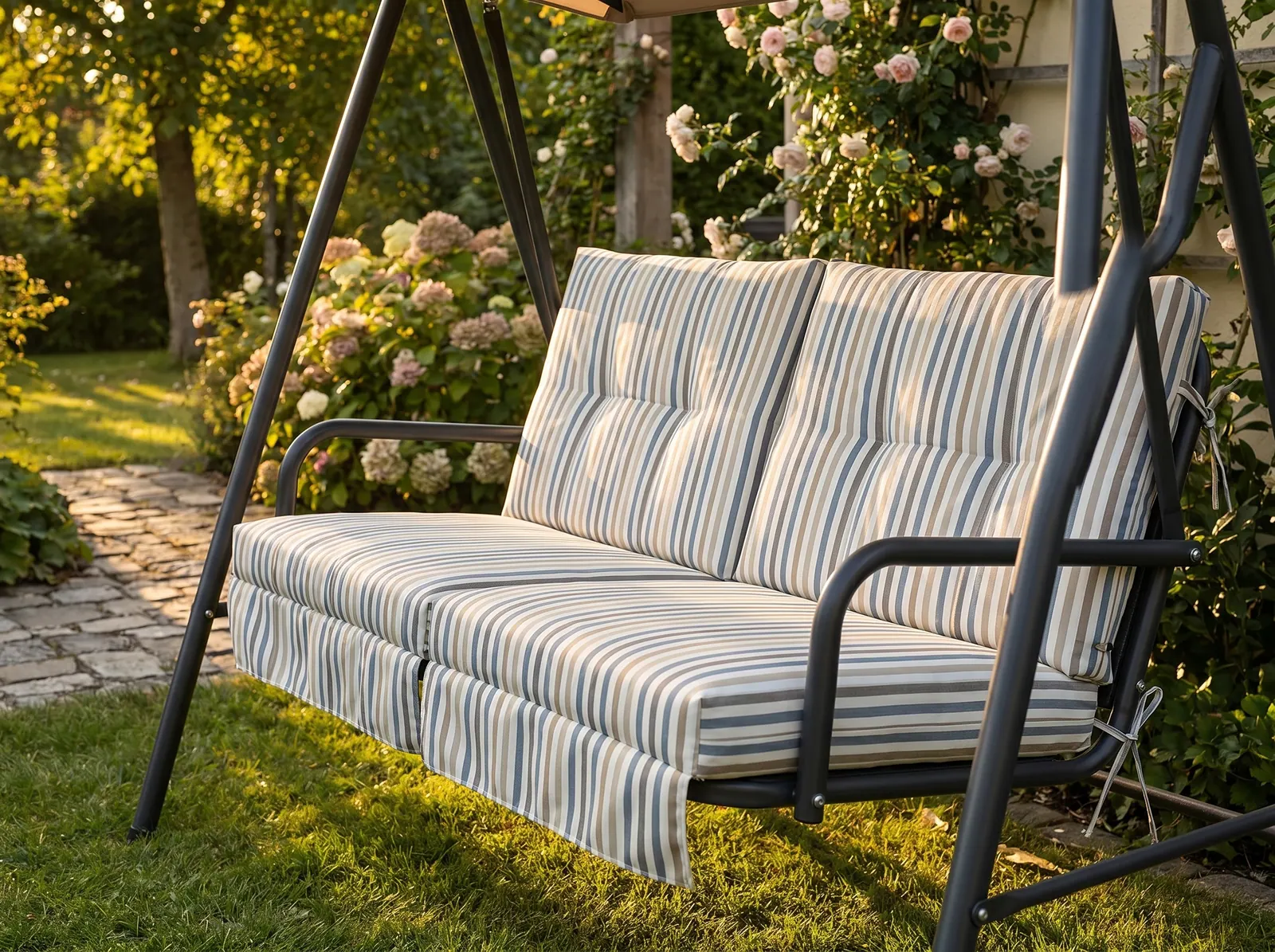
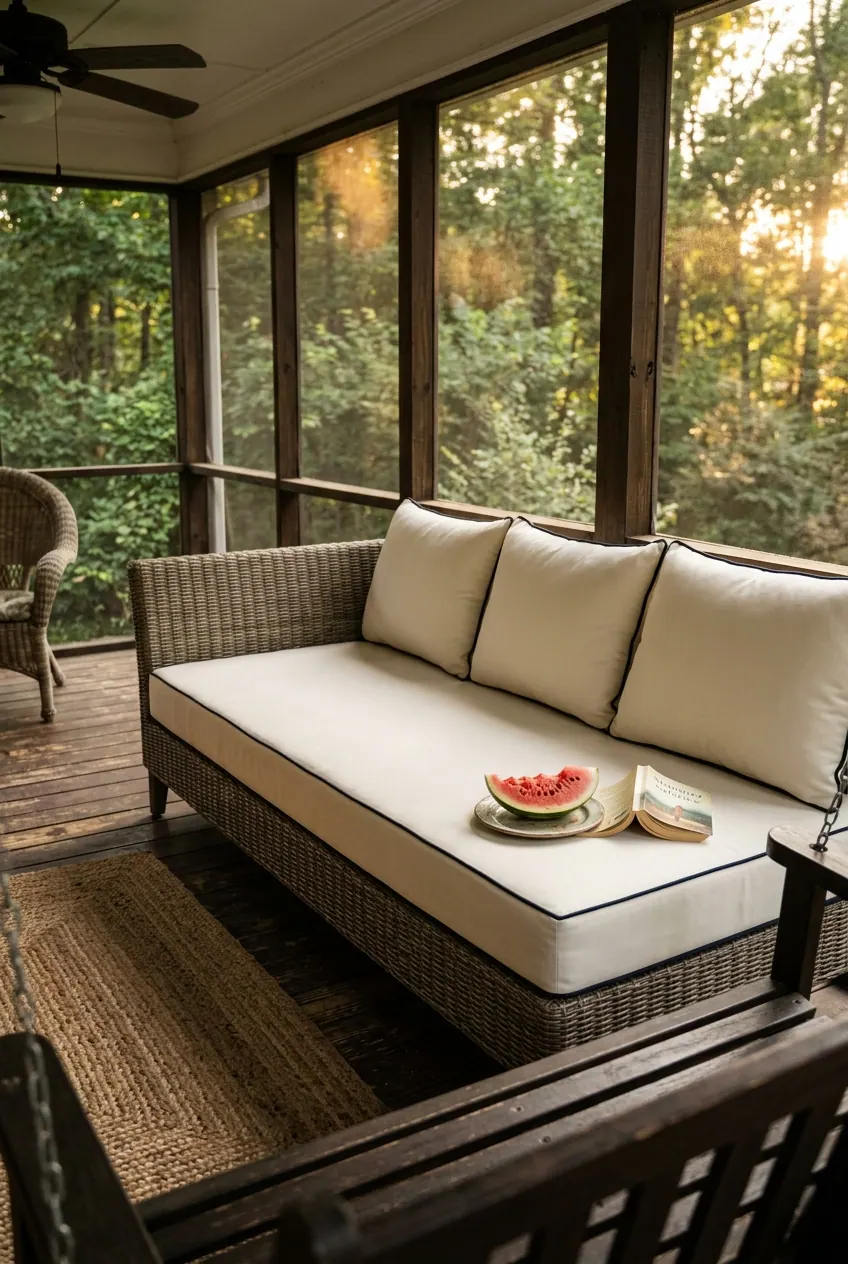
SaveA pale gray seat cushion keeps a white porch swing fresh, with three pillows layered at one end.SaveA thick pinstripe pad on a white porch swing, framed by black chains and a lantern; the stripe is quiet enough for a traditional porch.SaveCharcoal seat and back cushions piped in white, with a hand fastening the tie to a weathered swing slat.SaveA soft blue ticking stripe covers the seat and two back cushions of a timber garden swing, with the seat fabric dropping over the front rail.SaveBurnt orange velvet picks up the color of the evening sun on a teak swing, softened with cream pillows and a knit throw.SaveA hanging daybed dressed in a taupe awning stripe, with sheer curtains, ferns and a jute rug beneath.SaveStepping back shows the whole porch: rust velvet on the swing, cream pillows, a knit throw and the meadow beyond.SaveA white porch swing hung on thick rope gets a full seat and two back cushions in a neutral herringbone stripe.SaveSlate blue and sand stripes dress the seat and split back of a wooden garden swing in dappled shade.SaveQuilted backs and a seat with a front skirt dress this garden swing in soft gray stripes.SaveA thick ivory mattress cushion with navy piping turns a wicker daybed into the porch's summer reading bed.
A porch swing cushion set is two items: the seat and the back. On a 6-foot swing, two or three shorter backs sit straighter than one long one.
Neighbor, a swing wants a solid seat and a little fun in the pillows: a dove gray seat with navy ticking, or a cream pinstripe with one rust pillow, against white railings. Keep it to two or three pillows so there's still room for two people and a cup of coffee.
If the foam in your old cushions is still good, keep it. Zippered covers made to its exact size are the thrifty refresh; one buyer sent the workshop a 55.25 x 27.75 x 4 in seat and a 50 x 13 x 4 in back and got new covers in cinnamon with extra-strong zippers. See covers for foam you already own.
Porch gliders use the same measuring, on a different frame
A porch glider is a bench or loveseat that rocks on a fixed base instead of hanging from chains, and shoppers searching for glider cushions mean either this outdoor bench or a nursery glider rocker. For the porch glider, the cushion is a bench pad: measure the seat inside the arms at the front and back, the depth from the back to the front edge, and, if you want one, the back height from the top of the seat cushion. Pads for these gliders run from single-seat size up to about 6 ft, often with ties and a grip backing. Order it in outdoor fabric with ties at the back corners, and add a separate back cushion if the glider's back is slatted.
Buyer questions
A common question
The foam in my swing cushions is still fine. Can I buy new covers only?
The workshop's answer
Yes. Order from the zippered cover-only listing and write your foam's exact length, width and thickness and a fabric code in the personalization box; the cover is sewn to those numbers so it fits snugly. The workshop has made them for porch swings, benches and deck boxes, and extra-strong zippers can be requested. It double-checks that you really want covers only. They machine wash at 86°F (30°C) on a delicate cycle.
A common question
Is your outdoor swing fabric waterproof, or only water-resistant?
The workshop's answer
It comes from a separate water-repellent outdoor range with its own color chart, sent on request. In practice it is water-resistant rather than sealed: it handles rain showers and spills well, and the seats and backs get outdoor-suitable inserts. For a bigger project you can order one cushion first to check the fit. Store them indoors through the long off-season.
A common question
For a long swing, should I get one long back cushion or several shorter ones?
The workshop's answer
Several, usually. Two or three backs sit better and stay in place, and one long back isn't cheaper: four backs about 18 in wide and 21.5 in tall (45.5 x 55 cm) for a 72 in (182 cm) swing were quoted the same as one full-length back. Very long backs, around 79 in (2 m), are split into two pieces.
A common question
Will I see a drawing of my swing cushions before you cut them?
The workshop's answer
Yes. Before production the workshop turns your numbers into a drawing of the agreed dimensions, often converted to centimeters for accuracy, and makes the cushion exactly to the approved layout. The drawing shows your figures, though, so sketch your final measurements on paper, send a photo, and check what comes back.
A common question
One piece of my swing set came out the wrong size. Do I have to send it back?
The workshop's answer
Not in past cases where the error was the workshop's. Send a photo with a tape measure along the full length and ask the workshop to confirm in writing what it will do. Past remakes covered only the pieces that didn't fit, the piping color could change on the replacement, and remakes shipped with tracking. A partial refund was the other option.
Have it made
Have your porch swing cushion made — ask Rosa’s workshop
Tell the workshop who sits there: grandkids, the dog, a cup of coffee at six. The right fabric and foam follow from the people. — Rosa
Leave your details and the workshop will call you to confirm measurements, fabric, foam and piping. No prices, dates or payment on this page: it is a request, not an order.
Fabric · Foam · Pipingwhat the workshop will confirm with you
Only if you ask. Ties can be sewn into the seam at the corners or along the back edge, in any position, and they can also tie the back cushion to the seat. Write how many, where and how long in the order note, then check the photo before dispatch.
Which way should stripes run on a swing cushion?
You choose, piece by piece. The roll is about 55 in (140 cm) wide, so by default stripes run front to back across a long seat; running them along the full length needs a seam. Stripes are matched on one face only, so say which face goes up.
Can I add a matching swing cushion next year?
You can, but send a photo or offcut of the original and ask for a batch match. Each fabric roll is dyed in its own batch, and a piece cut months later can look a shade lighter or warmer. Ordering seat, back and bolsters together avoids the problem.
How thick should a porch swing seat cushion be?
The standard is 4 in (10 cm), and most buyers keep it. Backs can run a little thinner; 3 in has worked on a swing back. The thinnest standard foam is 2 in (5 cm), and a thin pad feels soft under an adult.
What should I do with swing cushions in winter?
Bring them in. Outdoor fabric handles showers and spills, but it is water-resistant rather than sealed. Store the cushions indoors and dry through the long off-season, and take the covers off to wash at 86°F (30°C) before they go away.
Are porch glider cushions the same as swing cushions?
Close, but measured on a different frame. A porch glider is a bench that slides on a fixed base instead of hanging from chains, and its pads run from single-seat size up to about 6 ft, often with ties and a grip backing. Measure inside the arms just as you would on a swing, and ask for ties where the seat meets the back.
Porch light's on — Rosa
Share this atlas entry
Readings
Photographs read by the masters: porch swing & swing bed cushions
Real cushions made for real rooms, each read for proportion, fabric and fit.
 Save
 Save
 Save
 Save
 Save
 Save
 Save
 Save
 Save
 Save
 Save
 Save