Across the Map · United States
Cushions for Carolina and Georgia porches
Every spring the pine pollen turns my porch swing yellow, and every summer the air gets thick enough to lean on. Here is how to dress a Carolina or Georgia porch so the cushions stay put, wash clean and outlast the storms. Pull up a chair.
- Sun & UVStrong
- HumidityVery humid
- RainFrequent
- WinterRare
 Save
The quick answer
Porch swing cushions in the Carolinas and Georgia should be cut in outdoor-rated, water-repellent fabric with zippered covers and ties at the back corners so they never slide. Wash the covers after spring pollen as well as after summer, keep indoor linen only on fully roofed porches, and bring cushions in before storms, since the foam is not quick-dry.
Field notes
Weather and light in the Carolinas & Georgia
- Sun & UVStrong (level 3 of 4)Strong summer sun
- HumidityVery humid (level 4 of 4)Humid summers, long porch seasons
- Rain & stormsFrequent (level 3 of 4)Summer storms
- Snow & freezeRare (level 1 of 4)Rare near the coast; some in the mountains
Watch for
- Spring pollen
- Salt air in the Lowcountry
- Hurricanes on the coast
Plain-language levels from general climate patterns, not measurements. Your own porch, shade and window exposure matter more.
Pollen in March, heavy air in July
Nobody warns newcomers about the yellow. In spring, pine pollen settles on every porch in the region, and on March 29, 2025, an Atlanta allergy practice recorded a pollen count of 14,801, the highest it had ever documented. Oak, pine, sycamore, sweet gum and birch all pitched in.
Then comes the heavy air. Savannah mornings average about 86% humidity and Asheville's about 87%, and Savannah sees about 73 days a year at 90°F (32°C) or more. Rain is generous: about 60 in (152 cm) a year in Wilmington, about 50 in (127 cm) in Atlanta.
The coast knows storms. Between 1851 and 2004, hurricanes struck North Carolina 46 times, South Carolina 31 and Georgia 20, and the season runs June 1 to November 30.
So on a Southern porch, mildew is the everyday enemy, pollen is the spring chore, and a storm is the day you carry everything inside.
Piazzas, joggling boards and sleeping porches
Charleston's single house is one room wide and turned sideways on its lot, with long piazzas facing south or west to catch the breeze. The front door opens onto the piazza, so the porch is really the front hall. Savannah rowhouses gather around the squares, and Lowcountry cottages stand on piers behind deep porches.
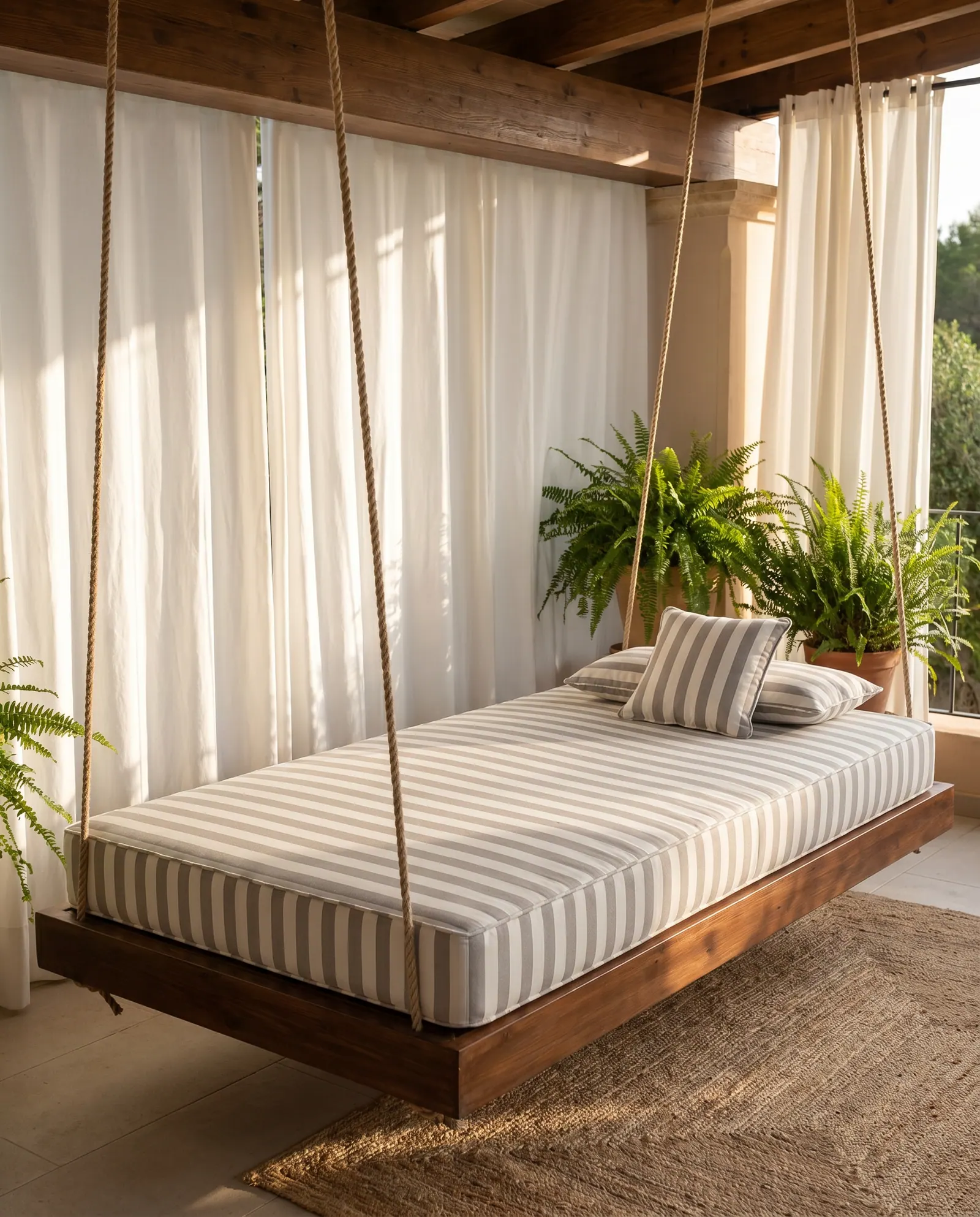
Then there is the joggling board, a long springy plank on two end stands, loved in the Lowcountry since the early 1800s and usually painted Charleston green. It deserves a long, thin pad. Sleeping porches, the fresh-air rooms of the early 1900s, call for swing beds and daybeds.
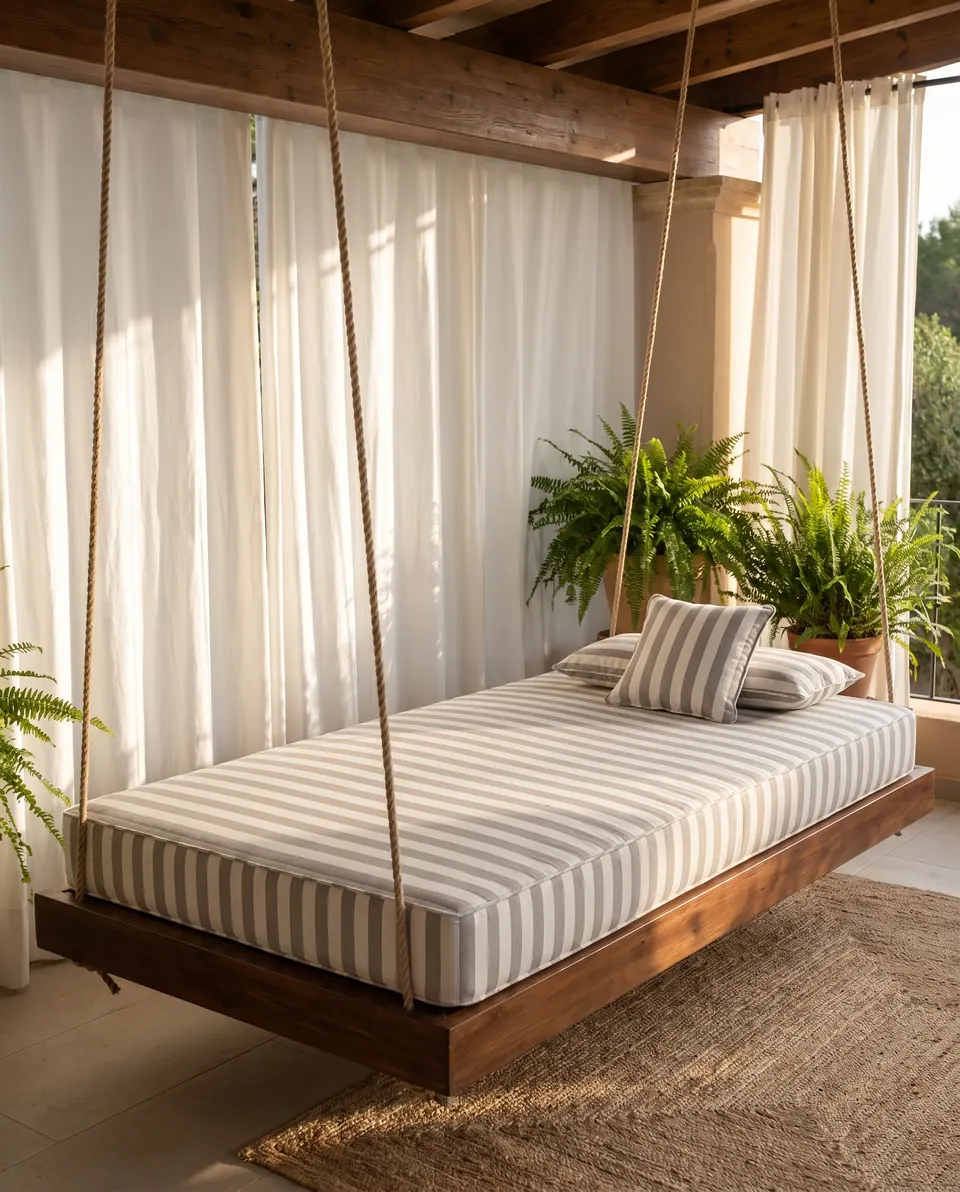
For the swing itself, start with porch swing cushions and the porch swing sizes pattern. Rockers have their own shapes in rocking chair cushions, and the rest of the porch lives under patio and porch cushions. Hanging a bed-sized swing? Read up on swing bed cushions.
Swing, rocker, piazza bench: what each one needs
Outdoor here means a UV-resistant, water-repellent woven fabric. It does not come with quick-dry foam or a mesh bottom, so even a porch swing does best under the roof.
| Porch seat | Fabric | Build | Why |
|---|---|---|---|
| Porch swing open to blowing rain | Outdoor fabric | 4 in (10 cm) seat, ties at the back corners | Resists moisture and mildew; the ties stop sliding |
| Screened or sleeping porch | Outdoor fabric | Zippered cover | Pollen, dust and humidity get through a screen |
| Fully roofed porch, no rain or direct sun | Linen or striped cotton | 4 in (10 cm) | Indoor fabric is fine under a closed roof; not waterproof |
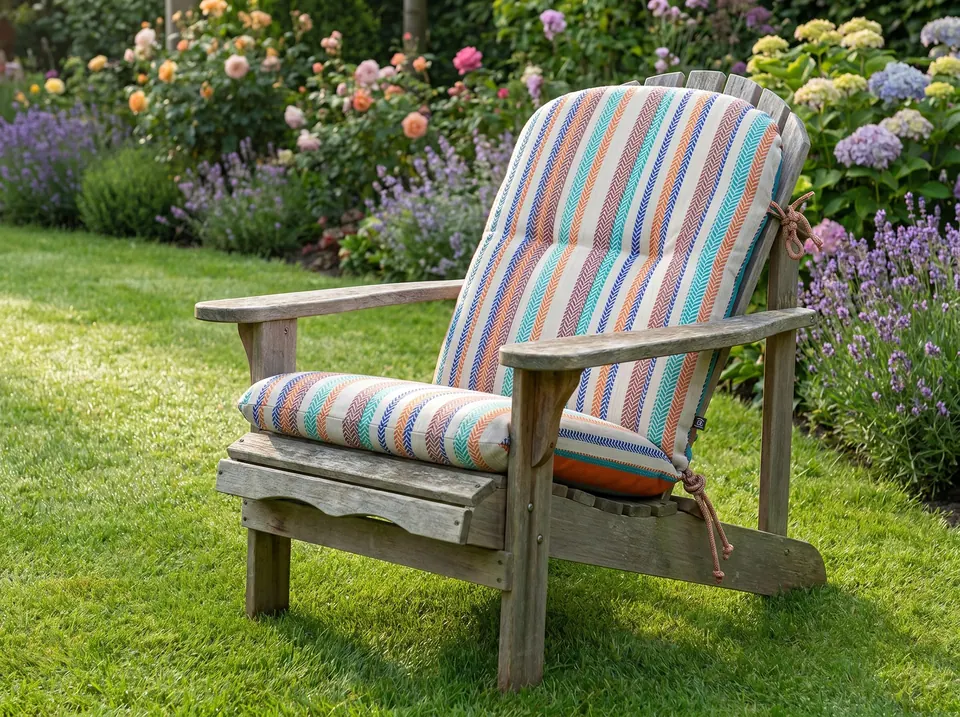
| Rocker with a sculpted seat | Linen | 3 in (7.5 cm), from a paper template | A traced template fits a curve better than a tape |
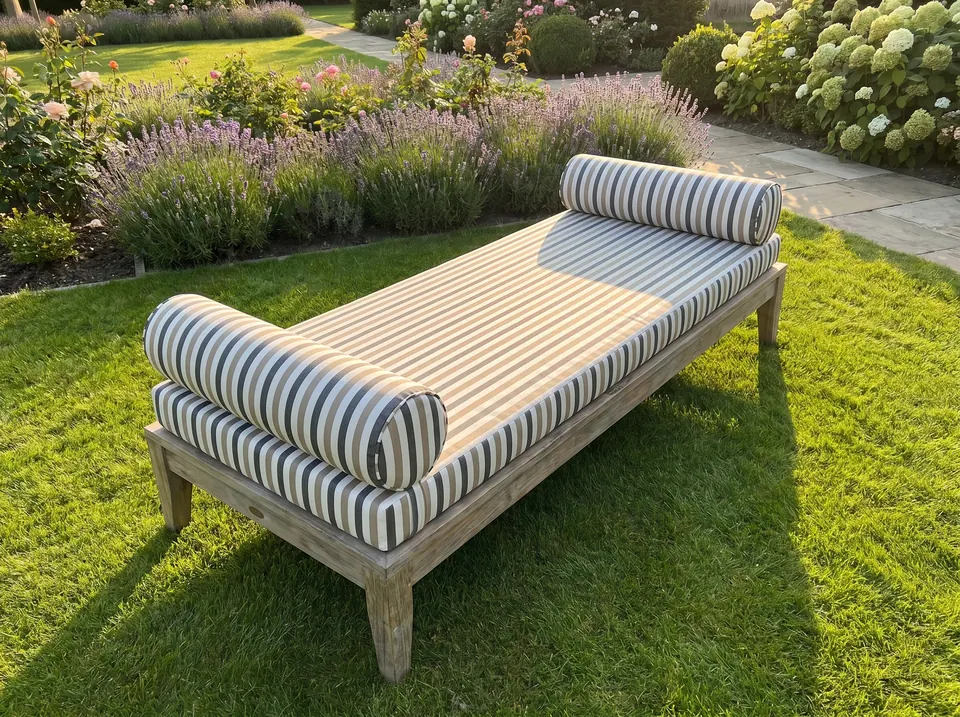
| Swing bed or daybed swing | Outdoor fabric | Back cushion plus two round bolsters | Order the bolsters with the main cushion so they share one fabric batch |
| Family porch with kids and dogs | Performance weave | Zip-off covers in a mid-tone | A tight, washable weave; a mid-tone forgives muddy paws |
Picked for the Carolinas & Georgia
Seats to start from
Fabric families
Try it in the Studio
The back pillow that came up 23 inches short
A buyer in the US ordered a striped seat and back pillow for her porch swing, and the back arrived 23 in (58 cm) shorter than the seat. The workshop had misread her measurement diagram. At first it pointed to the schematic she had approved. Then it looked again, owned the mistake, told her to keep the first pillow and remade the back at no charge.
The new one measured 63 3/4 in long, 18 in deep and 3 in thick (162 x 46 x 7.5 cm), with the stripes running top to bottom, and it sits on top of the seat pillow. It fit perfectly and looked just right out on her patio.
My advice, neighbor: label every dimension on your drawing, and write which way the stripes run for each piece. A paper template or a clear sketch saves everybody a second round.
The porch keeper's calendar, pollen to first frost
- Late March to April: pine pollen season. Once the yellow stops falling, hose the frame and wash the covers.
- May: if the swing cushion creeps, add ties at the back corners, with length and color in the order note.
- June 1: storm season opens. Make sure one person can carry each cushion inside.
- Summer: after a hard rain, stand cushions on edge under the roof and get them dry within 24 to 48 hours.
- November 30: storms end. Check seams, zippers and ties before the cool months.
- Winter in the mountains: Asheville averages about 95 days a year with a low at or below 32°F (0°C), so store cushions dry, off concrete and out of sealed bags.
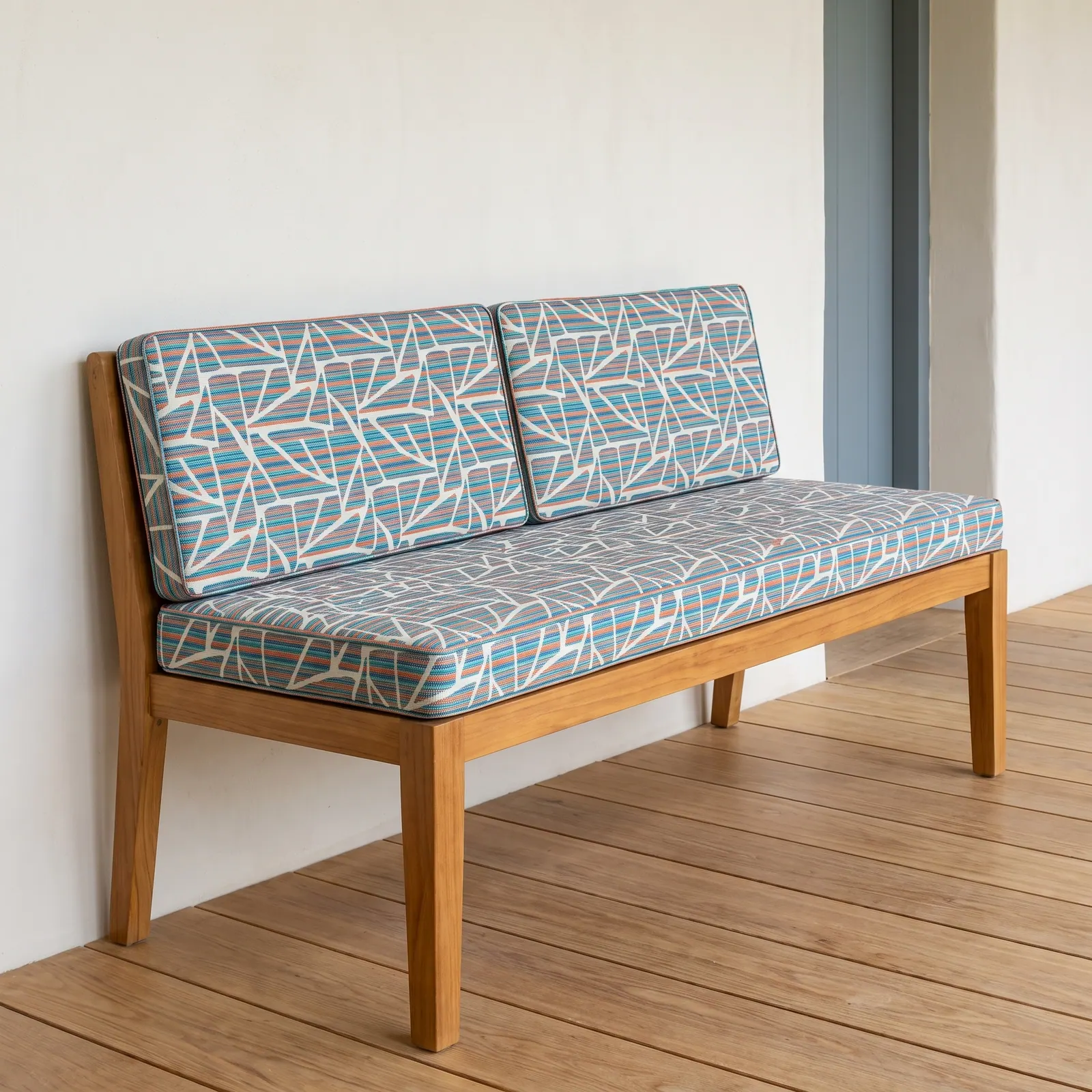
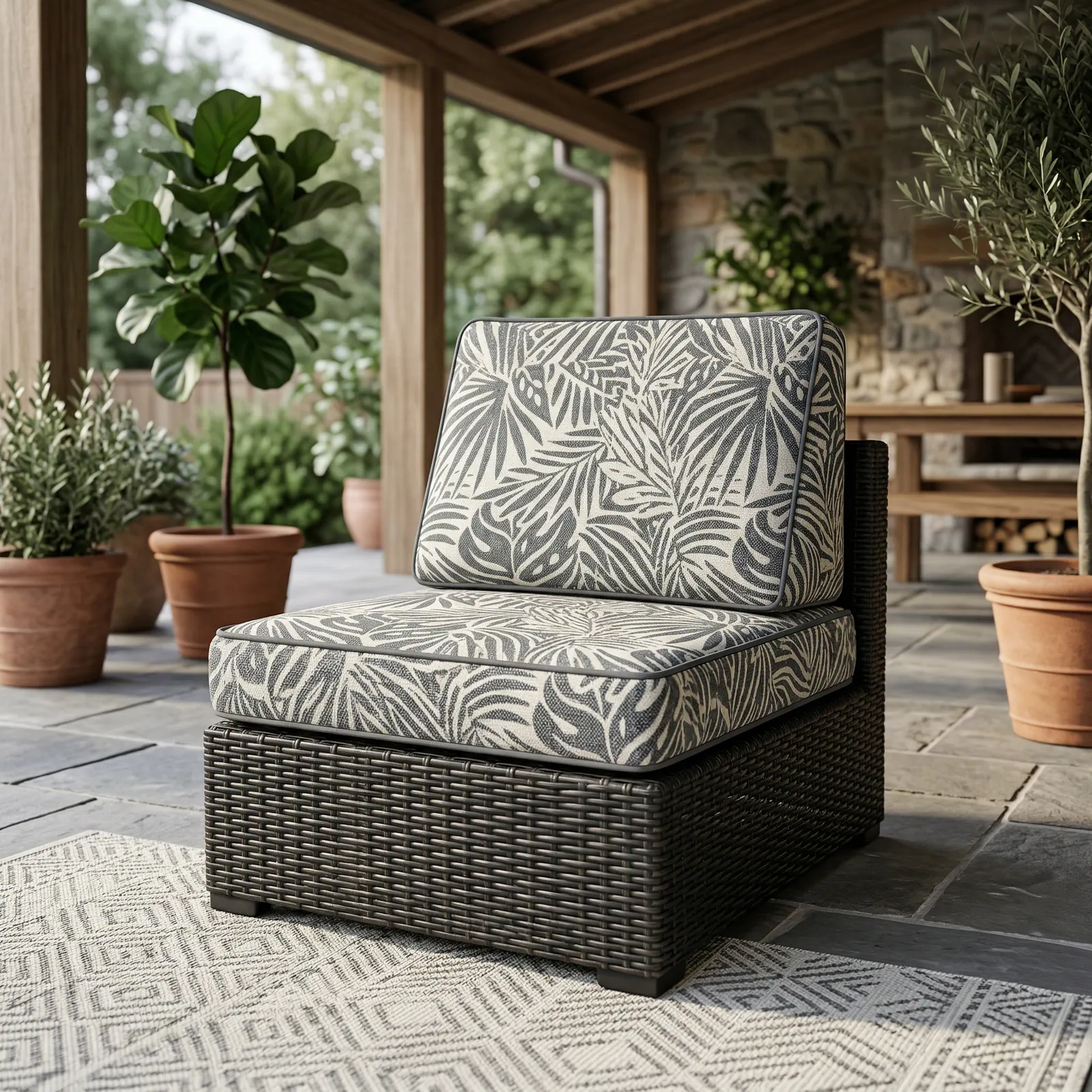
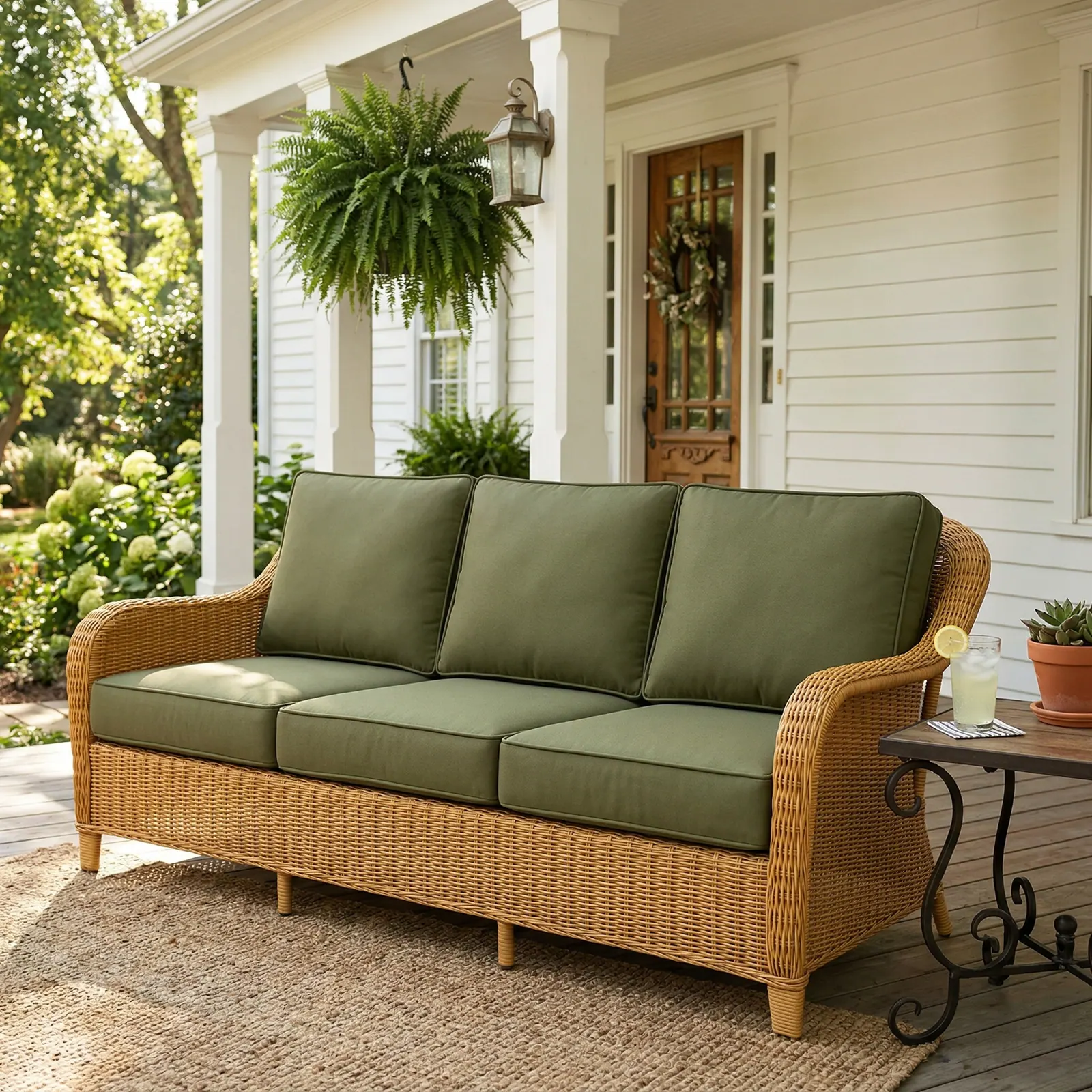
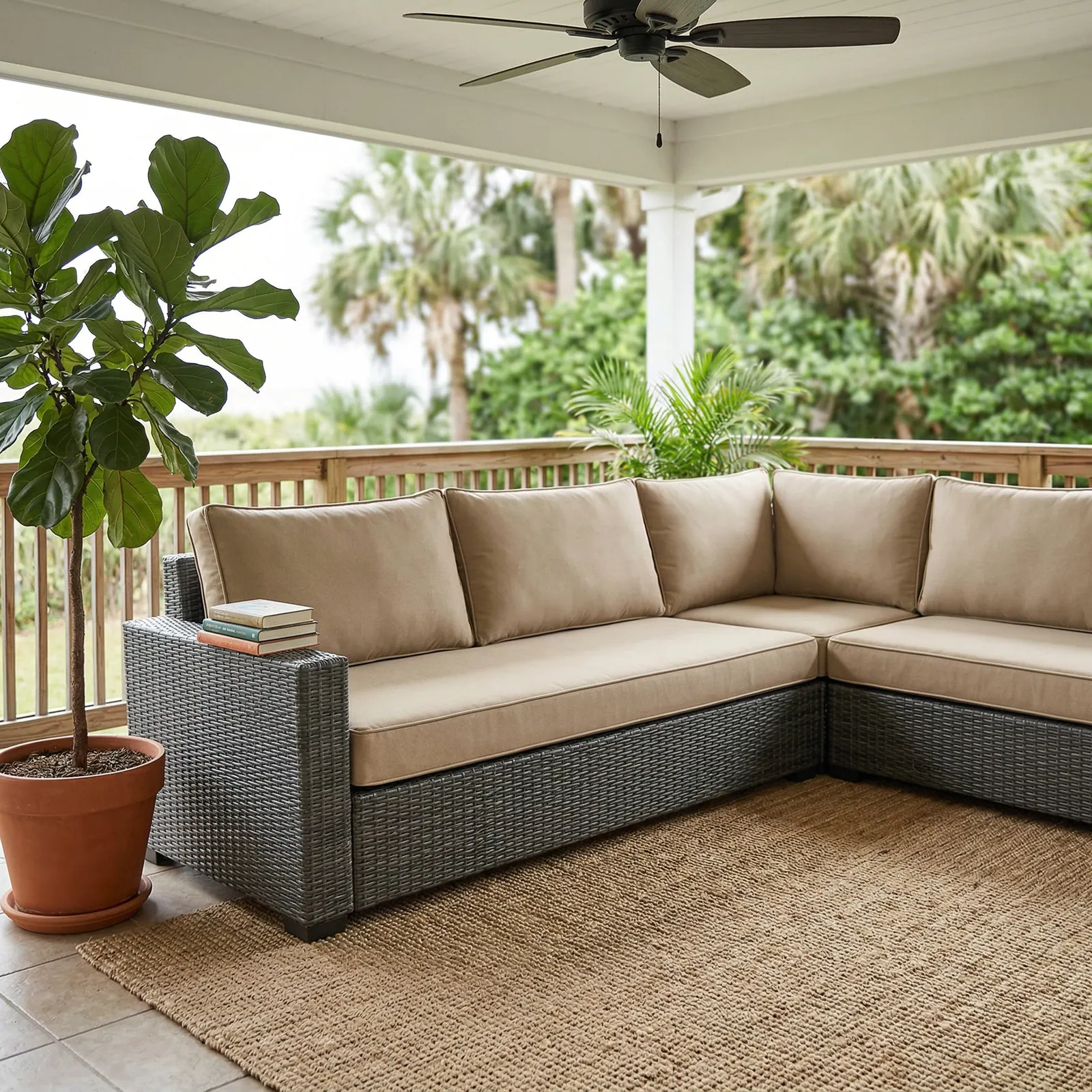
Photographs for homes like these
Open any photograph large; each one has its own link and a Save button.
 Save
 Save
 Save
 Save
 Save
 Save
 Save
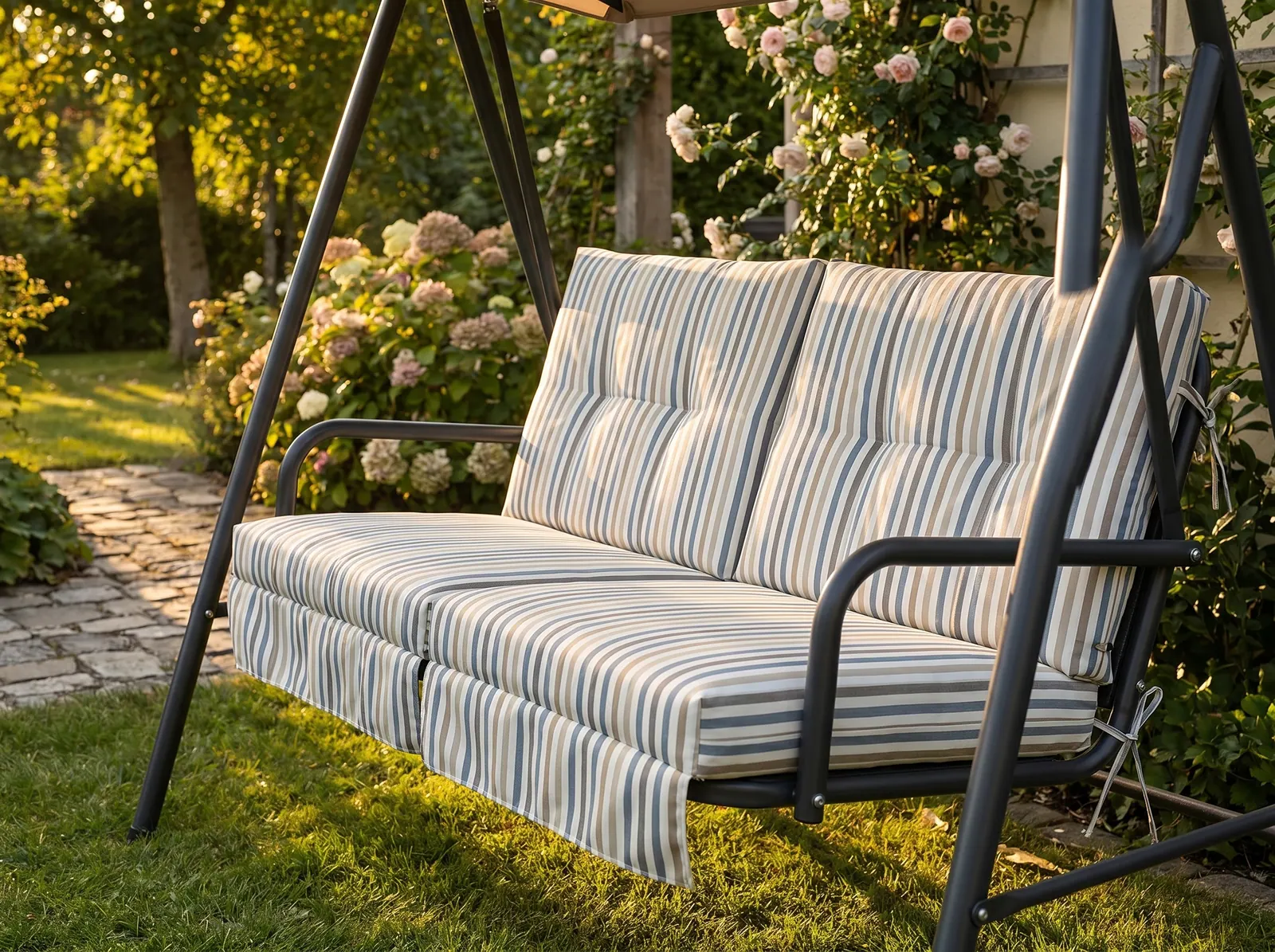
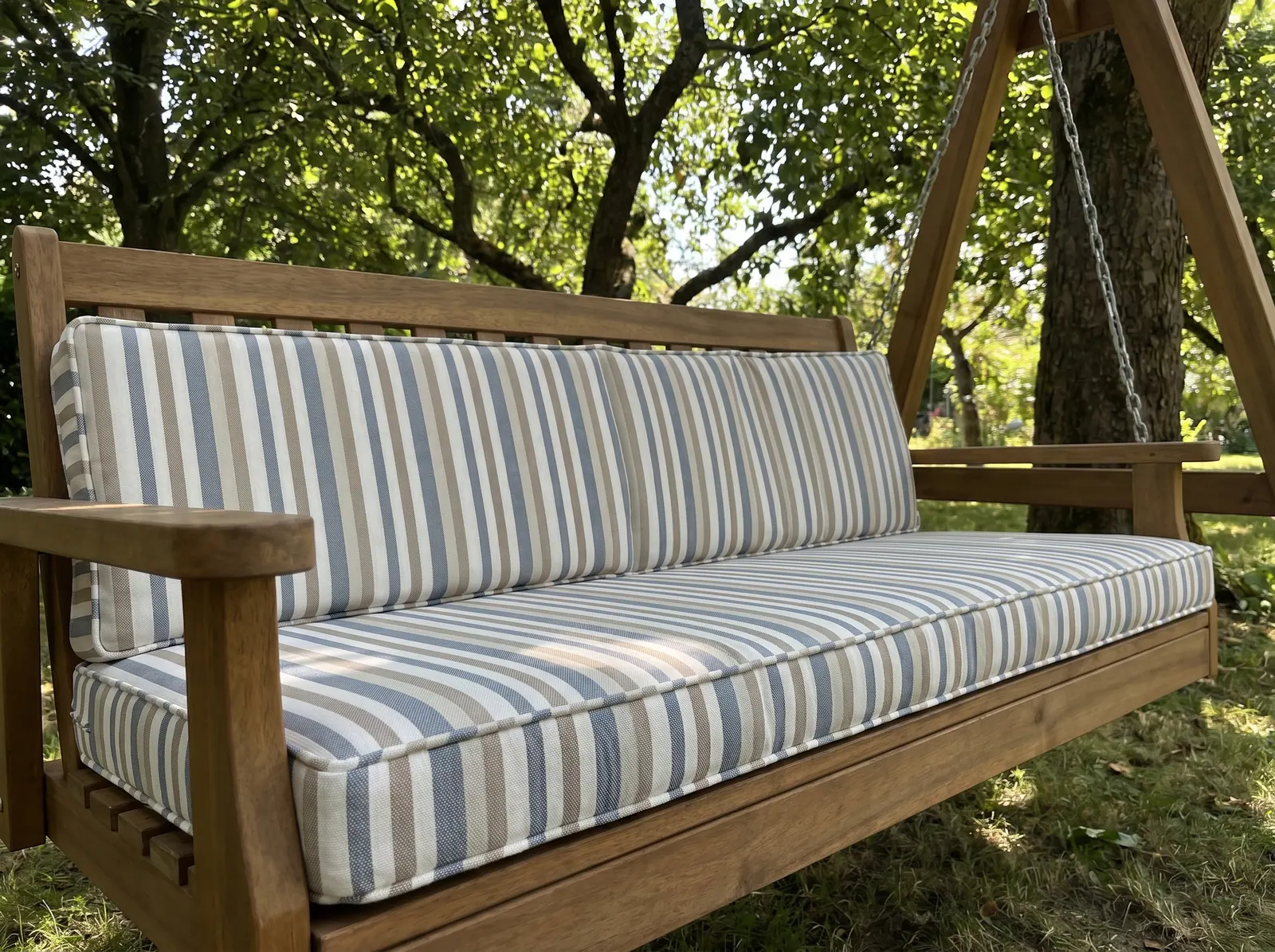
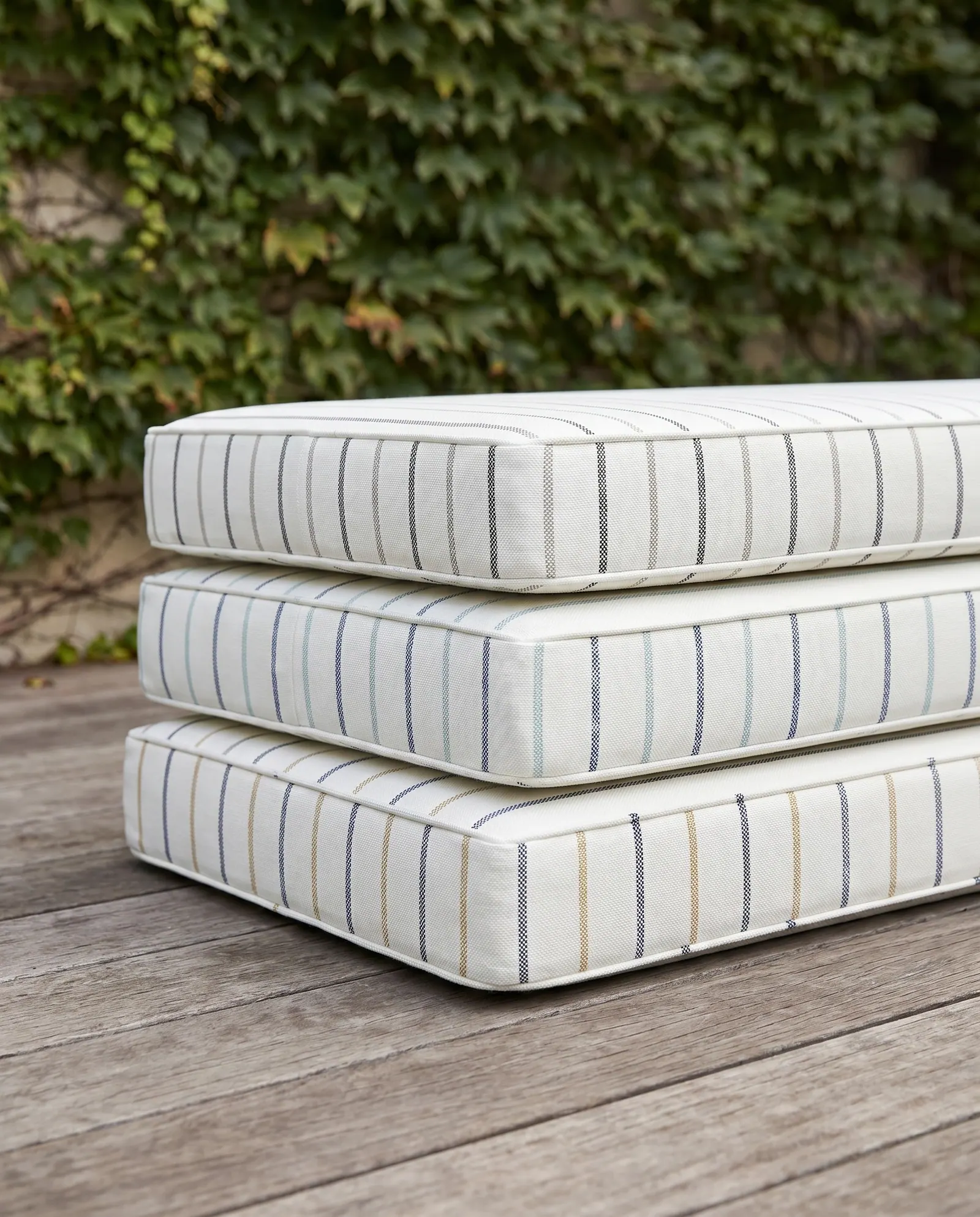
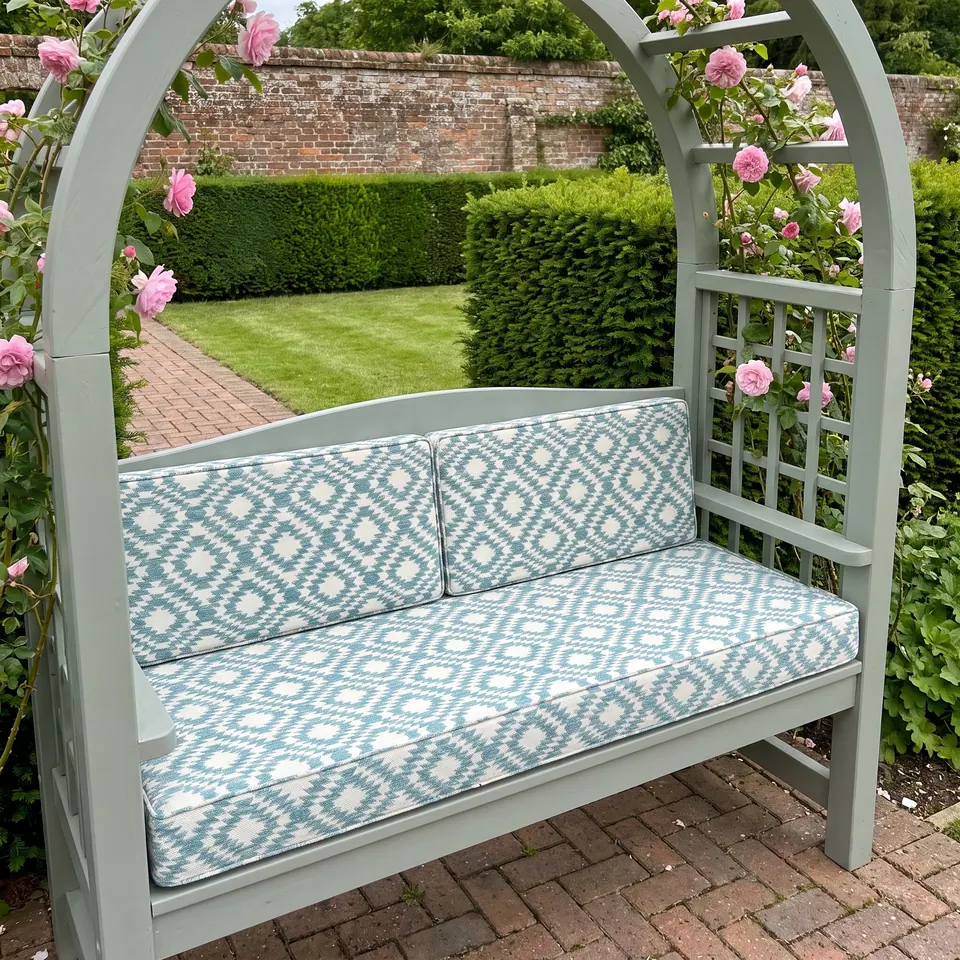
A porch swing cushion with ties at both back corners stays put when the swing moves. Name the ties, with length and position, when you order.
Rosa
Buyer questions: swing and porch questions
- A common question
I already have good foam for my hanging porch swing. Can you make just the covers, with really strong zippers?
The workshop's answerYes. Send the foam sizes. One buyer's set was a 55.25 x 27.75 x 4 in (140 x 70 x 10 cm) seat and a 50 x 13 x 4 in (127 x 33 x 10 cm) back pad, in cinnamon. Zippered covers cut to good foam are the cheaper refresh.
- A common question
My rocking chair has a curved, sculpted wooden seat. Can I send you a paper template?
The workshop's answerYes. Trace the seat, cut the paper, write the widest width and the depth on it, and photograph it from above with a tape measure beside it. The craftsmen mark the straight parts of the side edges and may ask for two extra measurements. One such cushion was made 3 in (7.5 cm) thick in linen with matching piping.
- A common question
Can I leave the outdoor cushions out in the rain all year?
The workshop's answerThe outdoor fabric is water-repellent and UV-resistant, with a fully zippered cover for washing. But the foam isn't quick-dry and there's no mesh bottom as standard, so the workshop says plainly: use them on a covered porch and store them indoors over winter.
- A common question
Which way will the stripes run on my swing cushion?
The workshop's answerBy default, front to back across the depth. The fabric roll is about 55 in (140 cm) wide, so lengthwise stripes on a long cushion would need a seam. You can ask for another direction before production; say so for each piece.

Have it made
Have it made for your home — ask Rosa’s workshop
Swings sway, rockers rock, dogs circle three times. Tell the workshop what your seat goes through, and they will plan for it. — Rosa
Leave your details and the workshop will call you to confirm measurements, fabric, foam and piping. No prices, dates or payment on this page: it is a request, not an order.
Questions buyers ask next
Which span do I measure on a porch bench with arms?
Decide that yourself, because the workshop makes exactly what you order. One bench measured 43 in (109 cm) in front of the arms and 47 in (119 cm) behind them. Write the span where the cushion will actually sit on your drawing.
Do Southern porch swing cushions need ties or a non-slip base?
On a swing, ties are the usual answer. Sewn into the seams at the back corners or wherever you choose, they fix the cushion to the swing or tie a back to a seat. They are added on request, so put them on the order in writing.
Is one long back cushion better than two on a porch swing?
The workshop usually recommends two or three back cushions per run, because they sit better and stay in place, and one long backrest costs no less. Together, the back pieces should equal the seat length.
What happens to swing cushions when a hurricane heads for the coast?
They come inside. Ready.gov's hurricane checklist says to bring in outside furniture, and the foam here is not quick-dry. Size each cushion so one person can carry it through the door, and the job goes quickly.
Porch light's on — Rosa
Concept Sketches
Sketches for homes like these
Real projects, drawn up as ideas you can borrow.
The atelier
Keep going
Across the Map
Nearby places
In Carolinas & Georgia
Nearby