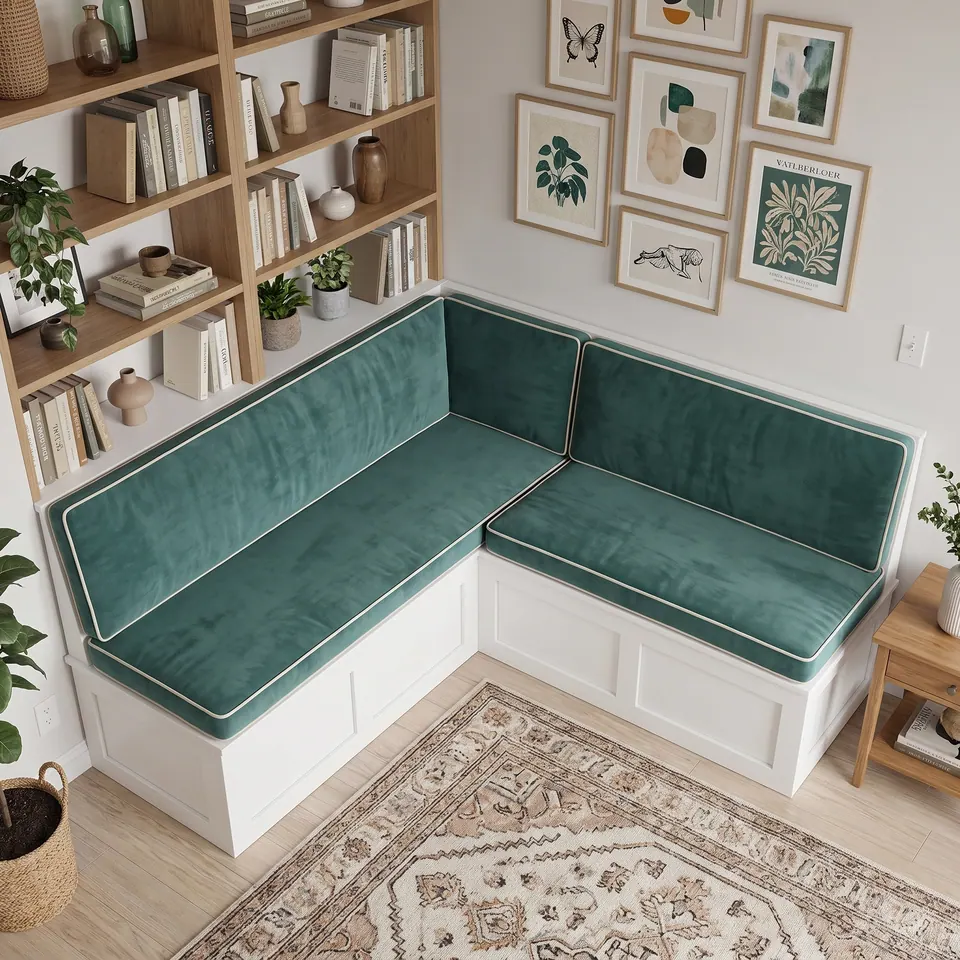
Cushions for Hudson Valley farmhouses and Adirondack camps
Syracuse averages close to 128 inches of snow a winter. Houses built for weather like that keep folks indoors and sitting down a good long while, so up here the window seat and the old blanket chest work harder than anywhere I know.
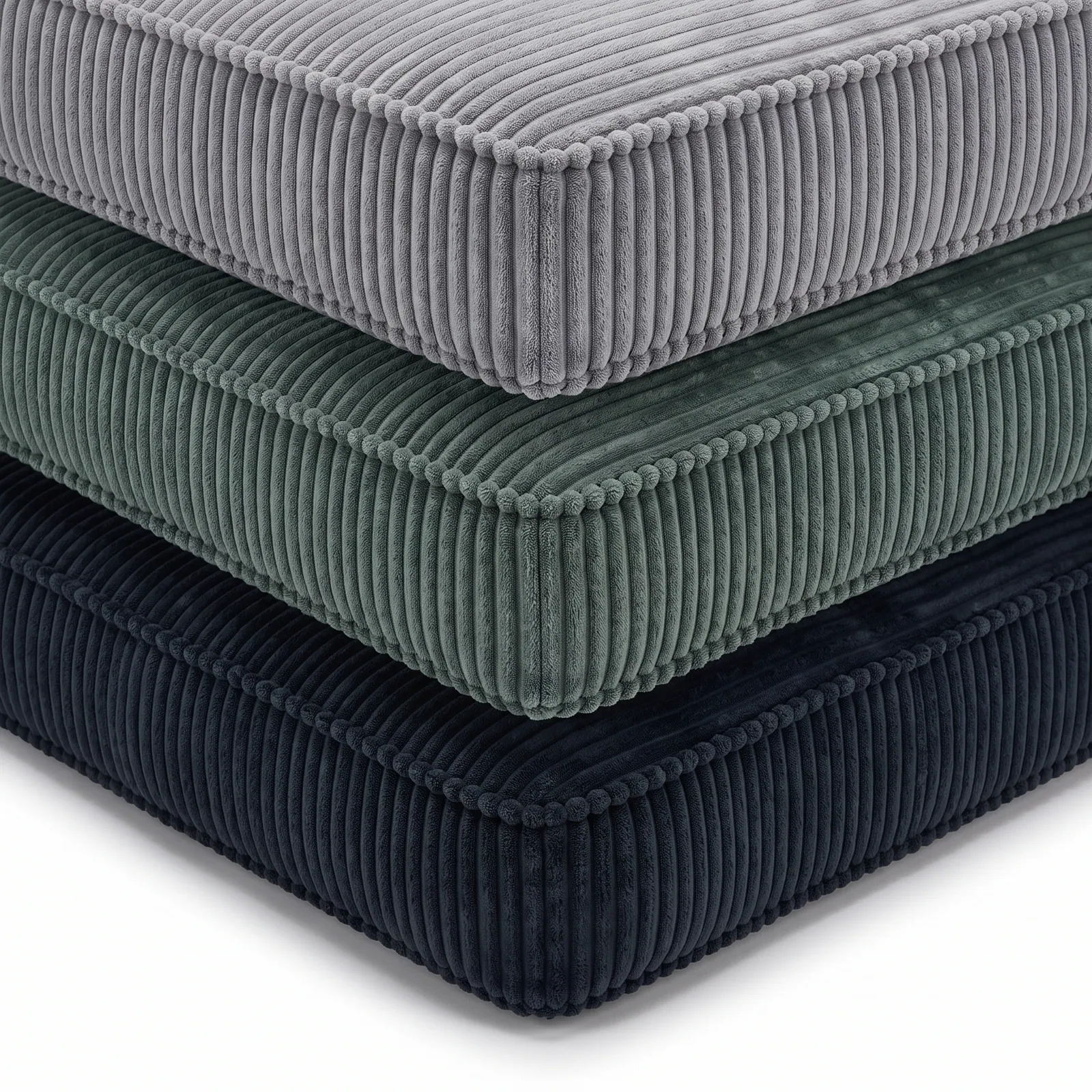
SaveA cool palette in one stack: pale gray, muted teal and near-black anthracite.
The quick answer
For upstate New York, put corduroy or velvet on the indoor seats that carry the long snowbelt winter, and keep outdoor-fabric porch cushions indoors and dry from first frost to spring. On antique chests and quilt boxes, cut the cushion to the inside of the lid bevel, set ties between the hinges, and leave grip fabric off a fine old finish.
Field notes
Weather and light in Upstate New York
Sun & UVModerate (level 2 of 4)Bright summers, short gray winter days
HumidityModerate (level 2 of 4)Humid summers, dry heated winters
Rain & stormsFrequent (level 3 of 4)Rain spread through the year
Snow & freezeLong winters (level 4 of 4)Lake-effect snow in the west and north
Watch for
Mud season
Woodstove heat
Camps closed for the winter
Plain-language levels from general climate patterns, not measurements. Your own porch, shade and window exposure matter more.
Lake-effect snow and a long gray season
Lake-effect snow does the heavy lifting up here. Cold air crosses the open lakes, picks up moisture and drops it downwind, hardest on the southern and eastern shores. By NOAA's long-term normals Rochester gets about 102 in (259 cm) of snow a year, Buffalo about 95 in (242 cm), and even Albany about 59 in (150 cm).
The light matters as much. Buffalo counts about 208 cloudy days a year. So an upstate window seat is not fighting the sun; it is fighting a cold pane, dry radiator heat and a long season of daily use. Velvet remembers every evening spent on it through a winter like that, and I mean that kindly.
Outdoors is another matter. Albany sees about 143 nights a year at 32°F (0°C) or colder, a long time for a porch cushion to sit out.
Farmhouses, stone houses, camps and the seats in them
Up here the houses are often older than the furniture, and some of the furniture is older than the houses. Greek Revival and Federal farmhouses, Dutch stone houses along the Hudson, Victorian village homes, barn conversions, weekend places. Thick walls make deep window seats, and handed-down cedar chests end up as seats at the foot of a bed.
The Adirondack Great Camps began in 1877 with log walls, screened porches and rustic chairs. Mudroom benches take the snow melt off every boot, and by the woodstove somebody always ends up on a floor cushion.
Long benches come out of these houses often. A buyer in the US ordered two brown corduroy bench cushions at 62 x 14 in (157 x 36 cm), four ties each, set 2 in (5 cm) from the ends. Another paired a 101.5 x 19 x 3 in (258 x 48 x 7.5 cm) bench cushion with a bolster in mushroom taupe velvet. What does the old bench in your front hall measure?
Which cloth and which build for each upstate seat
Sketch the size in the bench cushion builder first, then match the cloth to the seat.
A cedar chest, a set of hinges and an honest answer
A buyer in the US used a family cedar chest as a seat and wanted a tie-on cushion. The hinges left no place for ties, so the cushion was sized to the inside of the lid's bevel: 42 x 18 in (107 x 46 cm), against an outer lid of 44 1/4 x 19 in (112 x 48 cm).
A non-slip base helps a cushion stay put, but nothing holds it when the lid lifts, and she did not want grip fabric on that old finish. So she went without, and chose a linen with self piping.
42 x 18 in inside the bevel; outer lid 44 1/4 x 19 in
What it taught
Size a lid cushion to the inner bevel, and accept that a lifting lid will shed it.
An upstate year for cushions, season by season
Mud season: unzip the mudroom cover and wash it at 86°F (30°C) at most on a gentle cycle.
Late spring: carry porch and camp cushions out once the frosts are done, and check every tie.
Summer: switch the daybed or window seat to linen covers if you keep a second set.
First frost: bring outdoor cushions in. The fabric sheds rain, but the foam is not quick-dry.
Winter: store them dry, off the concrete, never in a sealed damp bag. See winter storage.
Photographs for homes like these
Open any photograph large; each one has its own link and a Save button.
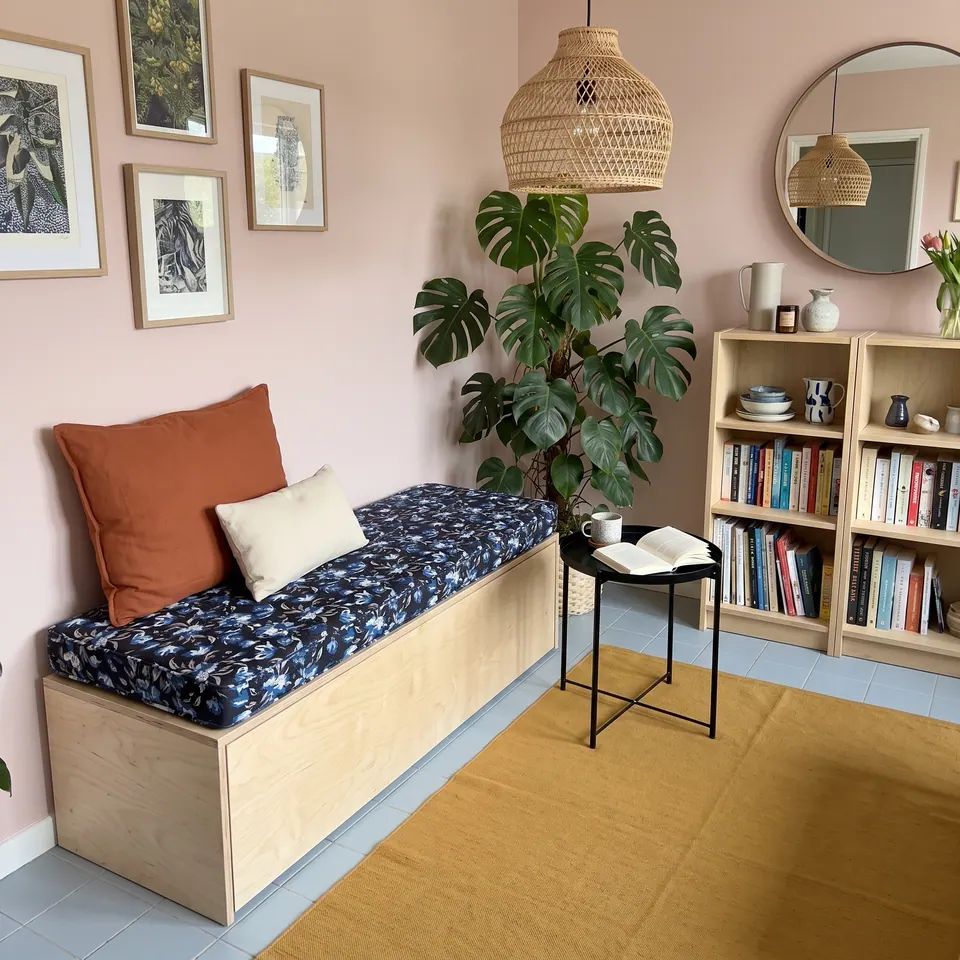
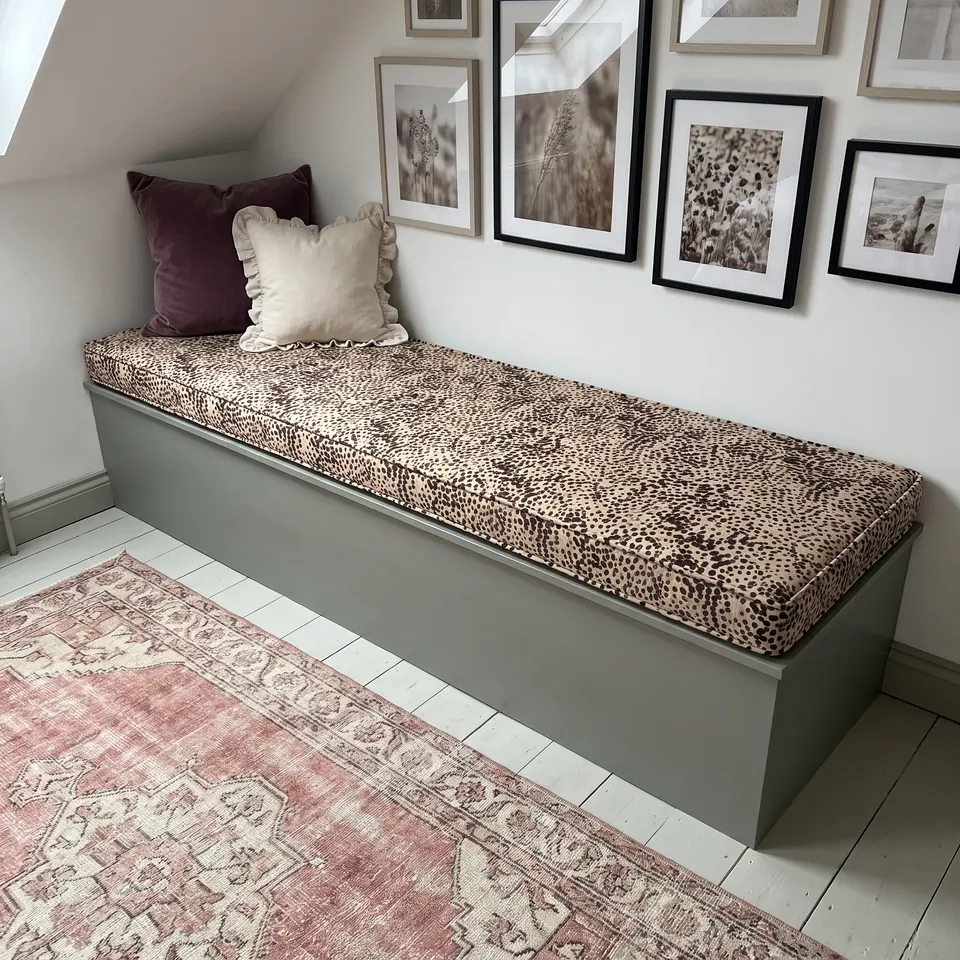
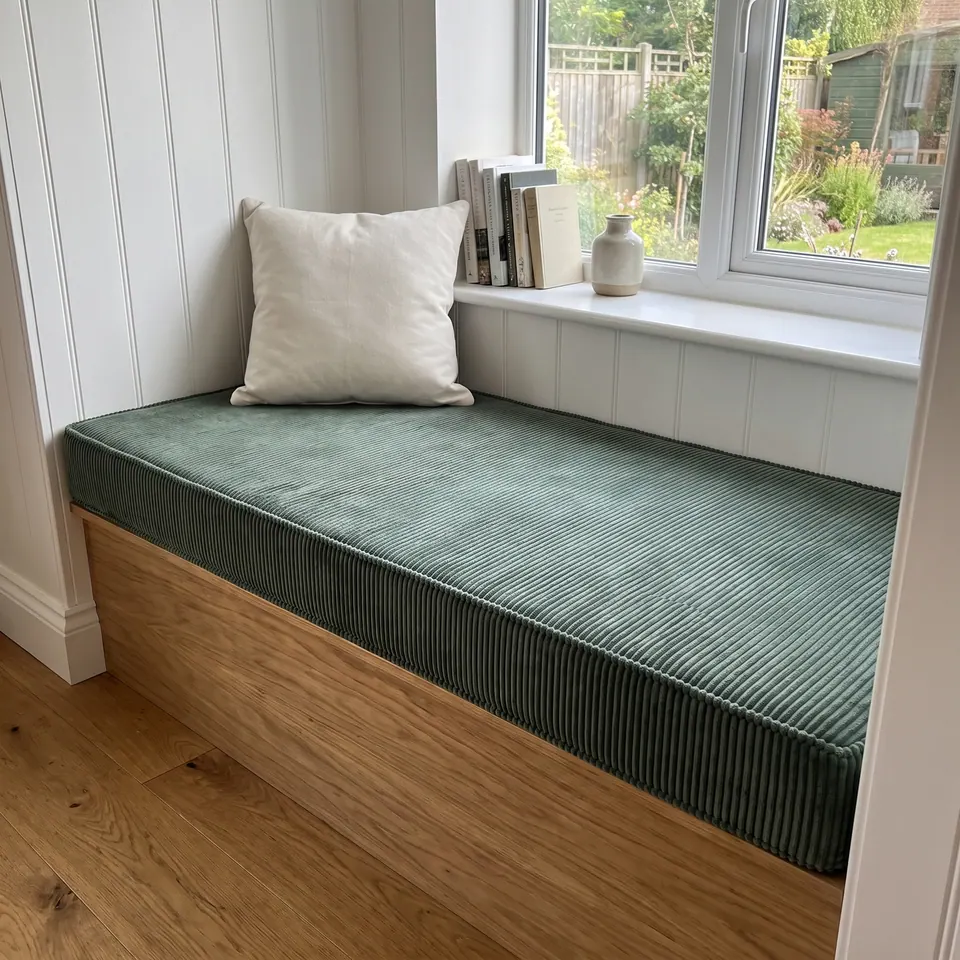
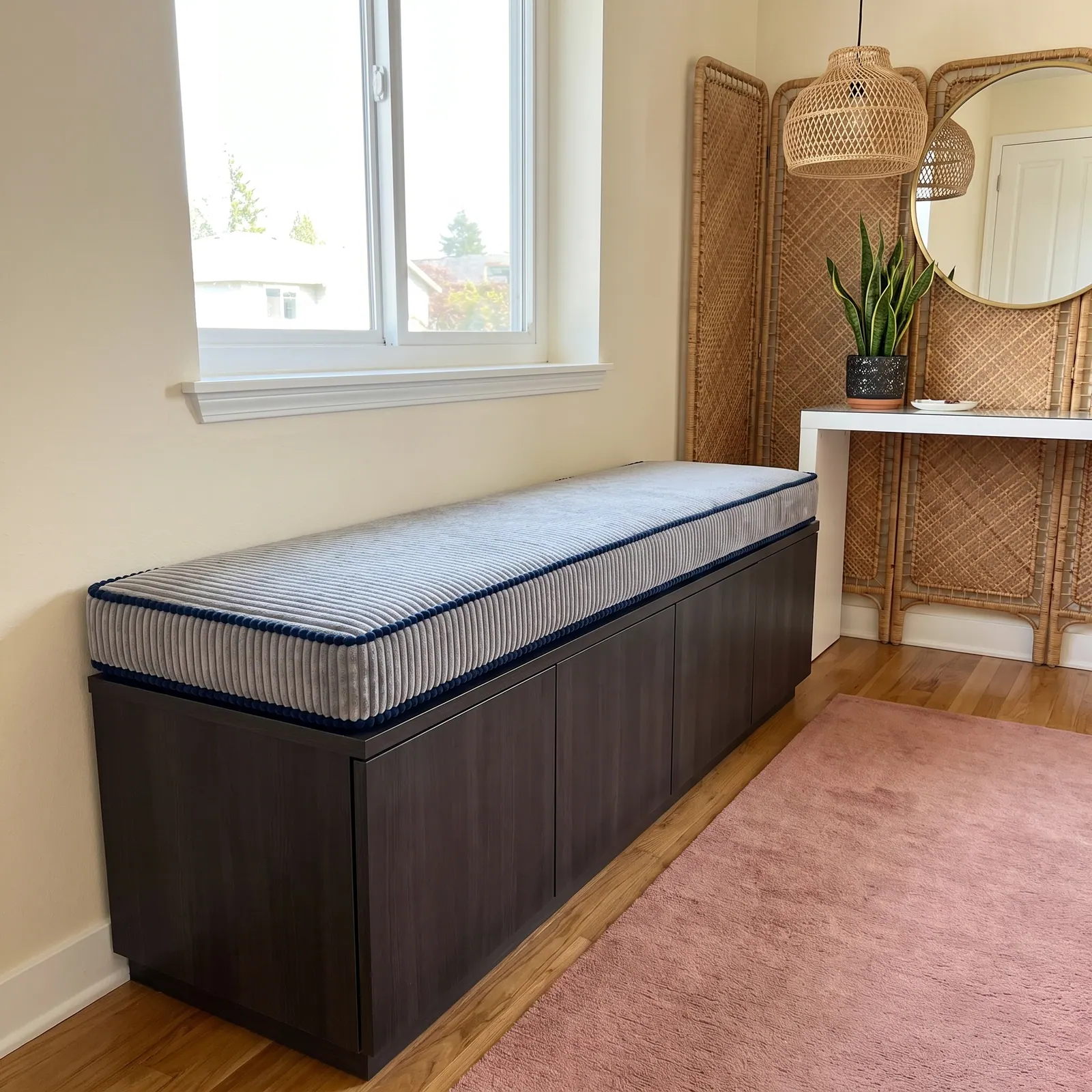
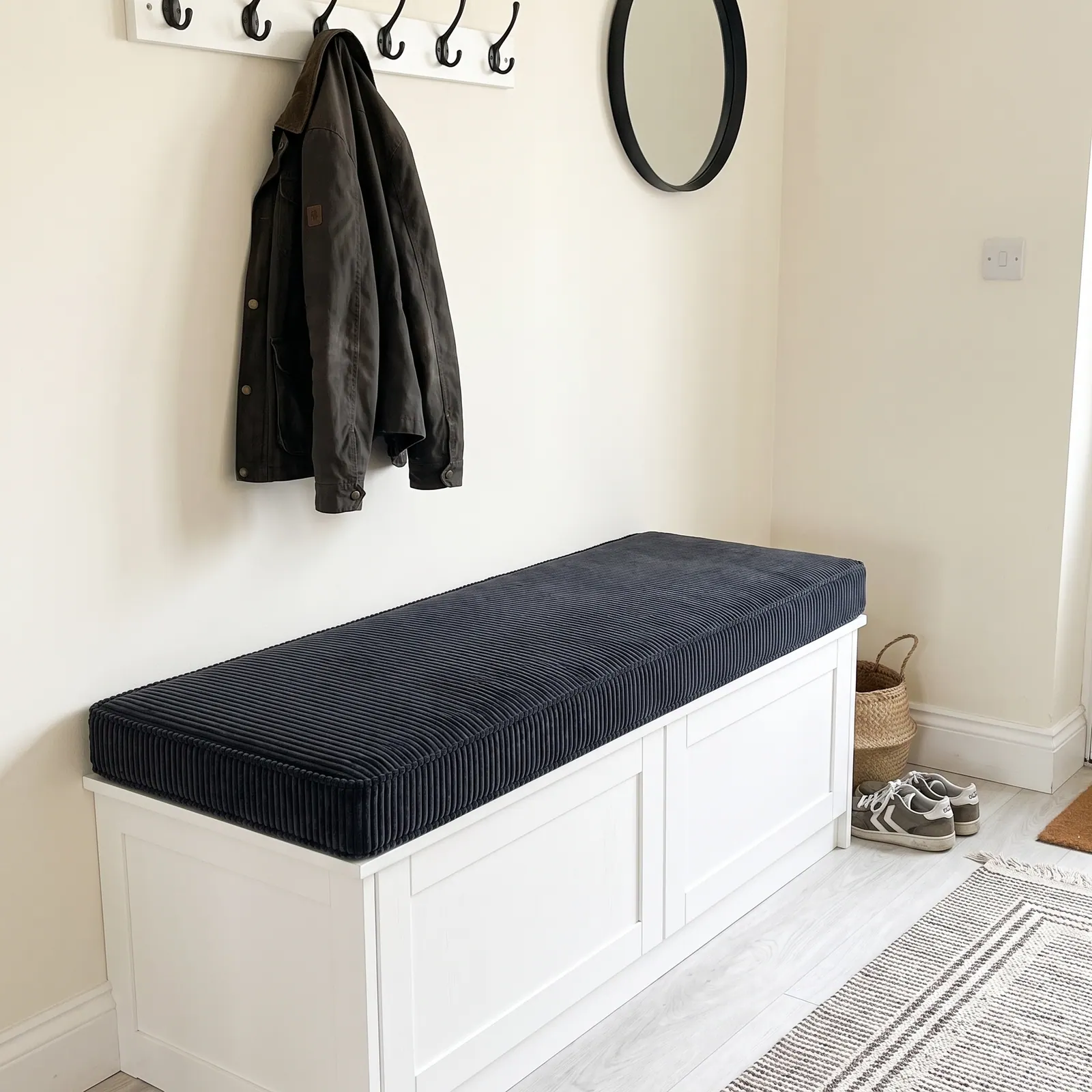
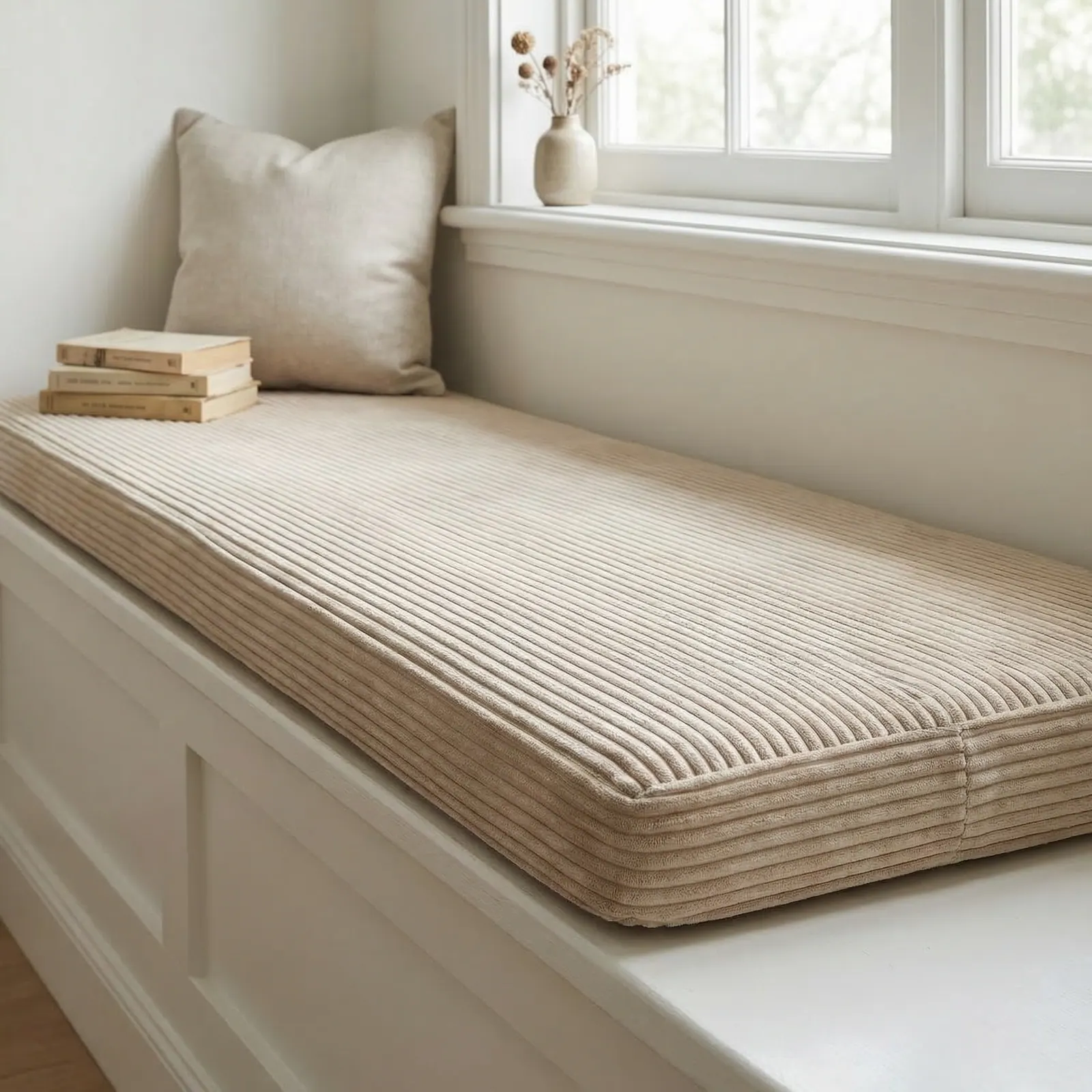
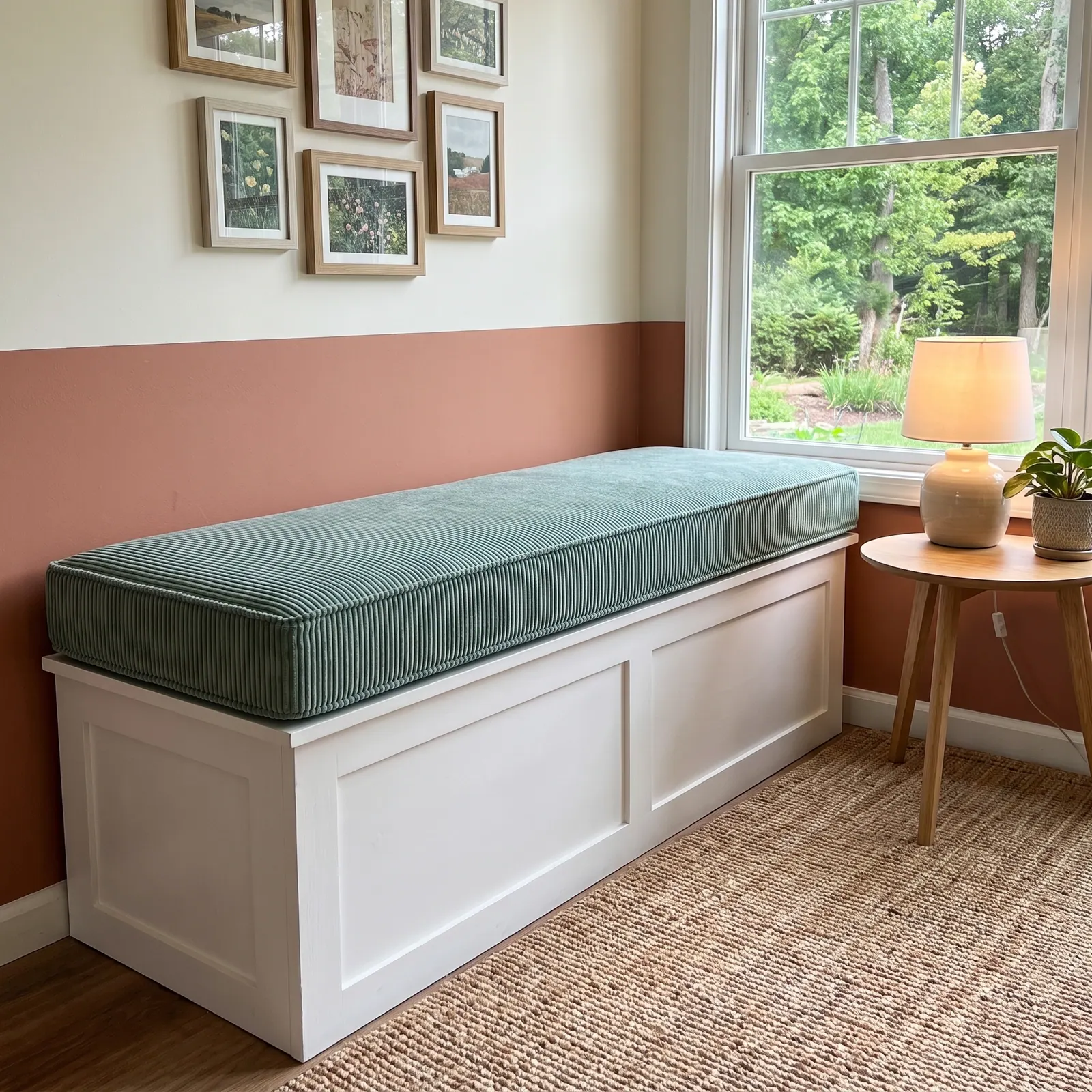
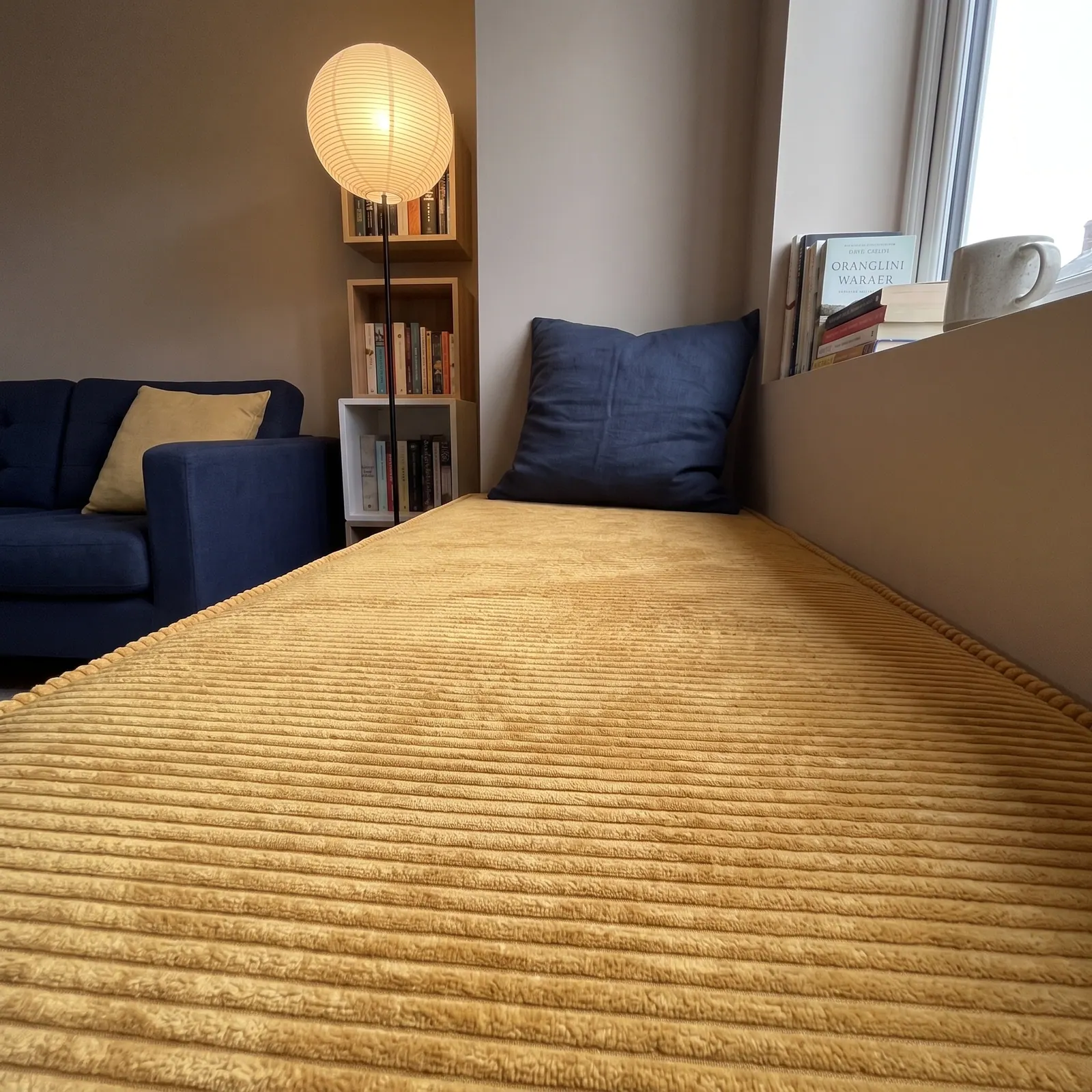
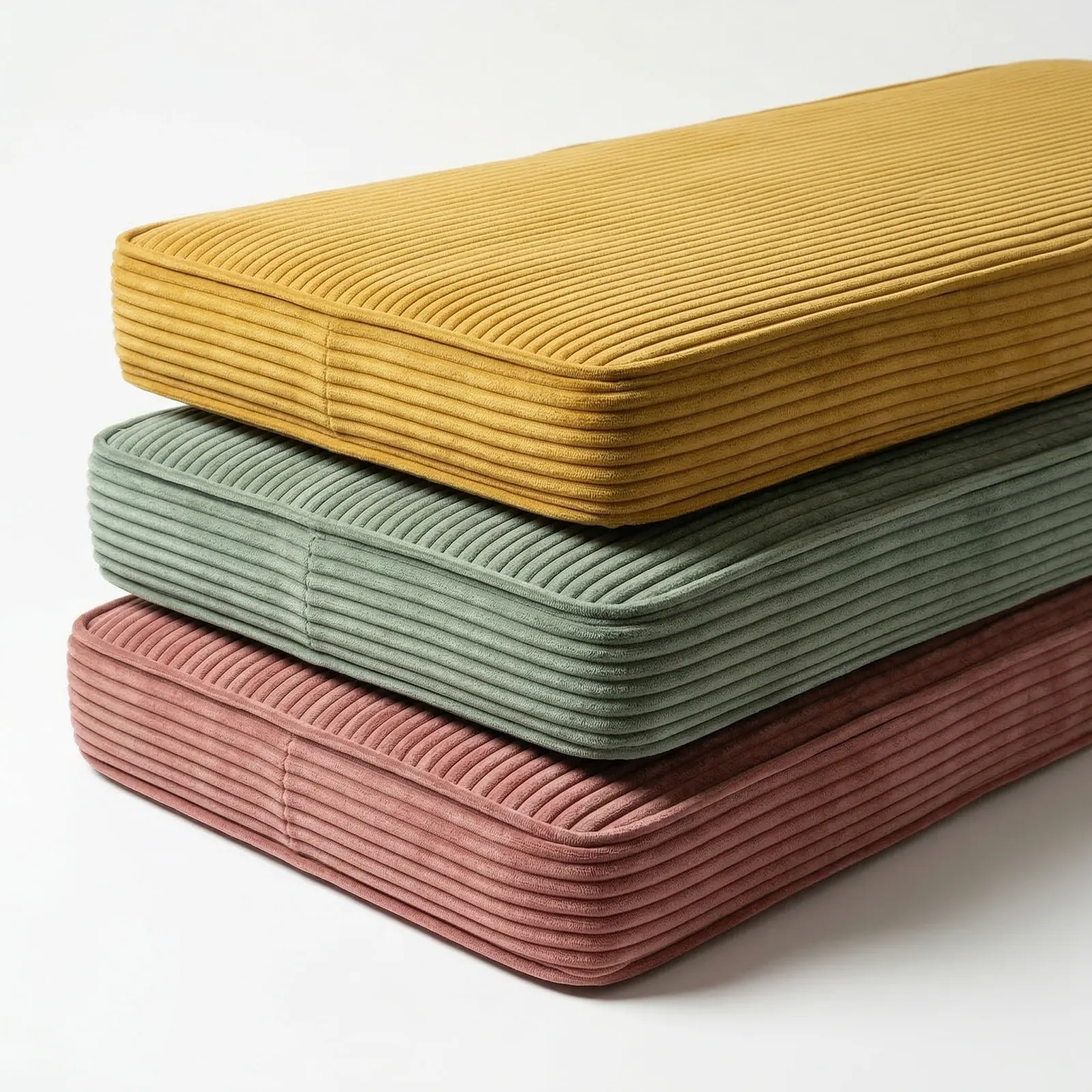
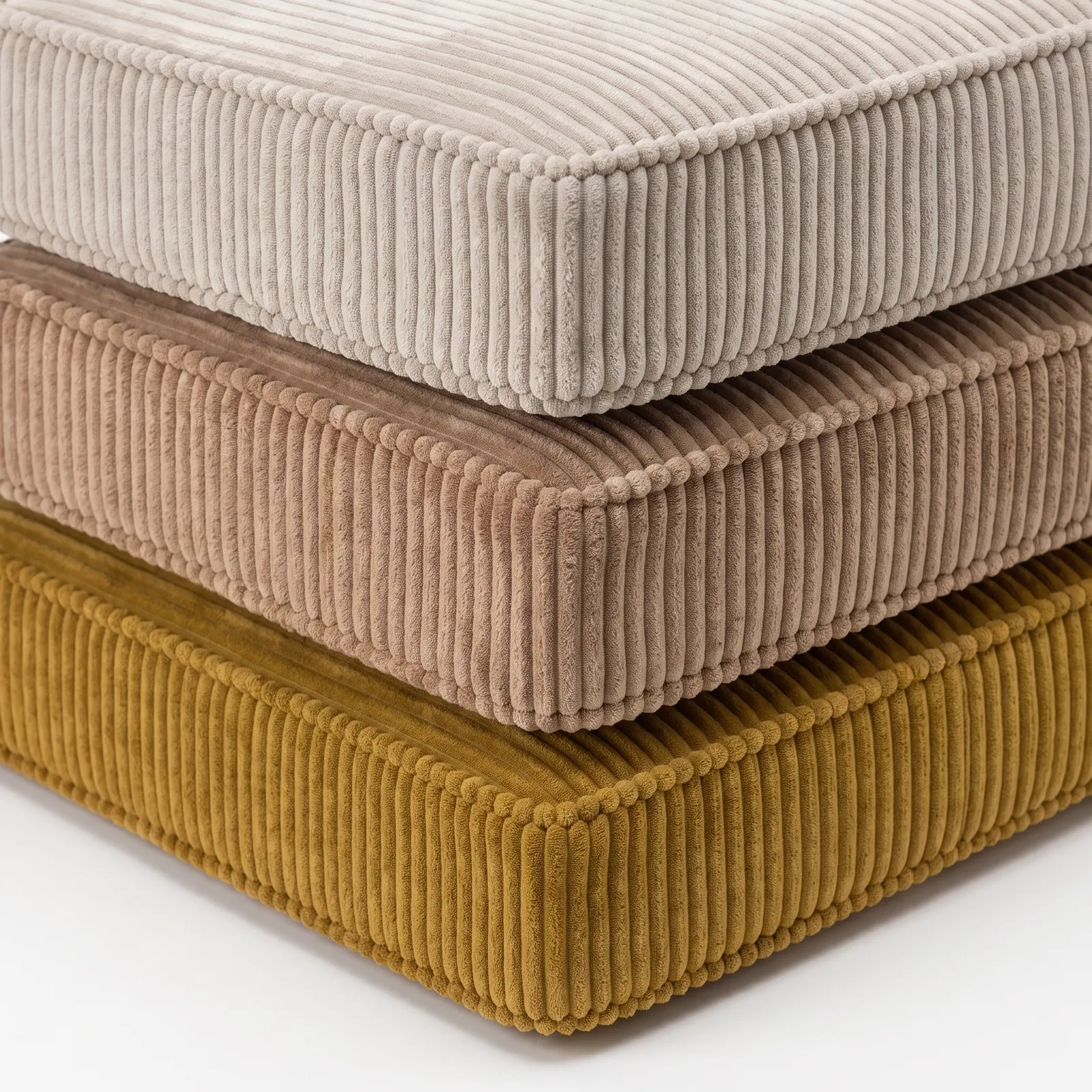
SaveNavy piping ties a light gray cushion to its dark wood base so the two don't look mismatched.SaveA near-black corduroy seat matched to black hooks and a black mirror frame makes for a crisp, graphic entrance.SaveOne pillow, one vase, one stack of books: a sand cord cushion given room to breathe.SaveGreen and clay pink are near-complements, so this teal cushion glows against the painted lower wall. Six small botanical frames carry the green up the wall.SaveA low shot down the length of the seat shows the plush mustard wales and the piping running unbroken along the edge. The lamp and navy sofa sit in soft focus beyond.SaveThree wide-wale colors stacked to show thickness, border seams and the self-piped edge that frames each cushion.SaveAn all-warm stack, from pale cream through camel to mustard, for rooms built on wood and linen tones.
Bring upstate porch cushions in before the first frost. The outdoor fabric sheds rain, but the foam is not quick-dry, and water that freezes in foam never really dries.
My quilt box has hinges along the back. How do I tell you where they are so the ties miss them?
The workshop's answer
Measure each hinge from one end and say which end. One buyer with a 77 in (196 cm) box gave 8 5/8, 29, 48 and 68 1/4 in. Add each hinge's width and a photo, and the ties go on the hinge side, in the gaps.
A common question
What is a non-slip base, exactly, and will it leave marks on old wood?
The workshop's answer
It is the cover's bottom panel sewn from grippy anti-skid fabric across the whole underside. It holds by friction, not glue, so it leaves no residue and doesn't show. It can go on corduroy, linen or a covers-only order.
A common question
I'd love a dark corduroy for a winter room. Is there black or maroon?
The workshop's answer
No. Corduroy comes in a short, fixed list with no black, maroon, fuchsia, lilac or lavender, and dyeing it isn't recommended. The deep shades, black and purples included, are in velvet and the soft fabric.
A common question
After a winter of wet boots, can the covers go in the washing machine?
The workshop's answer
Yes. Turn the cover inside out and wash at 86°F (30°C) at most on a gentle or delicate cycle, with mild detergent and no bleach. That 30 is Celsius. Air dry, and iron on low if needed.
Have it made
Have it made for your home — ask Harlan’s workshop
Fabric has a temper and foam has a memory. Better to settle both in a conversation than to guess at them alone. — Harlan
Leave your details and the workshop will call you to confirm measurements, fabric, foam and piping. No prices, dates or payment on this page: it is a request, not an order.
More about upstate houses and their cushions
Should camp and porch cushions stay out over an upstate winter?
No. The outdoor fabric is UV-resistant and water-repellent, but the foam is not a quick-dry foam and there is no mesh bottom. Bring them in before the first frost and store them dry, off the concrete.
What fabric suits a window seat against a cold farmhouse window?
Corduroy and velvet are the warm choices for the gray months, and both wash at 86°F (30°C) on a gentle cycle. If the pane sweats onto the cushion, dry the cover promptly; lingering damp invites mildew.
How thick should a cushion be on an antique bench or blanket chest?
The workshop's standard for bench and window-seat cushions is 4 in (10 cm), and most buyers keep it. A 3 in (7.5 cm) cushion gives a neater, lower line. On a chest, cut it to the inside of the lid bevel.
Will a modular floor sofa fit a 72 in wall in a small weekend apartment?
It can. For a 72 in (183 cm) wall, the workshop suggested one full 35.5 x 35.5 in (90 x 90 cm) ottoman beside a second cut to width, with a straight backrest instead of an L.
 Save
 Save
 Save
 Save
 Save
 Save
 Save
 Save