Across the Map · United States
Window seat cushions for New England's old houses and long winters
Old houses lie about their right angles, and winter glass sweats onto whatever sits below it. Here is how to fit a window seat, a dormer and an antique bench so the cushion still looks tailored in March.
- Sun & UVModerate
- HumidityModerate
- RainFrequent
- WinterLong winters

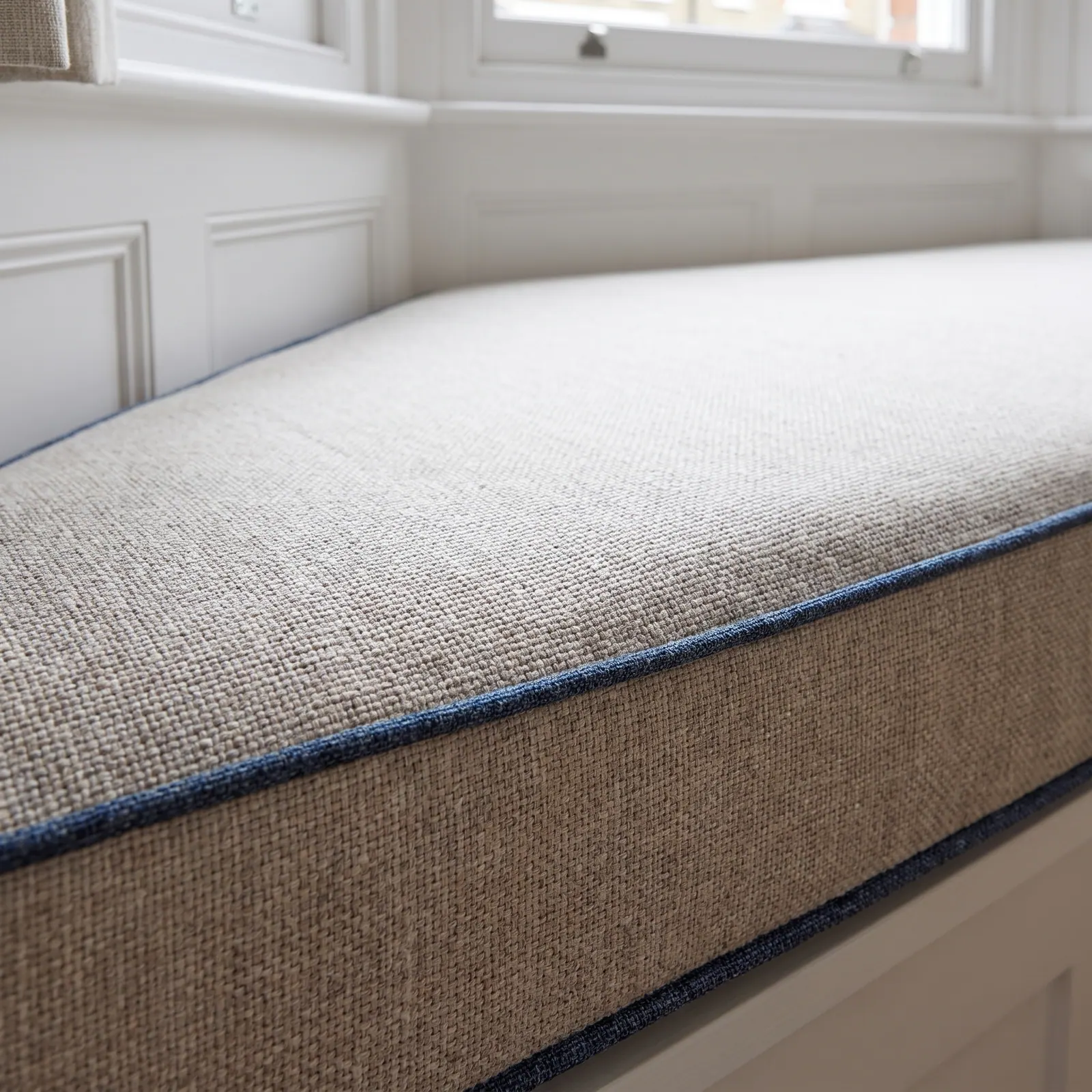 Save
The quick answer
New England window seat cushions work best when they are cut to the real, out-of-square walls, split over radiators, and covered in a fabric that wipes clean where winter glass sweats. Measure the front, the back, both depths and both diagonals. Choose ticking, stripes or linen for period rooms, velvet or corduroy for warmth, a slim 2 to 3 in profile under casements, and outdoor fabric on summer porches.
Field notes
Weather and light in New England
- Sun & UVModerate (level 2 of 4)Bright summers, short winter days
- HumidityModerate (level 2 of 4)Humid summers, dry heated winters
- Rain & stormsFrequent (level 3 of 4)Rain and coastal storms through the year
- Snow & freezeLong winters (level 4 of 4)Snowy winters, deeper inland and north
Watch for
- Salt air on the coast
- Drafty old windows
- Dry radiator heat
Plain-language levels from general climate patterns, not measurements. Your own porch, shade and window exposure matter more.
Radiator heat below, sweating glass beside
Four seasons, and each one has an opinion about your window seat. Winter is the hard one: dry radiator heat under the cushion, cold single-pane glass beside it. Warm room air meets that glass, turns to water and runs down onto the fabric.
A buyer messaged the workshop about exactly that: her old cushion had grown mildew from winter condensation. The workshop pointed her to velvet or, better, the soft performance fabric, because both wipe clean. Neither is waterproof. Wipe the sill, lift the cushion to air it, and get anything damp dry within a day or two.
Summer flips the problem. Coastal air turns humid and salty, and Boston's noon UV index averages about 8 in July against about 1 in December. A south-facing seat does its fading in summer, so plan for sun through glass then.
Saltboxes, Capes, triple-deckers and the seats inside them
Search maps put New England at the top for window seat and bench cushions, and the houses explain why. Colonial houses set deep seats into thick walls. Saltboxes and Cape Cods tuck them under dormers, where a casement swings in above your knees. Victorians have three-sided bays that wear ticking well. Boston built about 15,000 triple-deckers between 1880 and 1930, each floor with its own porch. Farmhouse and meeting-house benches never came in stock sizes either.
I once trusted a carpenter's square in an old parlor and got a wedge-shaped gap for my trouble. Old houses are rarely square, dear. Now every window seat gets both diagonals measured, and the cushion follows the edges that touch the walls. One buyer in a 120-year-old house went three rounds of re-measuring before the drawing closed; the inner corner wasn't 90 degrees. Final depths were 18.75 in and 19 in, and everything closed within 1/4 in.
What do your window seat's two diagonals measure? If they differ, measure it the old-house way and check a bay in the bay window calculator.
Fabric, thickness and build for each old-house seat
| Seat | Fabric | Build | Watch for |
|---|---|---|---|
| Window seat on single-pane glass | Velvet or soft performance fabric | 3 in (7.5 cm), zippered cover | Condensation; no indoor fabric is waterproof |
| Dormer seat under a casement | Linen or linen-look | 2 in (5 cm), a slim profile | Check the sash clears with the window open |
| Long ledge over a radiator | Any indoor fabric | Two equal cushions, not one | Heat needs a way out |
| Victorian three-sided bay | Ticking or stripe | Custom shape cut from your drawing | Stripes run front to back unless you ask otherwise |
| Farmhouse kitchen bench | Velvet or corduroy for winter warmth | 4 in (10 cm), the standard | Ties or a non-slip base on a narrow bench |
| Summer porch or deck | Outdoor fabric, UV-resistant and water-repellent | 3 to 4 in (7.5 to 10 cm) | Indoors from first frost to spring |
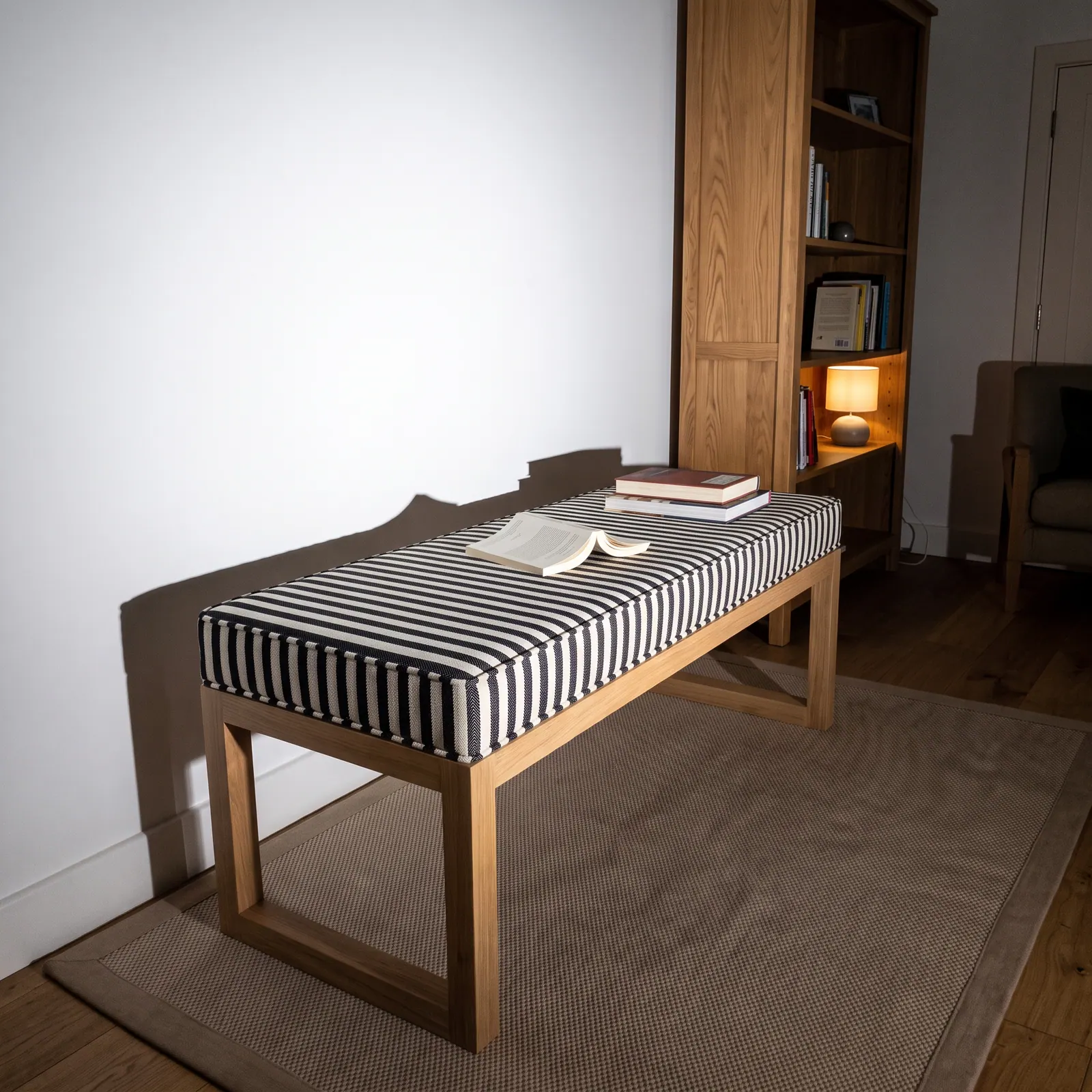
The stripes are 100% cotton: right for a period room, but they stain more easily and may not last as long as the performance fabrics.
Picked for New England
Seats to start from
Fabric families
Try it in the Studio
The meeting-house bench that matched no size
A buyer in the US had an antique bench 13 in deep and 66 in long. Nothing on the menu matched, which is normal: old benches were built for a room, not a catalog.
The workshop had her pick the nearest option, 13 x 61 in, and restate the true 66 in length in the order. Measure the bench, not the cushion you used to have. She chose an ice-blue soft fabric with tan linen piping; mixing fabric types is fine, and the linen welt made it look deliberate.
She also asked the courier to leave the parcel in a street-level garage, since the cottage sits below a long run of steps. Think about the stairs before the box arrives.
- Measured
- 13 x 66 in antique bench, ordered on the 13 x 61 in option with the true length noted
- What it taught
- Old benches rarely match stock sizes: order the nearest option and write the true length in the order.
A New England year for window seats and porch cushions
- October: porch and deck cushions come in before the first frost, fully dry.
- Winter mornings: wipe condensation off glass and sills; lift window seat cushions often to air.
- All winter: leave the radiator a gap between split cushions.
- April: wash indoor covers at 86°F (30°C) or lower and dry them fully before zipping.
- May: check porch cushions for mildew spots before the first warm weekend.
- July: turn south-facing window seat cushions so one end doesn't fade first.
Photographs for homes like these
Open any photograph large; each one has its own link and a Save button.
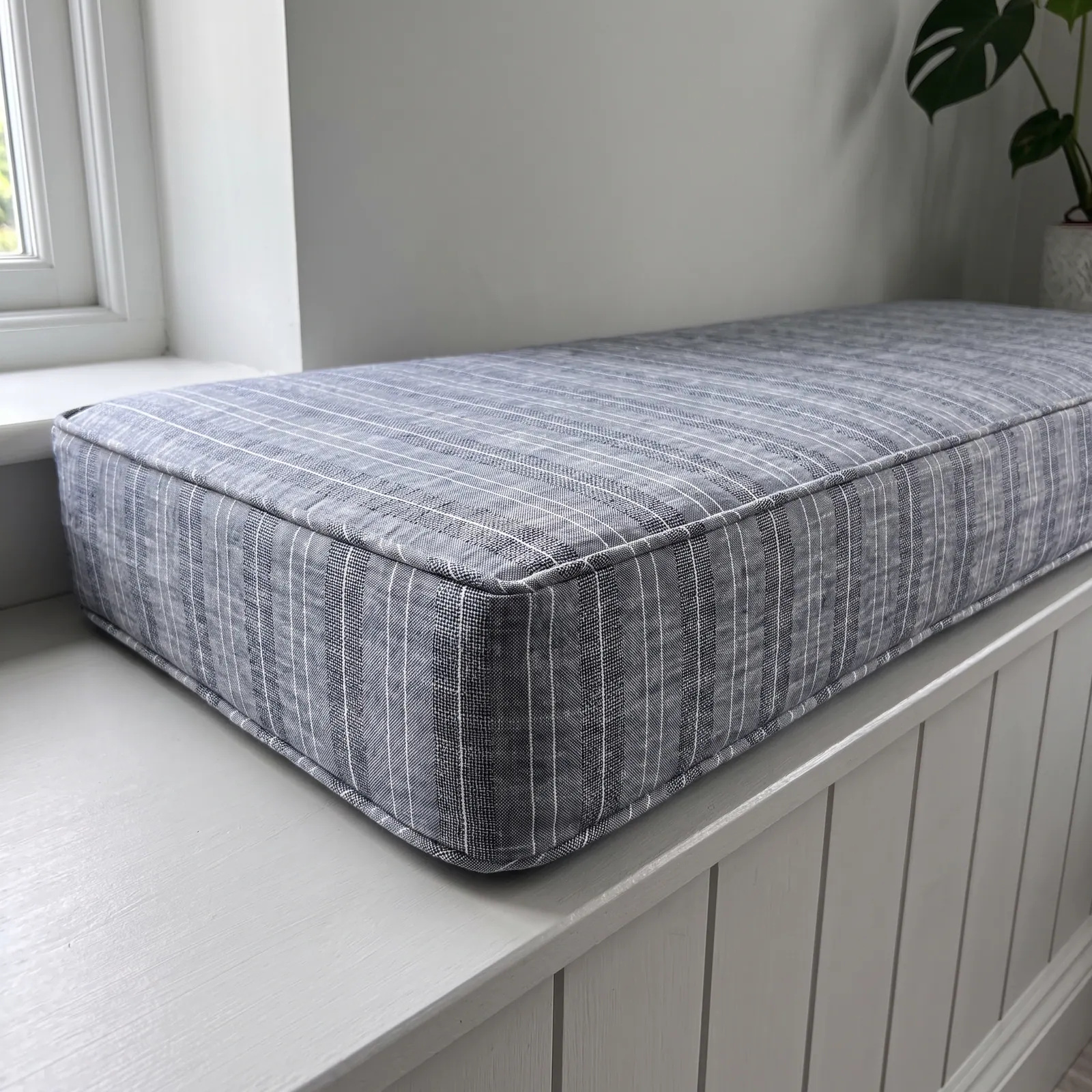 Save
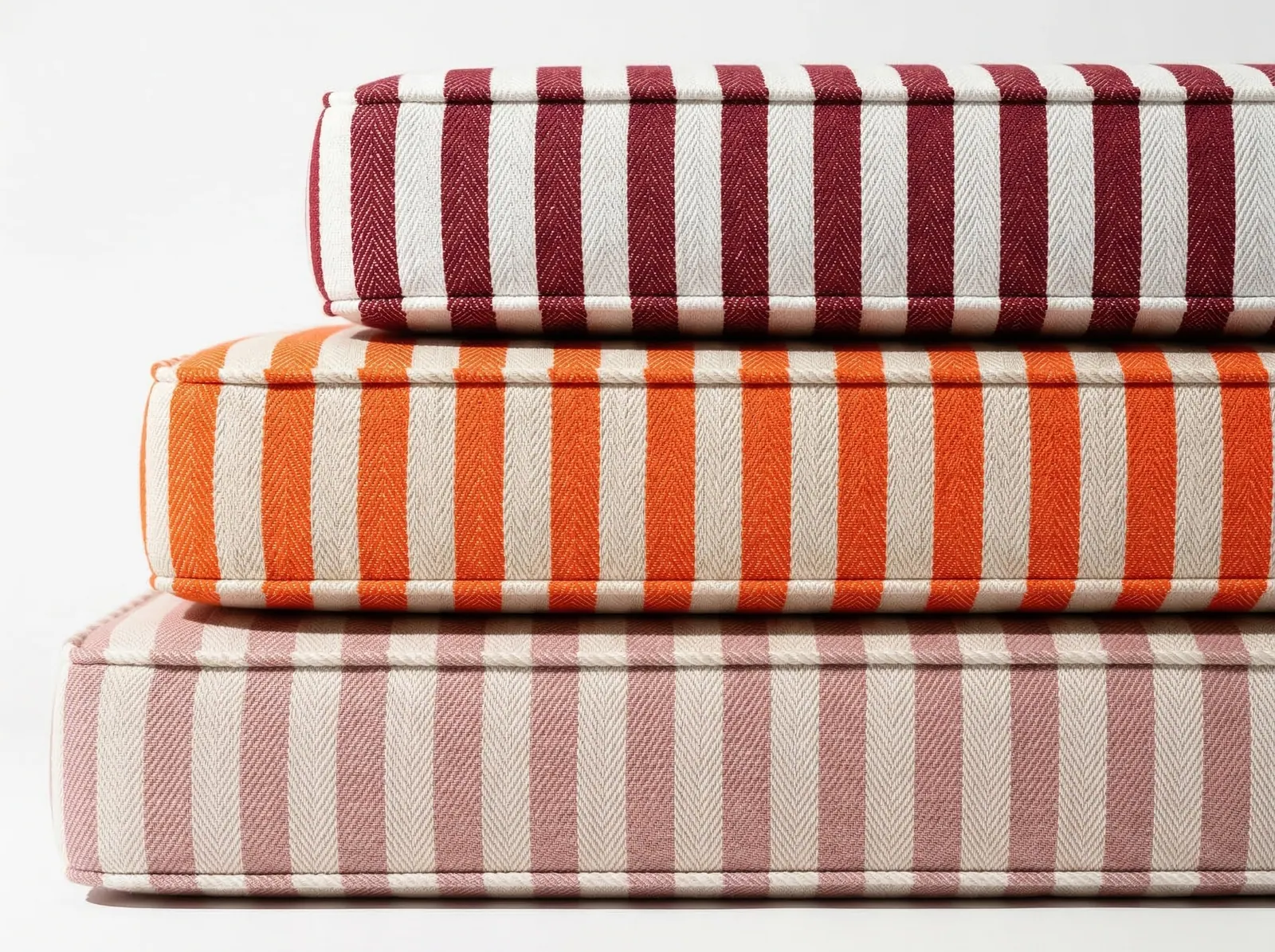 Save
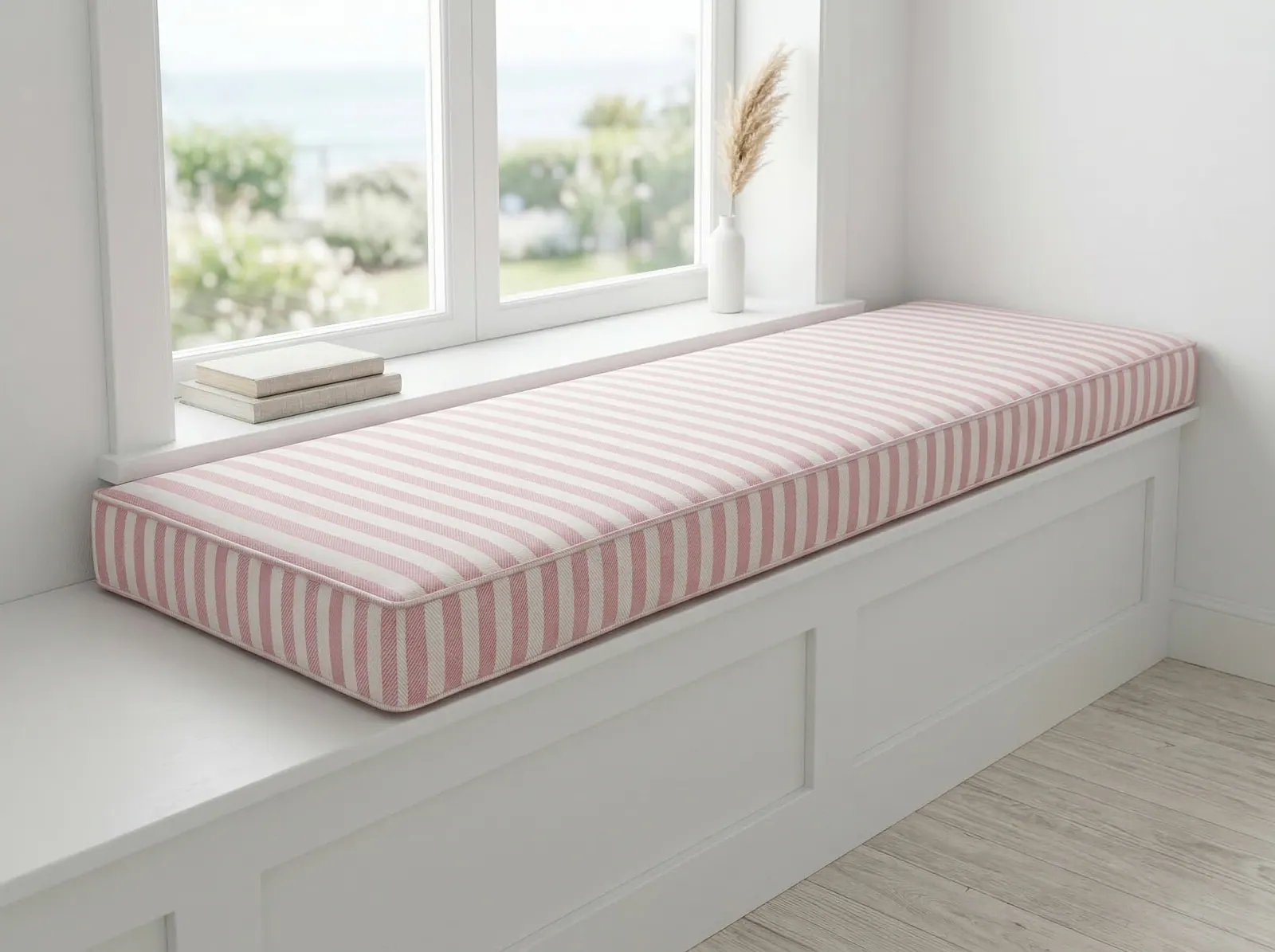 Save
 Save
 Save
 Save
 Save
In an old house, measure both diagonals of the window seat. If the two numbers differ, the walls aren't square, and the cushion should follow the walls.
Maggie
Old-house questions
- A common question
Which fabric wipes cleanest on a window seat against single-pane glass that fogs all winter?
The workshop's answerVelvet or the soft performance fabric, and soft fabric is the most practical. Neither is waterproof, so wipe moisture away regularly and don't leave the cushion against a wet surface; constant damp can cause mildew on any fabric.
- A common question
How do I measure a built-in window seat for a custom cushion?
The workshop's answerMeasure the seat top with a rigid tape, not the floor: the front edge wall to wall, the back edge along the window, the depth at left and right, and each angled side on its own. Inside a frame, measure wood to wood.
- A common question
How do I order a cushion for an angled, three-sided bay?
The workshop's answerAs a custom shape, not a rectangle. Choose the size by depth and overall length, then upload a sketch with every edge, any cut-ins and the depth, plus a photo of the seat. An asymmetric bay can be traced onto a paper template instead.
- A common question
Our farmhouse bench has one rounded end. Can you follow the curve?
The workshop's answerYes, but the curve has to be drawn, not described. Mark where it starts, where it ends and how deep it runs, or trace the seat onto paper and photograph the cut-out flat beside a tape measure. The shape is confirmed before production.

Have it made
Have it made for your home — ask Maggie’s workshop
Have the tape measure handy when they call. Old cushions shrink and sag; the seat underneath does not. — Maggie
Leave your details and the workshop will call you to confirm measurements, fabric, foam and piping. No prices, dates or payment on this page: it is a request, not an order.
Asked about New England seats
Can a window seat cushion sit on a ledge over a radiator?
Yes, if it is split. A 106 in ledge over a radiator was made as two 53 x 15 in cushions, so heat escapes between them and each piece lifts out on its own to dry.
What thickness suits a dormer seat under a casement window?
Go slim. A 2 to 3 in (5 to 7.5 cm) cushion keeps a neat, low profile and leaves room for a sash that swings in over the seat. The standard 4 in (10 cm) suits benches used every day.
Should a very long built-in window seat get one cushion or two?
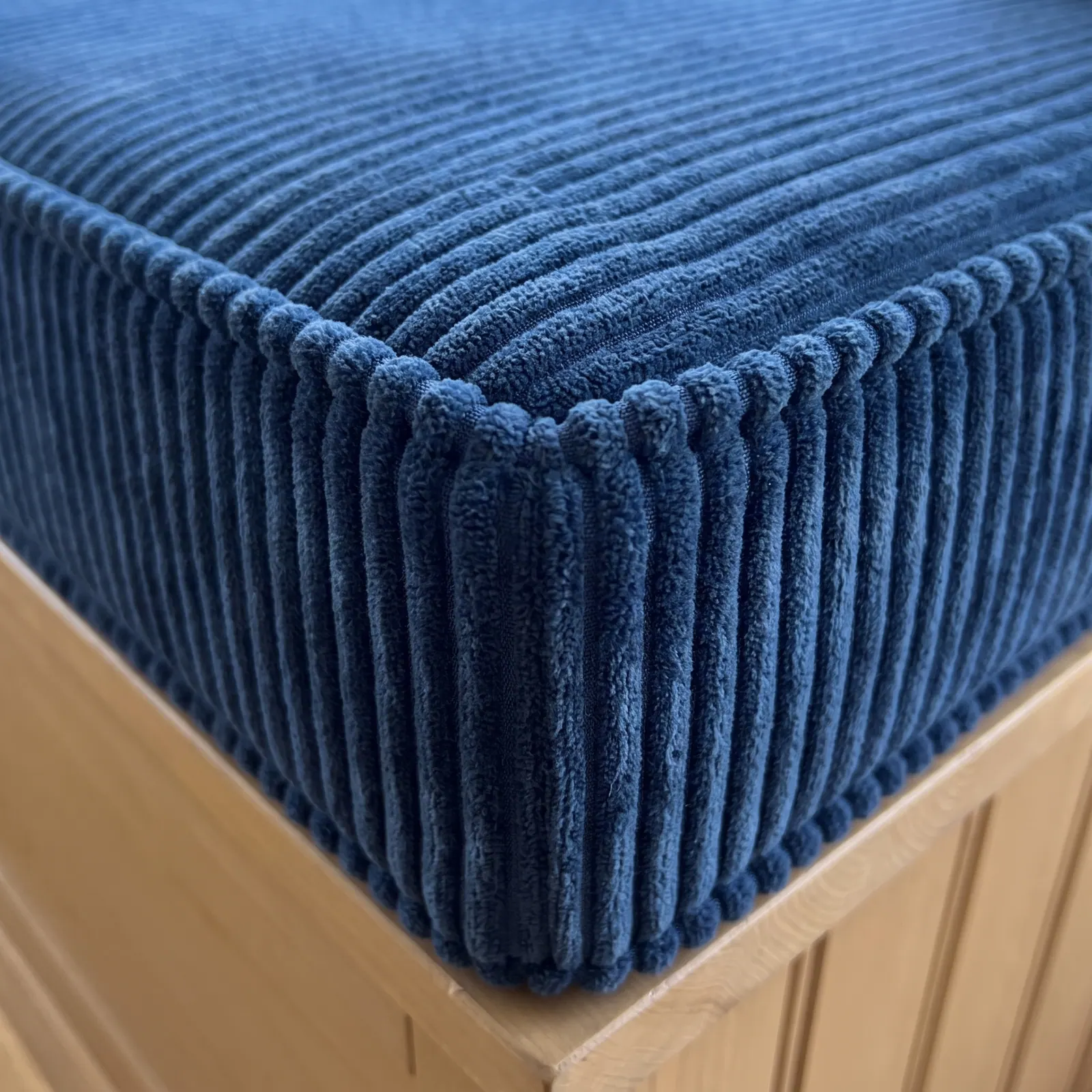
Usually two equal pieces. A 154.5 in built-in seat, 22 in deep, became two identical 77.25 x 22 in corduroy cushions. Open the vacuum pack by cutting only the outer plastic.
Will ticking look the same in my house as on the color chart?
Not always. One buyer found her ticking-stripe cushion warmer and more tan than the chart photo. Order physical samples, label them carefully, and judge them in daylight beside your trim and floorboards.
Stitch straight — Maggie
Concept Sketches
Sketches for homes like these
Real projects, drawn up as ideas you can borrow.
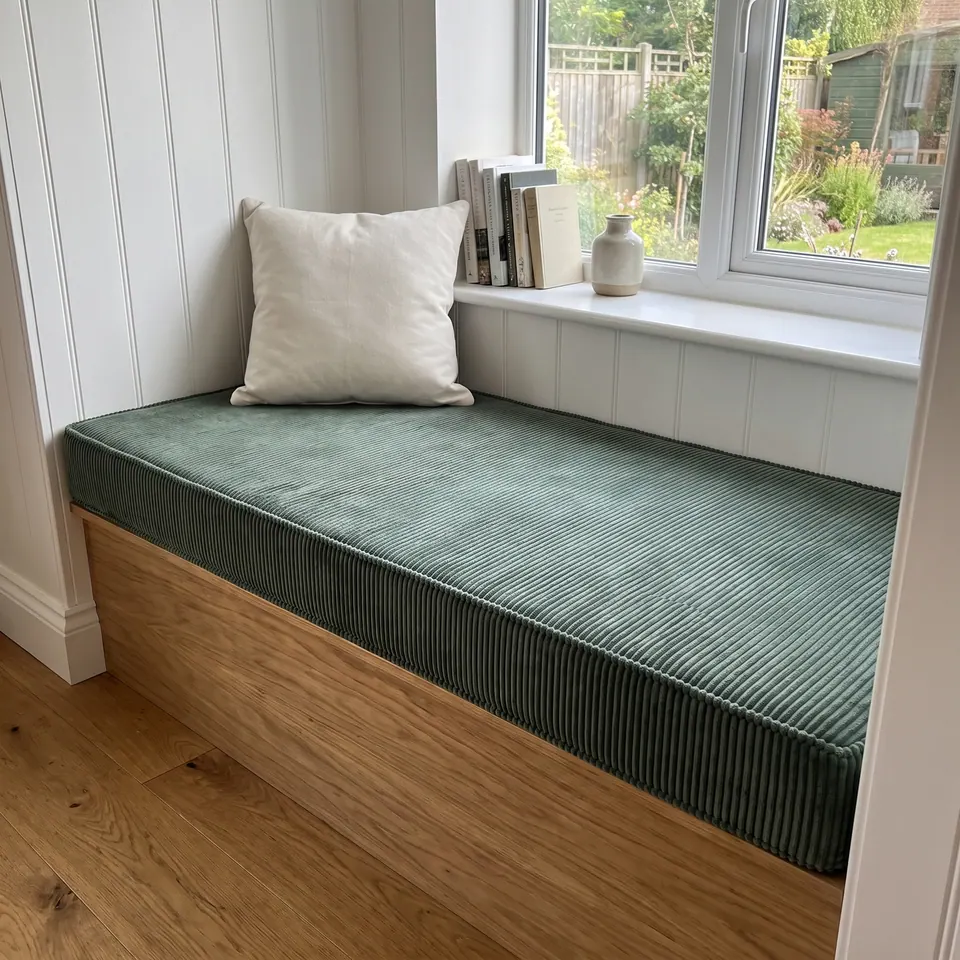
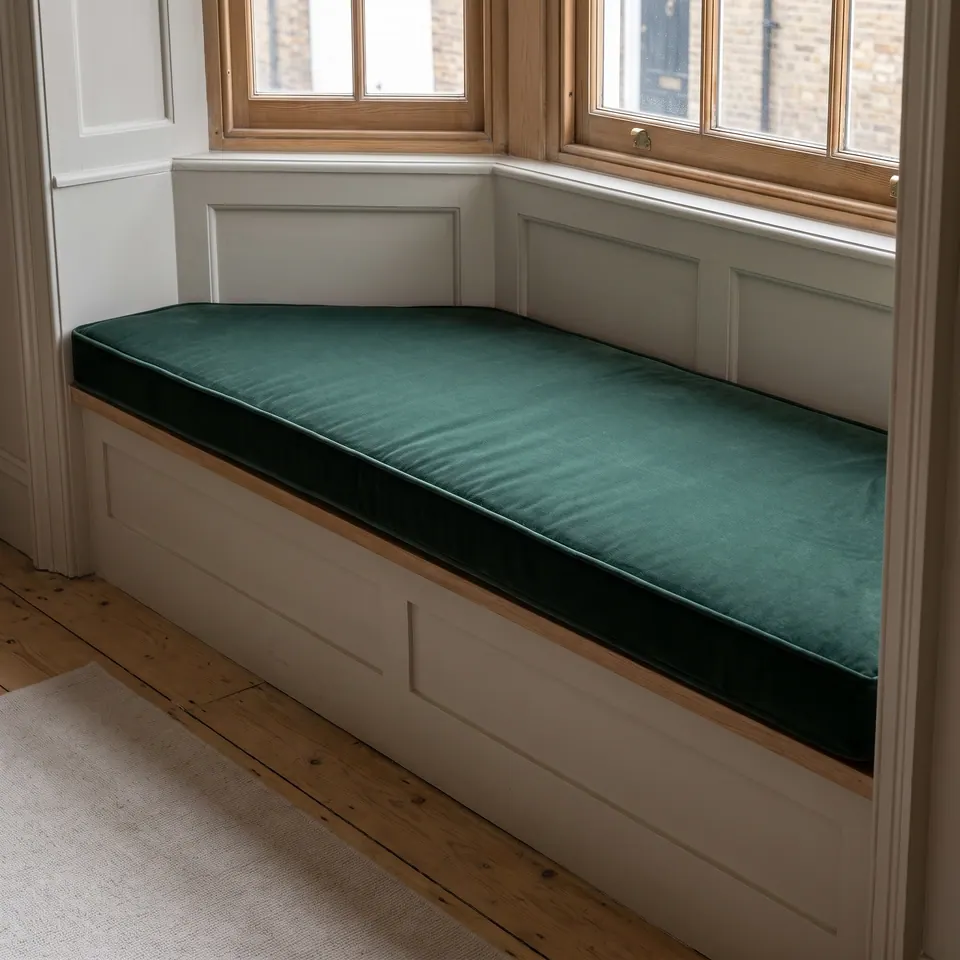
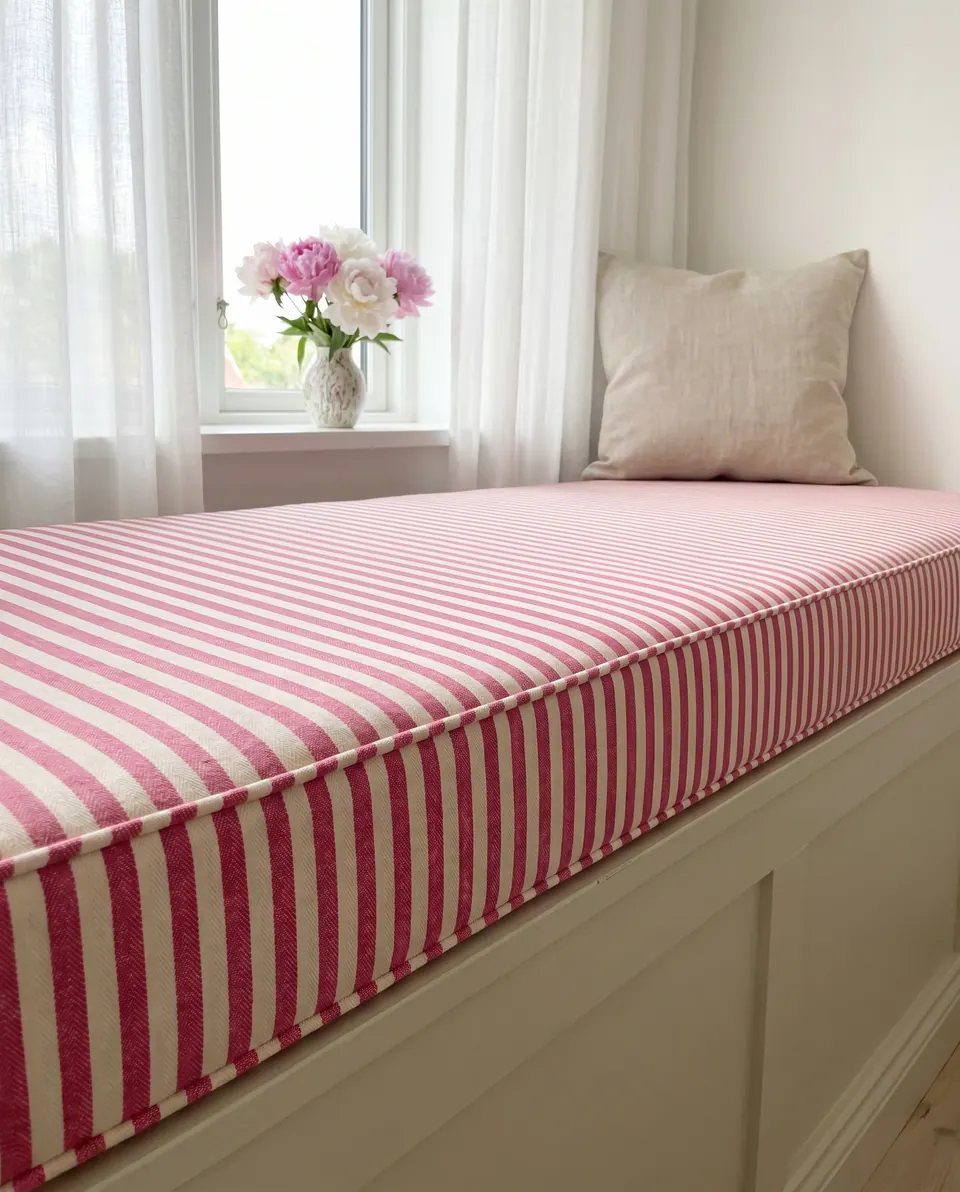
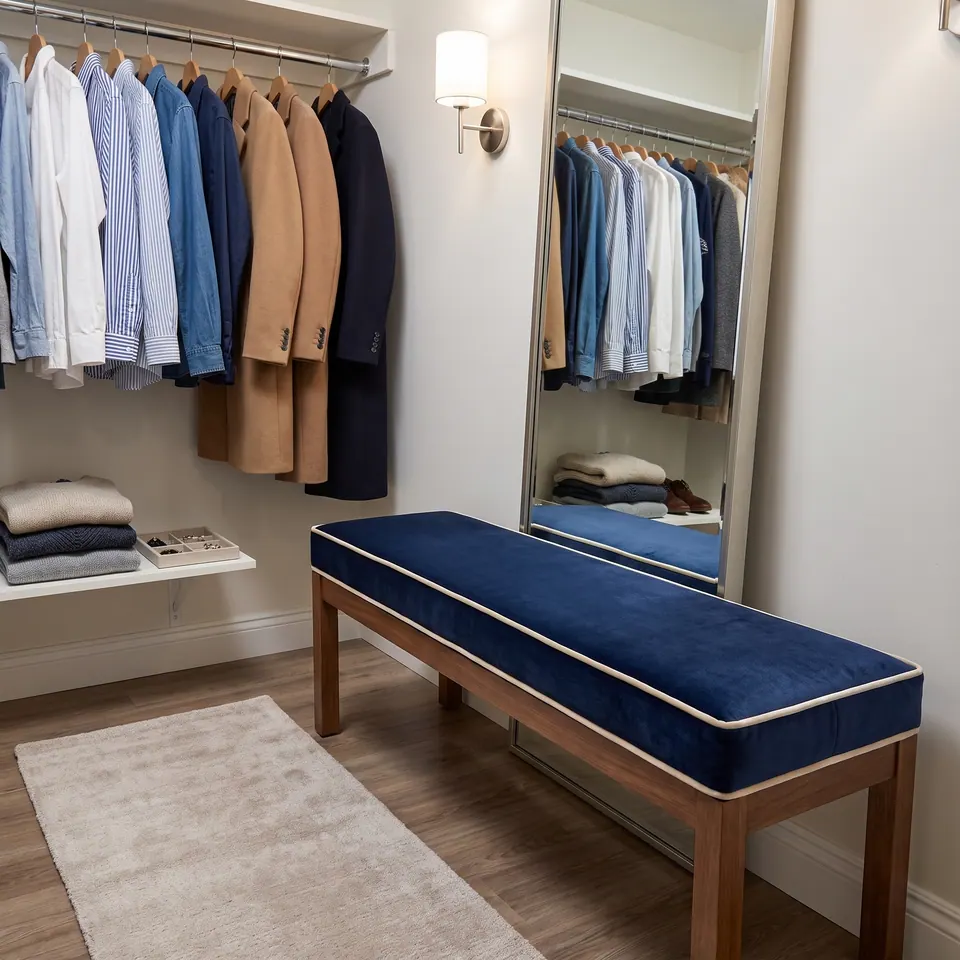
The atelier
Keep going
- A Reading by RosaWindow Seat Cushion in Green Ticking Stripe: How Thick to Go
- A Reading by RosaStriped Window Seat Cushion: Ordering It Right the First Time
- A Reading by RosaWindow Seat Cushion in Blush Stripe for a Small Bedroom Nook
- The Pattern RoomHow to dimension a notch so a cushion fits around posts and casings
Across the Map
Nearby places
In New England
Nearby