Concept Sketches · 9 scenes
Bay window seats in Victorian houses, one cushion at a time
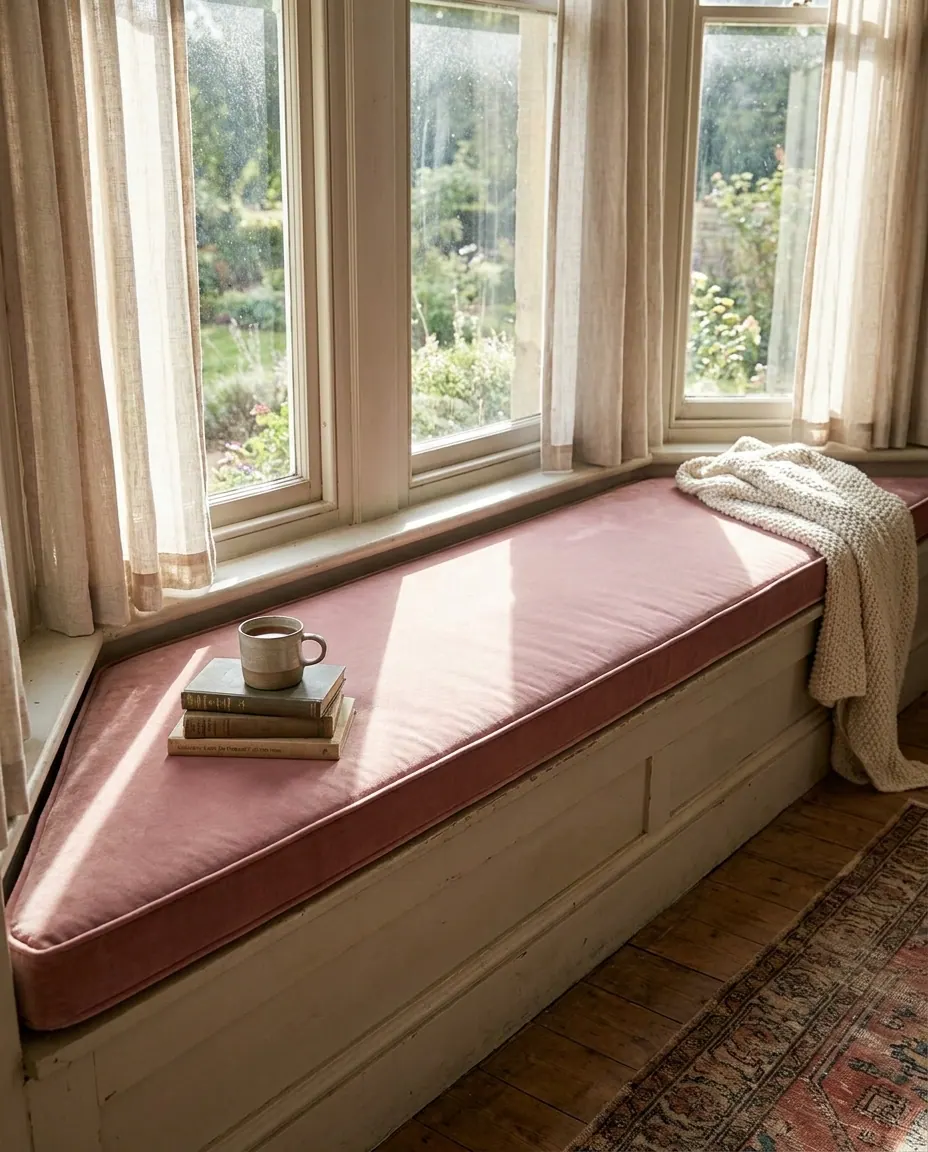
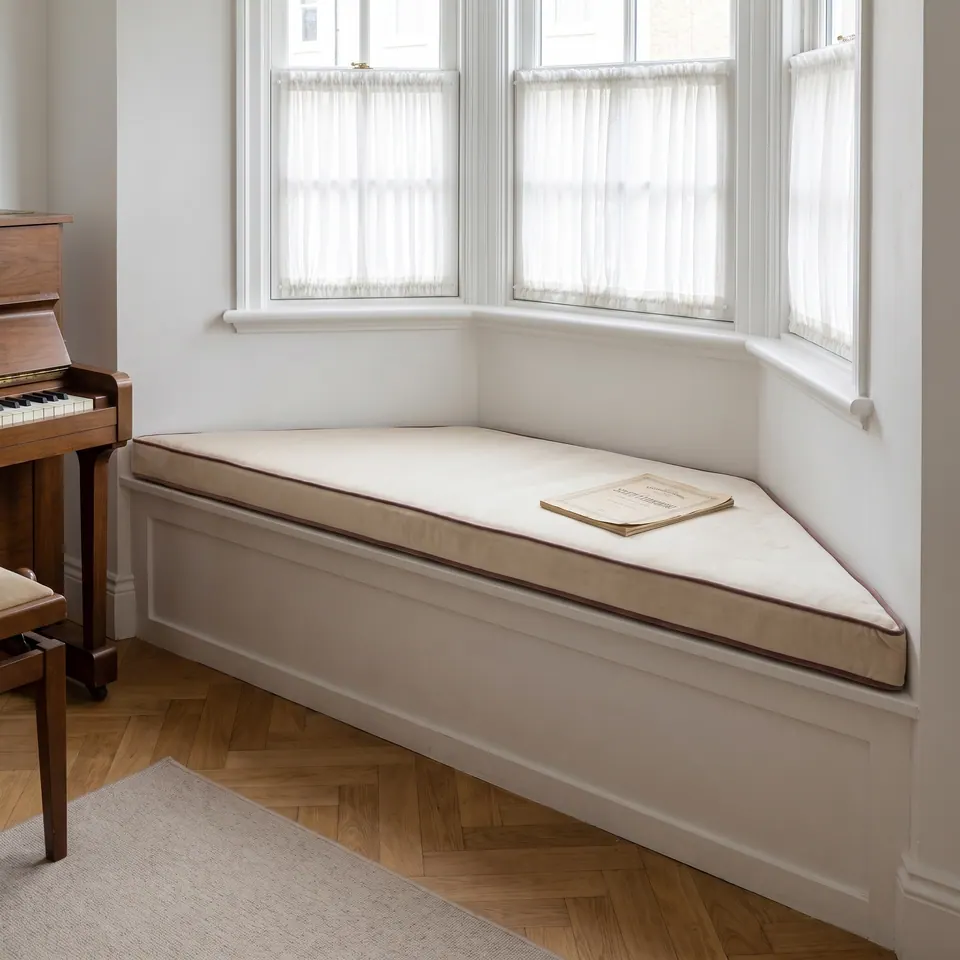
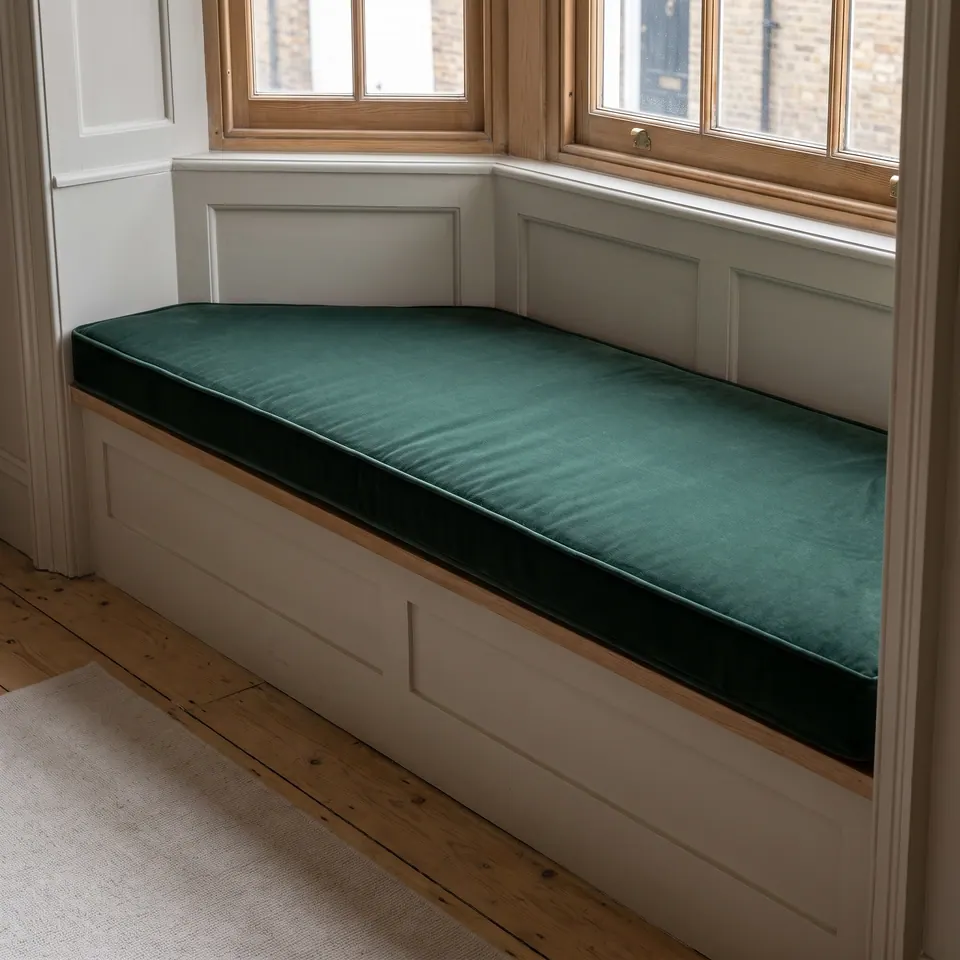
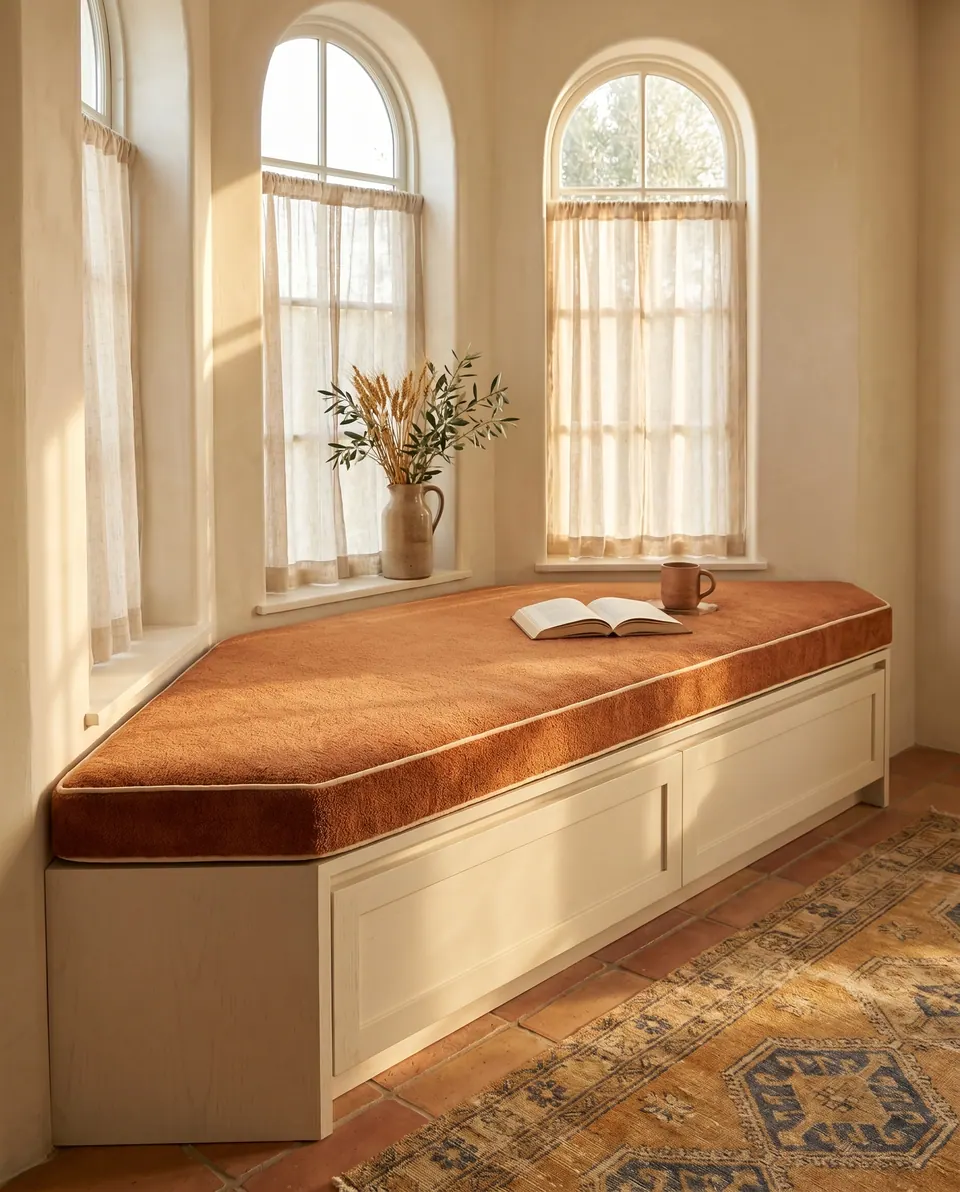
Victorian builders loved a three-sided bay and rarely troubled with a true square. Nine bays reached the workshop's cutting table with posts, overhanging trim, mismatched cheeks and one secret hexagon, and each was saved by a single number.

 Save
The quick answer
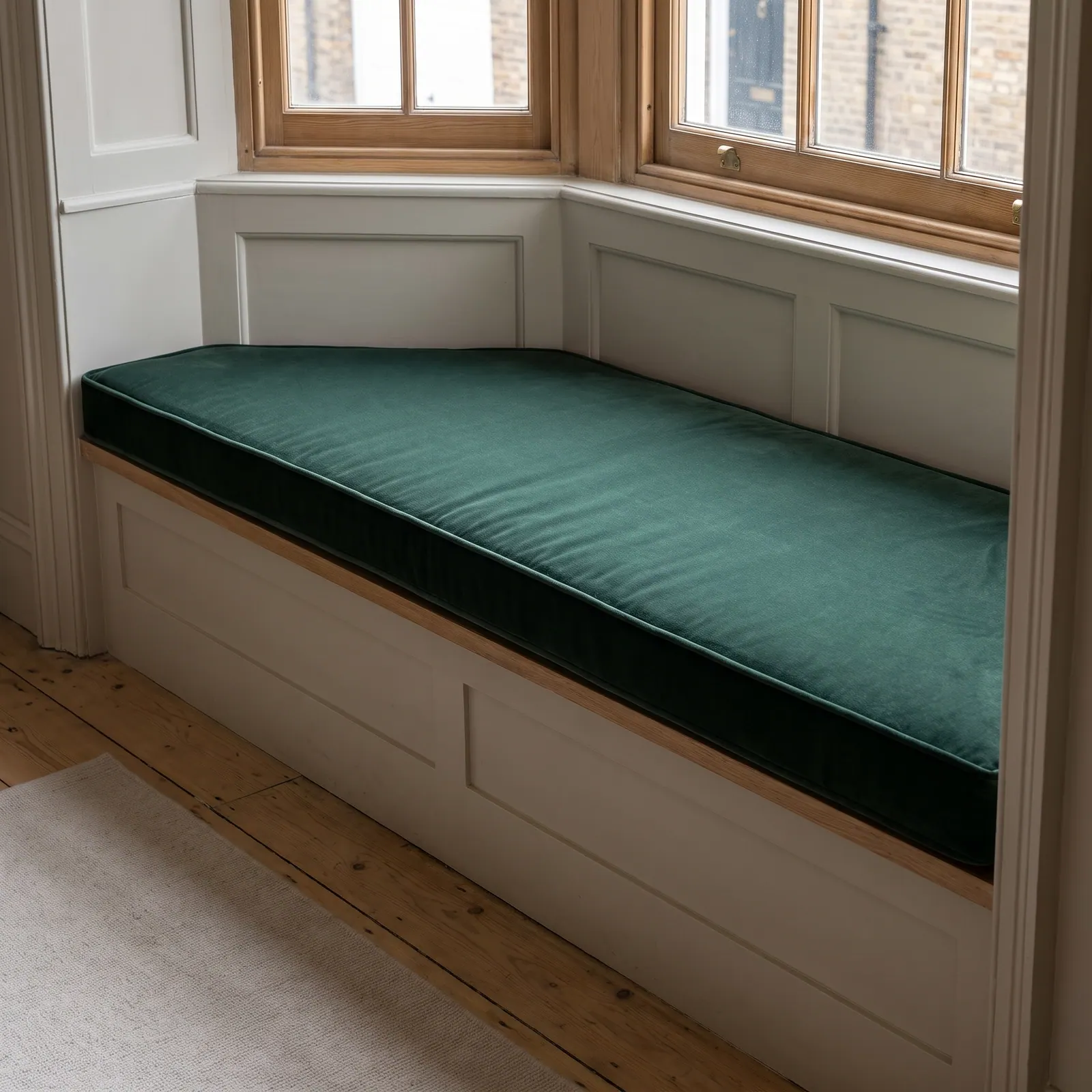
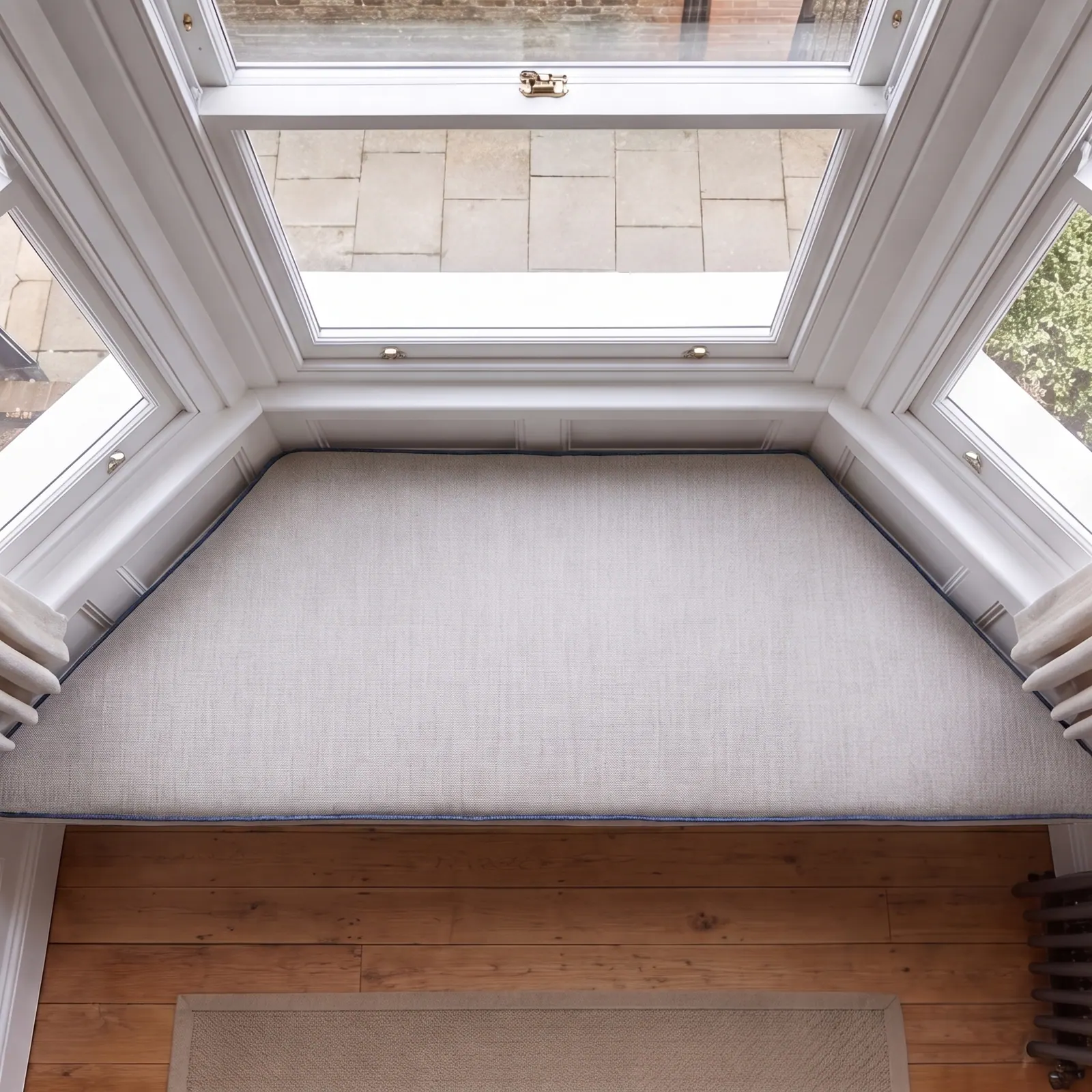
A Victorian bay window seat cushion is a custom trapezoid, cut from a drawing that shows every edge, the straight depth and, in an old house, both diagonals. Measure each angled side separately, because the two are rarely equal. Mark posts, notches and short straight returns. If a measured slant differs from the calculated one by more than about 1 in (2.5 cm), re-measure before cutting.
The slant that said 31 and meant 32.5
A buyer in the US drew a bay seat with 31 in (79 cm) slants. The arithmetic said 32.5 in (83 cm). They re-measured, and the arithmetic won.
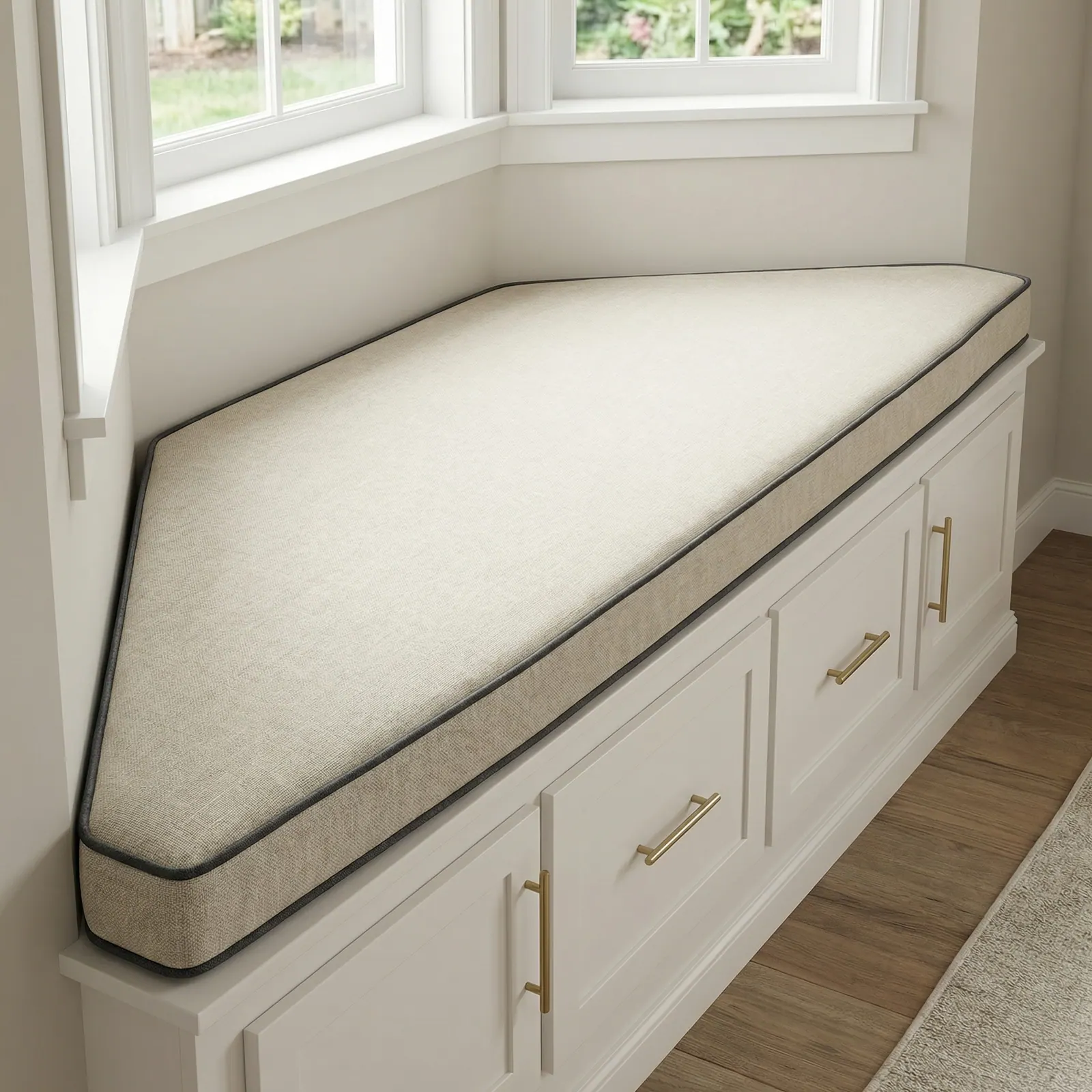
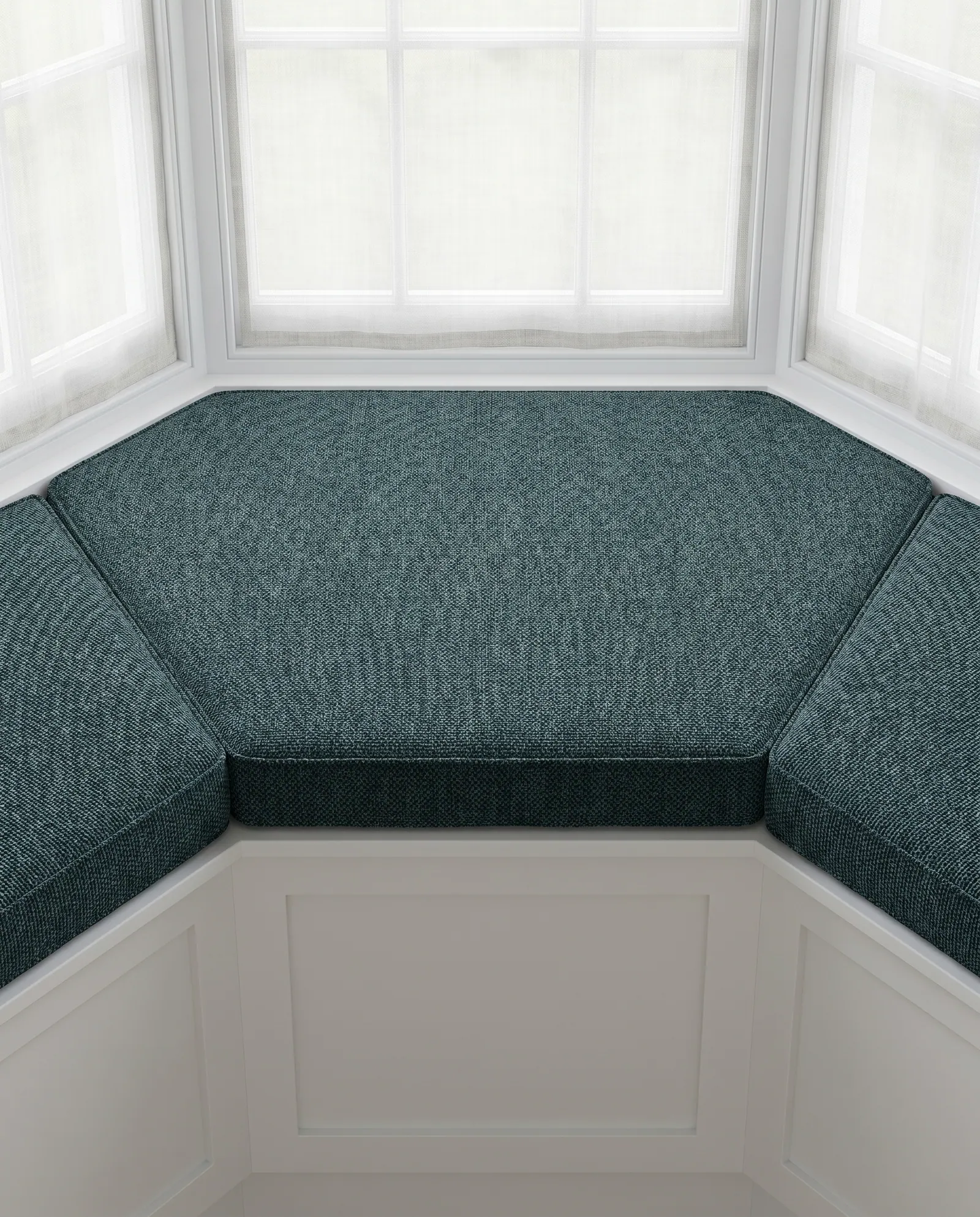
That is most of what a victorian bay window seat cushion asks of you. Victorian and Queen Anne houses gave America the three-sided bay: a long front edge, a shorter back along the glass, two angled cheeks and a depth that has had a century to settle. Plaster moves, trim overhangs, and corners were squared by eye.
My rule for old houses is dull and it works: measure every edge, both diagonals and the depth straight out from the back wall, then let the geometry check you. I learned the part about diagonals the hard way, and I'll leave it there. The bay window cushions hub has the shapes, the three-sided bay Pattern has the tape work, and the bay window calculator will tell you whether your numbers close.
Right, then. Nine bays follow, each with the one number that saved the job. What does yours measure, dear, and which edge is the long one?
Nine bays and the number that saved each one
01A past project
Two cheeks, two numbers: 21.25 in and 20.75 in
A buyer in the US chose a tufted velvet for a trapezoid bay and wrote both angled sides as 43.25 in (110 cm), the same as the front edge. That cannot be right for the shape, so the workshop asked for each side on its own. Re-measured, the right cheek was 21.25 in (54 cm) and the left 20.75 in (53 cm).
The takeaway: Measure each angled side separately and write both down, even when you expect twins.
02A past project
Posts in the corners, and a 39 in slant that could not be
A buyer in the US sent a photo of an angled seat with posts in its corners: 115.5 in (293 cm) front, 54.5 in (138 cm) back, 30.5 in (77.5 cm) deep, 8.5 in (21.5 cm) straight ends. The slants were written as 39 in (99 cm), but the geometry allowed about 37.5 in (95 cm). The tape had wrapped around the posts, and 4 in (10 cm) had already come off the true 58.5 in back for clearance. The final template went ahead at 3 in (7.5 cm) thick, with anti-slip material underneath.
The takeaway: If posts or trim are in the way, say so and let the maker work out the slants from front, back and depth.
03A past project
A 120-year-old corner seat, three rounds of the tape
A buyer messaged the workshop about a corner window seat in a 120-year-old house, notched for a window column and again where the trim overhangs. The drawing did not close, so before cutting the workshop asked for re-measurements and both diagonals. After three rounds, the buyer found the inner corner was not a true right angle and set the depths at 18.75 in (47.6 cm) and 19 in (48.3 cm). Then everything closed within 1/4 in (6 mm).
The takeaway: In an old house, measure both diagonals and let each seat's depth follow the real walls.
04A past project
The trapezoid that was a hexagon
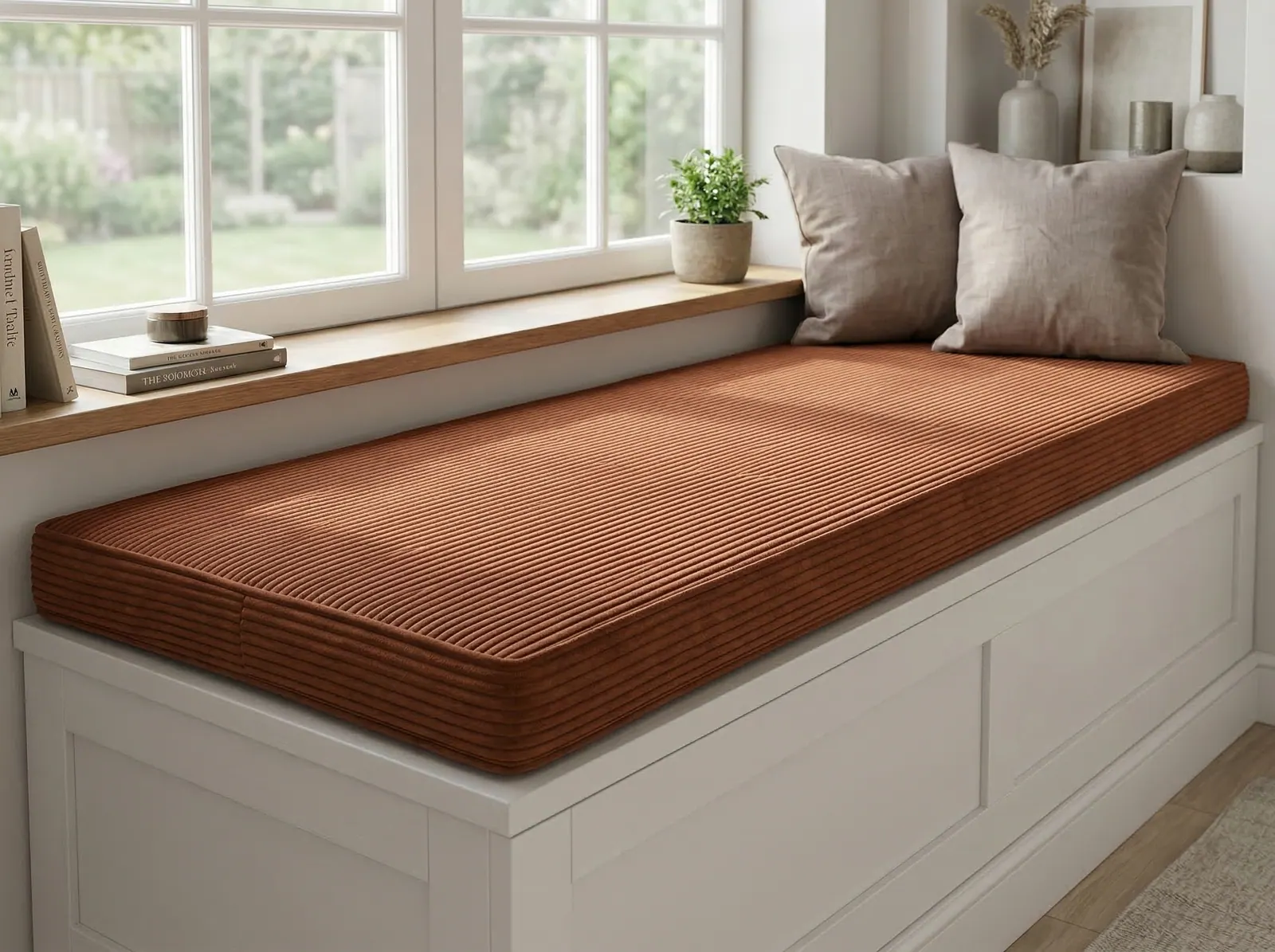
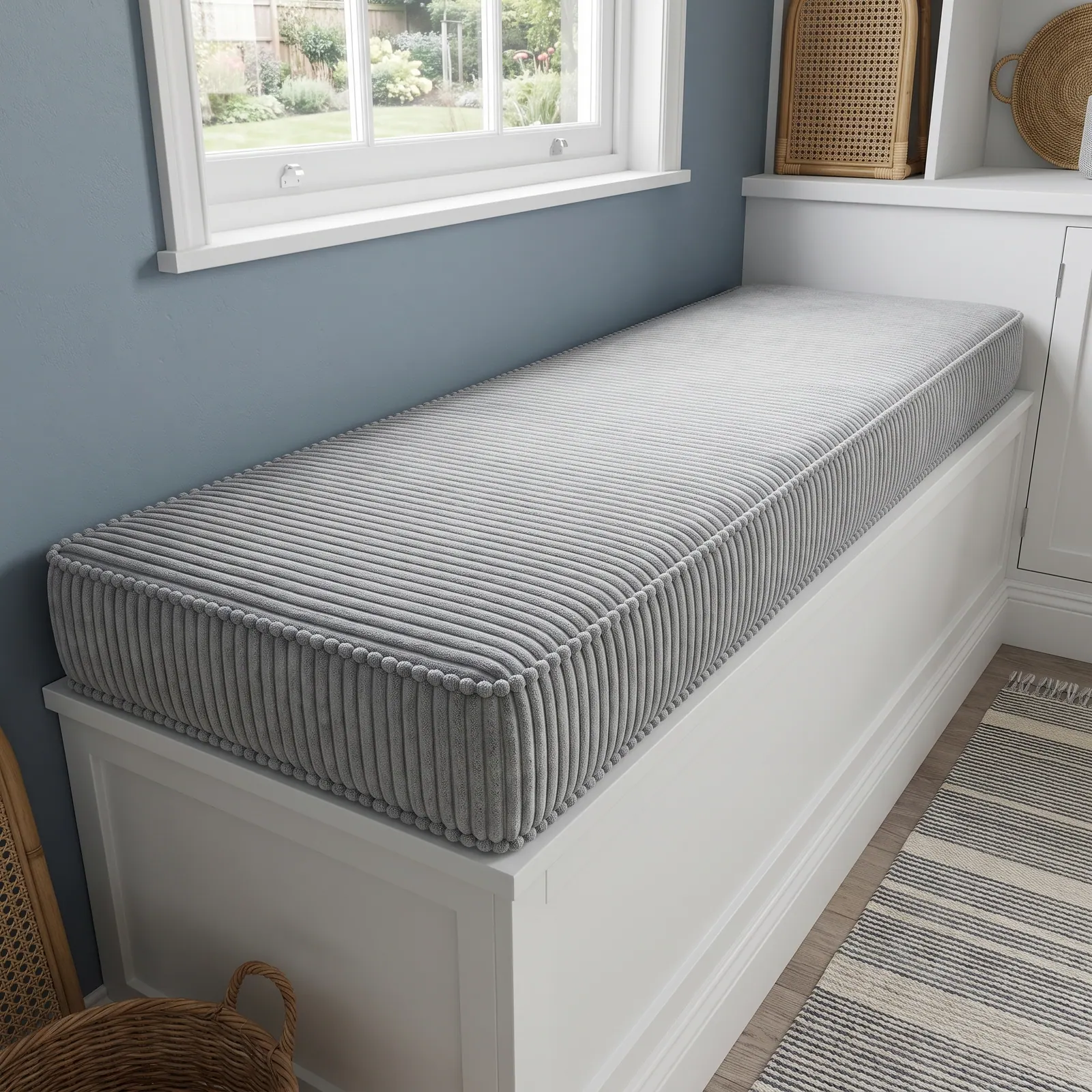
A buyer in the US asked whether corduroy suited a trapezoid bay seat, then noticed two short extra edges at the ends. That made it a hexagon: 78 in (198 cm) front, 46.5 in (118 cm) back, 23 in (58 cm) angled sides, 5 in (12.7 cm) end returns, about 22 in (56 cm) deep. They selected the ranges covering 78 in and 22 in and wrote the whole shape in the personalization, in navy corduroy.
The takeaway: Short straight returns at the ends change the shape, so draw and measure them.
05A past project
Mushroom velvet, 117 in long, bolsters on the cheeks
A buyer in the US wanted clean lines and no tufting on a three-sided bay: 117 in (297 cm) on the long edge, 68.5 in (174 cm) on the short one, 34 in (86 cm) diagonals and 25.5 in (65 cm) deep. It became a plain 4 in (10 cm) cushion with 10 in (25 cm) bolsters along the two diagonal sides only. She ordered swatches first and chose a mushroom velvet after checking it resisted stains.
The takeaway: Decide which sides get bolsters when you order the seat, and size them to those edges.
06A past project
A designer's bay that closed on paper
A designer in the US asked for one cushion for a built-in bay: 106 in (269 cm) main side, 56 in (142 cm) rear, two 35 in (89 cm) diagonal ends. Those numbers reconcile at about 24.5 in (62 cm) of depth, so photos and measurements were enough and no paper template was needed. The workshop suggested 4 in (10 cm) of firm, about 2 lb/ft³ (32 kg/m³) foam for a tailored built-in look, in warm oatmeal or natural flax linen.
The takeaway: When front, back, slants and depth agree, you can skip the paper template.
07A past project
An angled top, typed out letter by letter
A buyer in the US sent a sketch of an angled-top bay that was hard to read, so the workshop asked for every edge typed out: A 4.3, B 4.3, C 78.5, D 48, E 24, F 24, G 23, all in inches. Two returns, front, back, two slants and the depth, with nothing left to guess. It was made in a deep navy velvet whose cover machine-washes at 86°F (30°C).
The takeaway: Letter every edge on the sketch and type each number beside its letter.
08A past project
104 in wide, and a question about piping
A buyer in the US had a bay seat 104 in (264 cm) on its widest side, larger than anything in the drop-down. They sent a lettered drawing, A to G: 4, 4, 104, 57, 31, 31 and 24.5 in, and asked how the piping color is chosen. The workshop quoted it in linen and sent a custom order link. Piping has its own code on the fabric chart, written in the note beside the body code.
The takeaway: Off the menu is fine: send the lettered drawing, ask for a custom link, and name the piping code in the same note.
09A past project
160 in of sunny bay, in two pieces
A buyer in the US wanted a black cushion about 160 in (406 cm) long and 2 ft (61 cm) deep for a trapezoid bay, and specifically not corduroy or velvet. The workshop confirmed there are sun-resistant fabrics and suggested making it in two pieces because of the length.
The takeaway: A sunny bay needs a sun-resistant fabric, and a very long cushion is easier to make and handle in two sections.

What each kind of bay needs on the drawing
| Your bay | Write down | Check before cutting |
|---|---|---|
| Three-sided bay (trapezoid) | Front, back, each slant on its own, straight depth | Each slant within about 1 in (2.5 cm) of the calculated length |
| Angled top with short straight ends | Seven values lettered A to G: two returns, front, back, two slants, depth | The returns are drawn, not folded into the slants |
| Posts or columns in the corners | Front, back, depth, and where each post sits | The maker works out the slants |
| Corner seat notched under trim | Every edge; each notch's width, depth and position; both diagonals | The maker's scale drawing is approved before cutting |
| Asymmetric or very long bay | A sketch with every side, or a full-size paper template | Whether it should be made in two pieces |
Before the drawing leaves the house
- Measure the depth straight out from the back wall, at 90 degrees. An angled side is always longer than the depth it crosses.
- Run the numbers through the trapezoid cushion calculator. More than about 1 in (2.5 cm) off means measure again.
- Write inches or centimeters on the drawing itself. The same numbers read in the wrong unit change the whole quote.
- Order on the custom-shape listing and upload the drawing; the custom shape drawing Pattern shows how to label it.
- Choose cloth for the bay's life: velvet resists stains best, linen keeps a quiet period look, corduroy brings texture, and a full-sun bay wants a sun-resistant fabric.
Bay window seat cushion rule for old houses: if a measured slant misses the calculated one by more than 1 in, measure again before cutting.
Maggie
Buyer questions: columns, trim and odd angles
- A common question
My bay seat has a column in one corner and trim hanging over the back. Can the cushion be notched around them?
The workshop's answerYes. Mark each notch's width, depth and position along its edge, and add a few wide-angle photos of the seat. The workshop redraws it as a clean template and asks you to confirm before anything is cut. If a notch sits on the back edge, say so, because the zipper runs along the back.
- A common question
My bay cushion isn't a rectangle. Which listing do I order it on?
The workshop's answerThe custom-shape (trapezoid) listing. Choose the size range by the longest length and the deepest depth; that only sets the price bracket. At checkout, upload a drawing with a measurement on every edge, plus a photo if you have one, and put thickness and fabric code in the personalization. The workshop cut to the drawing, not the totals.
- A common question
My window seat has a corner that runs out onto the trim. Is that too awkward to make?
The workshop's answerNo. Measure every side and draw the shape on paper with all sizes on it, including rounded corners, joints and cut-outs, then send a photo of the drawing and of the space. The workshop redraws it for you to confirm, then quotes. Genuinely difficult pieces go to the most experienced craftsman and are paid through a private purchase link.

Have it made
Have an idea like this made — ask Maggie’s workshop
I once cut a lovely cushion two inches short, and I have not forgotten it. That is why the workshop goes over your measurements with you on the phone. — Maggie
Leave your details and the workshop will call you to confirm measurements, fabric, foam and piping. No prices, dates or payment on this page: it is a request, not an order.
Questions buyers ask next
Do I need both diagonals for a three-sided bay?
In an old house, yes. Front, back, each slant and the depth often close on their own when corners are square, but diagonals show whether they are. When corners are out of square, the workshop cuts from the edges against the walls and lets the diagonals follow, within about 1/4 in (6 mm).
What happens if I order an angled bay cushion on the rectangle listing?
The workshop holds the order, then either cancels and refunds it so you can reorder on the custom-shape listing with a drawing, or sends a link for the price difference. A simple test: if checkout never asks you to upload a drawing, you are on the wrong listing.
Is the depth really needed if every edge is measured?
Yes. Edge lengths alone don't fix the shape; the front-to-back depth, measured straight out from the back wall, is what the slants are checked against. One buyer in the US with dogs and a 91 in (231 cm) bay sent a sketch without the depth, and the workshop asked for it before going further.