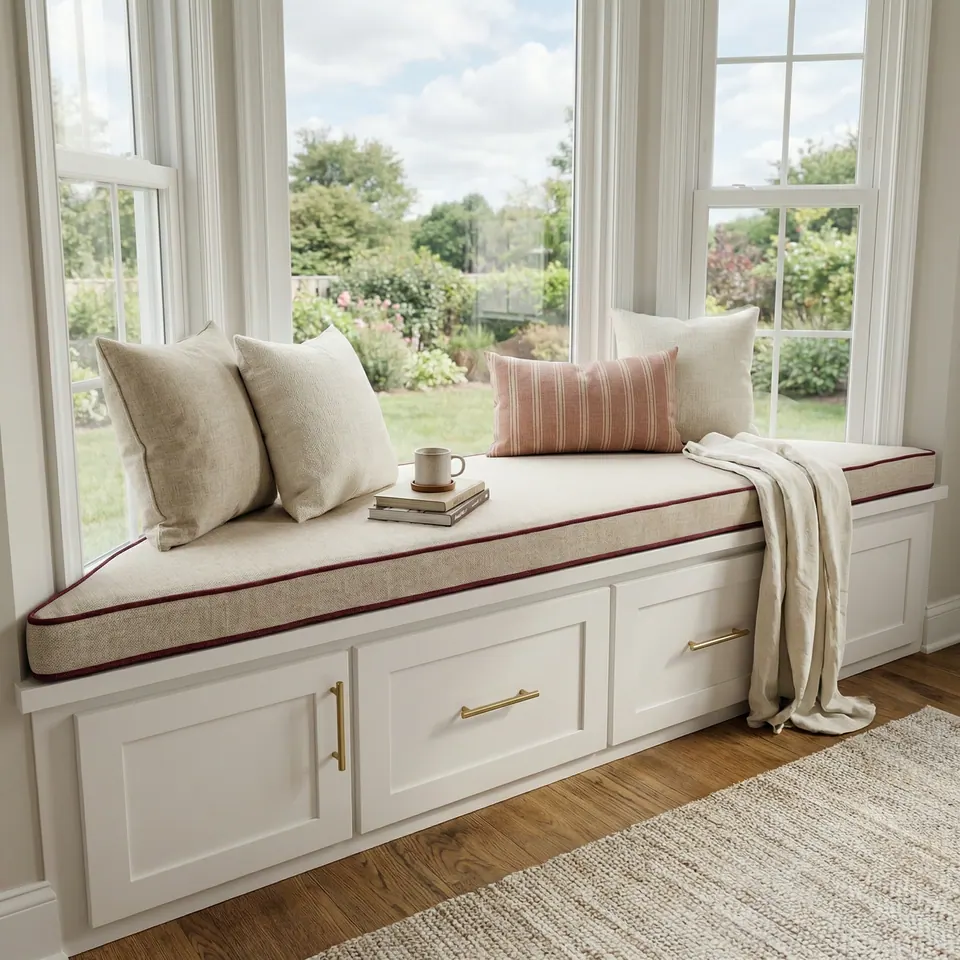
Concept Sketches · 8 scenes
Craftsman window seat cushions for shallow bays and short returns
Bungalow builders tucked a short straight return into each end of their bays. Those little edges get forgotten, and they decide whether a cushion fits or comes back with points.

 Save
The quick answer
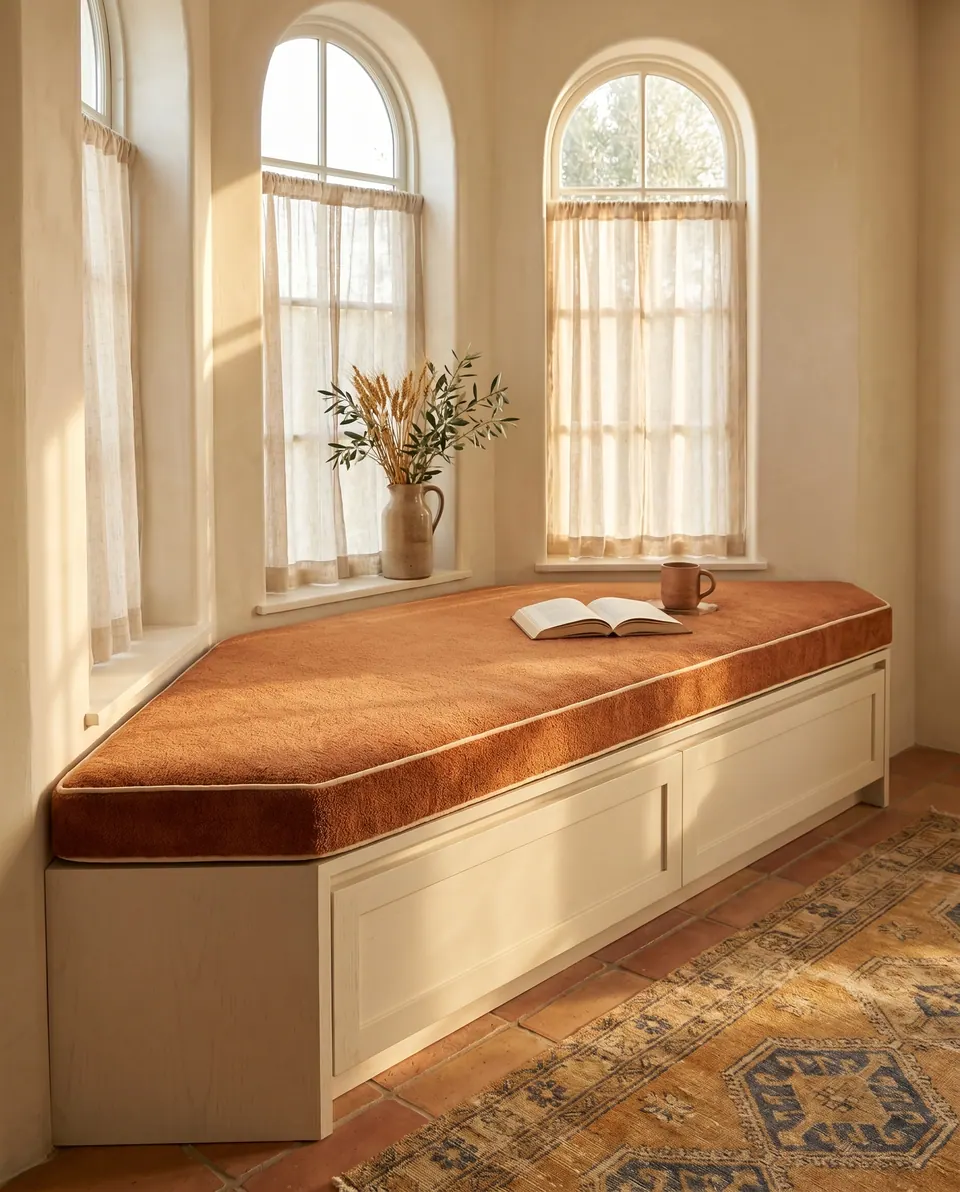
A craftsman window seat cushion is usually a clipped trapezoid: a long front edge, a shorter back edge, and a short straight return at each end before the angled sides begin. Measure all of them plus the straight depth, then check that the numbers close. If a measured slant misses the calculated one by more than about 1 in (2.5 cm), re-measure before cutting.
Two small edges that decide the whole cushion
A 2 in (5 cm) straight return can move an angled side by more than an inch.
Craftsman bungalows, built roughly 1905 to 1930, put the seating into the house: shallow bays, window seats between bookcases, benches by the hearth. The bays tend to end in a short straight return before the angle starts, which turns a plain trapezoid into a clipped one. A craftsman window seat cushion is only as right as those two small edges.
The habit: measure front, back, straight depth, both returns and both slants, then draw it to scale. If the numbers cannot close into a shape, one of them is wrong. Angles are just lengths in disguise.
Check your own bay in the bay window calculator, with the trapezoid measuring pattern beside it. What does your return measure, partner?
Eight bungalow bays, drawn to scale and checked
01A past project
The cushion that came back with pointed ends
A buyer's first cushion arrived too long, with pointed ends where the bay had square returns. Redrawn: 90 in (229 cm) bottom, 52 in (132 cm) top, 27 in (69 cm) deep, 6 in (15 cm) straight ends. Those returns force slants of about 28 in (71 cm), not the 24 in (61 cm) on the note.
The takeaway: Draw the straight returns first; the slants follow from them.
02A past project
32.5 in on paper, 31 in on the tape
A buyer in the US sent 86.5 in (220 cm) bottom, 39.5 in (100 cm) top, 24.5 in (62 cm) deep, 2 in (5 cm) ends and 31 in (79 cm) slants. Our check said about 32.5 in (83 cm). The buyer re-measured: top just under 40 in, slants really 32.5 in. Made 4 in (10 cm) thick.
The takeaway: When slants disagree, re-measure the short edge too, not only the slant you doubt.
03A past project
Six-inch cut-ins belong on the paper
One bay: 105.5 in (268 cm) long side, 51 in (130 cm) short side, 30 in (76 cm) angled sides, 21 in (53 cm) deep, 6 in (15 cm) cut-ins. The tailor cuts from the sketch, so every cut-in went on the drawing.
The takeaway: An edge that is not drawn and labeled is a missing edge.
04A past project
Where the window frame sticks out
Here the window frame sides stuck out into the seat. Edges of 103 in (262 cm) and 73 in (185 cm), depth corrected from 19.25 in to 19 in (48 cm). With the short returns drawn in, the angled sides came to about 24 in (61 cm), not 21.5 in (55 cm).
The takeaway: Treat frame and trim projections as edges of their own.
05A past project
The 40 in sides that could not exist
An angled seat with two center buttons came in with 40 in (102 cm) angled sides. Drawn to scale, 40 in would not close; the shape worked only at 34 in (86 cm), and a re-measure confirmed it.
The takeaway: Have a second person hold the tape and read each re-measured edge back.
06A past project
A good sketch with no depth on it
A hand sketch gave 95 in (241 cm) front, 61 in (155 cm) top, 22 in (56 cm) angled sides and 10.5 in (27 cm) lower edges, but no depth. The other edges implied about 24.5 in (62 cm); the real depth was 27 in (69 cm).
The takeaway: Measure depth square to the long edge and write it on every sketch.
07A past project
Five windows, 16 inches deep
A five-window bay seat: 115 7/8 in (294 cm) long, only 16 in (41 cm) deep, 4 in (10 cm) thick, with contrast piping. The bungalow pattern in one cushion: shallow depth, long run, a break at every window.
The takeaway: On a long shallow bay, measure every breaking point, not just the two ends.
08A past project
Posts in the corners, tape bent around them
A buyer in the US sent 115.5 in (293 cm) front, 54.5 in (138 cm) back, 30.5 in (77.5 cm) deep, 8.5 in (22 cm) ends and 39 in (99 cm) slants; the geometry said about 37.5 in (95 cm). Corner posts had bent the tape, and 4 in had come off the true 58.5 in (149 cm) back for clearance.
The takeaway: With posts in the way, say so and let the maker calculate the slants.
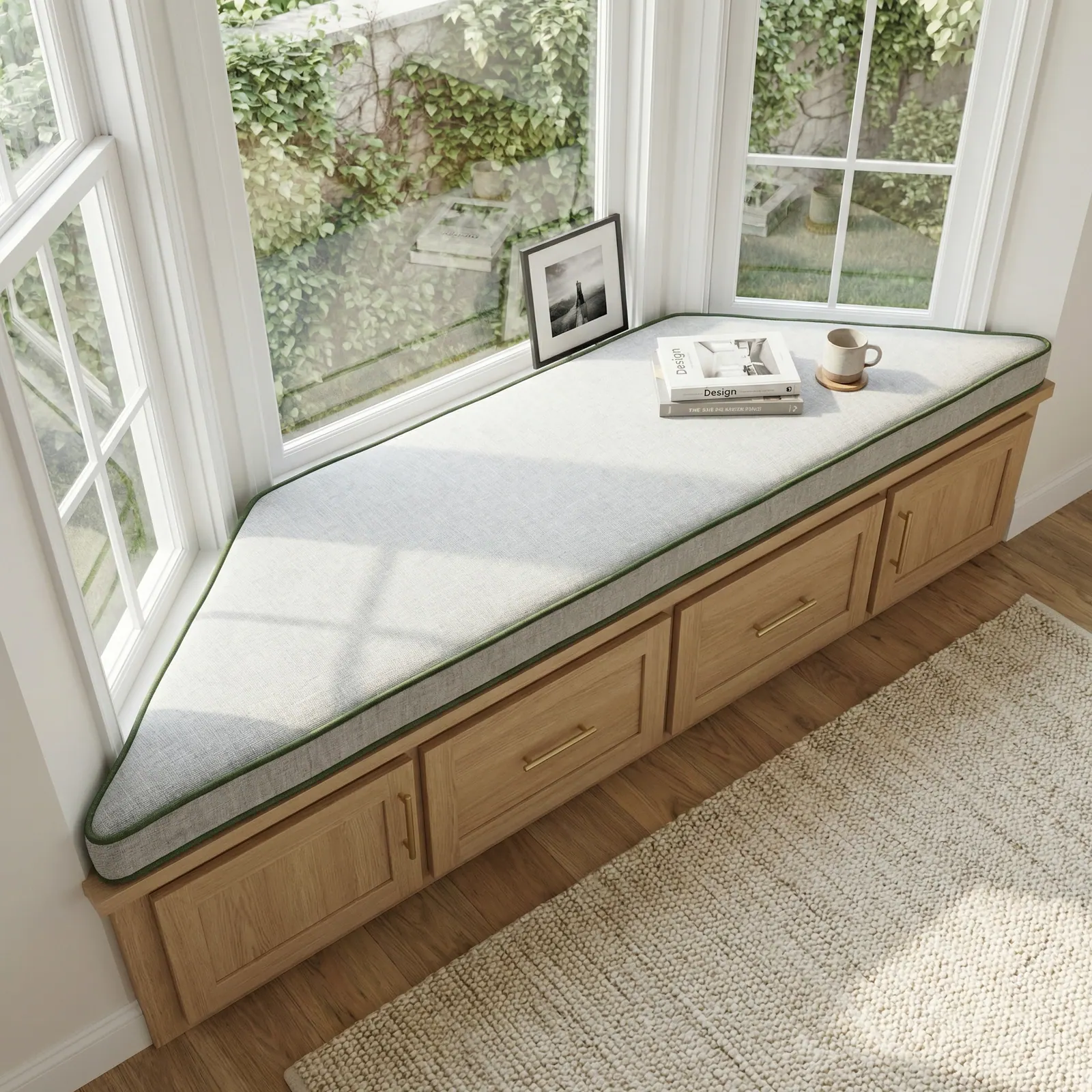
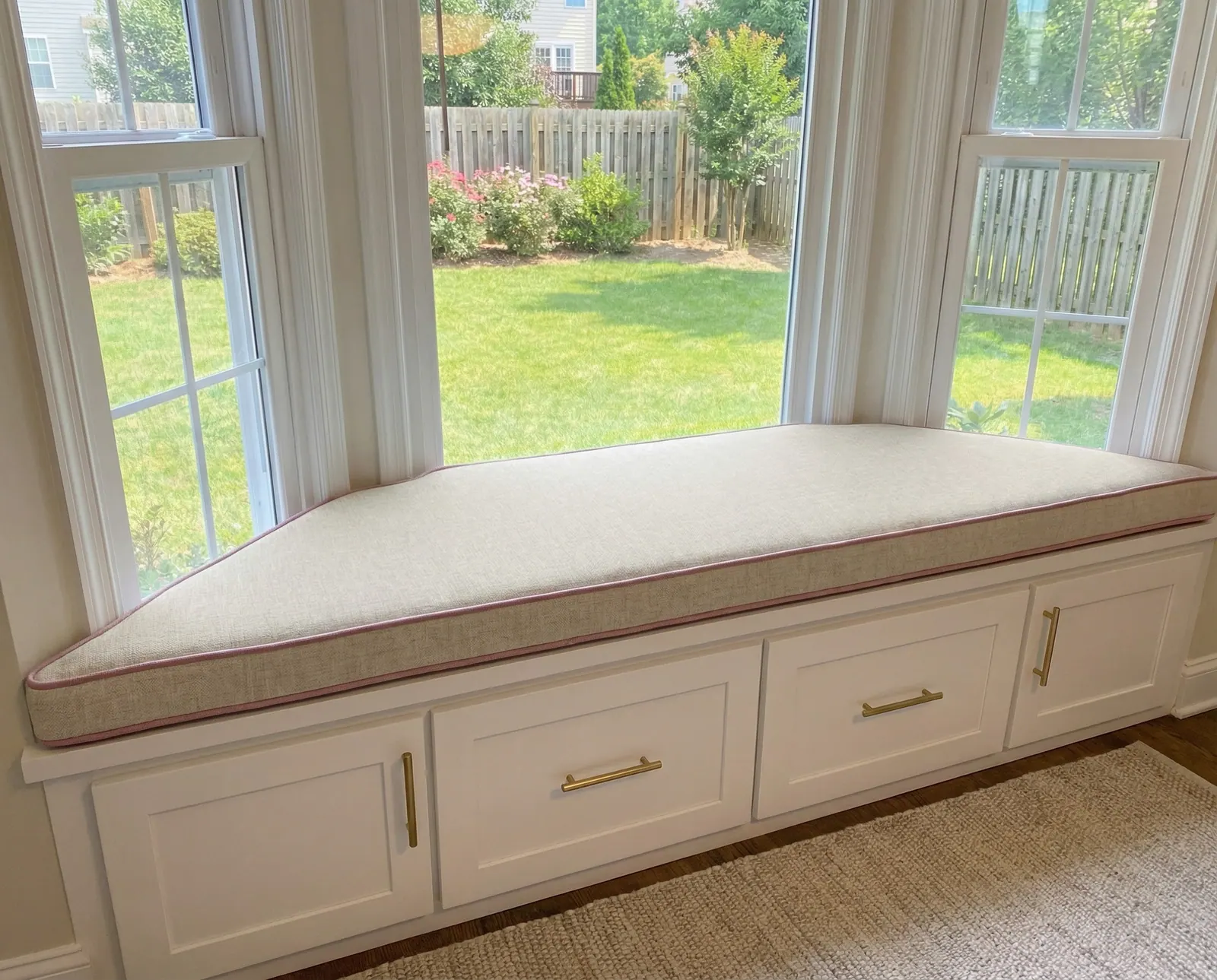
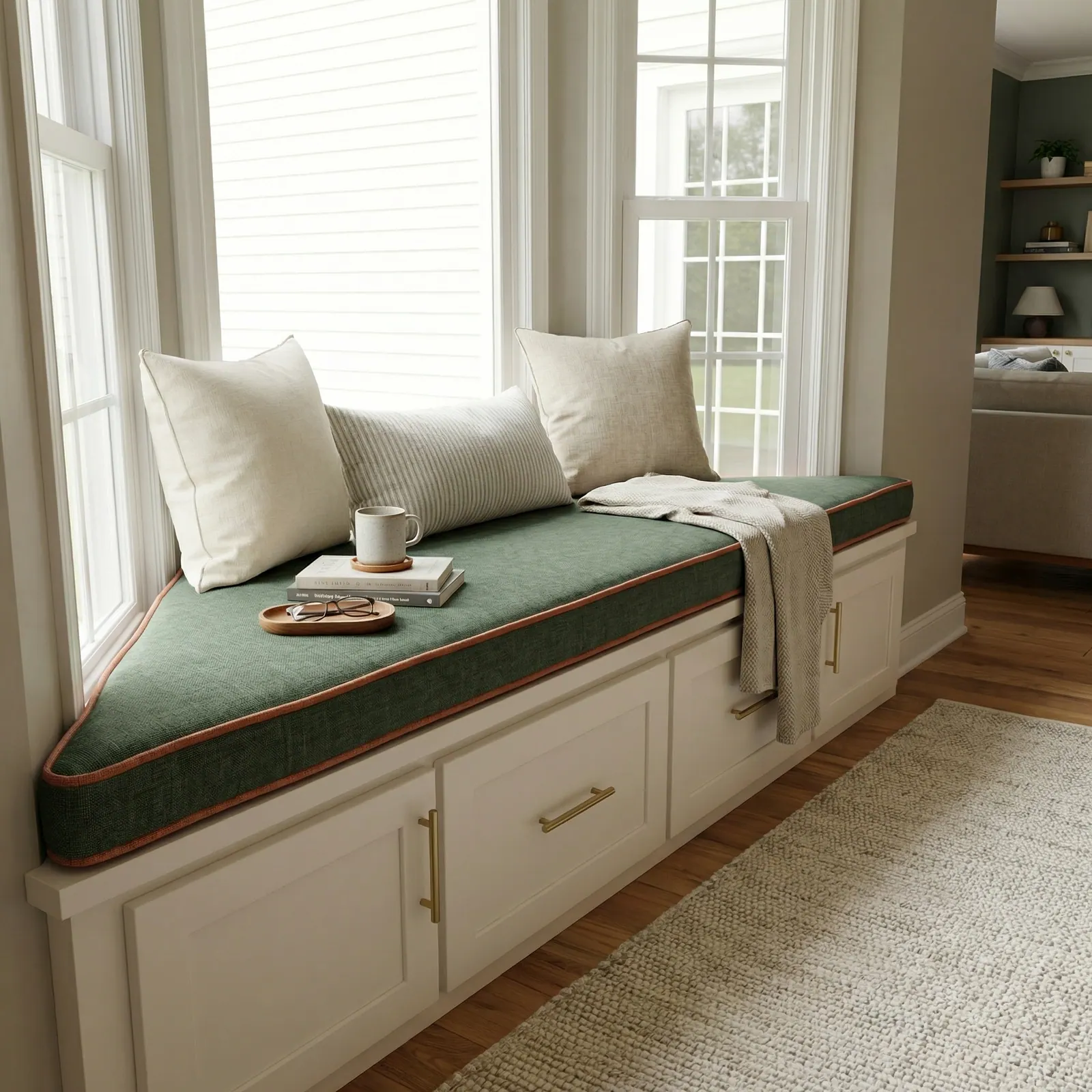
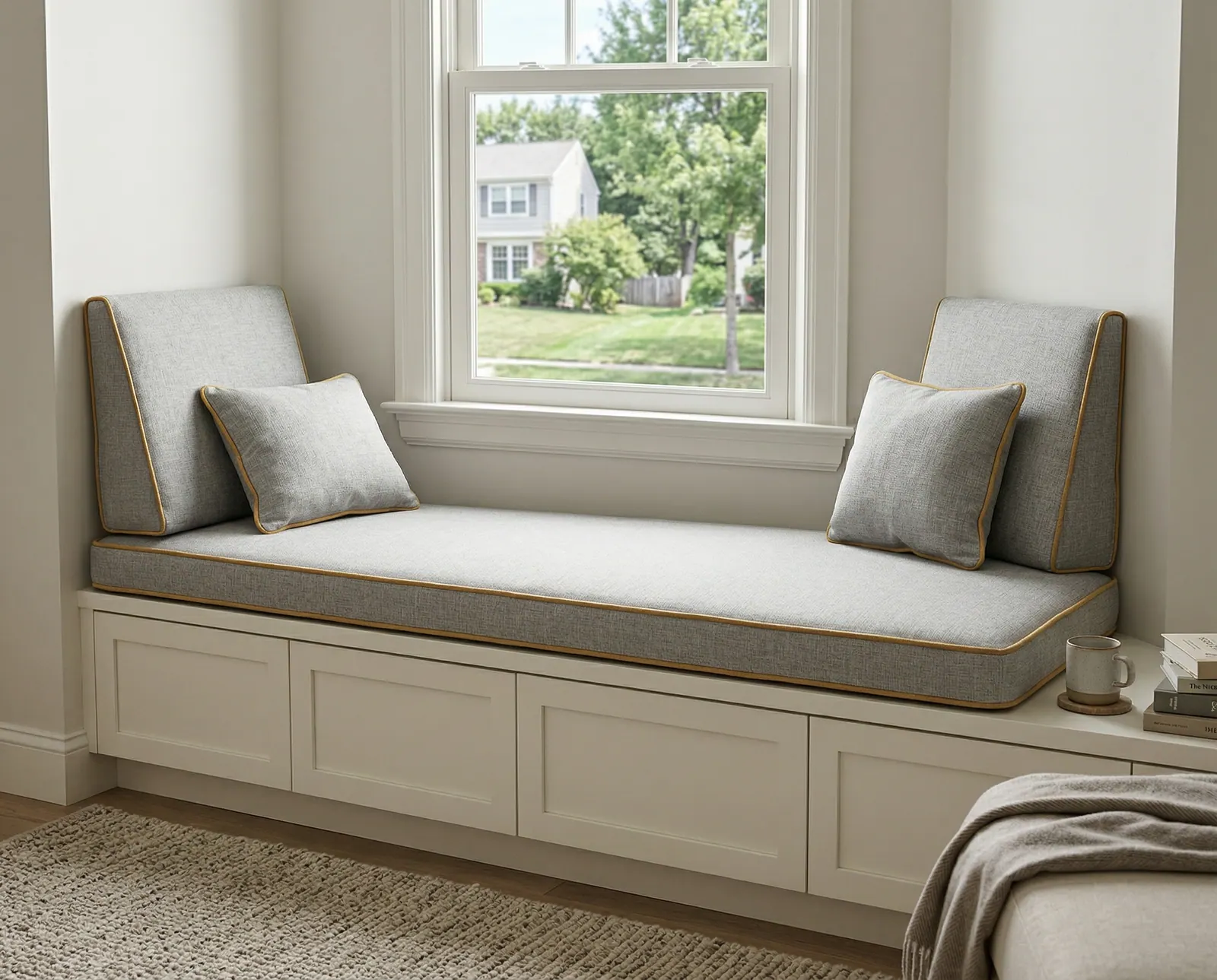
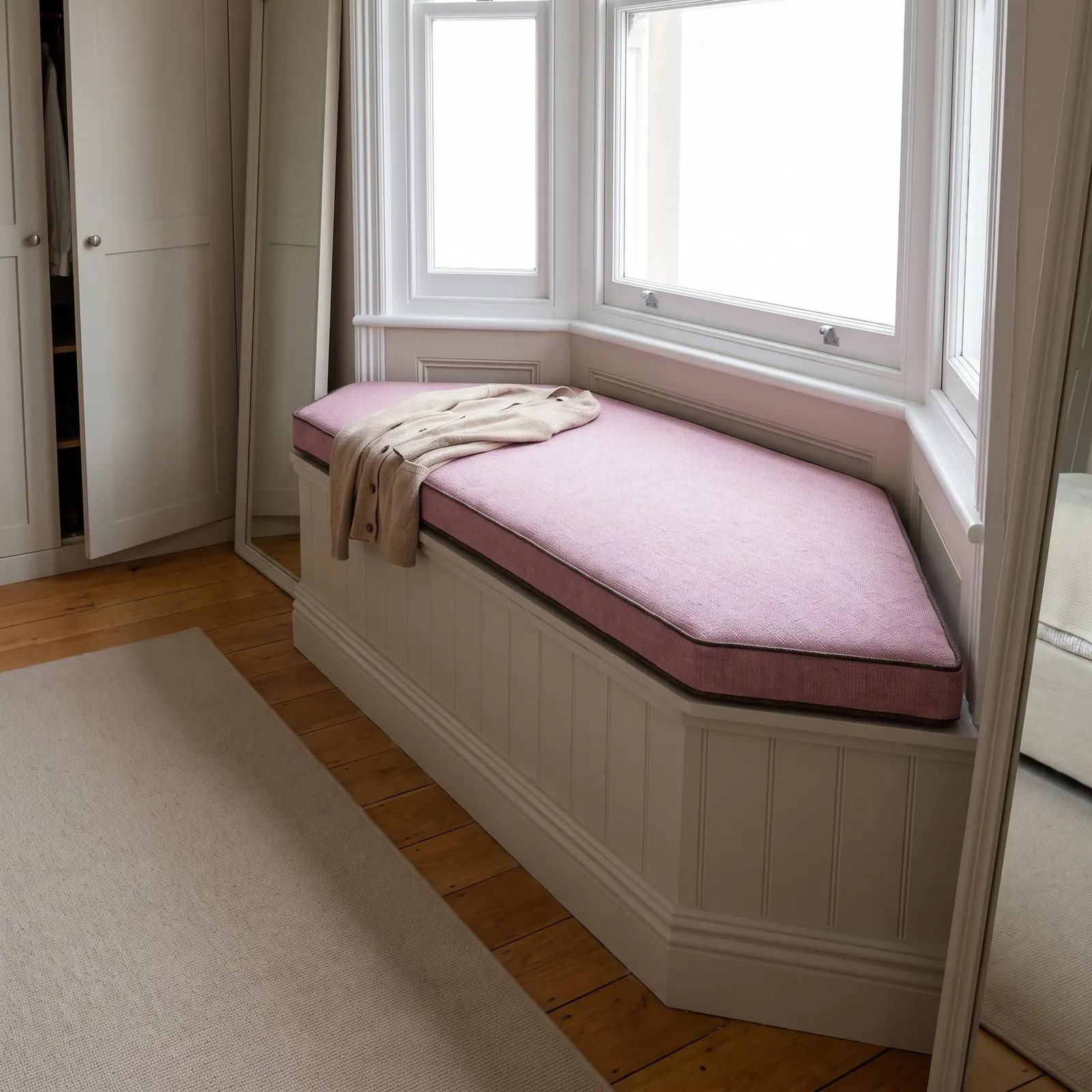
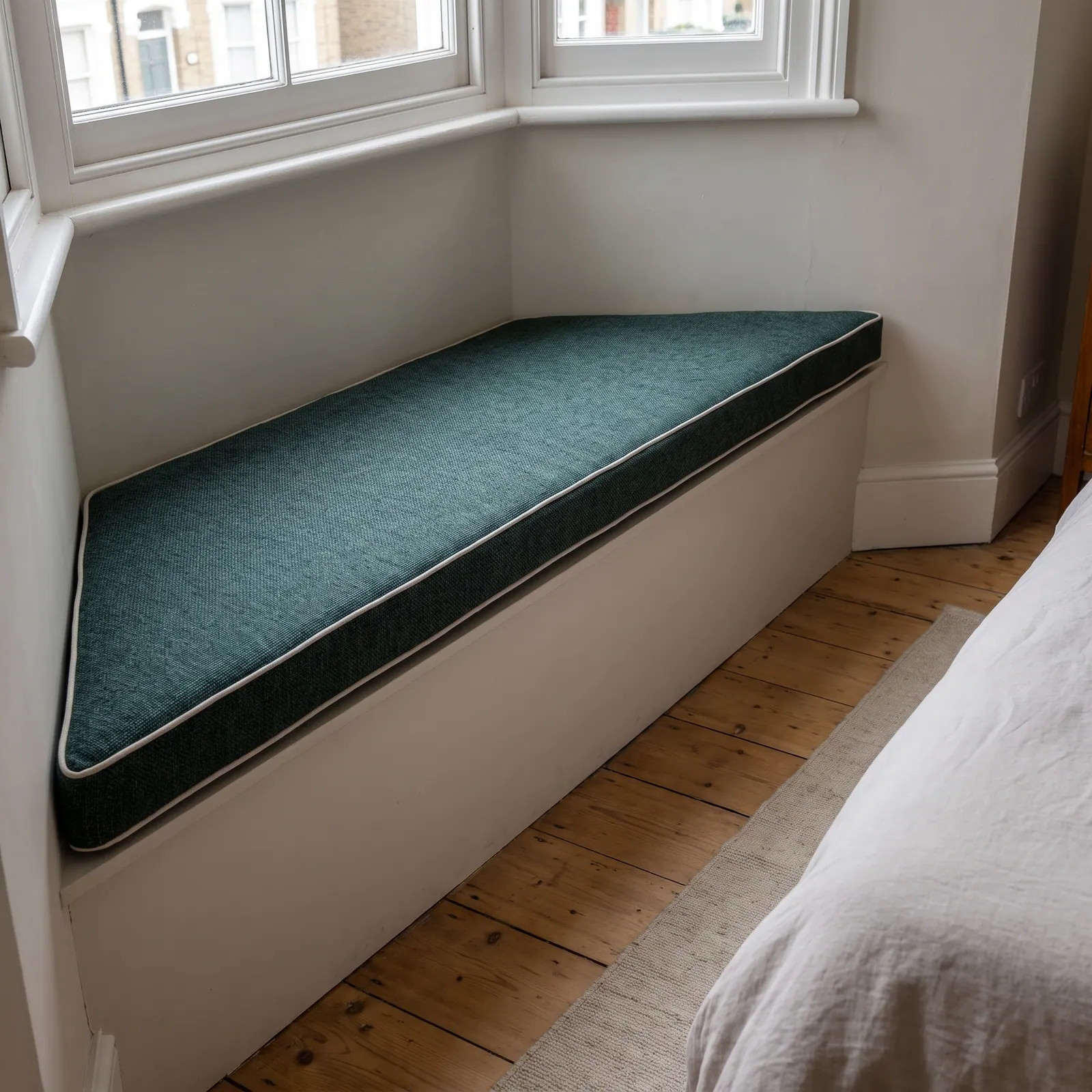
Slant as written against slant that closes
Four bays from past orders, checked the way the trapezoid cushion calculator checks them.
| The bay | Slant as written | Slant that closes | The fix |
|---|---|---|---|
| 90 / 52 in edges, 27 in deep, 6 in ends | 24 in (61 cm) | about 28 in (71 cm) | Redrawn with the straight ends |
| 86.5 / 39.5 in edges, 24.5 in deep, 2 in ends | 31 in (79 cm) | about 32.5 in (83 cm) | Re-measured; the slants really were 32.5 in |
| 115.5 / 54.5 in edges, 30.5 in deep, 8.5 in ends | 39 in (99 cm) | about 37.5 in (95 cm) | Corner posts explained; template confirmed |
| 103 / 73 in edges, 19 in deep, frame sides | 21.5 in (55 cm) | about 24 in (61 cm) | Short straight returns drawn in |
An angled side on a bay cushion is always longer than the straight depth it spans. If a sketch shows it shorter, one of the numbers is wrong.
Nate
Bay questions
- A common question
What do you actually need from me to make a trapezoid cushion for a bay window?
The workshop's answerEvery edge: front, back, both angled sides, any short straight ends or clipped corners, plus the straight depth and thickness. Measure each angled side on its own, mark cut-outs such as a window handle, and send a labeled drawing with a photo.
- A common question
My bay seat isn't symmetrical and there's wood sticking out on one side. Can you still make it?
The workshop's answerYes. Asymmetric bays go through the custom-shape order, not the rectangle one. A hand sketch with every edge, any cut-ins and the depth is enough, plus a photo; a traced paper template works too. The cushion is cut to your drawing.
- A common question
My measurements come out in fractions, like 19 3/8 inches. Is that a problem?
The workshop's answerNo. Half, quarter and other fractional inches are fine, and so are centimeters. The menu size only sets the price range; the cushion is made from the exact size you write in the note and on the drawing.

Have it made
Have an idea like this made — ask Nate’s workshop
Every edge and both diagonals, to the nearest 1/4 in. If the numbers do not close, the workshop will say so on the call. — Nate
Leave your details and the workshop will call you to confirm measurements, fabric, foam and piping. No prices, dates or payment on this page: it is a request, not an order.
Straight returns, slants and long bays
Why can't a bay cushion's angled side be shorter than the depth it covers?
The angled side runs on a diagonal; the depth runs straight back at 90 degrees. A diagonal always covers more distance than the straight line beside it, so a slant drawn shorter than its depth means a wrong number.
What is a straight return on a bungalow window seat?
The short straight edge at each end of a bay seat, before the angled side begins. In the bays above they ran from 2 in (5 cm) to 8.5 in (22 cm). Left off a drawing, they turn square ends into points.
Should a long bungalow bay cushion be made in one piece?
Not always. For trapezoids around 79 in (2 m) or more on the long side, the workshop may suggest two pieces, which are easier to make and handle. See one piece or two.