Linen and cotton-linen cushions: the natural side of the family
Put a real linen swatch to your cheek and it feels cool and a little dry, never slick. These are the natural charts: which hold real fiber, where a blend serves a seat better, and how stripes behave in daylight.
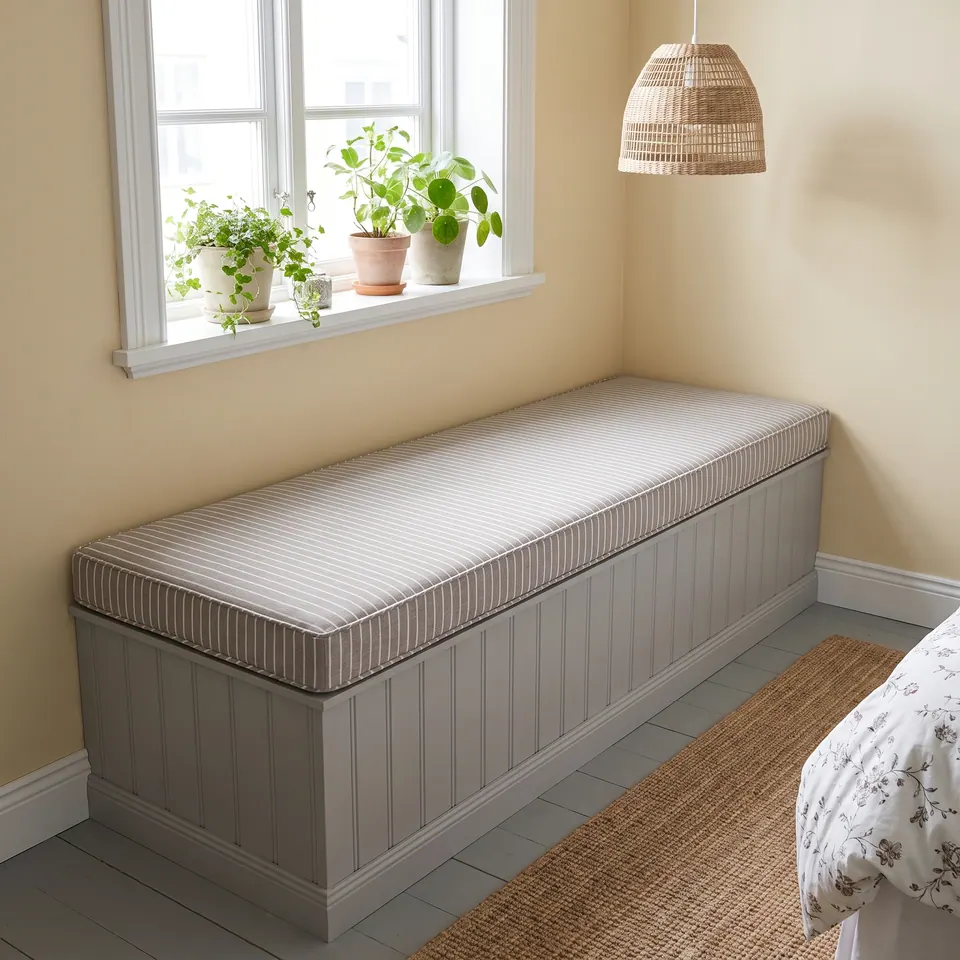
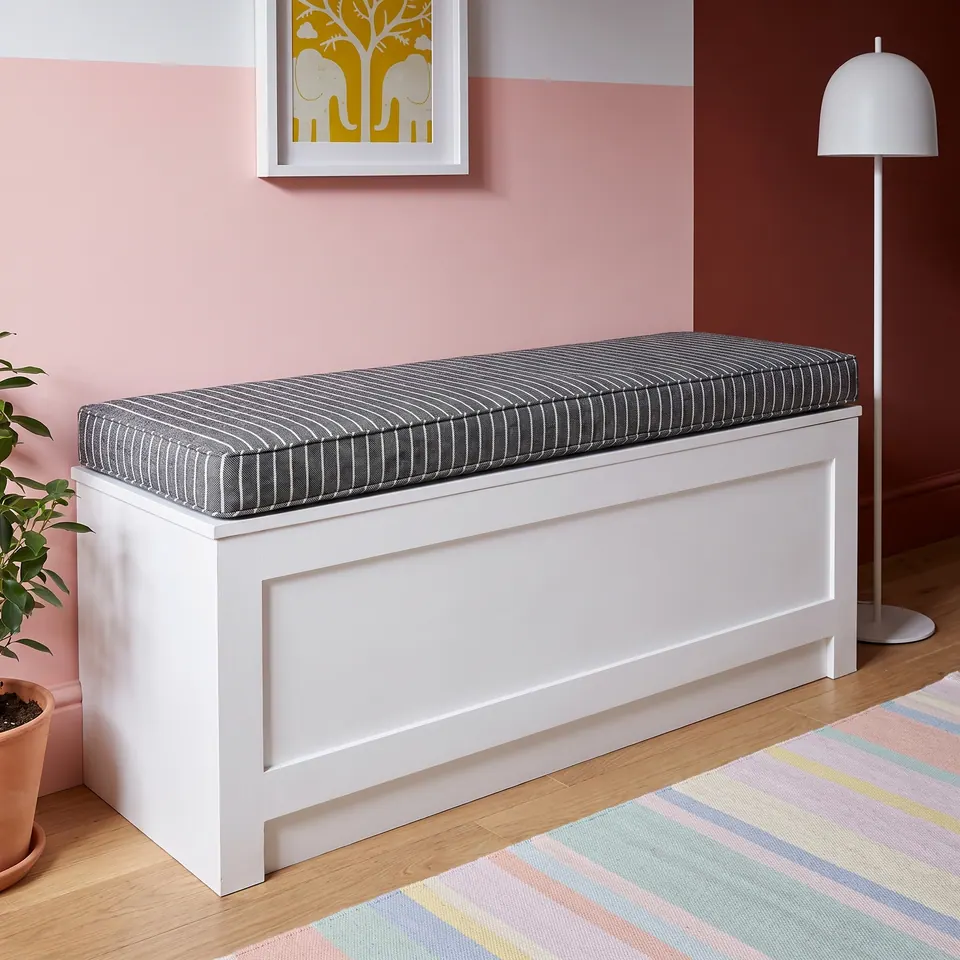
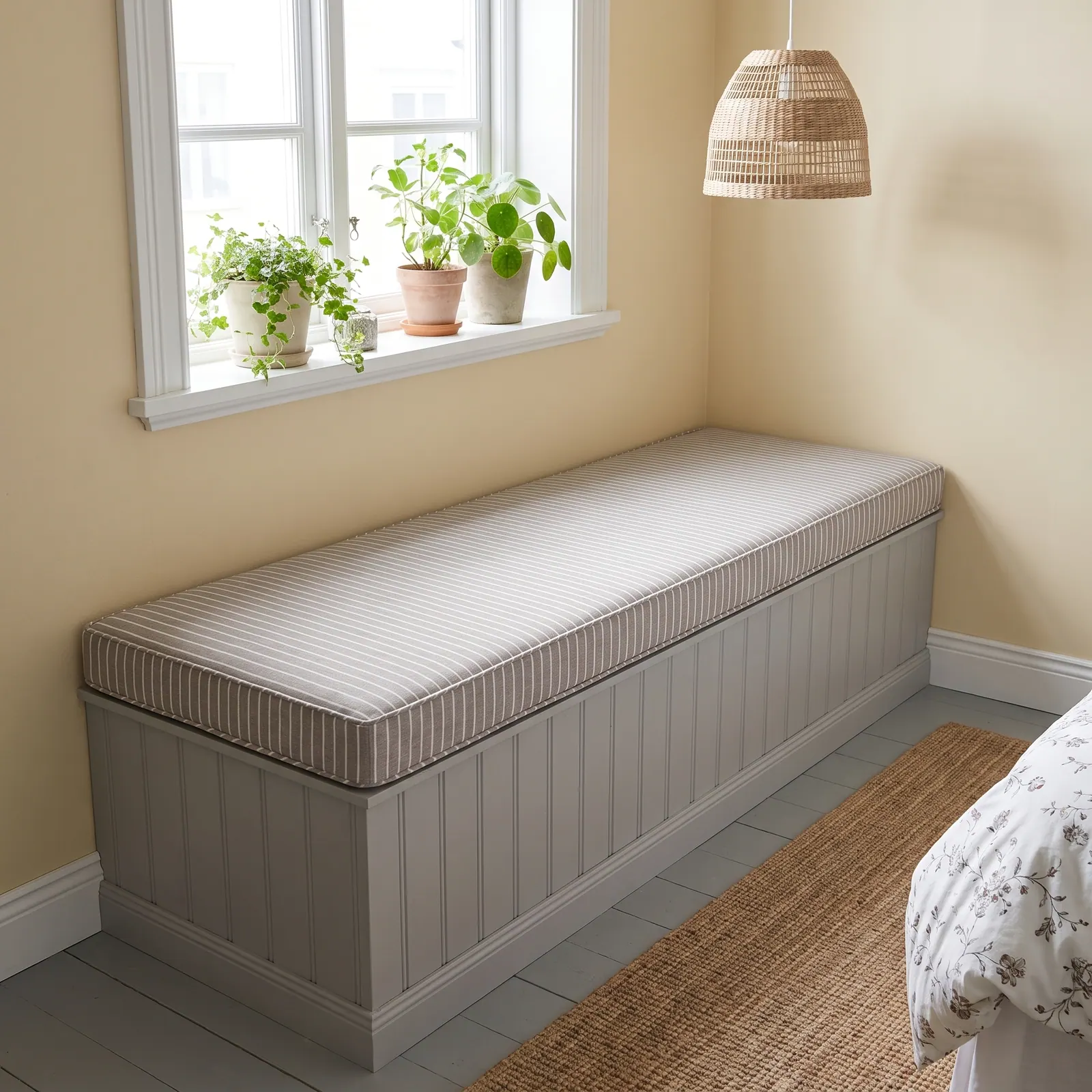
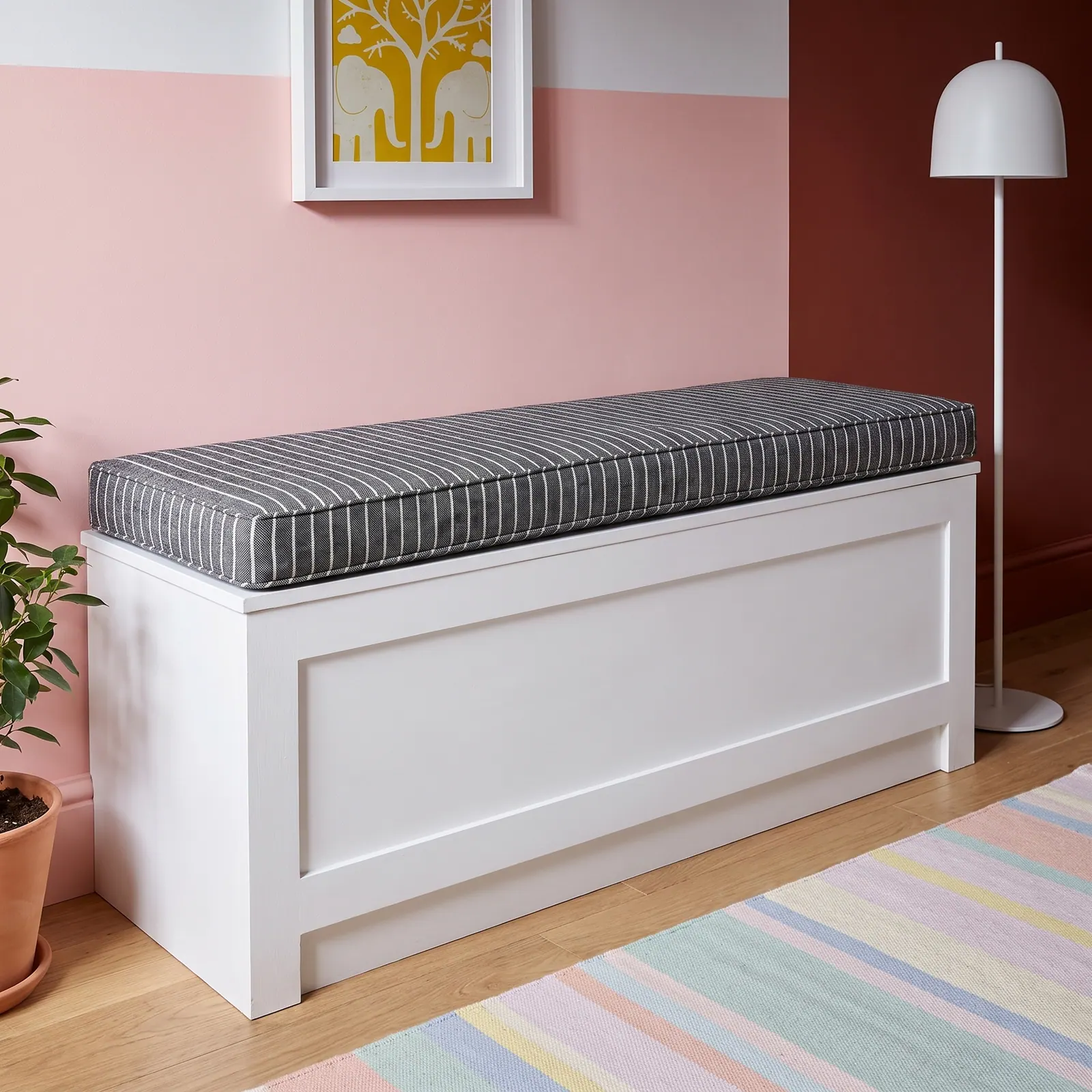
SaveA long gray bench under the window becomes a seat and blanket store beside the bed.
Swatch stripmeasured from the photographs on this page
sand#b7a78f
linen#dedbd2
umber#625648
taupe#82796e
pebble#989694
slate#4a3b3c
chalk#f9faf9
pebble#afb3b3
The quick answer
For a natural-fiber cushion, ask for the cotton-linen or 100% linen charts by code, because standard cushion 'linen' is mostly a blend. The natural linen chart is 50% linen and 50% polyester, one range is 50/50 cotton-linen, and pure linen costs more and wrinkles faster on a seat. Every cover unzips and washes at 86°F (30°C) on a gentle cycle.
Swatch book · 2 cards
The swatch book
Swatch cards photographed in daylight. Open any card to zoom into the weave. Screens shift color, so a sample in your own light is the final word.
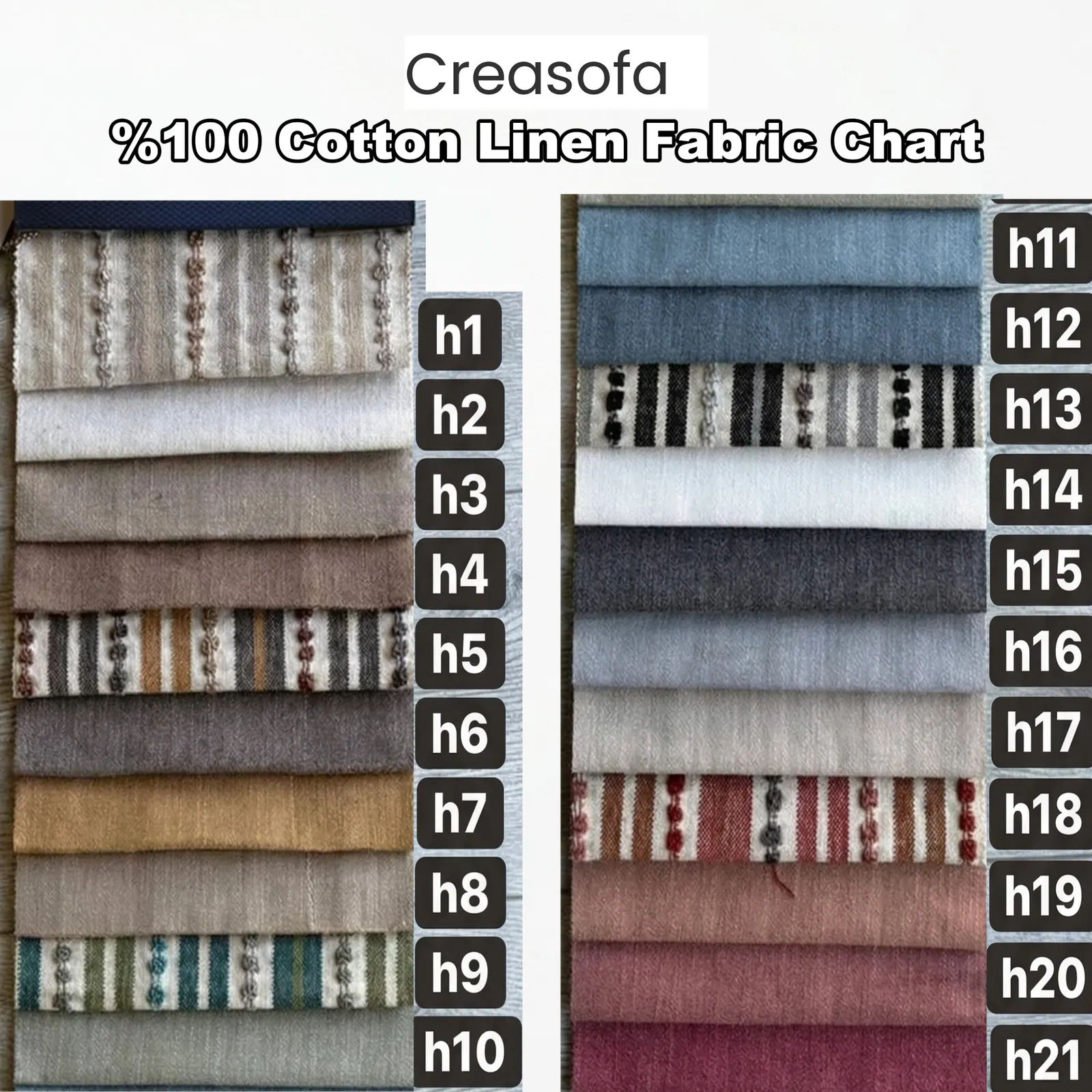
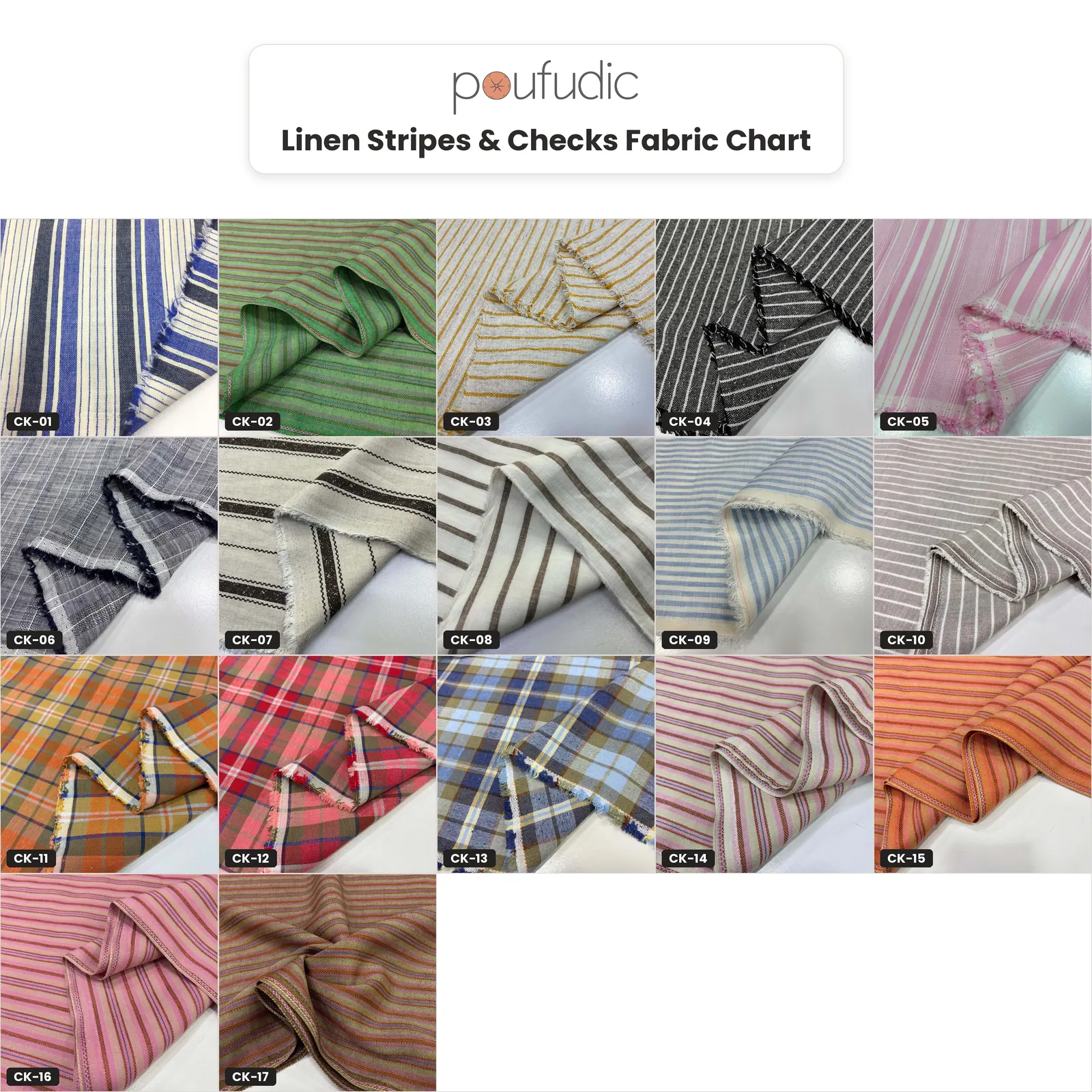
SaveTwenty-one cotton-linen weaves: calm plains in sand, ochre, blue and berry, broken up by five woven stripes with raised bobble dots. The stripes make lively pillows over a plain seat.SaveThe full range of striped and checked linens, numbered CK-01 to CK-17, for choosing a bench or window seat cushion fabric.
Counted from the readings the masters have published in this family. Open a cushion type for its sizes and measuring.
Cool, dry and a little irregular: the natural hand
Natural fiber has a hand you can learn with your eyes closed: cool, dry, with slubs that wander instead of repeating. That hand is why people ask for linen by name, and why the honest answer always starts with a fabric code.
The natural linen chart is described as 50% linen and 50% polyester. The H chart, twenty-one colors from white and sand to ochre, powder blue, dusty rose, berry and black, is a cotton-linen blend, some plain and some with dotted woven stripes. The cotton-linen on the linen floor sofa carries no synthetics at all, and a separate 100% linen chart comes out on request.
Grain-sack stripes on benches, banquettes and bedroom windows
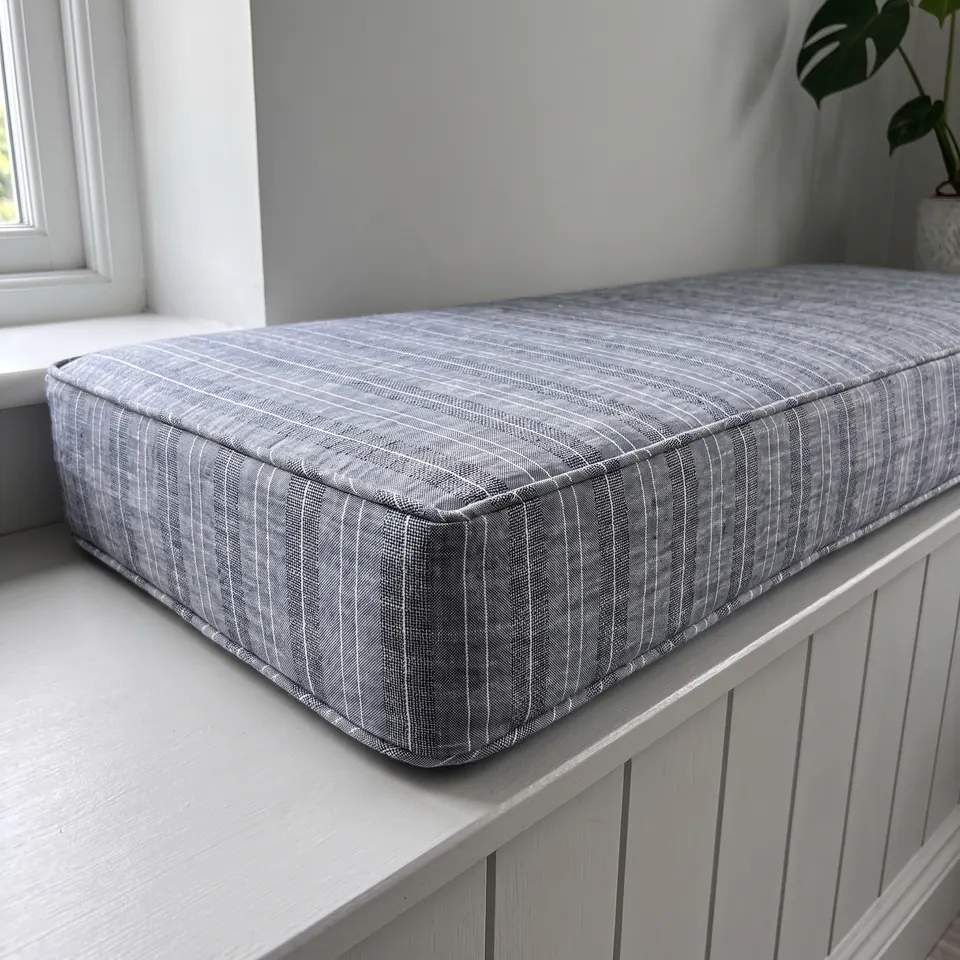
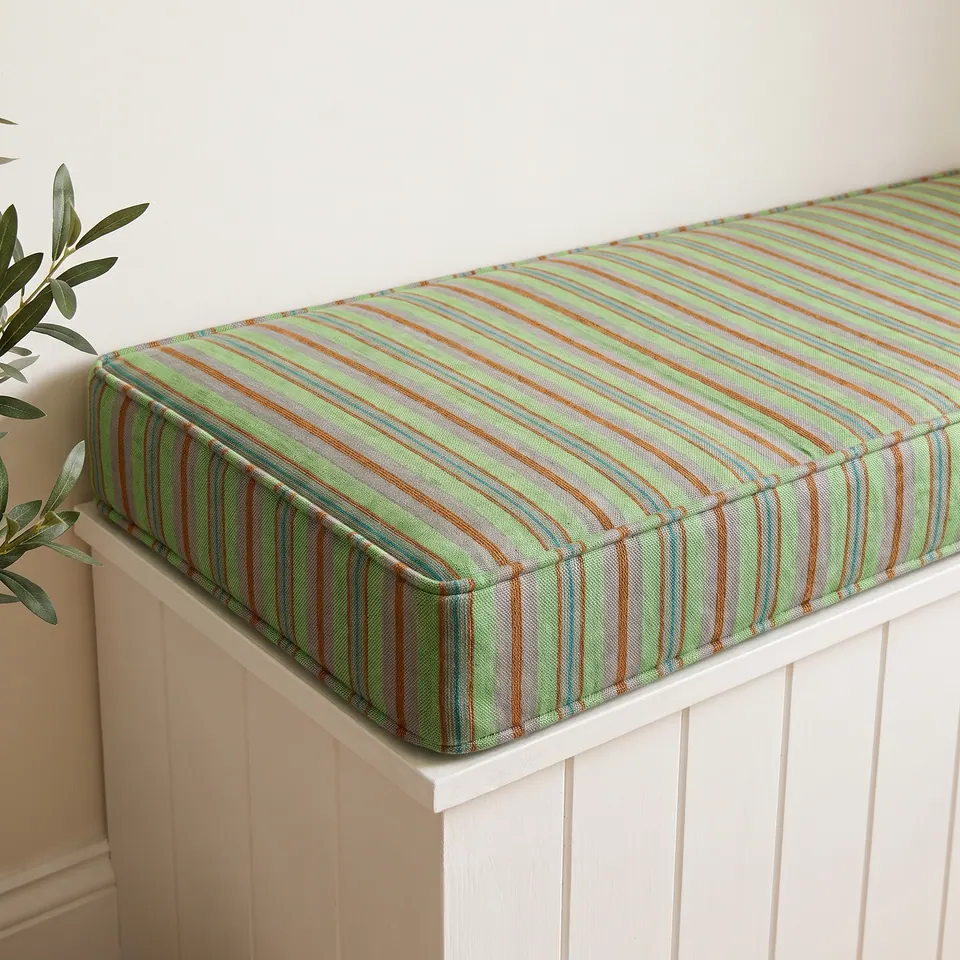
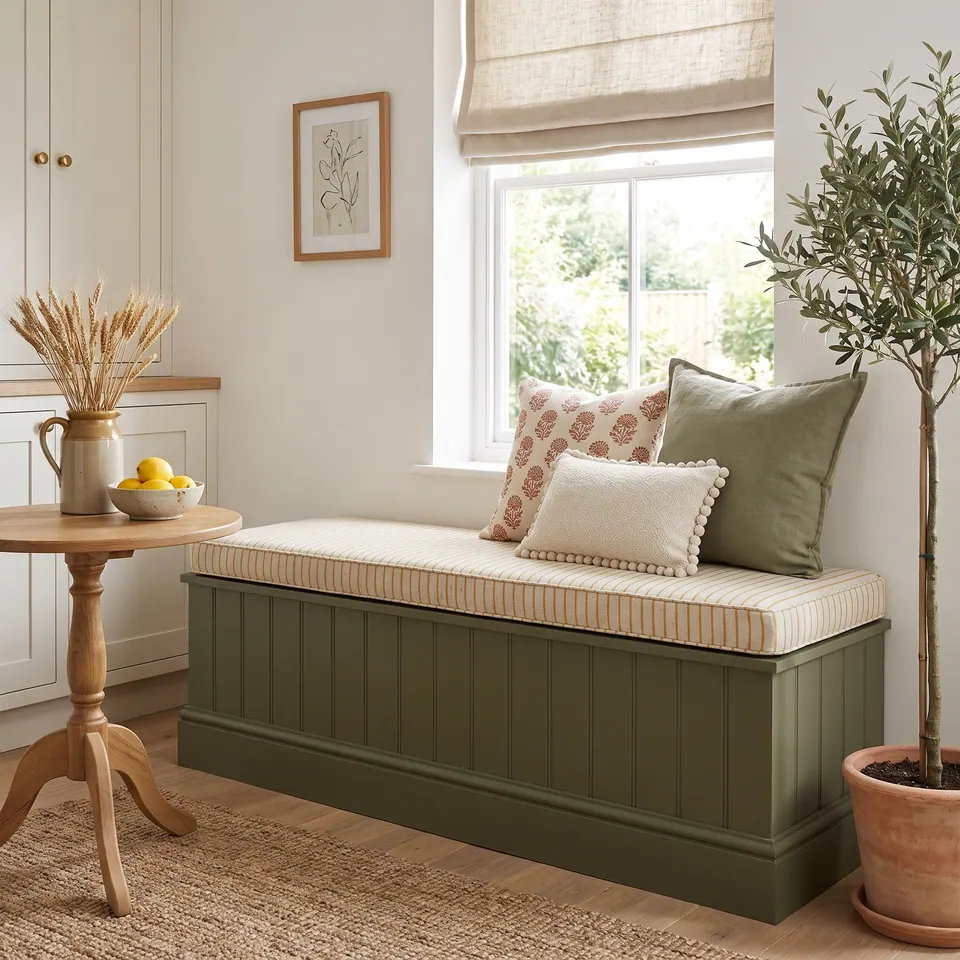
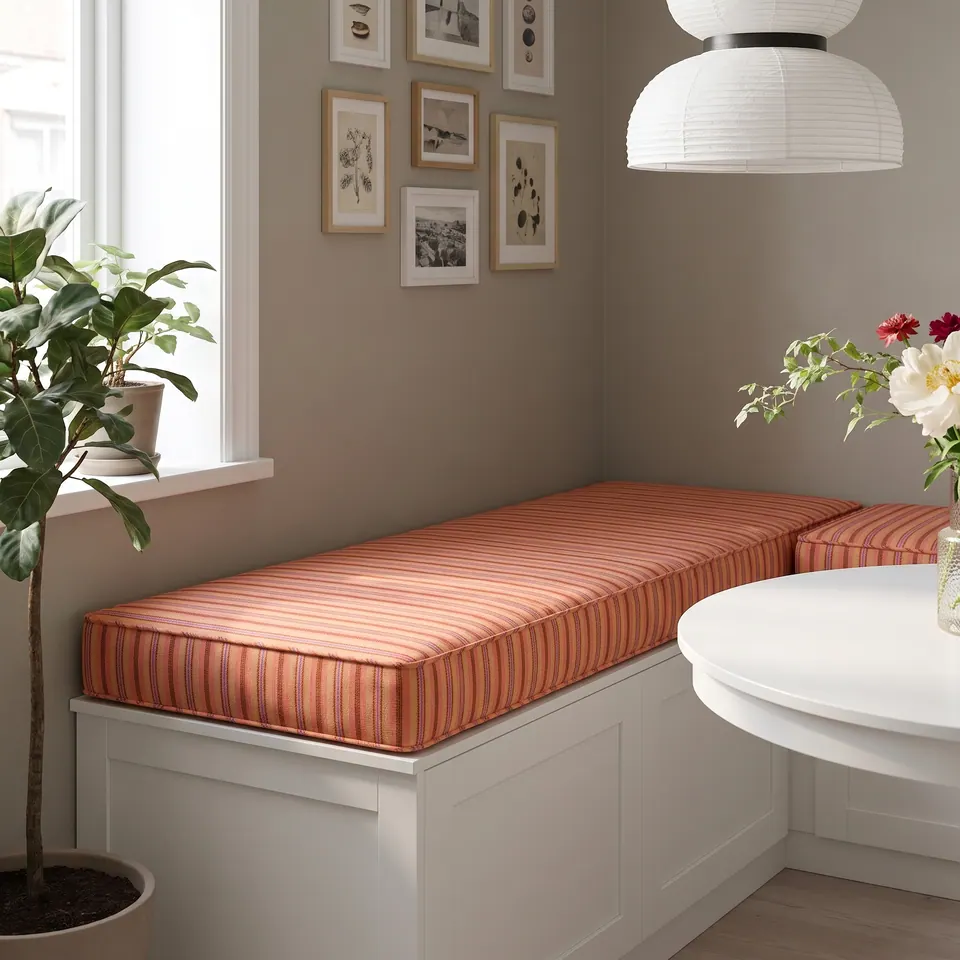
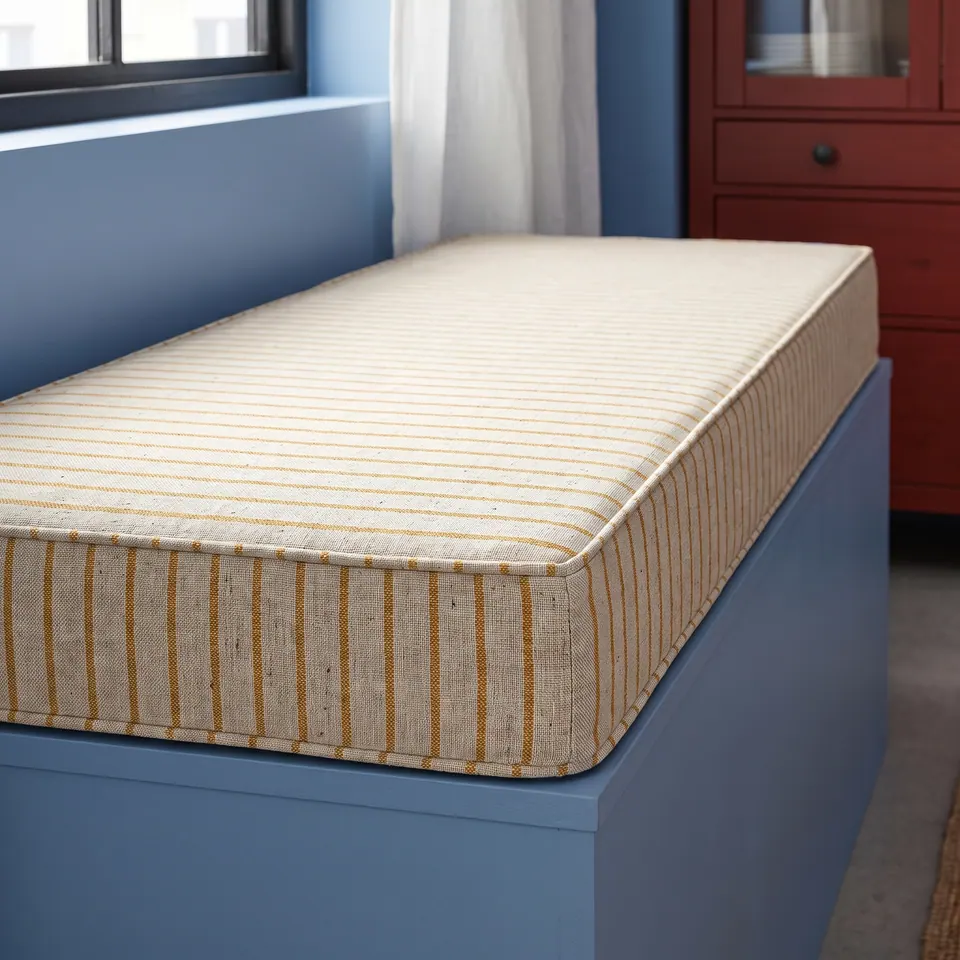
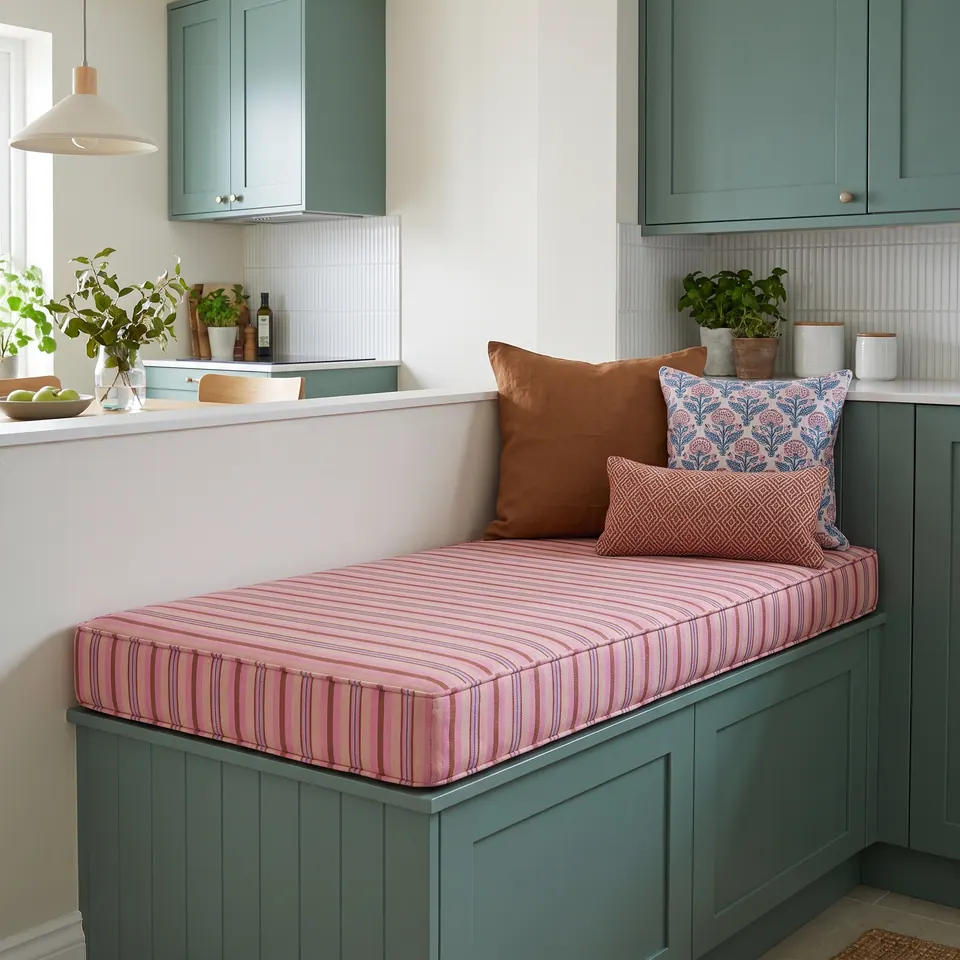
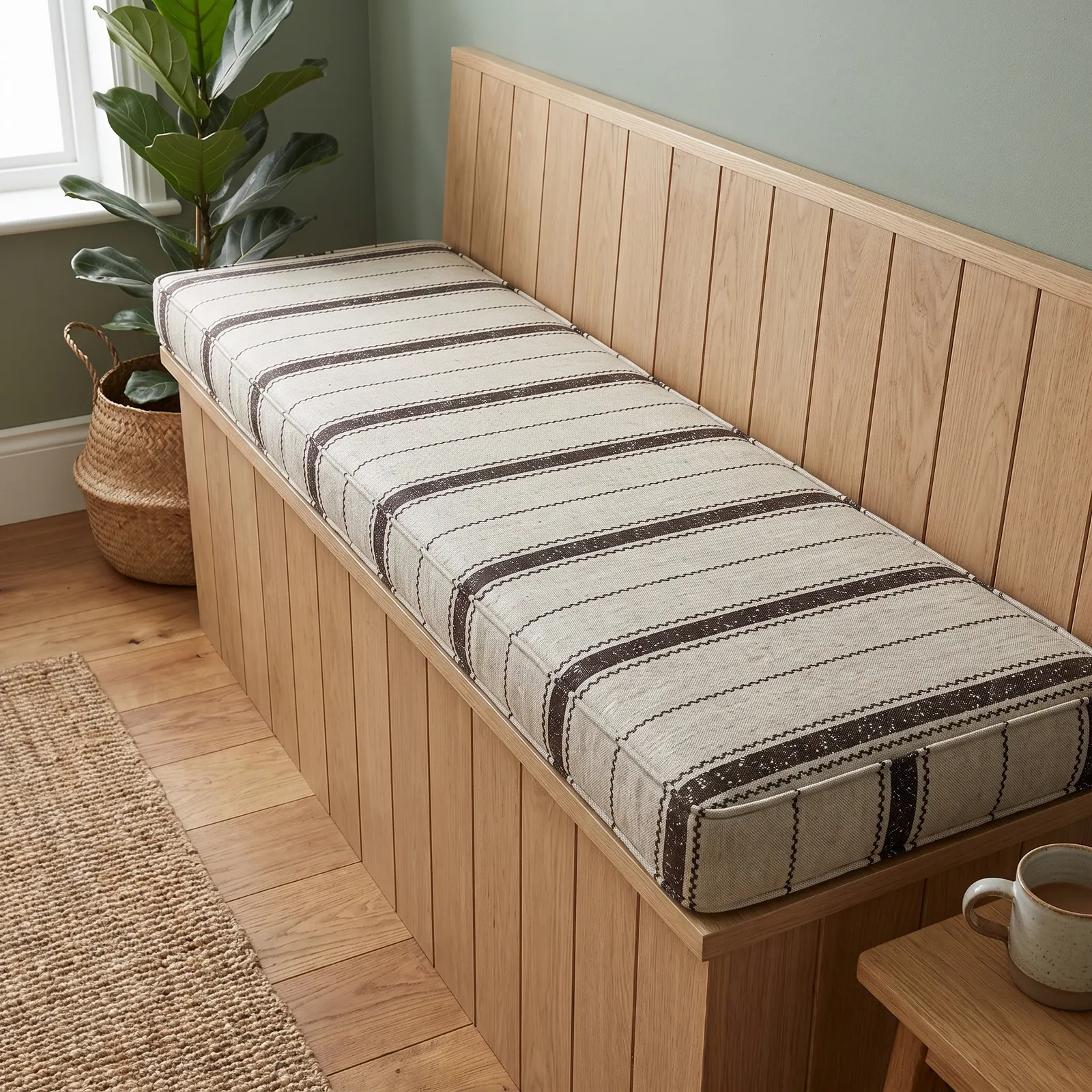
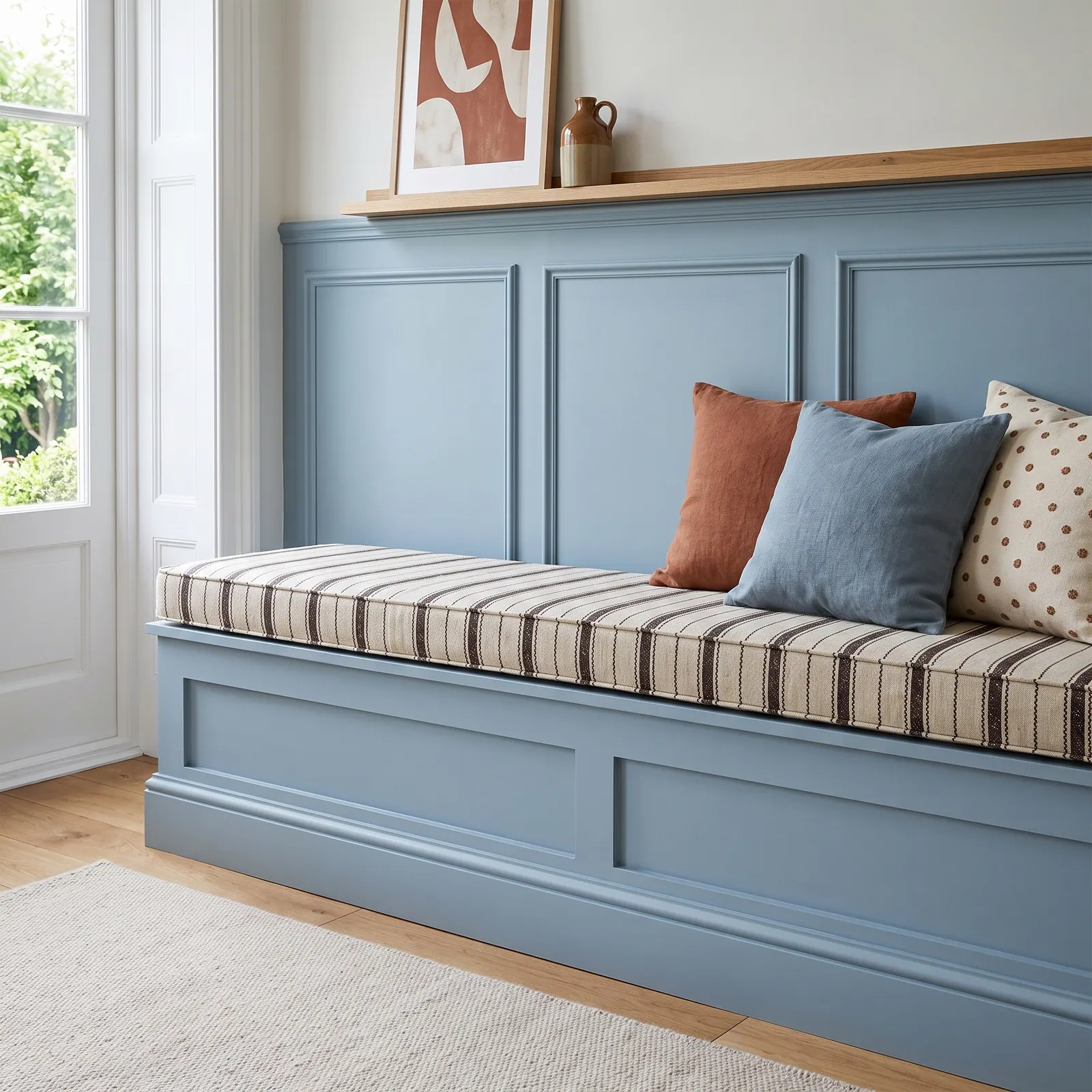
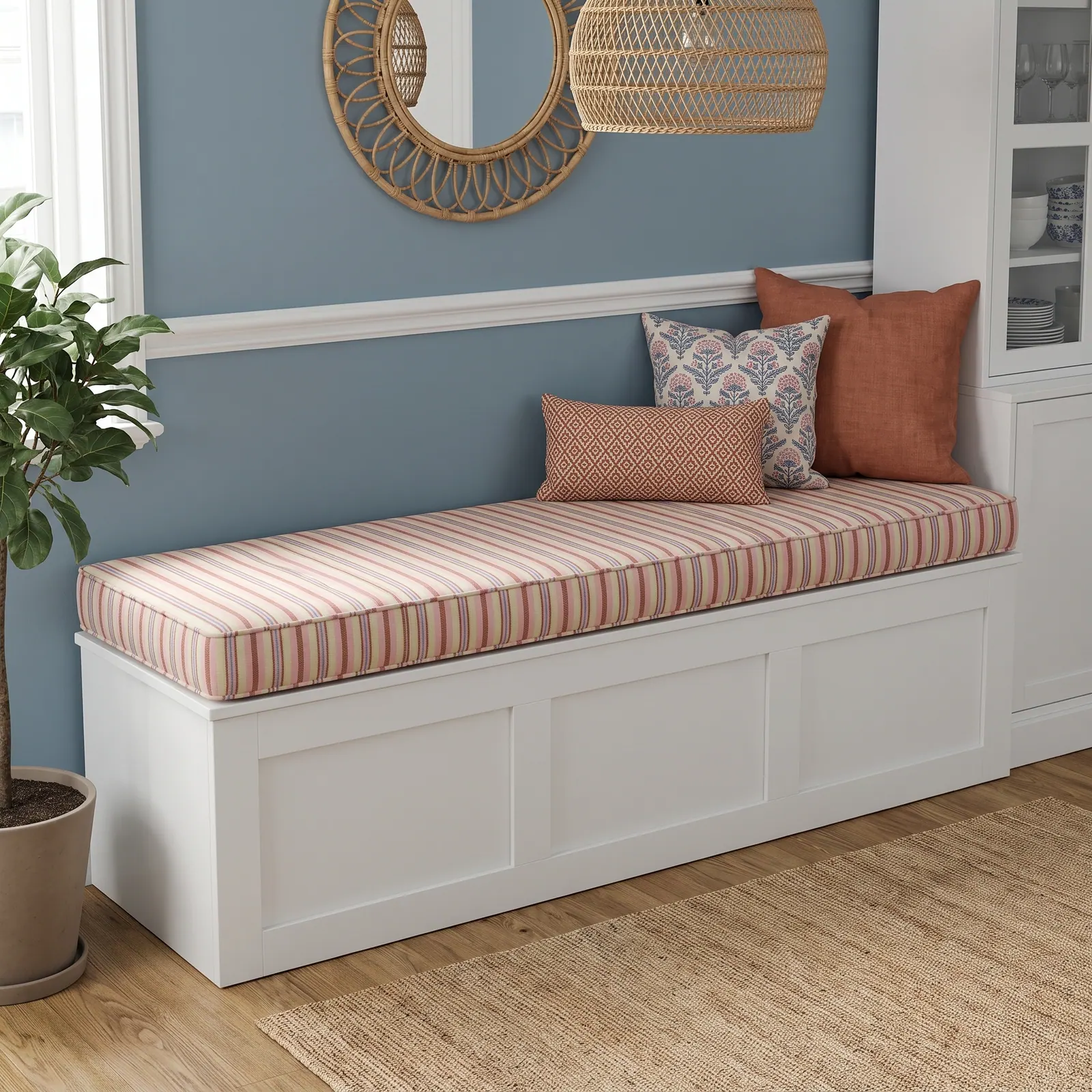
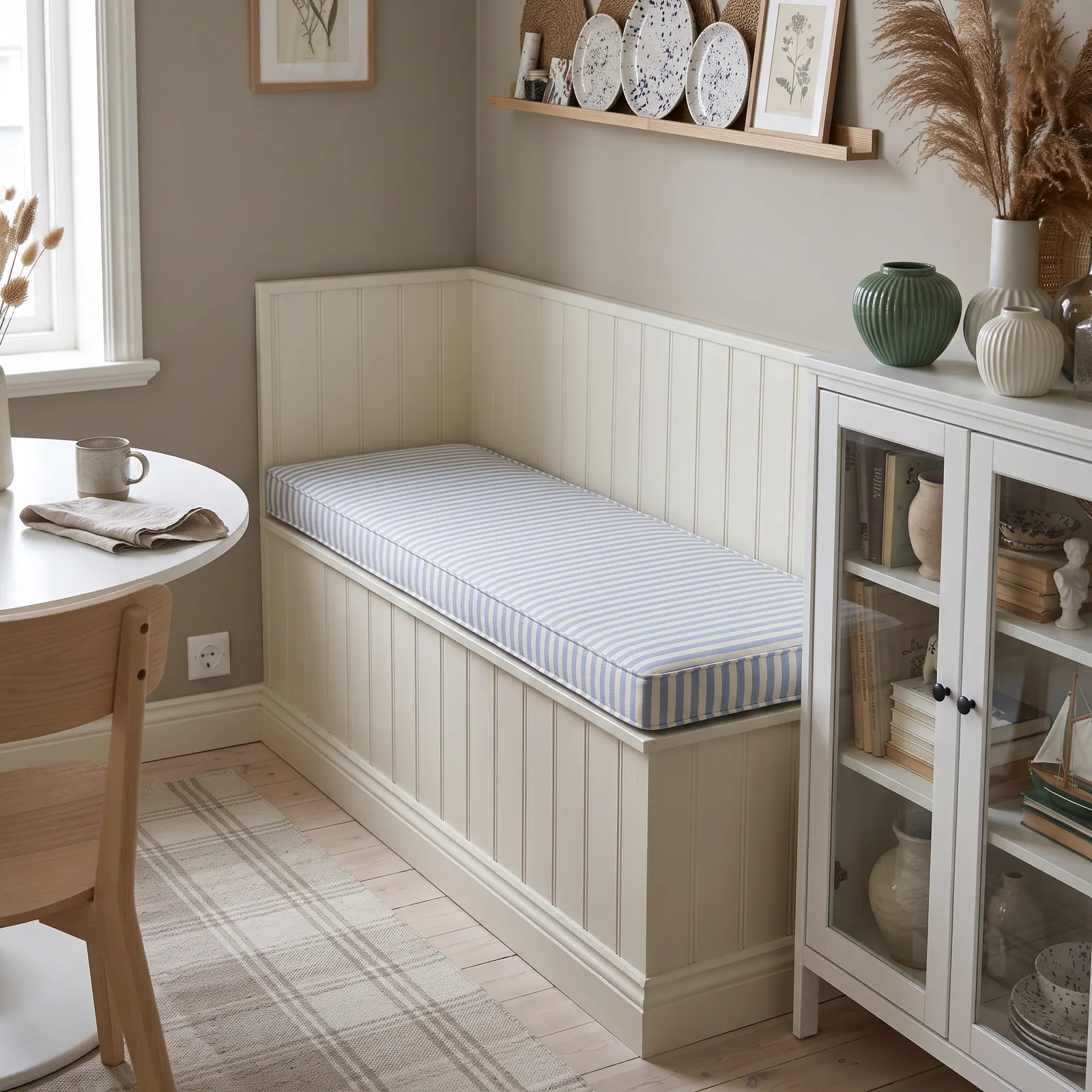
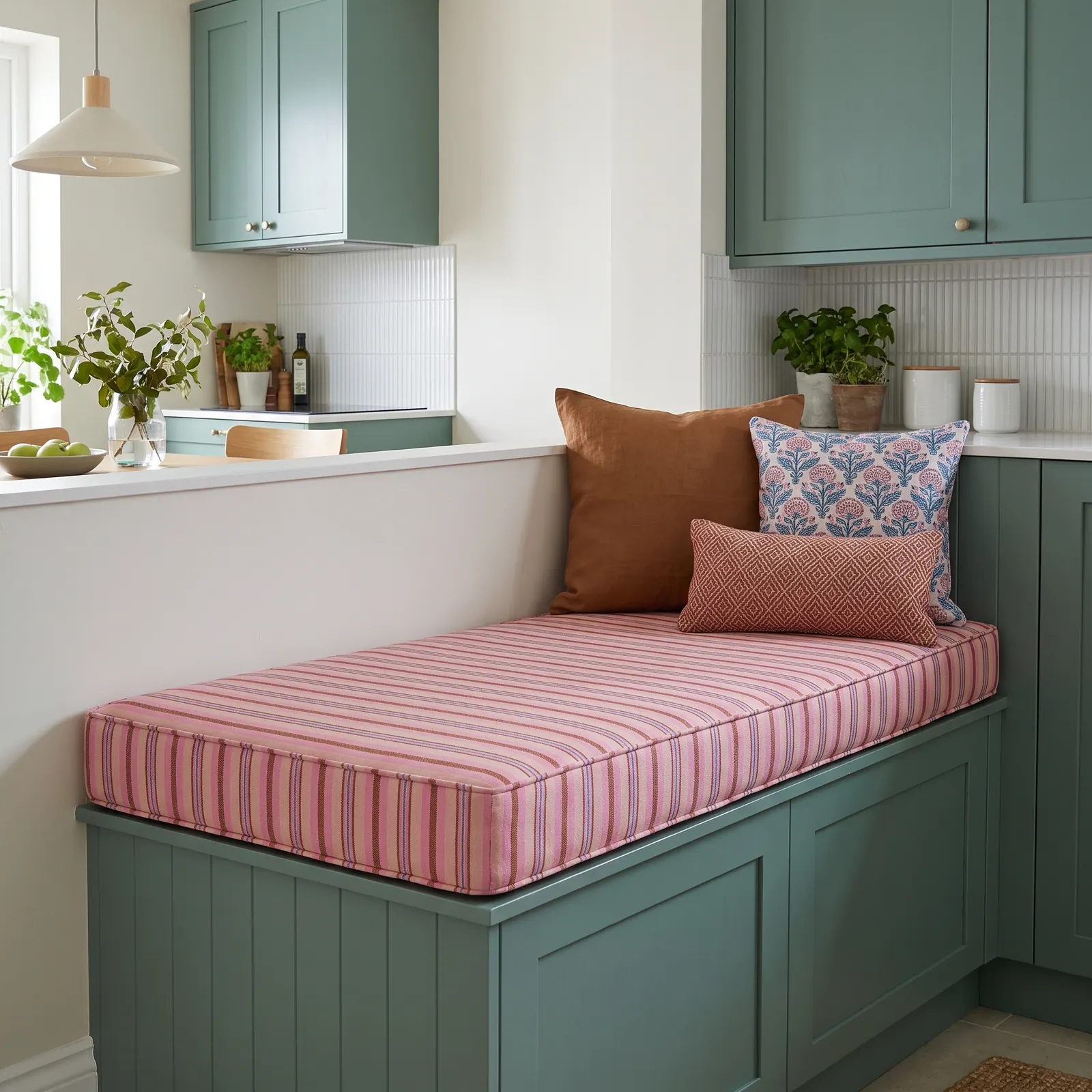
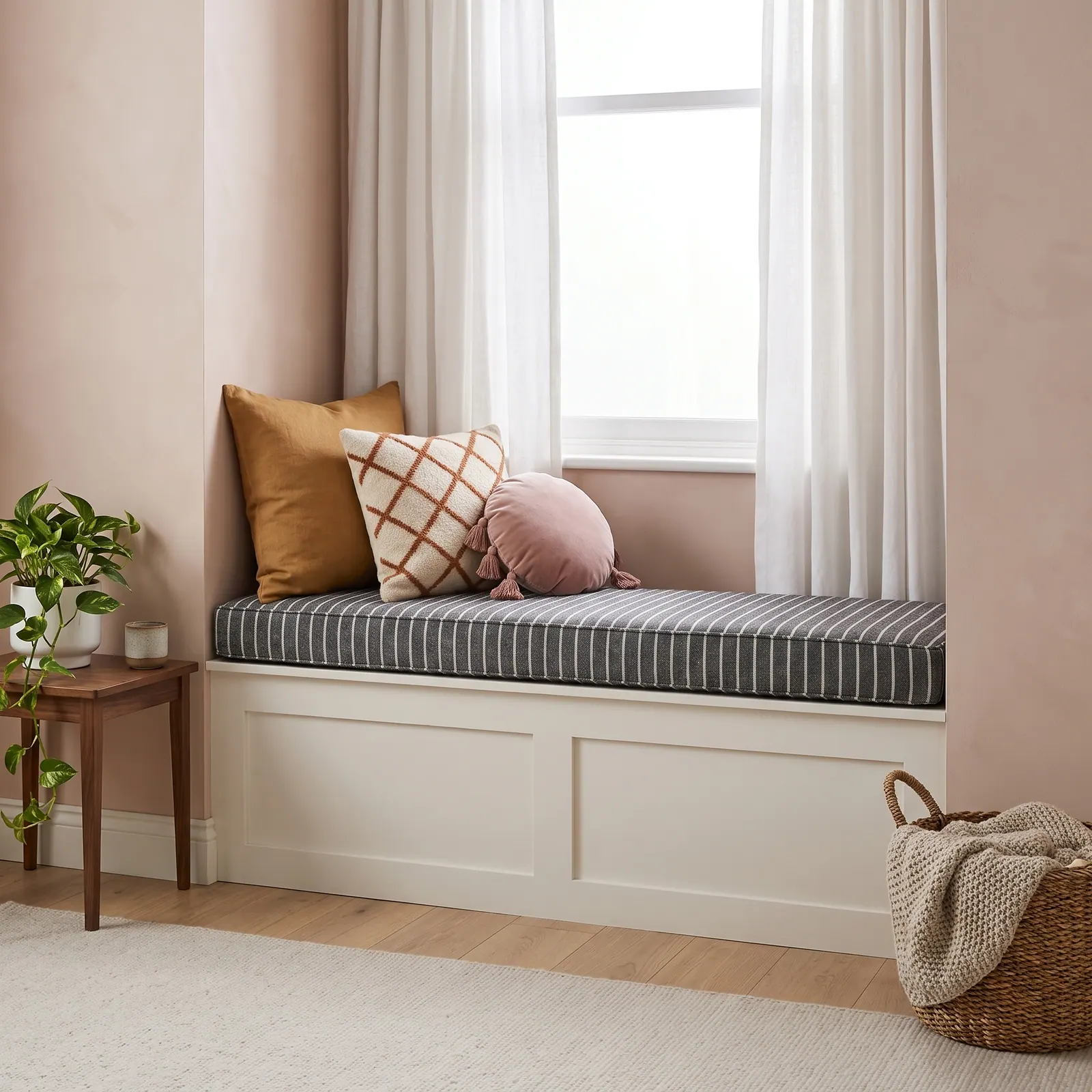
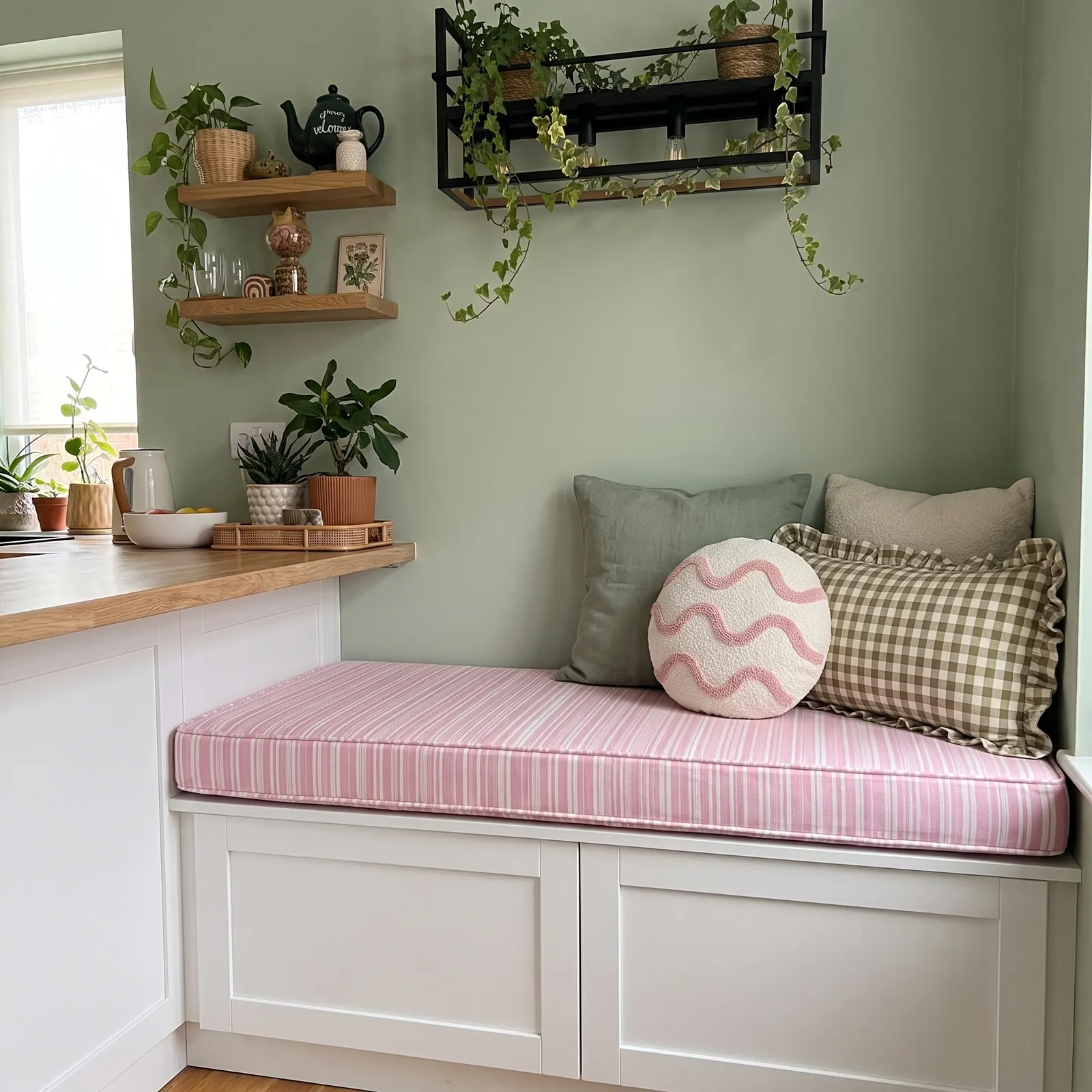
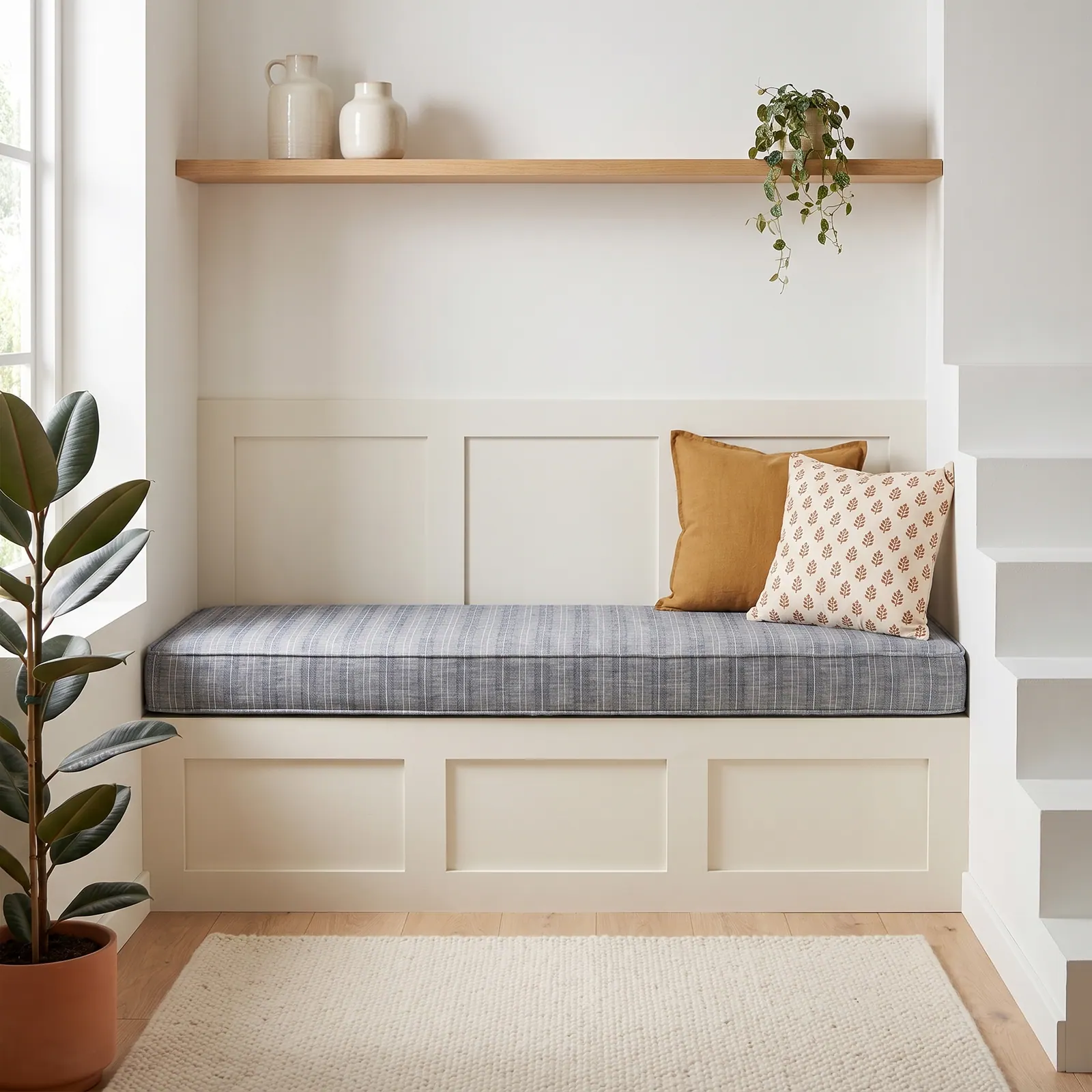
The photographs on this page are nearly all stripes, and they show where natural weaves feel at home. Mushroom taupe with fine white lines on a gray storage bench in a butter-yellow bedroom. Espresso grain-sack bands on oatmeal against sage. Powder blue and ivory on a cream beadboard corner bench. Blush multi-stripe on a teal kitchen banquette. Charcoal chalk stripe in a blush plaster alcove.
These are bench cushions, banquette cushions and window seats in rooms that live gently. One buyer in the US planned to turn a toddler floor bed, a 53.5 x 29.5 in (136 x 75 cm) platform, into a reading loveseat in linen with contrast piping, and settled on 4 in (10 cm) of firm 2.0 lb/ft³ (32 kg/m³) foam.
Under a closed roof, natural weaves are fine. A screened porch full of pollen, dust and damp air is another matter; indoor cushions on a porch walks through where the line falls.
Pure linen on a seat: lovely, and honest about wear
Here is the plain truth, my friends: pure linen wears and wrinkles faster on seating than a blend does. In a blend, the linen brings the look, the texture and the breathability, and the polyester brings strength, shape retention and easy washing. No coating or stain-shield treatment goes on either one.
So choose by the life the cushion will lead. Light linen in a rental is a look chosen over a life. For heavy use the workshop steers people toward performance linen or velvet; for kids and pets, a tight, washable weave in a mid-tone with zip-off covers. Banquette fabric has its own Pattern, and the performance weave has its own shelf here.
Cotton needs a word too. The workshop does not recommend 100% cotton for a nursery, because it copes less well with repeated washing and daily use.
Caring for natural linen and cotton-linen covers
Wipe first
For natural linen bench cushions, a soapy cloth is the workshop's favorite fix for everyday marks.
Unzip from underneath
Every cover has a zipper on the underside and comes off the foam completely.
Wash cool and gentle
Machine wash at no more than 86°F (30°C) on a gentle or delicate cycle with a mild detergent. The 30 on the care note is Celsius.
Air dry, then press low
Let the cover dry in the air rather than in a tumble dryer, and iron on low only if it needs it.
Know the one exception
Button-tufted cushions have covers sewn through the foam, so they stay on; see tufted cushion care.
Stripes in daylight: judging a natural weave's color
Let one color speak and the others listen. A stripe already has two voices, so the piping and the pillows around it should pick a side. Matching or contrast piping is the first decision; stripe direction is the second.
For the color itself, the workshop photographs your body fabric and piping swatches side by side, as many pairs as you like, with extra shots in different light on request. It does not make AI mockups, because they misstate real tones. Close-ups come out a little darker and coarser than daylight shows. When tone decides everything, order physical samples and hold them at your own window, once in the morning and again late in the afternoon.
Natural, blended and look-alike linens side by side
Every cover here unzips and washes at 86°F (30°C) on a gentle cycle.
In real rooms
Open any photograph large; each one has its own link and a Save button.
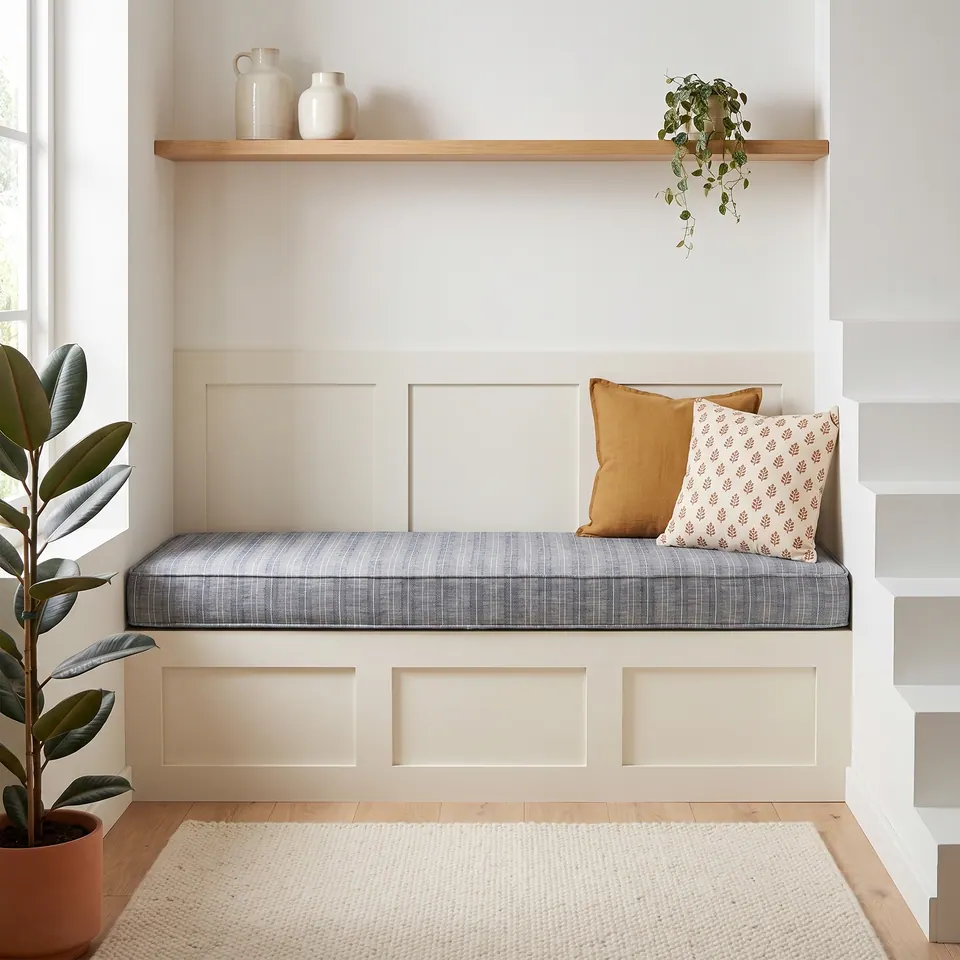
SaveOak boards, a sage wall and a jute runner let the dark grain-sack bands read as the only pattern.SaveA French-style grain-sack stripe warms a cool blue bench, with rust and dotted pillows repeating the art above.SaveA soft coral multi-stripe and three pink-toned pillows warm up a cool dusty-blue wall.SaveA soft blue stripe on cream beadboard, with speckled plates above and a glass cabinet beside, makes a gentle dining nook.SavePink and teal make a fresh modern kitchen pairing; cognac linen adds depth at the back.SaveDark charcoal grounds a soft blush room; mustard, lattice and a tasselled round pillow add the warmth.SaveA real kitchen corner where pink stripes, a ruffled gingham pillow and trailing plants make a cozy breakfast perch.SaveA soft blue-gray stripe keeps an all-cream stair-side alcove calm, with two warm pillows at one end.SaveA tailored gray stripe steadies playful pink walls and a pastel rainbow rug.
A real project
The floor cushion that was meant to be natural
A buyer in the US ordered a floor cushion and asked, specifically, for linen or a natural linen-cotton blend. The cushion arrived on time and well made. The fabric, though, was synthetic.
The workshop traced it to the production floor, where a linen blend had been cut instead. It apologized and offered a remake in a natural light-blue fabric from the chart, and the buyer met the workshop partway on the cost of the second cushion.
I tell this story because the fix was fair and the lesson is cheap. When fiber is the whole point, the composition belongs in writing next to the fabric code, and a swatch should cross your palm before the foam is ever cut.
What it taught
When fiber content matters, get the exact composition next to the fabric code and check a swatch first.
A cushion sold as linen is often a 50/50 blend; if fiber content matters, get the composition of the exact fabric code confirmed before you order.
Do the covers come off, and can they go in the washing machine?
The workshop's answer
Yes. Every cover has a zipper on the underside, where it stays hidden, and comes off the foam completely. All the fabrics, linen and velvet included, machine wash at 86°F (30°C) on a gentle or delicate cycle, for full cushions and cover-only orders alike. Air dry them, and iron on low if needed. Button-tufted covers are the exception: they're sewn through.
A common question
We have a covered porch. Can regular indoor cushions go out there?
The workshop's answer
Yes, if it has a closed roof and rain and direct sun can't reach the seat; the workshop checks that before recommending indoor fabric. Regular fabrics aren't waterproof. For a screened porch exposed to pollen, dust and humidity, or any open-air spot, outdoor fabric is the better choice, and samples can go out first.
A common question
Can I see the fabric and the piping together before I commit?
The workshop's answer
Yes. The workshop photographs your chosen swatches side by side, in as many combinations as you need, with extra shots in different light on request. There are no AI mockups, since they misrepresent tones, and not every pairing exists as a finished cushion. Close-ups look slightly darker and coarser, so physical samples are the safest check.
A common question
Is your 'soft fabric' a natural fiber?
The workshop's answer
No. It's the best-selling upholstery weave, codes 901 to 946: a durable poly-cotton blend (earlier described as 100% polyester), not chenille and not 100% cotton. It wipes clean and washes at 86°F (30°C). If you want natural fiber, choose cotton-linen instead.
A common question
Which fabrics can I choose from, and are there more than the charts show?
The workshop's answer
The main indoor families are linen (linen-look included), velvet and an easy-clean performance weave, each on a chart of about 40 colors. Teddy, corduroy, 100% cotton, 100% linen, chenille, faux leather and an outdoor range are available too, and more than 10,000 fabrics, hundreds of linens among them, can be sourced on request.
Have it made
Have it made in linen or cotton-linen — ask Élodie’s workshop
A fabric reads one way at noon and another at dusk. Mention your light, and the workshop will weigh it with you. — Élodie
Leave your details and the workshop will call you to confirm measurements, fabric, foam and piping. No prices, dates or payment on this page: it is a request, not an order.
Natural-fiber questions, answered plainly
Can I order a cushion in 100% linen?
Yes. A separate 100% linen chart is available on request, alongside 100% cotton fabrics. Expect it to cost more than the standard charts, and expect pure linen to wear and wrinkle faster on a daily seat than the linen-polyester blend does.
Will a natural linen cushion fade in a sunny window?
It can. Indoor fabrics have limited UV resistance and can fade in strong, prolonged sun. For a very sunny bay, ask for a sun-resistant fabric; one buyer in the US with a bay about 160 in (406 cm) long did exactly that, and the workshop suggested two pieces for the length.
Can you recover an old tapered chair cushion in linen?
Yes, as a cover only. One buyer in the US had a tapered cushion 17 in (43 cm) at the back, 19 in (48 cm) at the front, 19 in deep and 3.5 in (9 cm) thick, piped in the same linen as the body. Re-measure first: half an inch on the front width matters.
Can I buy matching linen by the yard for pillows?
Yes. Fabric can be bought by the yard or meter, for extra fabric to match a cushion or for large pillow covers. The workshop sources and customizes fabric but does not weave its own, so the range is mainly plain solids plus the stripe and check cards.
With color and care — Élodie
Share this fabric family
Readings
Cushions made in linen & cotton-linen
Real pieces in real rooms, read by the masters for color, light and wear.

 Save
 Save
 Save
 Save
 Save
 Save
 Save
 Save
 Save
 Save
 Save
 Save