 Save
A Reading by MaggieBench Cushions
An ochre-striped linen bench cushion, and six mistakes a powder-blue built-in avoids
Maggie reads a close-up of a striped linen box cushion on a painted built-in, then lists the mistakes it sidesteps, including one of her own.
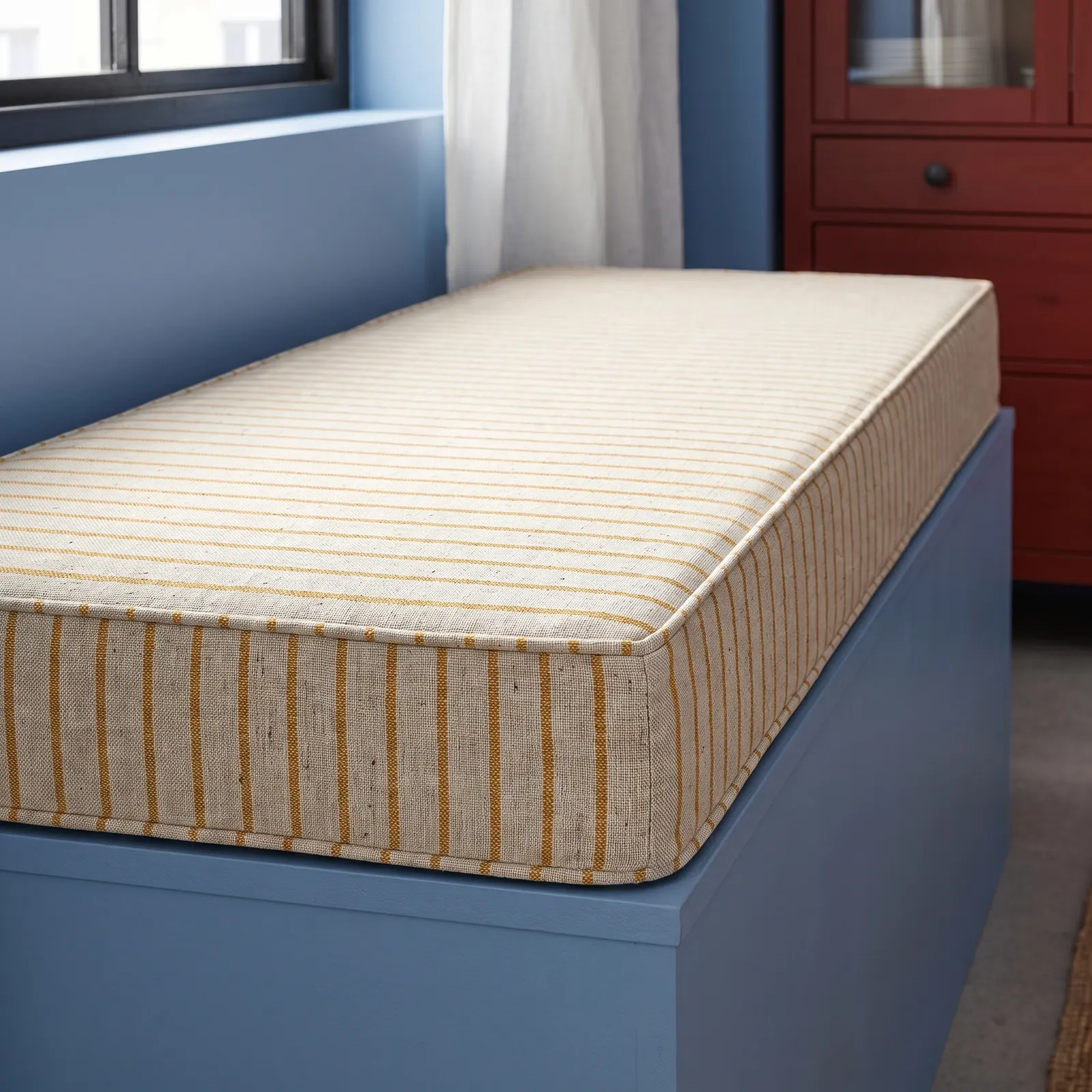
Warm ochre stripes against cool powder blue: a pairing that feels sunny rather than loud.

The quick answer
On a strongly painted built-in bench, choose a striped linen cushion whose accent color sits opposite the paint on the color wheel, on a mostly neutral ground. Here thin ochre stripes on oatmeal linen warm a powder-blue bench, self piping keeps the box edge soft, and a sheer curtain keeps the ochre from turning brassy.
Opposites on the color wheel, and a bench that knows it
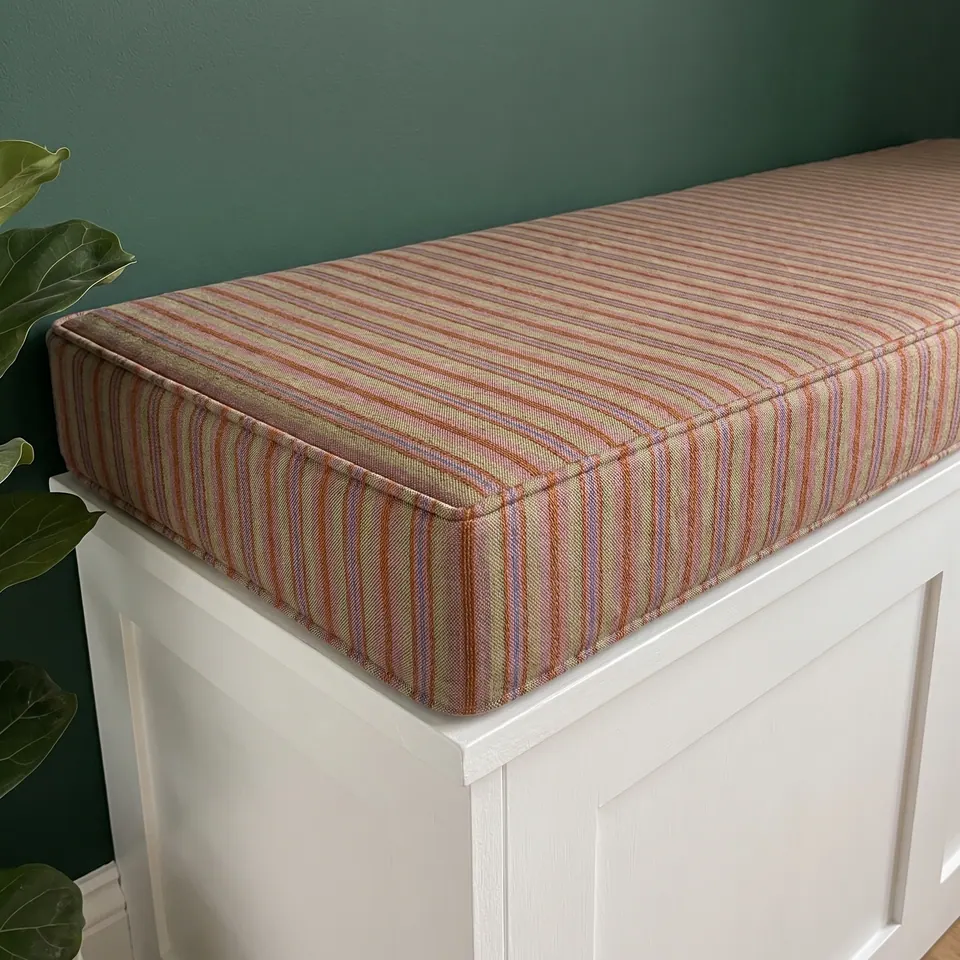
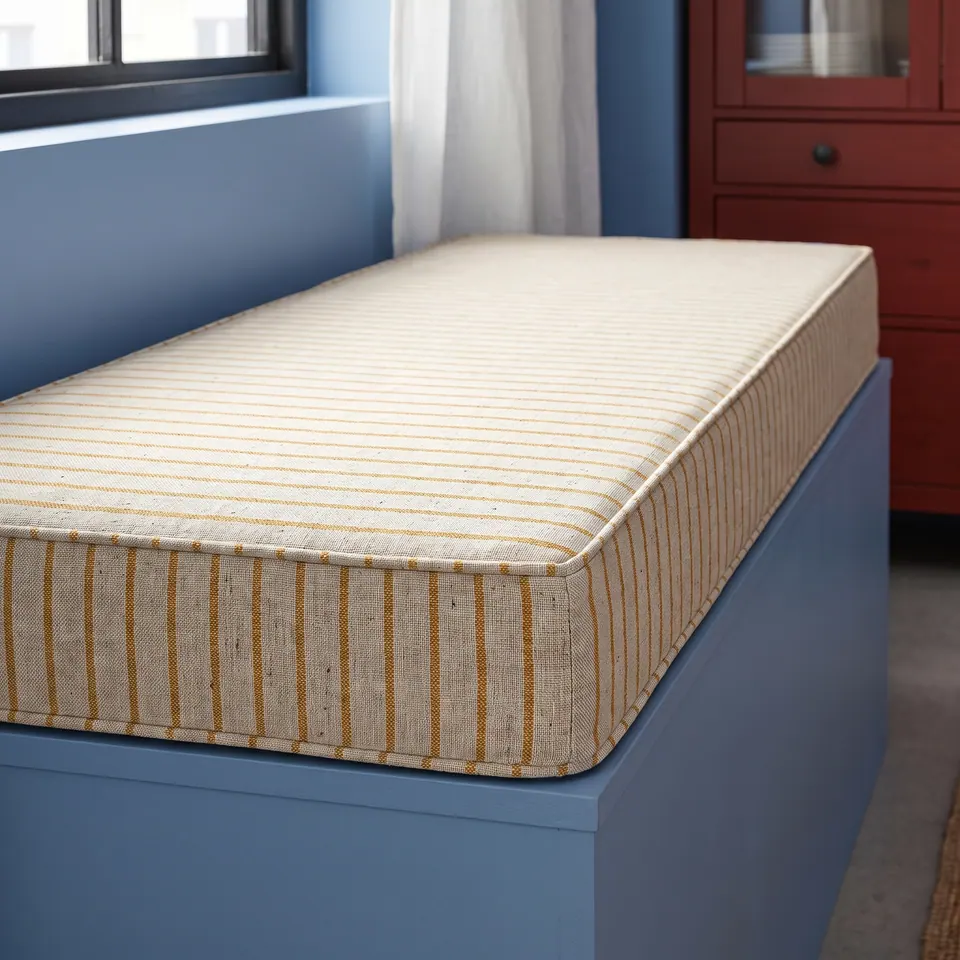
Ochre and powder blue sit opposite each other on the color wheel, and this bench shows what that buys you. A powder-blue built-in under a black steel window, an oatmeal linen box cushion with fine ochre stripes, and the corner feels sunny rather than loud.
The trick is restraint. The ground is mostly oatmeal, flecked and slubby, so the border looks hand-woven. The ochre arrives only as thin lines. That's enough warmth to carry a wall of blue paint; any more and this striped bench cushion would start an argument with the bench.
The box corner is held square by a firm fill, and the self welt softens its line where a contrast cord would have drawn a hard frame. Behind, an oxblood painted glass-front cabinet repeats the warm side of the palette at a darker level, so the ochre isn't alone in the room. A sheer white curtain filters the daylight, and filtered light keeps ochre soft; strong sun can push it toward brass. The gray concrete floor stays out of the conversation, as a floor should.
What color is your built-in painted, dear? Find its opposite, then look for it as a thin stripe on a neutral ground among the linen and cotton-linen weaves. More painted nooks live under kitchen nook cushions.
Pinned by Maggie: the powder-blue corner
Five pins, from the rounded box corner to the oxblood cabinet behind it.
- Rounded box corner
A firm fill holds the corner square while the self welt softens its line.
- Slubby linen border
Flecks in the oatmeal ground give the border a hand-woven look.
- Oxblood cabinet
The deep red piece repeats the warm side of the palette at a darker level.
- Sheer curtain
Filtered light keeps the ochre lines soft instead of brassy.
- Powder-blue base
A painted base in a cool color is what makes the warm stripe glow.
- Rounded box cornerA firm fill holds the corner square while the self welt softens its line.
- Slubby linen borderFlecks in the oatmeal ground give the border a hand-woven look.
- Oxblood cabinetThe deep red piece repeats the warm side of the palette at a darker level.
- Sheer curtainFiltered light keeps the ochre lines soft instead of brassy.
- Powder-blue baseA painted base in a cool color is what makes the warm stripe glow.
Six mistakes this bench doesn't make
- A bold stripe on bold paint. Thin ochre lines on oatmeal carry the contrast; wide ochre bands on blue would shout.
- An accent that matches the paint. A blue stripe on a blue bench disappears; the opposite color is what makes it glow.
- A hard cord around soft linen. The self welt keeps the edge quiet against the painted box.
- Full sun on a warm yellow. The sheer curtain stops the ochre from turning brassy.
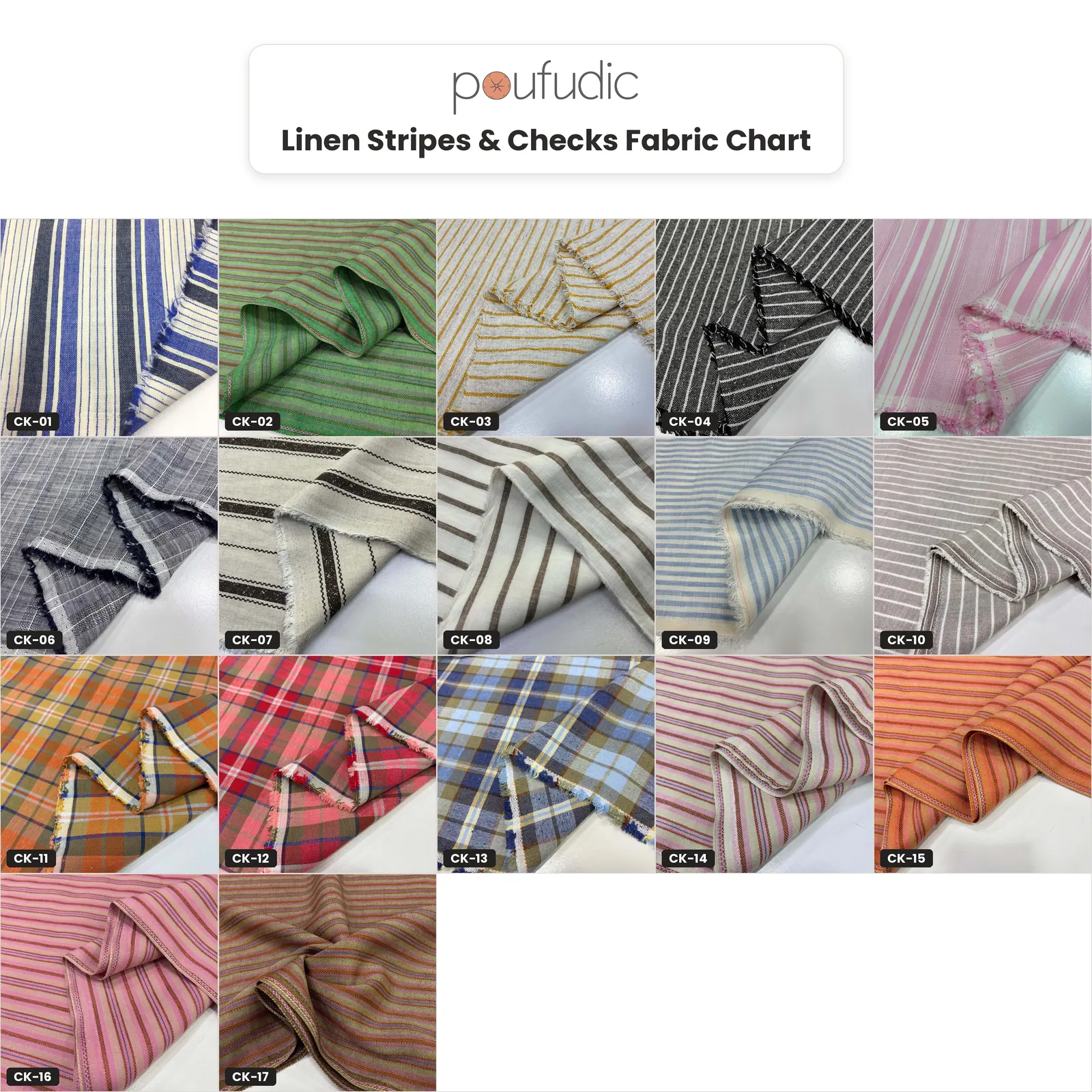
- Judging yellow from a screen. For a striped yellow linen, ask for real fabric images before production.
- A drawing without units. The story below shows what inches read as centimeters can do.
Inches, read as centimeters
A buyer in the US sent measurements for three trapezoid window seats, in inches. The workshop quoted, then realized it had read the inches as centimeters. The true figure came out at more than double the first one.
It took some back-and-forth to settle. The final order went out with inserts, 3 in (7.5 cm) thick instead of the 2.5 in (6.5 cm) first discussed, in L-07 linen with L-02 ivory piping. The buyer later wrote that they loved the result.
Measure the bench, not the cushion you used to have, and write the unit beside every number on the drawing. I once cut from a note that said only 18, and I will not tell you which unit I guessed. The trapezoid measurements Pattern and the trapezoid calculator keep the units honest.
Buyer questions: backrests, yellows, very long cushions
- A common question
Can I buy only the straight backrest pillows for a floor sofa?
The workshop's answerYes, backrests are sold separately. The straight backrest is about 39 3/8 in long, 15 3/8 in deep and 15 3/8 in high (100 x 39 x 39 cm). That's close to the size of similar floor sofas from other makers, so it can replace or add to those.
- A common question
Do you have a dark mustard or a marigold yellow?
The workshop's answerSoft fabric 920 is the brighter yellow, and velvet 111 is a deeper mustard; the workshop sends photos of cushions made in each. For a striped yellow linen, it sends real fabric images so you can judge the tone before production.
- A common question
Should a very long cushion, about 103 in, be one piece or two?
The workshop's answerEither works: one 103 1/8 in (262 cm) piece or two of 51 5/8 in (131 cm). The workshop recommends two, but at the buyer's request it made a single long piece, later adjusted to 103 1/2 in (263 cm) long and 15 3/4 in (40 cm) wide.
On the cutting table: the blue built-in
| Cushion | Box-edge bench cushion on a powder-blue painted built-in |
|---|---|
| Fabric | Oatmeal slub linen with fine ochre stripes, code CK-03 |
| Piping | Self welt |
| Corner | Firm fill holds the box corner square |
| Color logic | Ochre stripe opposite a powder-blue base |
| Light | Daylight filtered through a sheer white curtain |
| Room partners | Oxblood glazed cabinet, black steel window, gray concrete floor |
| Best for | Painted built-ins, kitchen nooks, dining benches |

Have it made
Have this made — ask Maggie’s workshop
Have the tape measure handy when they call. Old cushions shrink and sag; the seat underneath does not. — Maggie
Leave your details and the workshop will call you to confirm measurements, fabric, foam and piping. No prices, dates or payment on this page: it is a request, not an order.
On a powder-blue built-in bench, a linen cushion with thin ochre stripes on an oatmeal ground warms the whole corner without shouting.
Maggie
Questions buyers ask next
What cushion color goes with a powder-blue bench?
Its opposite on the color wheel, used sparingly. Ochre lines on an oatmeal ground warm the blue without competing, and a darker warm piece nearby, like an oxblood cabinet, repeats the idea.
Should a striped linen cushion have contrast piping?
Often not. On a fine stripe, a self welt keeps the box edge soft and lets the stripe carry the pattern. A contrast cord adds a second hard line around a surface that is already busy.
Why does yellow fabric look brassy in some rooms?
Strong direct light pushes ochre and mustard toward brass. A sheer curtain filters the daylight here and keeps the stripes soft, so judge yellows in the light they will actually live in.
Is slubby texture in linen a flaw?
No. Slubs and flecks are the character of the yarn and give the border its hand-woven look. On a pale ground they also make small marks a little less obvious than a flat, even weave would.
Stitch straight — Maggie
More photographs to read
 Save
 Save
 Save
 Save
 Save
 Save