A Reading by NateBay Window Cushions
A flax bay window cushion with wine piping, checked at morning, noon and evening
Nate treats light as one more measurement: how a flax seat and a burgundy welt shift across a three-panel bay, why screens drift, and a buyer's slant that was off by 1 1/2 in.
The quick answer
Check a bay window cushion fabric in the bay itself at three times of day, because a three-panel bay lights the seat from several directions and the color shifts with them. Warm light pushes flax and cream toward gold, daylight reads them grayer, so choose piping, like this wine red, that still holds its line in the dimmest light you sit in.

 Save
 Save
 Save
 Save
 Save
 Save
 Save
Pinned by Nate across the bay
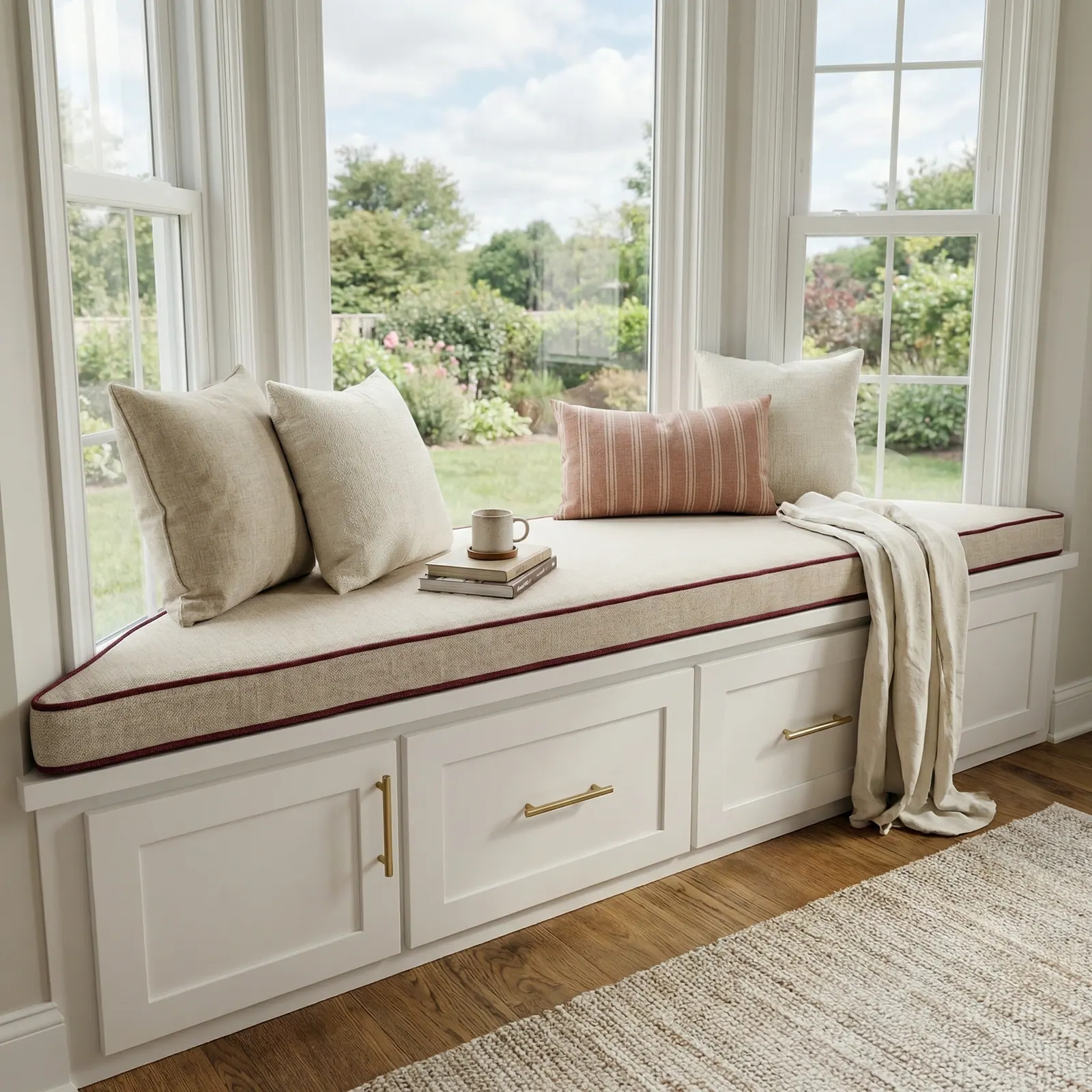
Five pins, from the linen pillow pair and the striped lumbar to the draped throw, the mug on two books and the wine-red welt.
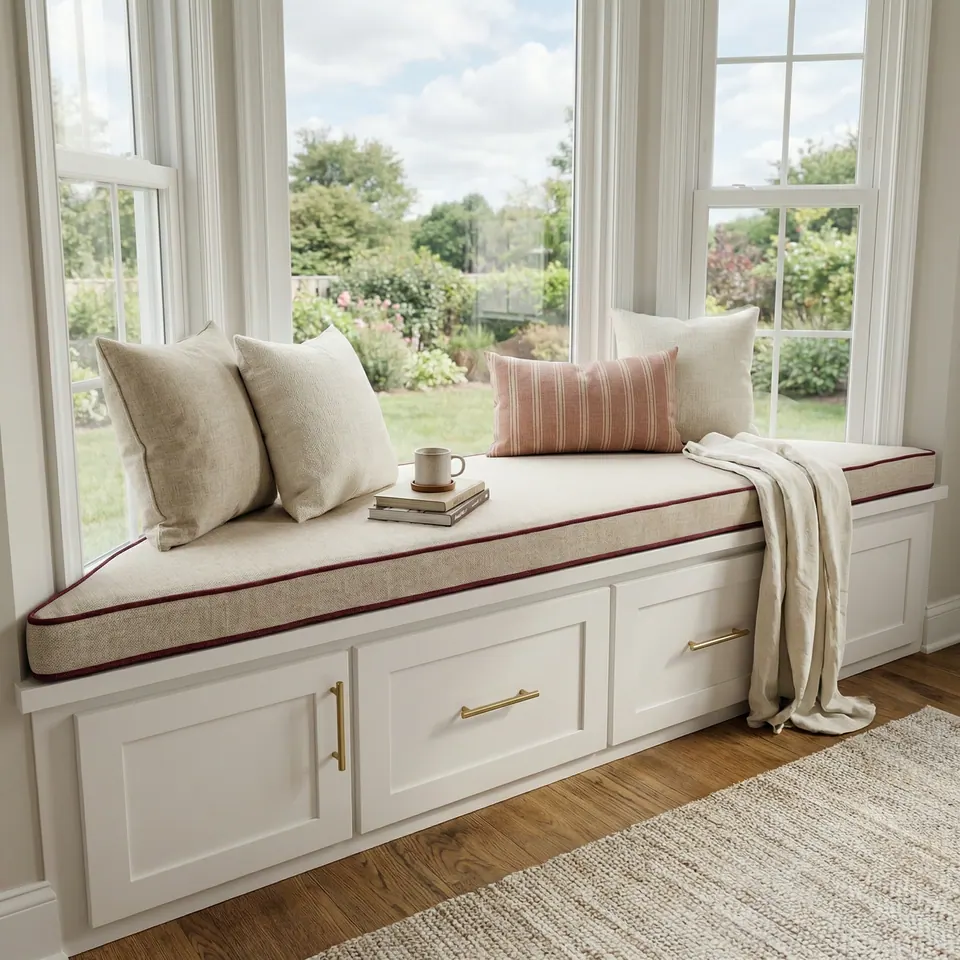
- Linen pillow pair
Two natural linen pillows lean into the corner, leaving open seat beside them.
- Striped lumbar
Its blush stripe repeats the piping color in a softer tone, linking pillow and cushion.
- Draped throw
The throw spills over the end and breaks the long straight line of the bench.
- Mug and books
A single mug on books is enough to say reading seat.
- Wine-red piping
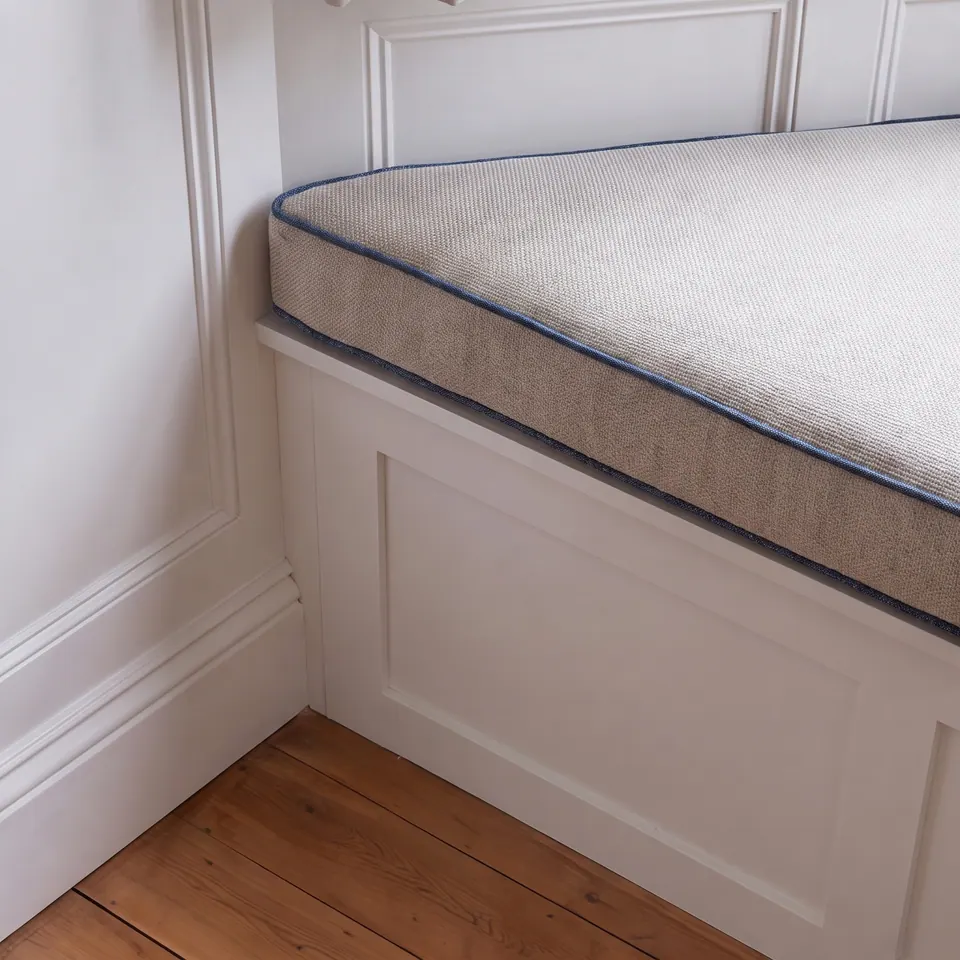
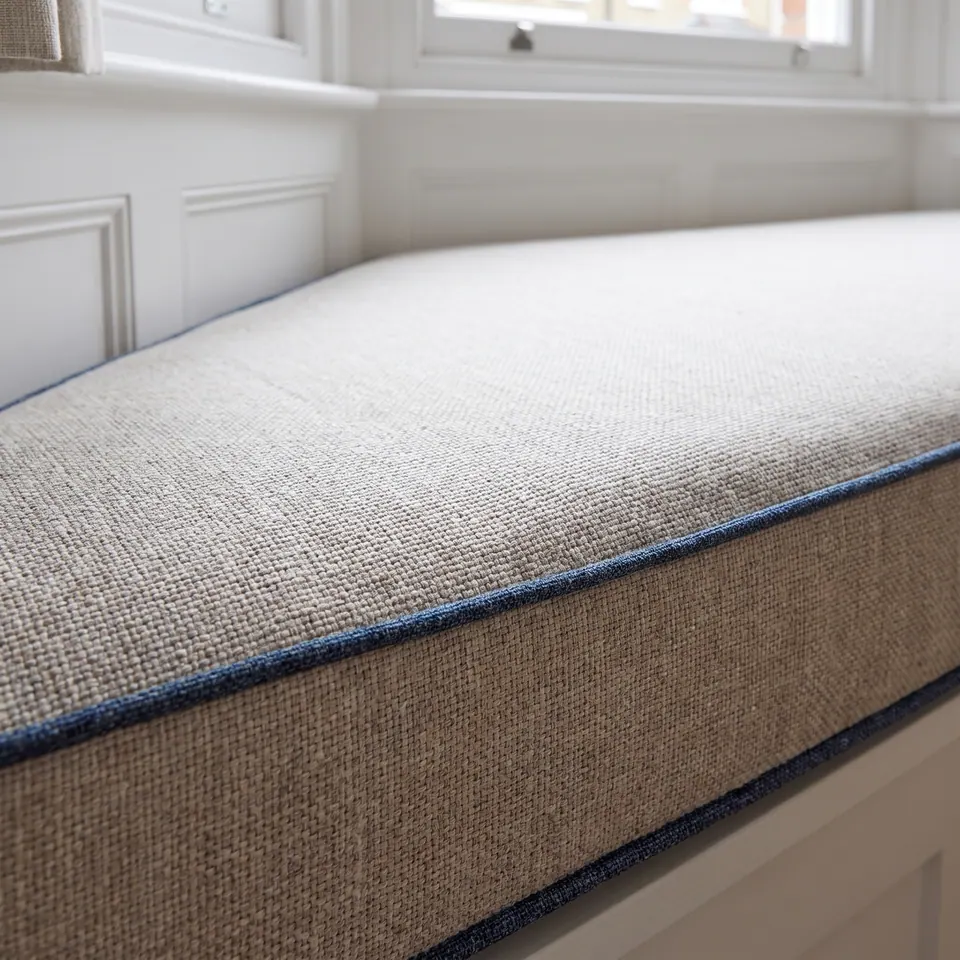
A thin wine welt gives the flax box edge a sharp, finished outline.
- Linen pillow pairTwo natural linen pillows lean into the corner, leaving open seat beside them.
- Striped lumbarIts blush stripe repeats the piping color in a softer tone, linking pillow and cushion.
- Draped throwThe throw spills over the end and breaks the long straight line of the bench.
- Mug and booksA single mug on books is enough to say reading seat.
- Wine-red pipingA thin wine welt gives the flax box edge a sharp, finished outline.
Three windows, three light sources
Here is a reading most people skip, partner: a bay window is three light sources, not one. The center panel faces out, the two angled panels face off to either side, and a seat in the middle takes light from all three. As the sun moves, the mix changes, and so does the color of your cushion.
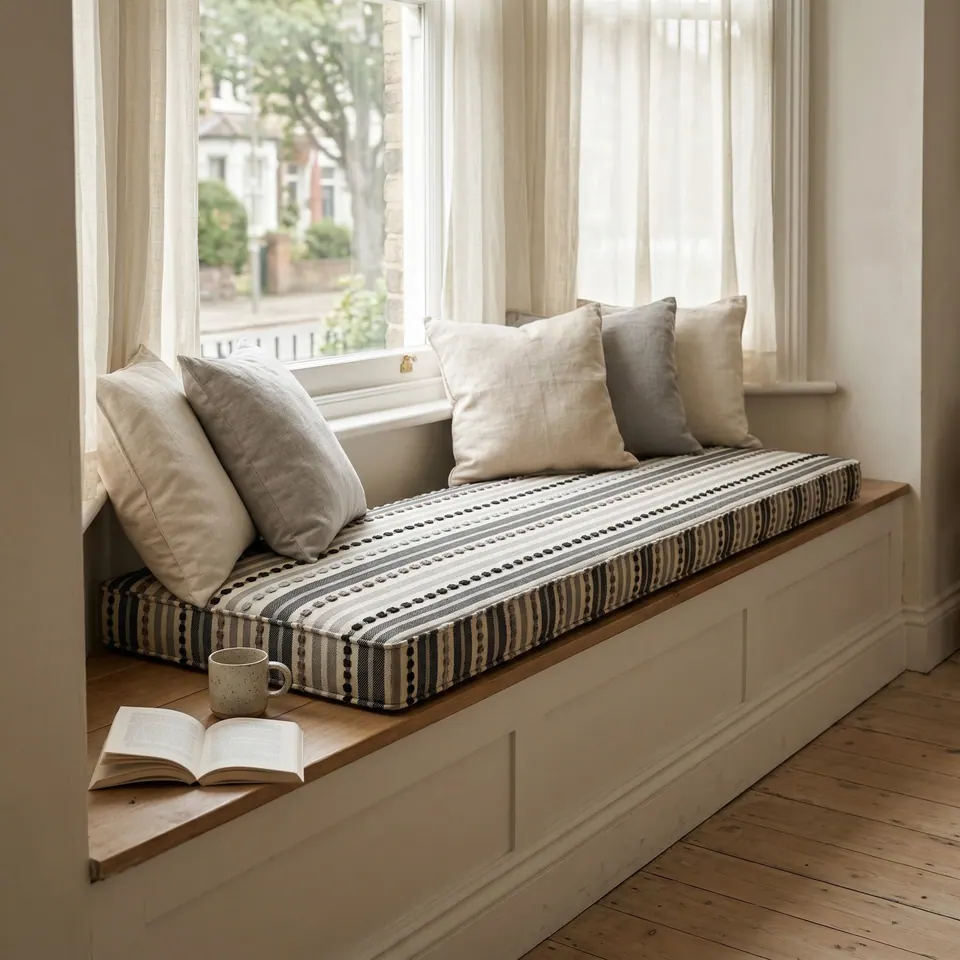
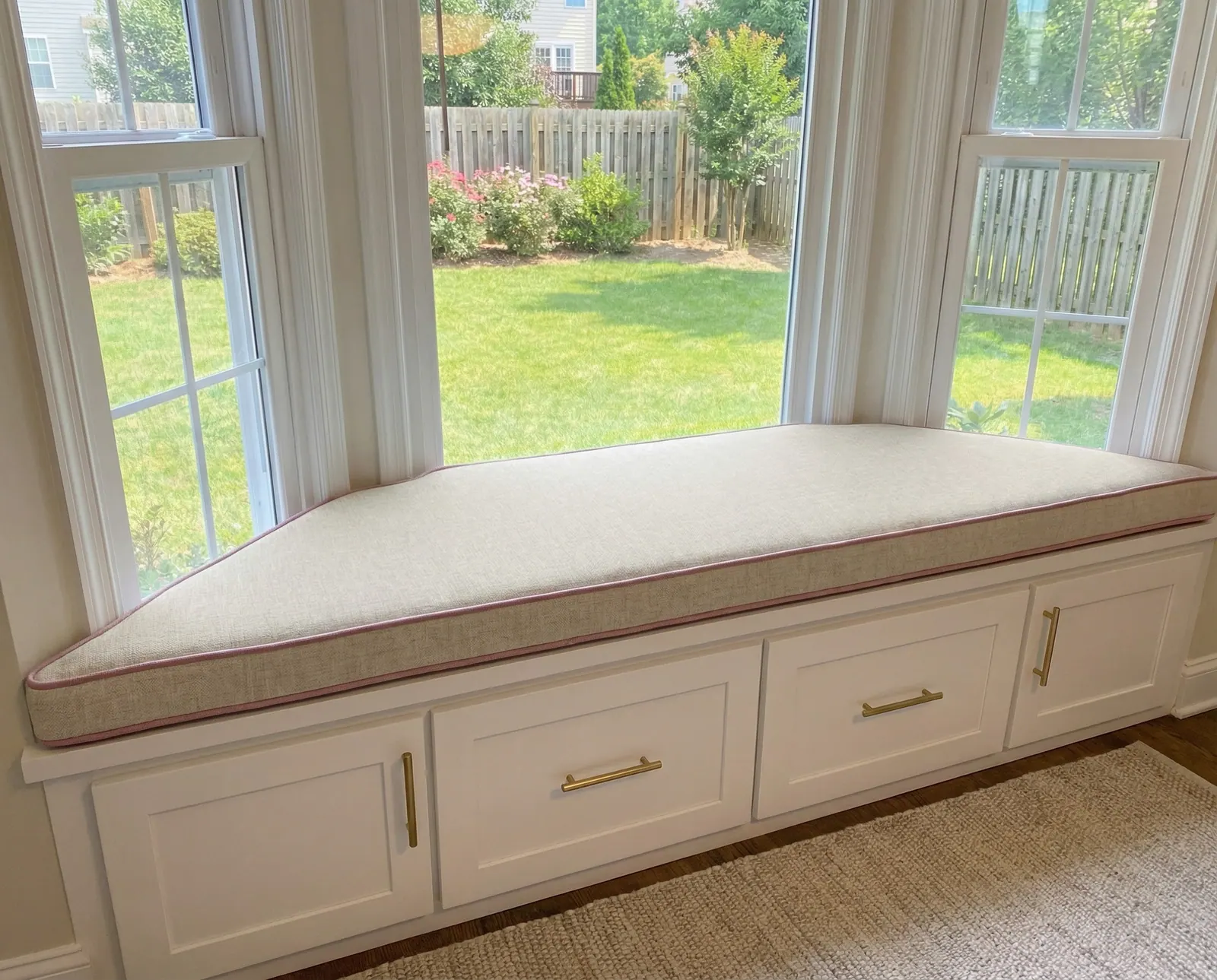
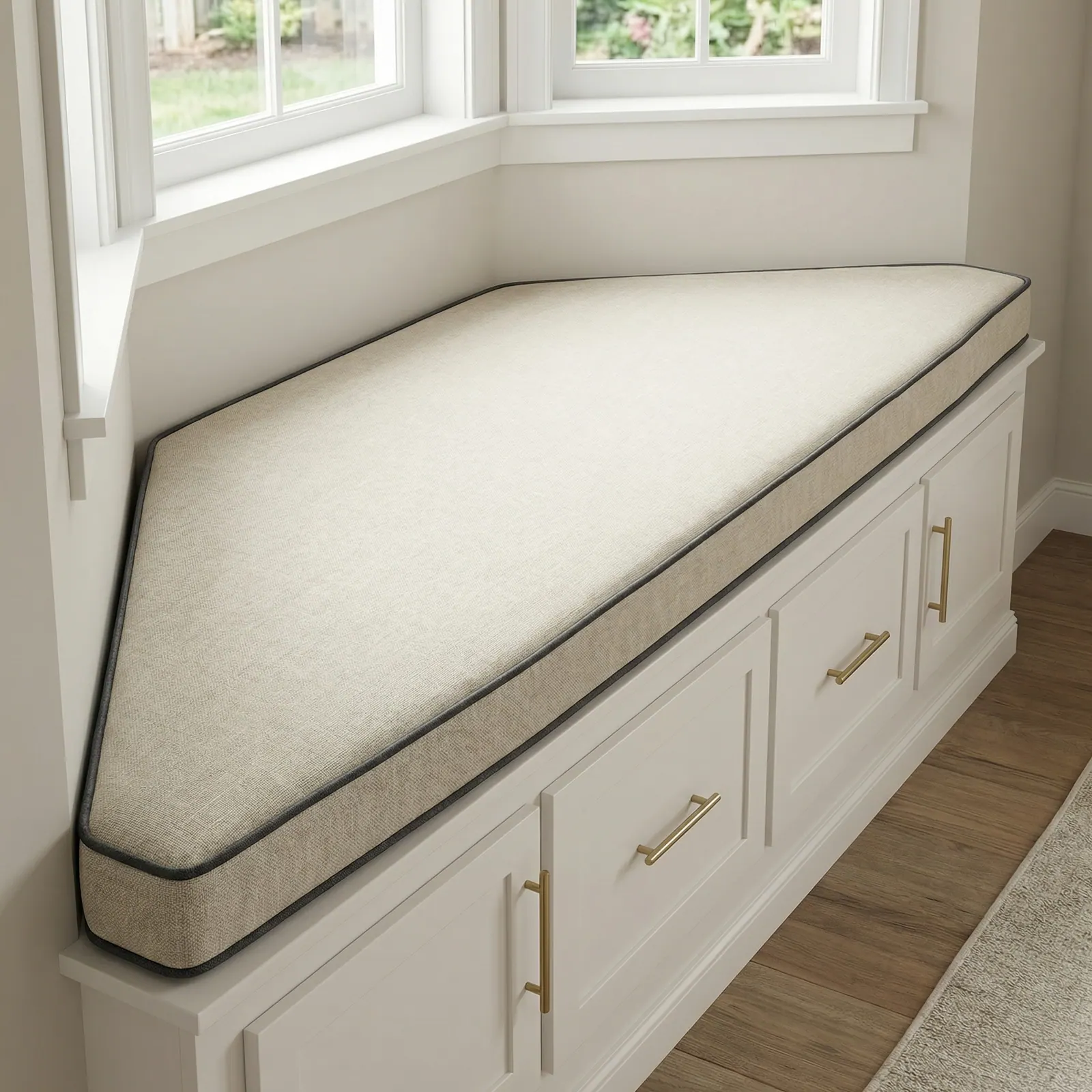
This one is flax linen on a white shaker storage bench, photographed in bright summer daylight over a rose garden. At that hour flax reads clean and slightly cool. The wine-red piping is thin, one welt on each box edge, and it gives the flax a sharp outline that daylight can't wash out.
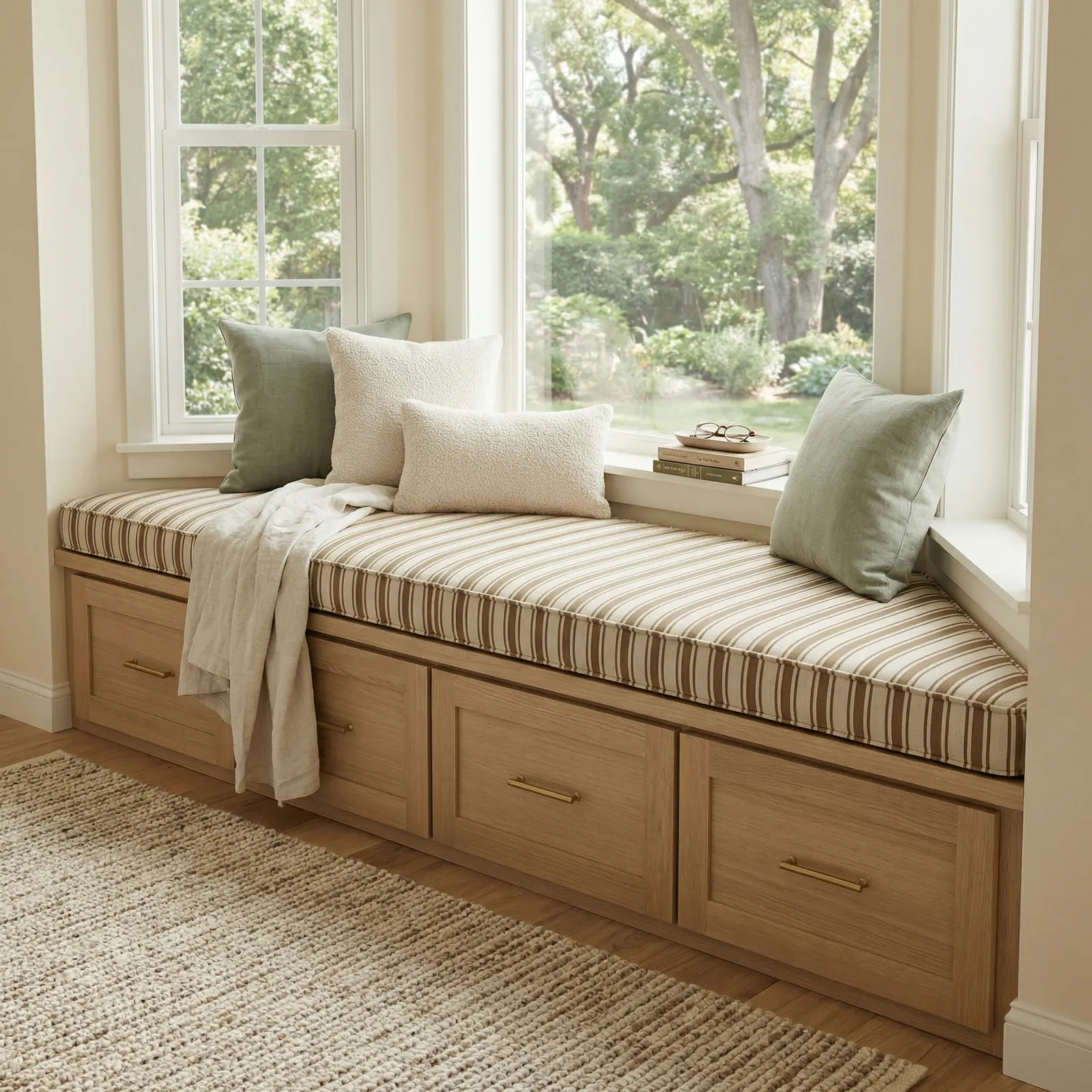
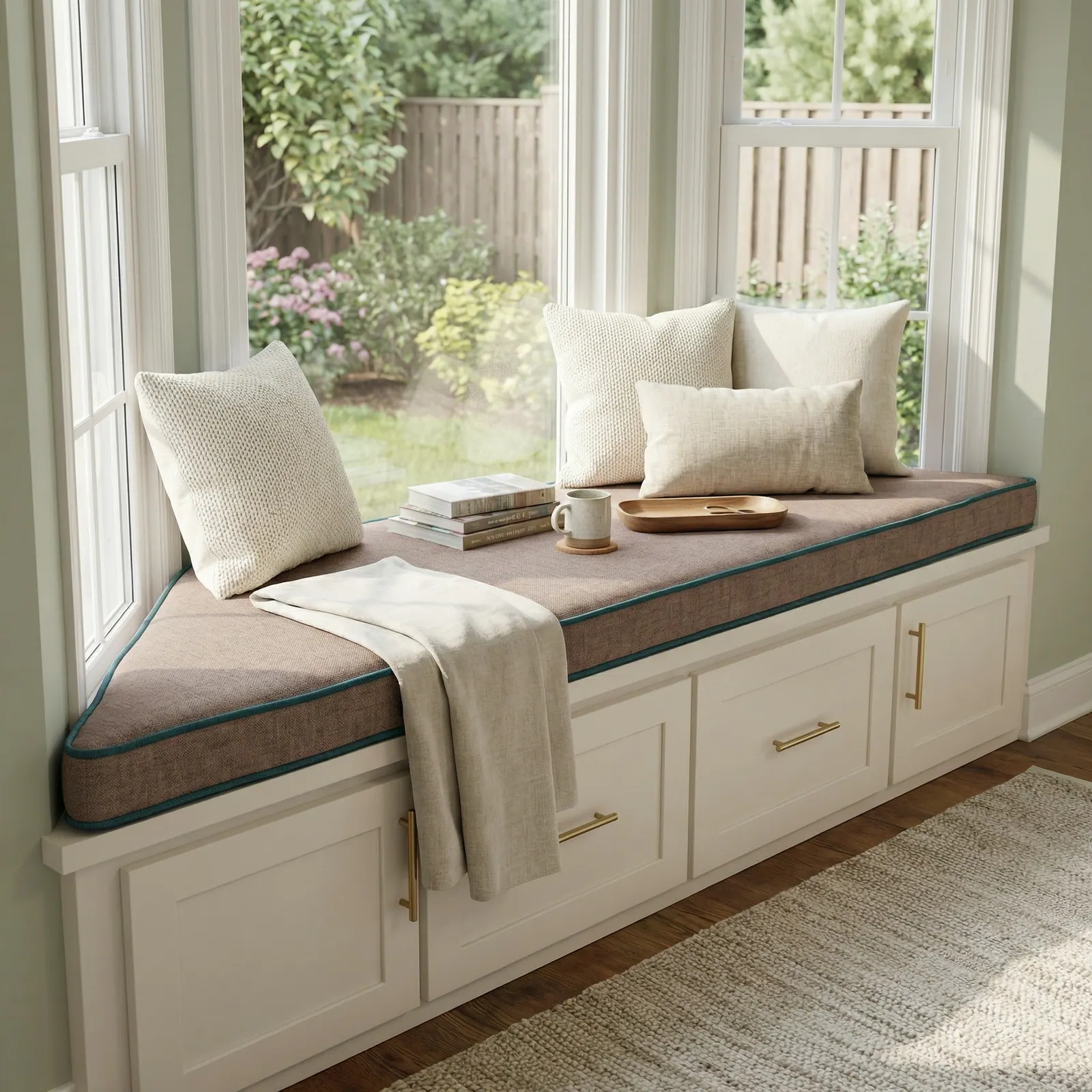
The pillows are a study in linked color. Two natural linen pillows lean into the left corner with an ivory linen pillow. A blush and rust striped lumbar repeats the piping's burgundy in a softer key, so pillow and cushion are related without matching. Between the clusters there is open seat, which is the whole point of a window bench.
A mug on two books says reading seat in two props. A cream linen throw spills over the right end and breaks the long horizontal. Brass bar pulls and a jute rug keep warm notes low, where evening light will find them. More seats like this live in the bay window cushion atlas.
Read the swatch the way you read a tape: three times
Morning, on the seat
Tape the swatch where the cushion will sit and look at it after breakfast. Note whether the flax leans gray or gold.
Midday, from across the room
Look again from the doorway. In daylight, cream and beige tones read grayer, and the fabric chart is closer to this reading than warm-lit listing photos are.
Evening, with the lamps on
Warm light brings cream and beige forward. Check that the piping still reads as a line; two colors that match at noon and part ways under lamps are showing metamerism.
Screen, last
Compare your notes with the monitor. When they disagree, trust the daylight reading; the screen versus daylight pattern explains why.

Have it made
Have this made — ask Nate’s workshop
Precision starts on the phone. Give the workshop your measurements and they will read them back to you, edge by edge. — Nate
Leave your details and the workshop will call you to confirm measurements, fabric, foam and piping. No prices, dates or payment on this page: it is a request, not an order.
± 1/4 in — Nate