The Cutting Table · a common question
How do I measure a bay window seat for a cushion?
Also asked as:It's a bay window, so how do I give measurements?There are weird angles to my window seat.
A bay window seat is a polygon pretending to be a bench. Treat it as a list of straight lines, partner, and it gives up its secrets.

The quick answer
Measure a bay window seat by sketching it from above and writing every edge length on the drawing: the back edge against the window, the front edge, each angled side, and the depth from front to back. Type the numbers in your message as well, choose the size range by your longest edge and depth, and the workshop checks the geometry before cutting.
 Save
Key facts
- Draw the bay seat from above and write every edge length on it, in order.
- On the trapezoid chart, E is the depth front to back; A is often the thickness.
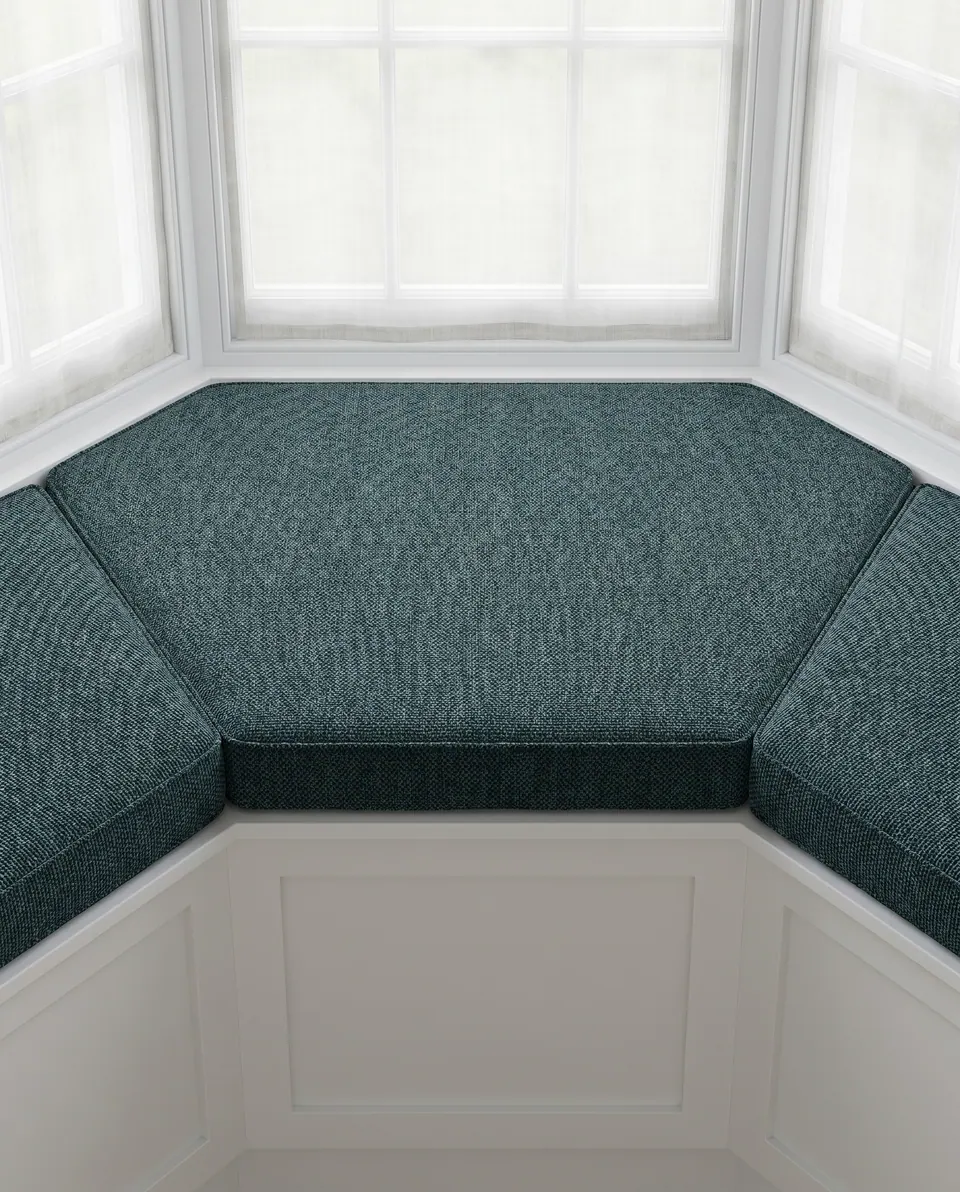
- For bays with several windows, measure every line between the breaking points plus the depth at each point.
- Bay cushions follow the real angles; curved corners would leave gaps.
- Choose the size range by your longest edge and your depth, e.g. 105 in (267 cm) and 18 in (45.5 cm).
- Upload the drawing and a photo of the bay, and type each side length in the message too.
- Multi-angle bays can be one continuous cushion, with a zipped removable cover and firm foam.

Have it made
Have Nate’s workshop cut this for you
Precision starts on the phone. Give the workshop your measurements and they will read them back to you, edge by edge. — Nate
Leave your details and the workshop will call you to confirm measurements, fabric, foam and piping. No prices, dates or payment on this page: it is a request, not an order.
Five measurements, in order
Sketch it from above
Usually a trapezoid, sometimes more angles. A simple hand sketch is enough.
Back edge, then front edge
The back edge runs against the window; the front edge is where your knees go.
Every angled side, edge by edge
Straight lines at the corners, never a curve.
Depth at every breaking point
Front to back. With several windows, take it wherever the line breaks.
Label and type
Letter the sides A to E; type every number too.
Why straight lines beat a pretty curve
Angles are just lengths in disguise. Give the workshop every edge and it rebuilds your bay on paper, checks that the shape closes, and confirms before anything is cut. On the trapezoid chart, E is the depth and A is often the thickness, so say which letter means what.
Size doesn't scare anyone: a bay 98.5 in (250 cm) across the front, 62.5 in (159 cm) at the back and 23 in (58 cm) deep became one continuous cushion.
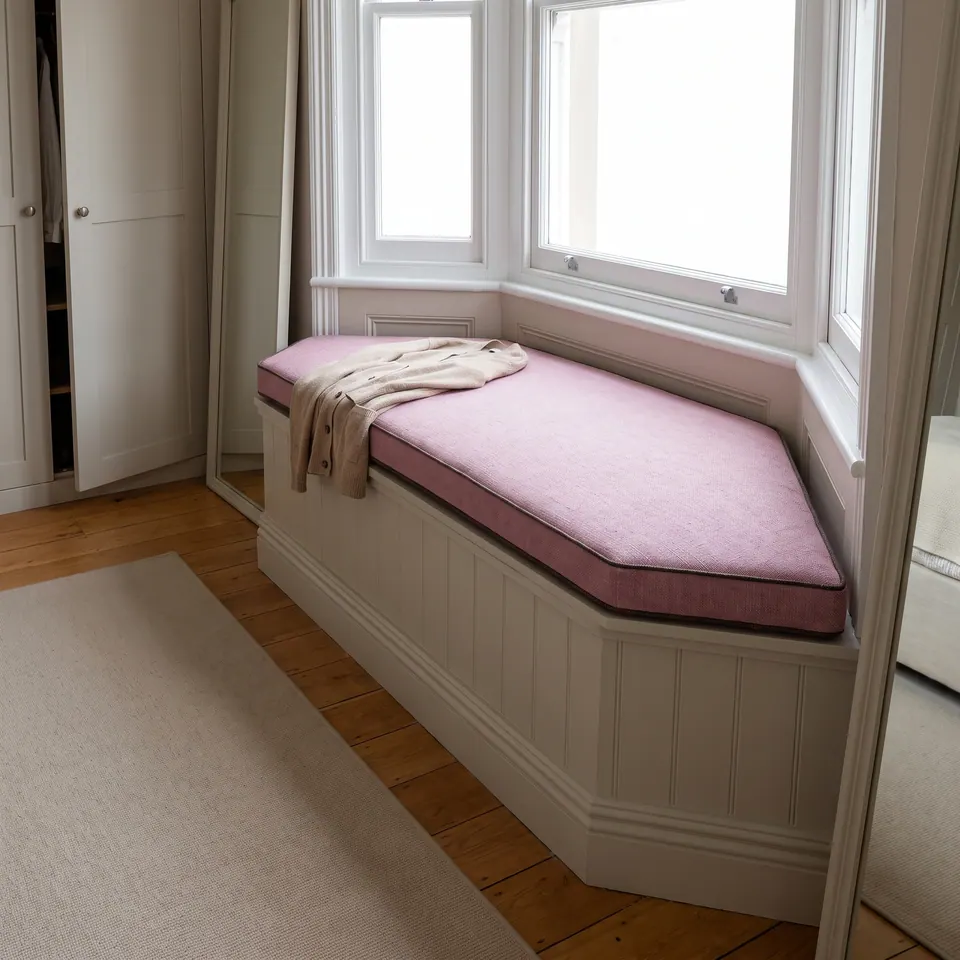
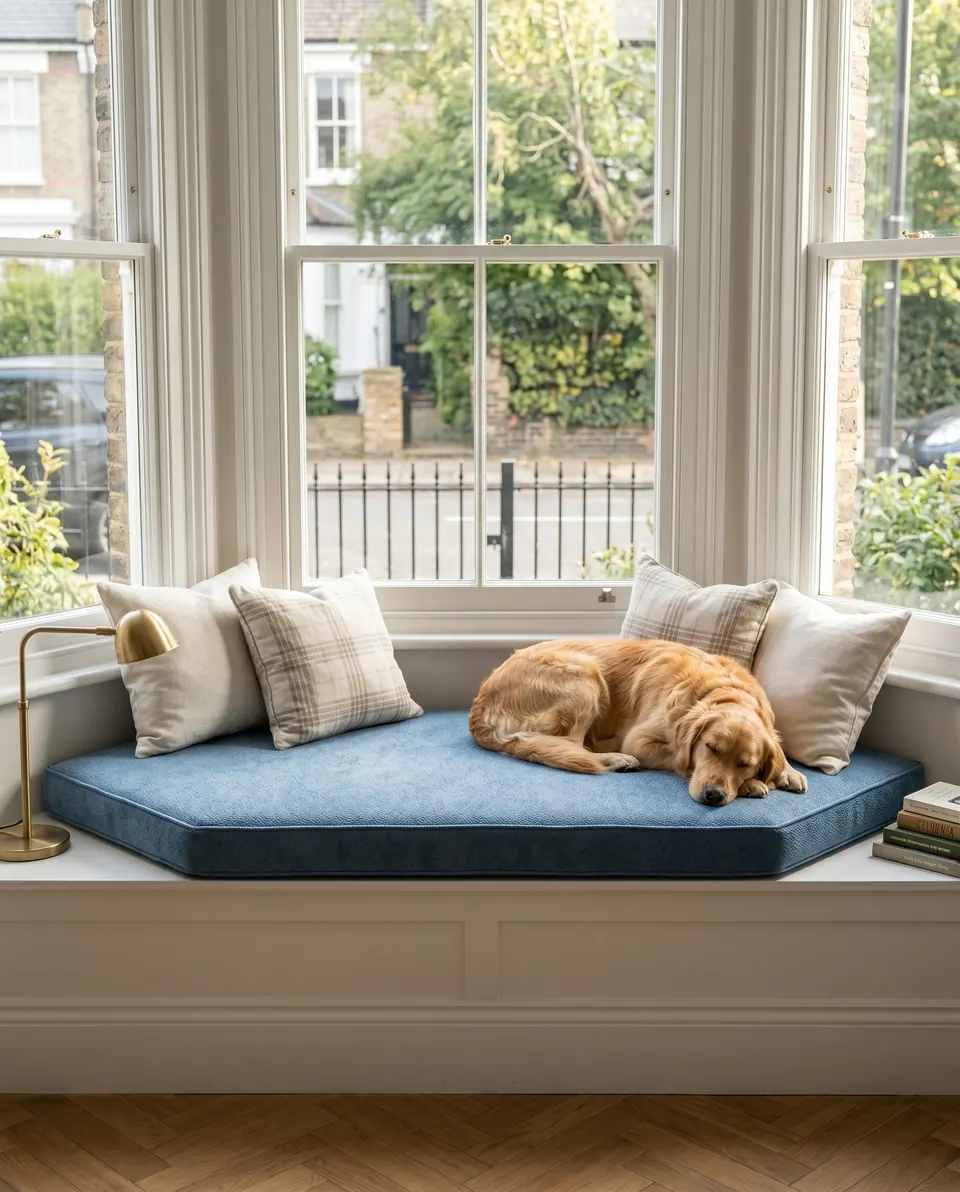
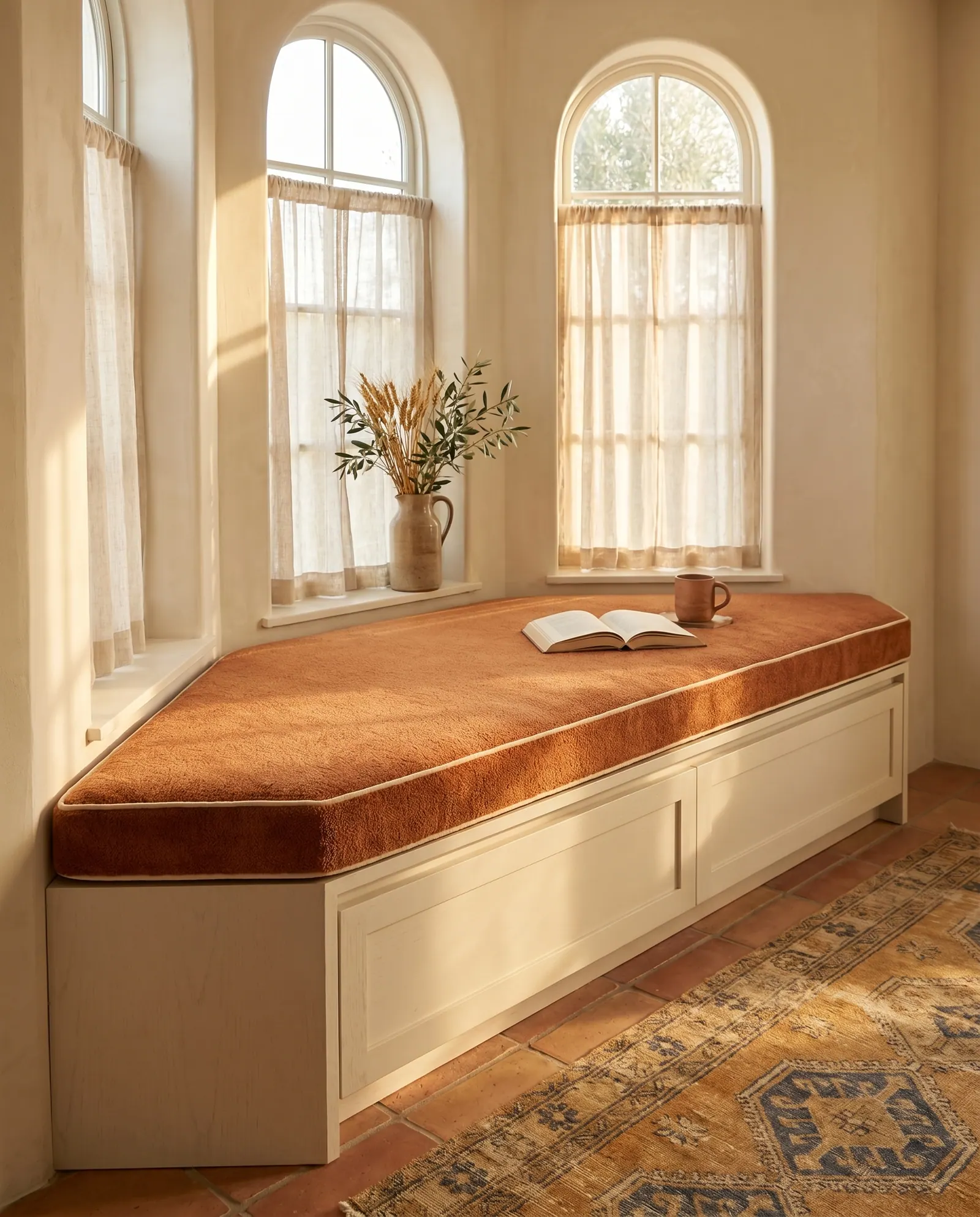
Try your numbers in the bay window calculator or read the 3-sided bay Pattern; finished bay window cushions show the result.
A bay window cushion 98.5 in across the front and 23 in deep can still be one continuous piece, as long as every edge is measured.
Nate
Buyer questions
- A common question
My bay seat has angled corners. Should the cushion curve there, or do I measure every edge?
The workshop's answerMeasure every edge. Bay corners are angled, so a curved cushion would leave gaps. Pick the size range by your longest edge and depth, and upload a drawing with every edge, plus thickness and fabric code.
- A common question
My sketch is hard to read. How should I send bay window measurements?
The workshop's answerType every side length in the message as well as sending the sketch. One buyer using an angled-top bay style wrote A = 4.3, B = 4.3, C = 78.5, D = 48, E = 24, F = 24 and G = 23 in.
- A common question
What if my walls aren't square and the numbers don't add up?
The workshop's answerThe workshop draws the cushion to scale and checks that it closes. If not, you'll be asked to re-measure, check both diagonals or fill in a lettered outline. A gap within 1/4 in is accepted, and nothing is cut until you confirm.
Questions buyers ask next
Which size do I pick on the trapezoid listing?
Pick the range that covers both your longest edge and your depth, for example 105 in (267 cm) and 18 in (45.5 cm), and upload the full drawing with the order.
Can a bay with several windows be one cushion?
Yes. Multi-angle bays have been made as one continuous cushion. Measure every line between the breaking points and the depth at each, and the geometry is checked from your drawing first.
Is the bay window cushion cover removable?
Yes. A zipped, removable cover over firm foam is standard on bay window cushions, whether the bay is a simple trapezoid or a multi-angle shape made in one continuous piece.