A Reading by NateBay Window Cushions
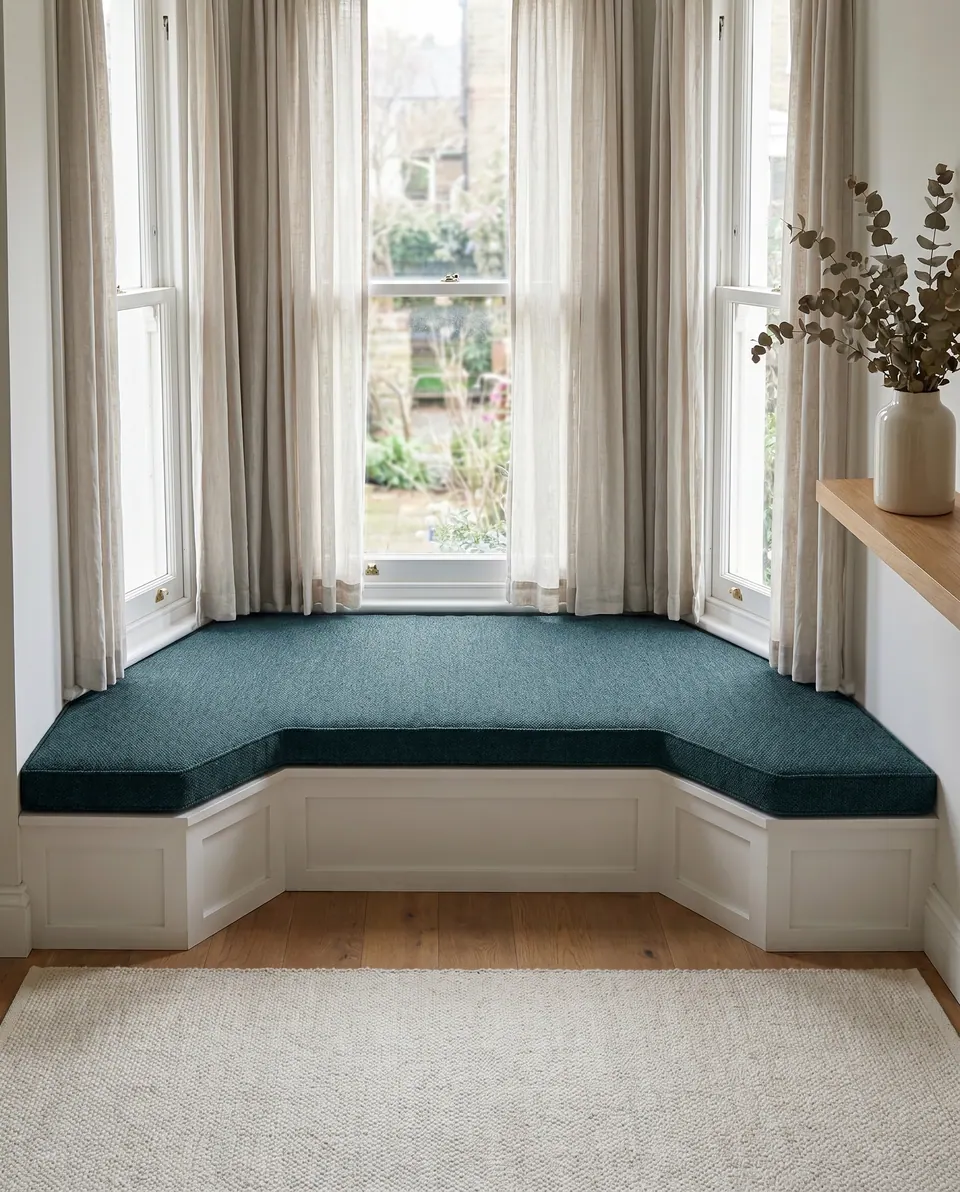
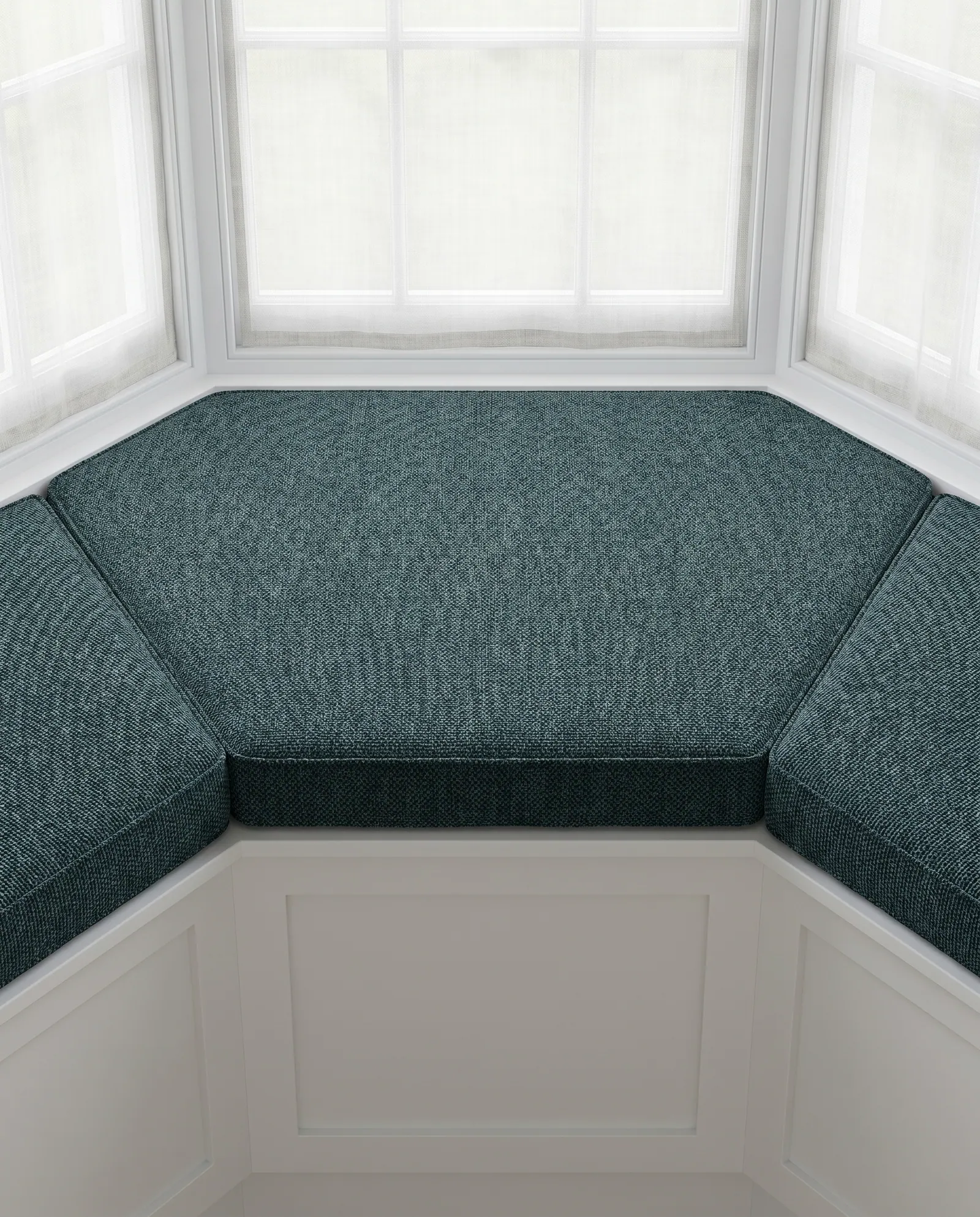
A Teal Bay Window Seat Cushion Seen From Above, With Nothing in the Way
A letter from Nate. No pillows, no throw, no lamp. For once the styling is the joinery, and that is exactly why this photo teaches so much.

 Save
The quick answer
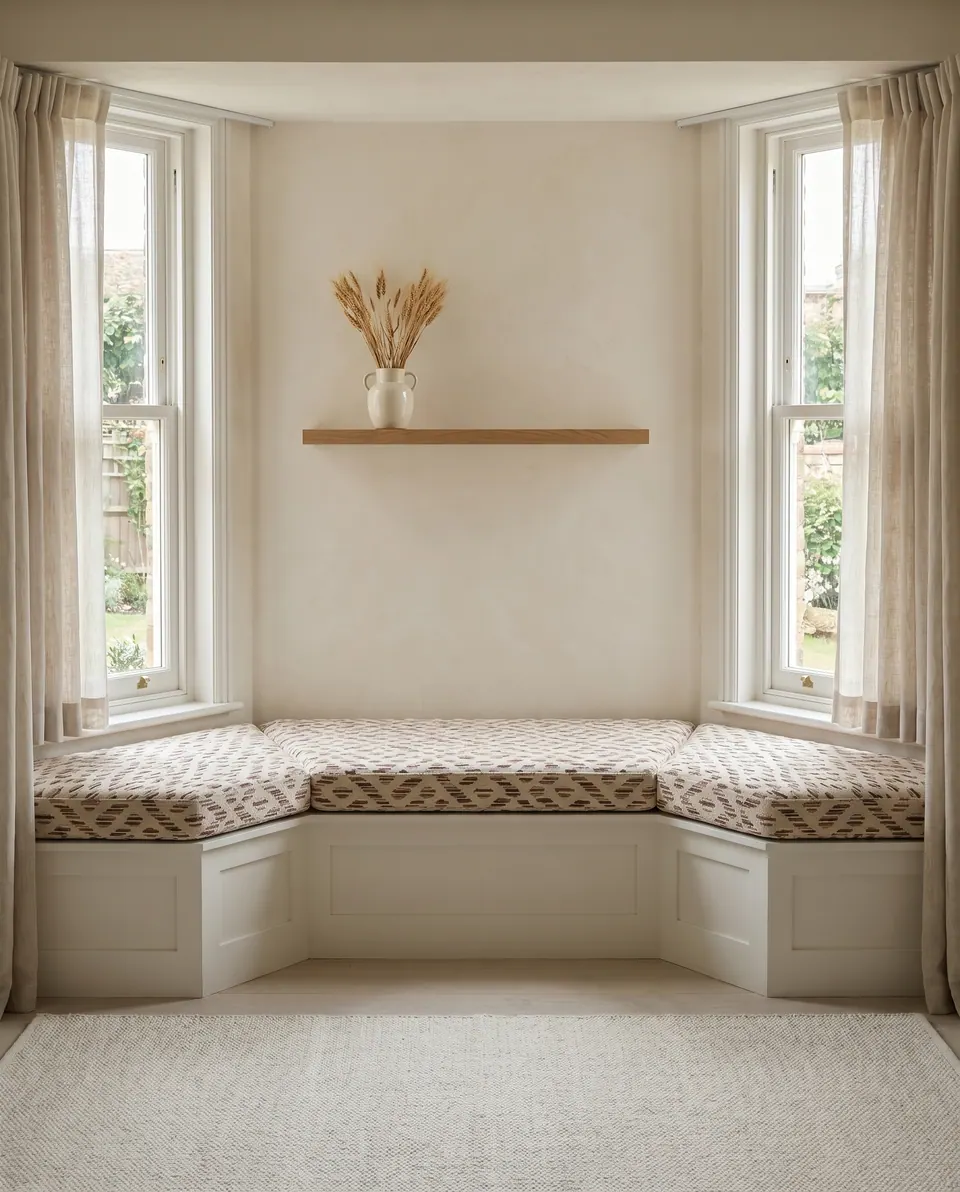
A bay window cushion is usually made in three pieces: a center trapezoid and two angled wings that butt together on each corner of the bay. The joints follow the bay's angles, so the seat reads as one surface while each part stays light enough to lift off for cover washing. Make a paper template of every angle before ordering.
Detroit ·
Partner,
A letter about the bay cushion props that are not there
Most bay window photos are busy: six pillows, a throw, a plant on the sill. This one has almost nothing, and I think that is the smartest styling choice in the frame.
Look down at it. Three deep teal pieces: a center trapezoid and two angled wings. Each butt joint lands on a corner of the bay. Lean pillows on those seams and you would never see how a shaped bay window cushion is really built.
The props that remain are architecture. The white paneled base under the teal gives it a tailored, built-in look, and white against deep teal is a hard contrast, so the cushion edge reads as one clean line. Sheer white curtains soften the daylight, which keeps the weave from going flat. White window frames repeat the base above and below, so teal is the only color in the picture.
About that weave: a fine two-tone texture, blue-green over teal, close in feel to our jacquard and damask family. From across the room it reads almost solid; from above, it is tactile. The front boxing is a straight vertical gusset, so the top stays flat right to the edge. No piping, either. Piping on a three-piece seat outlines every joint twice, and the plain box edge keeps it quiet.
Angles are just lengths in disguise, and a close-up like this one proves it.
Pinned by Nate: five points, from the top down to the base
Five pins: the center trapezoid, one angled joint, the left wing, the front boxing and the paneled base below.
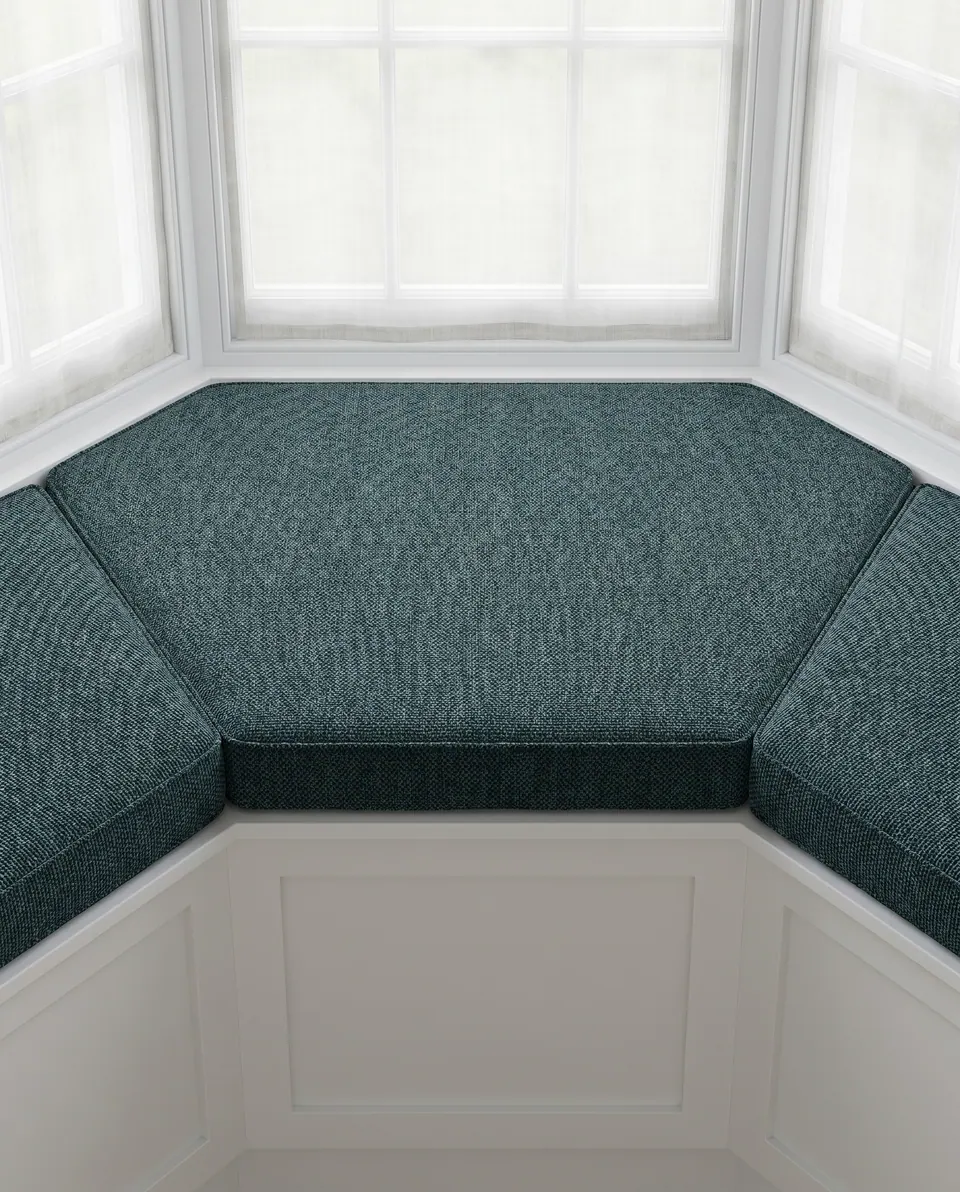
- Center trapezoid
The middle piece has angled ends so the wings meet it cleanly.
- Angled joint
Each butt joint follows the bay's corner angle; a paper template makes this precise.
- Left wing
Separate wings are lighter to handle and easier to take off for cover washing.
- Front boxing
A straight vertical gusset keeps the top flat right to the edge.
- Paneled base
White panels under deep teal give the bay a tailored, built-in look.
- Center trapezoidThe middle piece has angled ends so the wings meet it cleanly.
- Angled jointEach butt joint follows the bay's corner angle; a paper template makes this precise.
- Left wingSeparate wings are lighter to handle and easier to take off for cover washing.
- Front boxingA straight vertical gusset keeps the top flat right to the edge.
- Paneled baseWhite panels under deep teal give the bay a tailored, built-in look.
Copy it on your own bay in four moves
Template every angle
Lay paper on the seat and trace each corner. The bay window calculator turns your lengths into a drawing, and the paper catches walls that are not square.
Split at the corners
Ask for the joints to fall on the corners of the bay: one center trapezoid, two wings. Each piece lifts off on its own.
Put the zipper at the back
Request the zipper on the shorter back edge so the long front edge stays clean.
Style after the seams
Set pillows against the side walls on the wings, not across the joints, and let the woodwork do the framing.
Add a centimeter or take one off? Neither. Send the real numbers
A buyer sent the workshop photos and measurements of a bay window and asked whether to add or subtract a centimeter before ordering. The workshop asked for the exact measurements instead, then drew a schematic for approval.
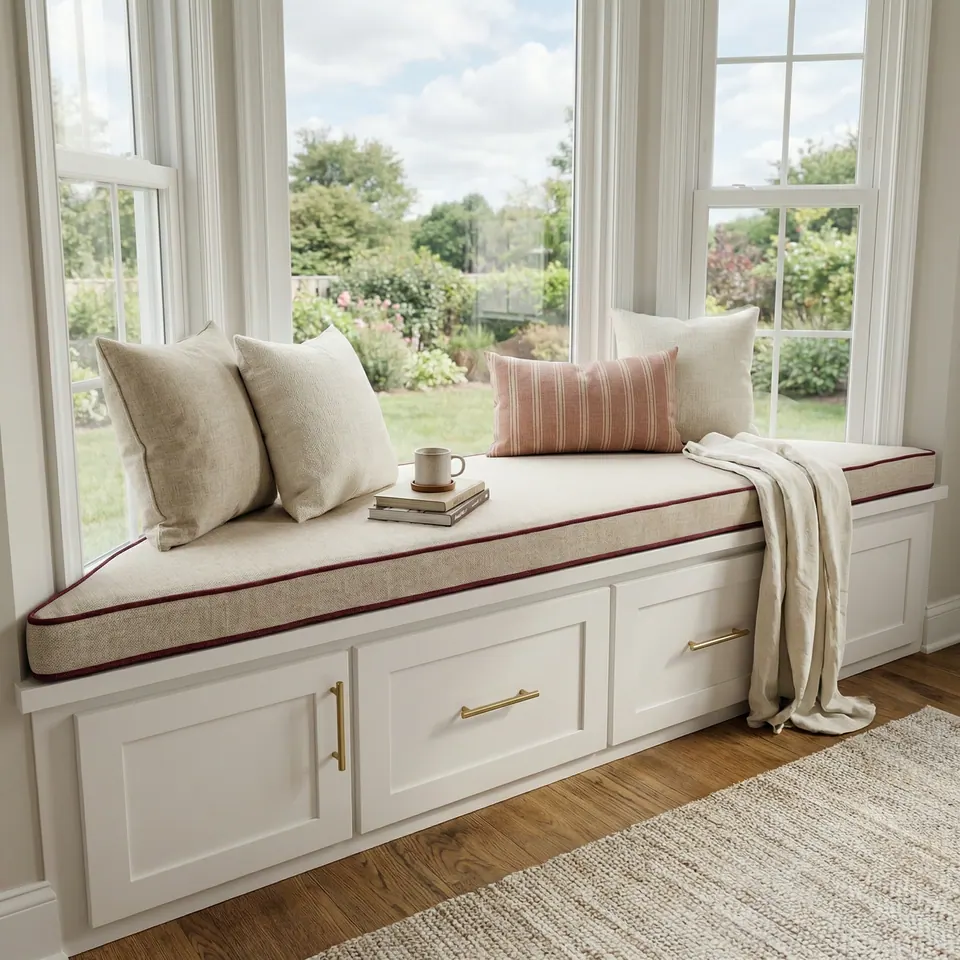
Some fabrics in the listing photos were no longer in the catalog but still in stock, so the workshop sent close-up photos from its linen and soft-fabric charts. The buyer chose a terracotta soft fabric at about 3 1/8 in (8 cm) thick, with linen piping in the shade closest to another soft fabric they liked. They ordered by picking the depth and length range and attaching the drawing.
In engineer's terms: do not pre-apply your own allowance. Send true measurements and let the maker set it once. Two people each adding a little is how a seat ends up tight. A contrasting linen piping, by the way, gives a sportier look. How many angles does your bay have? The three-sided bay Pattern walks through the count.
Buyer questions: zippers, grip and a stepped outline
- A common question
Which side does the zipper go on for a trapezoid cushion?
The workshop's answerOn request, the workshop puts it on the shorter back edge, the D edge for example, so the long front edge stays clean. Note it on your drawing or in the order note.
- A common question
Can my seat cushion have a non-slip bottom?
The workshop's answerYes. One trapezoid cushion was ordered at a maximum of about 2 1/2 in (6.5 cm) thick, with piping and a non-slip bottom. Floor sofa base covers also have a white non-slip backing, and if that backing ever crumbles or flakes, photograph it and send the photos to the workshop; damaged anti-slip covers have been replaced in past cases.
- A common question
My bench steps in at the ends. Can the cushion follow the steps instead of being a plain rectangle?
The workshop's answerYes, stepped shapes can be made exactly, but the drawing has to add up. In one sketch a 31 in top plus two 2 in steps made 35 in while the bottom said 37 in, so either each step was 3 in or the bottom was 35 in. Once corrected, choose Length as the longest edge, 37 in (94 cm), and Depth as the depth from that edge, 24 3/4 in (63 cm), then upload the drawing and state the thickness.
On the cutting table: the three-piece bay seat
| Piece | Bay window seat cushion in three parts |
|---|---|
| Layout | Center trapezoid plus two angled wings |
| Joints | Butt joints on each corner of the bay |
| Fabric | Deep teal weave with a fine blue-green texture |
| Edge | Box edge with a straight vertical front gusset |
| Piping | None |
| Zipper | Shorter back edge, on request |
| Base option | Non-slip bottom, on request |
| Before ordering | A paper template of every angle |

Have it made
Have this made — ask Nate’s workshop
Every edge and both diagonals, to the nearest 1/4 in. If the numbers do not close, the workshop will say so on the call. — Nate
Leave your details and the workshop will call you to confirm measurements, fabric, foam and piping. No prices, dates or payment on this page: it is a request, not an order.
A bay window cushion in three pieces looks like one seat when each butt joint lands exactly on a corner of the bay, and a paper template of every angle makes that possible.
Nate
Questions buyers ask next
Why make a bay window cushion in three pieces instead of one?
Separate pieces are lighter to lift and easier to take off for cover washing, and each joint can follow a corner of the bay. The center trapezoid and two wings still read as one continuous seat.
Should a multi-piece bay seat cushion have piping?
It depends on the look you want. A plain box edge keeps a three-piece seat calm, because piping outlines every joint. A contrasting linen piping gives a sportier look if you want the shape drawn in.
How do I record the angles of a bay window seat?
Trace each corner onto paper laid on the seat, then measure every side, including the short angled ends. Send the template or a drawing with all the lengths, and let the workshop set the allowances.
Where do pillows go on a three-piece bay cushion?
Against the side walls, on the two wings, leaving the center piece clear. That keeps weight off the joints, lets the seams stay straight, and gives each end of the bay a backrest.
± 1/4 in — Nate