A Reading by NateBay Window Cushions
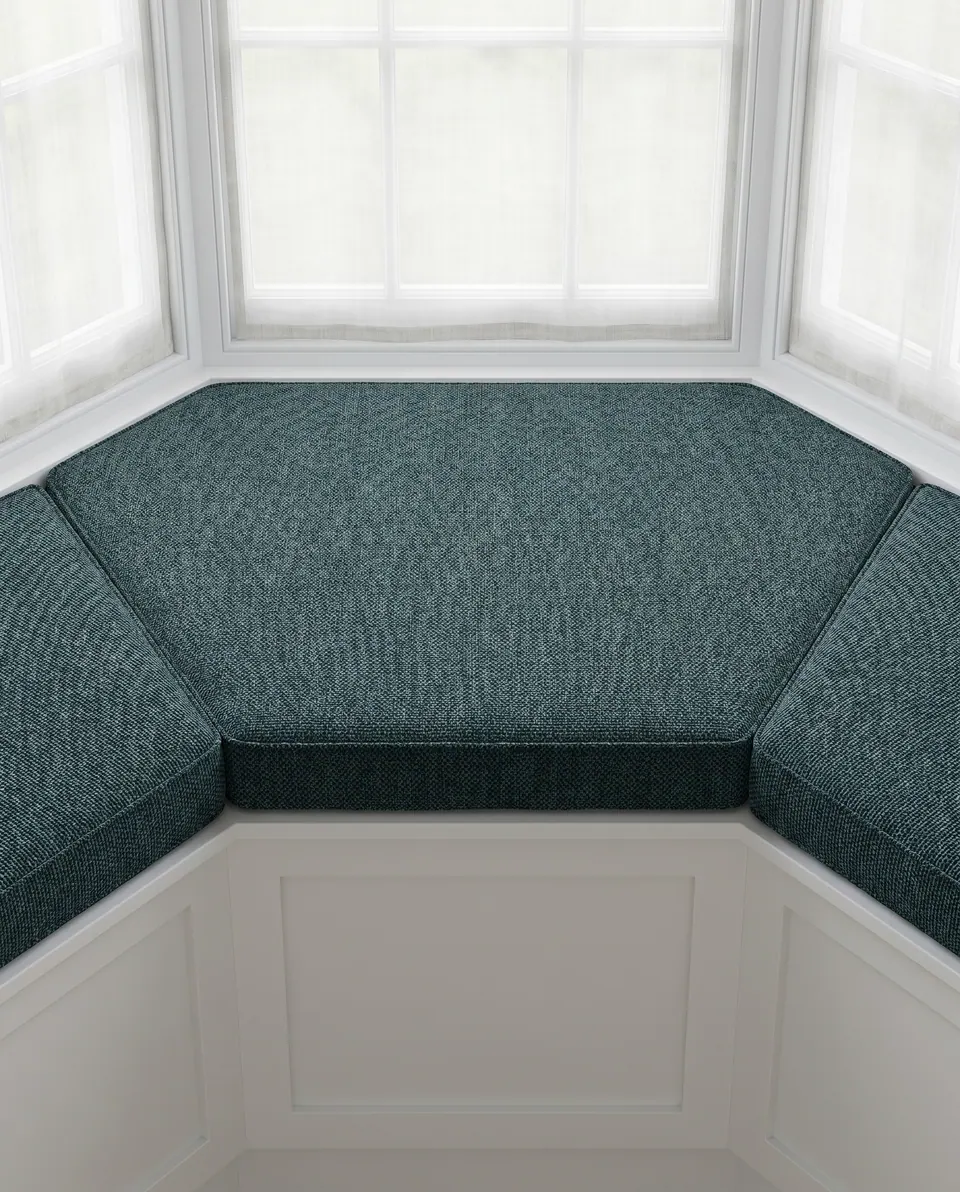
One deep teal cushion turns a white three-sided bay into a seat
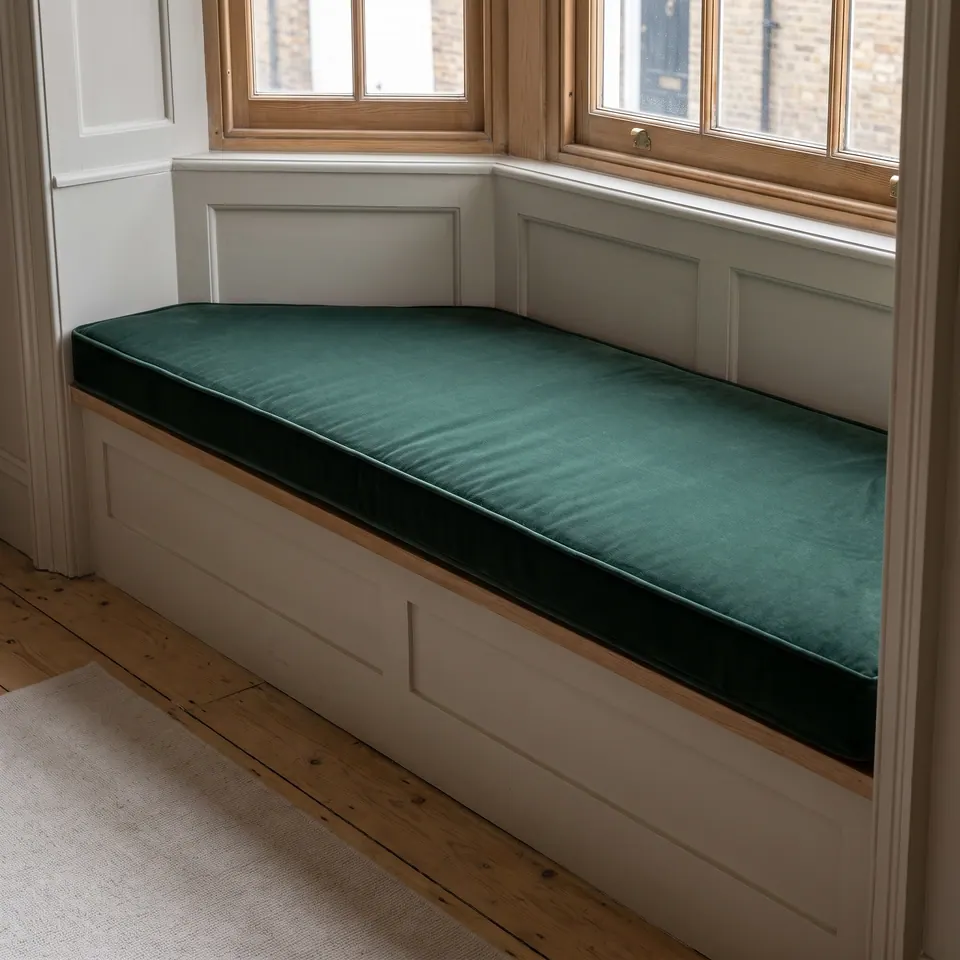
Before: a painted ledge under three windows. After: a place to sit. Between the two sits one cushion and a short list of honest measurements.

 Save
The quick answer
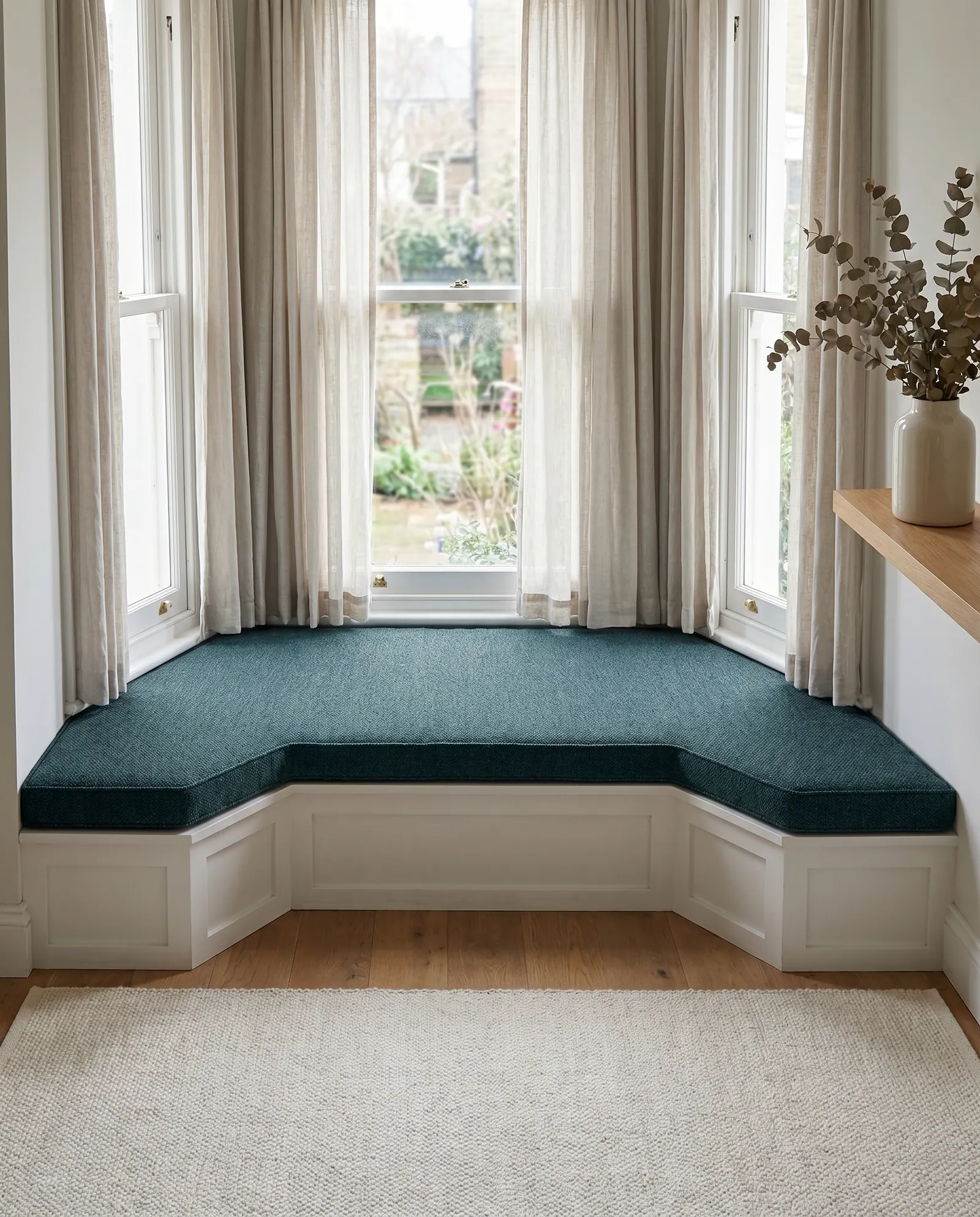
A bay window cushion should follow every side of the bay, with a straight center run on the back wall and angled wings cut to the splay, and each angle measured separately because very few bays are symmetrical. Deep teal on white paneling anchors a wall that is mostly glass, and a box edge with no piping keeps the angled corners clean.
Notebook, page one: the bay before the cushion
Before, this bay was three windows over white panels and a ledge nobody sat on. Overcast light came through the sheer linen and turned the whole wall into one pale sheet. Bright, cool, a little empty.
The brief I wrote in the notebook had three lines. Make it a seat. Give the glass wall a floor. Keep it calm.
After, one bay window cushion does all three. Deep teal is dark enough to anchor a wall that is mostly window, and its petrol-green undertone picks up the eucalyptus in the cream vase. The oak floating shelf and the oak boards keep the white from going clinical. The sheers stay on every sash, softening the light without blocking the view. The oatmeal wool rug is there so bare feet land on something warm.
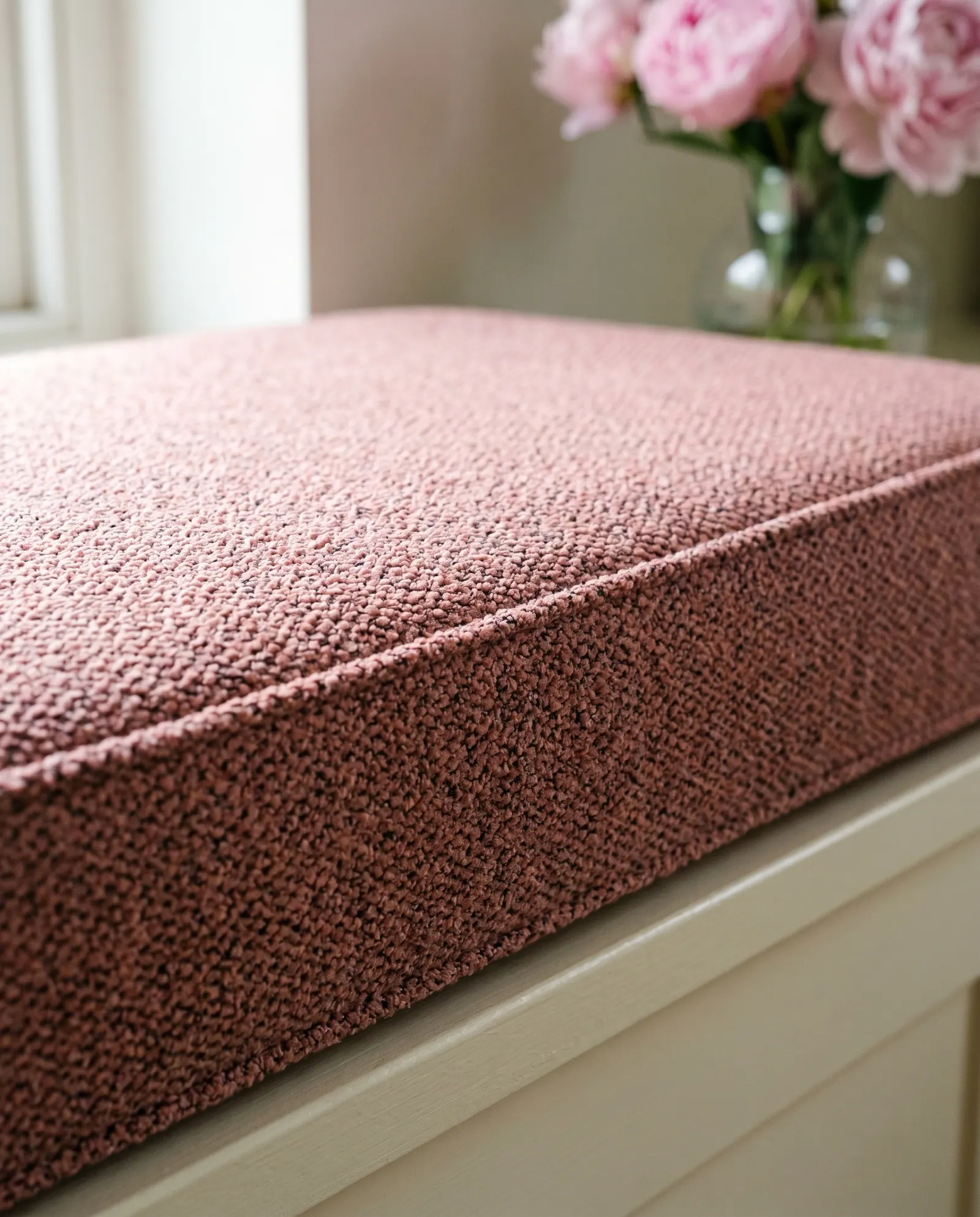
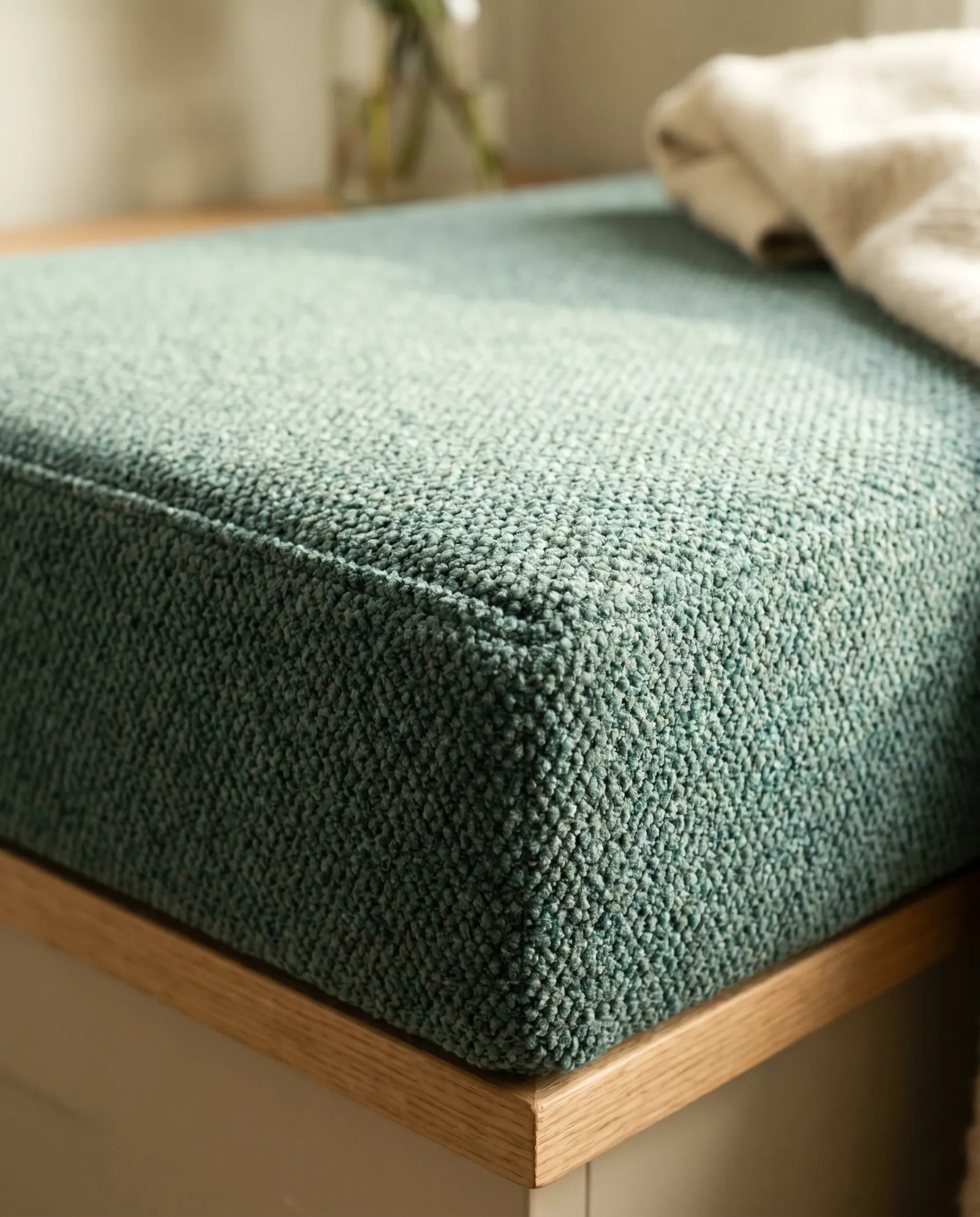
The cushion depth lines up with the paneled plinth below, so seat and base read as one piece of joinery. There is no piping; on angled wings a welt would have to turn two sharp corners, and a plain box edge keeps those turns clean. The chenille belongs to the jacquard and damask family.
Notice what is not on the seat: nothing. Good for a photograph. For daily life I'd add one pillow at each corner, where the wings meet the center run.
Pinned by Nate: five points on the bay
Five pins: the straight center run, both angled wings, the white paneled base and the eucalyptus that sets the green.
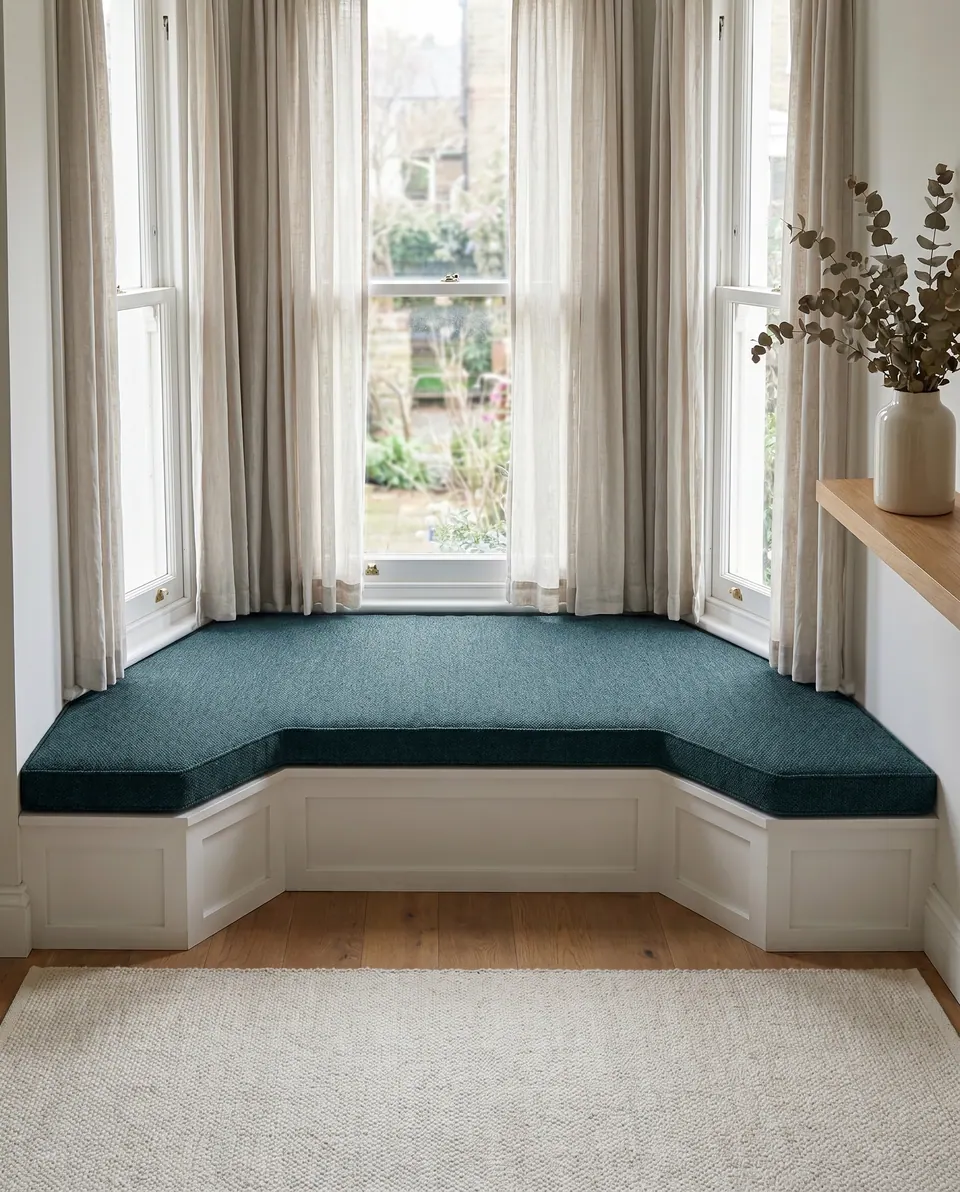
- Straight center run
The center section takes the back wall while the wings are cut to the splay of the bay.
- Left angled wing
The side follows the bay angle, so there is no gap or overhang at the corner.
- Right angled wing
Measure each angle separately; very few bays are perfectly symmetrical.
- Eucalyptus vase
Silver-green eucalyptus picks up the green undertone of the teal.
- White paneled base
White panels under a deep teal top give a clean, tailored contrast.
- Straight center runThe center section takes the back wall while the wings are cut to the splay of the bay.
- Left angled wingThe side follows the bay angle, so there is no gap or overhang at the corner.
- Right angled wingMeasure each angle separately; very few bays are perfectly symmetrical.
- Eucalyptus vaseSilver-green eucalyptus picks up the green undertone of the teal.
- White paneled baseWhite panels under a deep teal top give a clean, tailored contrast.
The teal bay window seat, before and after
| Line item | Before | After |
|---|---|---|
| Seat | Bare paneled ledge | Trapezoid box cushion across all three sides |
| Glass wall | White on white in gray light | Deep teal anchoring the bay |
| Corners | Dead space where the sides meet | Wings cut to the splay, no gap, no overhang |
| Edge | Painted nosing | Plain box edge lined up with the plinth |
| Props | None | Eucalyptus, oak shelf, oatmeal rug |
A seven-sided bay window cushion, typed out from A to G
A buyer in the US sent the workshop a sketch of an angled-top bay window. The drawing was hard to read, so the workshop asked for every side typed out as well. It came back as a list: A 4.3 in (11 cm), B 4.3 in (11 cm), C 78.5 in (199 cm), D 48 in (122 cm), E 24 in (61 cm), F 24 in (61 cm), G 23 in (58 cm).
Seven letters, seven numbers, no guessing. The cushion was made in velvet 131 Deep Navy Blue, a machine-washable fabric at 86°F (30°C).
The notebook lesson, partner: label every side with a letter and type the numbers as well as drawing them. The sketch shows the shape; the typed list is what gets cut. The bay window calculator and the Pattern on measuring a 3-sided bay are built on the same habit. How many sides does your bay have?
Buyer questions: arcs, backrests and lead time
- A common question
Can you make a curved wedge cushion for one section of a round rattan outdoor sofa?
The workshop's answerYes; curved and angled shapes are made regularly. Along with the outer arc of 43 1/4 in (110 cm), the inner arc of 16 7/8 in (43 cm) and two sides of 19 3/4 in (50 cm), the workshop needed the depth of the curve: the distance from the middle of a straight line across the inner edge to the arc, 11 3/8 in (29 cm), marked on a sketch. The buyer ordered one cushion first to test the fit.
- A common question
What size are your standard back pillows, and what do you need from me to price them?
The workshop's answerThe standard backrest is 15 3/4 in (40 cm) high and about 4 in (10 cm) thick. So the workshop needs only the length of each pillow and how many you want, then confirms the price.
- A common question
How long does a custom bench cushion take from order to my door?
The workshop's answerProduction time depends on the job, and some custom jobs take longer; ask for it in writing. Delivery time comes on top of that; for one buyer who asked, it was quoted at 2 to 4 business days after dispatch.
On the cutting table: the teal bay
| Cushion | Trapezoid box cushion: straight center run with two angled wings |
|---|---|
| Fabric | Deep teal chenille with a petrol-green undertone |
| Piping | None |
| Fit | Wings follow the bay angle, with no gap or overhang at the corners |
| Angles | Measured one at a time; left and right rarely match |
| Depth | Lines up with the paneled plinth below |
| Sketch | Every side lettered, every number typed as well as drawn |
| Styling | Eucalyptus, oak shelf, oatmeal rug; a pillow at each corner in daily use |
| Best for | Bright period bays with white paneling |

Have it made
Have this made — ask Nate’s workshop
Precision starts on the phone. Give the workshop your measurements and they will read them back to you, edge by edge. — Nate
Leave your details and the workshop will call you to confirm measurements, fabric, foam and piping. No prices, dates or payment on this page: it is a request, not an order.
Very few bay windows are perfectly symmetrical. Measure the left and right angles one at a time, or the cushion wings will stop short of the corners.
Nate
Questions buyers ask next
Why choose a dark cushion for a bright bay window?
A dark color such as deep teal anchors a wall that is mostly glass and frames the view instead of competing with it. On white paneling it reads crisp and tailored, and it keeps its depth in cool overcast light.
How do I record the sides of an angled bay for a custom cushion?
Give every side a letter on your sketch, then type each length beside its letter, measuring left and right separately. Angles are just lengths in disguise: with every side written down, the shape can be drawn true.
Where do pillows go on a three-sided bay window seat?
One at each corner, where the angled wings meet the center run. The corners work as natural backrests, and keeping the middle clear leaves both the view and the cushion's shape easy to read.
± 1/4 in — Nate
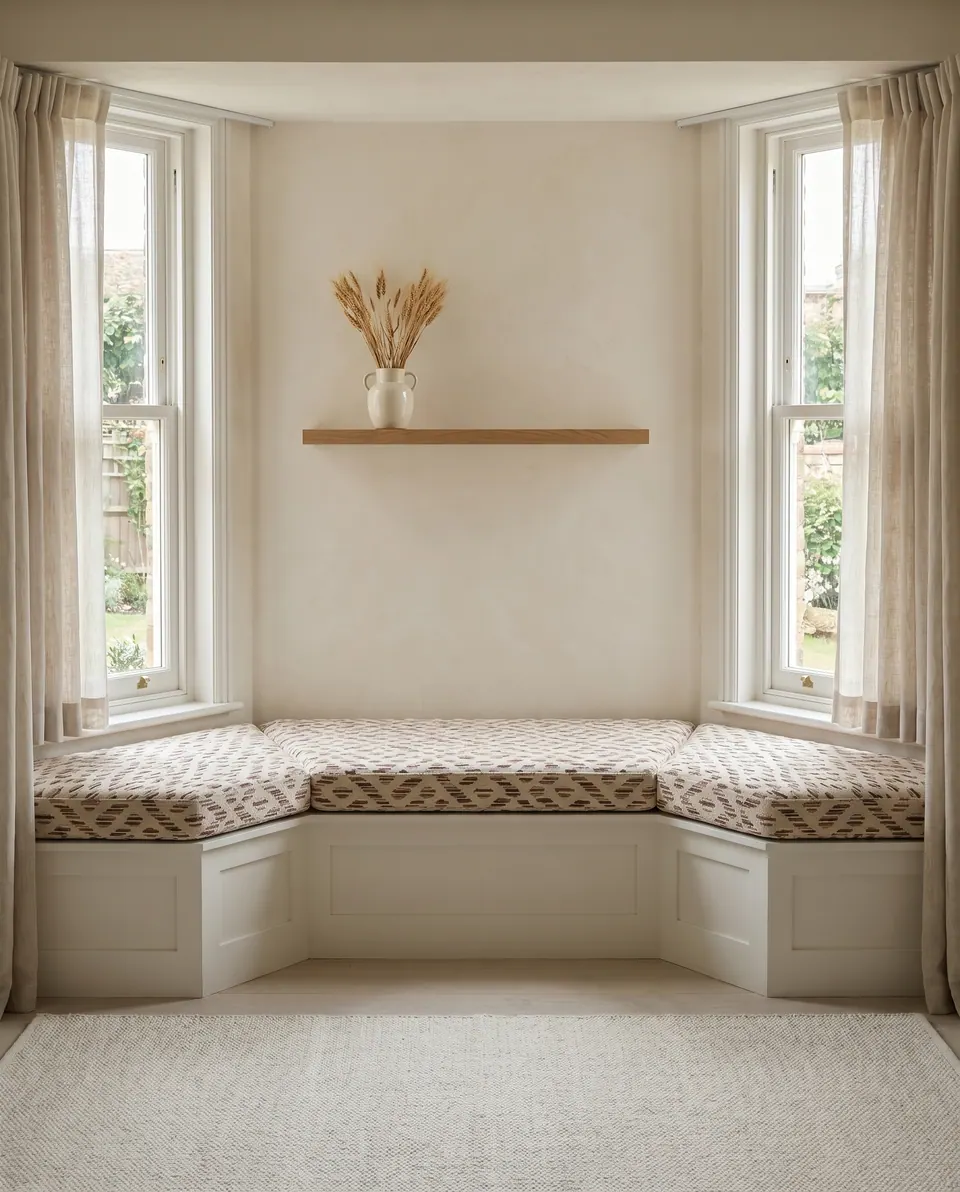
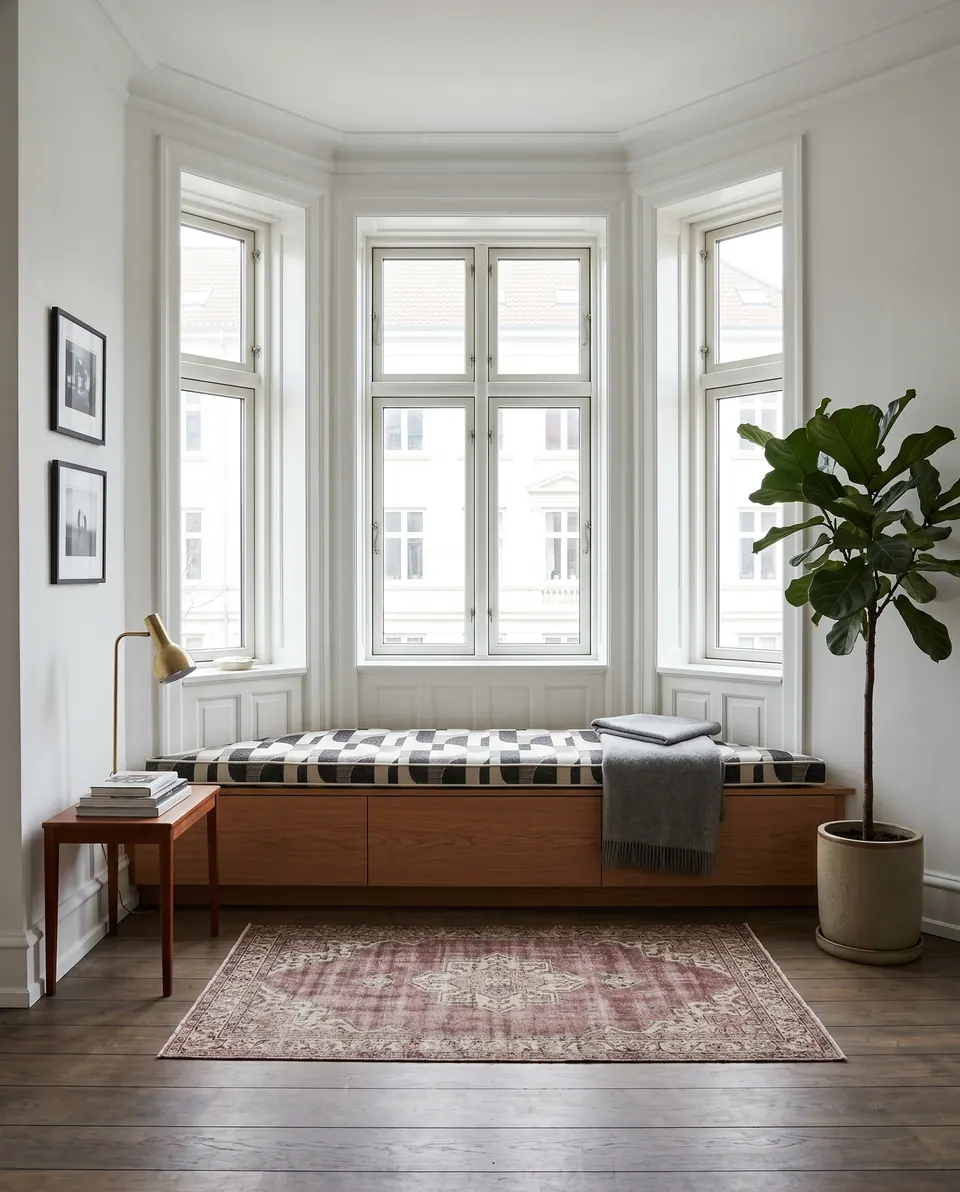
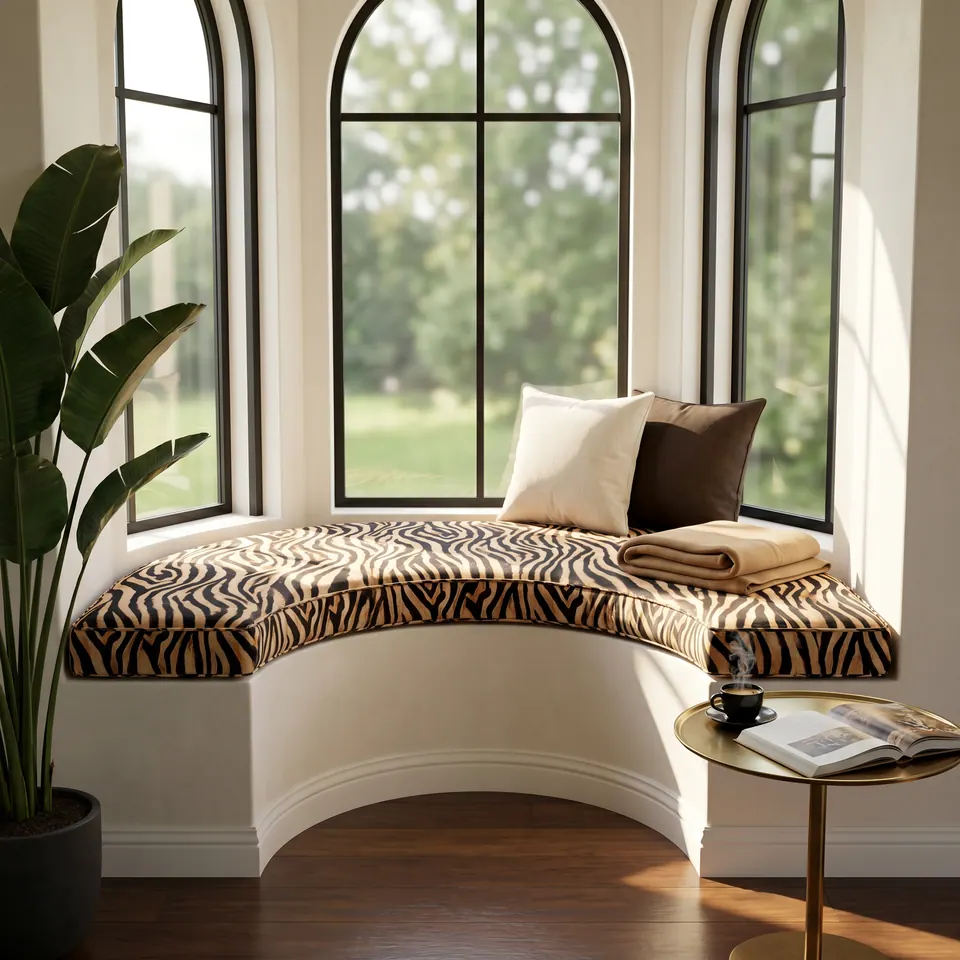
More photographs to read
 Save
 Save
 Save
 Save
 Save
 Save