A Reading by RosaWindow Seat Cushions
Green ticking on a window seat, and how thick the cushion should be
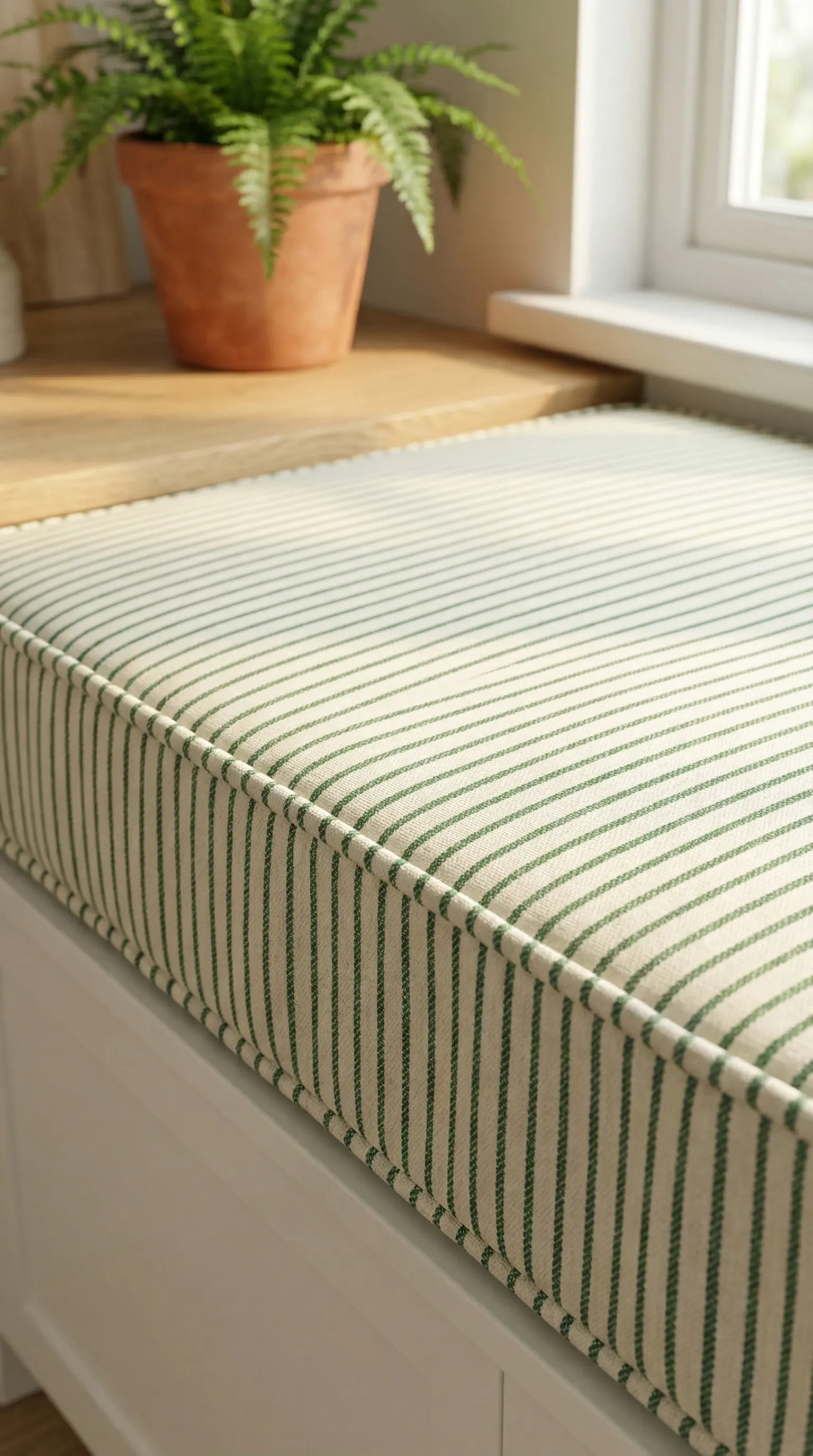
Rosa answers the questions first this time: long runs, wedges and quarter inches. Then she reads a close-up of green ticking by a fern and weighs thickness against the seat.

 Save
The quick answer
Match window seat cushion thickness to the job: the workshop's standard window seat cushion is 4 in (10 cm), which suits most seats, while a piece that has to hold its shape standing up, like a headboard, needs 6 in (15 cm). Check seat height and depth first, so the cushion leaves room for your knees and a back pillow.
Buyer questions first: long runs, wedges, quarter inches
- A common question
Can a really long bench cushion be made in one piece?
The workshop's answerThe workshop often suggests two pieces for very long runs, such as 9 ft or about 113 in and 117 in (287 and 298 cm), because they are easier to make and ship. If the bench needs a single piece, it will make one.
- A common question
For a deep lounge bench, should the back cushion be a wedge or a rectangle?
The workshop's answerA wedge, for deep seats. The standard wedge is about 35½ in long and 15¾ in high (90 x 40 cm), 6 in (15 cm) thick at the bottom and 4 in (10 cm) at the top. A thicker version runs about 8⅝ in (22 cm) at the bottom and 6 in (15 cm) at the top.
- A common question
Do my measurements need to be whole inches, or can I order 18.5 x 51.25?
The workshop's answerHalf and quarter inches are fine. Pick the closest size range in the dropdown for pricing, then type the exact measurements in the personalization box; that is what the cushion is made from. Centimeters are welcome too, and the workshop actually prefers them.
Now, the reading
Reading the close-up: a stripe that came from a fern
Pull up a chair, because this photograph is small and everything in it counts.
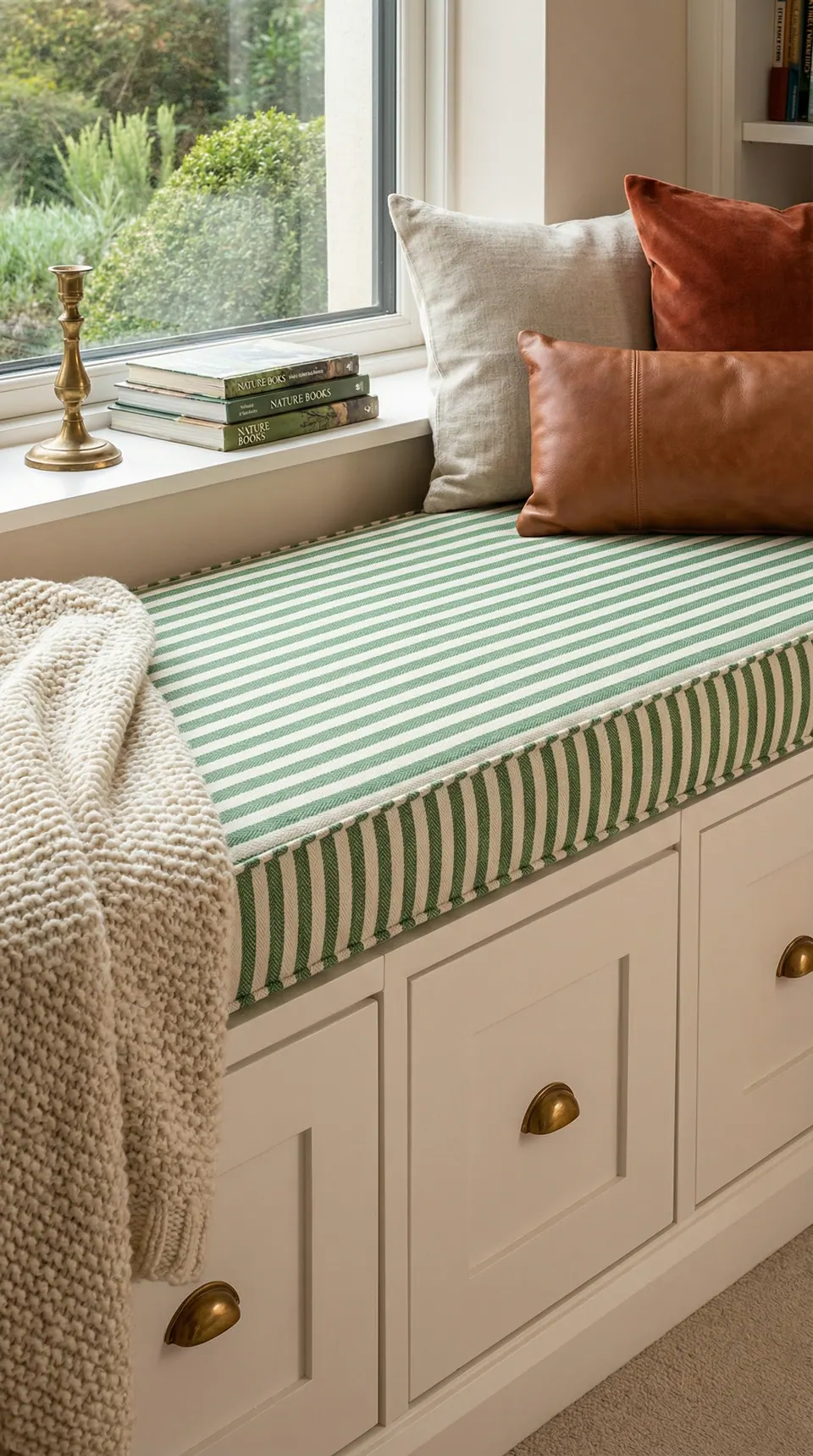
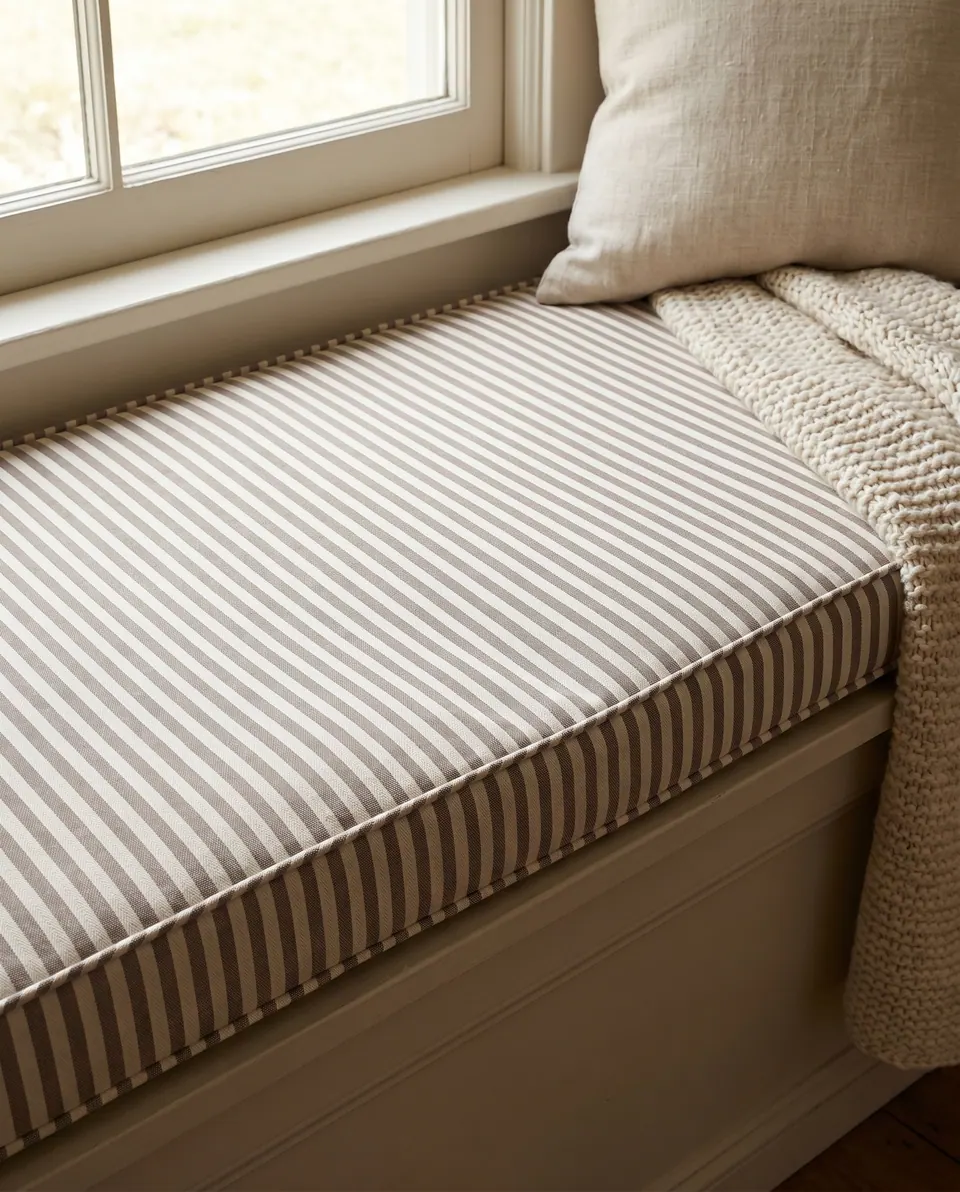
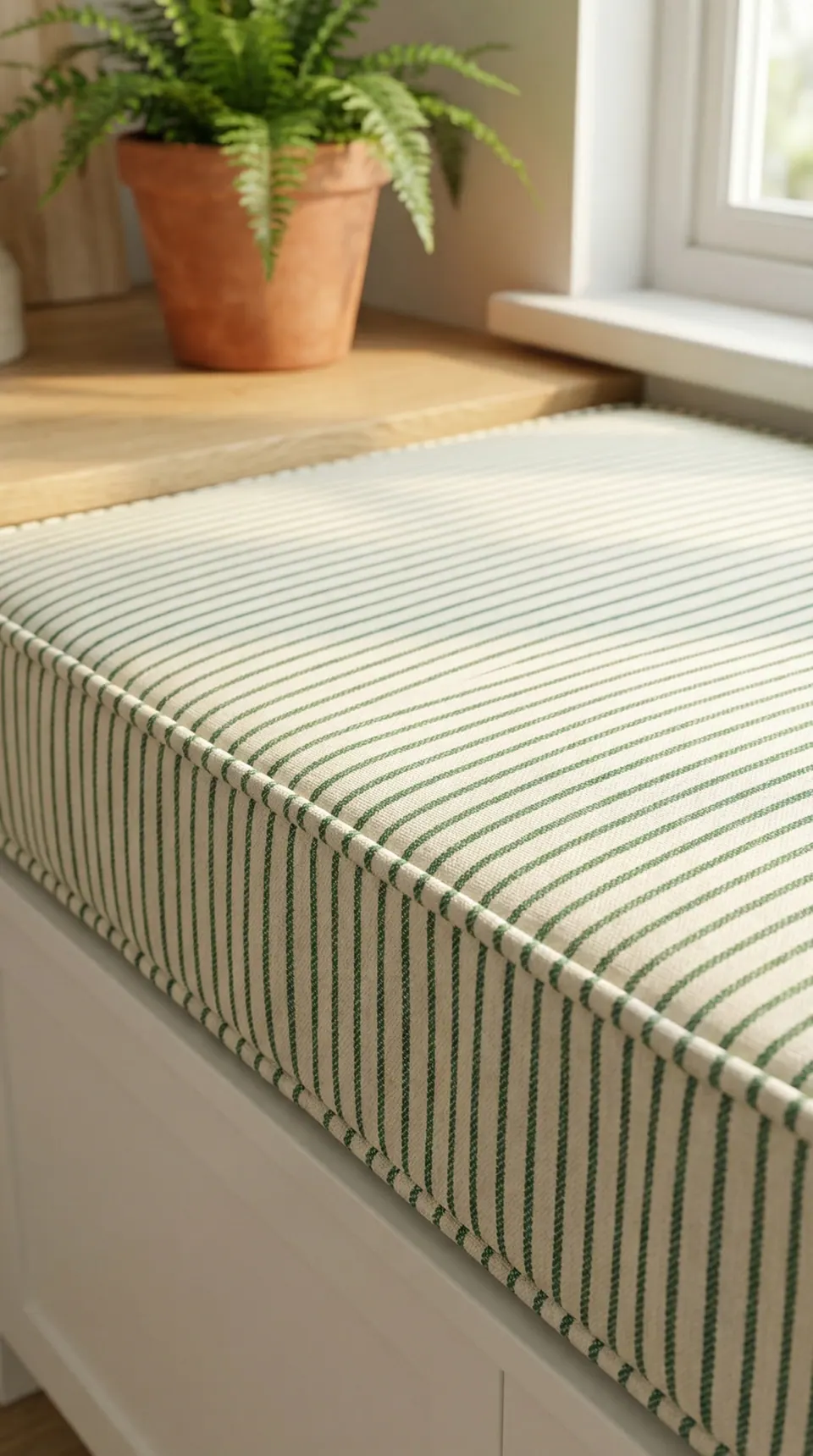
It is a close-up of a window seat cushion in cream with fine forest-green ticking, on a white-painted base under an oak ledge. A Boston fern in a terracotta pot stands on the ledge, and that fern is the reason for the stripe. A thin green line on cream brings the plant's color onto the seat without committing to a solid green, which is a lot of green to live with.
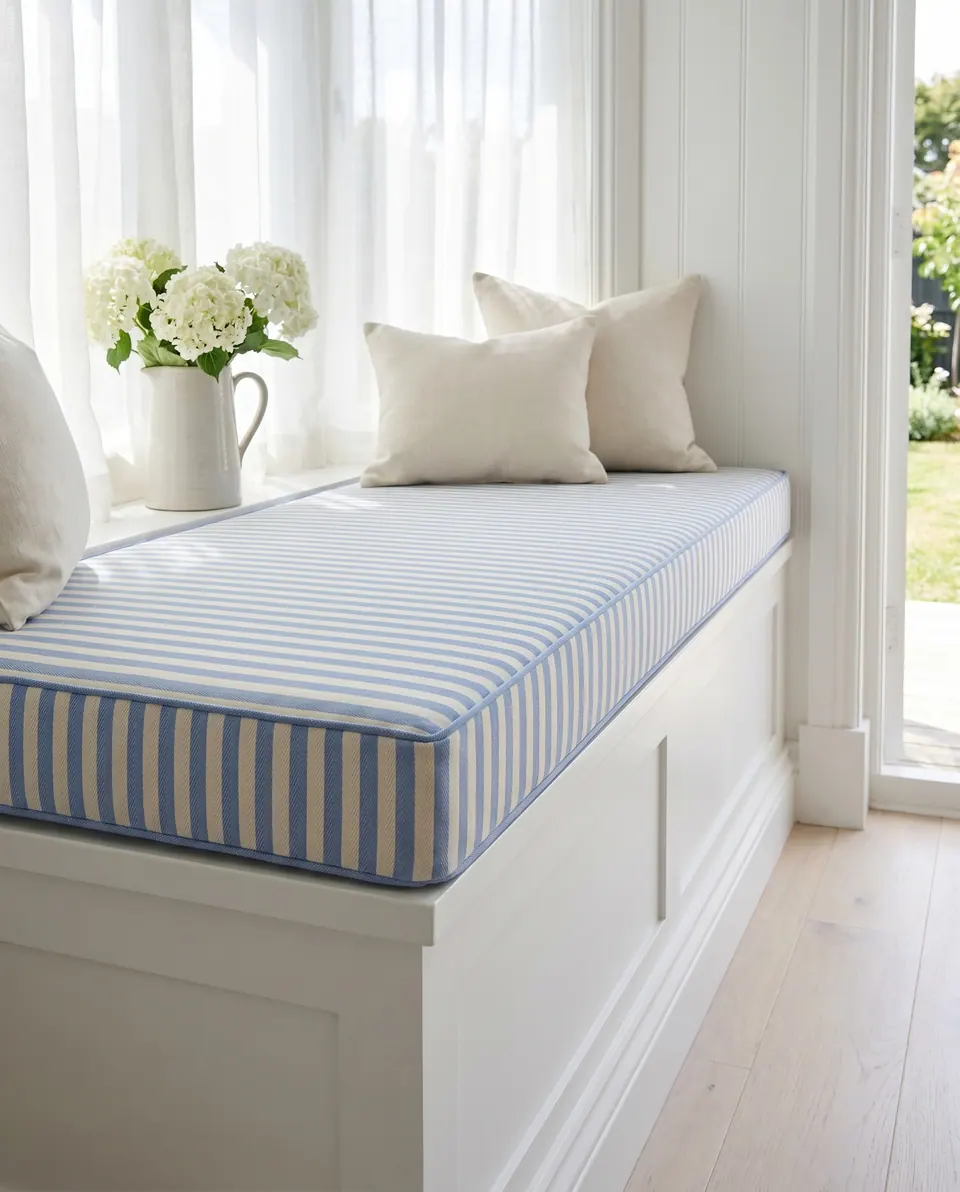
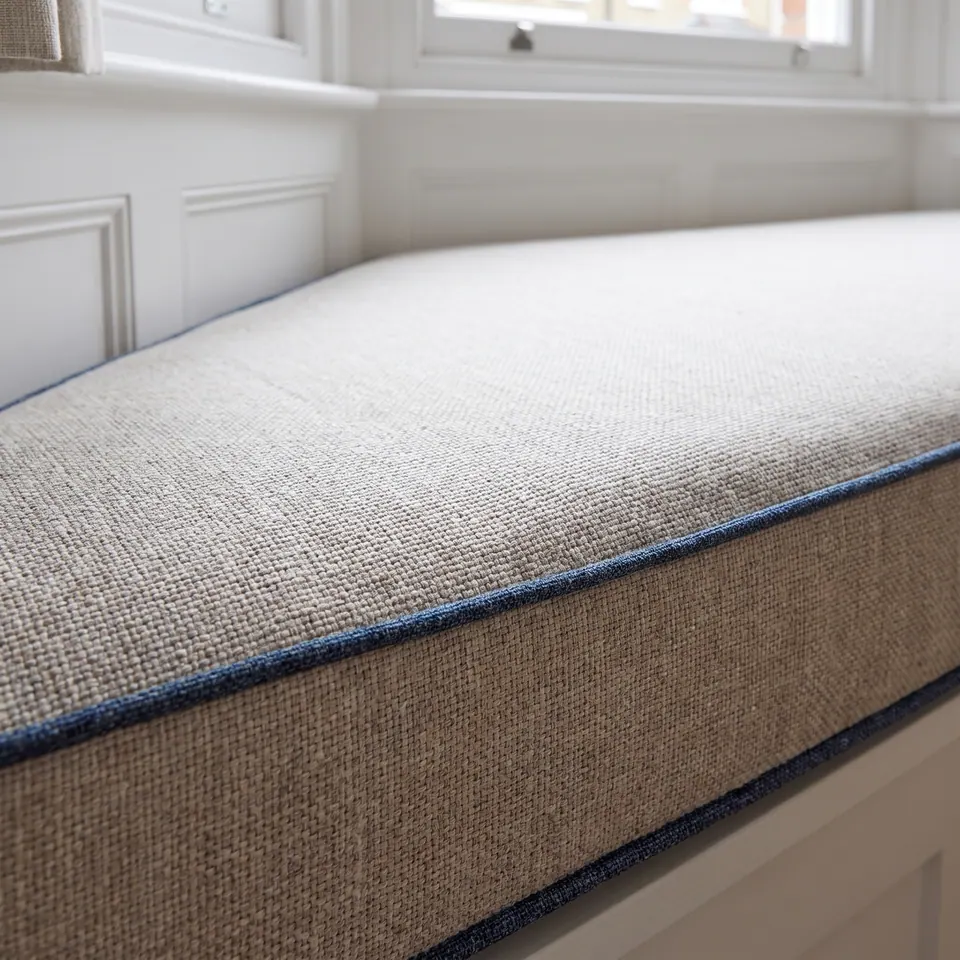
The piping is cut from the same ticking, so the edge becomes a tiny striped cord. It looks more tailored than a plain welt and keeps each corner as crisp as the stripe. Terracotta and oak warm the green so it never turns cold, and the white base lets the cream ground read warm.
Now proportion, which a close-up cannot settle alone. A cushion too thin on a deep seat looks like a placemat. Too thick, and your knees ride up and the sill lands at your elbow. For most window seats, the standard 4 in (10 cm) sits between the two. Our window seat thickness Pattern and the seat height calculator do the arithmetic. How high is your seat from the floor today?
Pinned by Rosa: fern to floor
Five pins drop from the Boston fern down to the white base, showing how one plant set the color of the whole seat.
- Boston fern
The fern's green is the color the stripe was chosen to repeat.
- terracotta pot
Terracotta and oak keep a green-on-cream stripe from feeling cold.
- green ticking top
A thin green stripe brings a plant's color onto the seat without a solid green.
- striped piping cord
Self piping wraps the edge as a tiny striped cord, more tailored than a plain welt.
- white painted base
The white base lets the cream ground of the ticking read warm.
- Boston fernThe fern's green is the color the stripe was chosen to repeat.
- terracotta potTerracotta and oak keep a green-on-cream stripe from feeling cold.
- green ticking topA thin green stripe brings a plant's color onto the seat without a solid green.
- striped piping cordSelf piping wraps the edge as a tiny striped cord, more tailored than a plain welt.
- white painted baseThe white base lets the cream ground of the ticking read warm.
A headboard that had to stand up straight
A couple wrote to the workshop wanting a linen tufted floor cushion to hang as their headboard: 52¾ x 20 in (134 x 51 cm) and at least 6 in (15 cm) deep.
The shop explained that its cushions are densely filled, firm but comfortable, and usually about 4 in (10 cm) thick. For a headboard, it offered to make one at 6 in (15 cm).
That extra depth is not about softness. A cushion lying on a seat is held up by the seat. One hung on a wall has to hold its own shape, and the thicker build does that. The same thinking runs the other way on a window seat, neighbor: lying flat, 4 in is plenty for most.
Checking thickness against your seat
Measure the bare seat height
Floor to the top of the seat board, with the old cushion off.
Measure the depth
Wall or back to the front edge. Deep seats want a back pillow or a wedge.
Add the cushion
Seat height plus thickness should land near a chair you already like sitting in.
Check the window
Every extra inch of cushion takes an inch off the view beside you.
Write exact numbers
Quarter inches are fine. Type them in the personalization box.
On the cutting table: the fern window seat
| Product | Window seat cushion |
|---|---|
| Fabric | Cream cotton ticking with fine forest-green stripes |
| Edge | Box edge |
| Piping | Self piping in the same ticking |
| Standard thickness | 4 in (10 cm) |
| Upright pieces | 6 in (15 cm) to hold their shape |
| Deep seats | Add a wedge backrest |
| Sizes | Half and quarter inches accepted; centimeters welcome |
| Best for | Cottage-style living rooms and plant-filled windows |

Have it made
Have this made — ask Rosa’s workshop
Swings sway, rockers rock, dogs circle three times. Tell the workshop what your seat goes through, and they will plan for it. — Rosa
Leave your details and the workshop will call you to confirm measurements, fabric, foam and piping. No prices, dates or payment on this page: it is a request, not an order.
A window seat cushion lying flat does fine at 4 in. A cushion that has to stand against a wall, like a headboard, needs 6 in to hold its shape.
Rosa
Questions buyers ask next
How can I tell if a window seat cushion will be too thick for my seat height?
Add the cushion thickness to the bare seat height and compare the total with a chair you find comfortable. Also check how much of the window it will cover. The seat height calculator does the sum for you.
Why does self piping on ticking look more tailored than a plain welt?
Cut from the same stripe, the piping becomes a tiny striped cord around the edge. It follows the pattern instead of interrupting it, so the corners stay as crisp as the stripe itself and the cushion reads as one piece.
Where should a plant sit beside a striped window seat cushion?
At the end of the seat, near where the piping turns the corner. The eye travels from leaf to stripe, and a green stripe then reads as a deliberate echo of the plant rather than a coincidence.
Can a tufted floor cushion work as a wall-hung headboard?
Yes, with a thicker build. The workshop's floor cushions are usually about 4 in (10 cm), but for a 52¾ x 20 in (134 x 51 cm) headboard it offered 6 in (15 cm) so the cushion holds its shape upright.
Porch light's on — Rosa