Concept Sketches · 8 scenes
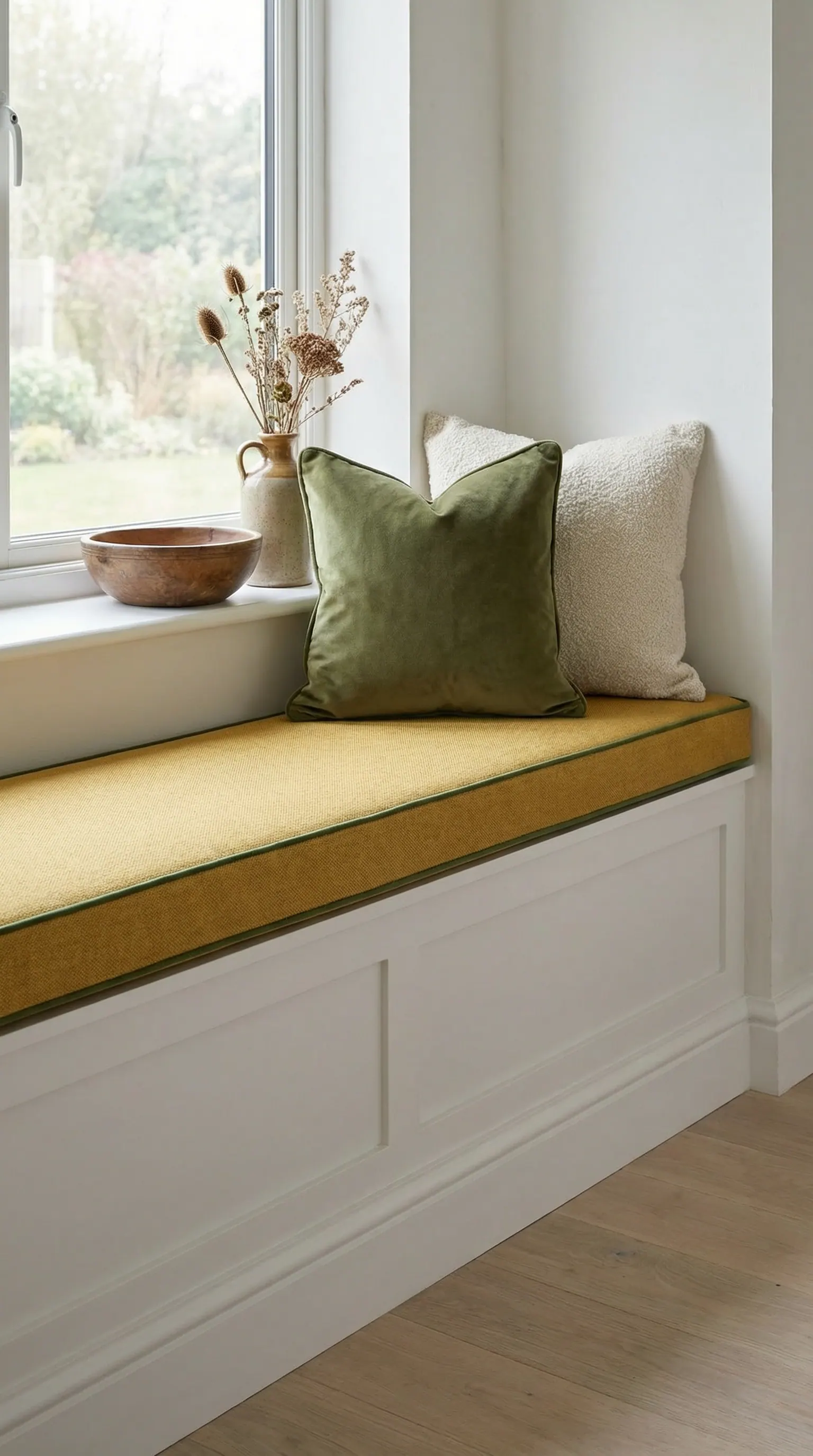
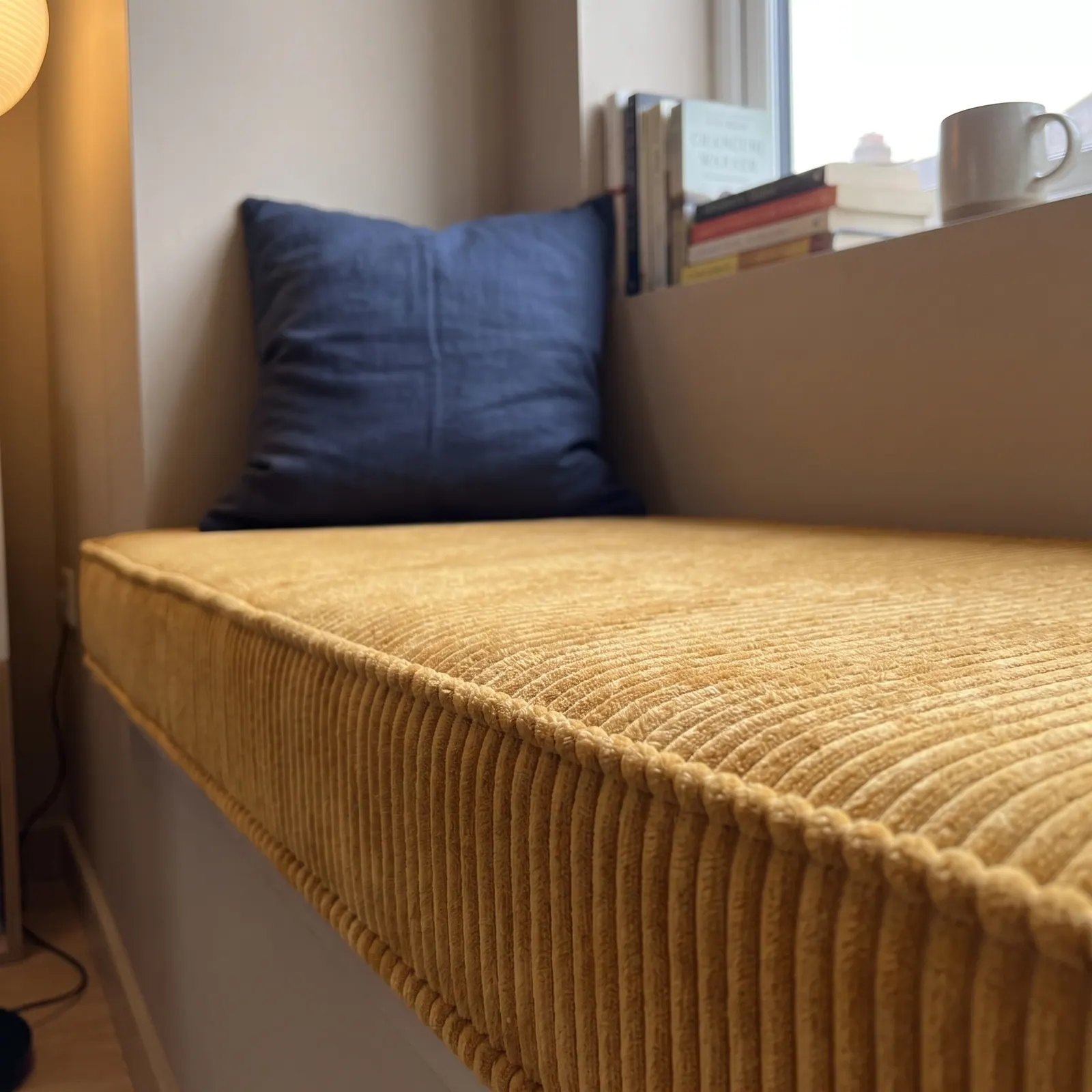
Colonial window seat cushions for deep sills and old benches
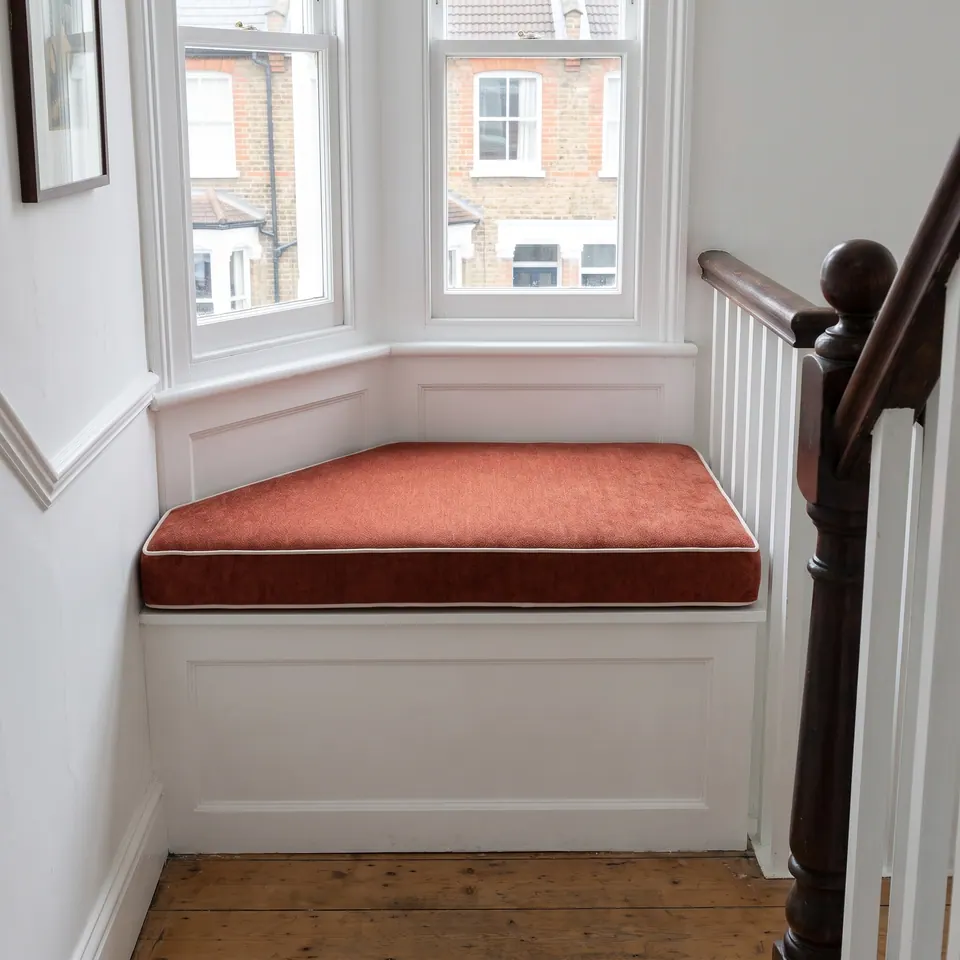
Old houses were built by hand, and no two sills agree. Eight window seats and benches reached the cutting table at lengths no stock size has heard of, and each one left a lesson behind.

 Save
The quick answer
A colonial window seat cushion is usually a custom size, so order the nearest listed option and restate the true length in the order note. Measure the seat top with a rigid tape, front and back edges separately. Split long ledges over radiators into two pieces, and choose an easy-wipe fabric where windows sweat in winter. Standard thickness is 4 in (10 cm); 3 in (8 cm) sits neater.
No sill in an old house is a stock size
No sill in an old house is a stock size, and the bench under it isn't either. A colonial window seat cushion starts with a rigid tape, a flashlight for the dark corner and a little humility.
These houses bring their own weather. Many-paned windows sweat through the winter, radiators hide under the ledges, and meeting-house benches carry lengths no catalog ever printed. I once measured an old cushion instead of the seat it sat on. Once. Measure the bench, not the cushion you used to have.
The window seat cushions and bench cushions hubs hold the shapes, and the window seat measuring Pattern holds the tape work. Try an awkward length in the bench cushion builder before you commit. What does your sill measure, dear, front edge and back?
Eight old seats, eight odd lengths
01A past project
A 13 x 66 in meeting-house bench, ordered as 61 in
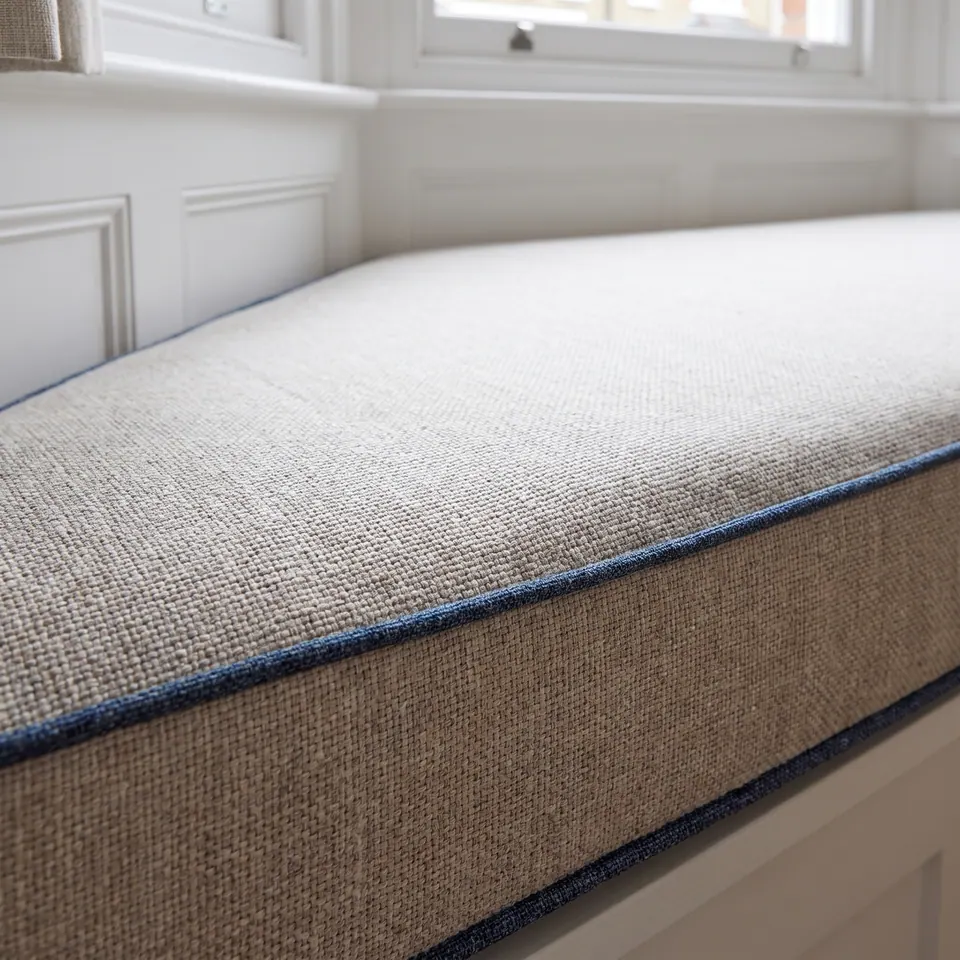
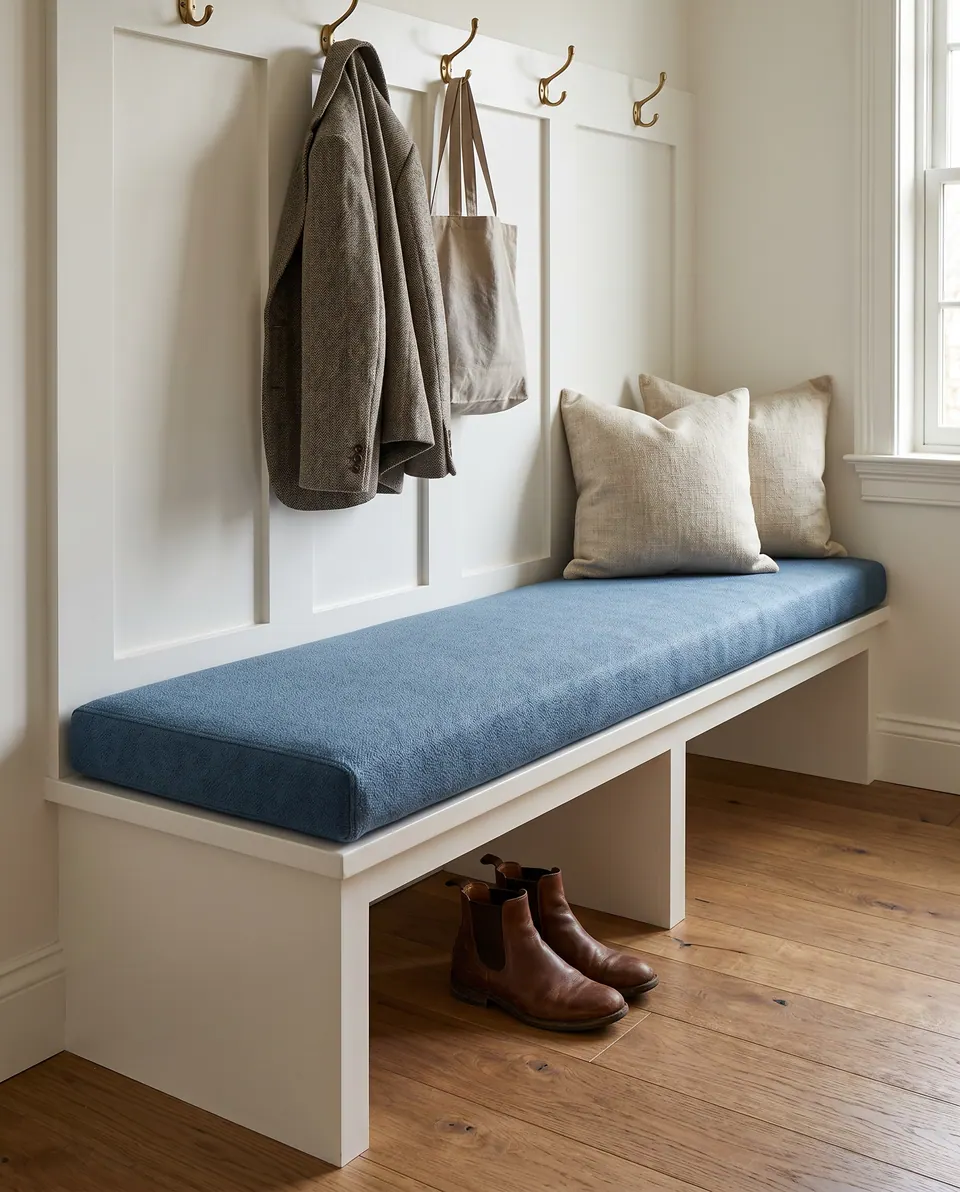
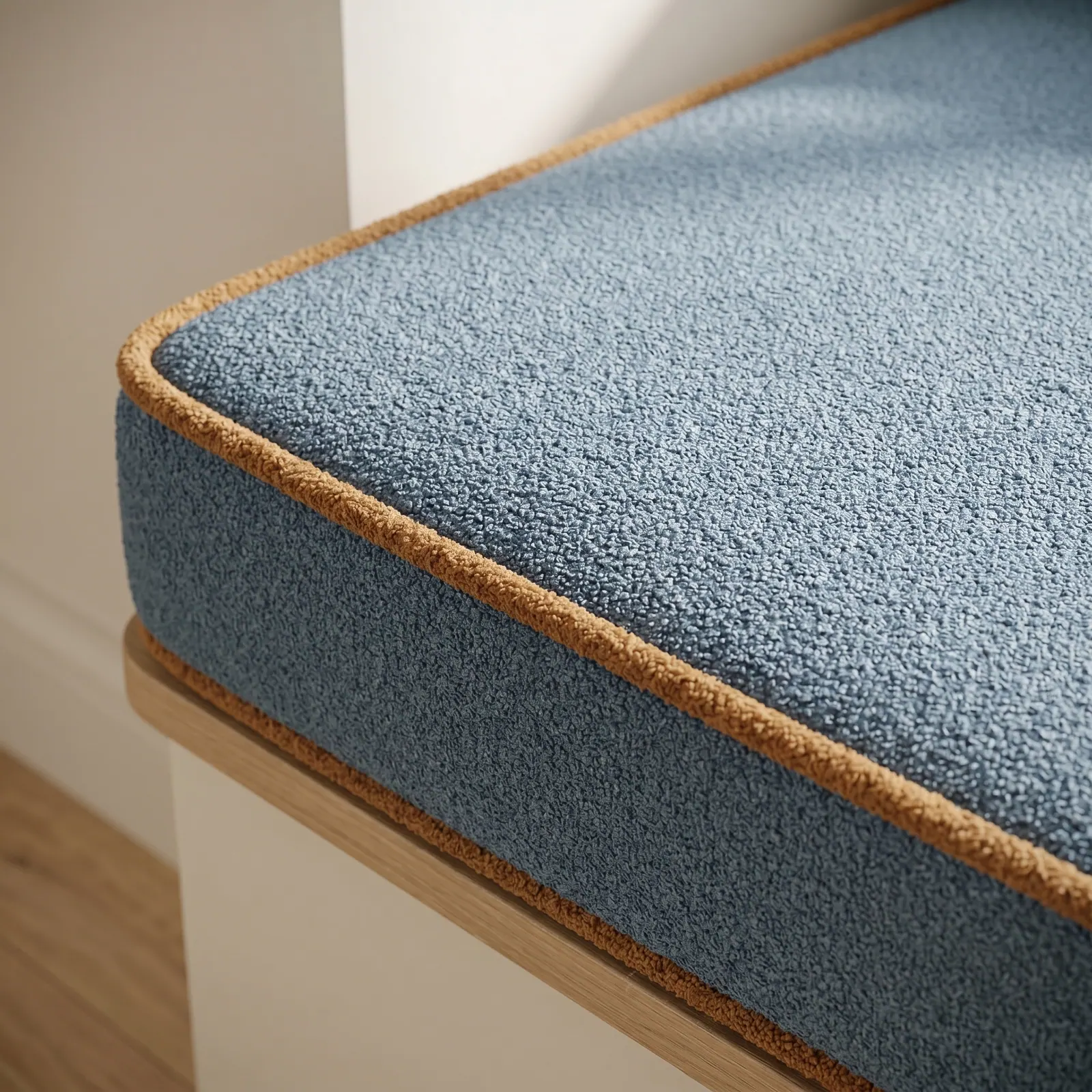
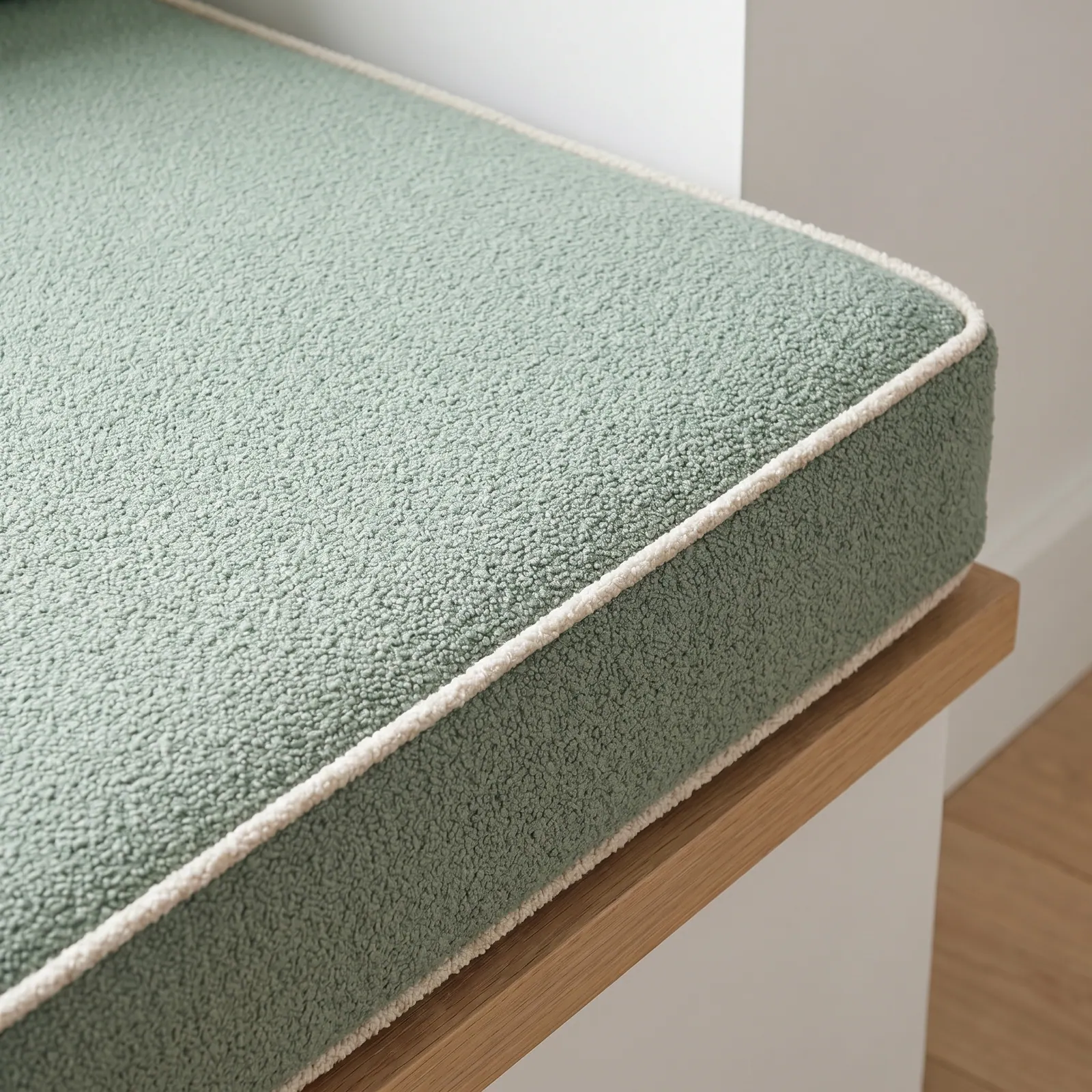
A buyer in the US had an antique meeting-house bench 13 x 66 in (33 x 168 cm). No option matched, so the workshop had them select 13 x 61 in (33 x 155 cm), restate 66 in, and the workshop made 66 in. They chose an ice-blue soft fabric with tan linen piping, since mixing fabric types is perfectly fine, and left the courier a note to use the street-level garage, because the cottage sits below many steps.
The takeaway: Old benches rarely match stock sizes; order the nearest option and restate the true length.
02A past project
A 106 in ledge over a radiator, cut in two
A buyer in the US had a front bay ledge of 106 x 15 in (269 x 38 cm) with a radiator beneath it. The workshop advised two 53 x 15 in (135 x 38 cm) cushions instead of one, so the radiator isn't fully covered and each piece lifts out on its own. Then the buyer took their time choosing a color from the chart, which I heartily approve.
The takeaway: Split a long window cushion over a radiator so the heat can escape.
03A past project
Mildew under a window that sweats all winter
A buyer got in touch after a previous window cushion grew mildew from winter condensation on a single-glazed window. The workshop recommended velvet, or better still its soft fabric, because both wipe clean easily, and said plainly that neither is waterproof. The moisture has to be wiped away regularly. They asked for matching bolsters too, which the workshop quotes from diameter, length and quantity.
The takeaway: Manage the condensation first, then choose an easy-wipe fabric.
04A past project
Two blue velvet pieces for an 1880 farmhouse kitchen bench
A buyer restoring an 1880 farmhouse kitchen for a magazine shoot asked for covers alone, but the workshop makes filled cushions. So they ordered two 4 in (10 cm) blue velvet seats for a 16.5 in (42 cm) deep bench, 63.4 in (161 cm) and 45.5 in (116 cm) long, with ties at the meeting end and the side. One arrived 6 in (15 cm) short; the workshop remade the 45.5 in piece and the buyer kept the first.
The takeaway: When two cushions meet on one bench, tie them at the join and check both lengths after unpacking.
05A past project
A 94.75 in striped window seat with self piping
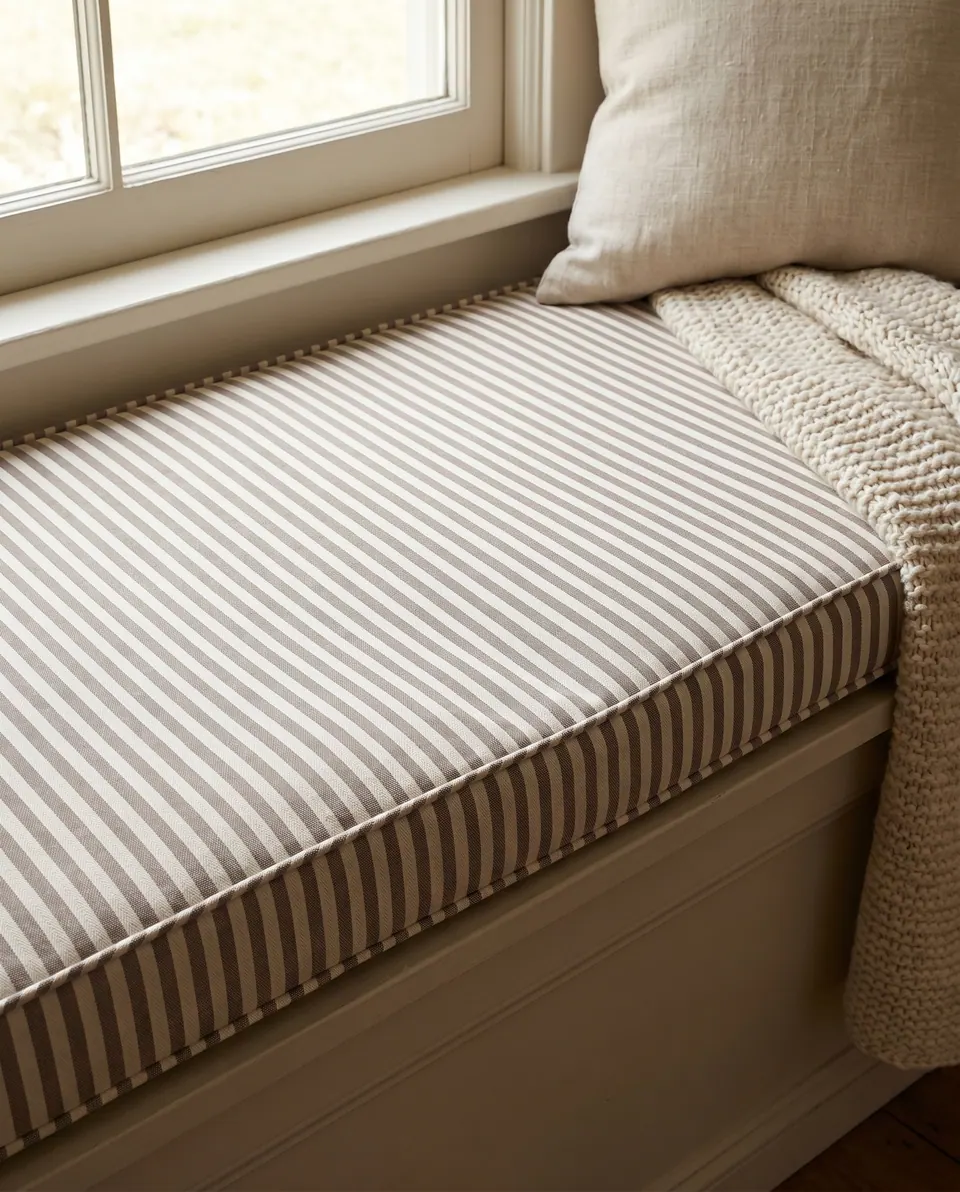
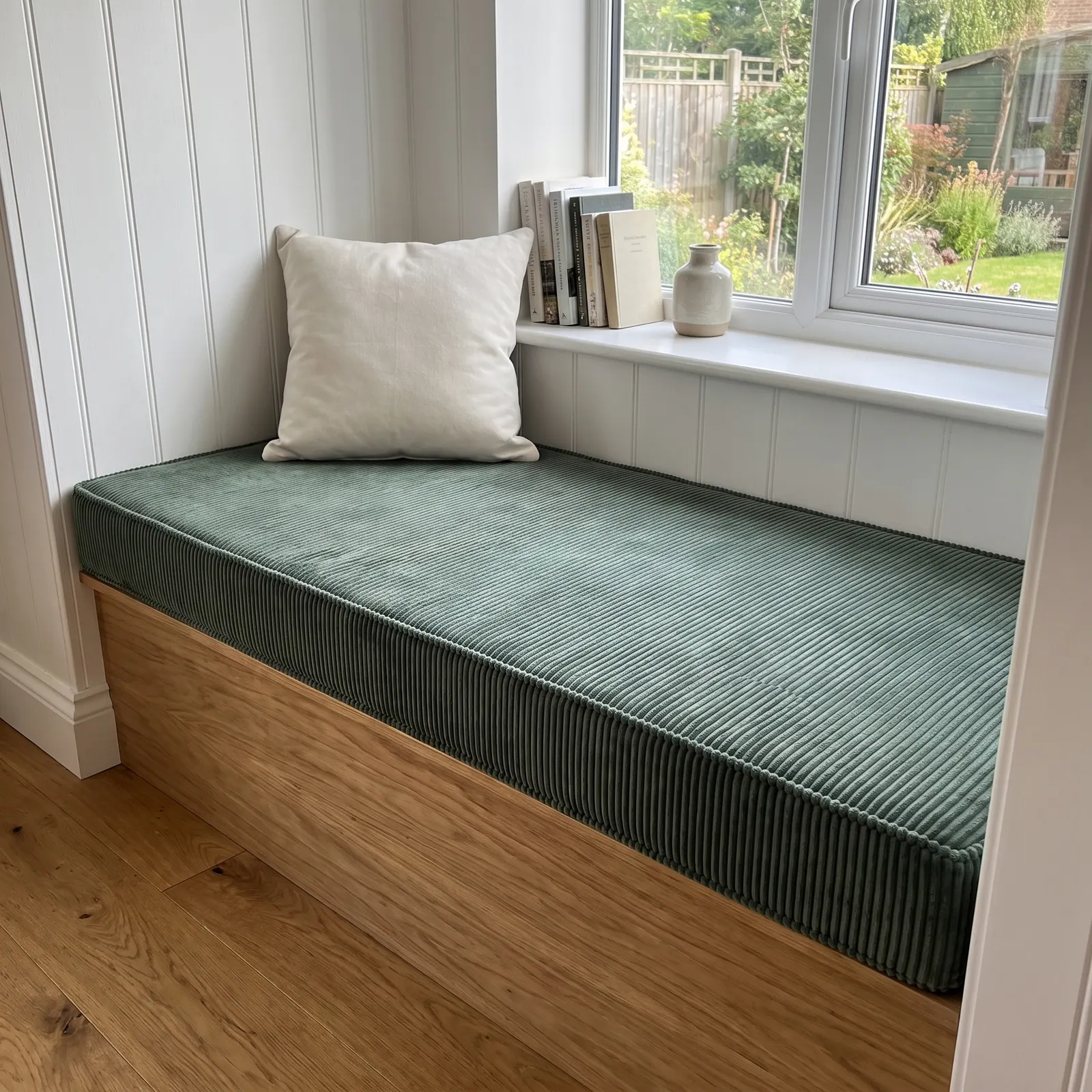
A buyer in the US needed a window seat cushion 94.75 x 16 x 3 in (241 x 41 x 8 cm) in the beige stripe from a listing photo. The longest 16 in deep option stopped at 84 in (213 cm), so the workshop added a Custom option to the listing. They wanted the piping cut from the same stripe rather than a solid, so the note named the fabric code for the piping too. The foam was the workshop's 32-density, firm and non-sagging, not memory foam.
The takeaway: For an oversize length, ask for a custom option and name self piping by fabric code.
06A past project
A 105.25 in mauve-taupe velvet bench, measured too soon
A cat owner in the US ordered swatches, praised the sample card and chose a mauve taupe velvet. Her length didn't match the range she had bought, so the workshop paused production until she confirmed 19.5 x 105.25 x 2 in (50 x 267 x 5 cm). Out of the box it measured about 103 in (262 cm). Vacuum-packed foam needs about a week to recover before anyone takes a tape to it.
The takeaway: Measure a long vacuum-packed cushion only after about a week.
07A past project
An 18 5/8 x 71 in ticking bench that went to linen
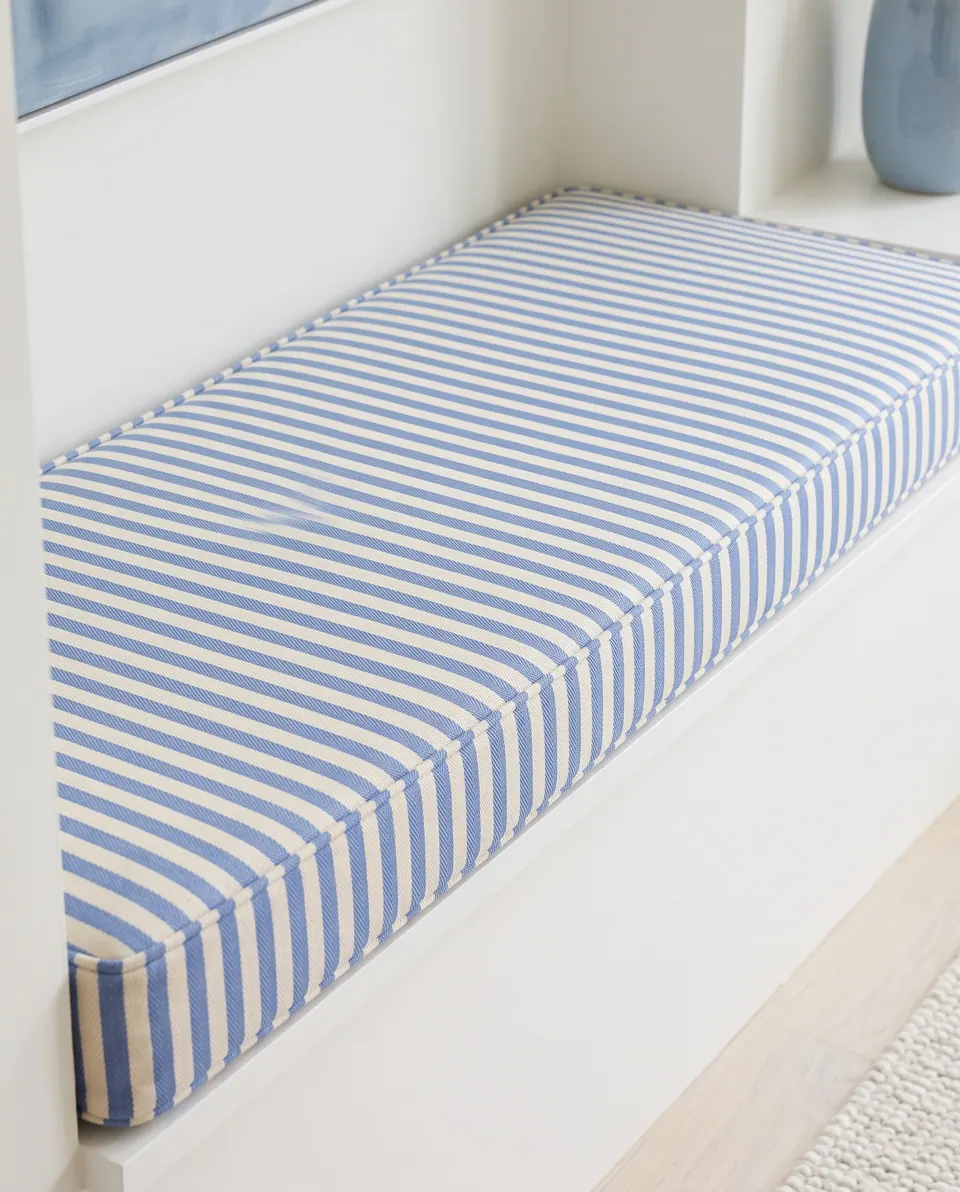
A buyer in the US found her ticking-stripe bench cushion, 18 5/8 x 71 in (47 x 180 cm), warmer and more tan than the chart photo. Production records confirmed the fabric, so she ordered samples and chose a linen for a new cover. That one came darker, with white contrast piping, because the sample carried its neighbor's code. The workshop's mistake, and I'll say so. The final cover came in the right linen with self piping and the non-slip base she had paid for, at no charge.
The takeaway: Label samples carefully, and repeat the piping and add-ons on every remake.
08A past project
A 79.25 in window seat with pink piping, reordered deeper
A buyer in the US ordered a 79.25 x 11 in (201 x 28 cm) linen window seat cushion with pink piping, then realized she had typed the wrong depth. She reordered at 79.25 x 23.25 in (201 x 59 cm) in a lighter linen with the same piping, and the workshop confirmed by message it would be 4 in (10 cm) thick like the first. It arrived 2 in (5 cm) thick, because production follows the order form, not the chat.
The takeaway: Put every spec, thickness above all, in the order personalization.
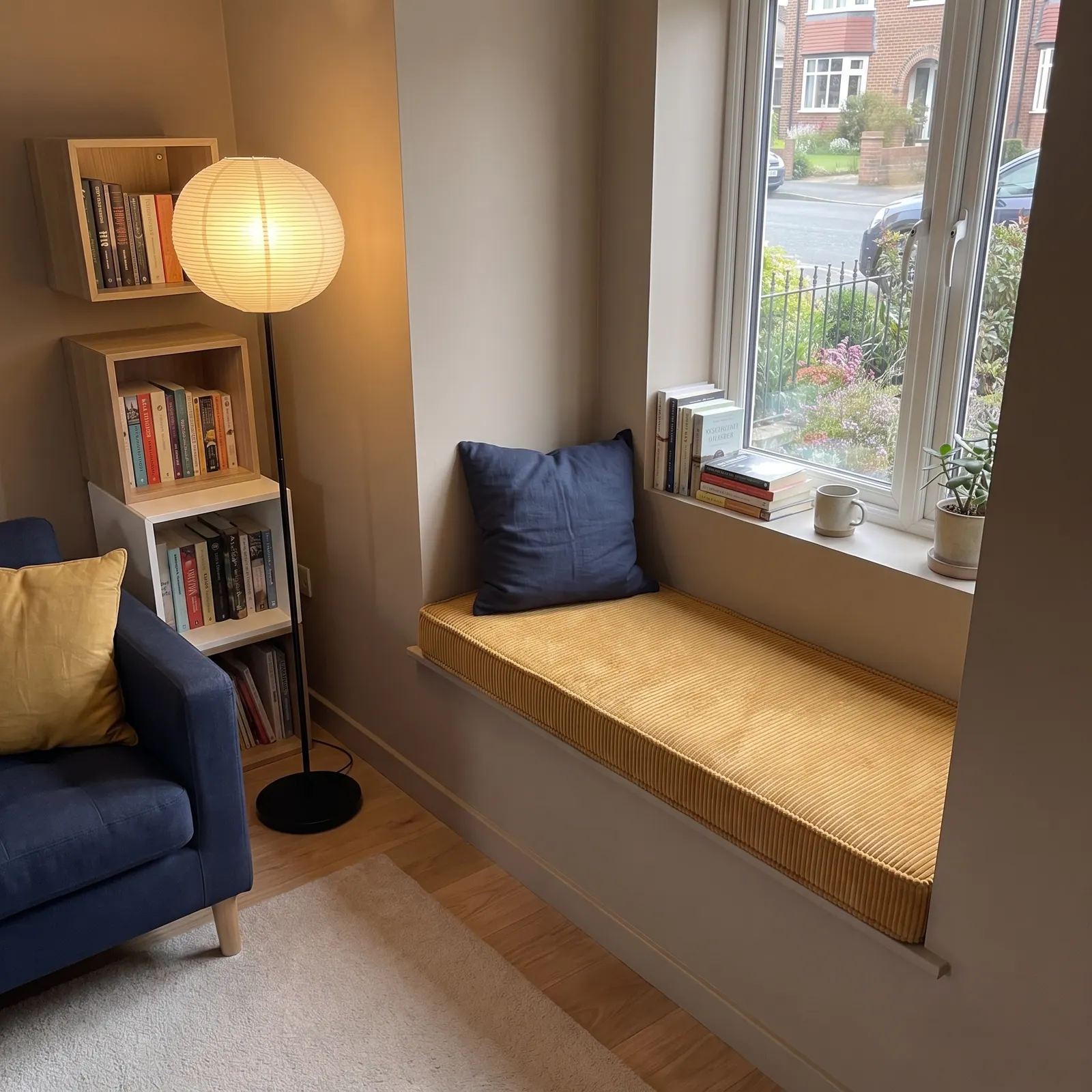
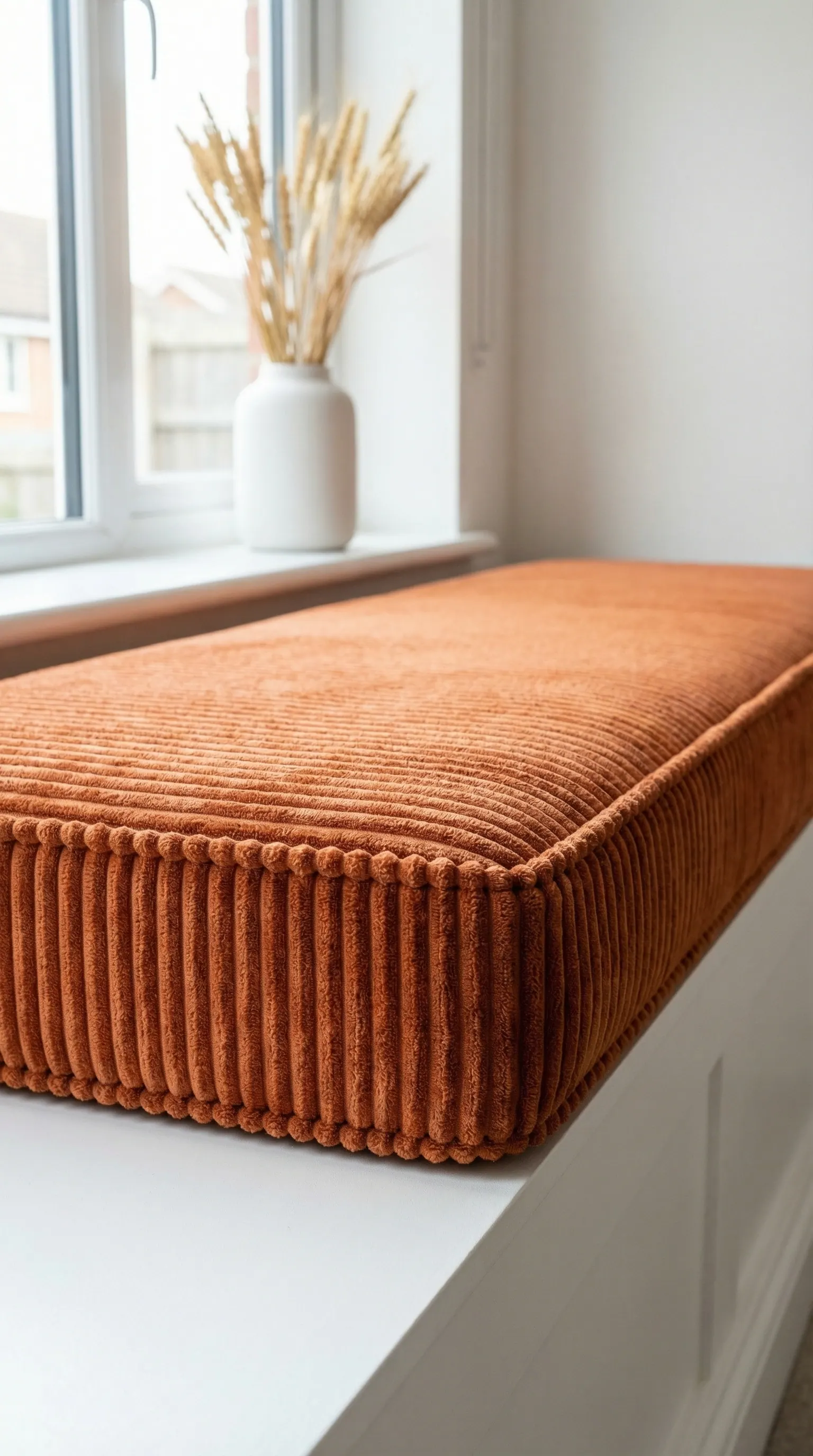
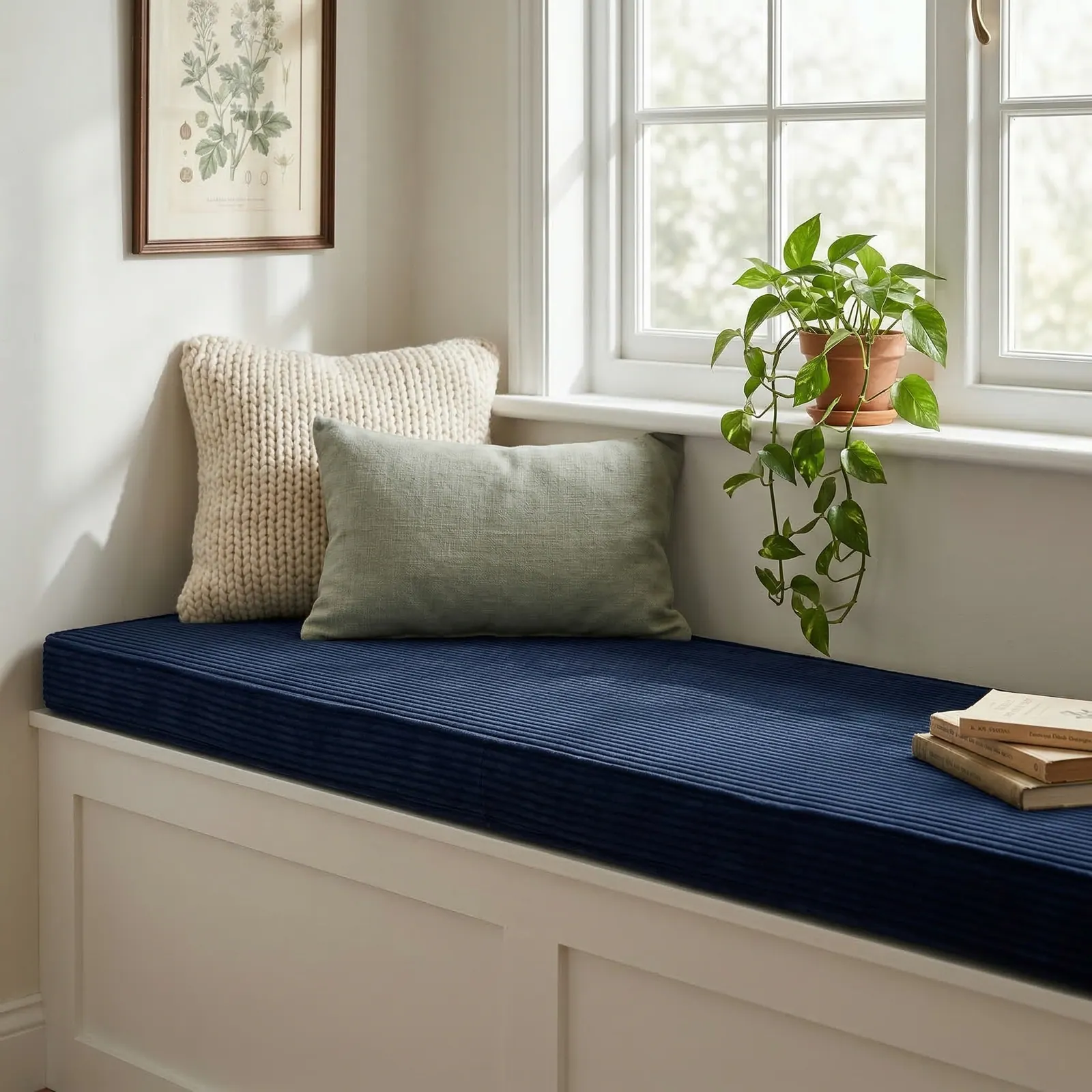
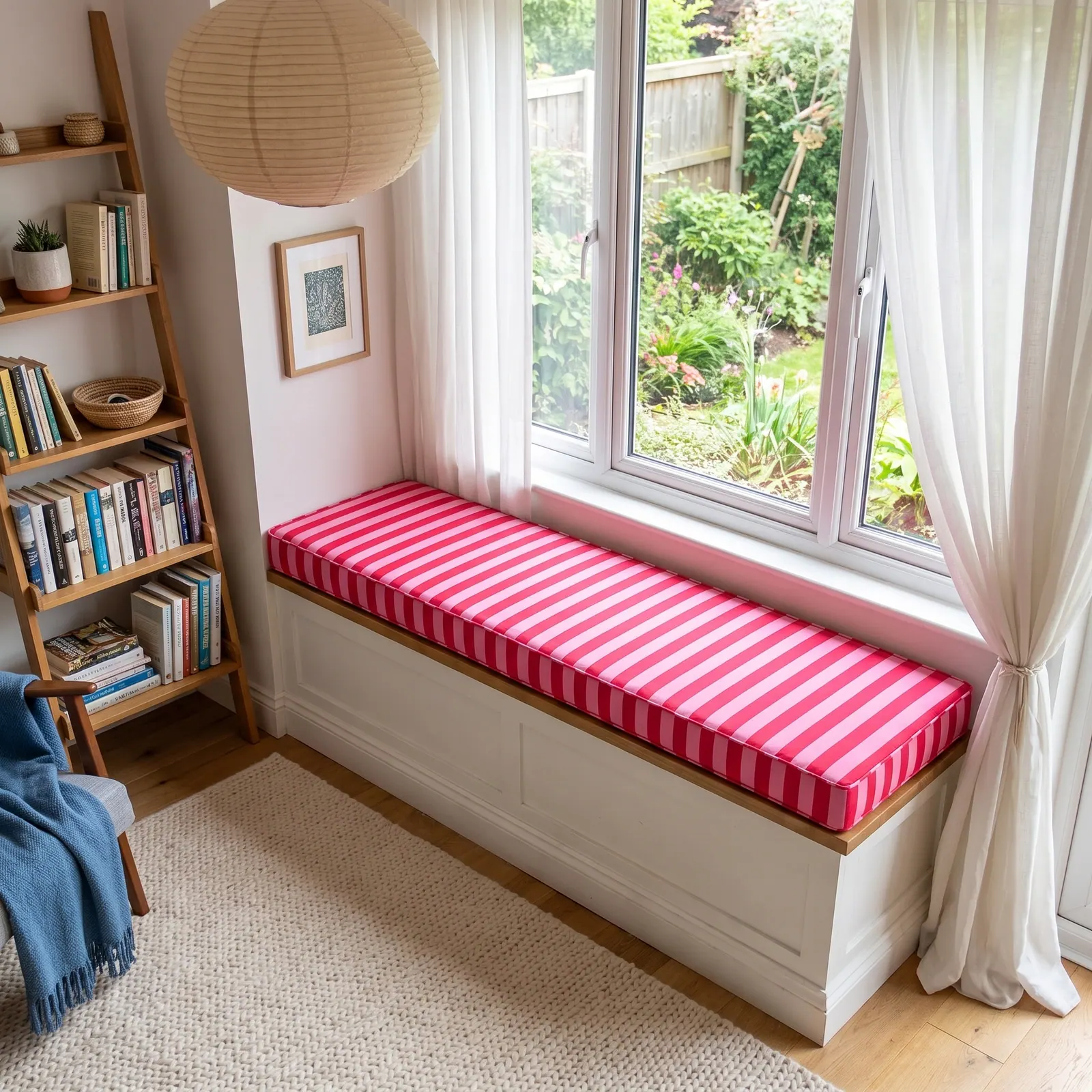
The old-house checklist, before anyone cuts
- Measure the seat top with a rigid tape: front edge wall to wall, back edge along the glass, and depth on the left and the right.
- Inside a bench frame, measure wood to wood, not the outside of the bench.
- Old walls are rarely square, so add both diagonals as a check.
- Order the nearest listed size and write the true length, thickness and piping in the personalization note. Production reads the order, not the chat.
- Over a radiator, split the ledge into two cushions so heat escapes and each piece lifts out.
- On a shallow sill, ask for a non-slip base or ties; a cushion cut exactly to a narrow seat has nothing to grip.
- Stripes run front to back unless you say otherwise. The roll is 55 in (140 cm) wide, so lengthwise stripes on a long seat need a seam.
- For a quiet period look, choose ticking or linen with self piping; for the long, cold months, velvet.
- Let a vacuum-packed cushion recover for about a week before you hold it against the sill.
Old window seats rarely match a stock size: order the nearest option, then write the true length, thickness and piping on the order form.
Maggie
Buyer questions: sills, stripes and tape measures
- A common question
How do I measure a built-in window seat for a cushion?
The workshop's answerMeasure the seat top itself with a rigid tape, not the floor. Take the front edge wall to wall, the back edge along the window (often shorter), the depth on both left and right, and each angled side separately. Inside a frame, measure wood to wood. Send a top-view sketch with a photo, and the workshop checks the numbers before cutting.
- A common question
Which way will the stripes run on my long window seat, and can I change that?
The workshop's answerFront to back, across the depth, by default. The roll is 55 in (140 cm) wide, so stripes running the length of a long cushion would need a seam. You can ask for another direction on the top and sides before production, and the team checks it's possible. A stripe too narrow to cut piping from gets a solid matching piping.
- A common question
Is the dark stripe in your striped fabric black, charcoal or navy?
The workshop's answerMostly navy. The darker stripes read as dark blue, though they look black from across a room, and one pairs a very deep navy with a natural cream rather than bright white. There is a true black stripe if you need one. When the tone must be certain, order a sample first.

Have it made
Have an idea like this made — ask Maggie’s workshop
I once cut a lovely cushion two inches short, and I have not forgotten it. That is why the workshop goes over your measurements with you on the phone. — Maggie
Leave your details and the workshop will call you to confirm measurements, fabric, foam and piping. No prices, dates or payment on this page: it is a request, not an order.
Questions buyers ask next
What thickness suits a window seat in an old house?
The workshop standard is 4 in (10 cm) for everyday seating. For a neater, lower profile on window seats and bench seats, 3 in (8 cm) is the usual advice, and many velvet bench buyers choose about that.
Will a cushion slide on a narrow painted window seat?
It can, because a cushion cut exactly to a shallow seat has nothing to grip. Ask for a non-slip base, or fabric ties sewn into the seams at the corners or the back. Ties can also hold a backrest to the seat.
Are there period patterns like plaid and ticking, or only solids?
Mostly solids, but there are stripes in beige and white and in black and white, plaid and tartan in brown, green, blue and red tones, and patterned velvets. The workshop's own fabrics all cost the same; a print found elsewhere can sometimes be sourced from a photo, at a higher price.