Concept Sketches · 8 scenes
Navy ticking on a bench: which way the stripe runs and why
Stripes were a rare request not long ago. Now they come up often, most of them navy, and every one of them starts with a tape measure.

 Save
The quick answer
On a ticking stripe bench cushion, the stripes run front to back across the depth by default, because the roll is about 55 in (140 cm) wide and long stripes on a longer cushion would need a seam. You can ask for another direction before production. For piping, self-piping cut from the same stripe is the only guaranteed color match.
Eight striped benches and what each one settled
01A past project
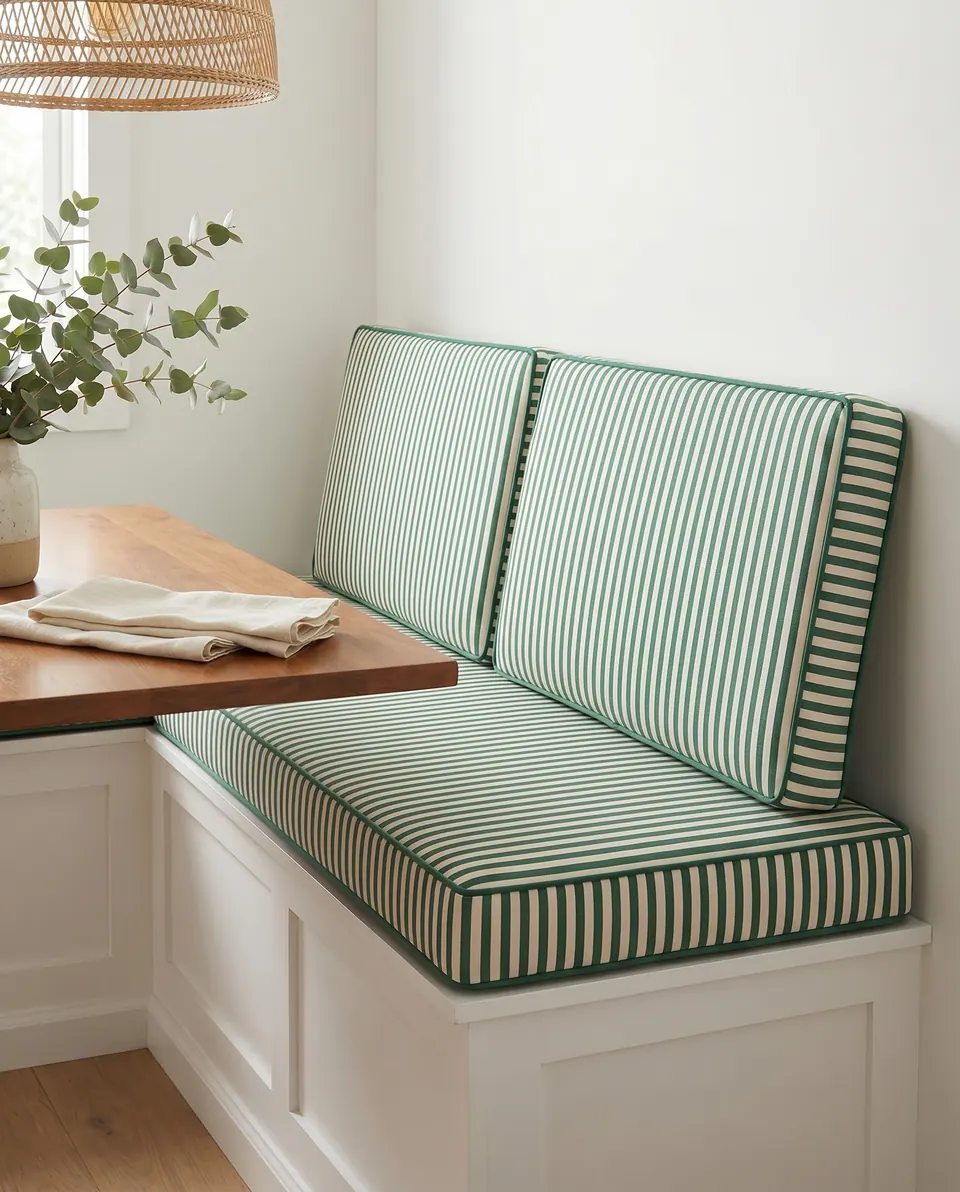
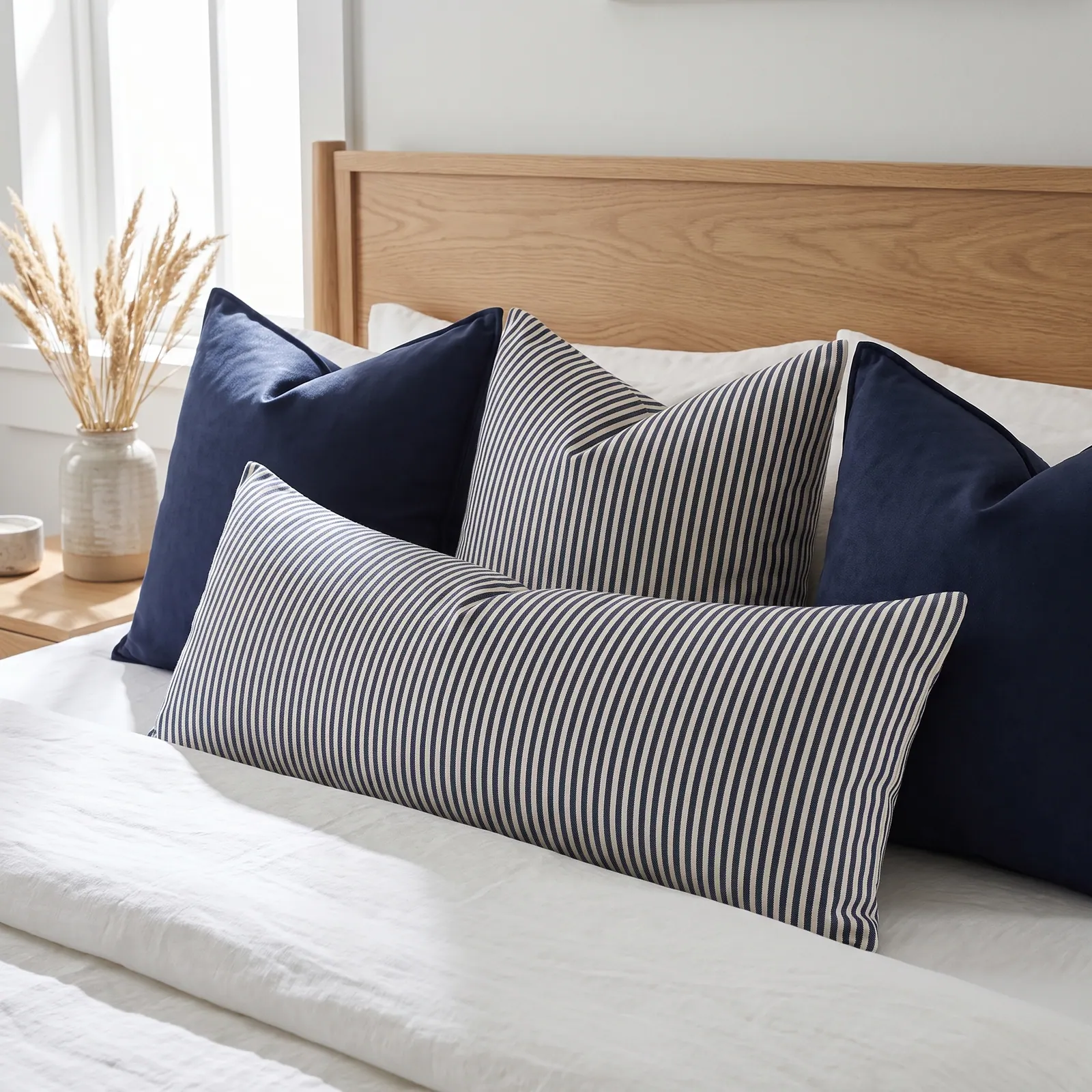
Navy ticking on a kitchen banquette, with three lumbars to match
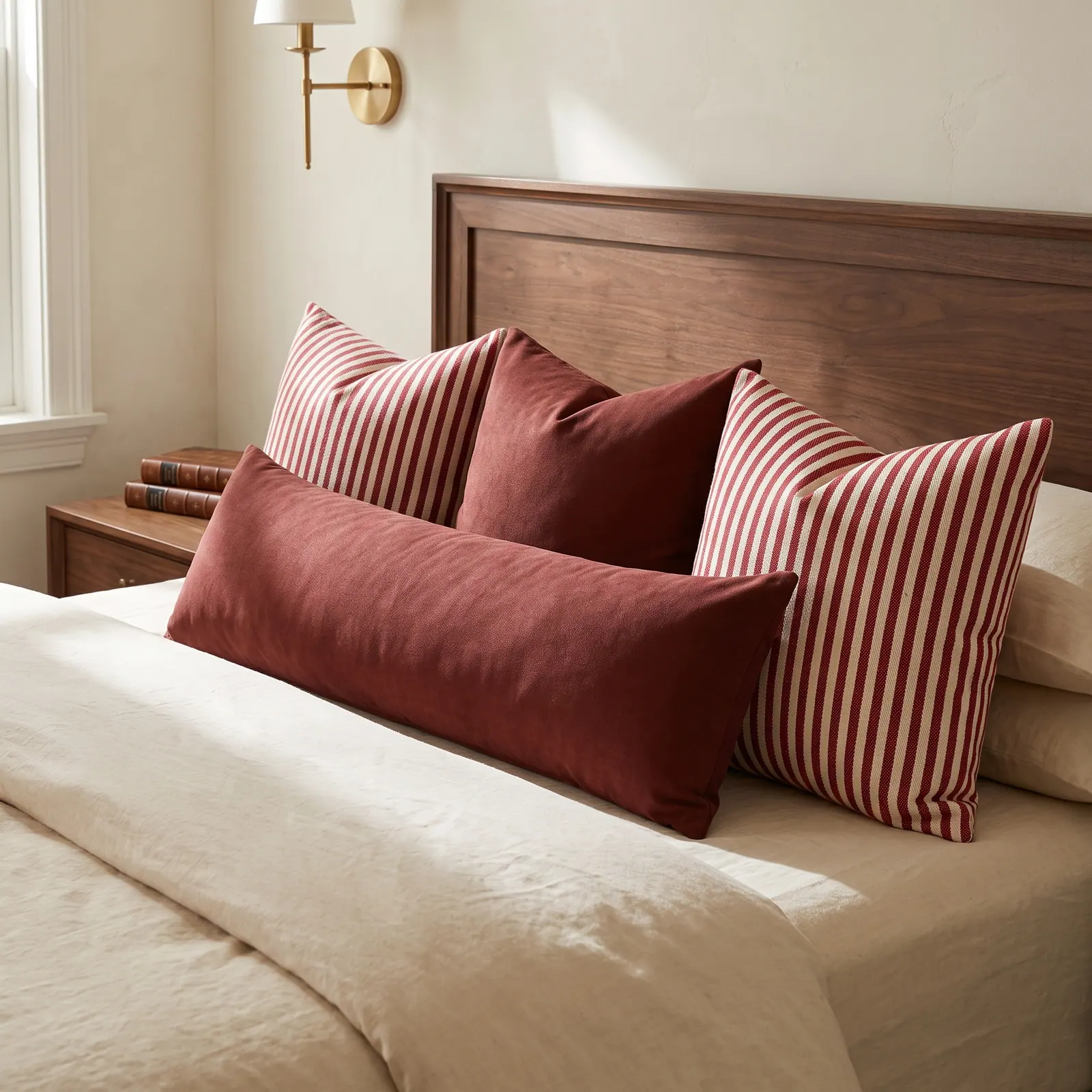
A buyer in the US had a banquette cushion made in navy blue ticking and came back for three matching lumbar pillows: covers 24 x 12 in (61 x 30 cm), inserts 25 x 13 in (64 x 33 cm), zippered and washable.
The takeaway: Order lumbar inserts about 1 in larger than the cover each way, so the pillows sit full against the bench.
02A past project
A U-shaped breakfast nook with a window sill in the way
A family in the US needed three cushions for a U-shaped breakfast nook, two cut out around an overhanging window sill, all 2.5 in (6.4 cm) thick in navy-and-natural ticking. Cotton ticking stains more easily, the workshop said plainly, but the covers wash at 86°F (30°C), and firm 32-density foam (about 2 lb/ft³) makes 2.5 in comfortable. We warned that solid navy piping may not exactly match the stripe, and caught a 2 1/4 in (5.7 cm) mismatch in the third piece before cutting.
The takeaway: On stepped cutouts, add up the edges on each side before you send the drawing.
03A past project
A designer's 57.5 in bench that wanted its stripes sideways
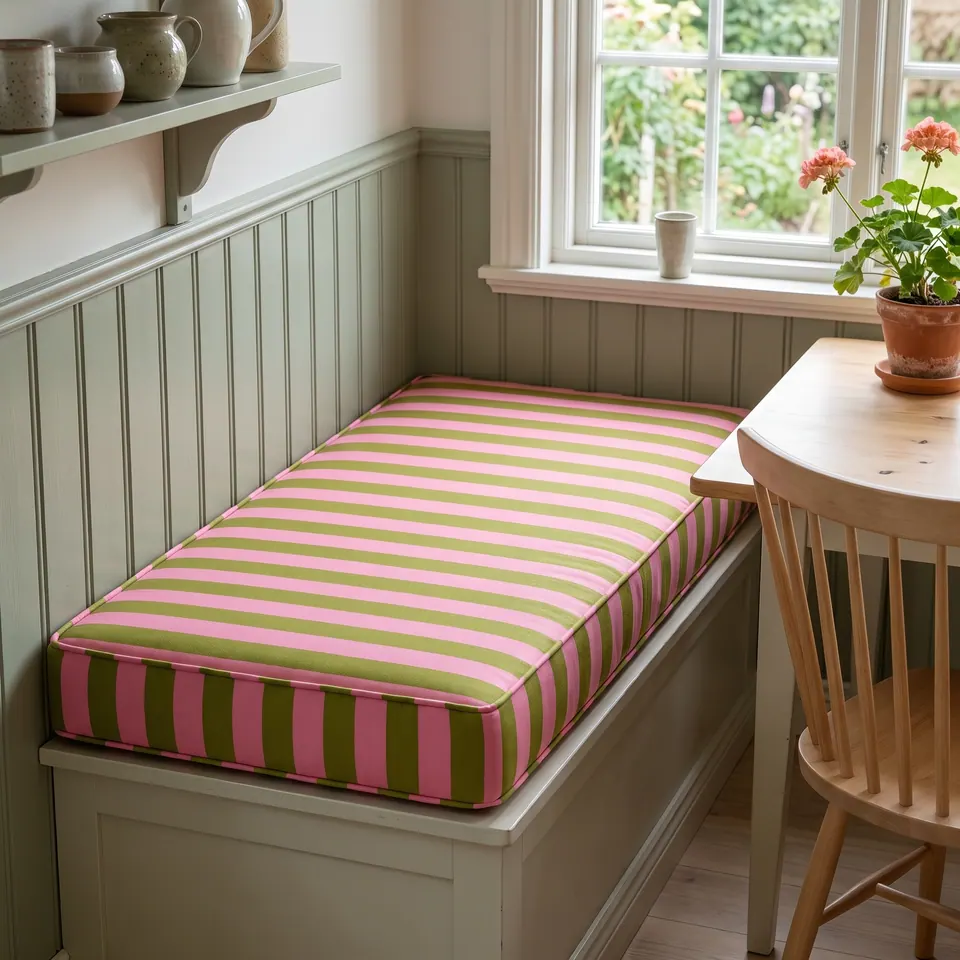
An interior designer in the US ordered a 32 x 57.5 x 4 in (81 x 146 x 10 cm) bench cushion in black-and-white stripe with piping, stripes to run side to side. They arrived front to back. At 57.5 in the cushion is longer than the roll is wide, so side to side meant a seam across the top, and the designer agreed the seamless top was better.
The takeaway: Check a long cushion's stripe direction against the 55 in roll, and settle seam or no seam in writing.
04A past project
A 92 in bench that outran the fabric
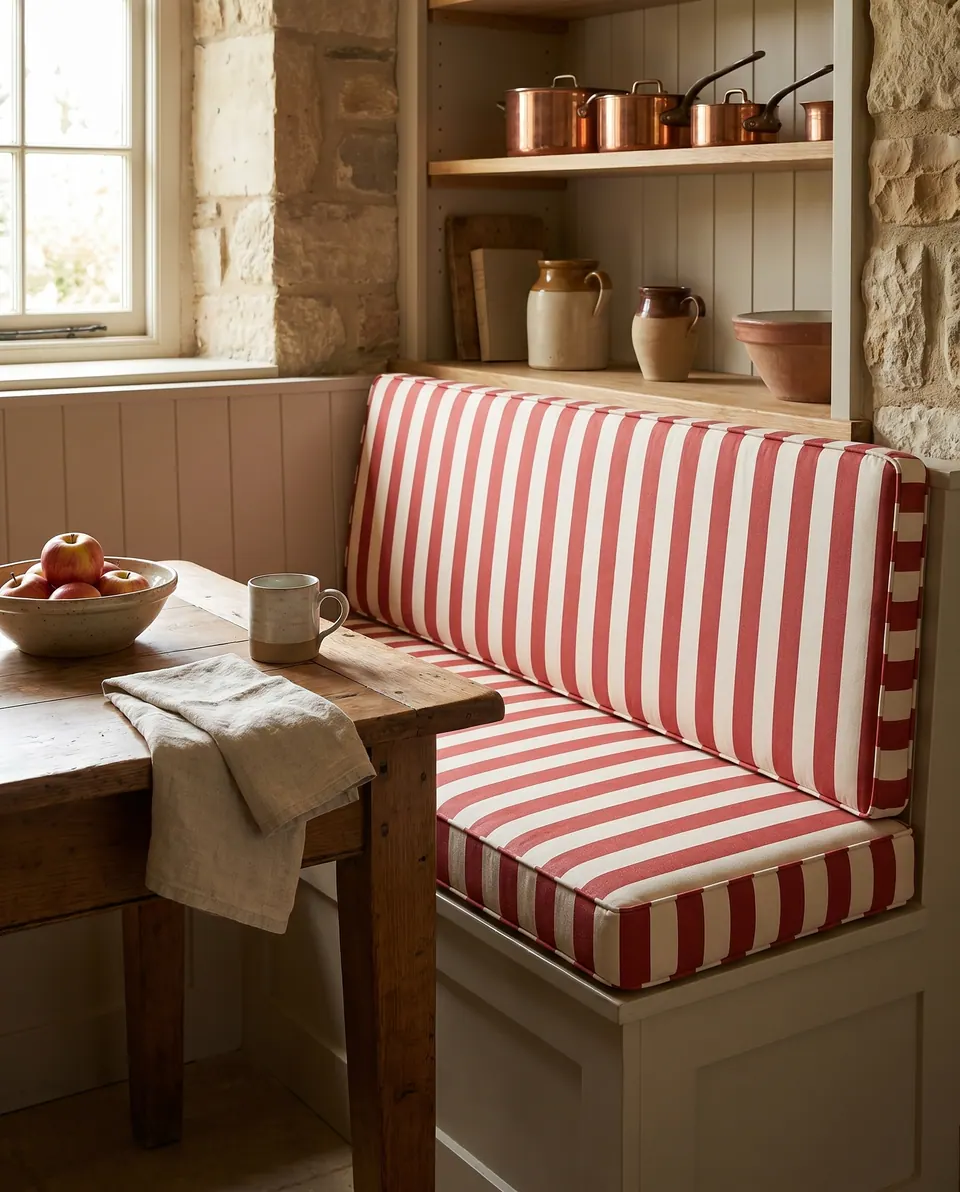
A buyer messaged the workshop about a striped bench cushion about 20 x 92 in (51 x 234 cm). Stripes running the long way, railroaded as the trade says, would need two pieces and a seam. Stripes front to back, across the 20 in depth, give one seamless, durable top.
The takeaway: Past about 54 in (138 cm), choose front-to-back stripes or long stripes with a seam, and write it on the order.
05A past project
An L-shaped corner bench in two pieces that meet flush
A buyer in the US ordered samples first, then cushions for an L-shaped corner bench in striped cotton, about 3 in (7.6 cm) thick. The workshop made two cushions that butt together at the corner instead of one L piece: 16.5 x 62.4 in (42 x 158 cm) and 16.5 x 45.5 in (42 x 116 cm). Straight pieces cover easier and fit cleaner.
The takeaway: State the stripe direction for each cushion separately, since the two pieces sit at right angles.
06A past project
Navy or charcoal? A 73 in bench answered for itself
A buyer in the US ordered a 73 x 26 x 2 in (185 x 66 x 5 cm) striped bench cushion and expected charcoal from the photos. It arrived reading dark blue, and the production record showed the right code. Dark stripes photograph badly: navy reads as black on a screen and plainly blue in daylight.
The takeaway: When a dark stripe's exact shade matters, judge a physical swatch in daylight and under your own lamps.
07A past project
Ticking that looked warmer than the chart
A buyer in the US found her 18 5/8 x 71 in (47 x 180 cm) ticking bench cushion warmer and more tan than the chart photo, though the workshop confirmed the fabric. For the replacement cover she chose a linen from samples, and I'll own ours: that sample was mislabeled, so the cover came darker. The third cover was free, in the shade she meant, with self-piping and her non-slip base.
The takeaway: Label swatches the day they arrive, and repeat piping and add-ons on every remake order.
08A past project
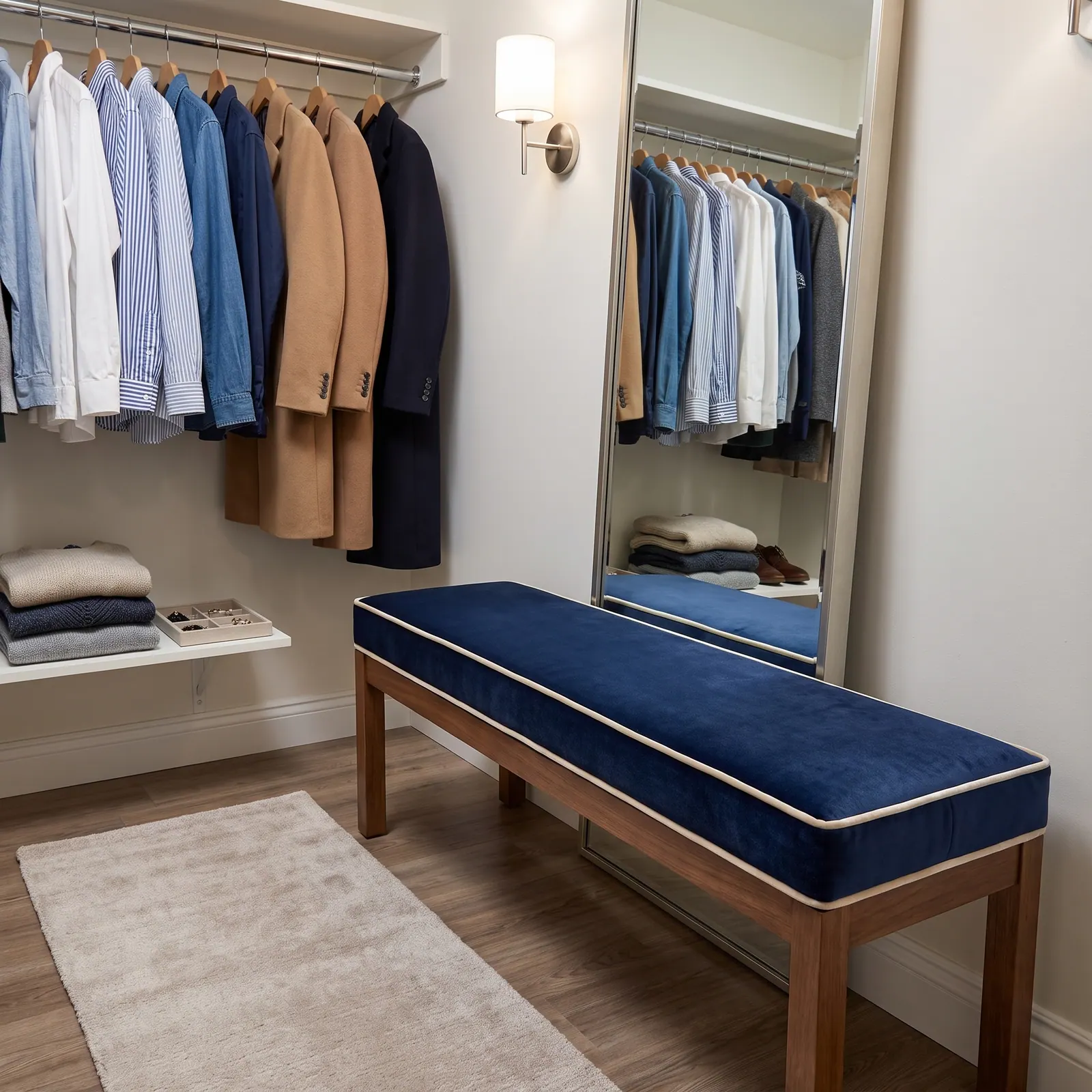
Navy velvet as the solid partner to a stripe
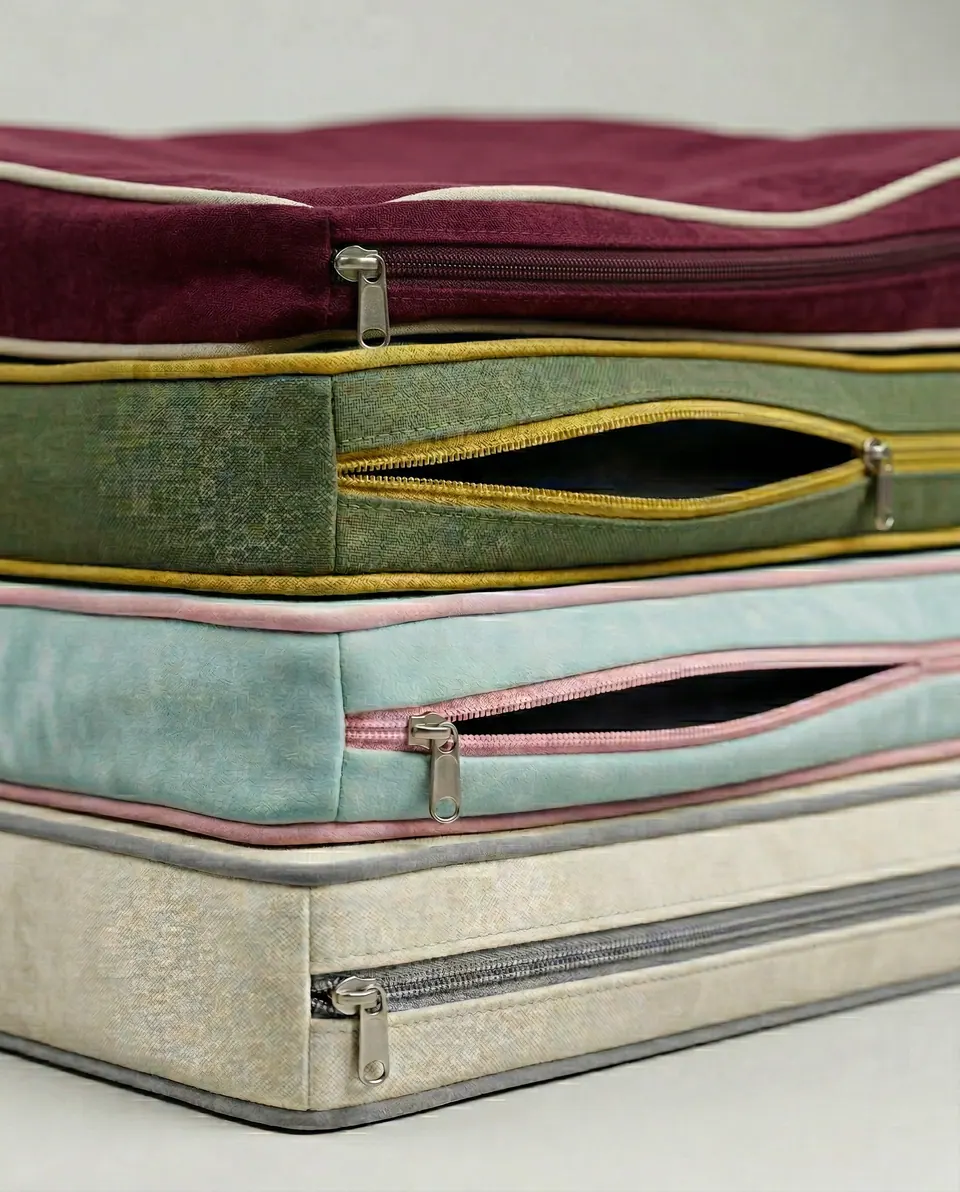
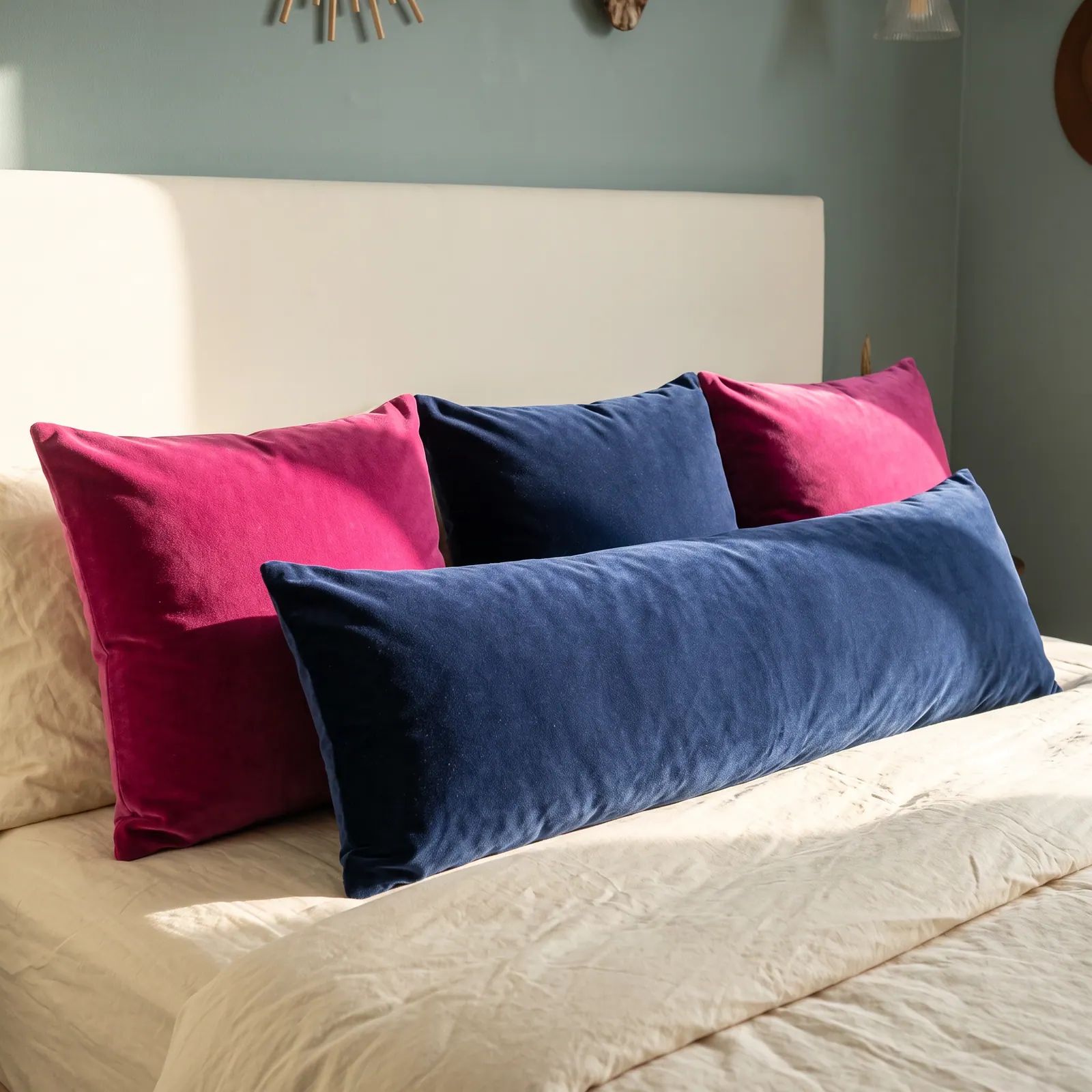
A designer in the US needed two 24 x 24 in (61 x 61 cm) velvet cushions, 6 in (15 cm) thick, for a client's family with children. The workshop recommended velvet for durability with kids and proposed deep navy with burnt terracotta piping, and teal blue with navy piping. The 6 in thickness went into the personalization note.
The takeaway: Let the solid navy live in velvet around a ticking bench; piping from any chart costs nothing extra.
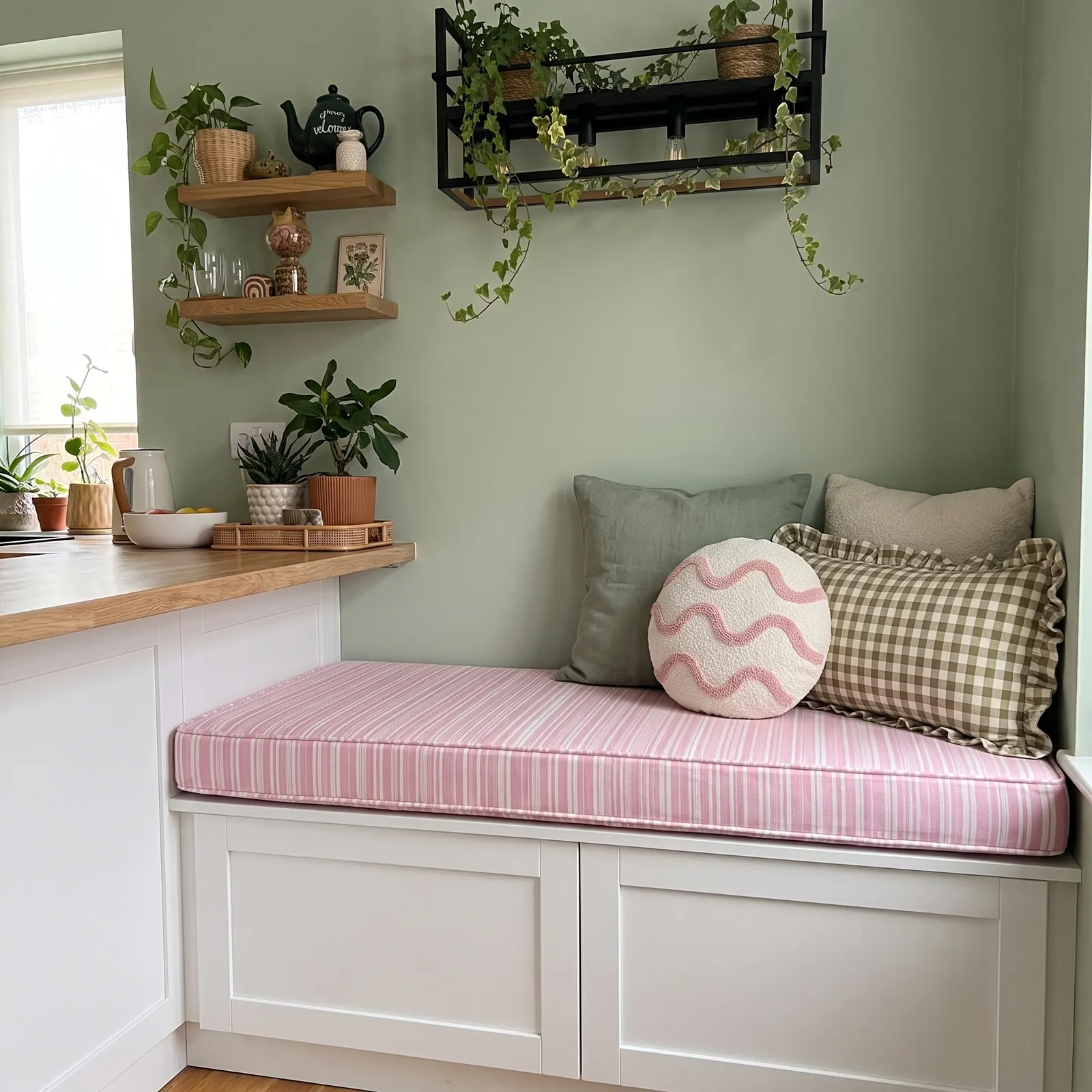
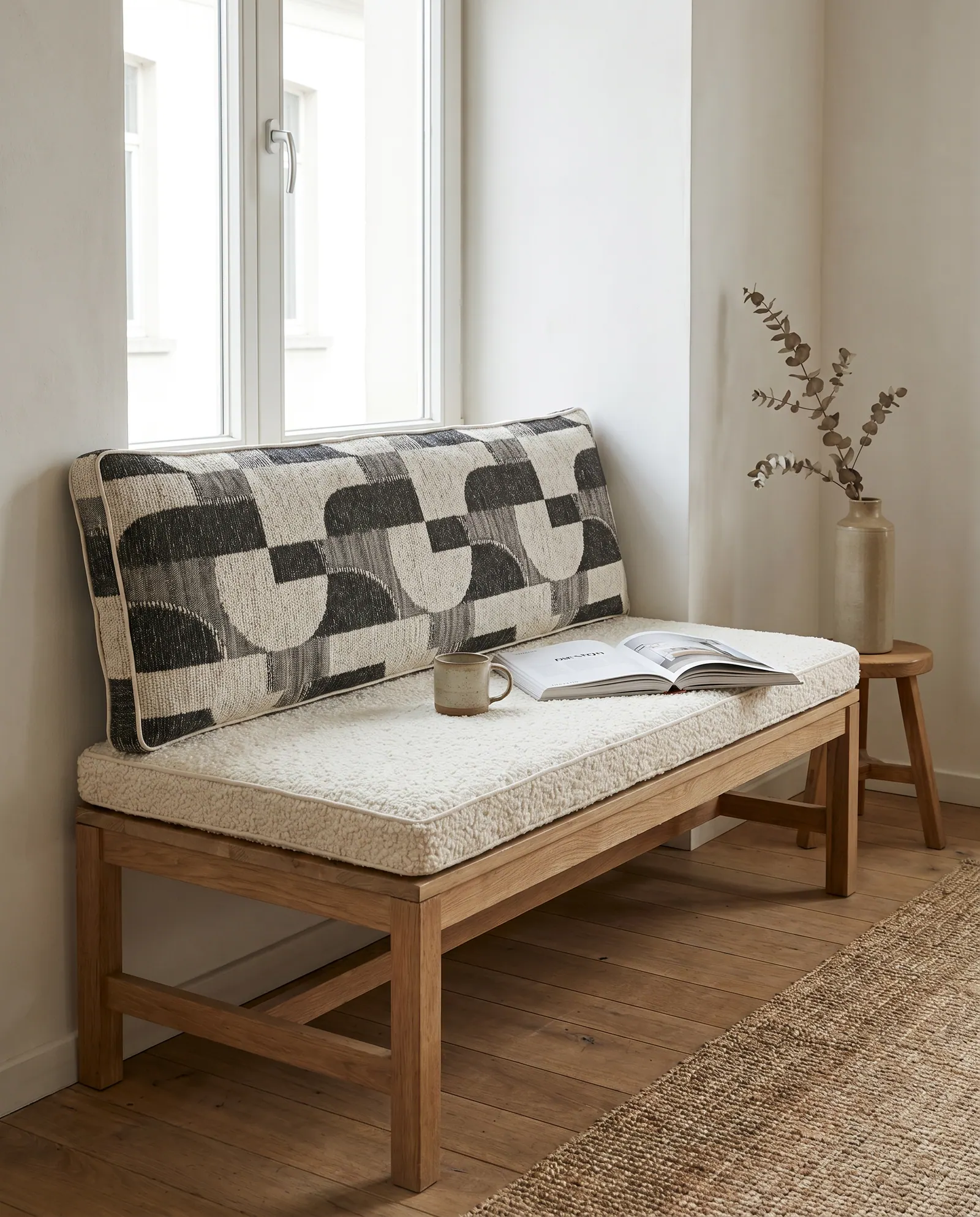
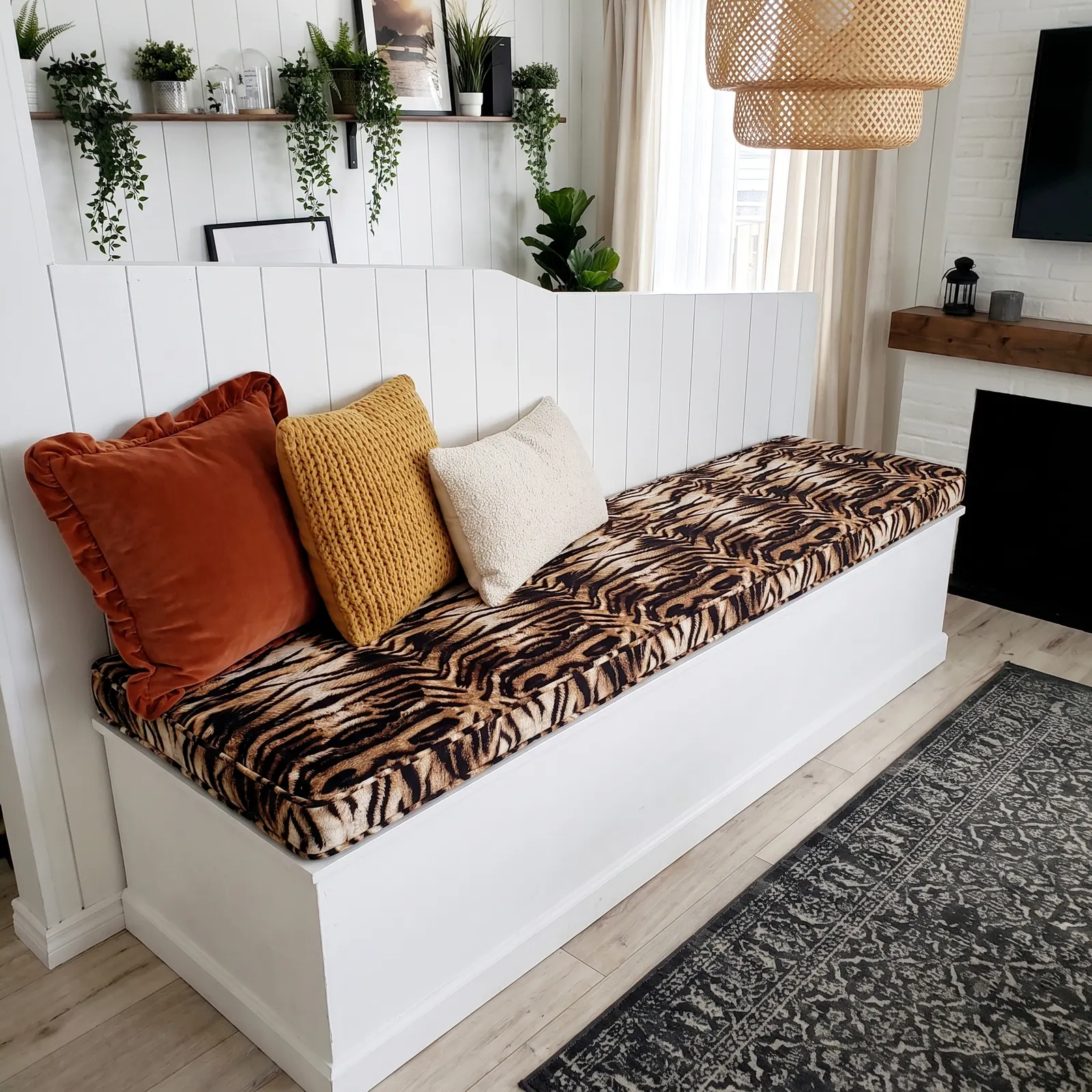
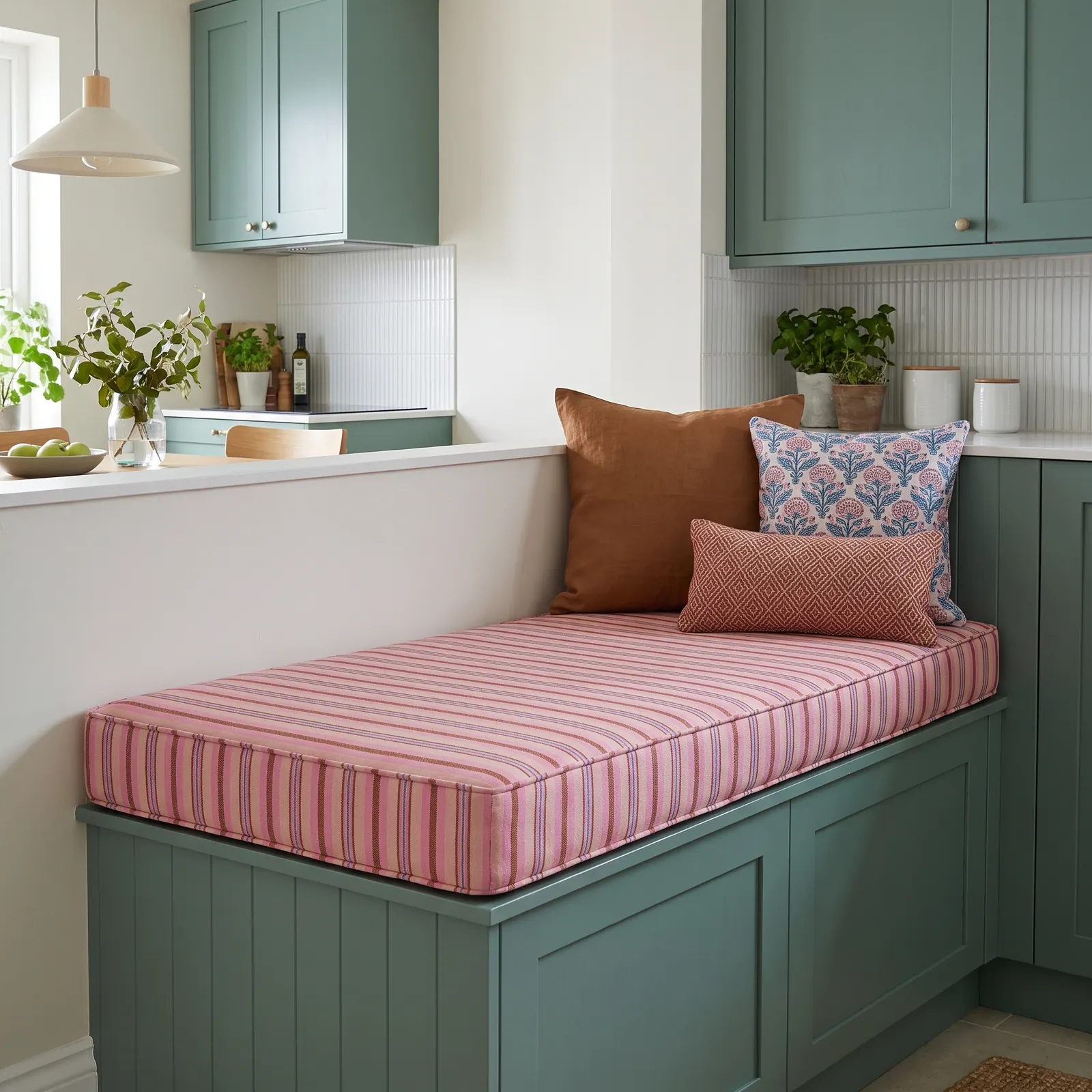
Stripe direction and piping: what each choice asks of you
| Choice | What you get | What to watch | Seen on the cutting table |
|---|---|---|---|
| Stripes front to back (default) | One seamless top at any length | Stripes read as short bars | A 32 x 57.5 in (81 x 146 cm) bench |
| Stripes the long way, under about 54 in (138 cm) | Long lines, no seam | Write the direction per cushion | Lumbars and short benches |
| Stripes the long way, over about 54 in | Long lines down a long bench | A seam across the top | A 20 x 92 in (51 x 234 cm) bench |
| Self-piping from the stripe | The only guaranteed color match | Striped, not solid, edge | The usual recommendation |
| Solid piping from another chart | A crisp solid edge | Tone may be slightly off | Solid navy on navy ticking |
| No piping | A softer, plainer edge | Costs the same as piping | Always an option |
Before the stripes meet the scissors
Right, then. My list, earned the hard way:
- Say which way the stripes run on each cushion: parallel to the long edge or the short one.
- Ask which face is stripe-matched. Stripes line up on one face only and shift around the corners, so put that face up and out.
- Past about 54 in (138 cm), choose stripes front to back or a seam. The fabric yardage calculator shows how a roll gets used.
- Order a swatch to check stripe width and ratio, not only color.
- Write body and piping codes as two lines: 'Body: code, Piping: code.'
And a word on light, dear. A buyer in the US found an off-white with cream stripes more yellow at home than online; listing and review photos are simply shot in different light. That order also held a real mistake by the workshop: one cushion came 36 in (91 cm) wide instead of 44 in, and the workshop remade it at 15 x 44 in (38 x 112 cm). The stripe direction Pattern and screen versus daylight go deeper, and the pillow cover studio sizes the lumbars.
A ticking stripe bench cushion longer than about 54 in needs a seam if the stripes run the long way, so front to back is the default.
Maggie
Stripe questions
- A common question
If I order a long striped bench cushion, which way will the stripes go, and do I get a say?
The workshop's answerBy default they run front to back, across the cushion's depth. The roll is about 55 in (140 cm) wide, so stripes running the long way on a long cushion, say 92 in (234 cm), would need two pieces joined with a seam. You can ask for another direction on the top and the side edges before production, ideally with a reference photo, and the team checks what the fabric allows. If a stripe is too narrow to cut piping from, a matching solid is used for the piping.
- A common question
Can the piping on my striped cushion be a solid that matches one of the stripe colors?
The workshop's answerSometimes. Stripe collections have no solid in the same tone, so solid piping comes from another chart, and a different fabric type may not match the stripe exactly. The workshop picks the closest shade under natural light. Thin stripes can't be cut into a solid strip. Self-piping cut from the same striped fabric is the only guaranteed match, and usually the recommendation. If you leave piping blank, we ask before production and can send a photo of piping cut from your fabric.
- A common question
Is there a separate chart for piping colors?
The workshop's answerNo. Piping can be cut from any fabric on any of the charts in the listing images, more than 150 options, and fabric types can be mixed, such as velvet piping on a striped cotton cushion. Use the body's code for matching piping or another code for contrast, and write both in the personalization, for example 'Body: code, Piping: code'. A plain color like solid black can simply go in the color box.
- A common question
Is everything a solid color, or do you carry stripes and other patterns too?
The workshop's answerMostly solids, but there are stripes, including beige/white and black/white, plaid and tartan in brown, green, blue and red tones, and patterned velvets. Extra patterned charts go out on request, and the workshop's own fabrics all cost the same. Natural-fiber patterns are limited, since most patterned fabrics are polyester blends. A print you found elsewhere usually isn't stocked; send a photo and the workshop will try to source it, at a higher cost than standard fabrics.

Have it made
Have an idea like this made — ask Maggie’s workshop
Numbers first, fabric second, piping last. Jot down what you have, and the workshop will go down the list with you, item by item. — Maggie
Leave your details and the workshop will call you to confirm measurements, fabric, foam and piping. No prices, dates or payment on this page: it is a request, not an order.
Questions buyers ask next
Can ticking stripe cushions go on a porch or patio?
Not these. The striped and ticking fabrics are 100% cotton, with one chart at 98% cotton and 2% polyester, and they are indoor-only. They also stain more easily than performance fabrics. For a porch or patio stripe, look at outdoor fabrics instead.
How do I wash a navy ticking cushion cover?
Unzip the cover, slide the foam out and wash the cover at 86°F (30°C). Cotton ticking marks more easily than performance fabric, so deal with spills on a kitchen bench promptly rather than letting them set.
How wide are the stripes on ticking fabric?
It depends on the code: from about 1/4 in (0.7 cm) up to 2 to 2 3/8 in (5 to 6 cm). The stripes are woven in, so the color pairings on the chart are the only ones available. Order a swatch to check width and ratio as well as color.
Will the stripes line up on every side of a box cushion?
Only on one face. Stripes are pattern-matched on one face of the cushion, and turning the corners shifts them along the sides. Ask which face is matched and set it up and outward, and state any stripe direction for the side edges before production.