 Save
A Reading by MaggieBanquette & Kitchen Nook Cushions
Reading a pink and olive stripe banquette cushion for thickness and depth
Maggie reads a sage beadboard kitchen nook the way she'd check a hem: the seat height first, the table second, the stripe last.
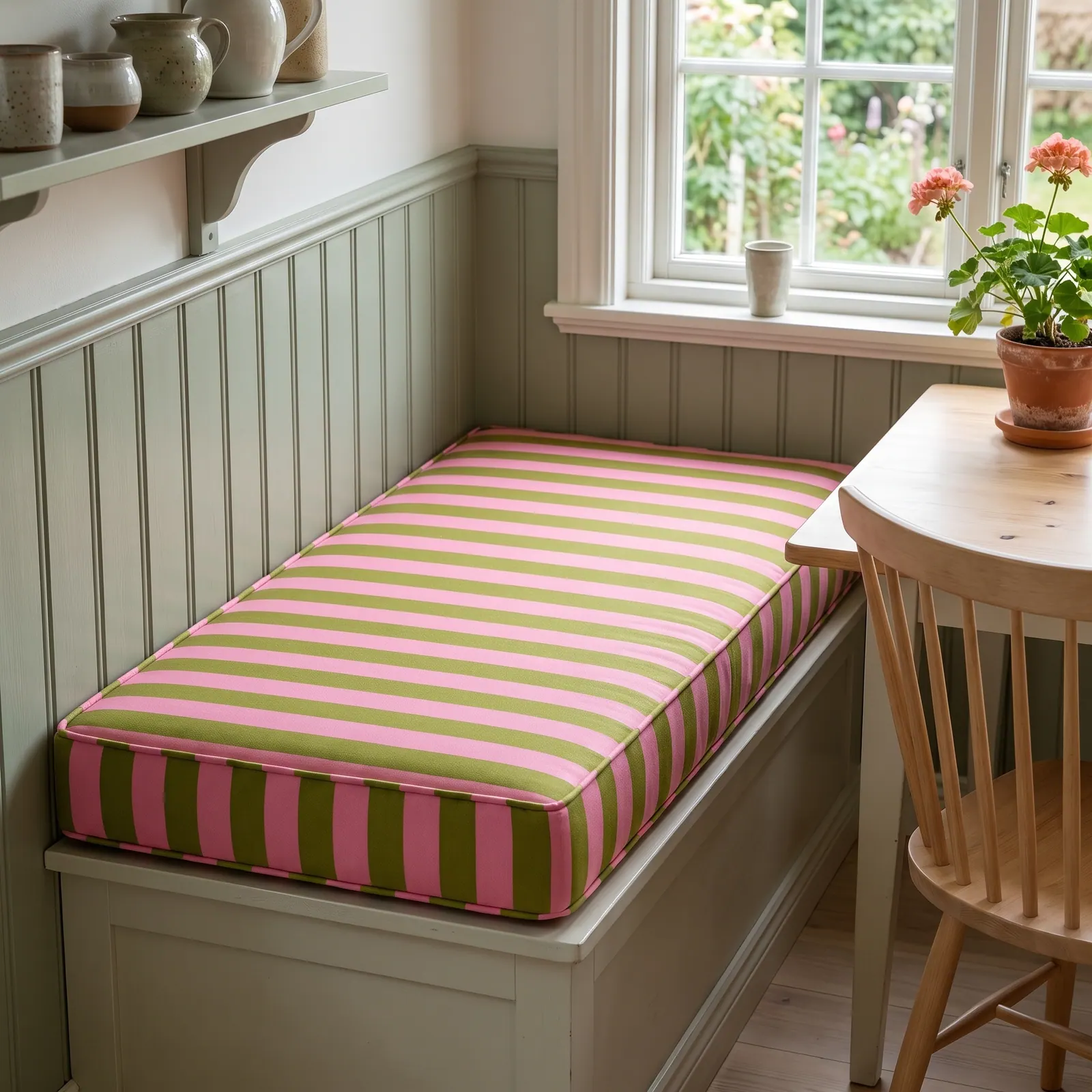
A cottage kitchen nook where the stripe's olive matches the painted beadboard and its pink repeats the geranium on the table.

The quick answer
Over a hard plywood kitchen nook bench, a 3 in (7.5 cm) banquette cushion is enough for everyday dining; the workshop confirmed it for a buyer ordering two 73 1/4 x 24 1/2 in cushions. Measure the gap between bench top and table apron first, because the cushion has to live inside that gap.
A cottage nook where the cushion looks built in
Most banquette cushions I'm sent photos of are an inch too proud, and the diners pay for it at the knee. This one isn't.
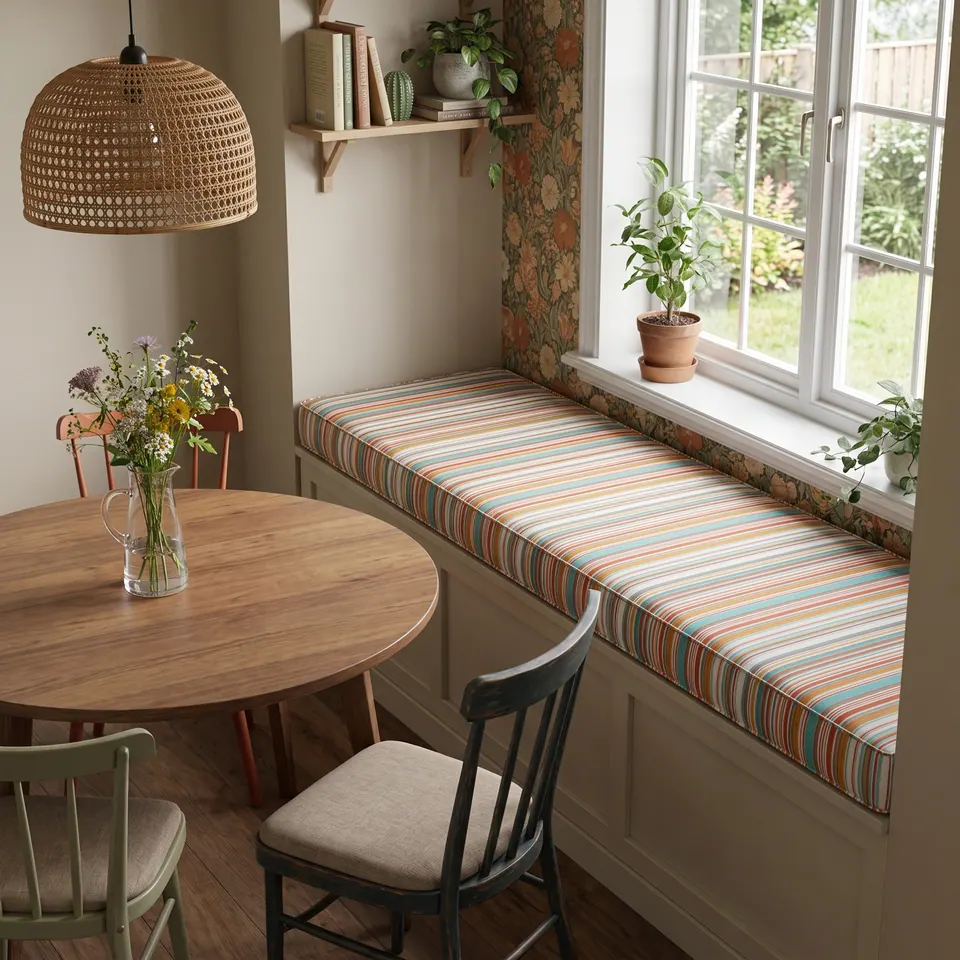
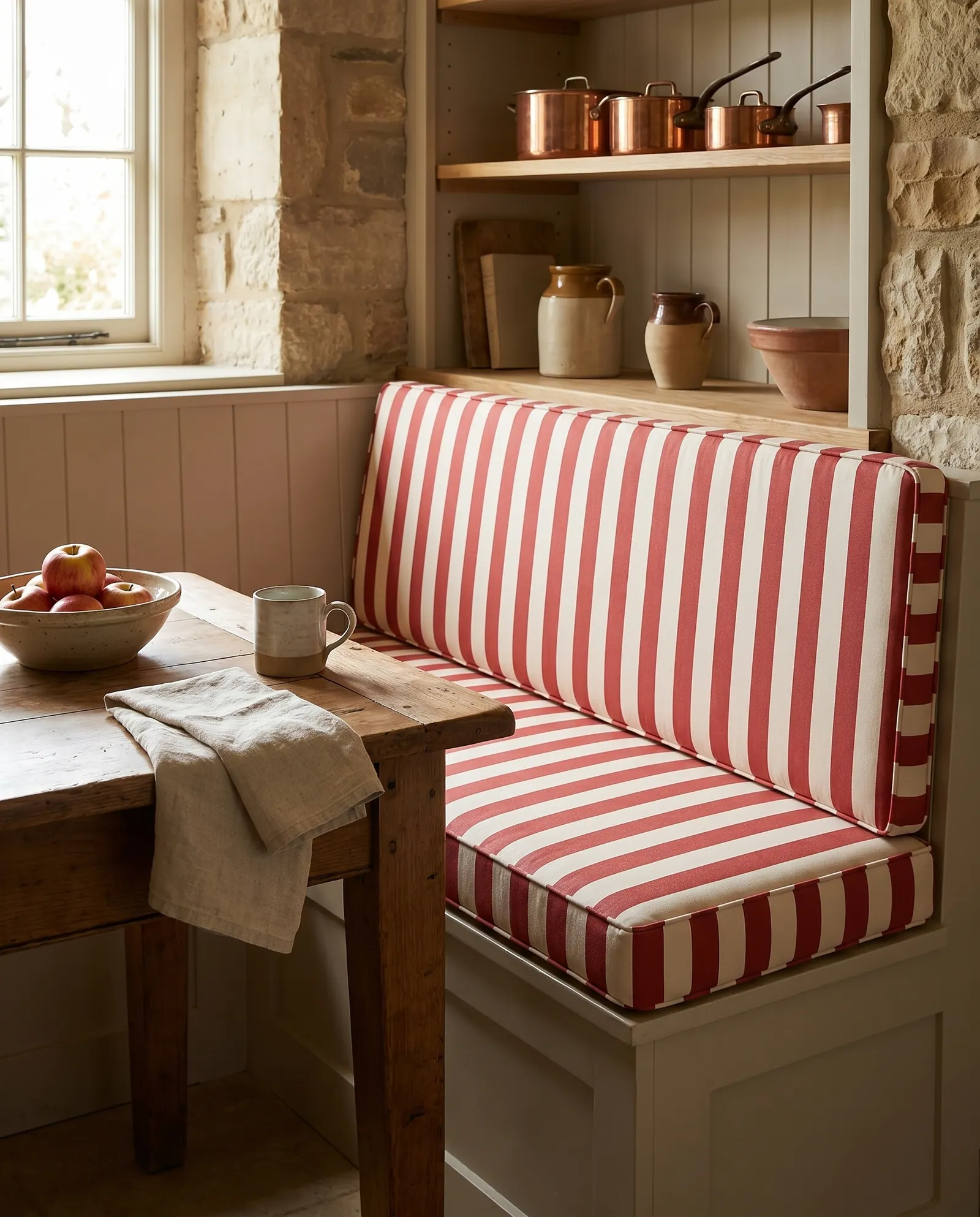
The nook is a storage bench built into sage beadboard paneling, with a pine table, a spindle-back pine chair and a cottage window above. The cushion has a box edge in a candy pink and olive green stripe. It is thick enough to lift a sitter to a comfortable height at the table, and no thicker. That restraint is what proportion looks like in a kitchen.
The color story starts with the paint. The olive in the stripe is a deeper shade of the sage paneling, so the cushion reads as part of the joinery rather than something dropped on it. The pink is lifted straight from the geranium in its terracotta pot on the table. Stoneware jugs on a bracket shelf keep all that sweetness grounded, and the pine chair and table bring warm wood so the painted corner doesn't go cold. A white cup waits on the sill.
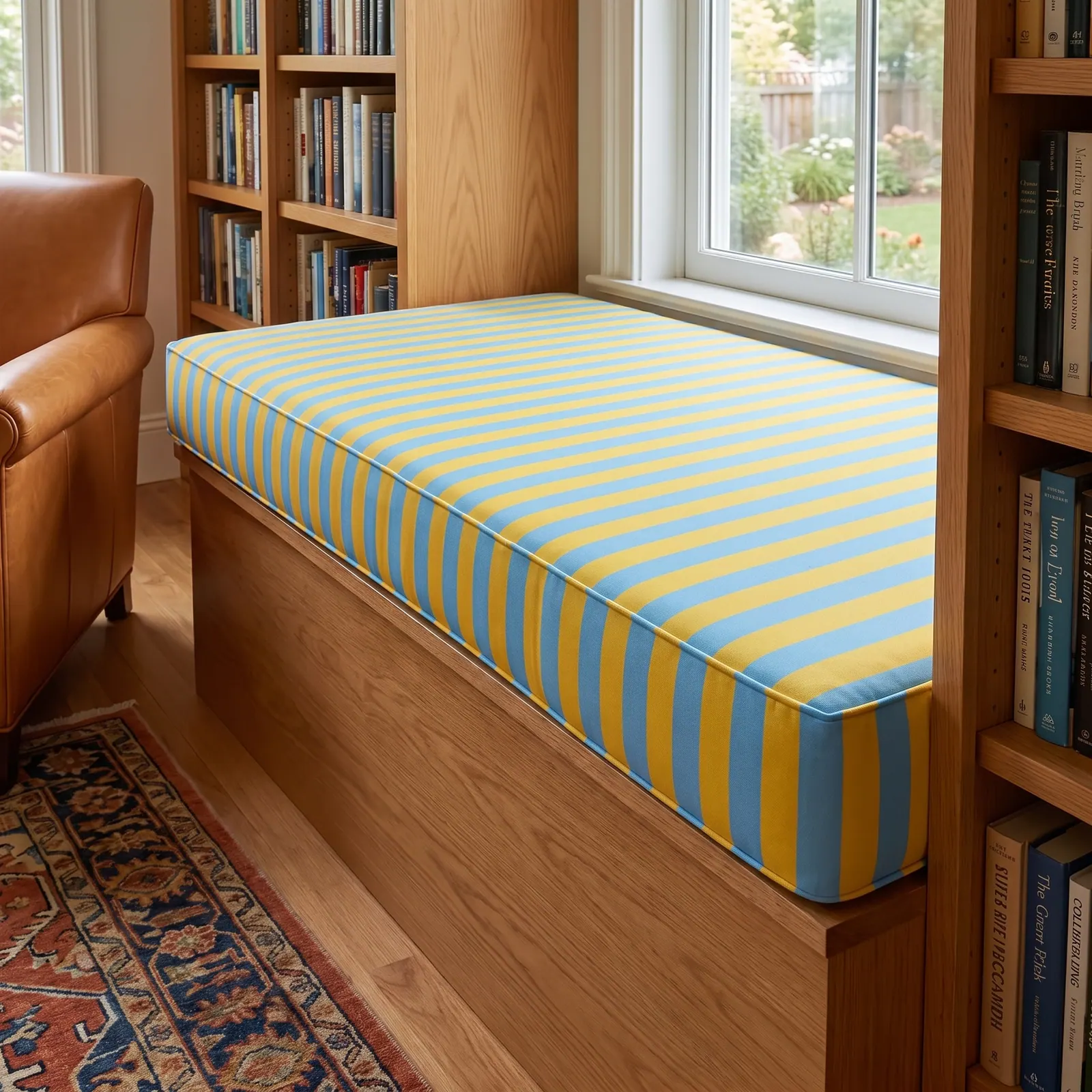
The front edge is self piped in the same stripe. On a banquette that edge takes every slide in and out beside the table, and a matching welt keeps it soft to the eye. A straight welt is a kind of honesty, and a matching one doesn't need to shout about it. Piping: matching, contrast or none and the striped cotton and ticking library cover the choice.
Pinned by Maggie in the beadboard nook
Five pins: the piped front edge, the sage beadboard, the geranium, the stoneware jugs and the spindle-back chair.
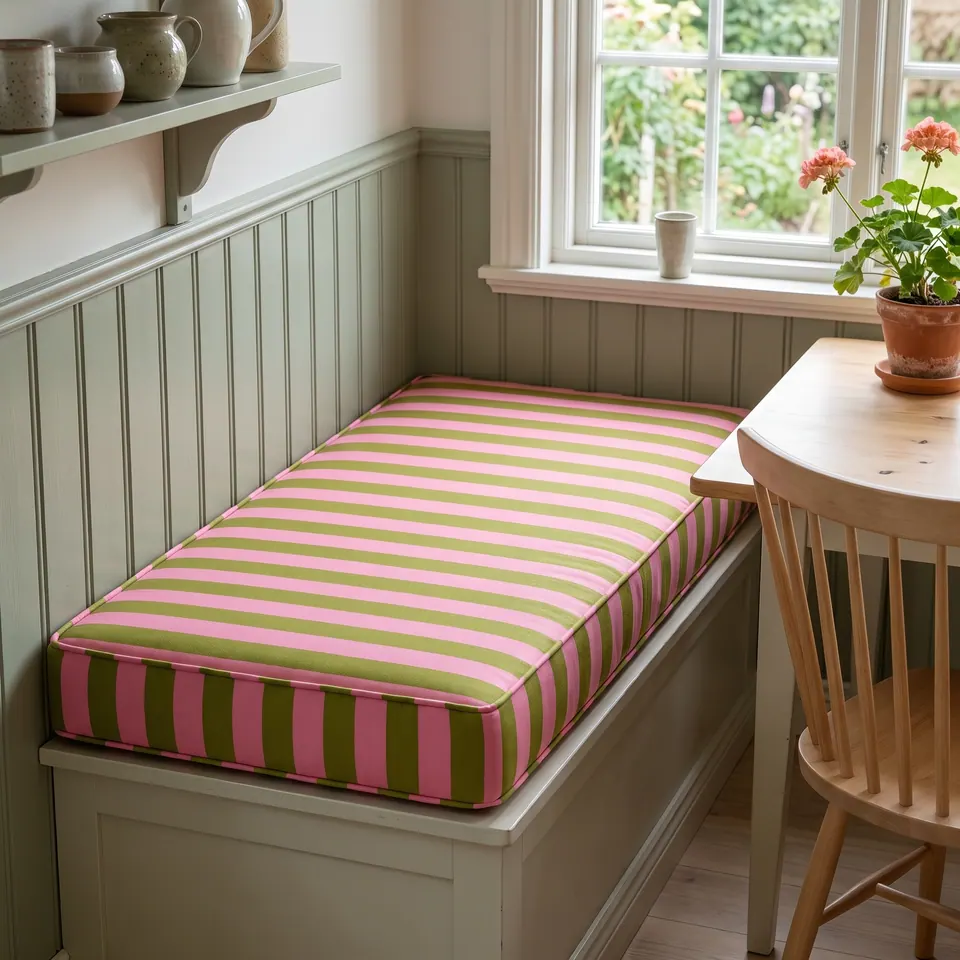
- Piped front edge
Self piping in the same stripe keeps the seat edge soft for anyone sliding in beside the table.
- Sage beadboard
The olive stripe is a deeper shade of this paneling, which is why the cushion looks planned rather than added.
- Geranium on the table
The pink of the stripe is lifted straight from these flowers.
- Stoneware jugs
Earthy ceramics keep a sweet pink and green palette grounded.
- Spindle-back chair
Pine chair and table add warm wood so the painted corner doesn't feel cold.
- Piped front edgeSelf piping in the same stripe keeps the seat edge soft for anyone sliding in beside the table.
- Sage beadboardThe olive stripe is a deeper shade of this paneling, which is why the cushion looks planned rather than added.
- Geranium on the tableThe pink of the stripe is lifted straight from these flowers.
- Stoneware jugsEarthy ceramics keep a sweet pink and green palette grounded.
- Spindle-back chairPine chair and table add warm wood so the painted corner doesn't feel cold.
Thickness is a conversation between the bench and the table
Here is the checklist I run before anyone chooses a banquette cushion thickness:
- Measure from the floor to the top of the bare bench.
- Measure from the bench top to the underside of the table apron.
- Take the cushion you're considering off that second number, then sit on a stack of books that high and test your knees.
- Measure the bench depth front to back and order the cushion to match it.
Bare plywood gives nothing back, so the cushion does all the work there. The seat height calculator does the arithmetic, and banquette thickness and table height explains the ranges. Where does your table apron sit, dear?
Three cushions for a plywood nook, and the 3 in question
A buyer in the US was building kitchen nook benches from plywood and needed three cushions: two at 73 1/4 x 24 1/2 in and one at 20 x 31 1/2 in, all in a corduroy. Their question was a good one: is 3 in (7.5 cm) thick enough on bare plywood?
The workshop said yes. Over a hard plywood seat, 3 in of high-density foam carries everyday dining comfortably. Production was quoted at 5 to 7 days and delivery at 3 to 5, and the workshop left the door open for whenever the benches were finished. Sensible on both sides. I'd add one thing from my own early mistakes: measure the benches after the last coat of paint, not before. The kitchen nook cushions collection has more builds like this.
- Sizes
- Two cushions 73 1/4 x 24 1/2 in, one 20 x 31 1/2 in, all 3 in (7.5 cm) thick
The lesson: Over a hard plywood seat, 3 in of high-density foam is enough for everyday dining.
Buyer questions: backrests alone, angled discounts, velvet or soft
- A common question
Can I buy just a straight backrest, or a corner one, on its own?
The workshop's answerYes. Straight and corner backrests are each sold separately through their own listings, in colors such as dark brown.
- A common question
Is there an extra discount on angled bay window cushions?
The workshop's answerNo. A quad-bay window seat with a 73 1/4 in (186 cm) longest side and 21 1/4 in (54 cm) longest depth was quoted at exactly what the listing shows for those dimensions. Angled shapes take more complex labor, and the listing price is already the best rate.
- A common question
At the same price, is velvet more durable than the soft fabric?
The workshop's answerThey're equally durable. Both lines come from the same manufacturer and meet the same quality standard; the workshop offers both only to widen the choice of colors and textures, so pick the look you like.
On the cutting table: the sage beadboard banquette
| Cushion | Kitchen banquette cushion on a built-in storage bench |
|---|---|
| Fabric | Candy pink and olive green stripe |
| Piping | Self piping in the same stripe |
| Edge | Box edge |
| Thickness logic | Enough to lift the sitter to table height, no more |
| Plywood benchmark | 3 in (7.5 cm) of high-density foam for everyday dining |
| Color source | Olive from the beadboard, pink from the geranium |
| Wood | Pine table and spindle-back chair |
| Best for | Cottage and farmhouse kitchen nooks with painted paneling |

Have it made
Have this made — ask Maggie’s workshop
I once cut a lovely cushion two inches short, and I have not forgotten it. That is why the workshop goes over your measurements with you on the phone. — Maggie
Leave your details and the workshop will call you to confirm measurements, fabric, foam and piping. No prices, dates or payment on this page: it is a request, not an order.
The olive in a banquette stripe should be a deeper shade of the painted paneling, so the cushion looks built in rather than added.
Maggie
Questions buyers ask next
Is 3 inches thick enough for a kitchen banquette cushion?
Over a hard plywood bench, yes: 3 in (7.5 cm) of high-density foam handles everyday dining. Before ordering, check the space between bench top and table apron so knees still clear.
How do I pick a striped fabric for a painted banquette?
Hold a paint chip of your paneling next to a flower, dish or jug you love, then look for a stripe that contains both colors. Here the olive deepens the sage paint and the pink repeats a geranium.
Should banquette piping match the fabric or contrast with it?
On a busy stripe, matching self piping keeps the front edge calm where people slide in beside the table. Save contrast piping for plain fabrics, where a single drawn line has room to be seen.
Should a banquette cushion be as deep as the bench?
Order it to the bench's measured depth front to back, so the seat is covered and nothing overhangs. In one US build, the plywood benches took cushions 24 1/2 in deep.
Stitch straight — Maggie
More photographs to read
 Save
 Save
 Save
 Save
 Save
 Save