The Cutting Table · compared on the table
Is a 3 or 4 inch cushion thick enough on a hard wooden bench?
Also asked as:Is 3 inch thick enough on plywood?Kitchen nook bench cushion thickness?
Plywood doesn't give, so the foam does all the work. Here is the thickness table from real benches and real replies.

 Save
The quick answer
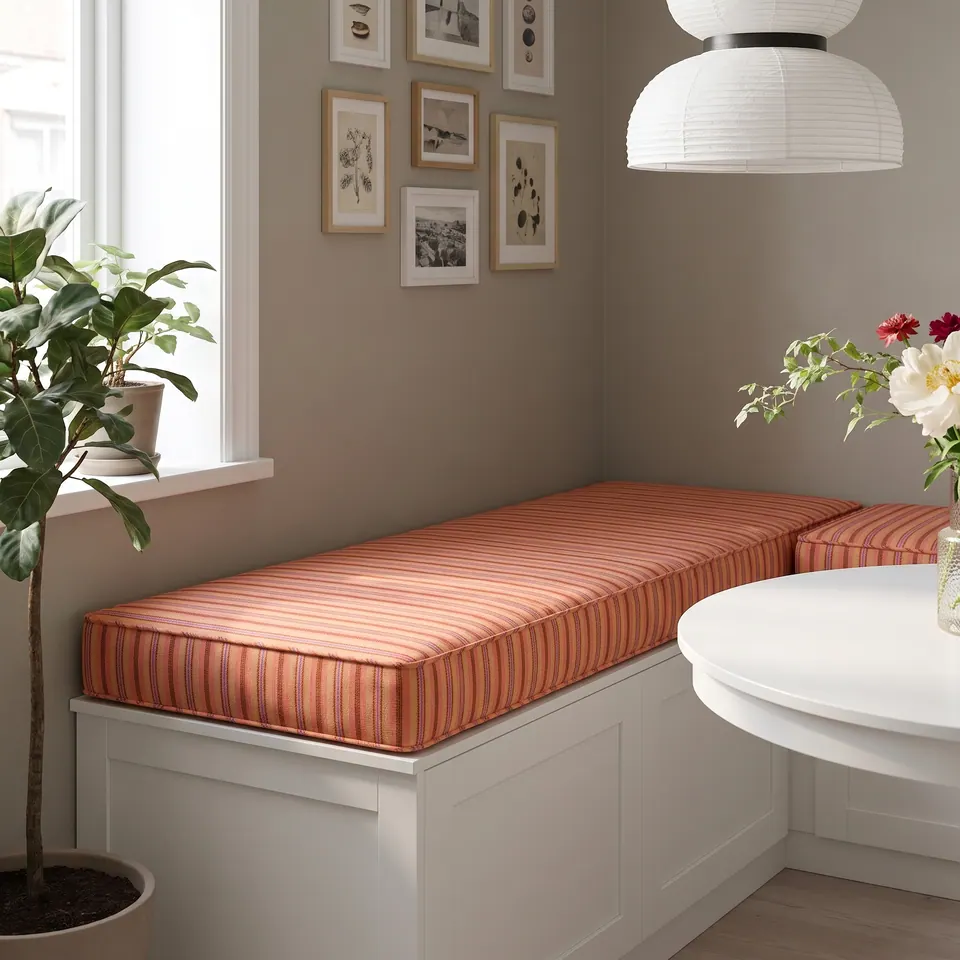
Yes, a 3 inch (7.5 cm) cushion is thick enough over a plywood kitchen nook bench, and 4 in (10 cm) is the recommendation for sitting and napping on a hard wooden or wicker base. Most customers who pick 4 in find it comfortable. For more loft, 6 or 8 in (15 or 20 cm) can be made on request at a higher price.
Get a quote for a banquette cushion
Thickness by base and use
| Base | Main use | Thickness | Note |
|---|---|---|---|
| Plywood kitchen nook bench | Sitting at the table | 3 in (7.5 cm) | Enough, per the workshop |
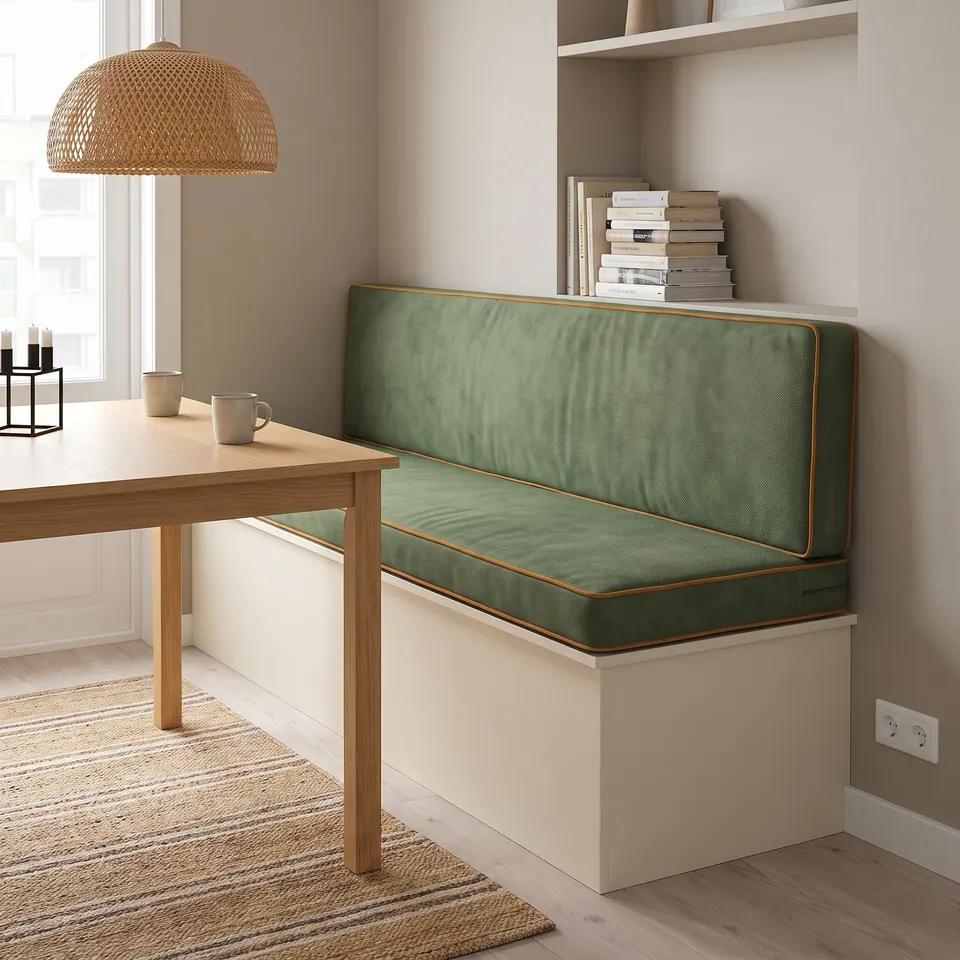
| Dining bench already at seat height | Daily meals | 2-3 in (5-7.5 cm) | Firm 32-density foam barely compresses |
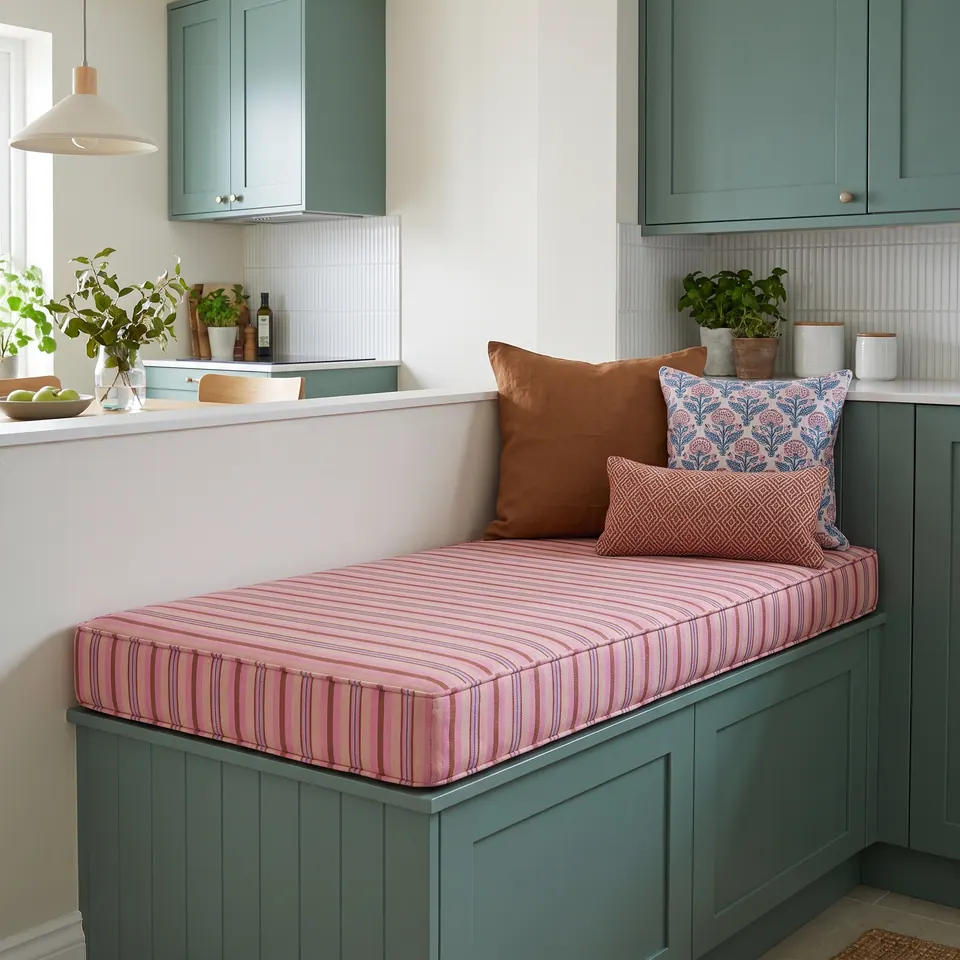
| Daybed, willow sofa or wicker base | Sitting and napping | 4 in (10 cm) | The recommendation; most buyers keep it |
| Wooden swing platform, 51 x 82 in (130 x 208 cm) | Lounging, with a backrest | 4 in, or 8 in (20 cm) | Quoted both ways; 8 in costs more |
| Any hard base | Extra loft | 6 or 8 in (15 or 20 cm) | On request, higher price |
Key facts
- 3 in (7.5 cm) is enough over a plywood nook bench.
- 4 in (10 cm) is recommended for daybeds and hard wooden or wicker bases.
- Most customers choose 4 in and find it comfortable.
- 6 or 8 in (15 or 20 cm) is made on request at a higher price.
- Firm 32-density foam, about 2 lb/ft³ (32 kg/m³), barely compresses, so the thickness ordered is close to the height added.

Have it made
Have Nate’s workshop cut this for you
Every edge and both diagonals, to the nearest 1/4 in. If the numbers do not close, the workshop will say so on the call. — Nate
Leave your details and the workshop will call you to confirm measurements, fabric, foam and piping. No prices, dates or payment on this page: it is a request, not an order.
Why the nook gets 3 in and the daybed gets 4
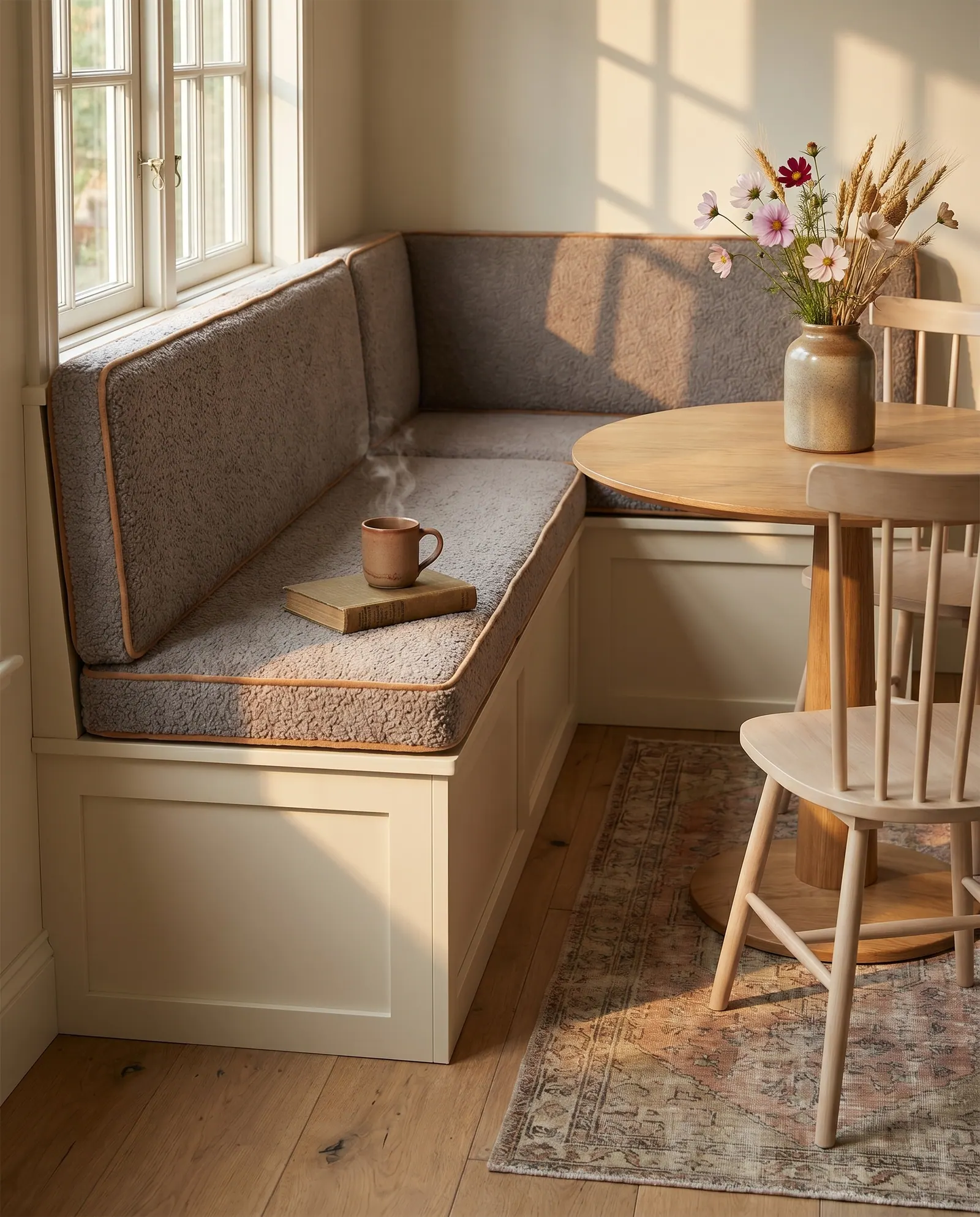
At a table, the cushion is part of your seat height, and firm 32-density foam (about 2 lb/ft³) barely compresses. Every inch you add, you keep. That's why 3 in works over plywood, and why a bench already at seat height can drop to 2-3 in so the table height stays comfortable.
Napping is a different load case, partner. You're lying on the cushion, not perched on it, and a hard wooden or wicker base gives nothing back. That's where 4 in earns its place. Run your numbers through the seat height calculator, then read banquette cushion thickness and table height.
What does your bench measure from floor to seat?
Over a plywood kitchen nook bench, a 3 in cushion is enough; for sitting and napping on hard wood or wicker, 4 in is the workshop's recommendation.
Nate
Buyer questions
- A common question
Is a 3 inch cushion thick enough to sit on comfortably over a plywood kitchen nook bench?
The workshop's answerYes, the workshop said 3 in would be fine over plywood. Firm foam barely compresses, so check that the table still clears your knees with 3 in added.
- A common question
Is 4 inches enough for sitting and napping on a hard wooden or wicker base?
The workshop's answerThe workshop recommends 4 in, which most customers prefer and find comfortable. For a curved willow sofa base and a 51 x 82 in swing platform, it quoted 4 in as standard and 6 or 8 in as a pricier step up.
- A common question
Is 4 inches your standard thickness for bench cushions?
The workshop's answerYes. 4 in (10 cm) is standard for bench, window seat and floor cushions, and most buyers keep it. Thicknesses from about 2 in up to 12 in are made to order; thicker than standard costs more.
Questions buyers ask next
Does going from 4 in to 6 or 8 in change the price?
Yes. 4 in is the standard, and 6 or 8 in is made on request at a higher price, like any thickness above standard. The quote for your exact size and thickness gives the figure.
What foam goes inside a nook bench cushion?
Firm 32-density foam, about 2 lb/ft³ (32 kg/m³), which barely compresses when you sit. The thickness you order is close to the height you add, so check the table clearance first.
How long does a custom nook bench cushion take?
One nook bench order like this was quoted at 5-7 days of production, then 3-5 days of delivery after dispatch. Ask for the current times with your own quote.