Across the Map · New England · United States
Custom cushions for Maine camps, capes and coastal porches
I learned weather on Casco Bay before I ever cut foam. A Maine cushion lives two seasons: a short one on the porch or the boat, and a long one in storage. Build for both.
- Sun & UVModerate
- HumidityModerate
- WinterLong and hard
- CoastSalt air nearby
- Typical seatsCamp porch swing, deck bench, v-berth and cockpit cushions

 Save
The quick answer
Custom cushions in Maine should be built for a short outdoor season and a long one in storage. Use water-repellent, UV-resistant outdoor fabric on camp porches, decks and boats, rinse salt off with fresh water, and close camp with covers washed and foam dry to the core. Portland averages 152 freezing nights and 68.7 in of snow a year.
152 freezing nights and a coast that salts everything
Portland, my home port, averages 152 days a year at or below 32°F (0°C), 68.7 in (175 cm) of snow and only about 5 days at 90°F (32°C). Precipitation runs about 48 in (122 cm) over 130 wet days.
Then add the sea: NOAA counts 3,478 miles of tidal shoreline in Maine. Salt spray is heaviest near breaking waves and drops off fast in the first 300 to 3,000 ft (90 to 900 m), yet faster corrosion has been measured 5 to 10 miles inland. Nothing is salt-proof, so rinse covers and zippers with fresh water.
For custom cushions in Maine, that means a short, hard-working summer and a long winter indoors. Maine sits in the top seven states for searches on both custom cushions and bench cushions. The wider old-house story is on our New England page.
Camps, Capes and the connected farm
Maine has about 6,000 lakes, and the simplest places on their shores are called camps: rustic, sometimes without electricity. Camp porch cushions go on swings, deck benches, bunks and screened-porch daybeds, rarely in stock sizes, so measure the frame itself.
In town, the Cape rules: a steep roof to shed snow, a central chimney, low ceilings and dormers added for space and light. Those dormers make the best window seats in the state; keep them slim, 2 to 3 in (5 to 7.5 cm), as the thickness guide explains.
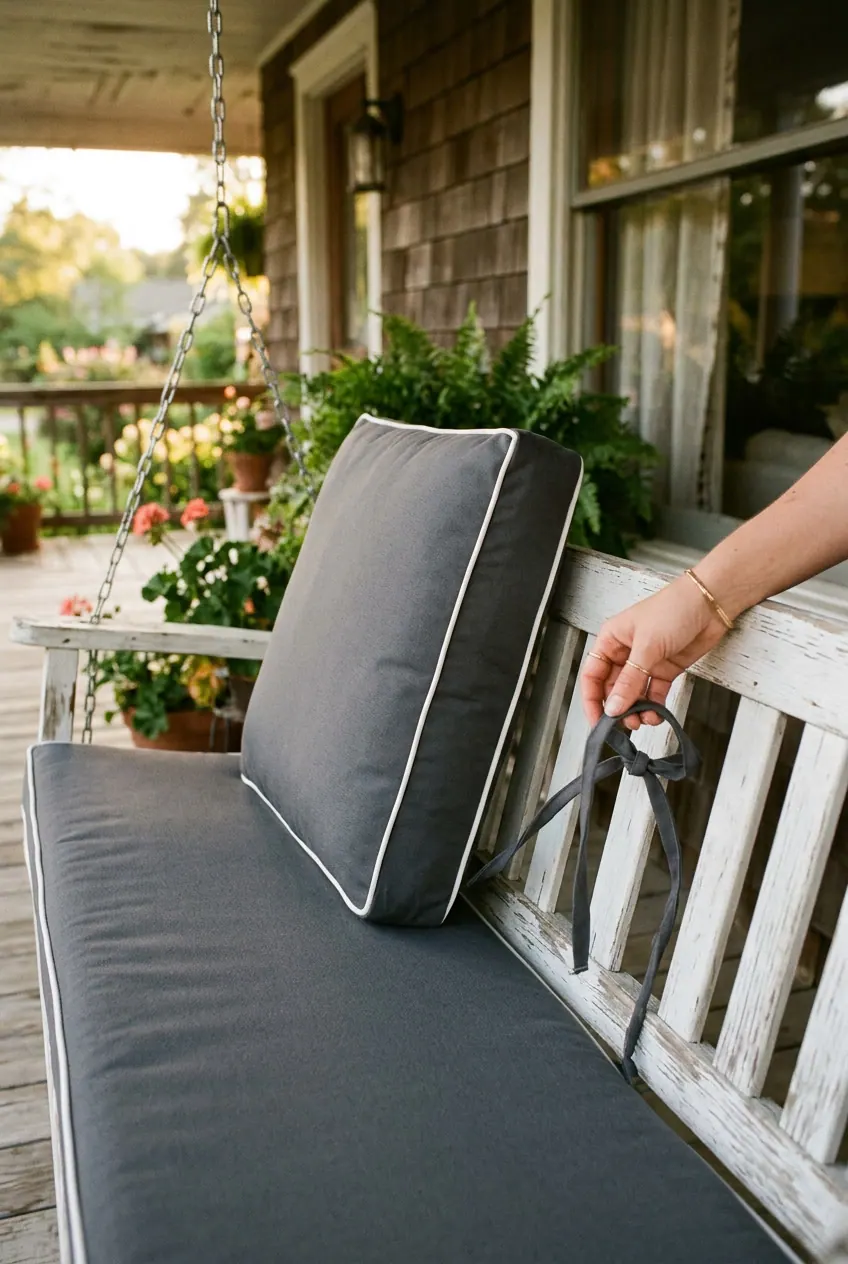
Inland, the connected farm strings big house, little house, back house and barn in one line, and the ell is where boots come off: a job for a mudroom bench cushion. On the coast, shingle cottages hang porch swings like the charcoal pair above, the back tied to a slat.
Where does your camp swing spend January, friend?
Lobster boats, sailboats and the cabin below
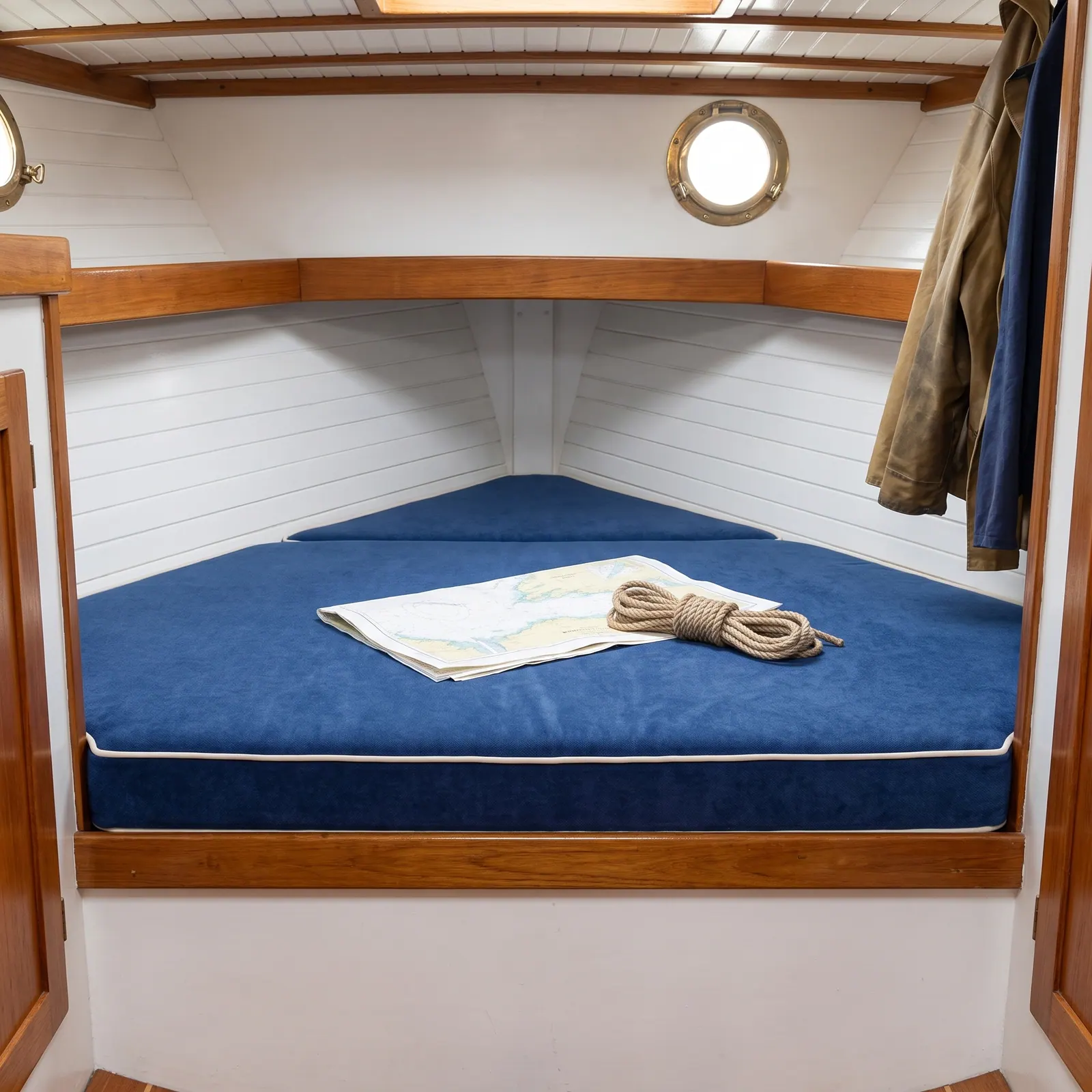
Boat cushions in Maine start from the boat: V-berths narrow to the bow and cockpit benches follow the hull. Trace the plywood base, write top side up and bow on every piece, and photograph it flat with a tape in frame; the V-berth template guide walks through it.
The straight answer on build: the workshop uses its regular seat foam, about 2.0 lb/ft³ (32 kg/m³), in water-repellent outdoor fabric. It isn't quick-dry, there's no mesh bottom as standard, and water still gets in at needle holes and zippers. These cushions belong in a cabin, under a hard top or a covered cockpit, or below when weather comes in. For a seat that lives in the rain, read dry-fast foam first. When the boat comes out, the cushions come home; long pieces fold or roll for the ride. More in boat and RV cushions.
Window seats against sweating glass
Winter in an old house means warm air meeting cold single panes. The glass sweats, and the cushion beside it drinks. The EPA's advice is simple: act quickly to dry the wet surface.
Window seat cushions in Maine want a fabric that wipes clean, such as velvet or a soft performance weave; neither is waterproof. Wipe the sill on cold mornings and lift the cushion now and then to air it.
Camp, Cape and cockpit: fabric, foam and piping
| Seat | Fabric | Foam and build | Piping |
|---|---|---|---|
| Camp porch swing or deck bench | Outdoor fabric: woven polyester, water-repellent, UV-resistant | Standard foam, 4 in (10 cm); ties or a non-slip base | Contrast white on charcoal reads at dusk |
| Sailboat V-berth | Outdoor fabric, or linen-look below deck | Traced template; split on the centerline so each half lifts | Contrast piping draws the curve |
| Lobster-boat or cockpit seat under a hard top | Outdoor fabric | Plain, never tufted; carried below in rain | Self piping |
| Cape dormer window seat | Velvet or a soft performance weave | 2 to 3 in (5 to 7.5 cm) under the slope | Optional contrast welt |
The standard foam is not quick-dry. Covers zip off and wash at 86°F (30°C) on a gentle cycle; air dry them.
Storage benches, split at the lid lines
A buyer in the US sent drawings of outdoor storage benches with lift-up lids, in a climate with hot summers and snowy winters, and wanted the seat cushions split at the lid lines. One run was about 1.5 in (4 cm) deeper at one end, so the workshop asked for a full drawing of each piece.
It also told her plainly: no quick-dry foam, no fast-drying mesh bottom, and a UV-resistant, water-repellent fabric that suits a covered porch or winter storage. She compared close-ups of eight outdoor colors and ordered 3 in (7.5 cm) seats with back pillows and long round lumbar pillows.
That's how I'd do a camp deck: one cushion per lid, one drawing per piece, and a dry shelf waiting in October.
- Measured
- Several seat sections, including two of 45.5 in (116 cm), 3 in (7.5 cm) thick, plus full back pillows and long round lumbar pillows
- What it taught
- Split seats over storage lids at the lid lines, and draw every asymmetric piece separately.
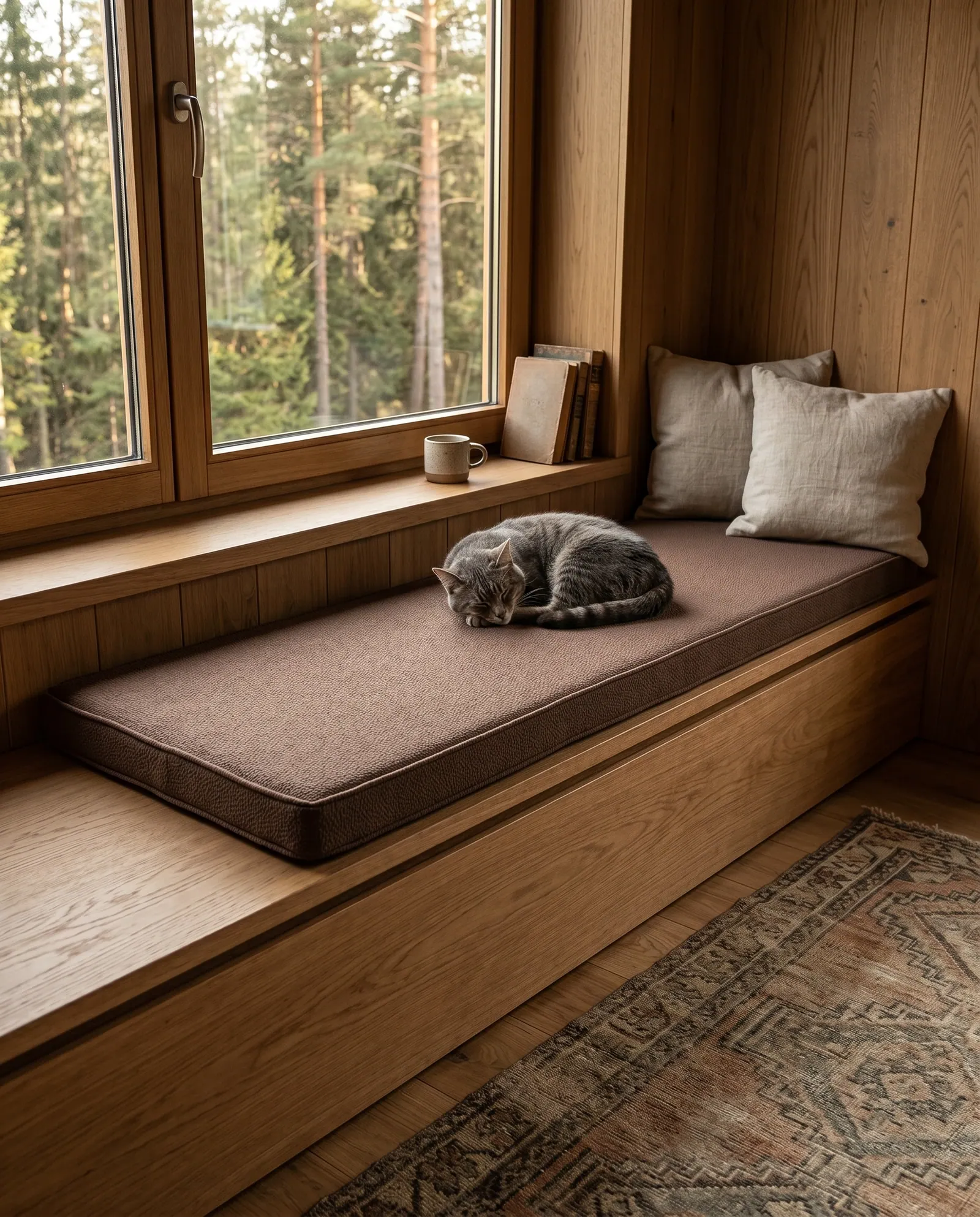
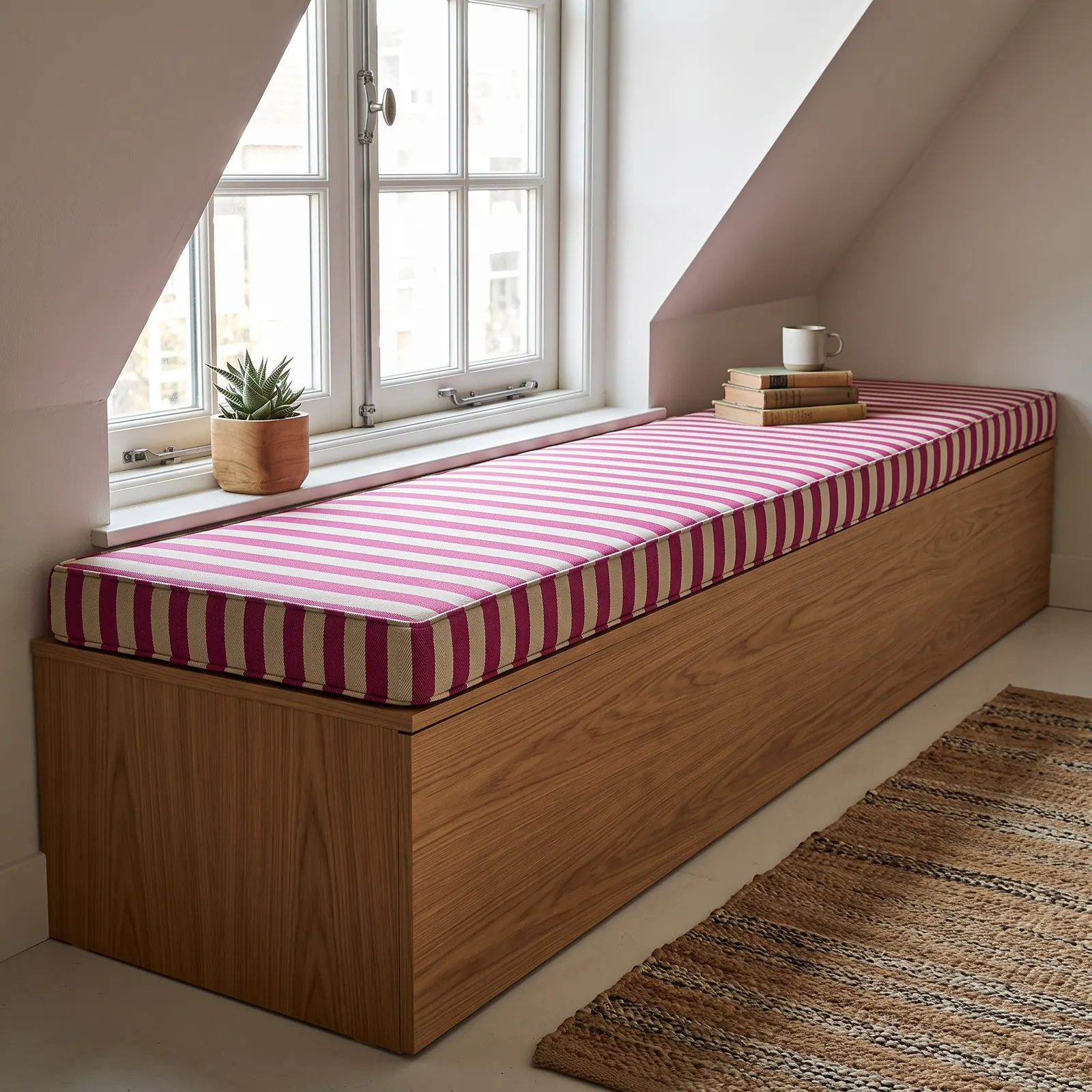
Photographs for homes like these
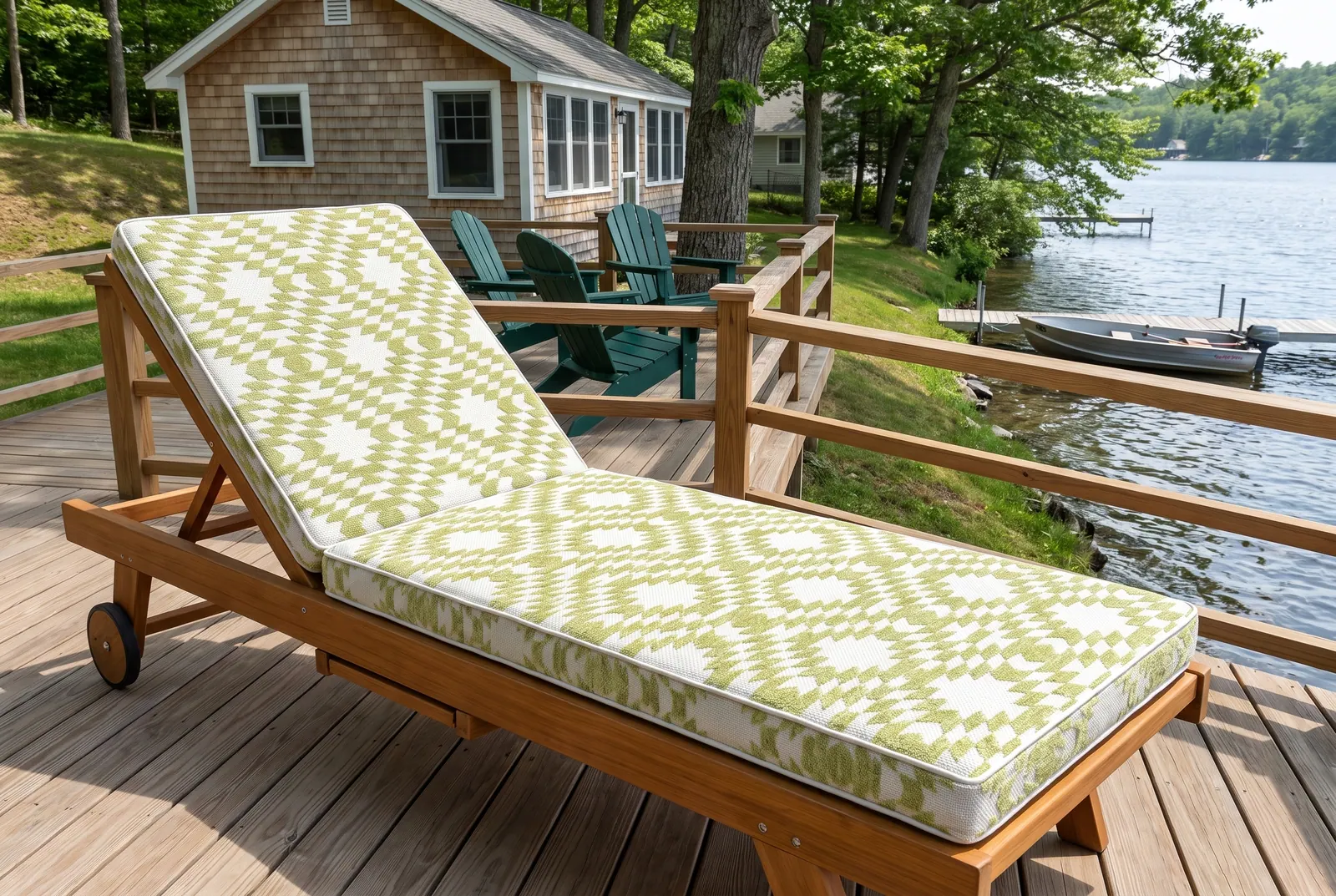
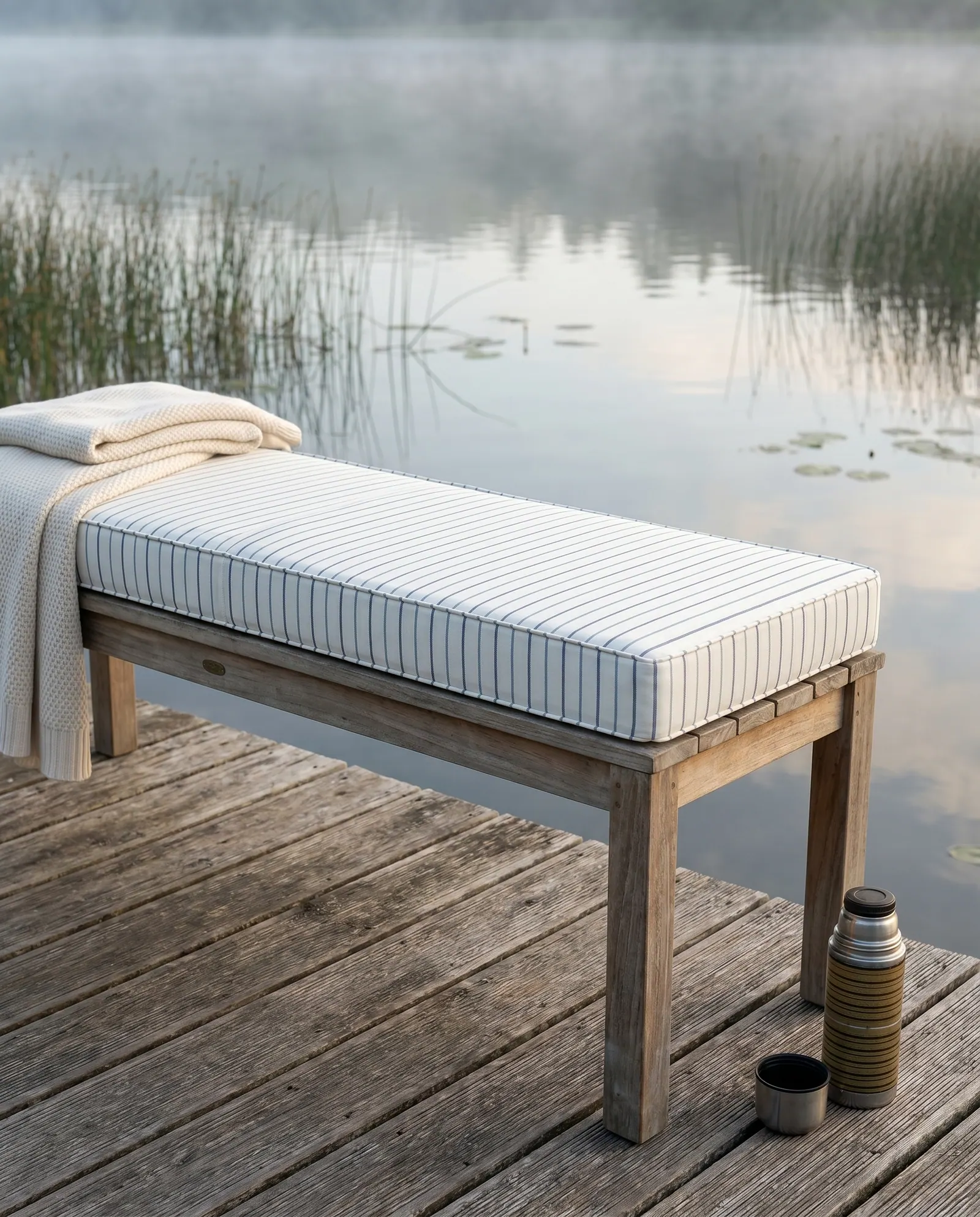
Open any photograph large; each one has its own link and a Save button.
 Save
 Save
 Save
 Save
 Save
Closing camp: the cushion checklist
- Pick a dry, breezy day before the first frost.
- Brush off pollen, needles and grit; mildew grows on the dirt, not the fiber.
- Rinse boat and shore covers with fresh water.
- Wash covers at 86°F (30°C) on a gentle cycle and air dry; wipe any non-slip base by hand.
- Stand the foam on edge for 24 to 48 hours, until it's dry to the core.
- Store indoors, off concrete, in breathable covers, never sealed in plastic.
In Maine, a cushion's hardest season is storage. Bring them in before the first frost and they'll forgive you everything.
Callum
Buyer questions: decks, benches and boats
- A common question
Do outdoor back cushions need straps to stay on the chairs?
The workshop's answerOften not. Back cushions made with double piping have enough structure to sit in place without sliding. Straps are still possible if you prefer them, and the workshop may suggest a non-slip base on the seat cushions instead.
- A common question
Will the non-slip base damage the wood of my bench, and does it cover the whole bottom?
The workshop's answerIt won't. The non-slip base is a fabric backing, not an adhesive or rubber coating, so it's safe on wooden benches. It covers the entire underside, can't be done as a partial strip, and doesn't show.
- A common question
Can you make zippered covers for my outdoor cushions to fit over the inserts I already have?
The workshop's answerYes, in the workshop's own outdoor fabrics. Send photos and a drawing with every size. The original cushions don't need to be mailed; measurements and photos are enough.
- A common question
Can the cushion covers be washed?
The workshop's answerYes. The zippered covers come off for washing, and the fabric chart offered was described as easy to clean and machine washable at 86°F (30°C).
- A common question
Can you confirm the size before production?
The workshop's answerYes. The workshop sends a drawing of the agreed dimensions, often converted to centimeters, and makes the cushion exactly to that approved layout. Check every number on it before you say yes.

Have it made
Have it made for your home — ask Callum’s workshop
Tell them where it lives. Porch, deck or boat: the weather picks the fabric and the foam before anyone else does. — Callum
Leave your details and the workshop will call you to confirm measurements, fabric, foam and piping. No prices, dates or payment on this page: it is a request, not an order.
Maine cushion questions
Can camp cushions stay on the porch through a Maine winter?
No. Portland averages 152 days a year at or below 32°F (0°C) and 68.7 in of snow. Water in standard foam freezes, thaws and never dries, so store cushions indoors, clean and dry to the core, in breathable covers.
What cushions suit a sailboat or lobster-boat seat?
Plain, untufted cushions in water-repellent outdoor fabric, cut from a traced template. The standard foam holds water for 24 to 48 hours once soaked, so they belong in a cabin or covered cockpit, or carried below in rain.
How thick should a Cape dormer window seat cushion be?
Usually 2 to 3 in (5 to 7.5 cm). A sloped ceiling leaves little headroom, and 3 in gives a neater, lower profile than the standard 4 in (10 cm). Check that a casement still swings clear above the cushion.
How far inland does salt air affect outdoor cushions?
Salt spray is heaviest near breaking waves and falls off within the first 300 to 3,000 ft, but faster corrosion has been measured 5 to 10 miles inland. Rinse covers and zippers with fresh water after storms and before storage.
Fair winds — Callum
Concept Sketches
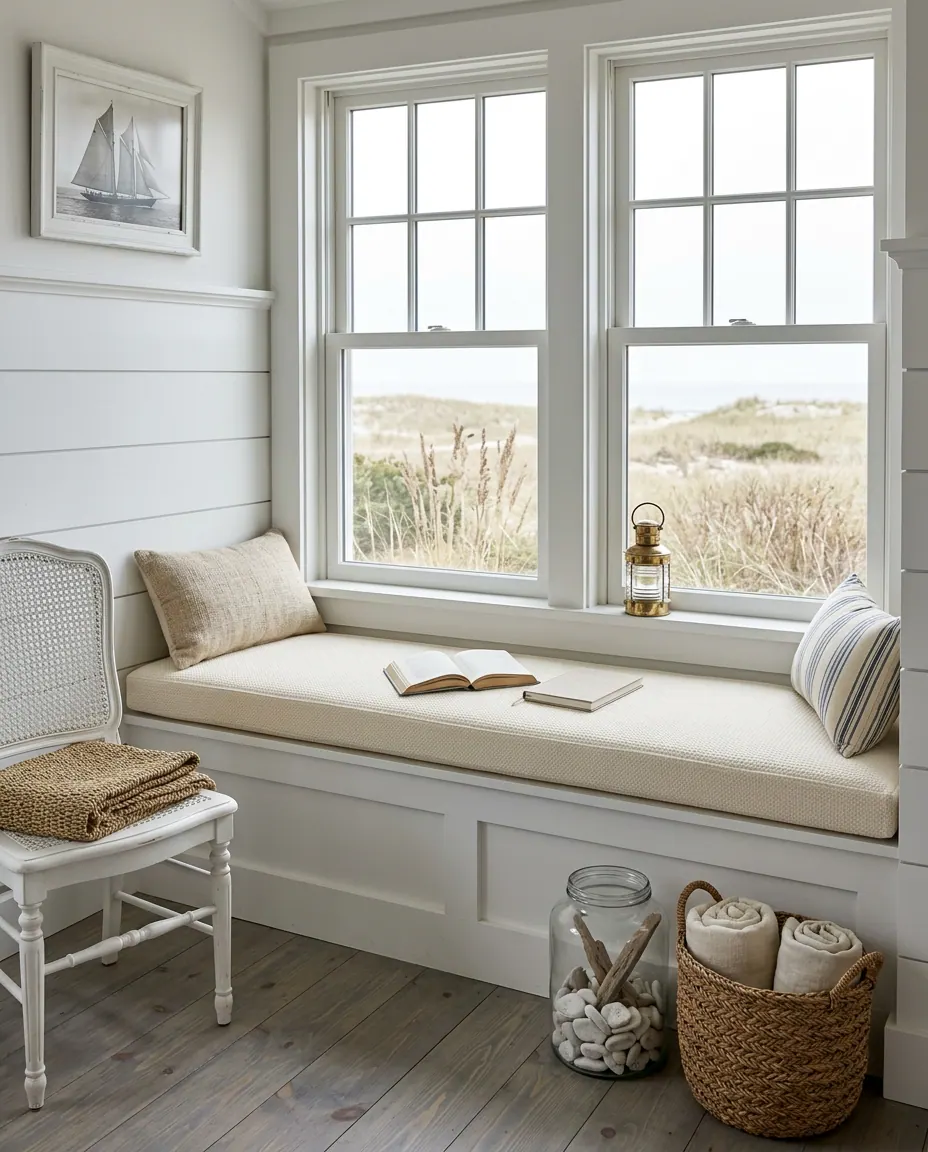
Sketches for homes like these
Real projects, drawn up as ideas you can borrow.
The atelier
Keep going
Across the Map
Nearby places
Close by on the map