Boat, camper and RV cushions, measured one piece at a time
Rain doesn't negotiate, and neither does a bunk ceiling. On a boat or in a van nothing is square and no two seats match, so every cushion gets its own numbers.
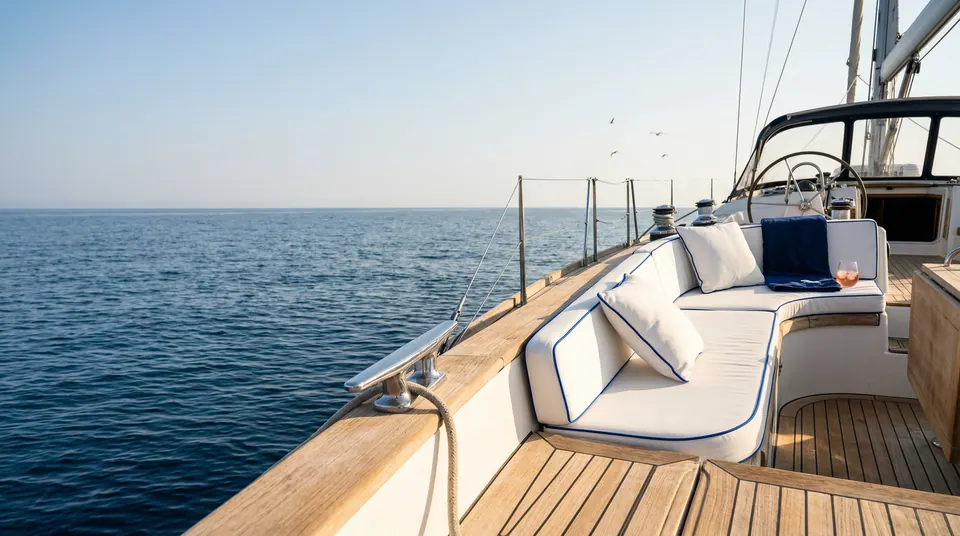
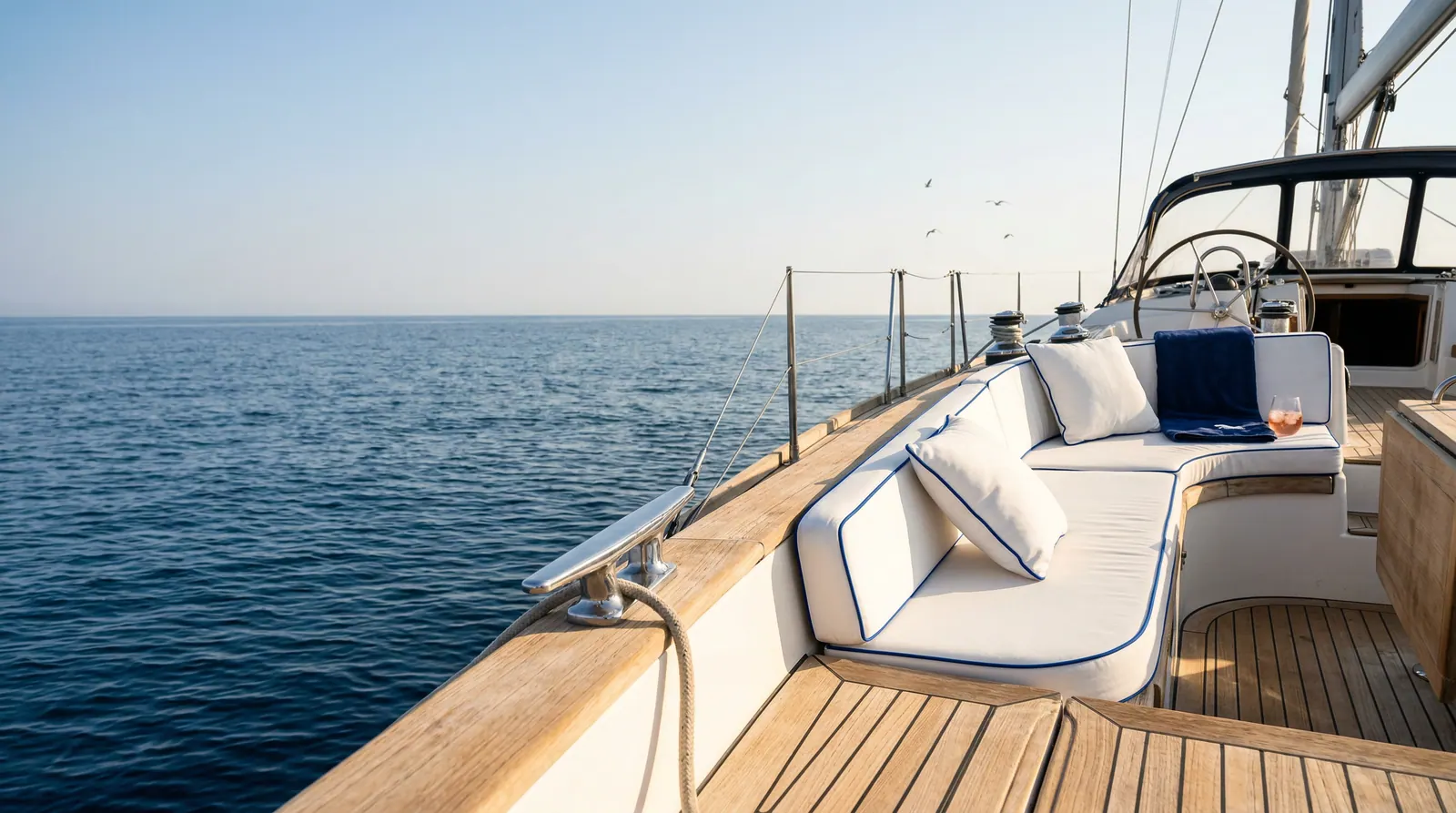
SaveCurved white cockpit cushions edged in navy piping follow the line of a sailing yacht's coaming.
The quick answer
Boat, camper and RV cushions are made one piece at a time from your measurements, a drawing or a paper template, because vehicle seats are rarely square or the same width. Standard foam is 4 in (10 cm); a back can be thinner, but not under 2 in. Open cockpits need outdoor fabric; inside, linen and velvet cost the same.
The count is how many published readings use each family. Open a family for its swatch book, care notes and neighbors.
Seats that move
A boat cushion rides a cockpit bench, a V-berth or a bow seat. An RV or camper cushion sits on a dinette, a bunk, or a bench that turns into a bed at night. A converted school bus has all of these, built by hand, usually a little out of square.
What they share is small space and odd angles. The seat back is narrower than the base. The bench lid lifts. The bunk has a ceiling. That is why these cushions are measured piece by piece, never as a set.
What are you fitting out, friend: a boat, a trailer, or a bus you built yourself? The answer changes the fabric more than the foam.
Curves, bevels and backs
A cockpit bench curves with the hull, and a V-berth narrows toward the bow. Neither is read from numbers alone. Lay paper on the seat, trace it, cut it out and photograph it flat with a tape measure alongside. Making a paper template shows how.
On an RV bench lid, a cushion can be sized to sit inside the bevel of the lid, 42 x 18 in on one camper, with a non-slip fabric bottom. That holds in normal use. It cannot hold a cushion when the lid lifts, so if you open it often, ask for ties on the hinge side.
Backs are their own pieces. A 2 in back takes little depth off a 16 in seat, which matters in a narrow van. Go below 2 in and the foam flattens against the wall. Back cushion height covers the sizing.
Salt air outside, linen inside
Out in the cockpit and on the bow, the cushion lives under open sky. Use the outdoor range: woven fabric, not vinyl, that resists water, UV and fading. Outdoor acrylic fabrics are the place to start. White with navy piping, as on the cockpit photographed here, reads crisp against teak.
Inside a camper or a bus, the cabin is a room. Linen-look weaves and velvet are priced the same, so choose by feel. A cold-foam van mattress of 27 1/2 x 78 3/4 x 4 in (70 x 200 x 10 cm) got a corduroy cover.
Vintage campers want avocado and harvest gold. The olive velvet is the closest to avocado, and it shifts: yellow-lime under white light, calmer under warm. Greens are the hardest colors to judge on a screen. Ask for close-ups, or samples.
Foam for bunks, dinettes and beds
Standard foam is 4 in (10 cm), high-density and medium-firm, and it holds a flat top. Dinette seats can go to 8 in or more. RV top bunks have had 12 in cushions, which is a lot of cushion under a low ceiling.
When a bench becomes a bed, the base can be split into two cushions over the storage lockers. Two pieces side by side do not look or feel odd to lie on. One slide-out bed used 14 x 70 in and 24 x 70 in.
By default a backrest is a little softer than the seat. It can be made just as firm, and foam backs are the better choice where the back is slim.
A real project
A school bus loveseat, 1.5 in out of step
A buyer in the US was finishing a converted school bus and needed a loveseat cushion set. The seat back measured 46.5 in wide and 17.5 in tall. The base was 48 in wide and 16.5 in deep. Not the same width, which is usual in a build like this.
The workshop made the back cushion narrower than the seat to match, and subtracted the backrest thickness from the back height so the two pieces met properly. It went out in linen. Nothing was rounded to look tidy on paper.
Measured
back 46.5 x 17.5 in; seat 48 x 16.5 in
What it taught
In vans and RVs, measure back and seat separately. They are rarely the same width.
Mistakes that travel with you
Measuring one seat and assuming the one opposite is the same. Measure every cushion on its own.
Measuring from the plans before the frame is built. One skoolie builder waited for the bed frame before ordering, and was right to.
Ordering 12 in bunk cushions without checking headroom. Sit up in the bunk with a tape measure first.
A cushion on a lift-up lid with no ties. It slides off when the lid opens; split it at each lid break and add ties.
Ties or a non-slip base mentioned only in chat. Write them in the order note and check the pre-dispatch photo.
A foam back under 2 in thick. It flattens and loses its shape against the wall.
Photographs from the workbench
Open any photograph large; each one has its own link and a Save button.
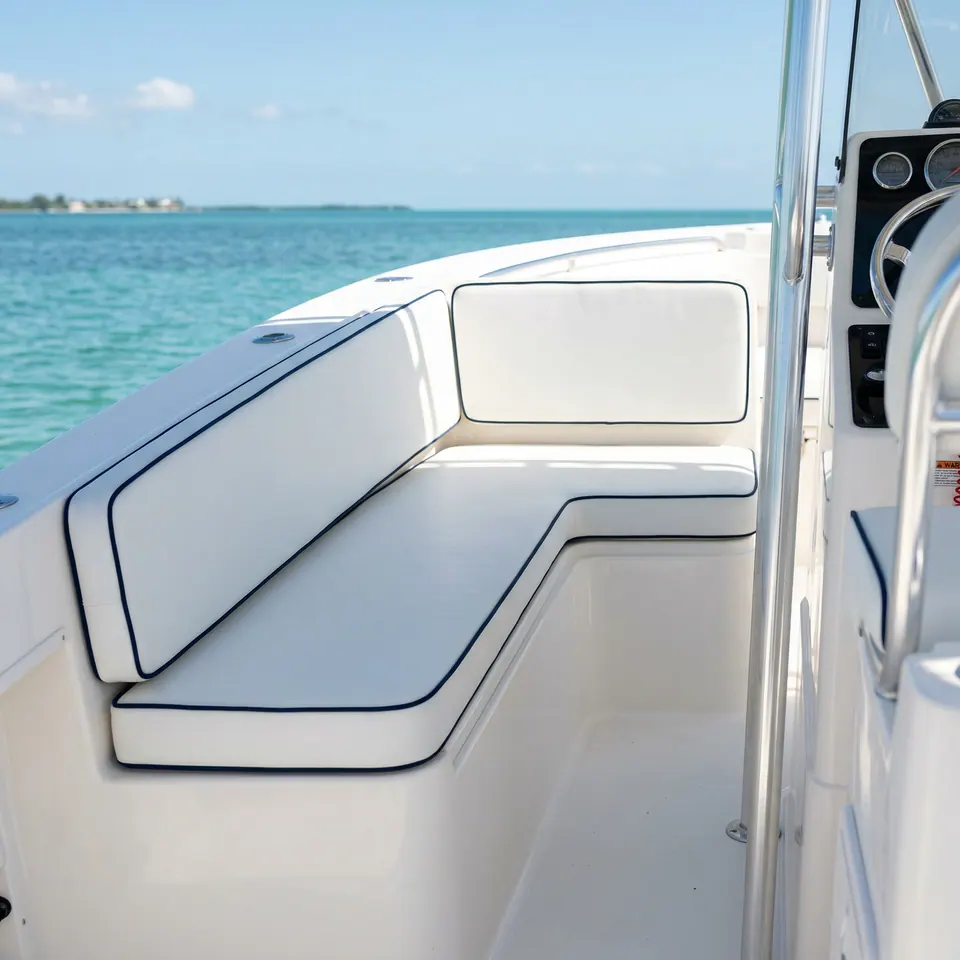
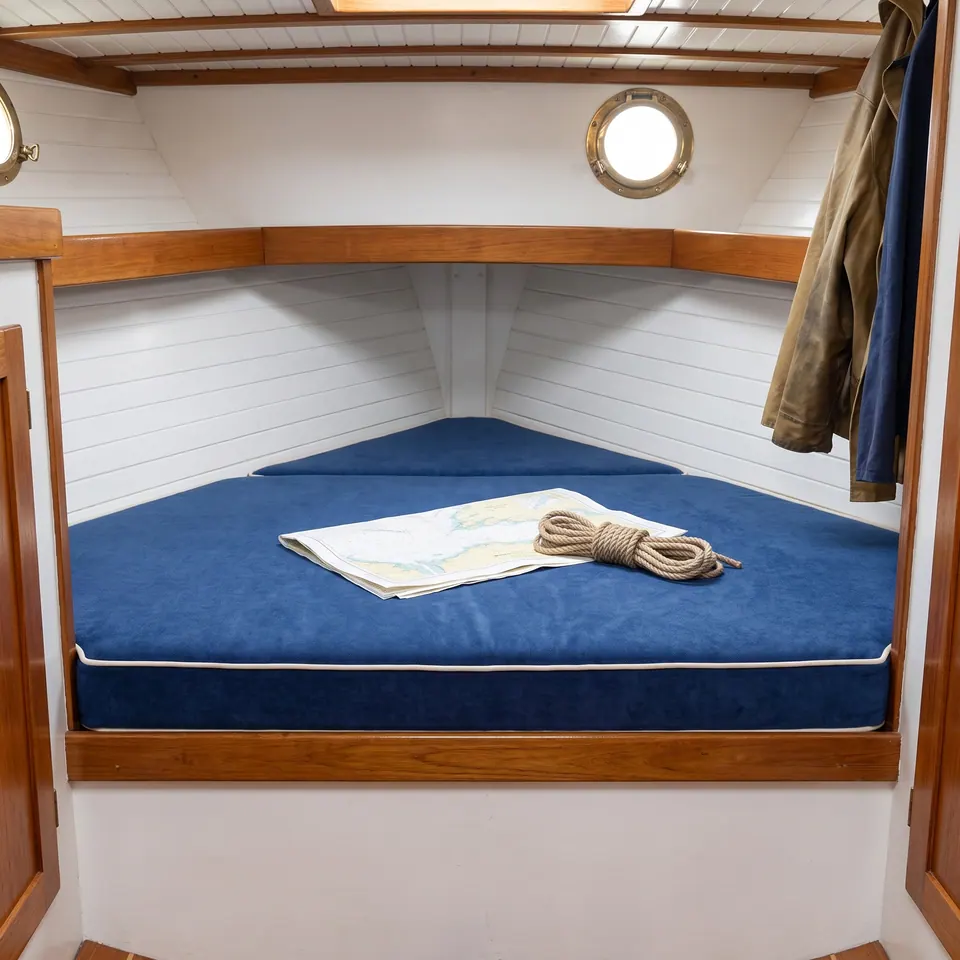
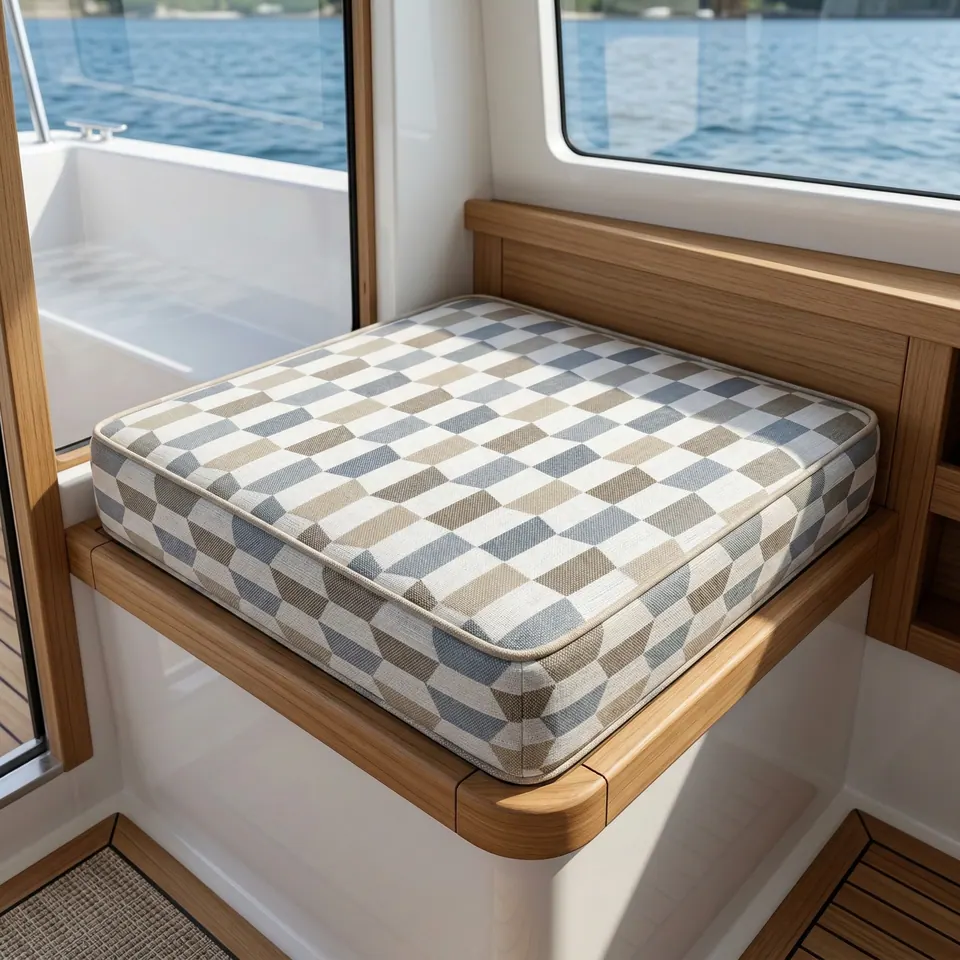
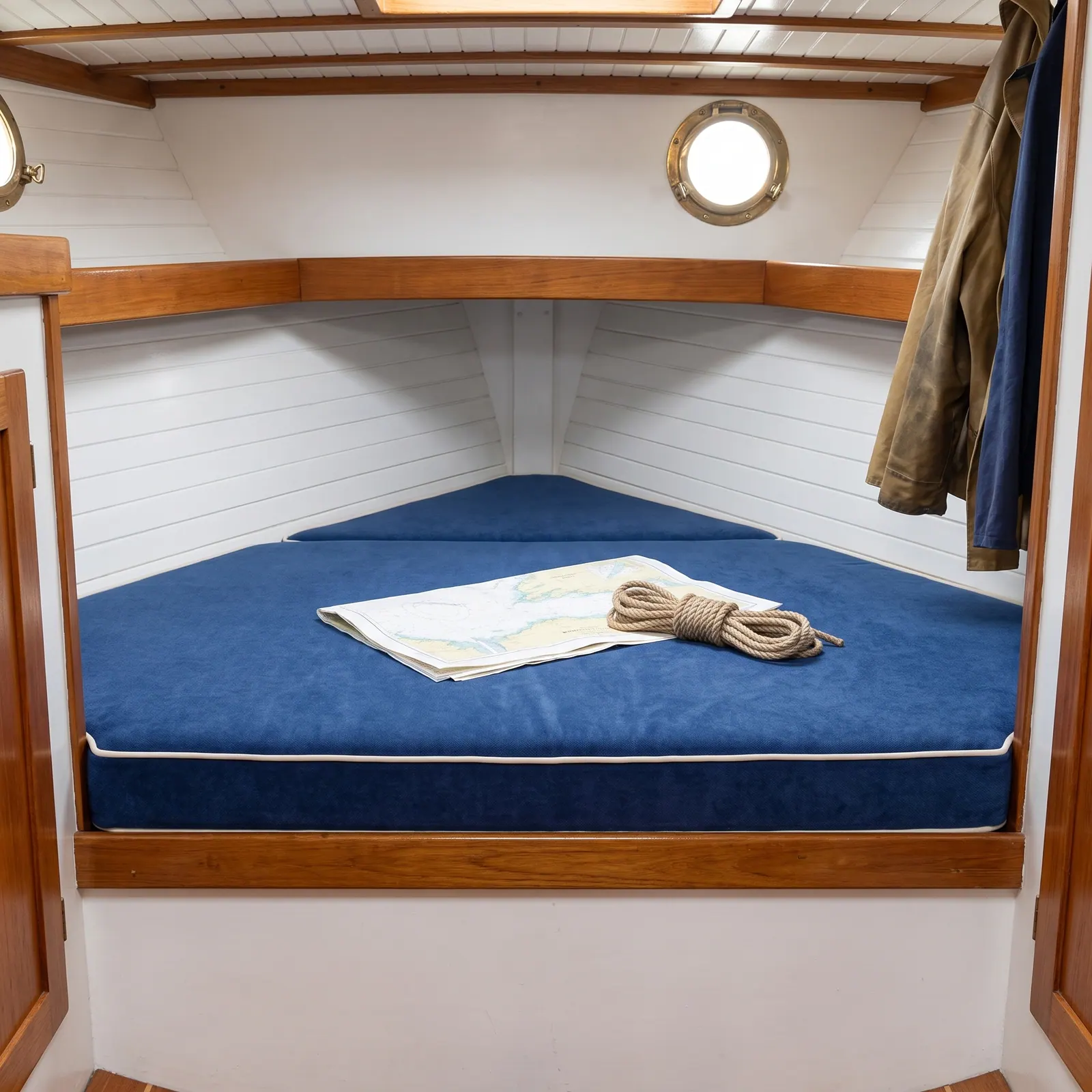
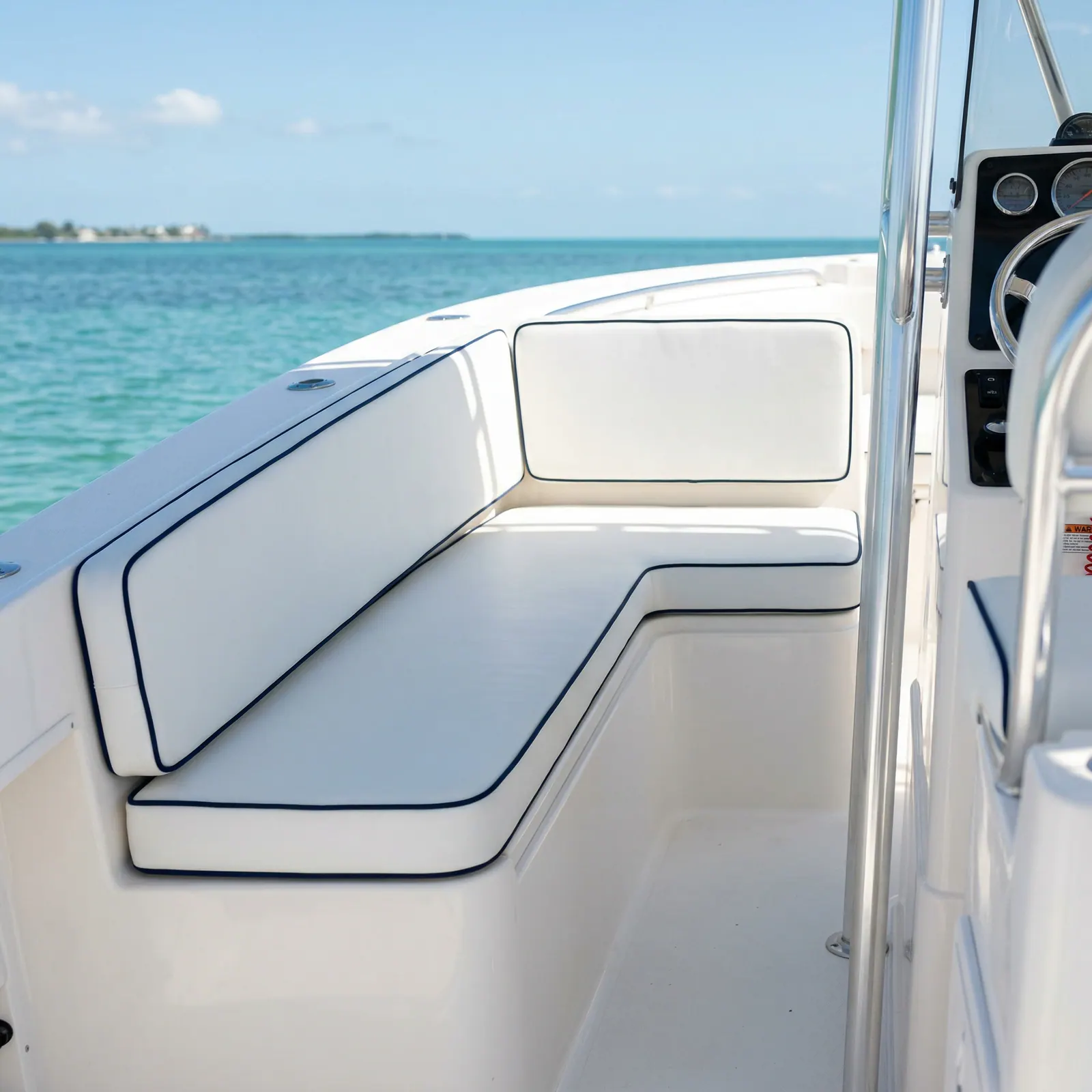
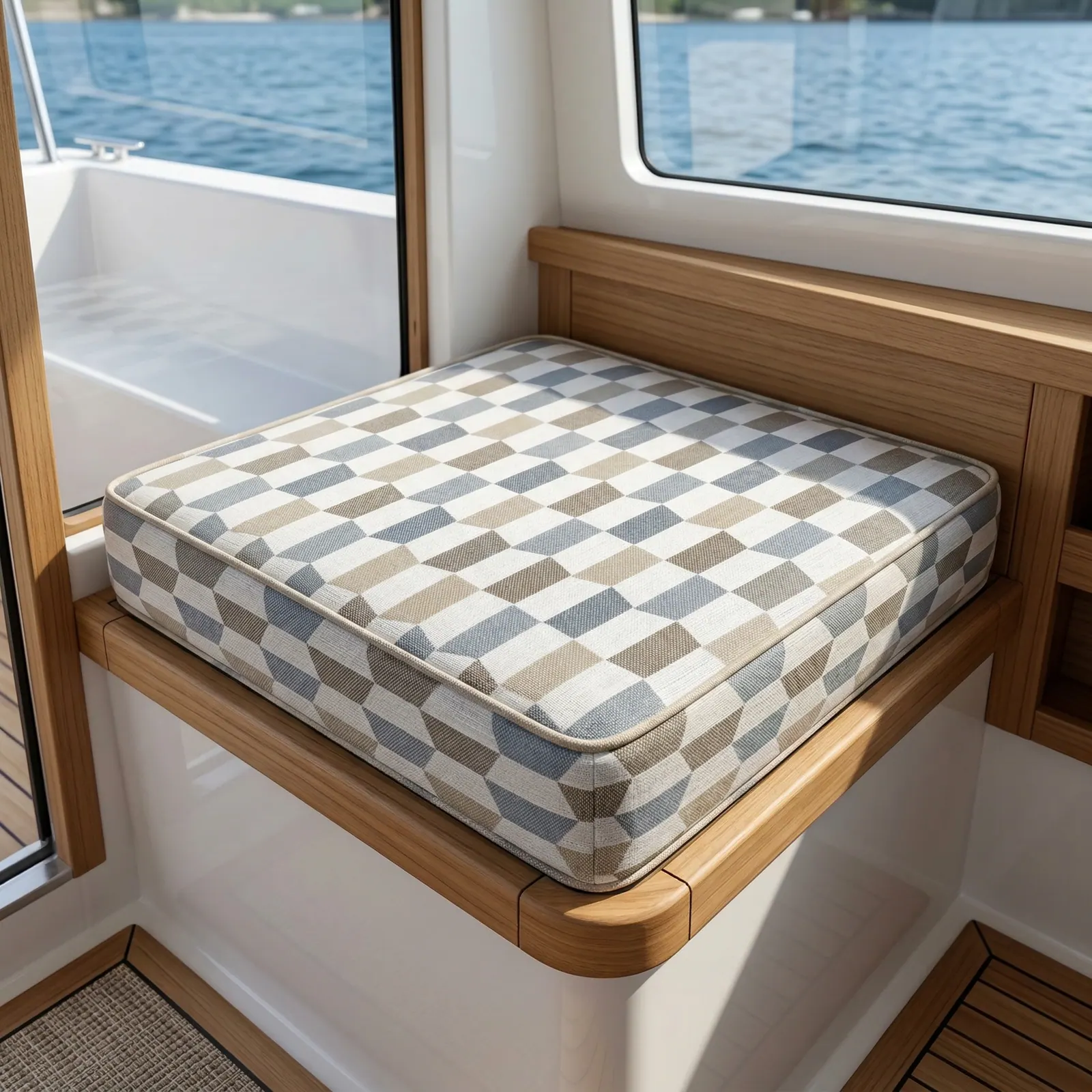
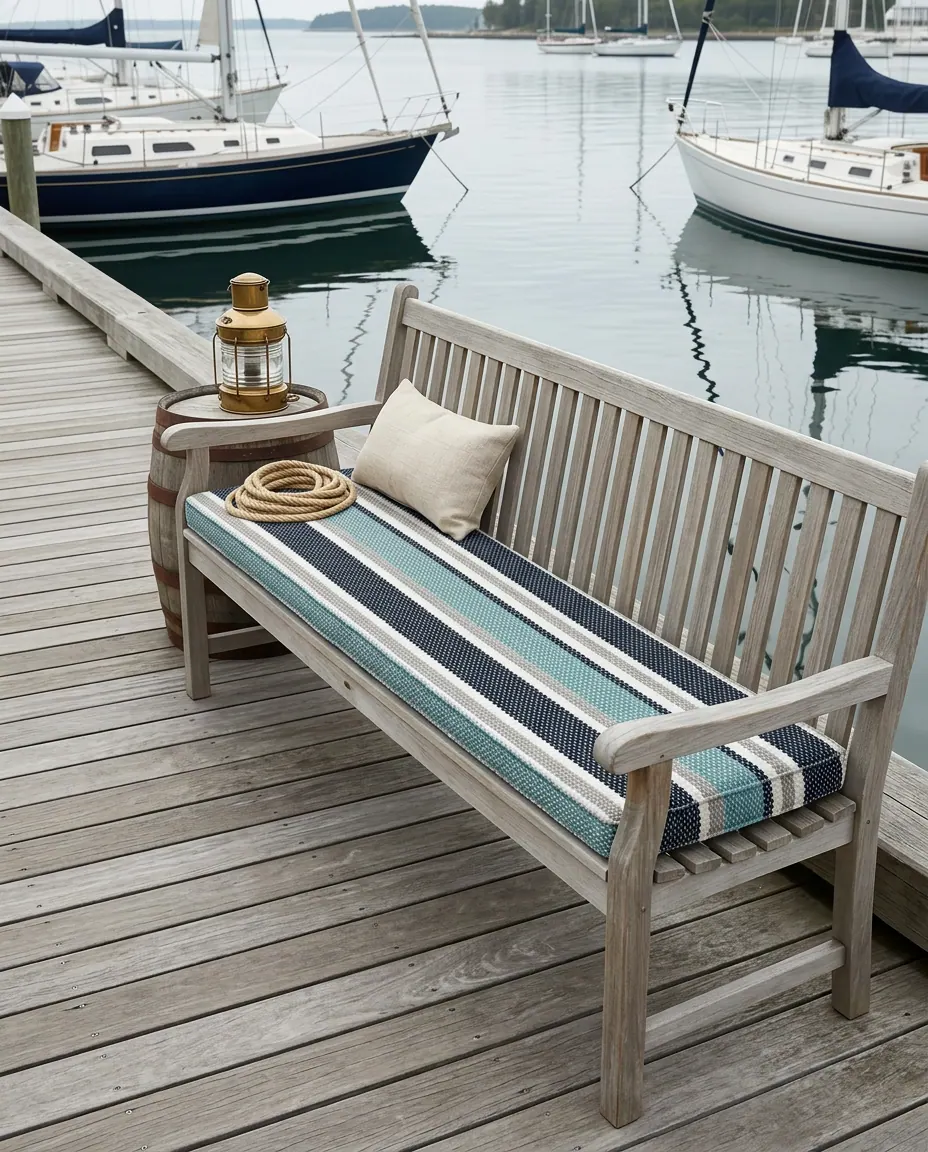
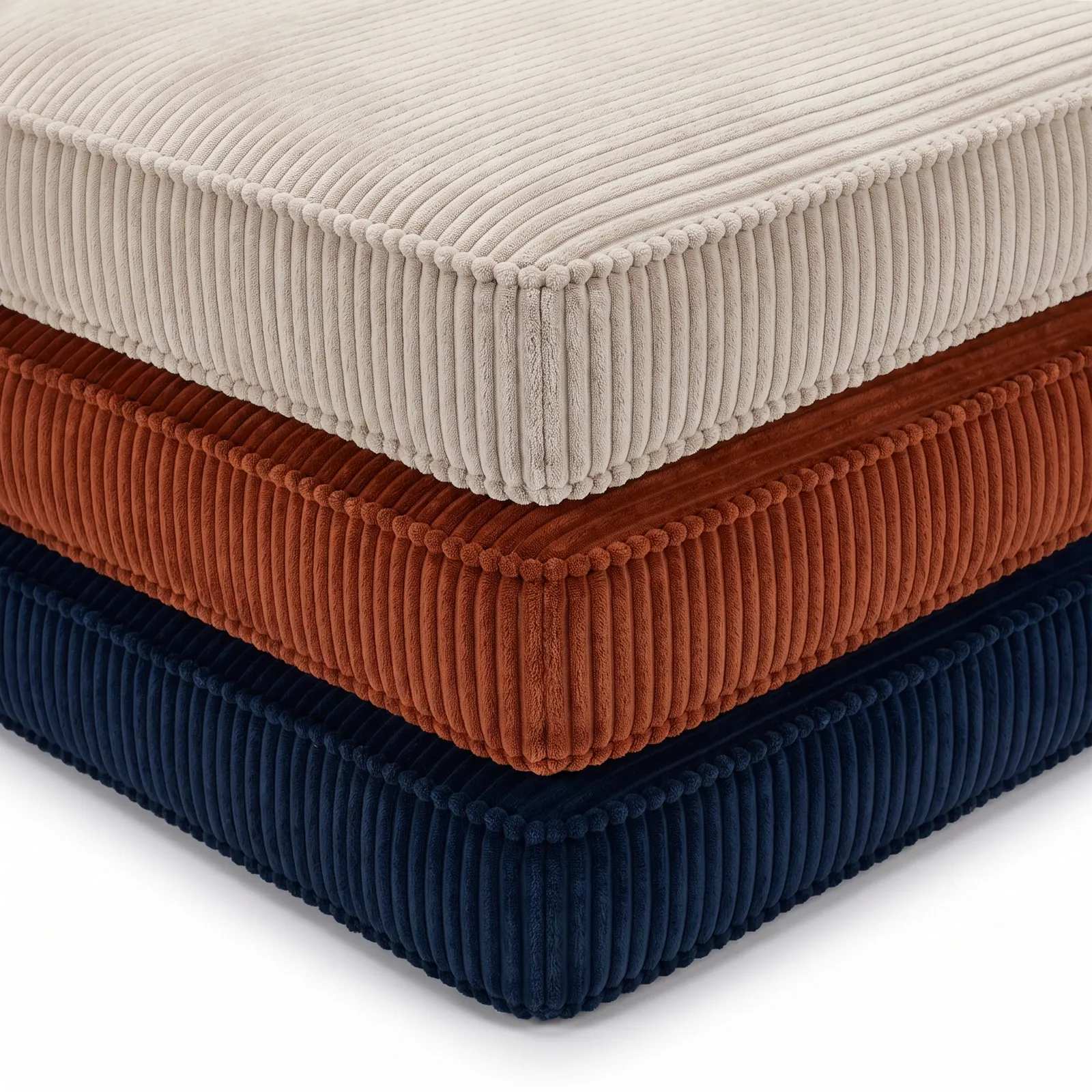
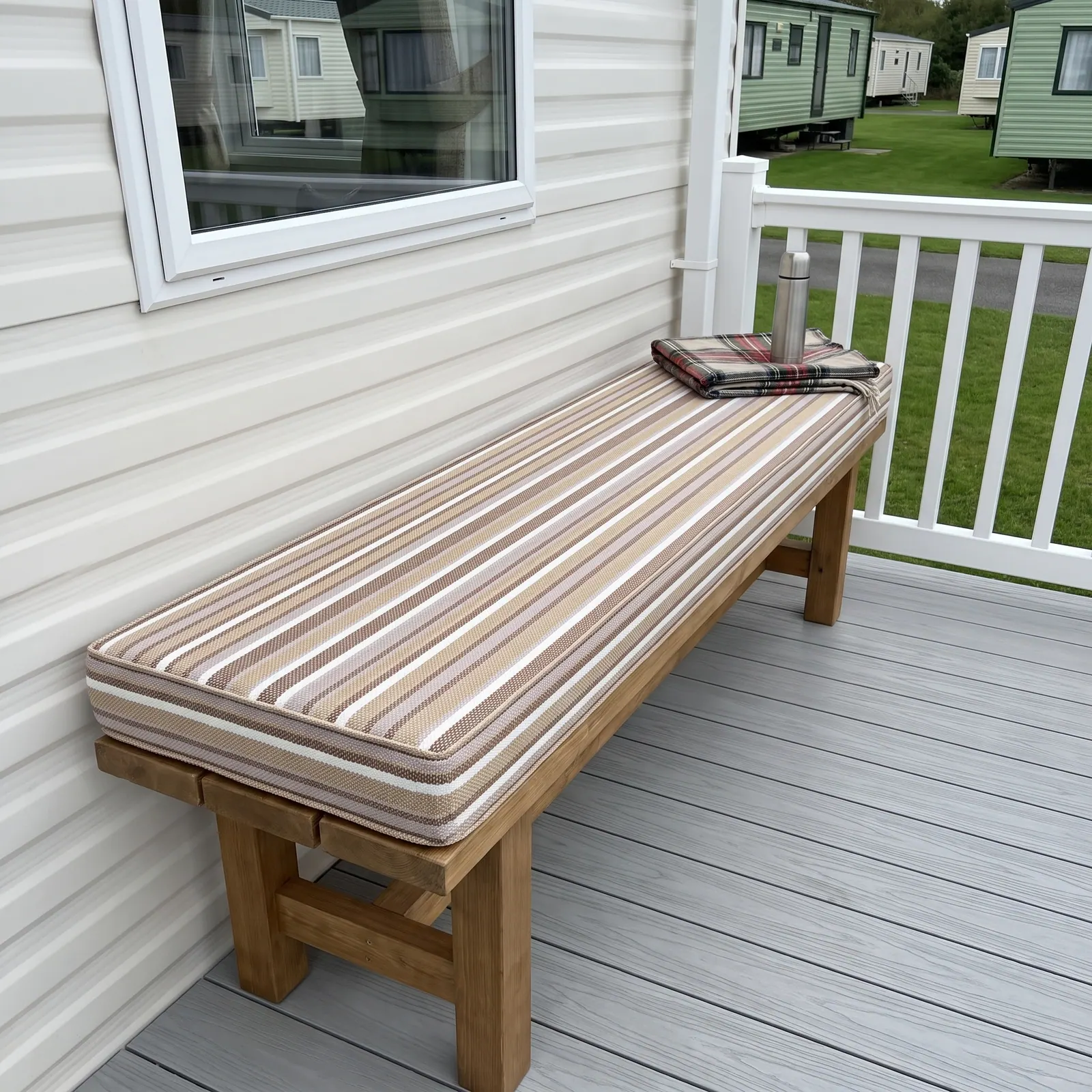
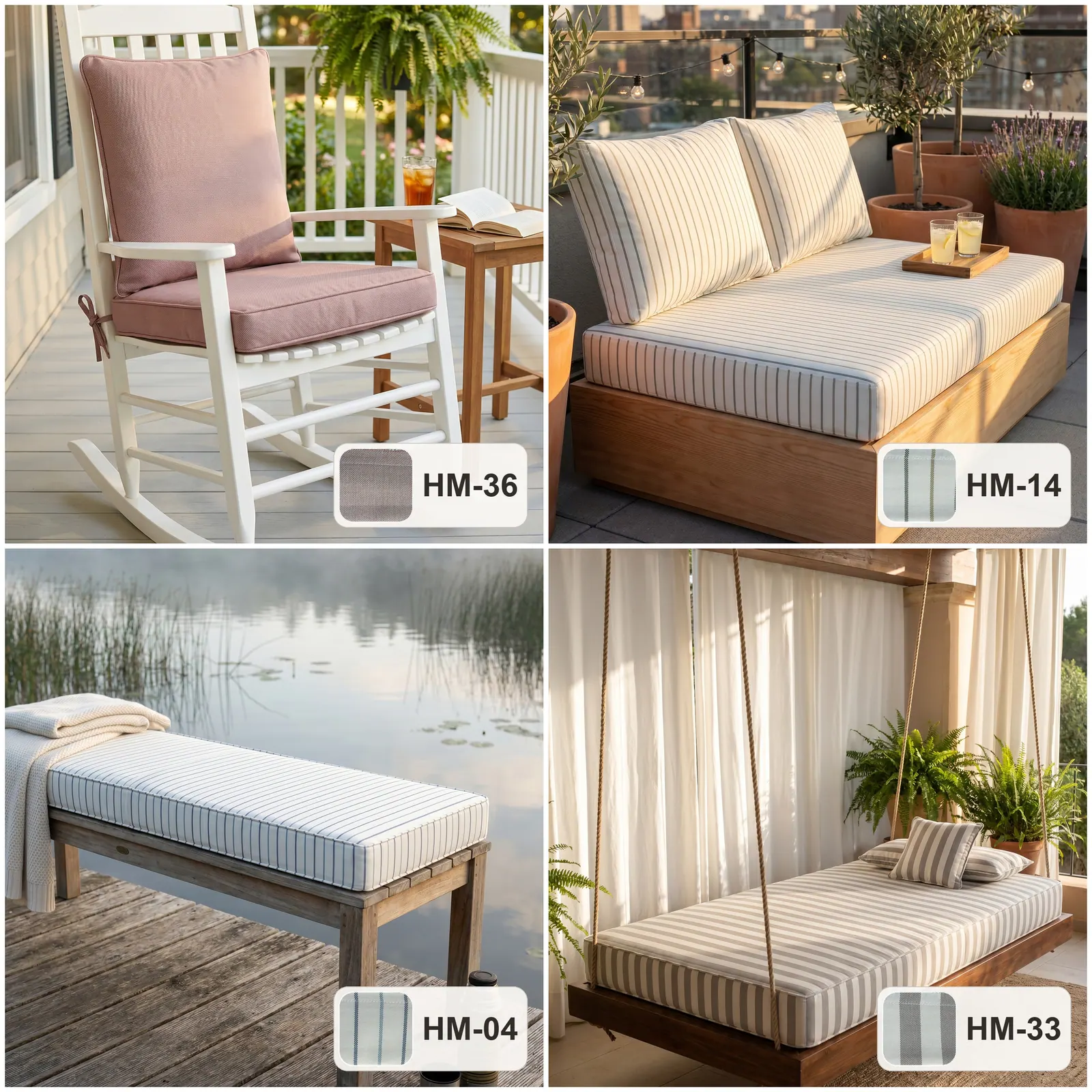
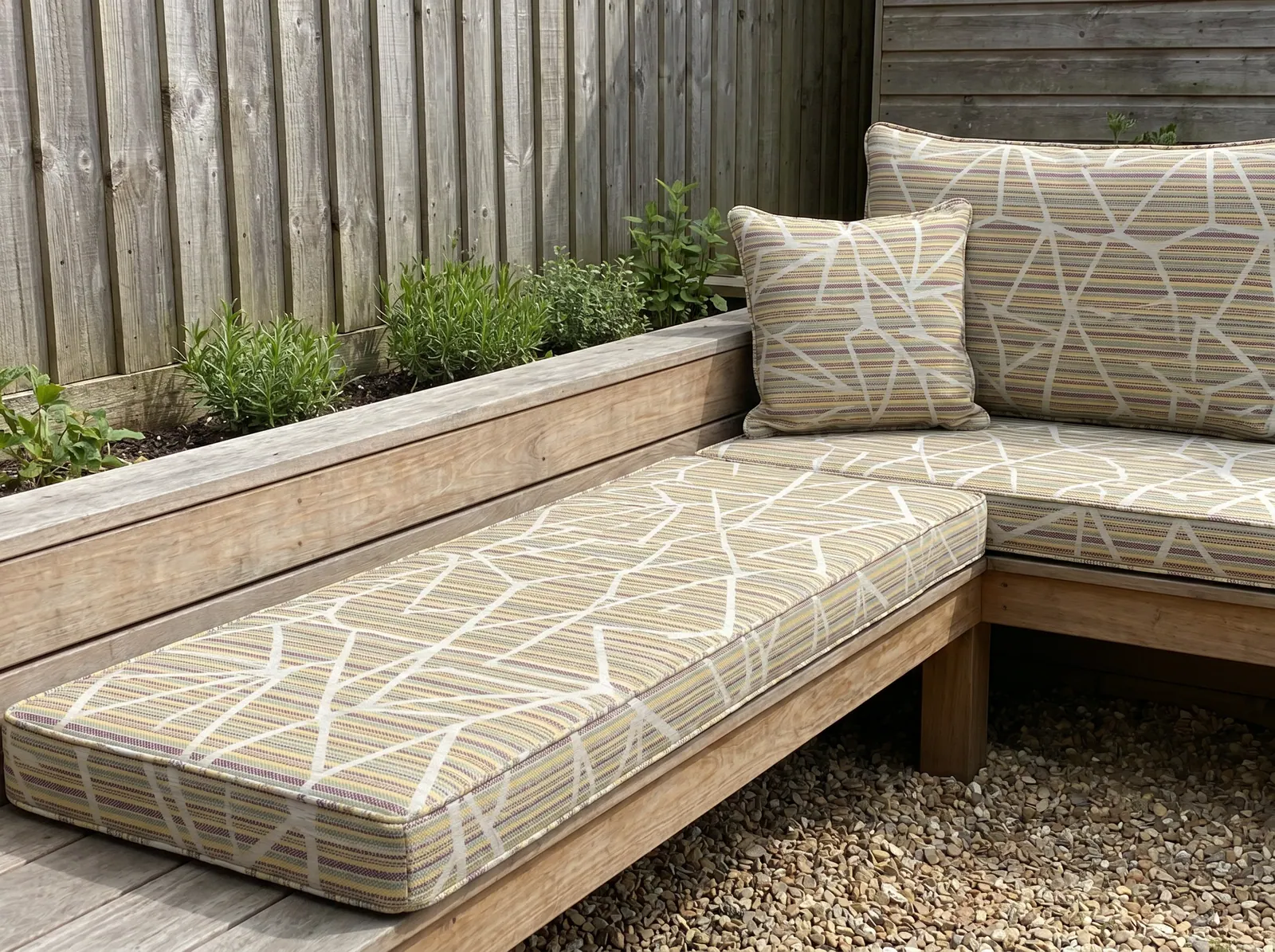
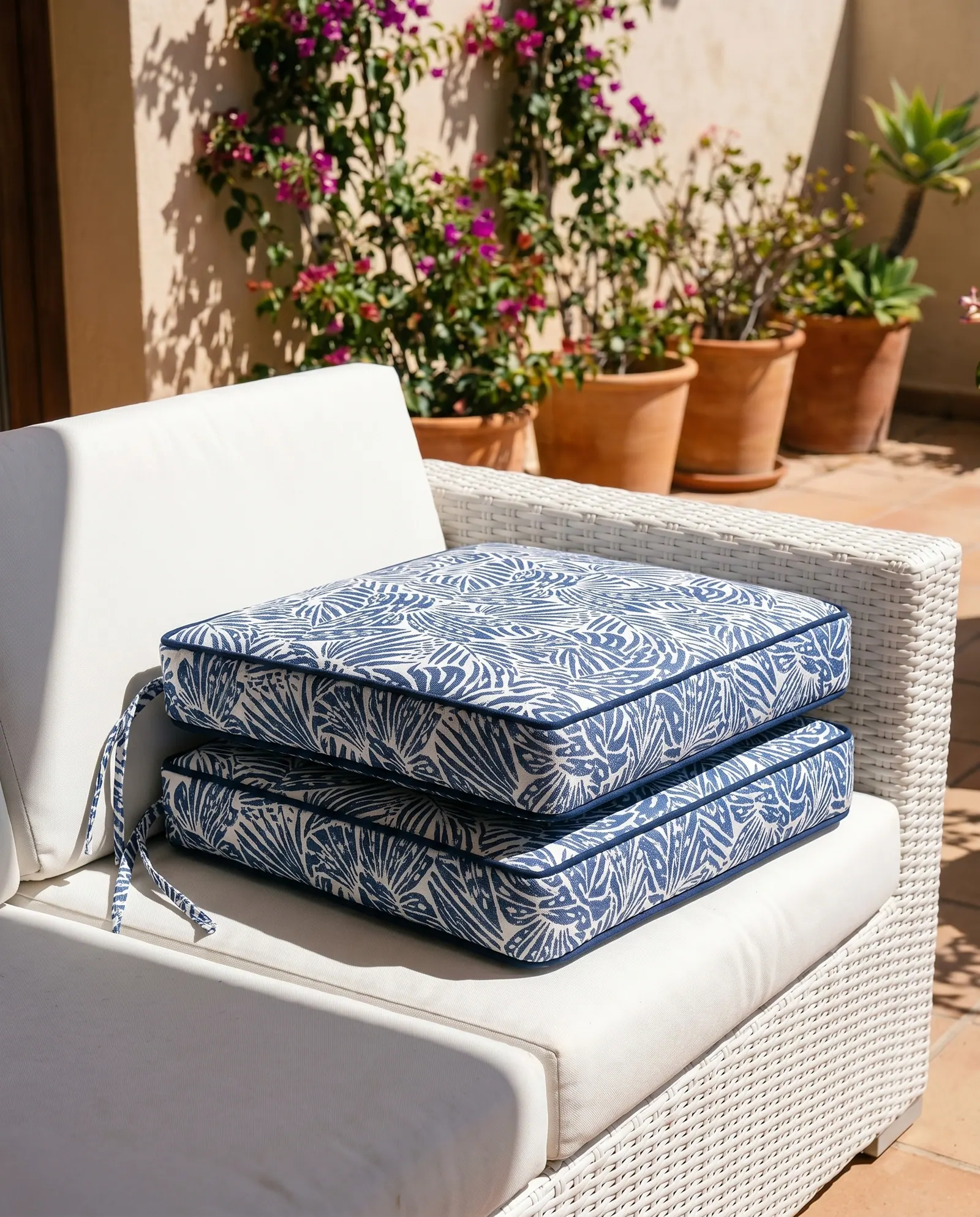
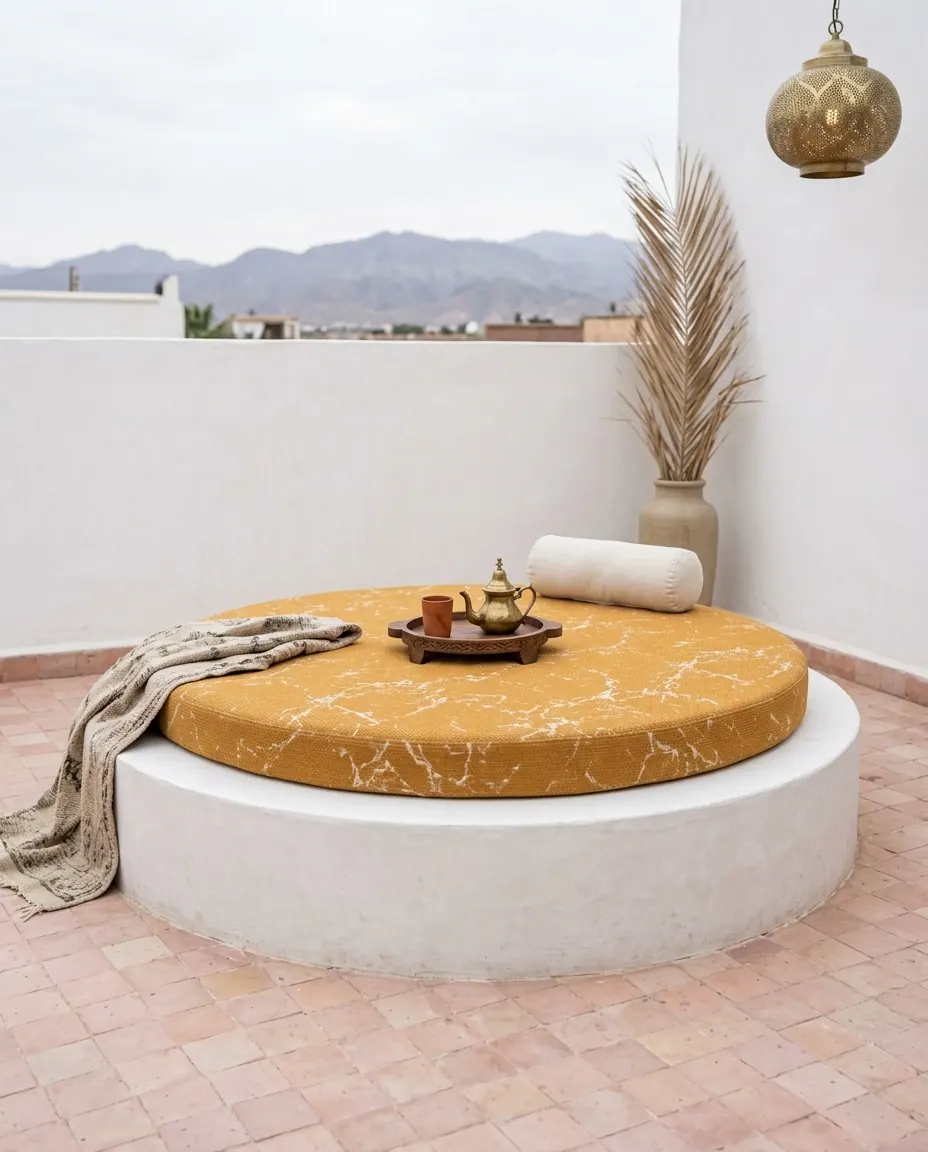
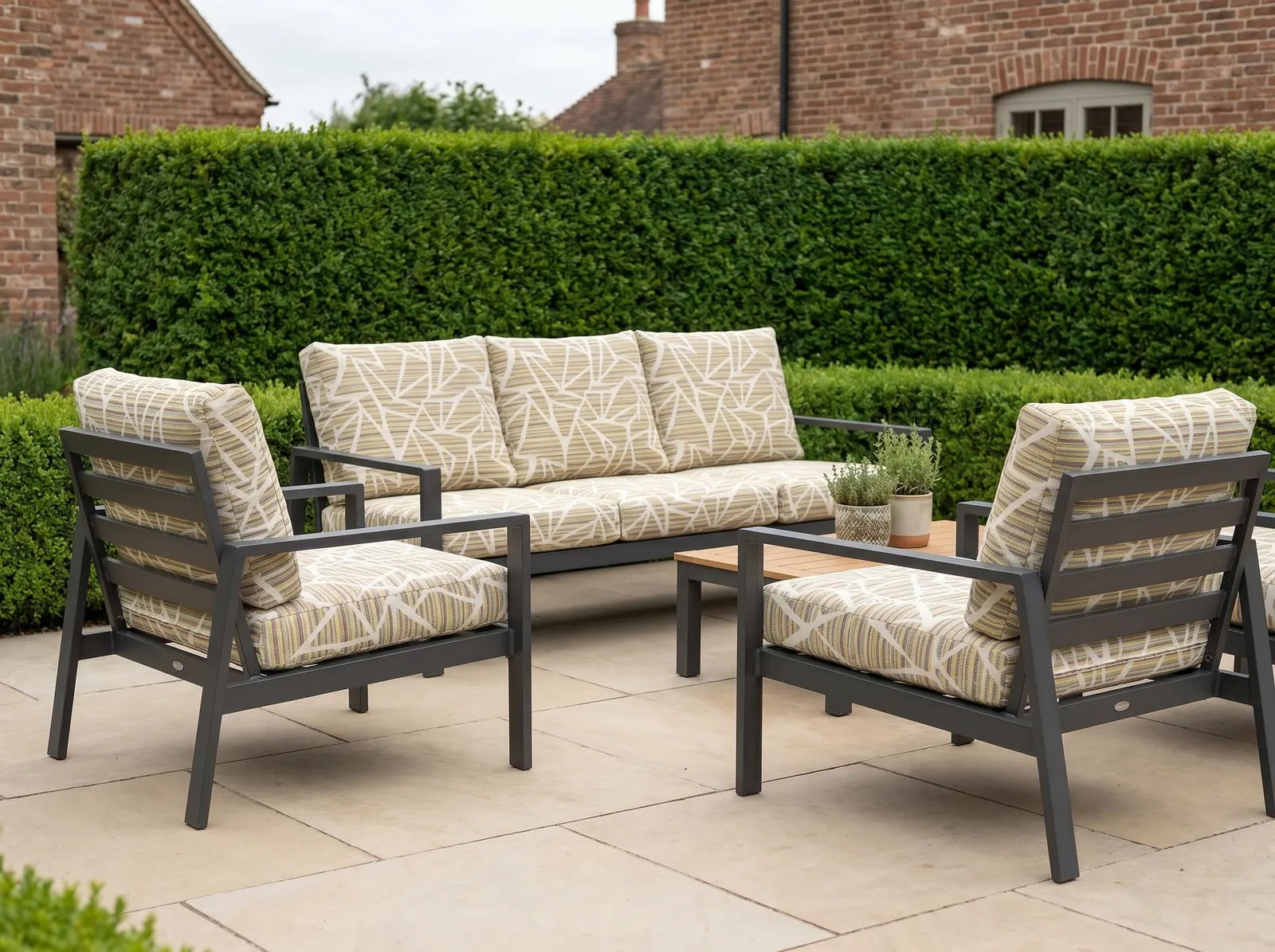
SaveA forward cabin V-berth made in two pieces, a large tapered base and a separate bow infill, both piped in ivory.SaveWhite bow cushions with navy welting trace the stepped seat and curved hull of a center-console boat.SaveA square box cushion in a small geometric outdoor weave fills a teak cabin ledge, its sand piping echoing the wood.SaveA striped outdoor cushion made for salt air, set on a teak dock bench a few steps from the moorings.SaveStacked corners make it easy to compare how each corduroy color takes the light. All three are finished with self piping in their own fabric.SaveA neutral stripe suits the gray decking and cream cladding of a holiday caravan. A folded tartan blanket waits at the end for cooler evenings.SaveRocking, lounging, waiting by the water and swinging: four outdoor seats, each with a cushion made to fit its frame.SaveSeparate seat, back and scatter pieces in one graphic stripe cover a timber L-shaped bench built against a raised herb bed.SaveA pair of navy-piped palm-print seat pads, ready to tie onto terrace chairs, rests on a white rattan sofa among potted bougainvillea.SaveA made-to-measure round cushion crowns a plaster plinth on a Moroccan rooftop, with a bolster for leaning back.SaveReplacement seat and back cushions in a beige geometric outdoor weave refit a full charcoal aluminum sofa set.
In a van or RV, measure the seat and the back separately. On one converted school bus the back was 46.5 in wide and the seat 48 in.
Small cabins like one strong color and one quiet one. Cobalt on a V-berth with ivory piping, against white tongue-and-groove. White cushions with navy welting on a bow seat over shallow water. In a camper, a beige or greige linen keeps a narrow space feeling wider, and harvest-gold piping on olive tells everyone which decade you love.
Can you make new covers for my boat cushions with velcro that lines up with the strips already on board?
The workshop's answer
Yes. Give the exact length, width and thickness of each cushion, and fitted covers are made with soft loop velcro sewn on the bottom to meet the hook velcro you already have. Send photos and a simple sketch of where the existing strips sit so the new ones line up. Each cover is made to the numbers you supply, so measure every cushion individually.
A common question
Do you make cushions for a camper van, RV or bus conversion?
The workshop's answer
Yes. Send the measurements and a purchase link comes back. Past examples: a corduroy cover for a 27 1/2 x 78 3/4 x 4 in (70 x 200 x 10 cm) cold-foam van mattress, a 6 ft x 31 in travel-trailer cushion at least 3 in thick, two 75 x 26.5 in cushions for a bus sofa that pulls out into a double bed, and two 71 x 28 x 12 in velvet cushions for an RV top bunk. Linen and velvet are priced the same; velvet colors are chosen by number.
A common question
Can you make U-shaped dinette cushions for our trailer?
The workshop's answer
Yes, U-shaped vehicle and dinette seating is made regularly. Send a drawing with every run of the U, the depth and thickness you want, and a photo of the space; to recover an existing set, send a template or drawing of each cushion. Every piece is sized separately: one dinette used a 65 x 17.5 in seat, two 17.5 x 24.5 in side seats and a 65 in back cushion 4 in deep. Seats can be 8 in thick or more, and the drawing is reviewed before quoting.
A common question
How do I keep a cushion on an RV bench seat that lifts up for storage?
The workshop's answer
Ask for ties on the hinge side only, so the cushion stays attached when the lid opens. Write your exact size and 'ties on the hinge side' in the personalization, with each hinge's position measured from a stated end, its width and a photo; one-sided ties carry a small extra charge. If ties won't work with your hinges, the cushion can be sized inside the lid's bevel, for example 42 x 18 in, with a non-slip base. That holds in normal use, but a lifted lid can still let it slide.
A common question
How should I size the seat and back cushions on a van bench that turns into a bed?
The workshop's answer
Splitting the base into two cushions over the storage compartments won't look or feel odd; 14 x 70 in and 24 x 70 in pieces have been made for a slide-out bed. The back cushion can be narrower than the seat, such as a 46.5 in back on a 48 x 16.5 in seat, and the backrest thickness is subtracted from the back height so the cushions fit together. Send the measurements and the set is quoted.
A common question
Which fabric is closest to avocado green for a vintage camper, and will it look too bright?
The workshop's answer
The olive in the velvet chart is the closest to avocado: a muted, earthy olive, with a linen alternative if you'd rather not have velvet. It shifts noticeably with light, reading yellow-lime under white light and much calmer under warm light. Greens, sage especially, are the hardest colors to judge on a screen, so check close-ups under your own lighting or order samples. For harvest-gold piping there are three neighbors, from mustard to yellow to orange, and swatch photos come side by side.
Have it made
Have your boat cushion made — ask Callum’s workshop
Short list: size, sun hours, how fast it has to dry. The workshop goes through it with you. — Callum
Leave your details and the workshop will call you to confirm measurements, fabric, foam and piping. No prices, dates or payment on this page: it is a request, not an order.
Fabric · Foam · Pipingwhat the workshop will confirm with you
Can the backrest be thinner than the seat cushion?
Yes. Write each cushion's thickness in the personalization; a 4 in seat with a 2 or 3 in back is common, and one campervan bench used exactly that. Keep foam backs at 2 in (5 cm) or more, because thinner foam loses its structure and flattens.
How do I order backrests alongside the seats?
Add each backrest to the cart as its own item from the seat's listing, at its own size, and write the size, fabric code and 'backrest' in the personalization. If a back and a seat share a size, order two and say which is the back. Backrests can be shorter than the seat.
Does velvet cost more than linen for camper cushions?
No. Custom cushions are priced mainly by size, so the same cushion costs the same in velvet, linen or the soft cotton-type fabric. If a quote needs to come down, a more affordable velvet grade and a lower-density foam are the levers.
What fabric should go in an open cockpit?
Outdoor fabric. Anywhere rain or damp can reach, choose the outdoor range, which resists water, UV and fading and is woven like cloth rather than vinyl. Keep indoor linen and velvet for the cabin, the camper and the bus.
Can camper cushions be thicker than 4 in?
Yes. Dinette seats can be 8 in or more, and RV top-bunk cushions have been made 12 in thick. Check the headroom in the bunk and the table height at the dinette before going thick.
Fair winds — Callum
Share this atlas entry
Readings
Photographs read by the masters: boat, camper & rv cushions
Real cushions made for real rooms, each read for proportion, fabric and fit.
 Save
 Save
 Save
 Save
 Save
 Save
 Save
 Save
 Save
 Save
 Save
 Save