Sunbed and chaise lounge cushions for a long season in the sun
A lounger cushion lies flat under open sky from Memorial Day to Labor Day. Build it for the worst afternoon in July, and the rest of the summer takes care of itself.
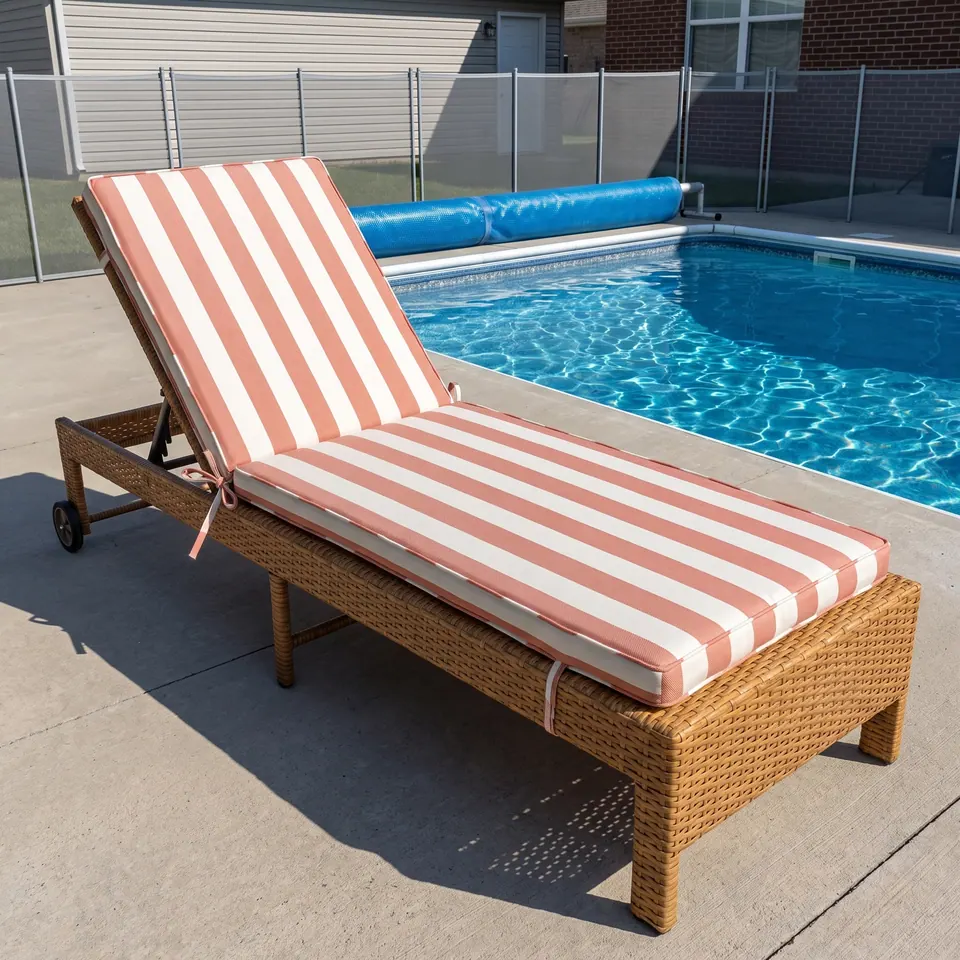
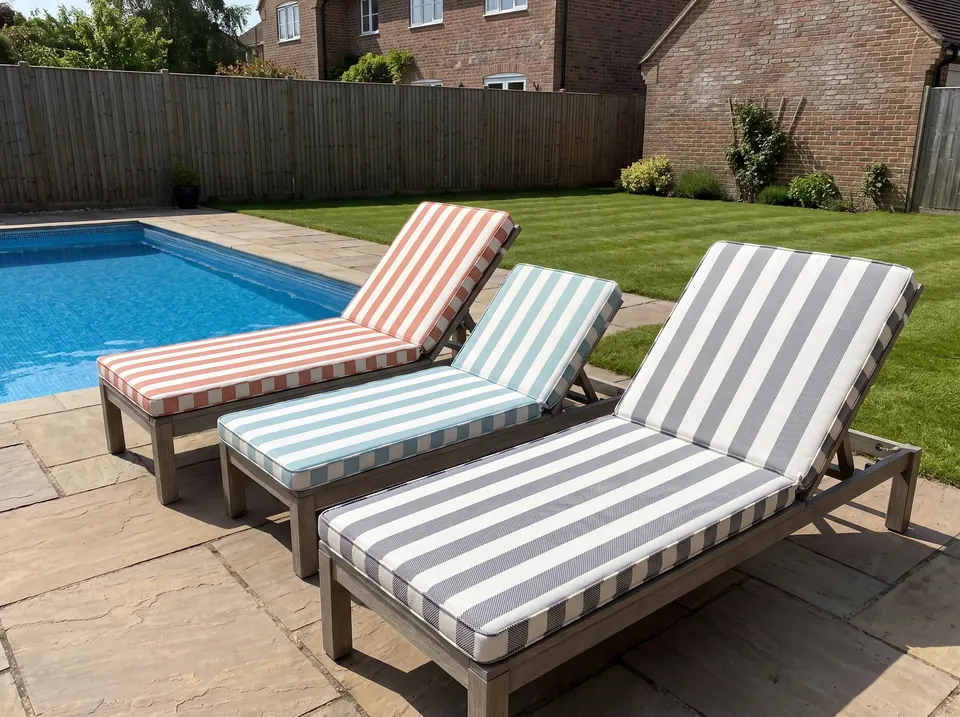
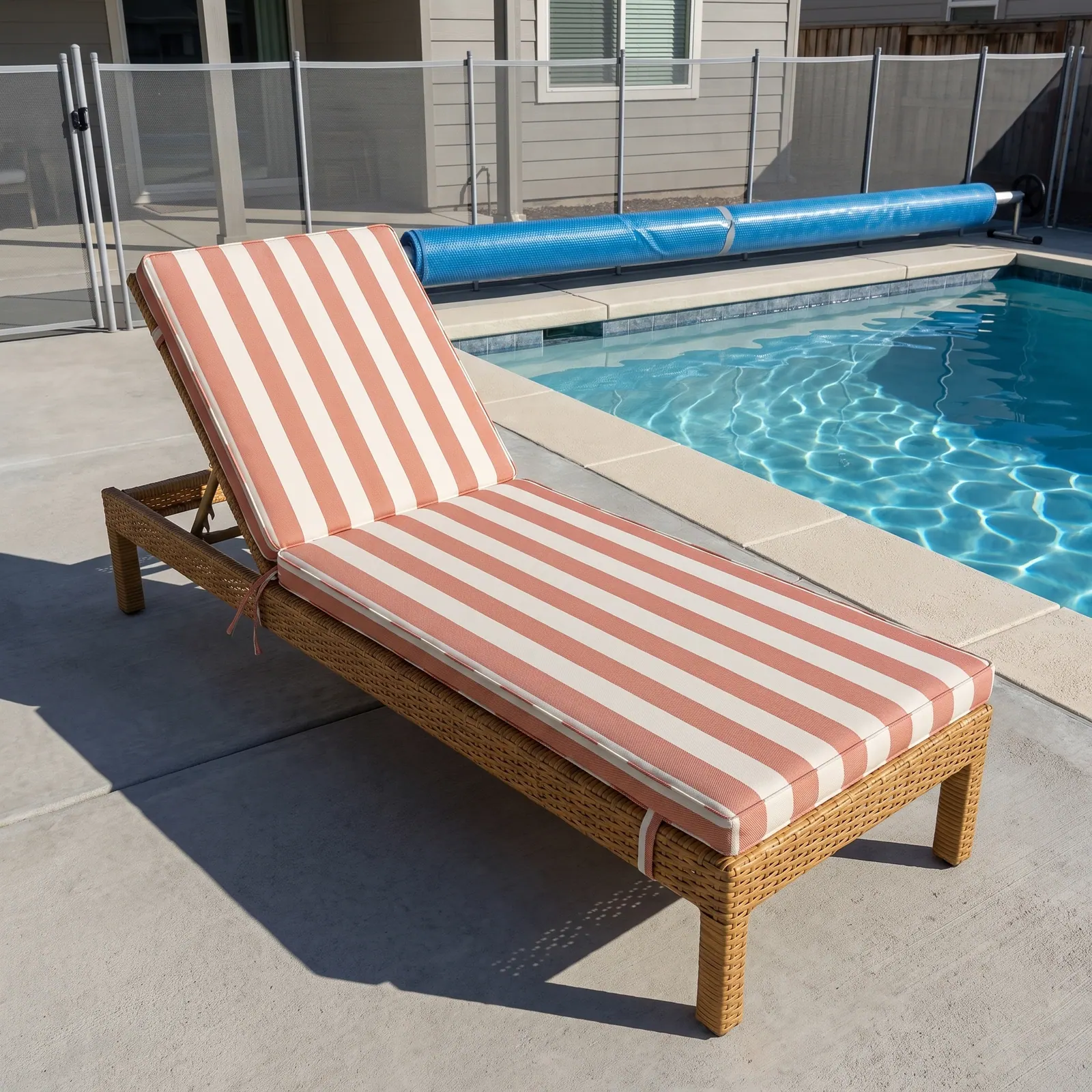
SaveA coral cabana-stripe cushion on a rattan lounger, tied at the hinge and the foot. The warm stripe stands out against the blue pool.
The quick answer
A sunbed cushion is made to the lounger's own seat and back, either as one cushion or as a seat with a separate backrest, with 4 in (10 cm) foam as the standard. By a pool or on an open deck, use woven outdoor fabric that resists water, UV and fading, ask for ties where wind reaches, and label each piece's thickness.
Every one is cut to your measurements. The number is how many readings the atelier has published for that shape.
Sizes & measuring
Measuring a lounger at the hinge
Lay the lounger flat. Measure the frame, not last year's cushion.
Seat
From the hinge line to the foot end, and across the frame inside the rails
Back
From the hinge line to the top of the backrest, measured separately
Standard thickness
4 in (10 cm), the size most buyers keep
Thinnest
2 in (5 cm) standard foam; anything thinner only without piping
Seat and back
Each is its own item at its own size; write 'backrest' on the back piece
Near-twin pieces
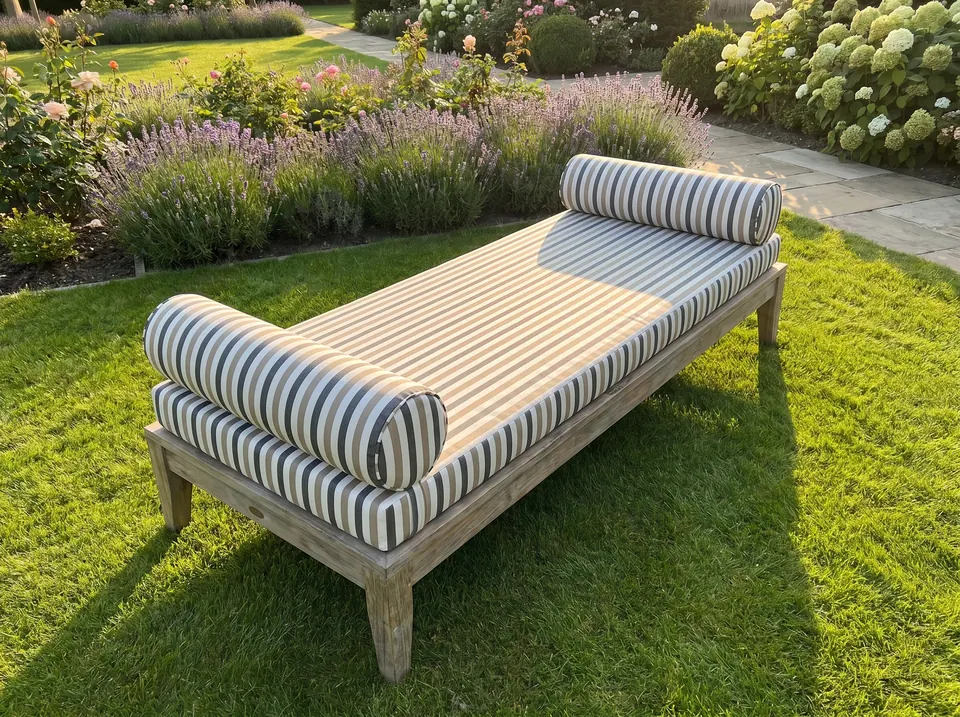
Label each piece and give each its own thickness. One daybed had an 88 5/8 x 25 5/8 in (225 x 65 cm) seat and an 88 5/8 x 25 1/4 in (225 x 64 cm) back.
Rounded head or foot
Trace a paper template, cut it out, photograph it flat beside a tape measure
Ties
On request, at the corners or the back, in any position; put position and length in the order note
Stripes
The roll is about 55 in (140 cm) wide; stripes running across a piece longer than about 54 in need a seam
A sunbed cushion spends its life flat on its back in full sun. It gets sunscreen, pool water, wet towels and the odd thunderstorm nobody saw coming. Chaise lounges on a patio, rattan loungers by the pool, a timber lounger on a lake deck: the cushion is the part that wears.
So start with exposure. How many hours of sun does your lounger see on a July afternoon? Is there a roof, or only sky? Write it down. It decides the fabric before you ever look at color.
Most lounger cushions are plain rectangles with a box edge and piping in any color from the outdoor range. Piping earns its keep here. It holds a crisp line on a cushion that gets sat on, lain on and dragged across a deck.
Curves need a drawing, not a guess. The workshop will not read a curve from numbers alone: mark where each curve starts and ends and how deep it runs, or trace the seat onto paper and photograph the cut-out. Every cushion gets its own drawing. Measuring a curved cushion walks through it.
With a separate back, the back can be softer or firmer than the seat, and a different fabric. That is where the fun starts.
Outdoor fabric that still feels like cloth
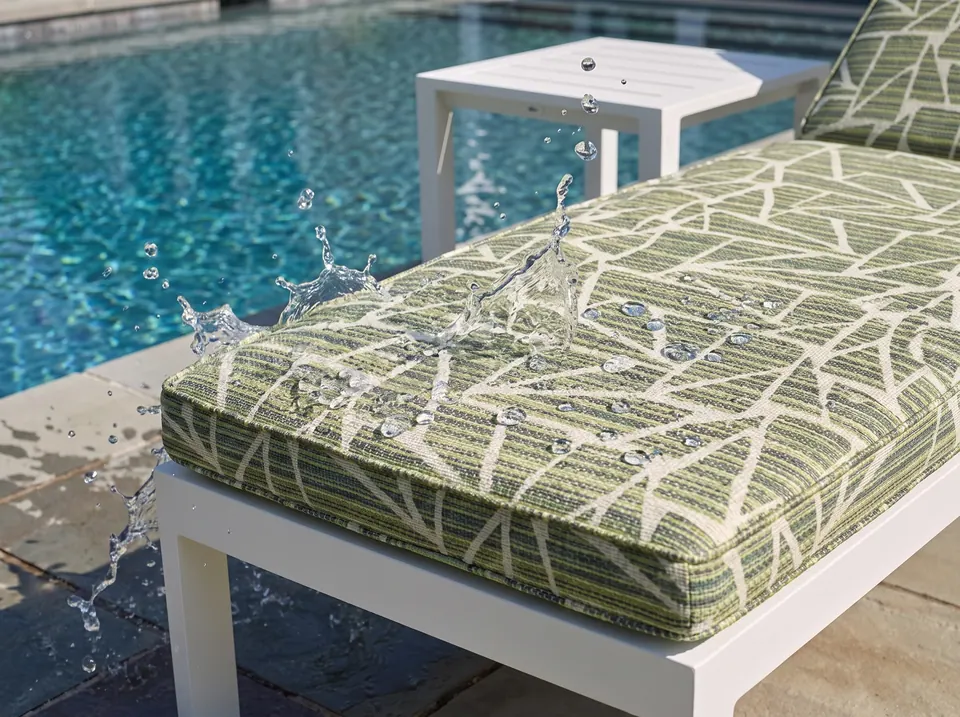
The outdoor range runs close to 200 fabrics on four or five charts. Every one is water-resistant, UV-resistant and fade-resistant, and meant to stay outside all summer. They are woven cloth, not vinyl and not a plastic finish. All come from the same factory at the same quality; the charts differ only in texture, color tone and pattern.
Outdoor fabrics cost more than the standard indoor charts. Close-up photos are available for any code, so ask before you choose. An indoor chaise, away from rain and direct sun, can go in regular fabric; one lounger went in indigo linen.
The count is how many published readings use each family. Open a family for its swatch book, care notes and neighbors.
Foam, firmness and a flat arrival
The standard is 4 in (10 cm) of high-density foam, medium-firm, which gives a flat, structured top. Backrests come a little softer by default. They can be made as firm as the seat if you like to sit up and read.
Many cushions travel vacuum-compressed and roll-packed. They arrive flat, folded and smaller than the photographs. That is normal. Unwrap every piece. The workshop's numbers for roll-packed foam: most pieces fill out in 24 to 36 hours, reach their photographed shape in about 36 to 48, and are fully firm after 3 to 5 days. A good shake speeds it along. See the first 72 hours.
A real project
The lounger that arrived flat, and the daybed with twins
One buyer wrote in about a chaise-longue style floor lounger in indigo linen, 43 x 35 x 12 in, with its backrest on the 35 in side. It arrived vacuum-packed, and the buyer asked, fairly, how it was ever going to look like the photo. The answer was plain: open every package, give it time, and pull and shake the cushions to help the foam find its shape.
Another buyer ordered an outdoor daybed whose seat and back were both 88 5/8 in (225 cm) long and only 3/8 in (1 cm) apart in depth. Before cutting, the workshop asked for a separate thickness for each piece, so the seat could not end up where the back belonged.
Measured
43 x 35 x 12 in, backrest on the 35 in side
What it taught
Roll-packed foam needs time and a shake. When seat and back are nearly the same size, label each piece and its thickness.
Mistakes the pool deck will find
Settling a change in chat and never adding it to the order. Production sews to the order note, so every spec belongs there.
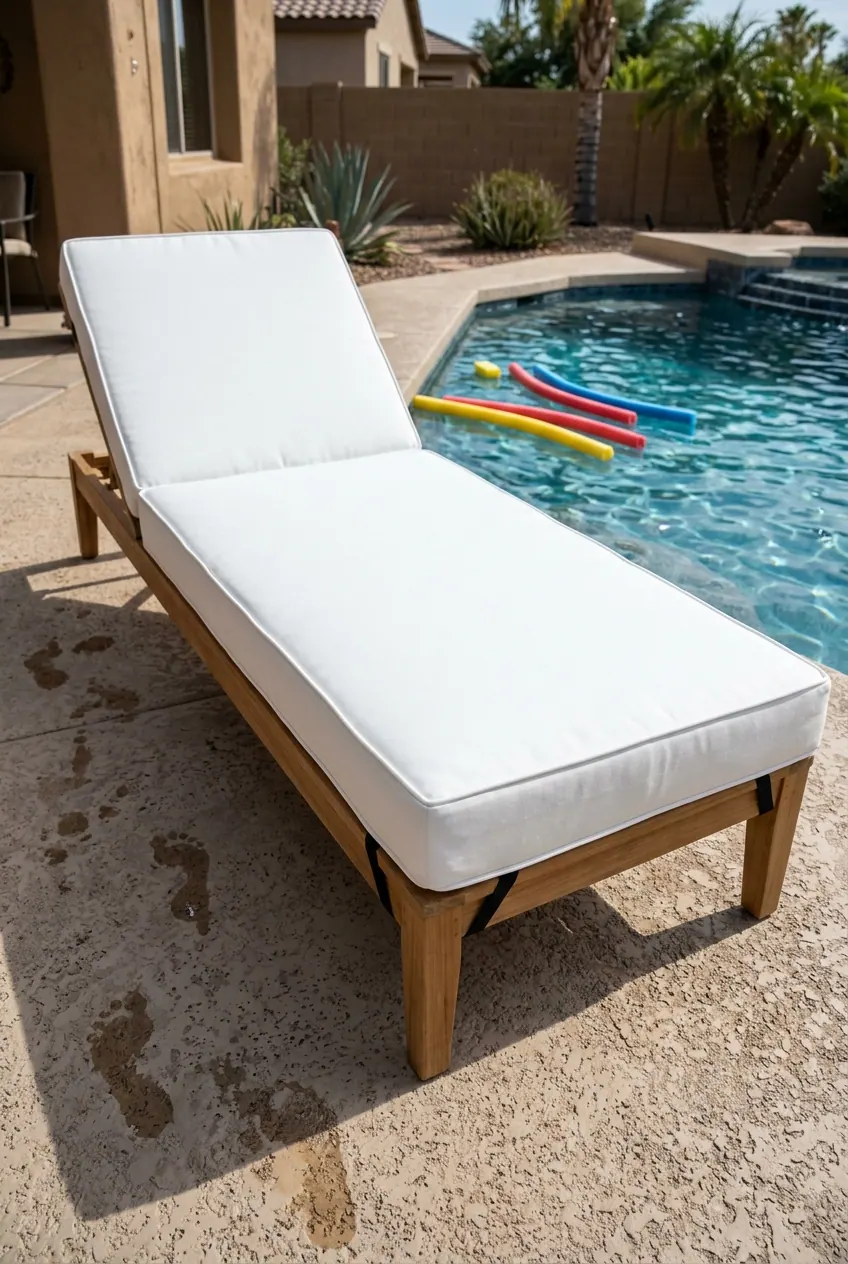
Typing a request for ties into the size box. Write ties, their position, length and color in the note, and look for them in the pre-dispatch photo.
Two near-identical pieces with no labels. Say which is the seat and give each its own thickness.
Indoor fabric on an open pool deck. Tell the maker indoor or outdoor first, so the search starts in the right chart.
Judging a stripe or a coral from a screen. Ask for close-ups of the code first.
Opening a vacuum-packed cushion and calling it wrong on the spot. Give it 48 hours and a shake.
Photographs from the workbench
Open any photograph large; each one has its own link and a Save button.
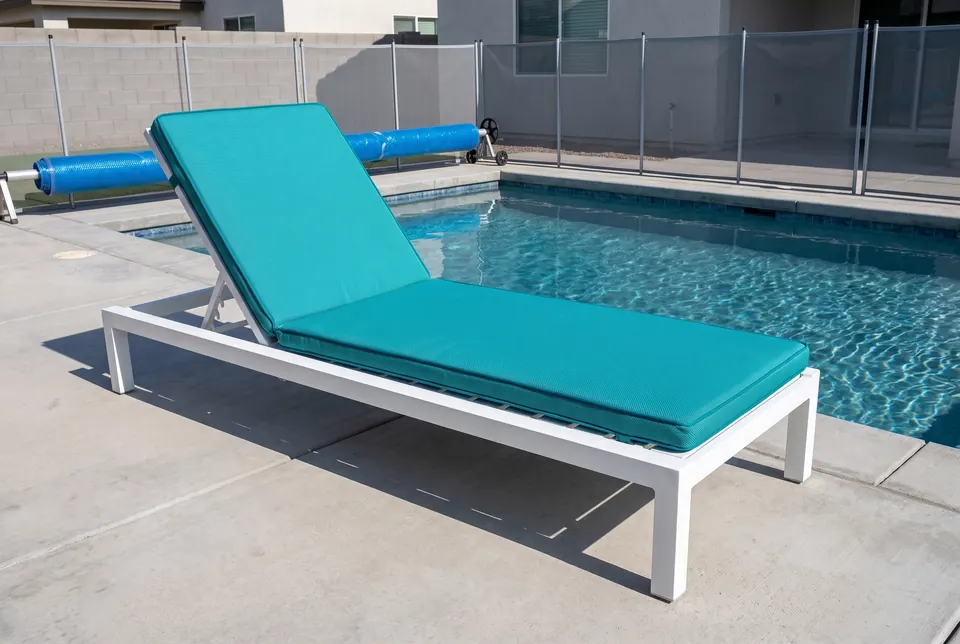
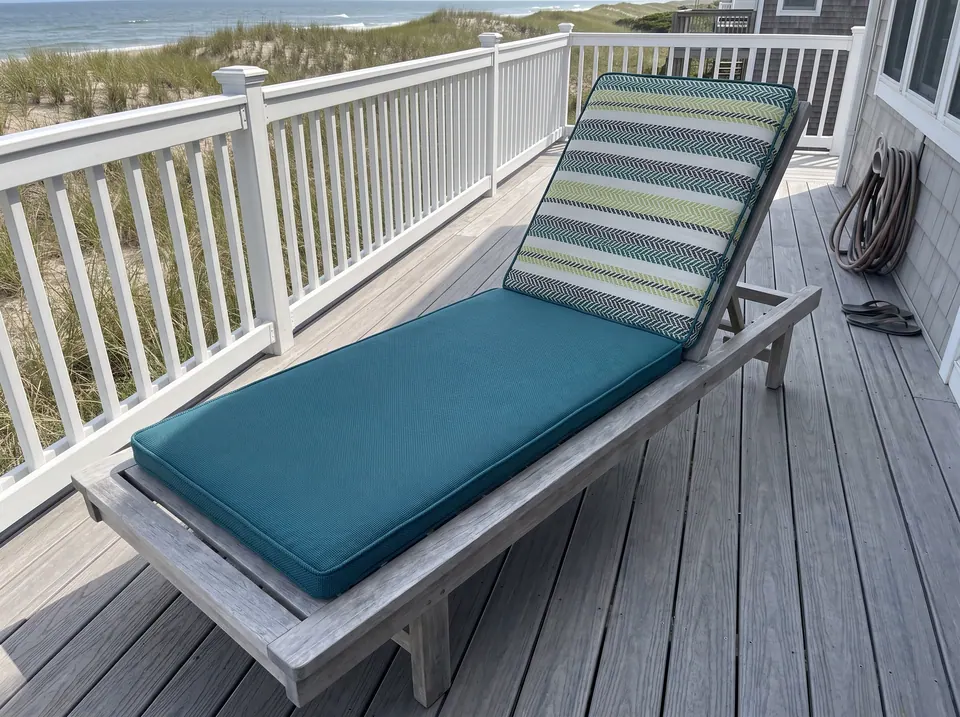
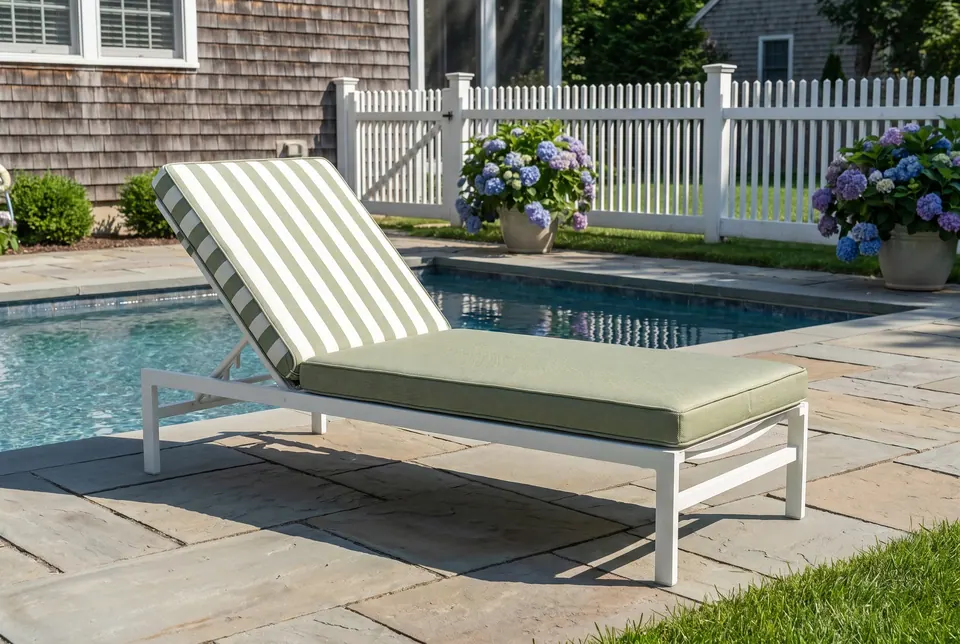
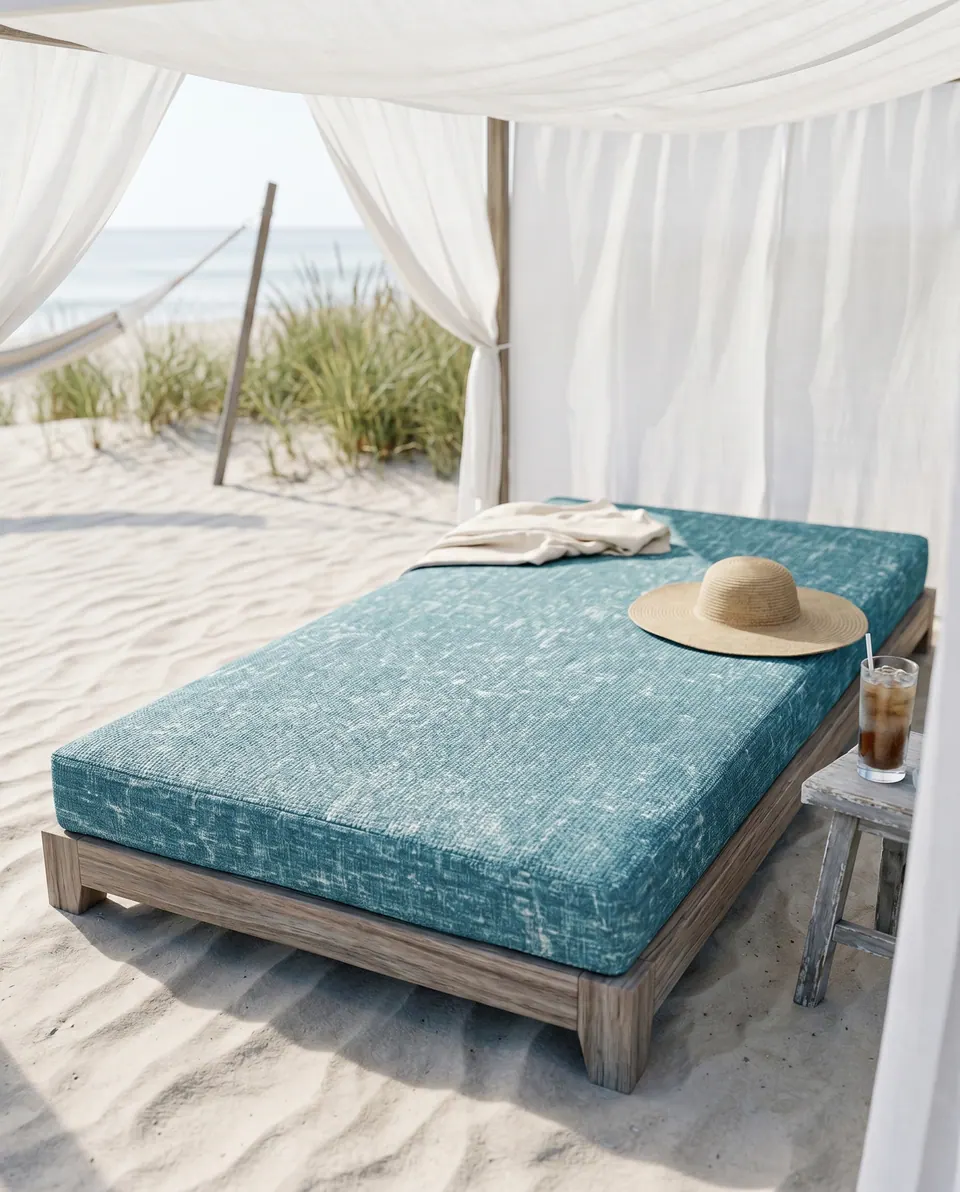
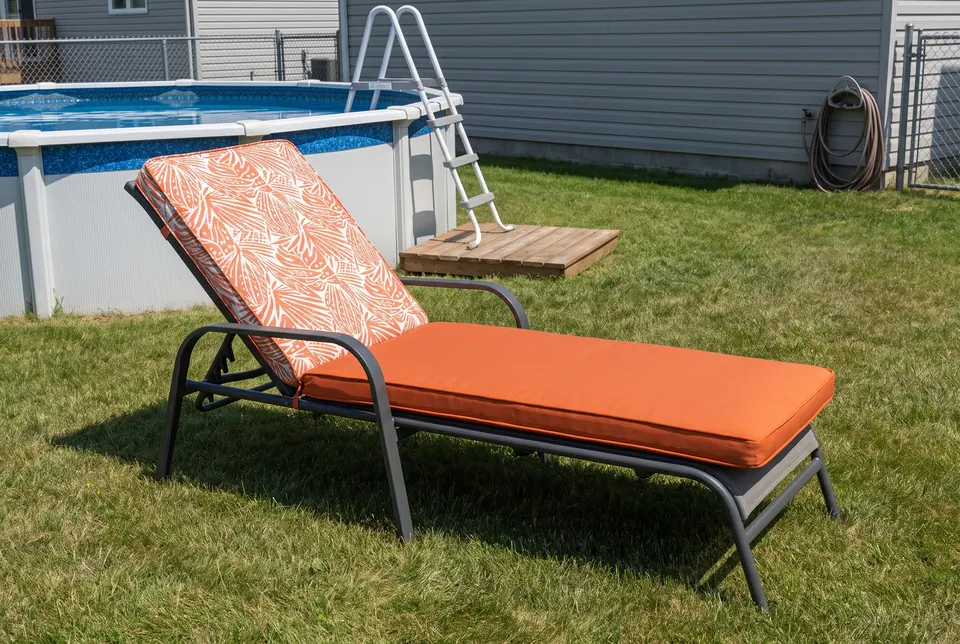
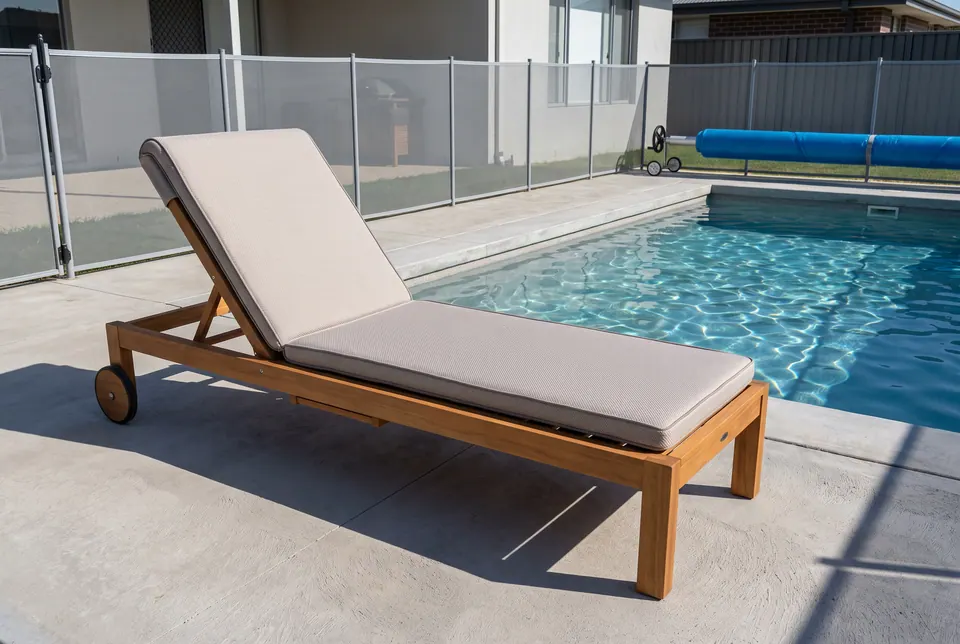
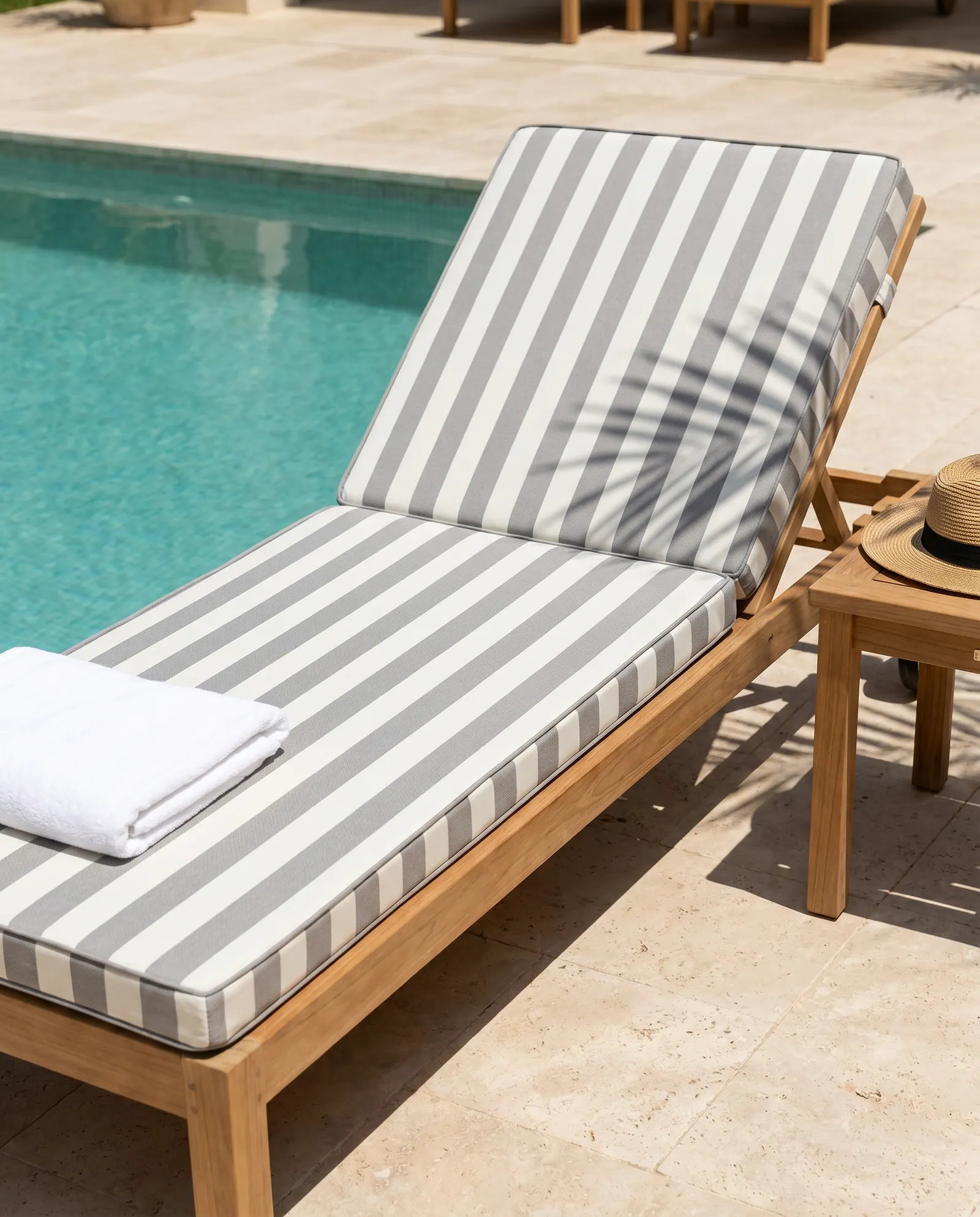
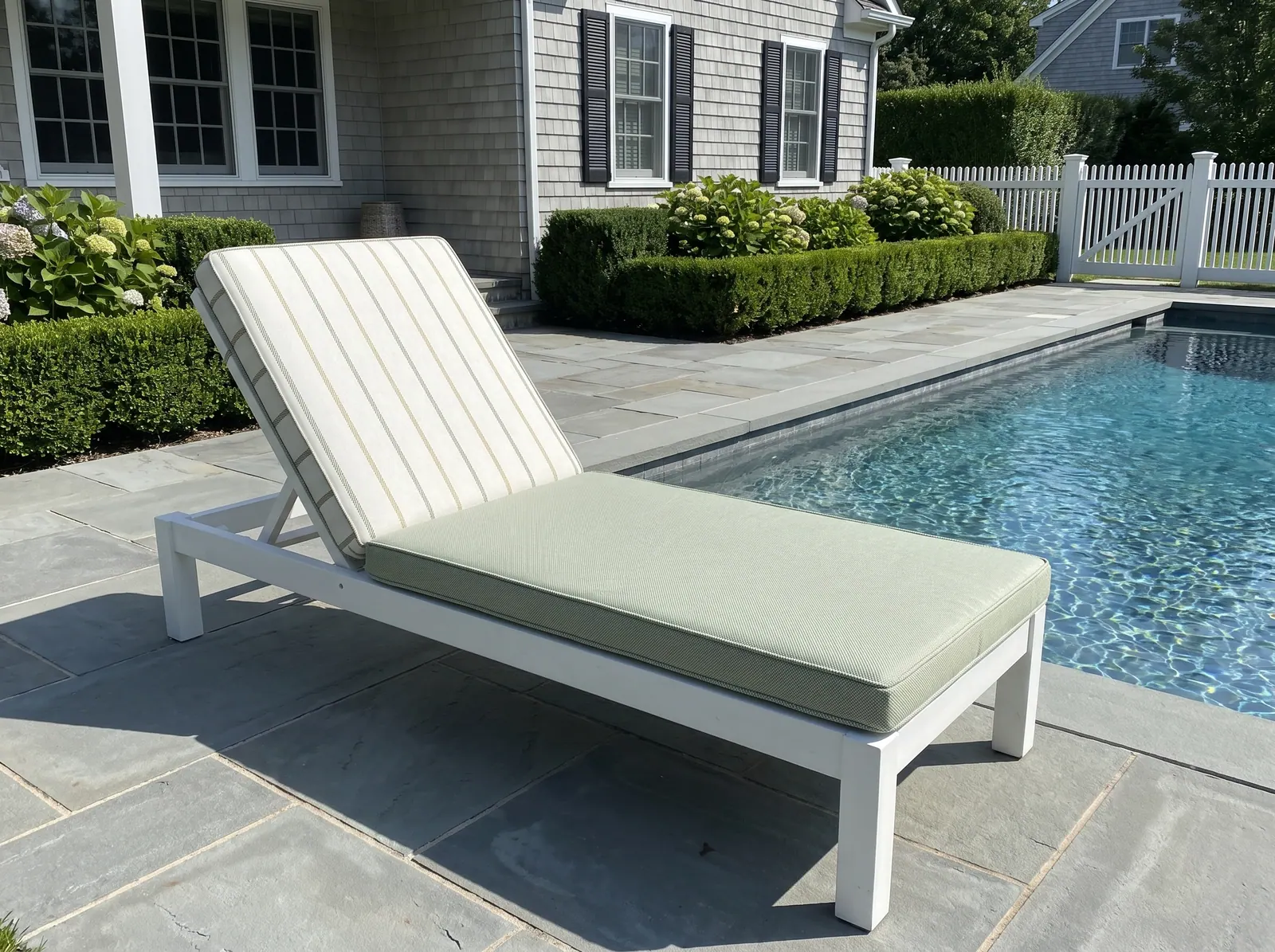
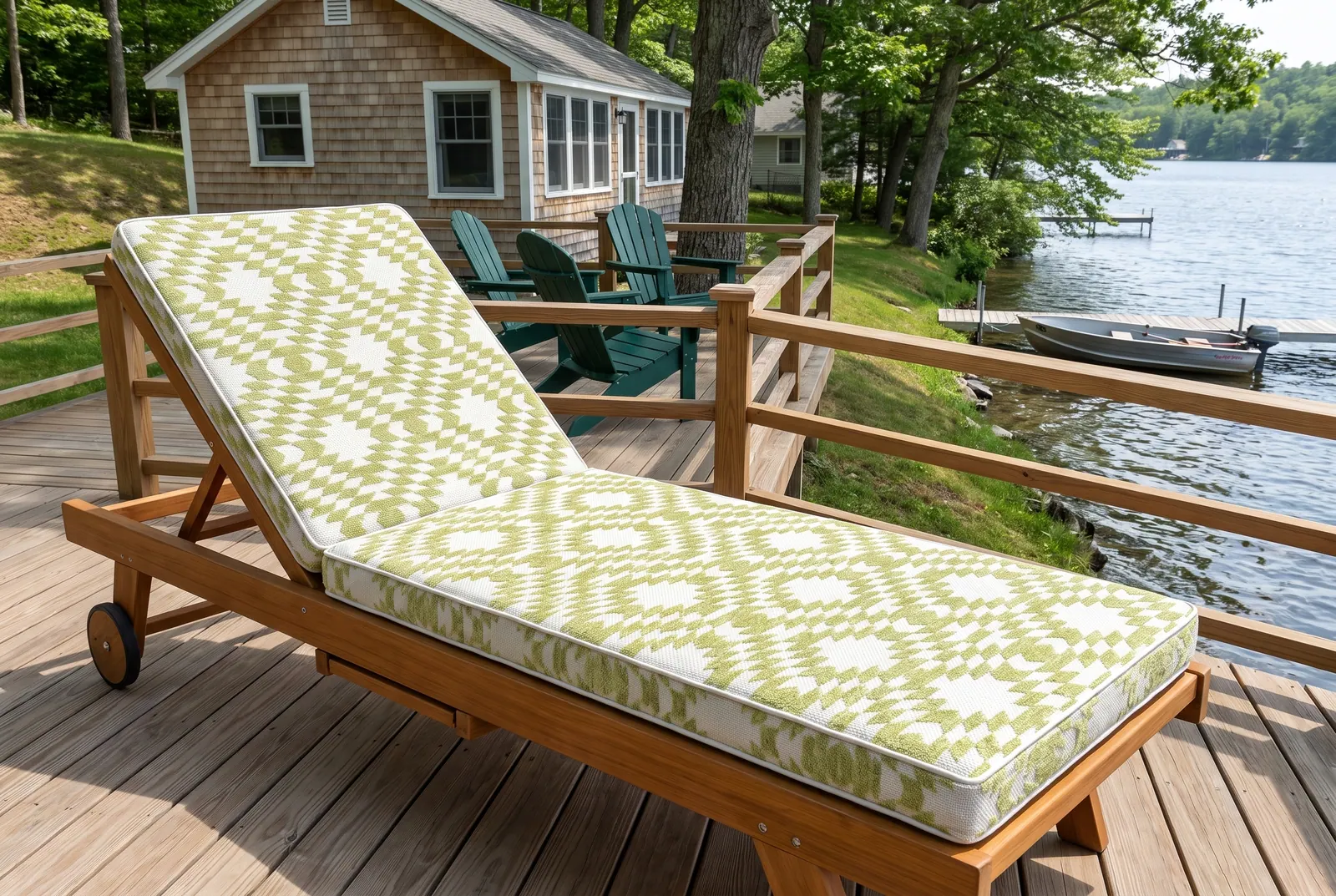
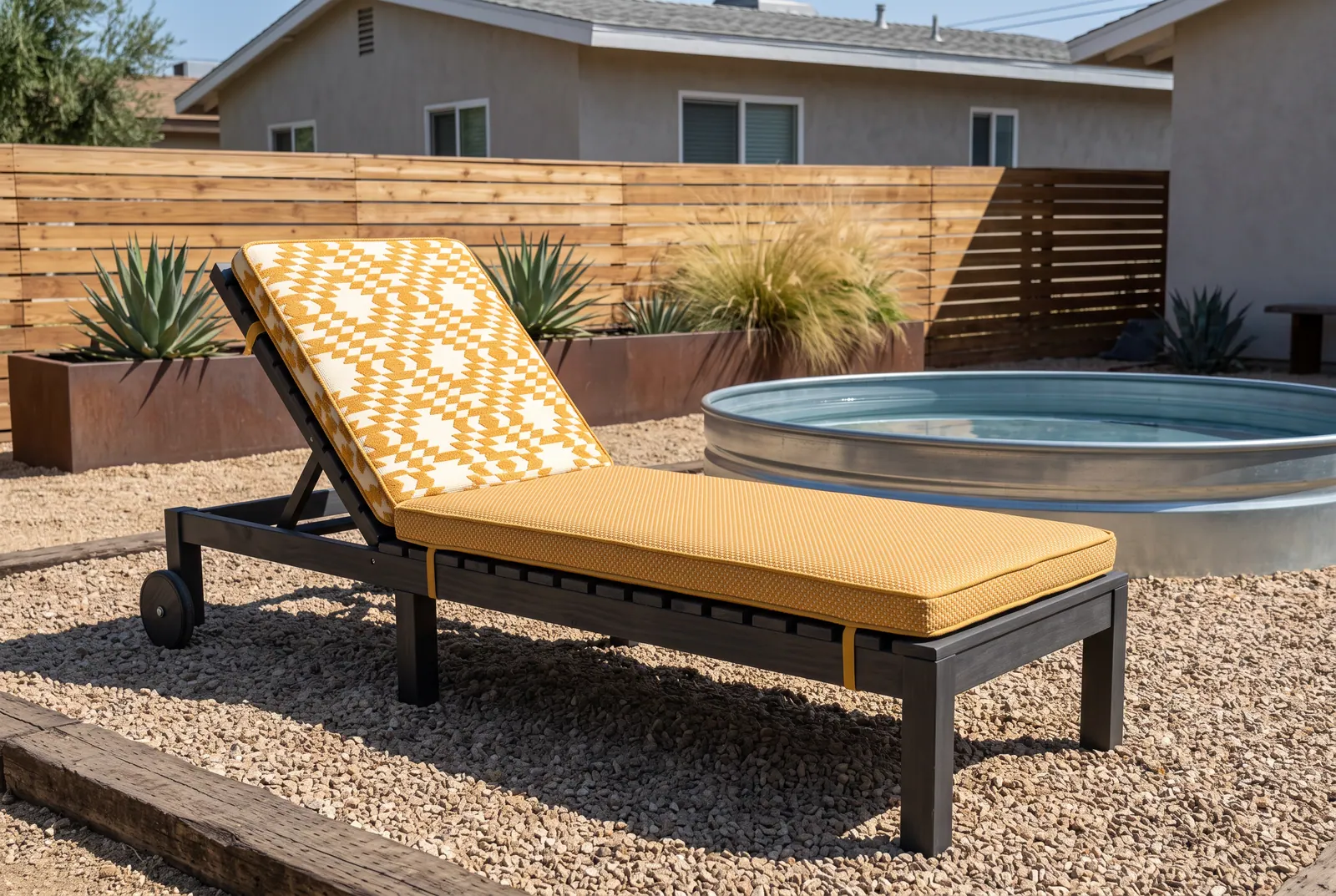
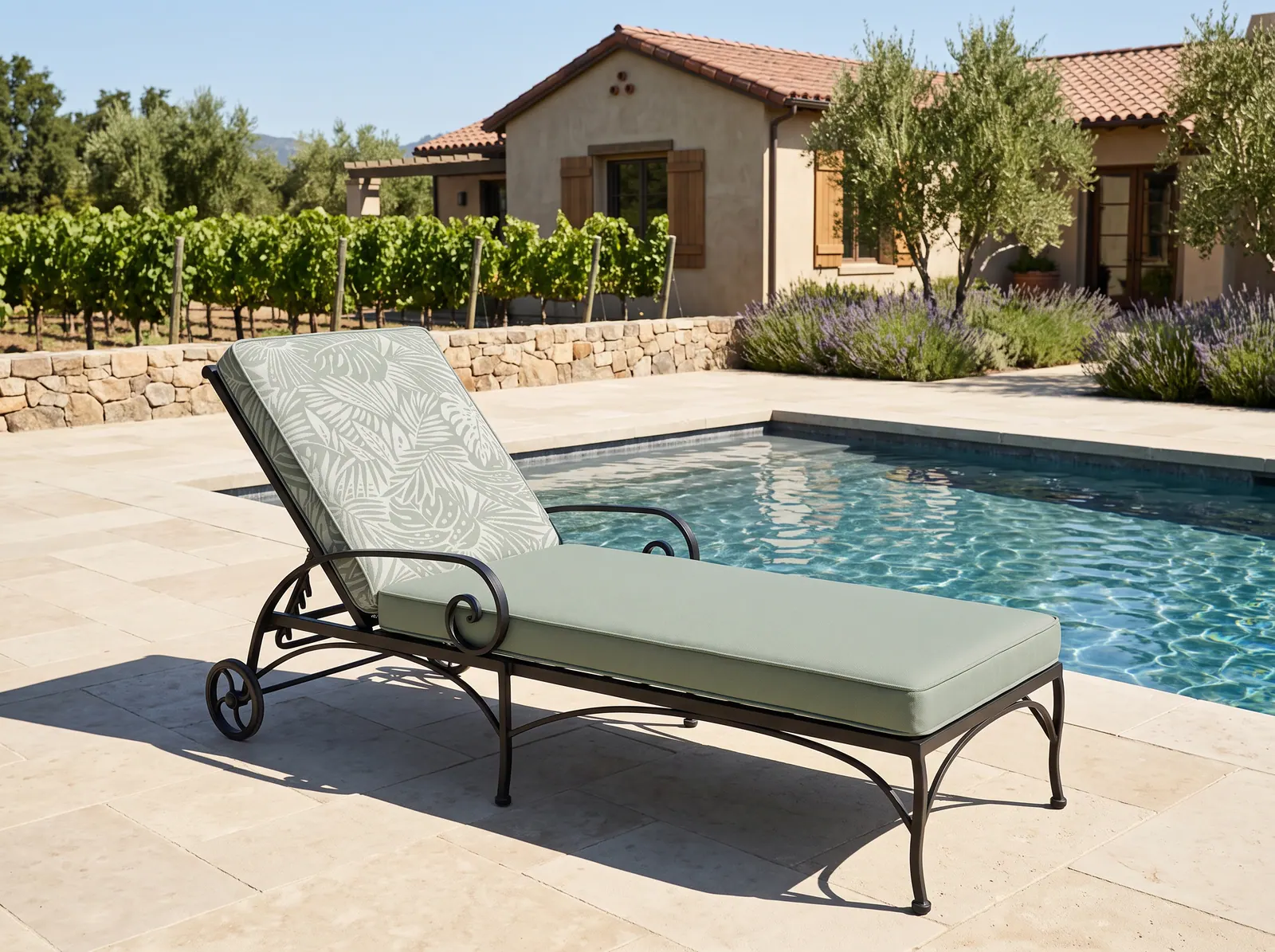
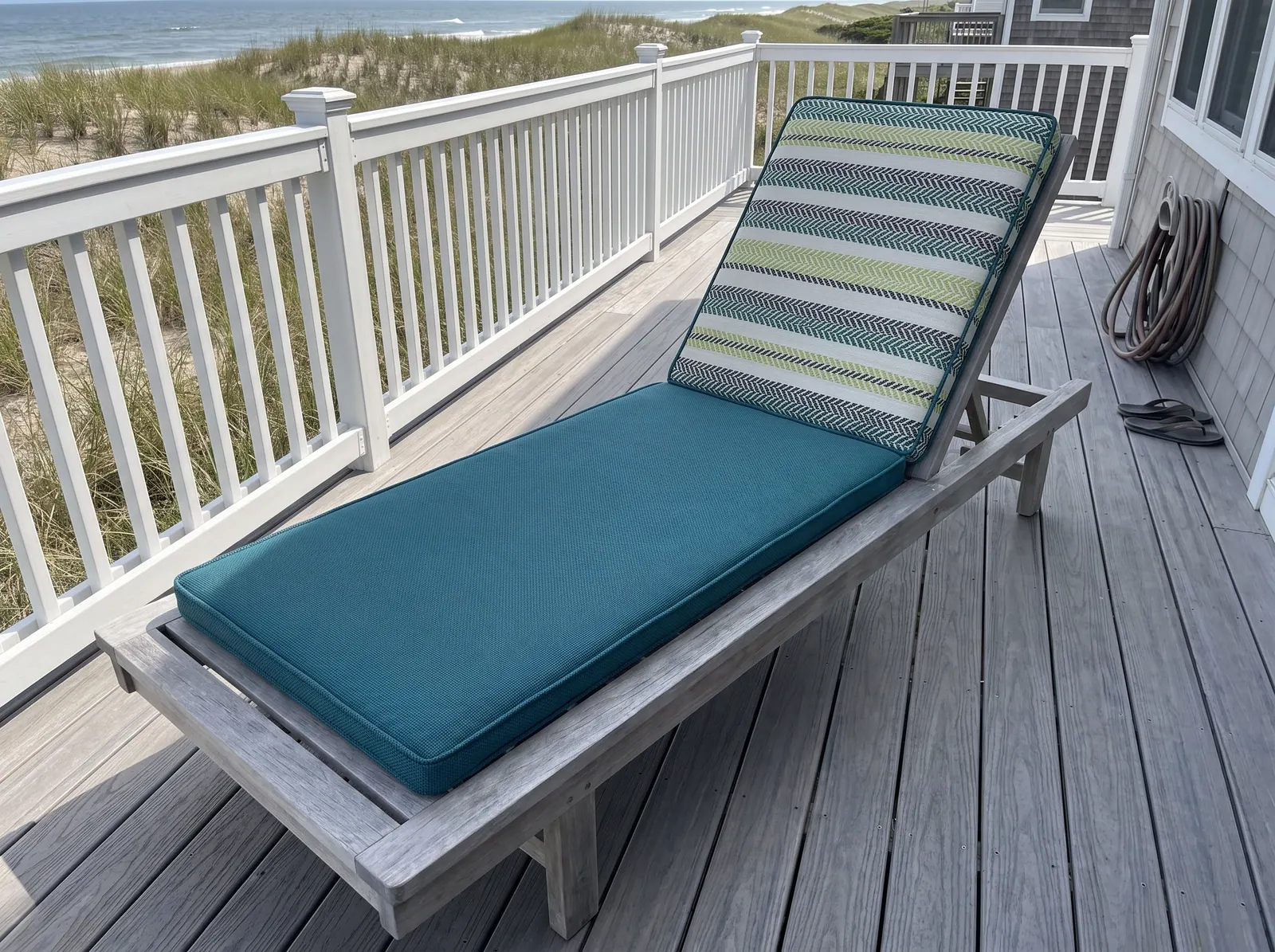
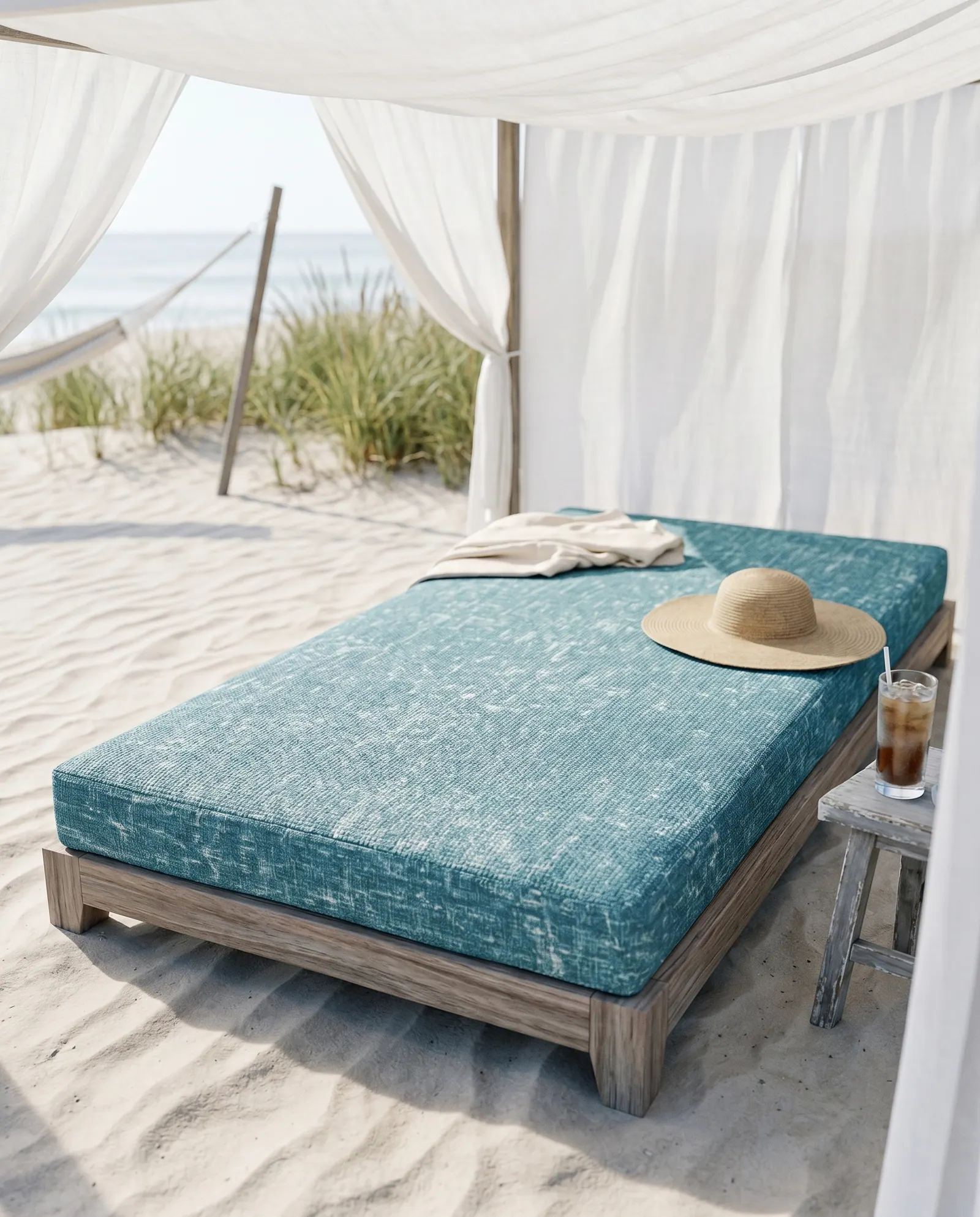
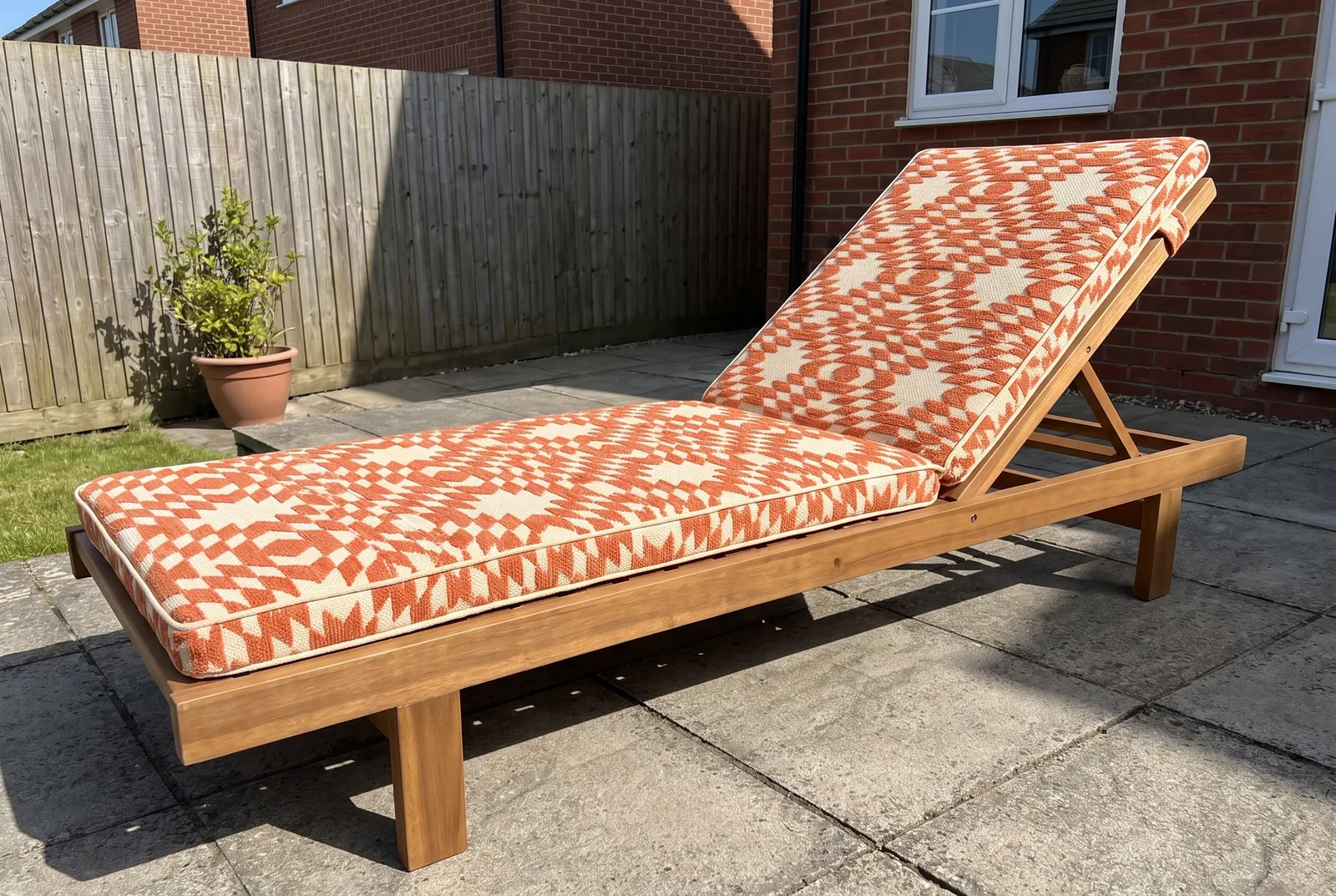
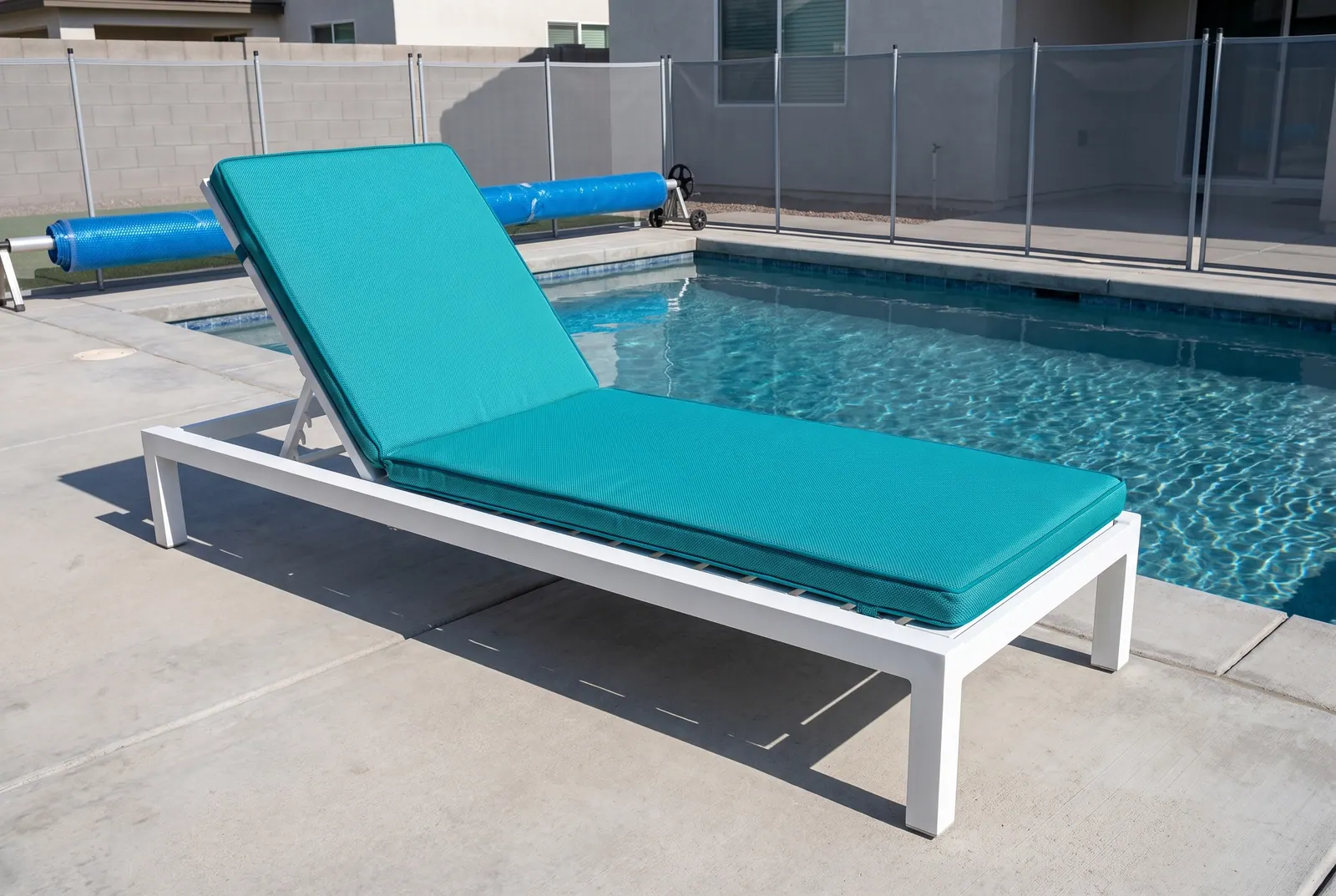
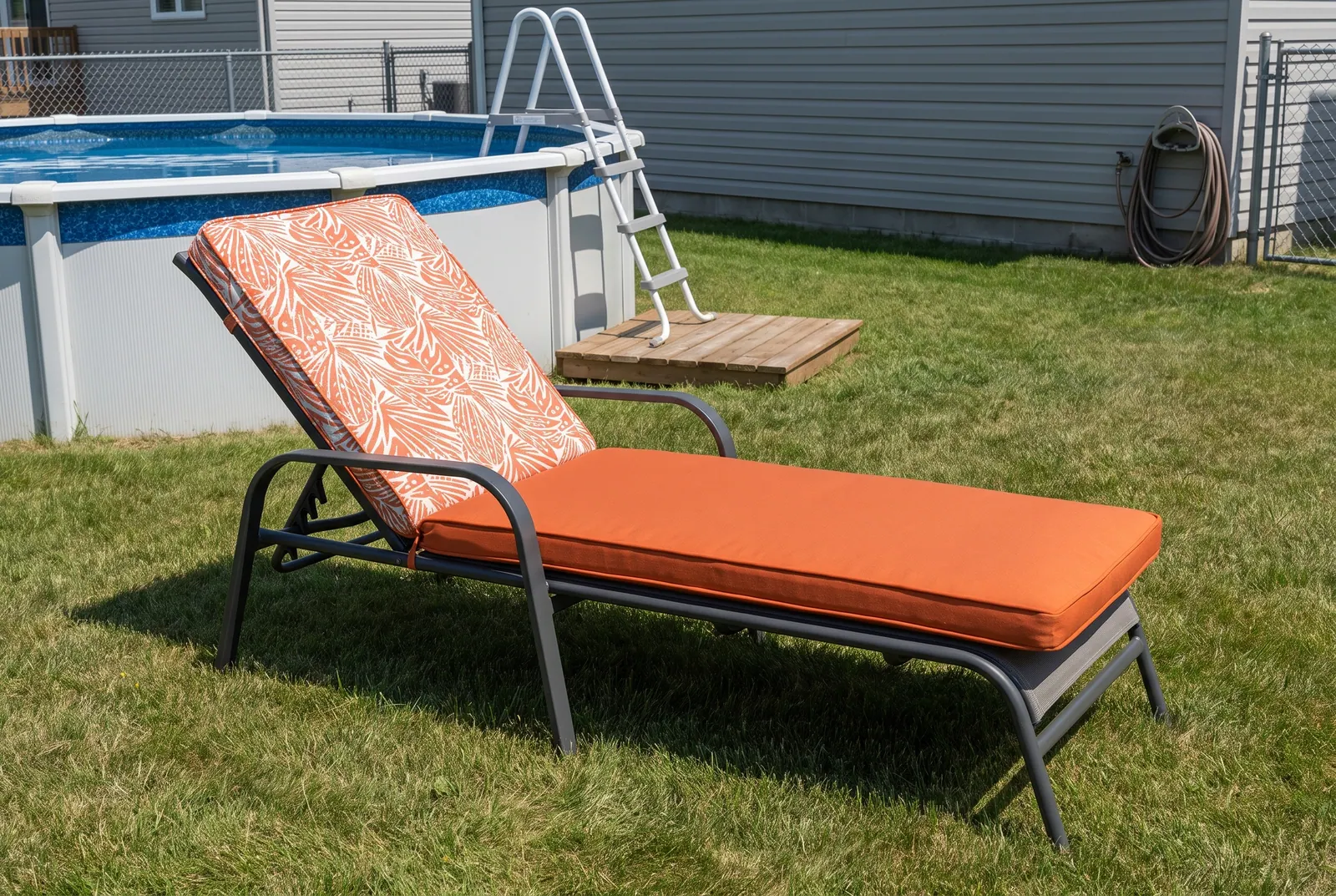
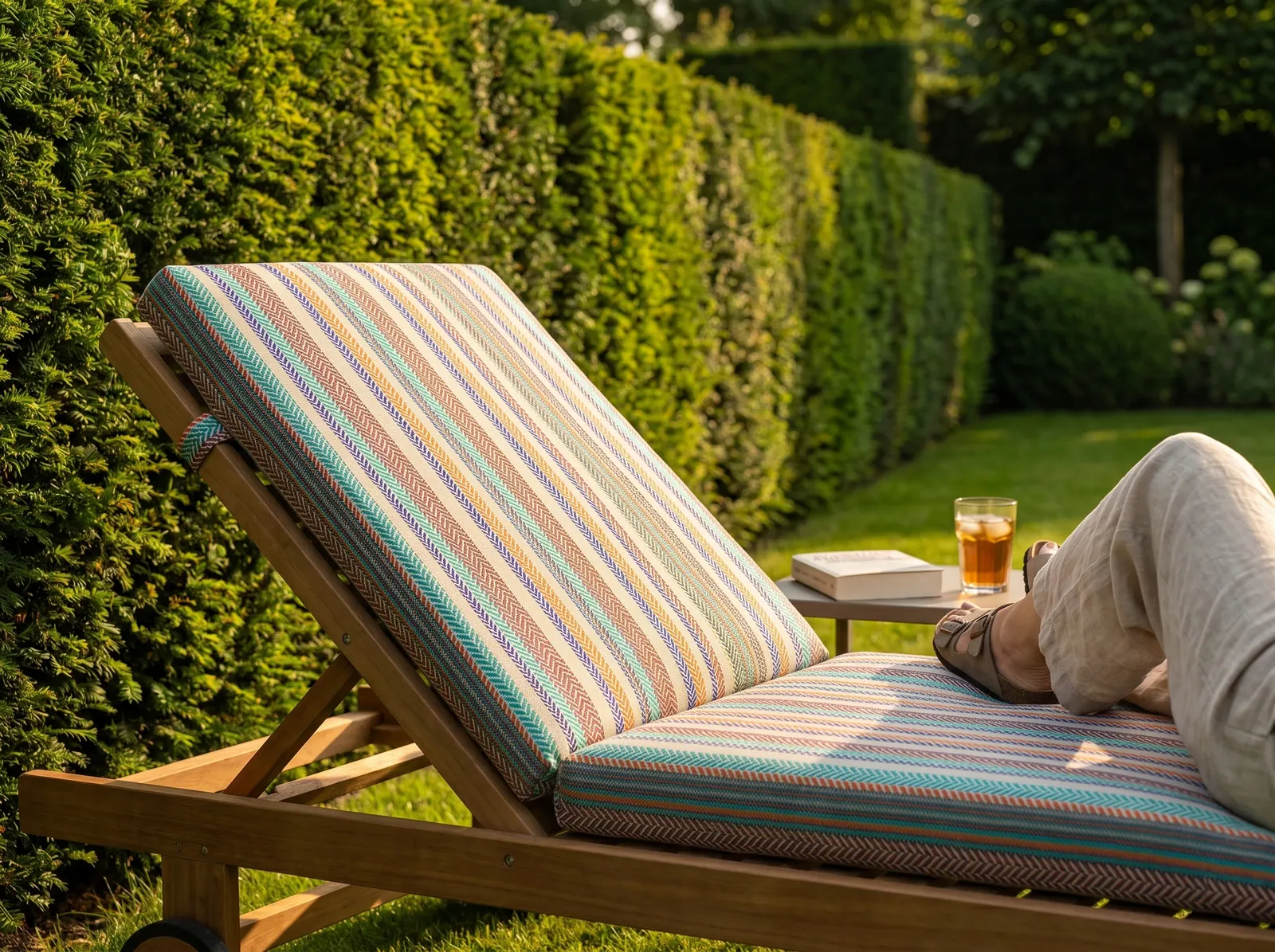
SaveA dove-gray stripe on a reclining teak lounger, styled with a rolled towel and a straw hat under palm shadows.SaveClipped boxwood, black shutters and a white picket gate give this two-fabric lounger a formal Hamptons backdrop.SaveA lake cottage deck with green chairs and a moored boat; the pistachio pattern keeps the lounger in the same fresh green family.SaveMustard picks up the dry grasses around a stock-tank pool, with a patterned backrest and a plain textured seat.SaveA leaf-print back and a plain sage seat make a two-fabric cushion for a wrought-iron chaise. Lavender, olives and vines behind share the same soft green.SaveOn a dune-top deck, the teal seat picks up the sea and the banded backrest brings in the greens of the grass.SaveA thick turquoise cushion on a low beach daybed, shaded by white voile with dune grass and sea beyond.SaveA warm kilim pattern brings holiday color to a plain paved garden between a timber fence and brick wall.SaveOne bright solid from head to foot, reading a shade deeper than the pool water beside it.SaveAn orange leaf-print back paired with a solid orange seat on a steel lounger beside an above-ground pool. The bright color lifts a gray frame and a gray house.SaveA colorful herringbone stripe cushion folds with the teak lounger, ready for a long afternoon with a book.
A sunbed cushion lies in full sun for months. Choose woven outdoor fabric that resists UV and fading, and add ties wherever wind reaches the deck.
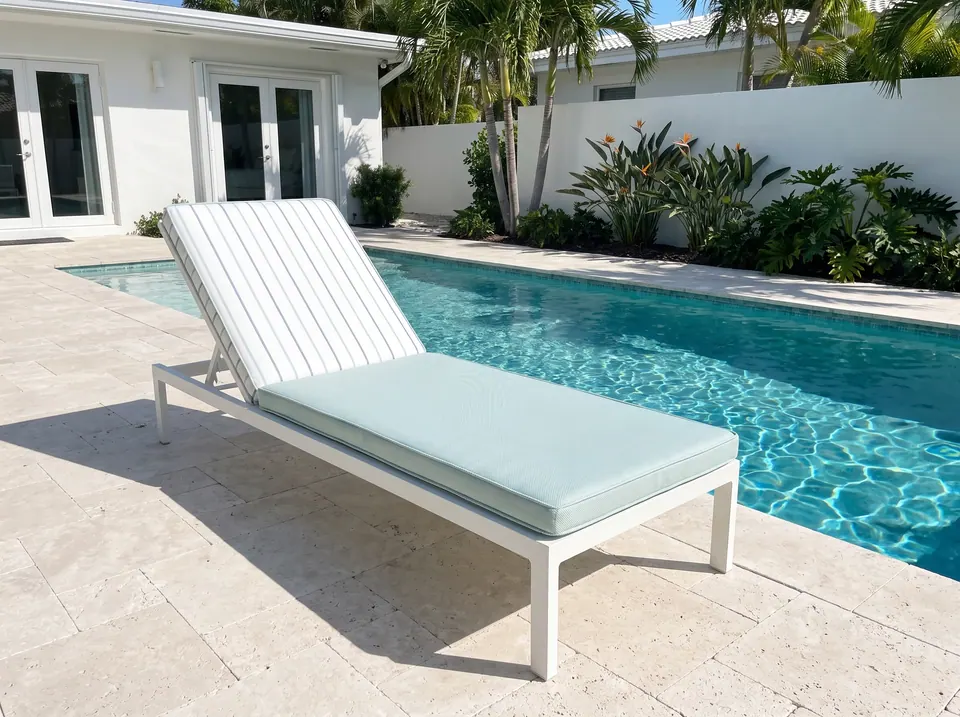
The photographs here keep making the same good choice: pattern on the back, solid on the seat. A mustard kilim back over a plain waffle seat. A chevron band over teal. A leaf print over a quiet sage. The seat takes the wear and the sun, and a solid hides both. The back is what people see from the house.
Stripes belong on loungers. A wide coral cabana stripe on rattan reads like a beach towel you never have to fold. Say which way the stripes run, for every piece.
Which outdoor fabrics can a lounger cushion be made in, and why are there several charts?
The workshop's answer
There is a separate outdoor range of close to 200 fabrics on four or five charts. All are water-, UV- and fade-resistant and meant to stay outside all summer, and they are soft woven fabrics, not vinyl. They come from the same factory at the same quality, so the charts differ only in texture, color tone and pattern. An outdoor order can include the foam, an anti-slip underside and piping in any color from the range, and close-up photos are available for any code.
A common question
My chaise has a rounded head. How do I measure the curve?
The workshop's answer
Curves are made, but never guessed from numbers alone. Either sketch the cushion with its total width and depth, the straight length of each edge before the curve begins, where each curve starts and ends, and its depth or radius; or lay wrapping paper on the seat, trace it, cut it out and photograph it flat beside a tape measure. The template method is best for tricky curves, with a separate drawing for each cushion.
A common question
The cushions came vacuum-packed and look flat and small. Is that right?
The workshop's answer
Yes, that is expected, not a wrong product. Unwrap every piece. Most fill out in 24-36 hours and reach the photographed shape in about 36-48 hours, with full firmness after 3-5 days and occasionally a week. Shaking them by hand helps the foam recover, and you can use them while they expand. If a piece is still flat after another 4-5 days, photograph it and send the photo to the workshop with your order details.
A common question
Can you hold my order so the cushions arrive after I move in?
The workshop's answer
Often, yes: order whenever you like and write 'please deliver on or after [date]' in the personalization box or order note, or send a message. Past orders were held, or production timed, to arrive as close to that date as possible, and some went straight to the new address. Transit times vary, so an exact day can't be promised. With UPS you can also reschedule or hold the delivery yourself, for example with Hold for Pickup.
A common question
One cushion arrived shorter than I ordered. Will you remake it?
The workshop's answer
Photograph it with a tape measure along the full side, the day it arrives, and send that to the workshop. In past cases where the error was the workshop's, only the parts that didn't fit were remade, the piping color could change on the new piece, and a partial refund was offered to buyers who kept it.
A common question
I ordered a lounger cushion by mistake. Can it be canceled?
The workshop's answer
Usually, yes, if you ask before production starts: accidental orders have been canceled and refunded, and the refund took a few days to show. The workshop usually asks why first, and if size or color is the problem it offers a custom size or color instead, or a later ship date.
Have it made
Have your sunbed cushion made — ask Callum’s workshop
Short list: size, sun hours, how fast it has to dry. The workshop goes through it with you. — Callum
Leave your details and the workshop will call you to confirm measurements, fabric, foam and piping. No prices, dates or payment on this page: it is a request, not an order.
Fabric · Foam · Pipingwhat the workshop will confirm with you
Should a chaise cushion be one piece, or a seat with a separate back?
Either can be made. A separate backrest is ordered as its own item at its own size, with 'backrest' written in the note. Two pieces let the back be softer or firmer than the seat, and let you put a pattern on the back and a solid on the seat.
How thick should a sunbed cushion be?
4 in (10 cm) is the standard for outdoor cushions and the thickness most buyers keep. 2 in (5 cm) is the thinnest standard foam; anything thinner can only be made without piping.
Can a lounger cushion stay outside all summer?
The outdoor range is made for it: water-, UV- and fade-resistant, and meant to stay out through the season. Water-resistant is not sealed, though. After a storm, stand the cushion on its edge to drain, and bring it in for the winter.
Will ties keep a sunbed cushion on the frame in wind?
Ties are sewn into the seams on request, at the corners or the back, in any position, to fix a cushion to its frame. They are never added unless you ask, so write how many, where and how long in the order note.
Can the backrest be as firm as the seat?
Yes. By default backrests are a little softer than seats, which suits lounging. If you sit up to read or eat on the lounger, ask for the back to be made as firm as the seat.
Do outdoor fabrics cost more than indoor ones?
Yes. The standard indoor charts share one price, while outdoor fabrics cost more. The difference buys a fabric that stands up to a summer of sun and showers.
Fair winds — Callum
Share this atlas entry
Readings
Photographs read by the masters: chaise lounge & sunbed cushions
Real cushions made for real rooms, each read for proportion, fabric and fit.
 Save
 Save
 Save
 Save
 Save
 Save
 Save
 Save
 Save
 Save
 Save
 Save