The Pattern Room · a side-by-side pattern
UV-resistant outdoor cushion fabric compared: solution-dyed acrylic, olefin, polyester
Two patio cushions can match in May and look a season apart by Labor Day. The difference is the fiber under the color, and the fiber is what you should shop for.
 Save
The quick answer
Solution-dyed acrylic holds color longest and feels softest, olefin resists stains by nature but feels rougher, and batch-dyed polyester costs least and fades soonest, all within a 1,000 to 2,000-plus hour UV class. The workshop's own outdoor range is woven polyester with a water-repellent, UV-resistant finish: real cloth, not plastic, and firmer than indoor upholstery.
Where the color lives decides how long it lasts
Sun is the slow storm. It doesn't soak a cushion in an afternoon; it bleaches it over a season, and the fiber decides how fast. When I cut canvas for lobster boats, we learned to buy cloth by what it was made of, not by what it was called. Outdoor cushion fabric works the same way.
Three fibers do most of the work on American patios. Solution-dyed acrylic gets its pigment before the fiber is ever spun: the color goes into the liquid polymer, so it runs through the whole cross-section the way grain runs through a plank. Olefin, or polypropylene, is solution-dyed too. Outdoor polyester is usually batch-dyed, which means the color goes onto finished fiber.
That shows in the fade tests. Solution-dyed acrylic often rates 7 to 8 for lightfastness, against 5 to 6 for most performance polyesters and olefins. Hour claims run from about 1,000 to 2,000-plus depending on fiber and test, so treat them as a class, and only compare two numbers measured under the same standard. More in the glossary on solution-dyed acrylic and olefin.
Acrylic, olefin and polyester, side by side
| Solution-dyed acrylic | Olefin | Outdoor polyester | |
|---|---|---|---|
| How it's colored | Pigment in the polymer, through the whole fiber | Pigment in the polymer, through the whole fiber | Usually batch-dyed: color added to finished fiber |
| Sun | 1,000 to 2,000-plus hour class; lightfastness often 7 to 8 | 2,000-plus hours claimed | About 1,000 hours, roughly one season, unless finished for UV |
| Stains | Leans on its finish; untreated, it stains easily | Resists stains by nature: no dye sites to grab them | Many dye sites, so it leans on its finish |
| Bleach for mildew | Yes, diluted | Yes | Only on codes the maker clears for it |
| Hand | Softest outdoor hand, though some find it scratchy | Rougher | Spun versions can look like cotton |
| Watch for | Pilling and fuzz | Low melting point; can snag or pill | Fading in hard, all-day sun |
| Price tier | Top | Similar to acrylic | Lowest |
Hour figures are published claims from different tests; they describe a class, not a guarantee.
Key facts
- Solution-dyed acrylic and olefin carry pigment through the whole fiber; outdoor polyester is usually batch-dyed.
- Outdoor UV claims sit in a 1,000 to 2,000-plus hour class; plain outdoor polyester is about 1,000 hours, roughly one season.
- The workshop's outdoor range is woven polyester with a water-repellent, UV-resistant finish, close to 200 colors from one mill at one quality.
- The outdoor fabric feels like real cloth, not a tarp, and is firmer and less velvety than indoor upholstery.
- Tufted cushions let water in even when they are made in outdoor fabric.

Have it made
Measured it? Have Callum’s workshop make it
Short list: size, sun hours, how fast it has to dry. The workshop goes through it with you. — Callum
Leave your details and the workshop will call you to confirm measurements, fabric, foam and piping. No prices, dates or payment on this page: it is a request, not an order.
What the workshop's outdoor range is made of
Straight answer, because a buyer in the US asked it straight: the workshop's outdoor fabrics are woven polyester with a water-repellent, UV-resistant finish. Not solution-dyed acrylic, and not the big-name acrylic people ask for by name.
The range runs close to 200 colors on four or five charts, all from one mill at one quality. The charts differ only in texture, tone and pattern. One buyer in the US hesitated between several blacks and was told plainly that every outdoor black is the same cloth. She ordered a 16 x 74 x 2 in (41 x 188 x 5 cm) bench cushion with a non-slip base, then came back for an identical one for her other bench.
UV rating and fabric weight vary by code, so the workshop shares both once you've picked one. Outdoor fabric costs a little more than indoor, and any piece, seat, back or bolster, can be made in it. Browse outdoor cushions, patio and porch cushions and the outdoor fabric family.
So before you fall for a color: where will the cushion live, under a roof or under open sky?
Does outdoor fabric feel like plastic?
No, friend. It's a fair worry if you've ever sat on a vinyl boat seat in July, but the outdoor range is woven cloth, not a coated sheet. It feels like proper fabric, not a tarp.
It is firmer than indoor upholstery, though. It won't feel velvety; think of a good sun-lounger cushion. Comfort feedback on it has been consistently good, and it works indoors too, as long as you remember it was built for weather first.
The plastic feel you remember comes from coated fabrics: PVC or polyurethane layers that make cloth truly waterproof and stop it breathing, so they turn sticky and sweaty in heat. Sling-chair mesh belongs to that family. The difference between shedding a shower and sealing out water is laid out in water-repellent vs waterproof cushions. If your seat sits under a solid roof, read indoor cushions on a covered porch first.
Stripes, whites and bleach: straight answers
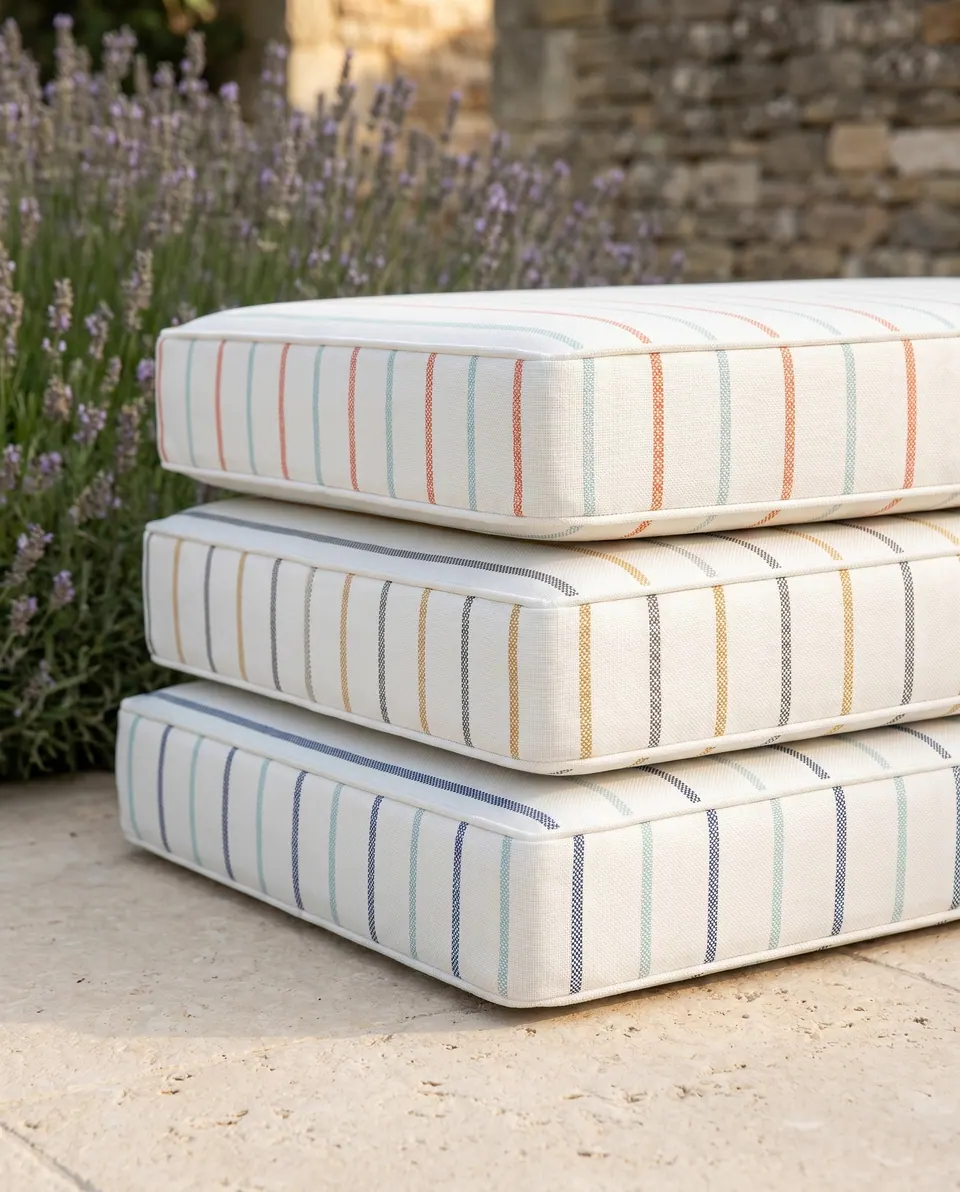
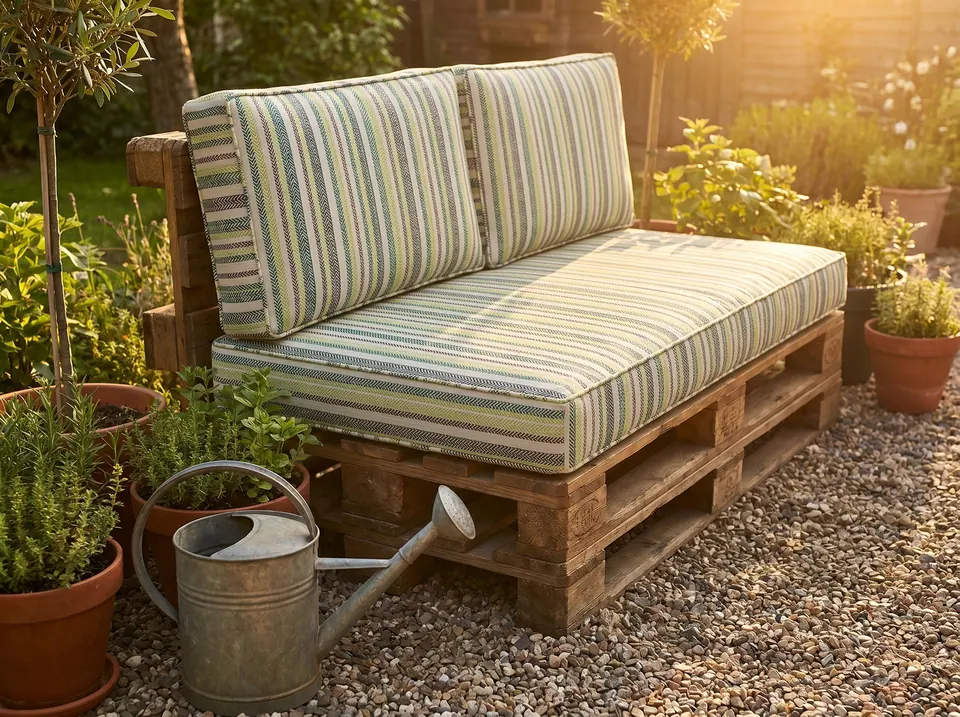
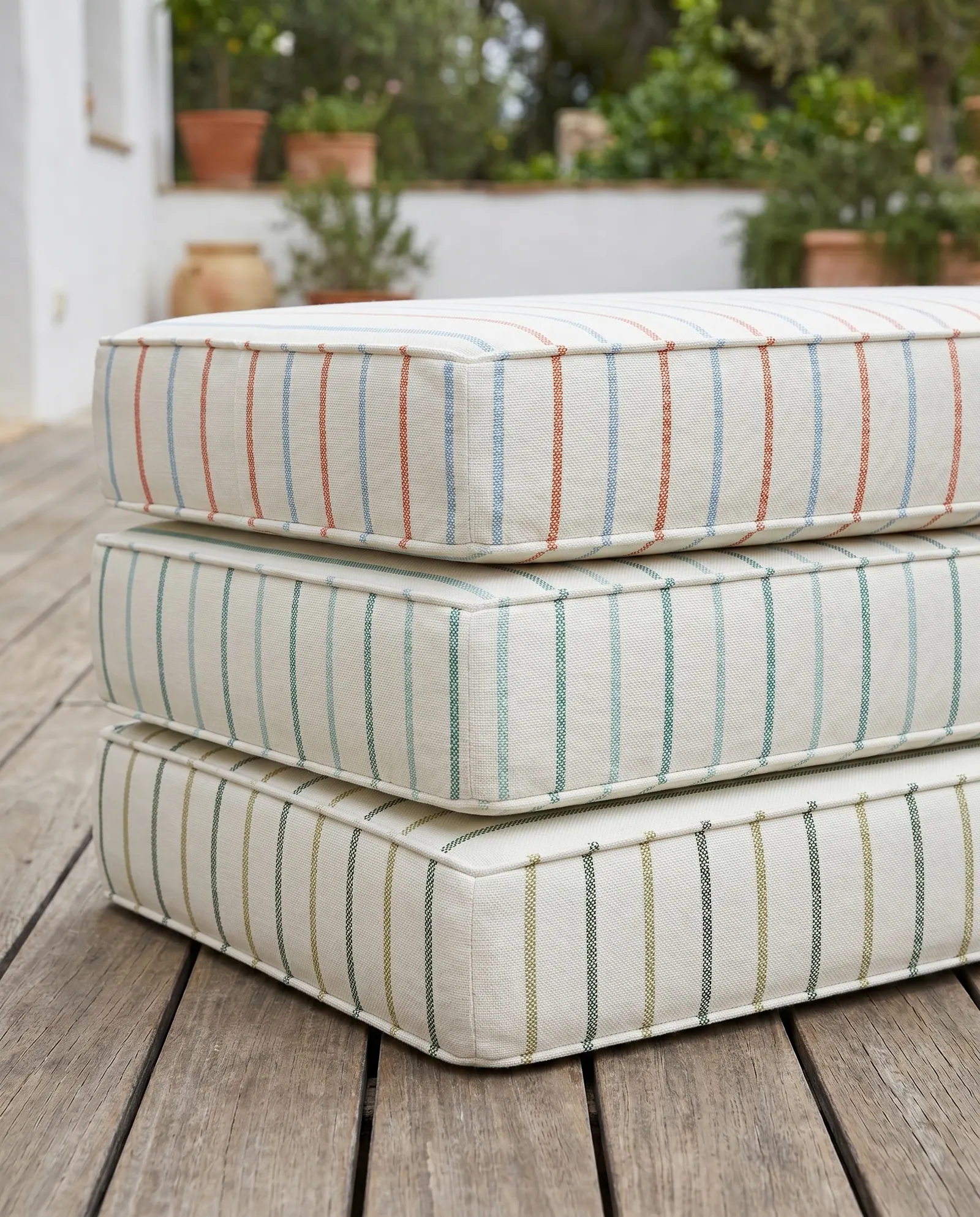
- Outdoor stripes exist. The outdoor charts carry water-repellent, UV-resistant stripes, so a striped outdoor cushion fabric is an ordinary order.
- The cotton stripes and the fine ticking are 100% cotton: indoor only, never for year-round patio use.
- For a plain, natural look outside, the outdoor linen-look fabrics come in natural tones.
- The fabric roll is about 55 in (140 cm) wide, so stripes on a long cushion run front to back unless you accept a seam.
- Every white and off-white outdoor fabric can be cleaned. If you plan to use chlorine bleach, ask which white codes the workshop names for it and pick one of those.
- Mildew grows on dirt left on the fabric, not on the fiber itself. Rinse off the grime and you've taken away its dinner.
- Acrylic makers publish a mildew mix of about 1 cup bleach and 1/4 cup mild soap per gallon of water, soaked about 15 minutes. Check your own code before you pour.
- Neutrals in the range run from off-white and ivory to oatmeal and warm light gray.
Off-white sofa covers, answered by fiber
A buyer in the US wrote in with existing outdoor sofa foam and a clear list: a boxed, zippered seat cover of 64.75 x 31 x 4 in (164.5 x 78.7 x 10 cm), three back covers, and a big-name acrylic in off-white, ivory or oatmeal.
The workshop didn't pretend. It doesn't carry that brand. It explained what it does use, polyester with water-repellent, UV-resistant finishes, and how it builds: self-piping to reinforce the edges, double-stitched seams, hidden zippers, and ties rather than hook-and-loop. Then it asked for photos of the sofa and the back cushion sizes before quoting.
Another buyer in the US asked for the same brand in taupe for ten 3 in booth cushions in a bright coastal-style home, and got the same honest answer, with taupes and creams from the workshop's own charts.
The lesson I'd tack to the shed door: if you're replacing covers only, send the foam's exact size and ask what the fabric is made of. A brand name tells you who sold it. The fiber tells you how it will age.
Common mistakes with outdoor fabric
- Indoor fabric where rain can reach. A closed roof with no rain or direct sun can take regular fabric; a screened porch full of pollen, dust and humidity should get outdoor fabric.
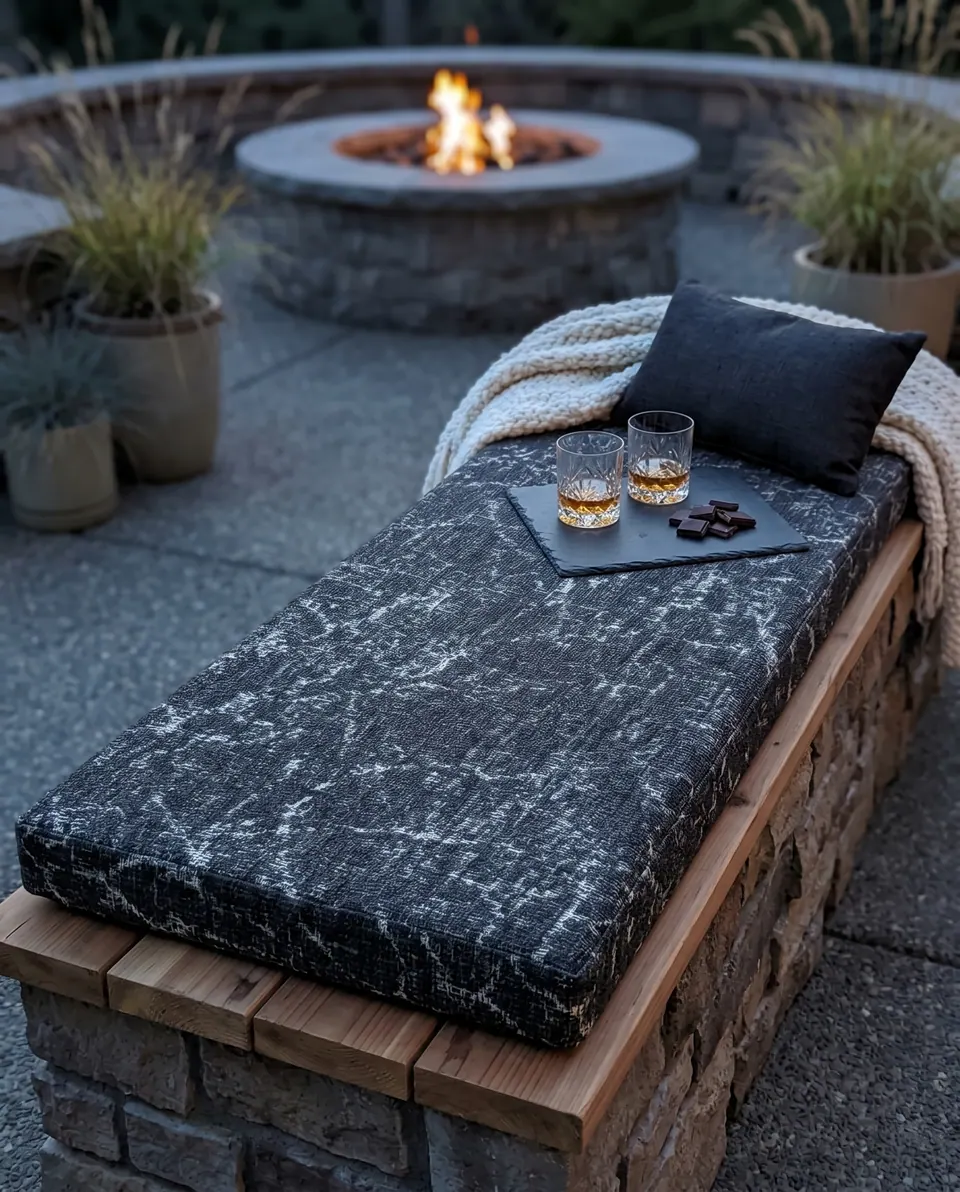
- Tufting by the pool or the fire pit. Water gets in around every button, even in outdoor fabric; choose a non-tufted, foam-filled cushion there.
- Leaving standard foam out all winter. It isn't quick-dry foam and there's no mesh bottom as standard. Ordinary foam takes 24 to 48 hours to dry, reticulated foam 1 to 3, so store the cushions for the off-season.
- Typing ties or a non-slip base into the size box. Ask for them in writing, with the tie positions, and check the pre-dispatch photo.
- Shopping by brand name. Ask for the fiber, the finish and the UV rating of the actual fabric code.
Outdoor cushion fabric sheds a summer shower, but the standard foam inside still needs 24 to 48 hours to dry. Bring the cushions in before a wet week.
Callum Reid
Buyer questions: what buyers ask about outdoor fabric
- A common question
Is your outdoor fabric solution-dyed acrylic, olefin or polyester?
The workshop's answerPolyester-based, with a water-repellent, UV-resistant finish. It isn't solution-dyed acrylic and it isn't the big-name acrylic brand. The finish helps it resist fading and clean easily. Neutrals include off-white, ivory, oatmeal and warm light gray. UV rating and fabric weight vary by code, so the workshop shares those specs once you pick one. Outdoor fabric costs a little more than indoor.
- A common question
Will the outdoor fabric feel plasticky, or soft like my indoor cushions?
The workshop's answerIt isn't plasticky. These aren't the coated, plastic kind of outdoor fabric; they feel like proper cloth, not a tarp. They are less soft than indoor upholstery and won't feel velvety; the texture is closer to a good sun-lounger cushion. Comfort feedback has been consistently positive, and the fabric is built for outdoor durability first, which is worth knowing if you plan to use it indoors every day.
- A common question
Which of the white outdoor fabrics can I clean with bleach?
The workshop's answerAll the white and off-white outdoor fabrics can be cleaned. For stubborn stains the workshop names a few specific white codes as the right ones for chlorine bleach, so if you expect to bleach-clean, ask for those codes and choose one of them when you order.
- A common question
Do you have a striped fabric that can live outdoors?
The workshop's answerYes. The outdoor charts include water-repellent, UV-resistant stripes. The cotton stripe series and the fine ticking stripe are 100% cotton, so they are indoor only, and that series has no two-color outdoor versions. For a plain, natural look, the outdoor linen-look fabrics come in natural tones. If a stripe in a listing photo isn't on the chart, the workshop sends a photo to confirm and uses exactly that fabric.
- A common question
Will regular indoor cushions be okay on a covered porch?
The workshop's answerYes, under a closed roof where rain and direct sun don't reach, regular fabrics such as linen, velvet and the soft standard fabrics are fine, though they aren't waterproof. The workshop checks that the spot really is covered before recommending them. For a screened porch exposed to pollen, dust and humidity, or anywhere open-air, choose outdoor fabric; samples can be sent first, and seats, backrests and bolsters can all be made in it.
- A common question
Can I leave outdoor cushions out in rain and snow all year?
The workshop's answerThey handle sun and rain showers, and the covers zip off fully for washing. But the standard foam isn't a quick-dry outdoor foam and there's no fast-drying mesh bottom as standard, so in a climate with very hot summers and snowy winters the workshop says plainly they aren't the product to leave uncovered in rain and snow. Keep them on a covered porch, or store them indoors over winter.
Outdoor fabric questions, answered short
Is solution-dyed acrylic worth paying more for?
Where cushions face hard sun all day, often yes. The color runs through the fiber, lightfastness commonly rates 7 to 8 against 5 to 6 for most performance polyesters and olefins, and it takes diluted bleach. It still relies on a finish against stains and can pill or fuzz.
What does a UV rating in hours actually measure?
It is how long a fabric sits under test light before its color shifts by a set step. Outdoor claims run from about 1,000 hours, roughly one season for plain polyester, to 2,000-plus. Compare two ratings only when both came from the same test standard.
Is olefin a good choice for outdoor cushions?
For stains, yes. Olefin has no dye sites, so stain resistance is built in rather than added as a finish, and it is solution-dyed with 2,000-plus hour UV claims. The trade-offs are a rougher hand, a tendency to snag or pill, and a low melting point, so keep it clear of grills and fire pits.
Can outdoor fabric be used for indoor cushions?
Yes, the workshop's outdoor range works indoors as well. Expect a firmer, less velvety hand than indoor upholstery, closer to a good sun-lounger cushion, because the cloth is designed for durability first. Order samples if the cushion will be sat on every day.
Does water-repellent fabric keep the foam inside dry?
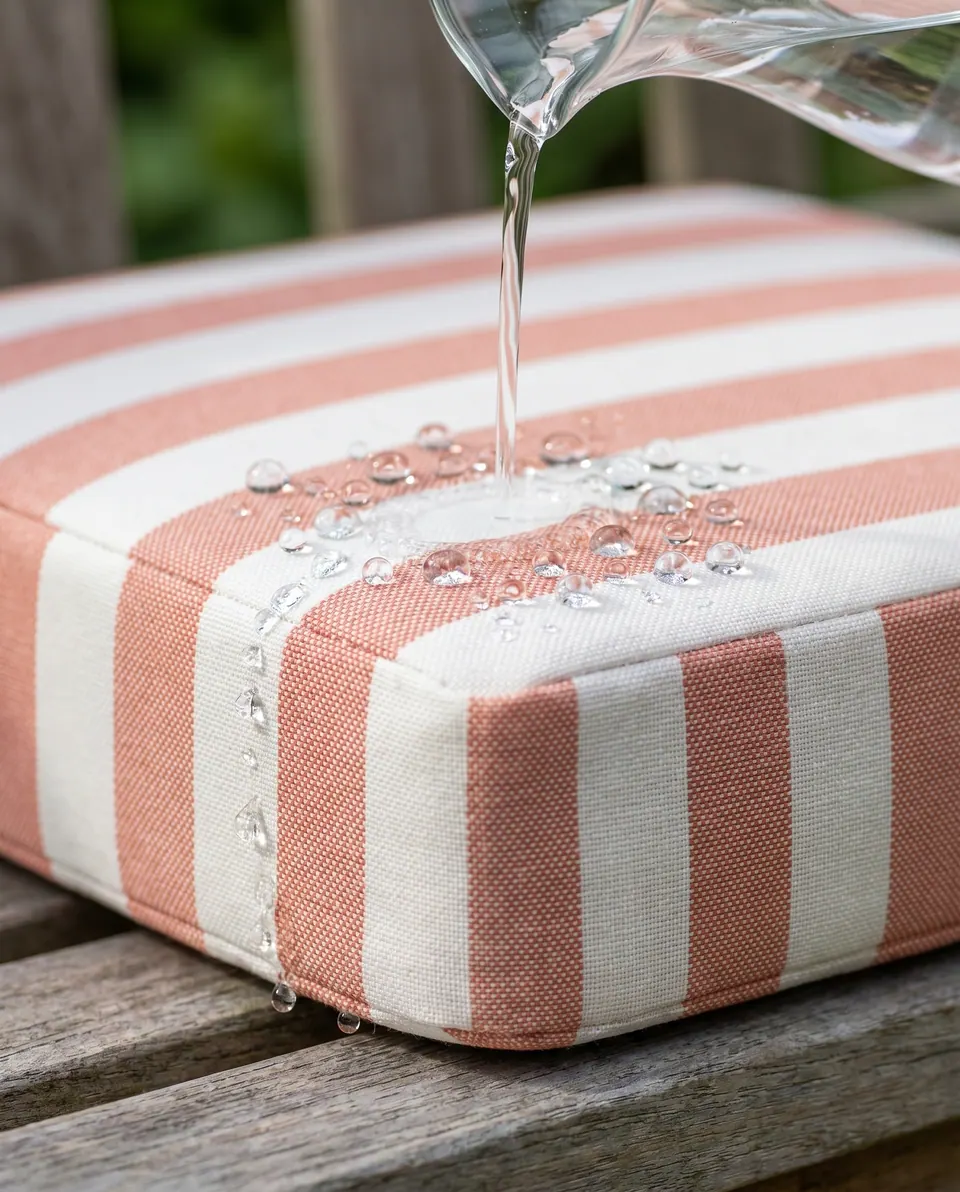
Not entirely. Water finds its way through needle holes in the seams, the zipper and the dips around any buttons. Water-repellent fabric sheds showers; a truly waterproof fabric needs a coating or membrane, and that coating stops the cloth breathing.
Which outdoor cushion colors hold up best in strong sun?
Earth tones, navy and deep green are named among the most stable outdoors, while bright reds, oranges and electric blues fade first. One outdoor guide suggests choosing fabric rated 4 or higher on the 1-to-8 Blue Wool lightfastness scale. If you love a bright color, keep it for pillows you can bring inside and use a steadier shade on the seat.
How long does outdoor polyester last compared with acrylic?
Usually less in full sun. Fabric makers rate outdoor polyester at roughly 1,000 hours of lightfastness against 2,000 or more for solution-dyed acrylic, and one comparison says polyester can show fading within 12 to 24 months of exposure. The workshop's outdoor range is polyester with a UV-resistant finish, so shade, covers and winter storage make a real difference.