Concept Sketches · 8 scenes
Vintage campers and RVs: dinettes, bunks and avocado green
A camper is a small boat on wheels: tight corners, lids that lift, every inch spoken for. Eight rigs and benches from past orders, each with its measurements.

 Save
The quick answer
Vintage camper cushions are made piece by piece from a template or drawing of every cushion, because the dinettes, bunks and benches in an old rig rarely match a catalog size. Check bunk headroom before choosing thickness, use a non-slip base or hinge-side ties on lift-up lids, and compare body and piping swatches side by side for retro colors like avocado and harvest gold.
A camper is a small boat on wheels
I cut canvas for boats long before I cut a camper cushion. The two jobs are closer than you'd think.
Both are small rooms that move. Seats turn into beds, lids hide the gear, and nothing in an old rig is quite square. So vintage camper cushions start with a template, not a catalog size: one drawing per piece, every piece labeled.
Camper and RV questions circle four things. Color. Shape. Headroom. Slide. The eight rigs and benches below are past projects, measurements kept. The boat and RV cushions hub has the full range, and the RV dinette Pattern covers the measuring. Converting a van instead? See van and skoolie cushions.
So tell me, friend: how many pieces does your dinette break into?
Eight rigs and benches, measured
01A past project
Avocado green, judged beside harvest gold
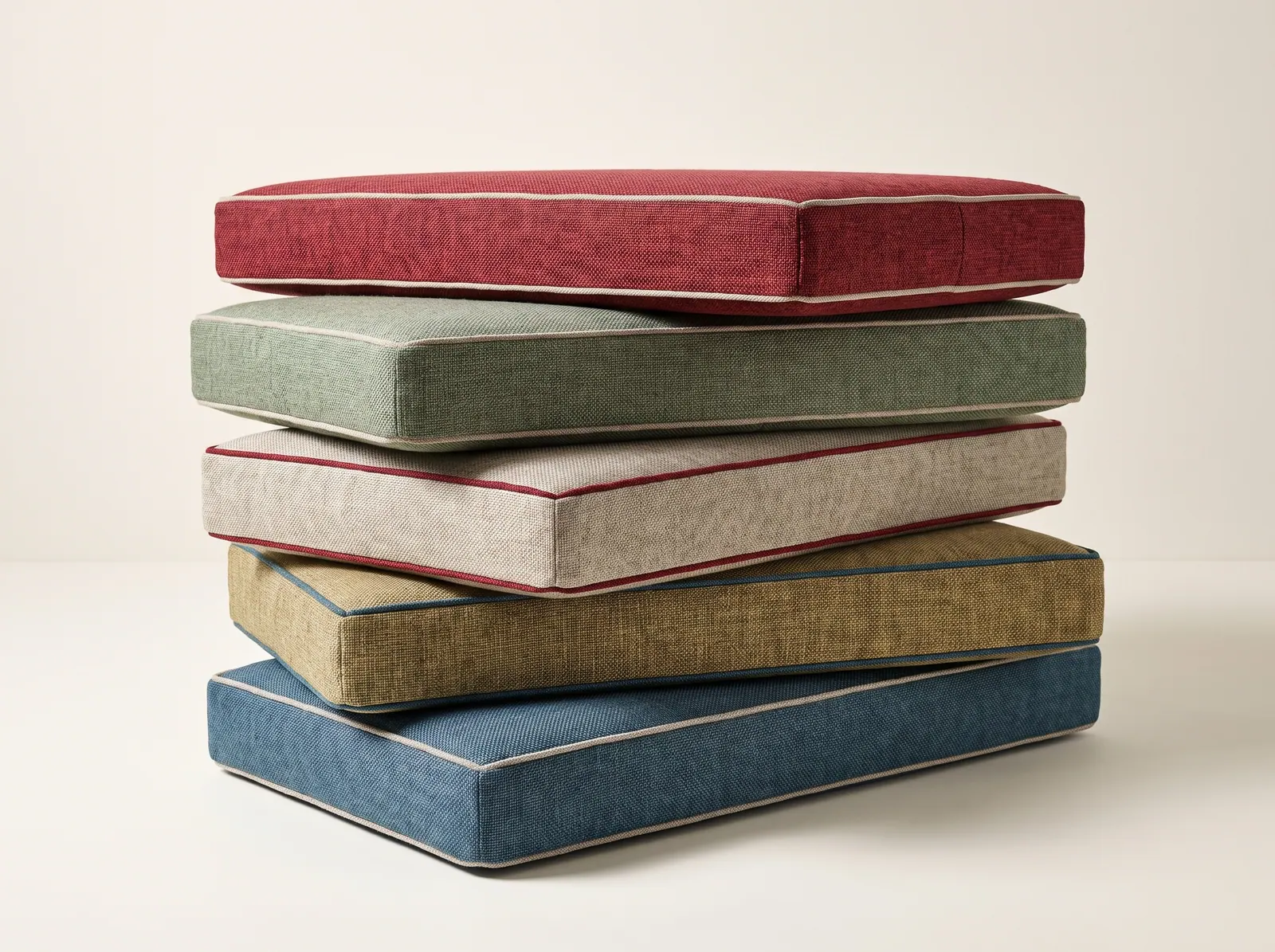
A buyer wrote to the workshop wanting avocado green for a vintage camper dinette and couldn't judge the color from photos. The workshop pointed to an olive green velvet and two harvest-gold piping options, and sent the swatches photographed side by side. The buyer picked the more mustard of the two, then asked to see a finished cushion in that piping before confirming. The workshop sent one.
The takeaway: Judge a retro palette as a pair: body and piping in one photo, then a finished cushion if you can get it.
02A past project
Six bench cushions, one template
A buyer messaged the workshop needing new covers for the six bench cushions in a mini camper trailer. The workshop confirmed it makes camper covers, and the buyer sent one template showing every cushion's shape and size for the quote.
The takeaway: Trace or draw every piece, label each one, and send them together. A set quoted as a set fits as a set.
03A past project
A U-shaped dinette, sized piece by piece
U-shaped dinettes come up regularly, from vintage trailers to vans. One was built from a long 65 x 17.5 in (165 x 44 cm) seat, two 17.5 x 24.5 in (44 x 62 cm) side seats and a 65 in (165 cm) back cushion 4 in (10 cm) deep. Each piece was sized on its own.
The takeaway: Send a drawing with every run of the U, the depth, the thickness you want and a photo of the space. Seats can go 8 in (20 cm) thick or more.
04A past project
A 12 in top bunk and the ceiling above it
A buyer in the US wanted two 71 x 28 in (180 x 71 cm) cushions for a camper's top bunk, in beige linen-look fabric or gray velvet. The workshop sent the velvet chart with its beige and dark beige, and pointed out that the cushion in the picture the buyer liked was 12 in (30 cm) thick. The buyer kept the 12 in.
The takeaway: Before you fall for a thick cushion, measure from the bunk platform to the ceiling. Every inch of foam comes out of the headroom.
05A past project
A lift-up RV bench that keeps its cushion
A buyer wrote in about an RV bench cushion, 28.75 x 17 in (73 x 43 cm), sitting on a lid that lifts for storage. Instead of a strap, the buyer went with a non-slip base, and cream piping around the edge.
The takeaway: A non-slip base is the whole bottom panel sewn in grippy fabric. It holds when you sit and lean; it won't hold a cushion on a lid tipped open.
06A past project
Backrests shorter than their seats
A buyer wrote to the workshop fitting out a campervan with two seats: one about 22.8 x 24 in (58 x 61 cm) with a 22.8 in (58 cm) backrest, and one 47.2 x 23.6 in (120 x 60 cm) whose backrest was only 36.6 in (93 cm) long. The backrest sizes went into the personalization box, and the buyer was pointed to three linens: cream-beige, greige and a warmer beige.
The takeaway: Give each backrest its own length. It doesn't have to match the seat under it.
07A past project
A thinner back that wins back seat depth
A couple converting a van re-measured their bench base at about 52 x 17.3 in (132 x 44 cm). They kept the standard 4 in (10 cm) seat and chose a 2 in (5 cm) back cushion about 49 x 8.7 in (124.5 x 22 cm), both in burnt orange.
The takeaway: Choose the seat thickness first, then the back. In a van, a thinner backrest saves seat depth.
08A past project
Ties on the hinge side only
A buyer in the US wanted a tie-on cushion for a family cedar chest, but ties wouldn't work with the hinges. The cushion was sized to the 42 x 18 in (107 x 46 cm) inside of the lid's bevel, in linen with self-piping, and the workshop was straight about it: a non-slip base helps, but a lifted lid will still shed the cushion. RV storage lids follow the same rules.
The takeaway: Where the hinges allow, ask for ties on the hinge side only, with each hinge's position from a stated end, its width and a photo.
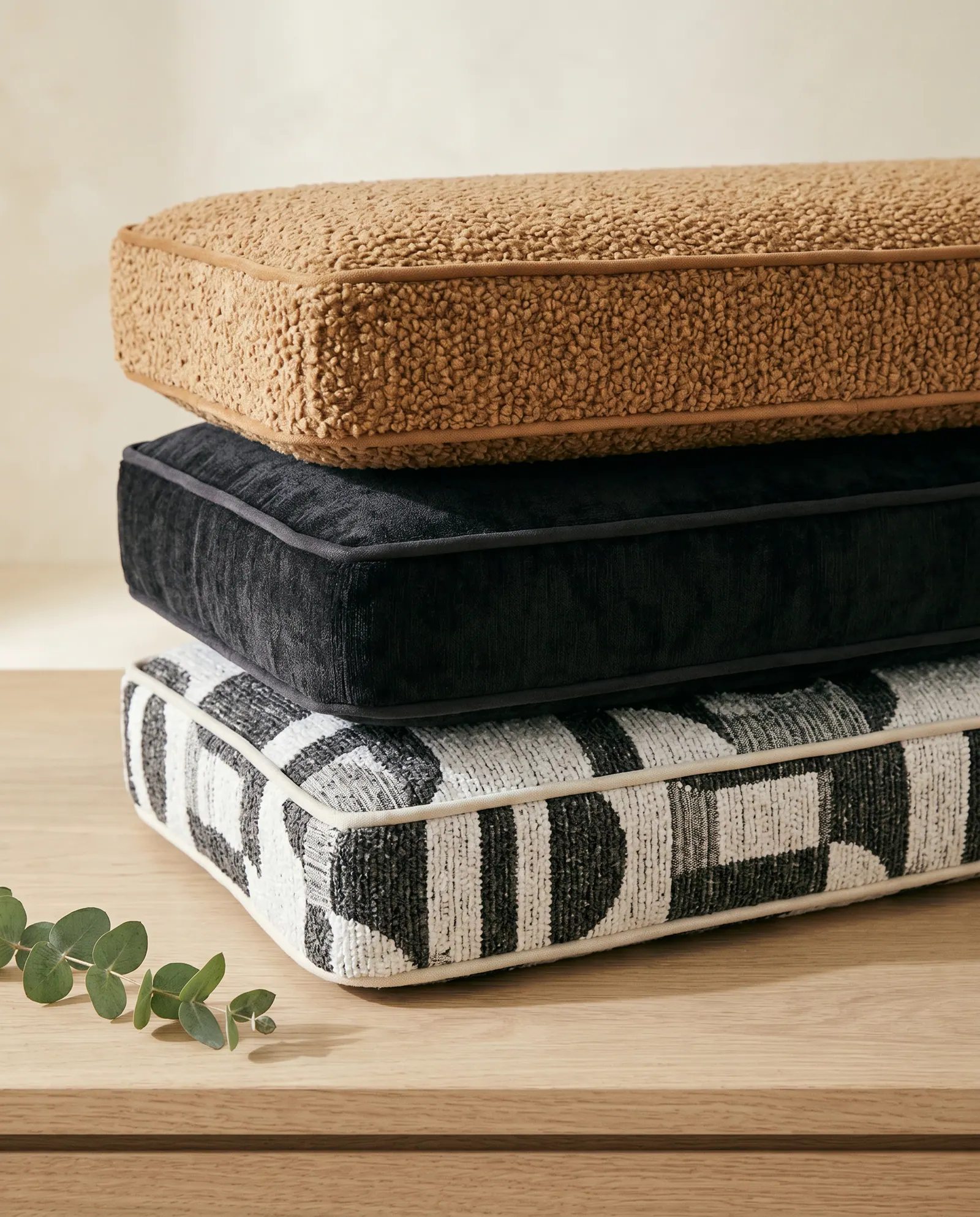

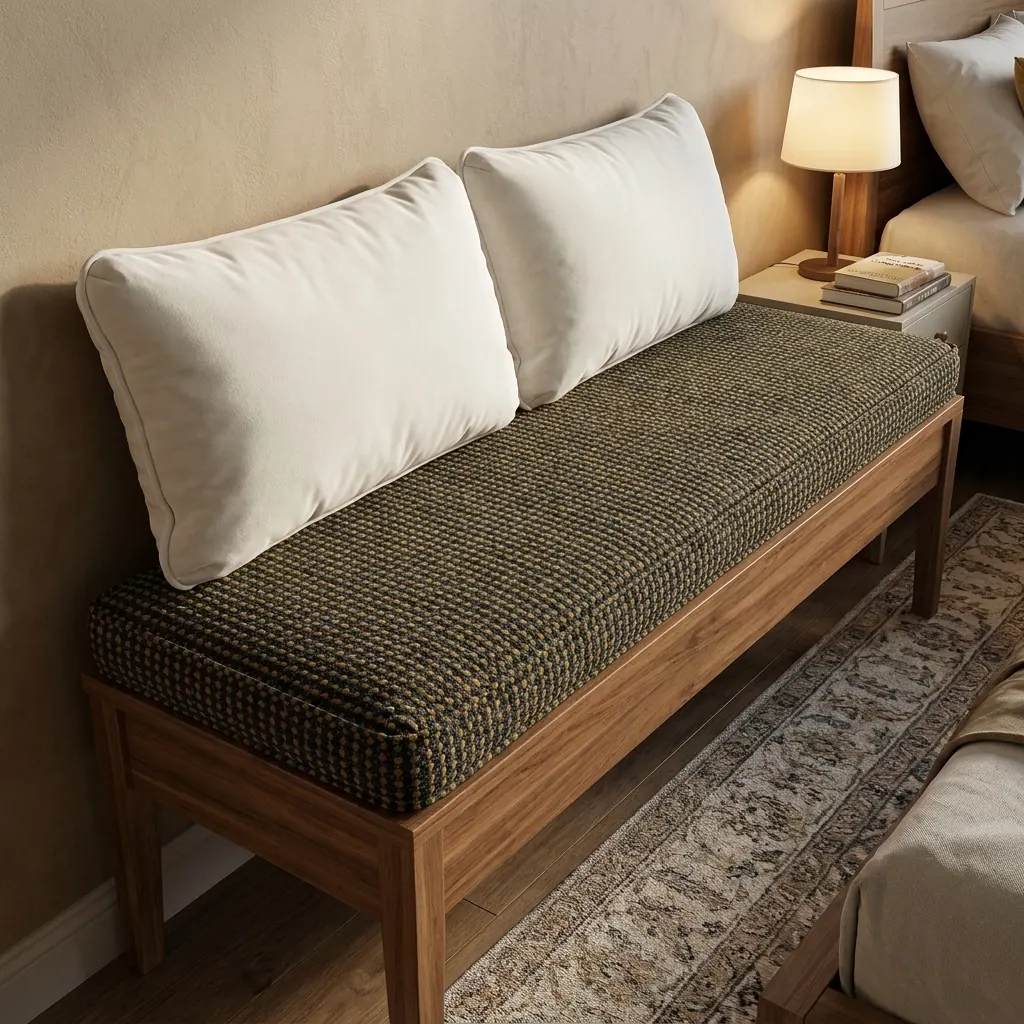
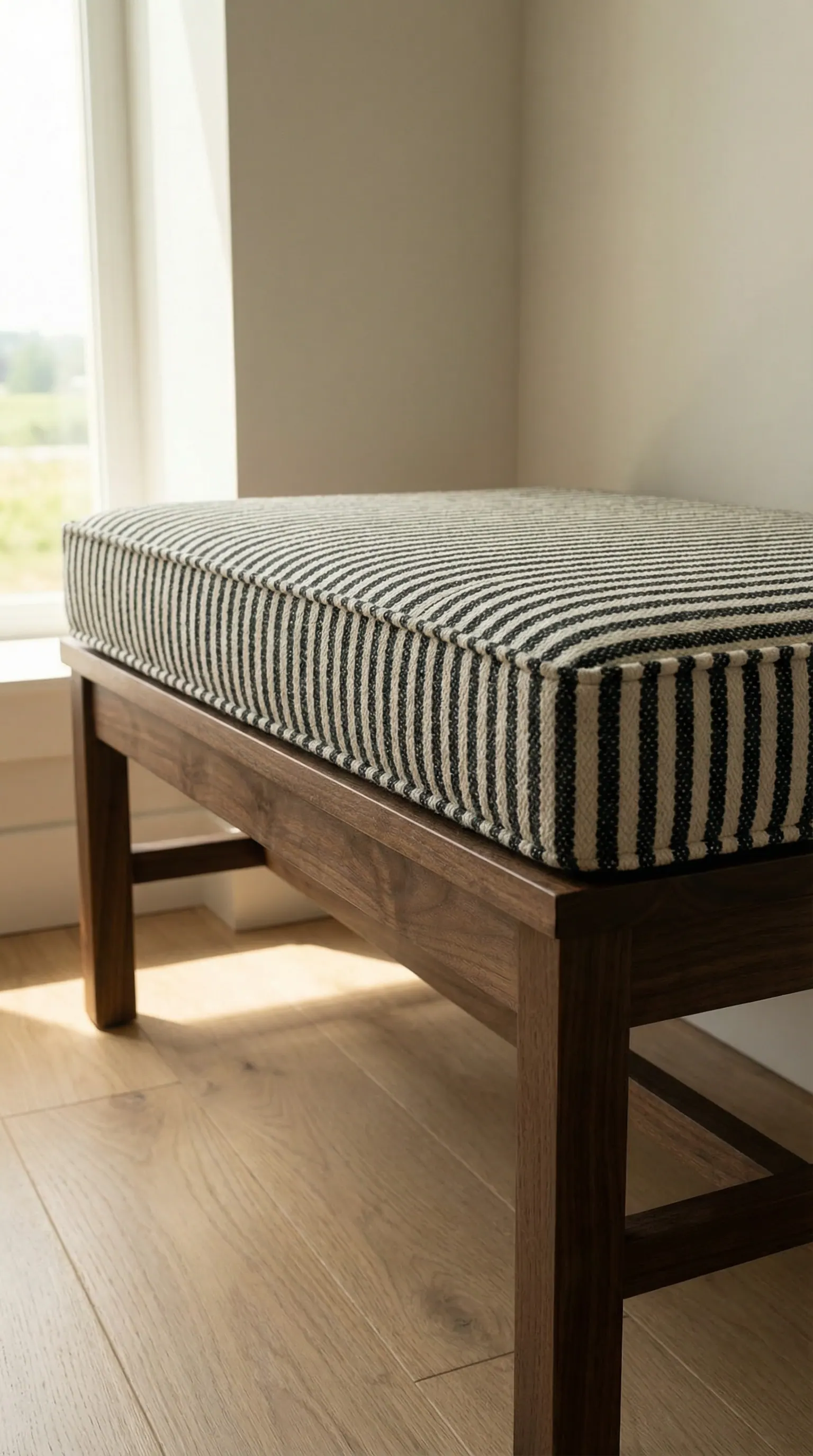
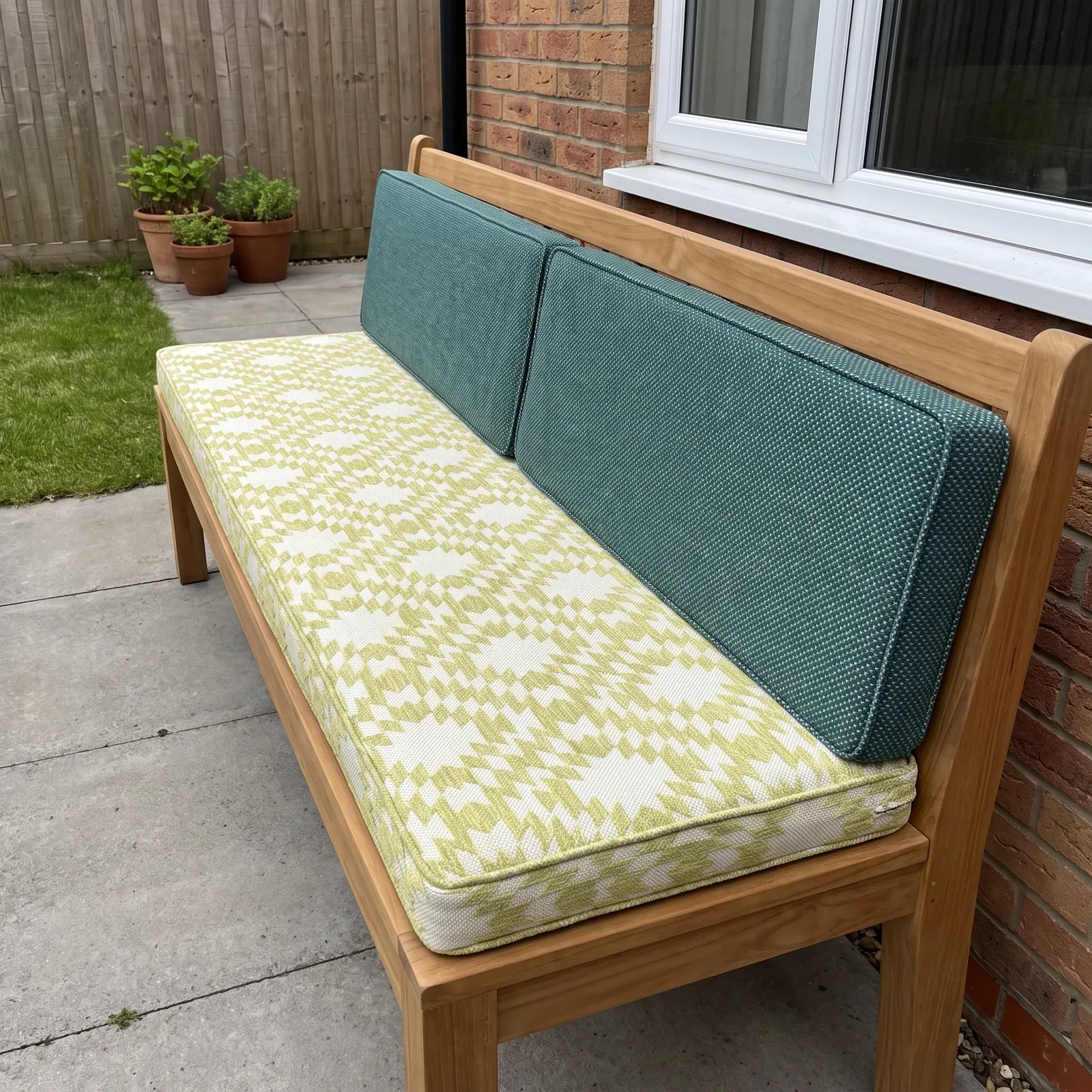
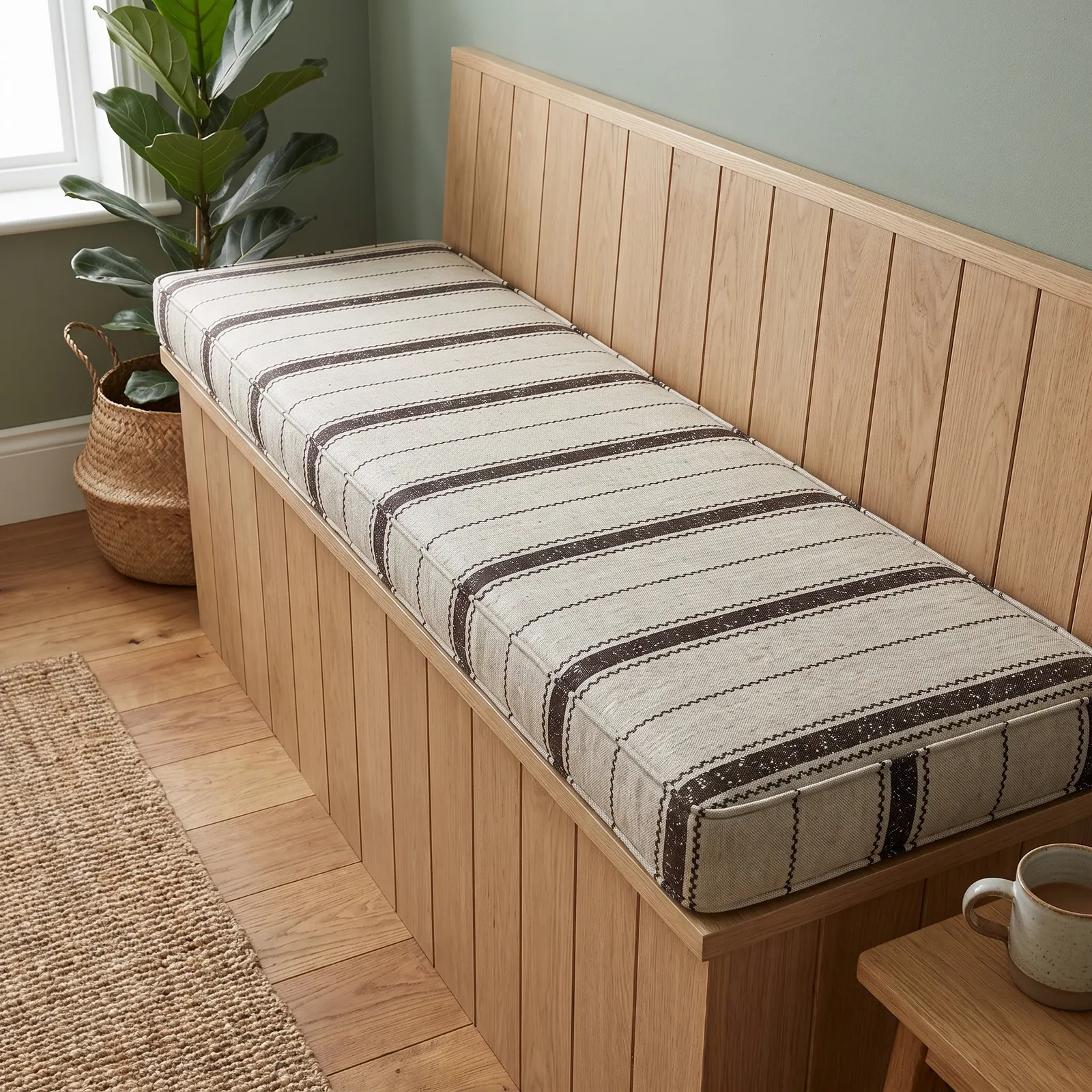
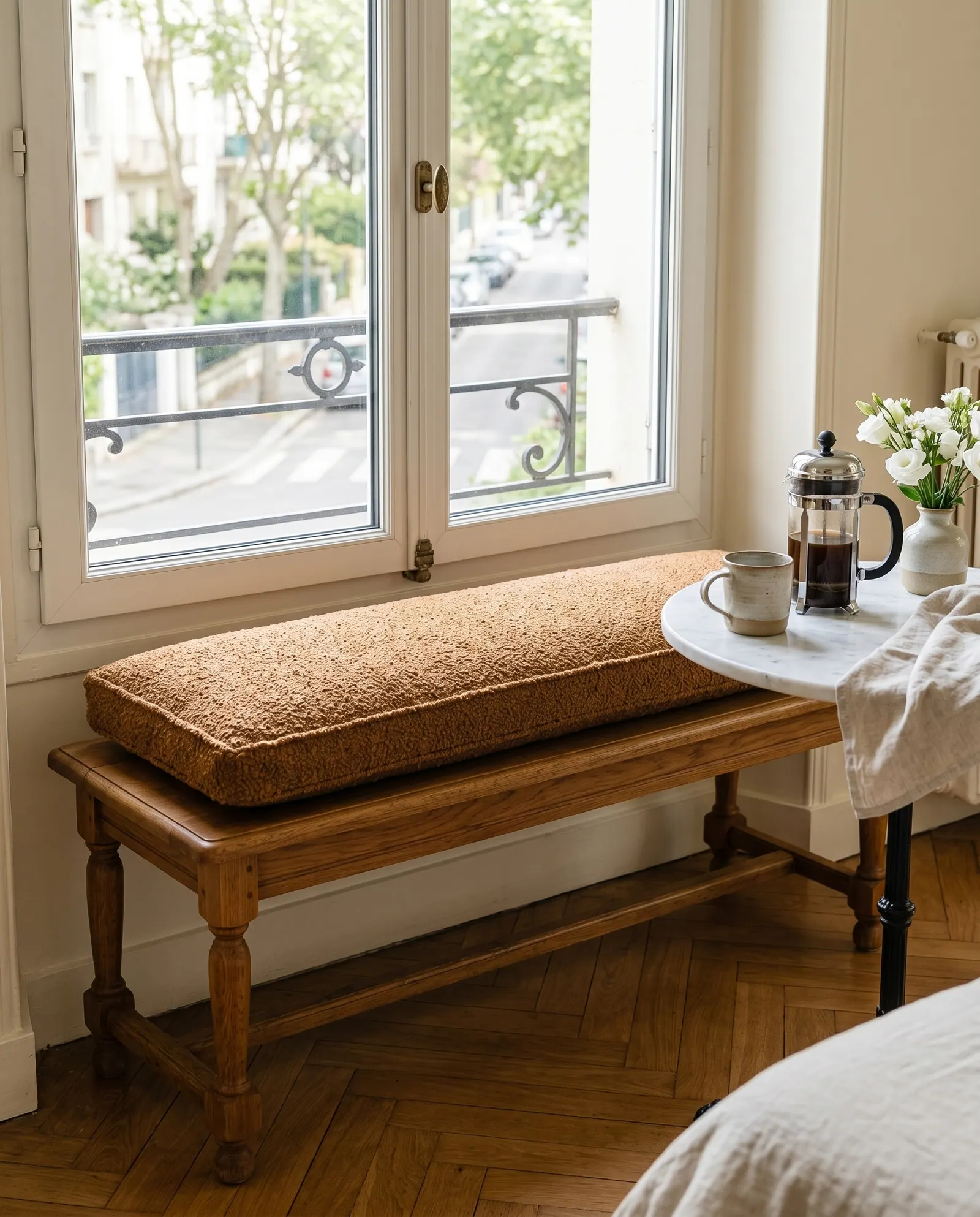
Four ways to keep a camper cushion where you left it
Roads shake, lids lift and people slide in sideways. The stop-the-slide Pattern and the hinged lid Pattern have the long version, the glossary defines a non-slip base and ties, and the bench cushion builder will sketch the seat.
| Hold | How it works | Best on | Limits |
|---|---|---|---|
| Non-slip base | The whole bottom panel sewn in grippy fabric; friction, no adhesive, no residue | Fixed dinette seats and RV bench lids in normal use | Can't hold a cushion on a lifted lid; an optional add-on that scales with size |
| Hinge-side ties | Ties sewn on one side only, lined up with the hinges | Lift-up storage lids | Needs hinge positions, widths and a photo; small extra charge |
| Corner or back ties | Sewn into the seams at any position | Seats, backrests tied to seats, stacked cushions | Added only on request; put position, length and color in writing |
| Two-sided velcro strip | One side sewn under the cushion, the other fixed to the bench | Requests where ties or a non-slip base won't suit | Made on request at extra cost; tabs and snaps aren't made |
The camper checklist before you order
- A template or drawing of every cushion, each piece labeled.
- Length, depth and thickness for each piece; for a U-shaped dinette, every run of the U.
- Each backrest's own length and height, even when it's shorter than the seat.
- Headroom from bunk platform to ceiling before you pick a thickness.
- Which lids lift, with each hinge's position from a stated end, its width and a photo.
- Ties, velcro or a non-slip base written into personalization, then confirmed by message and checked on the pre-dispatch photo.
- Body and piping swatches photographed side by side, in velvet or linen-look fabrics.
Vintage camper cushions start from a template of every piece: seat, sides, back and bunk, each with its own length, depth and thickness.
Callum
Camper and RV questions
- A common question
Which velvet is olive green, and will it look too bright in my camper?
The workshop's answerOlive green is velvet 123, a muted, earthy olive and the closest to avocado for vintage campers; linen L24 is the non-velvet alternative. Velvet 123 shifts with light: under white light it reads yellow-lime, under warm light much calmer. Greens are the hardest colors to judge on a screen, so check close-ups in your own light or order samples. For harvest-gold piping, 920 is the most mustard, 921 more yellow and 919 orange.
- A common question
What exactly is a non-slip base, and how does it hold?
The workshop's answerThe cover's bottom panel is sewn from a grippy anti-skid fabric instead of the regular fabric, across the whole underside rather than strips or dots. It's built into the cover, not a separate mat. It grips by friction, not adhesive, so it keeps the cushion planted when someone sits or leans back, even on smooth painted or wooden benches, and leaves no residue. You can't see it in use. It's chosen in personalization, works on covers-only orders, and can be removed before production.
- A common question
Does the non-slip bottom come standard, or is it extra?
The workshop's answerIt's an optional add-on, available on any shape, including bench, window seat, daybed and trapezoid cushions, and it has been added to outdoor seats too. The add-on scales with cushion size, so larger cushions cost more. Order as usual, write 'non-slip base' with your exact size in personalization, and the workshop includes it in your quote or sends a link for the difference. You can have it on some cushions in a set and not others.
- A common question
How do I stop a cushion sliding off the lift-up storage lid in my RV?
The workshop's answerAsk for ties on the hinge side only, so the cushion stays attached when the lid opens. Write your exact size and 'ties on the hinge side' in personalization, and give each hinge's position from a stated end, its width and a photo; one-sided ties normally carry a small extra charge. If ties won't work with your hinges, size the cushion inside the lid's bevel with a non-slip base. On RV bench lids, a non-slip bottom is often preferred to straps.

Have it made
Have an idea like this made — ask Callum’s workshop
Short list: size, sun hours, how fast it has to dry. The workshop goes through it with you. — Callum
Leave your details and the workshop will call you to confirm measurements, fabric, foam and piping. No prices, dates or payment on this page: it is a request, not an order.
Questions buyers ask next
How thick can camper dinette cushions be made?
The workshop standard for seat and bench cushions is 4 in (10 cm), and dinette seats have been made 8 in (20 cm) thick or more. A top-bunk cushion in this series was 12 in (30 cm). Check table clearance for a dinette and headroom for a bunk before you settle on a number.
Can I get new covers made for the old foam in my trailer?
Yes. Camper and trailer covers are made from a template or drawing of each cushion with its dimensions, so measure every piece and label it. Every foam cushion cover zips and comes fully off. The covers for existing foam Pattern walks through the measuring.
Should a campervan backrest be as firm as the seat?
By default backrests are made a little softer than seats, which sit at about 6 to 7 on a 1-to-10 firmness scale. If you want the back as firm as the seat, ask; it can be made equally firm. Try the foam firmness finder to see where your numbers land.
Where does the zipper sit on an RV bench cushion?
Every foam cushion comes with a fully removable zippered cover at no extra cost. The zipper is hidden on the back edge, facing the wall, or on the underside, and you choose which. On bench covers it often wraps around two corners in an L so the foam slides out easily.