Across the Map · Carolinas & Georgia · United States
Outdoor cushions for South Carolina piazzas, pools and beach houses
South Carolina searches for outdoor cushions more than any other state, and the weather earns it. Build for the worst week of hurricane season and the rest of the year takes care of itself.
- Sun & UVIntense
- HumidityHumid
- WinterMild
- CoastSalt air nearby
- Typical seatsCharleston piazza bench, porch swing, rocking chair
 Save
The quick answer
Outdoor cushions in South Carolina need UV-resistant, water-repellent outdoor fabric, untufted construction and a storm plan. Charleston's July noon UV averages about 9.8, summers bring about 30 days at 90°F or hotter, and the state logged 31 hurricane strikes from 1851 to 2004. Keep cushions under the piazza roof, stand them on edge after rain, and carry them in before a storm.
First in the nation for outdoor cushions, and the weather earns it
No state searches for 'outdoor cushions' more than South Carolina. It scores 64, first in the country, and ranks high for patio cushions (36), chaise lounge cushions (61) and outdoor cushion covers (53). Interest peaks in April at 70, weeks ahead of the North. Here is why.
Sun. Charleston's noon UV Index averages 9.8 in July. The EPA calls 8 and up very high. Nearly half the day's UV lands between 10 a.m. and 4 p.m., and the beach adds more: sand reflects about 15 percent, sea foam about 25. Sun fades color first, then weakens fiber.
Heat and wet. Charleston averages 44.26 in (1,124 mm) of rain over 107 wet days, about 30 days at 90°F (32°C) or hotter, and only 10 freezes. A soaked cushion in humid air doesn't dry overnight, and the EPA's line for mold is 24 to 48 hours.
Salt. Spray is heaviest near breaking waves and drops fast in the first 300 to 3,000 ft inland, but faster corrosion has been measured 5 to 10 miles from shore. That means zippers and hardware, not only fabric.
Storms. South Carolina logged 31 hurricane strikes from 1851 to 2004. Hugo came ashore near Charleston in September 1989 as a Category 4. A cushion has to survive the season, not just the afternoon.
Piazzas, joggling boards and haint blue ceilings
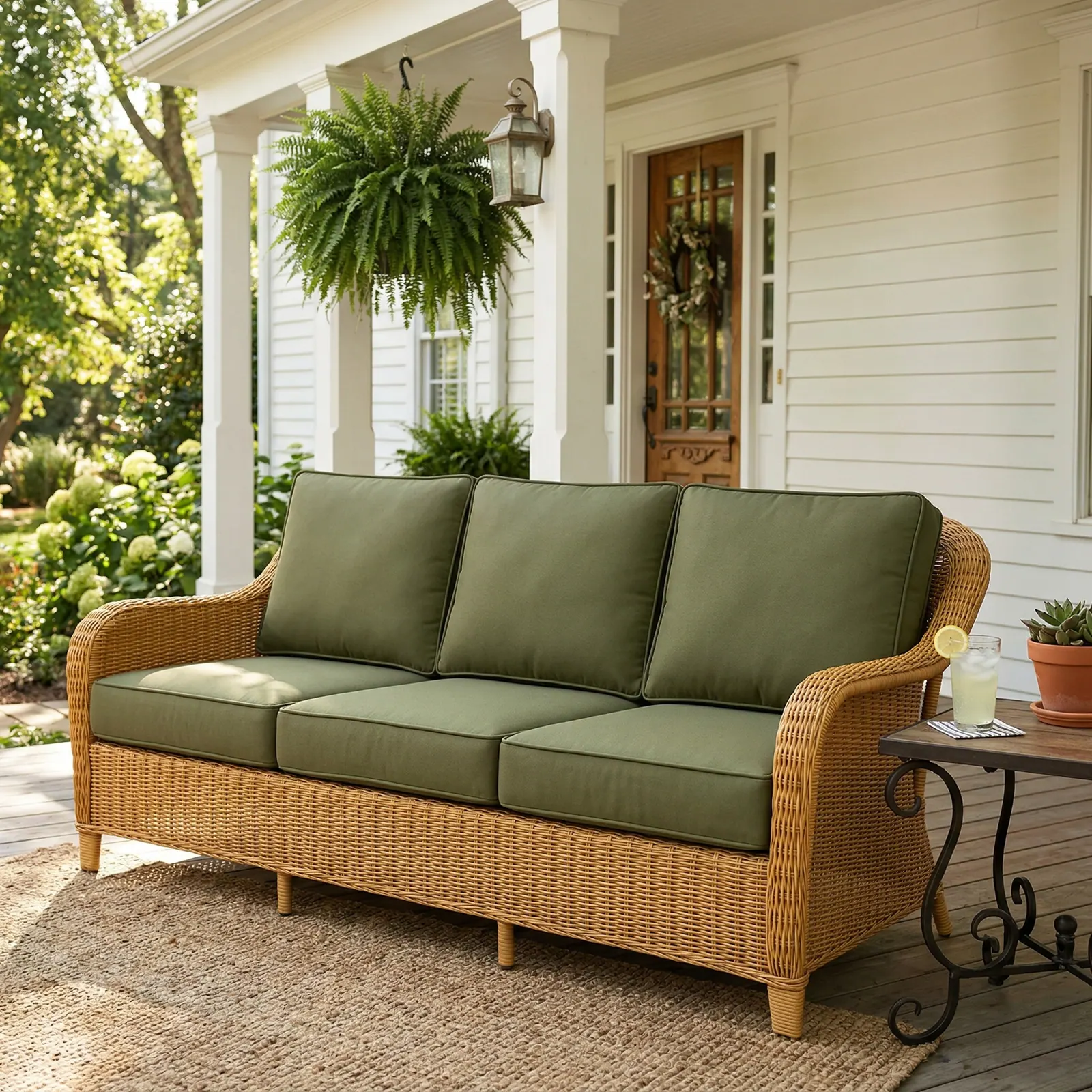
The Charleston single house is one room wide, set sideways on a narrow lot, with long piazzas down the side facing south or west to catch the breeze. The front door opens onto the piazza, not the street, so it works as hallway and sitting room at once.
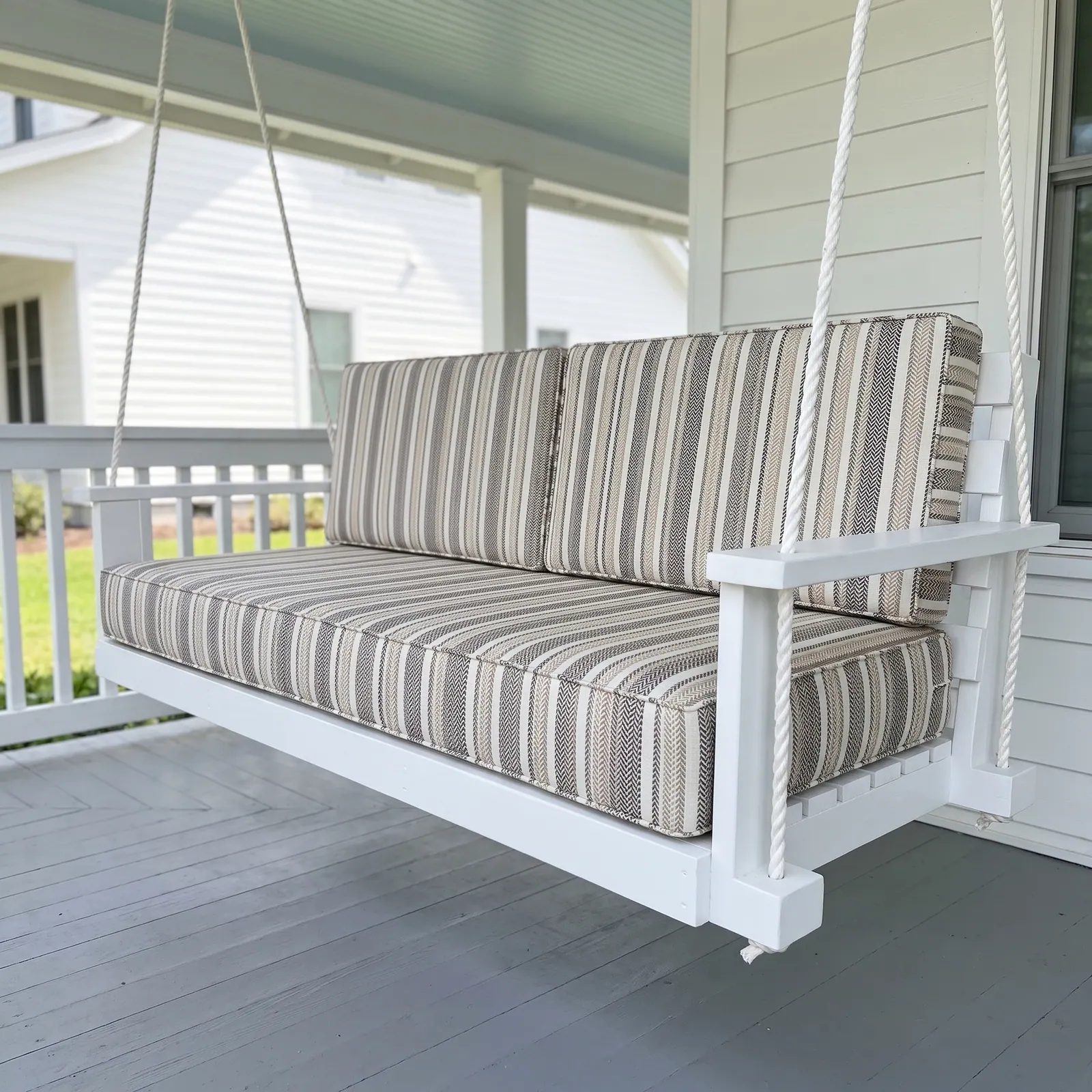
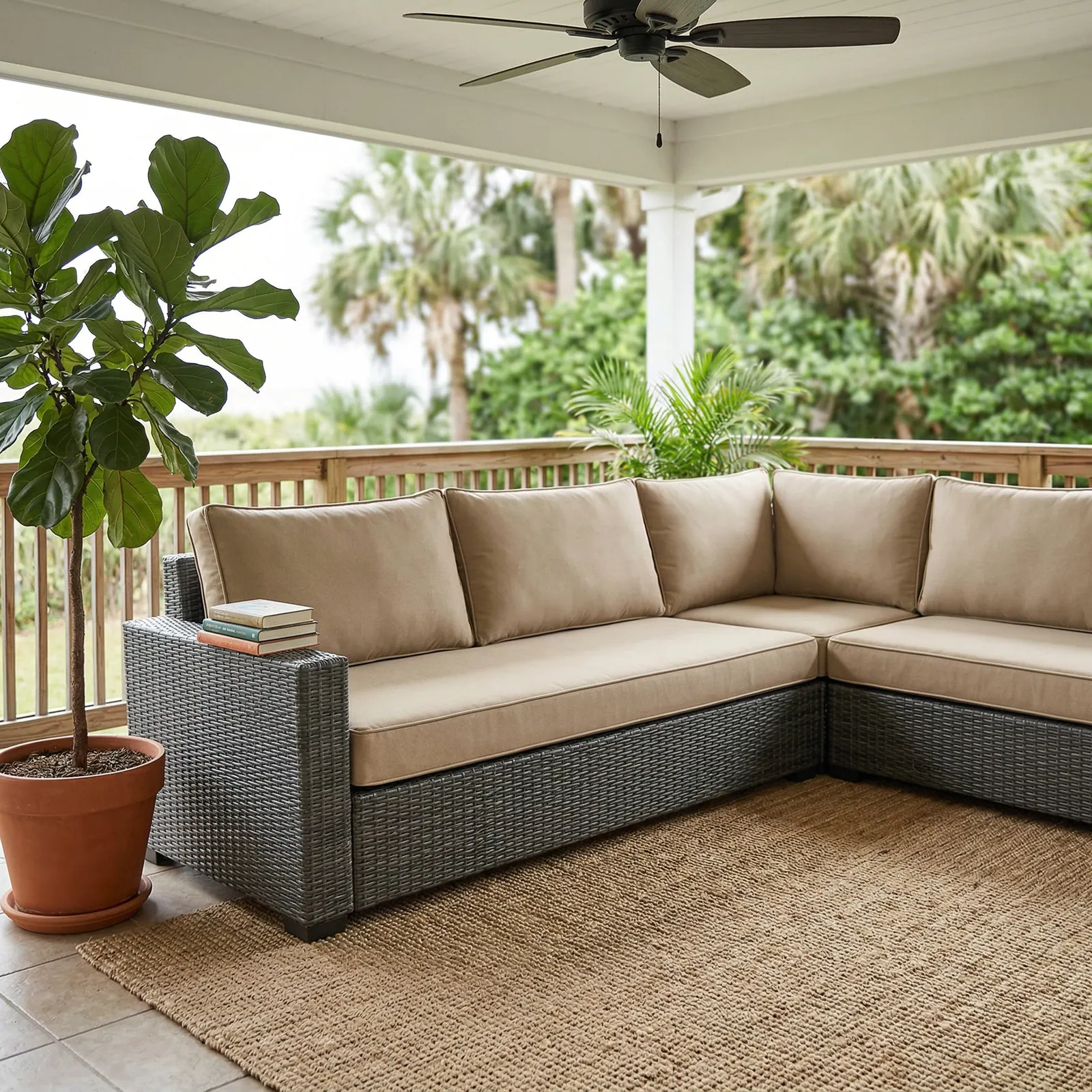
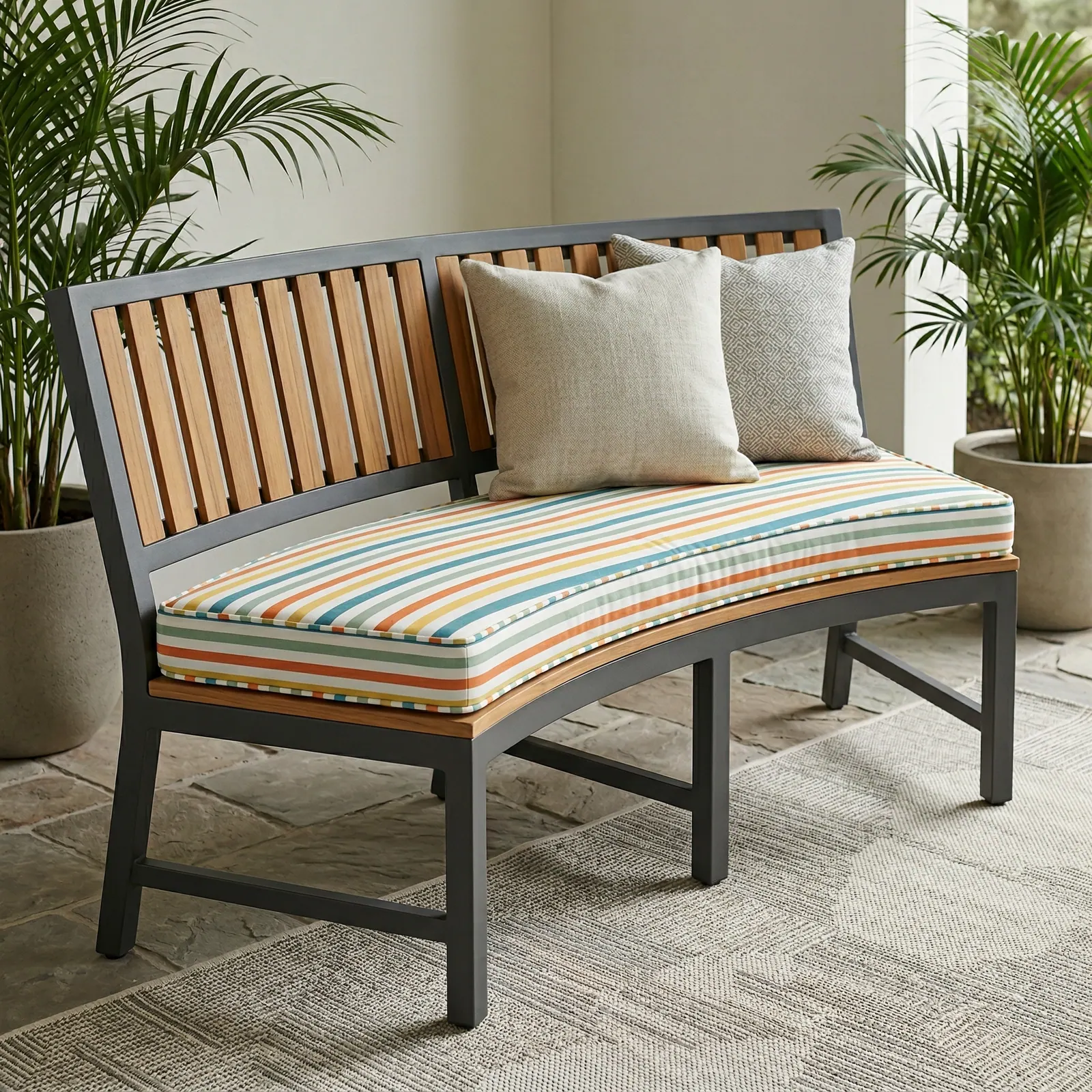
A piazza wants long, narrow cushions: benches, swings and rockers lined up in the shade. The roof keeps off sun and most rain, but not humidity or a sideways squall, so outdoor fabric belongs under it too. Start with patio and porch cushions and porch swing cushions.
The Lowcountry has its own furniture. The joggling board, a long springy plank on two stands, has been popular since the early 1800s and is often painted Charleston green. Treat its pad like a long bench cushion: thin, so the board still bounces, with ties at the ends.
Overhead, many porch ceilings are painted haint blue, the pale blue-green the Gullah people used to keep spirits away, first made with indigo grown here. Cushions that sit well under it: sand, oyster white, marsh green, a clean navy.
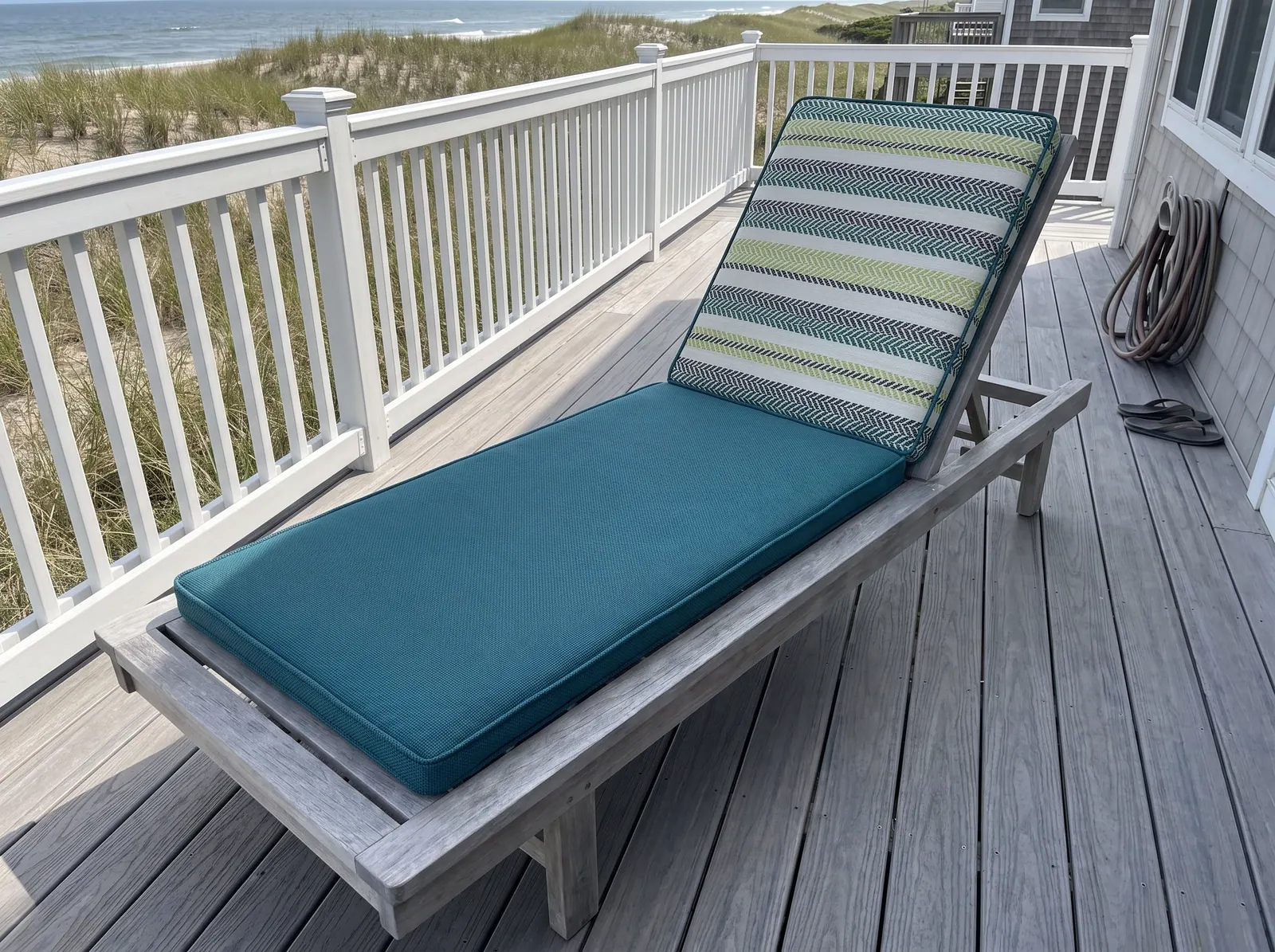
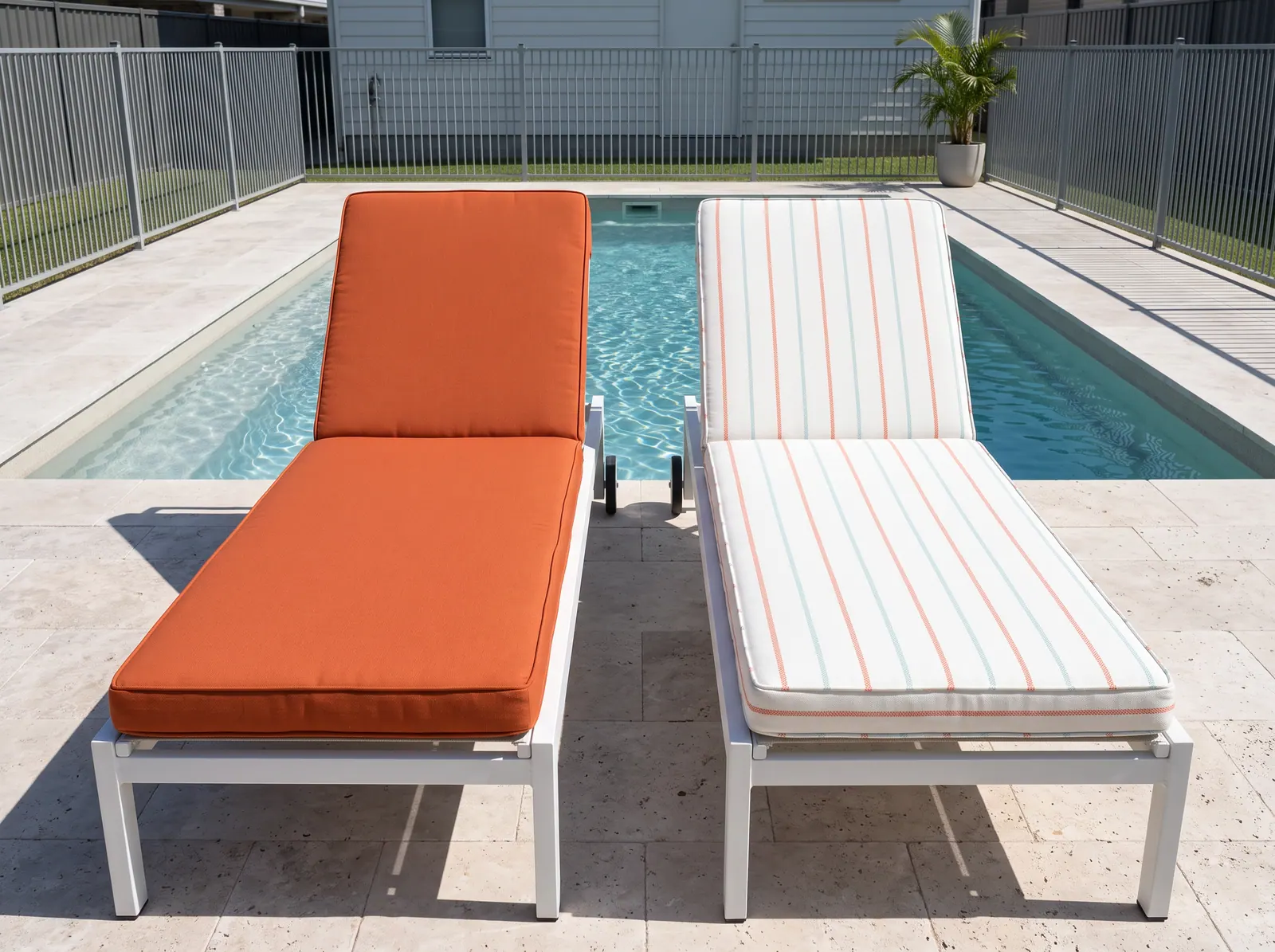
Out on the islands the seats change again. Hilton Head, Kiawah and Myrtle Beach mean pool chaises, deck loungers and screened-porch daybeds. See chaise and sunbed cushions and the regional Carolinas and Georgia page.
Fabric, foam and hardware by South Carolina seat
| Seat | Fabric | Build | Weather note |
|---|---|---|---|
| Piazza bench or rocker | Outdoor fabric, UV-resistant and water-repellent | 3-4 in (7.5-10 cm), untufted, self piping | Stand on edge after blowing rain |
| Porch swing | Outdoor fabric | Ties at the chains; non-slip base | Sized so one person can carry it in |
| Joggling board | Outdoor fabric | Thin pad, 2 in (5 cm), ties at the ends | Comes in before any storm |
| Pool chaise | Outdoor fabric in a mid-tone | Separate back and seat pieces, untufted | Rinse off chlorine and sunscreen; dry fully |
| Beach house deck lounger | Outdoor fabric | Self piping; ties or a non-slip base | Rinse hardware with fresh water; bring in when the wind rises |
| Existing outdoor set | New zippered covers over your inserts | Measure boxed side panels seam to seam | Zip off and wash at 86°F (30°C) |
Four covers, one outdoor sofa, and the question that beats a brand name
A buyer in the US had good foam on an outdoor sofa and wanted new covers: a boxed, zippered seat cover 64.75 x 31 x 4 in (164 x 79 x 10 cm) and three back covers, in off-white, ivory or oatmeal. They asked for a well-known outdoor brand by name.
The workshop doesn't carry that brand, and said so. Then it said what it does use, which is the useful part. Its outdoor fabrics are polyester with a water-repellent, UV-resistant finish. It recommends self piping to reinforce the edges. Seams are double-stitched and zippers are hidden. It offers ties, not hook-and-loop tape.
Before a final quote it asked for two things: photos of the sofa and the sizes of the back cushions. Covers made over existing foam live or die on the foam's exact size.
Here's the lesson, friend. When you're replacing covers, send the foam's exact dimensions and ask what the fabric is made of and how it's finished, not only what it's called. A label won't dry a cushion. Construction will. More in covers for existing foam and cushion covers.
A Lowcountry cushion year, with the storm drill
- February–March: measure and order. South Carolina's outdoor cushion interest peaks in April.
- April: pollen season. Brush cushions off dry, then wash zip-off covers at 86°F (30°C) on gentle and air dry them.
- June 1: hurricane season opens and runs to November 30. Pick an indoor spot for every cushion now: a closet, a garage shelf, under a bed.
- Any storm watch: carry cushions in first. Ready.gov puts outdoor furniture on its hurricane checklist.
- After rain or a storm: stand wet cushions on edge in moving air and get them dry within 24 to 48 hours.
- Every beach week: rinse zippers and hardware with fresh water.
- Late fall: wash, dry right through, and store off the floor in something that breathes. Ten freezes make a short winter, but damp storage is never kind.
Photographs for homes like these
Open any photograph large; each one has its own link and a Save button.
 Save
 Save
 Save
 Save
 Save
Water-repellent is a promise; waterproof is a contract. On a Charleston piazza the promise is enough, as long as you carry the cushions in before the storm.
Callum
Buyer questions: chaises, covers and beach-house whites
- A common question
Can you make custom cushions for a double chaise lounge?
The workshop's answerYes. Both pieces can be made to your sizes, for example a back of 51.5 x 35 in and a seat of 51.5 x 49 in. They're made in the workshop's weather-resistant outdoor fabrics, ordered through the outdoor listing with its fabric charts.
- A common question
Can you make zippered covers for my outdoor chair cushions to fit the inserts I already have?
The workshop's answerYes, in the workshop's own outdoor fabrics. Send photos and a drawing with every size; the outdoor charts are in the zippered cover listing. You don't need to send the old cushions. Measurements and photos are enough.
- A common question
Is your outdoor fabric a solution-dyed acrylic?
The workshop's answerNo. The outdoor fabrics are polyester-based with a water-repellent, UV-resistant finish, so they resist fading and clean easily. Colors include off-white, ivory, oatmeal and a warm light gray. UV rating and weight vary by fabric and are shared once you choose one. Outdoor fabric costs a little more than indoor.
- A common question
Does the outdoor fabric feel plastic or rubbery, like cheap coated cushions?
The workshop's answerNo. These aren't the plastic-coated kind; they feel like proper fabric, not a tarp. They are less soft than indoor upholstery fabrics, closer to a good sun lounger cushion, which is worth knowing if you plan to sit on them indoors every day.
- A common question
Which white outdoor fabrics can be cleaned with bleach for stubborn stains?
The workshop's answerAll of the white and off-white outdoor fabrics can be cleaned, but the workshop named four codes as the best for that kind of cleaning: V-45, V-54, M-01 and S-09. Ask for close-ups before you choose.

Have it made
Have it made for your home — ask Callum’s workshop
Short list: size, sun hours, how fast it has to dry. The workshop goes through it with you. — Callum
Leave your details and the workshop will call you to confirm measurements, fabric, foam and piping. No prices, dates or payment on this page: it is a request, not an order.
South Carolina questions
Can outdoor cushions stay out on a South Carolina porch all summer?
Under a deep roof, mostly yes, if you stand them on edge after blowing rain and get them dry within 24 to 48 hours. These are water-repellent covers over standard foam with no mesh bottom, so on an open deck, carry them in when rain is coming. Cushions that must live uncovered need dry-fast foam.
What is a Charleston piazza, and what cushions suit it?
A piazza is the long side porch of a Charleston single house, usually facing south or west to catch the breeze, with the front door opening onto it. It suits long bench, swing and rocker cushions in outdoor fabric, which handles the humidity and blowing rain a roof doesn't stop.
How do I slow fading on pool and beach cushions in Hilton Head or Myrtle Beach?
Choose UV-resistant outdoor fabric in mid-tones, turn cushions often, and stow them when nobody's using them. Charleston's July noon UV averages 9.8, nearly half the day's UV arrives between 10 a.m. and 4 p.m., and sand and sea foam reflect more back up. No fabric is fade-proof.
Do beach house cushions need special zippers or hardware?
Near the water, hardware matters as much as fabric. Salt spray is heaviest near breaking waves, and faster corrosion has been measured 5 to 10 miles inland. Ask what the zipper and any grommets are made of, prefer plastic or coated hardware, and rinse with fresh water after windy beach days.
Fair winds — Callum
The atelier
Keep going
Across the Map
Nearby places
Close by on the map