Dining chair cushions with ties, cut to the seat you sit on
A straight welt is a kind of honesty, and so is a tie that lands on a spindle instead of thin air. Here's how the workshop sizes dining pads, where the ties go, and what buyers forget to write down.
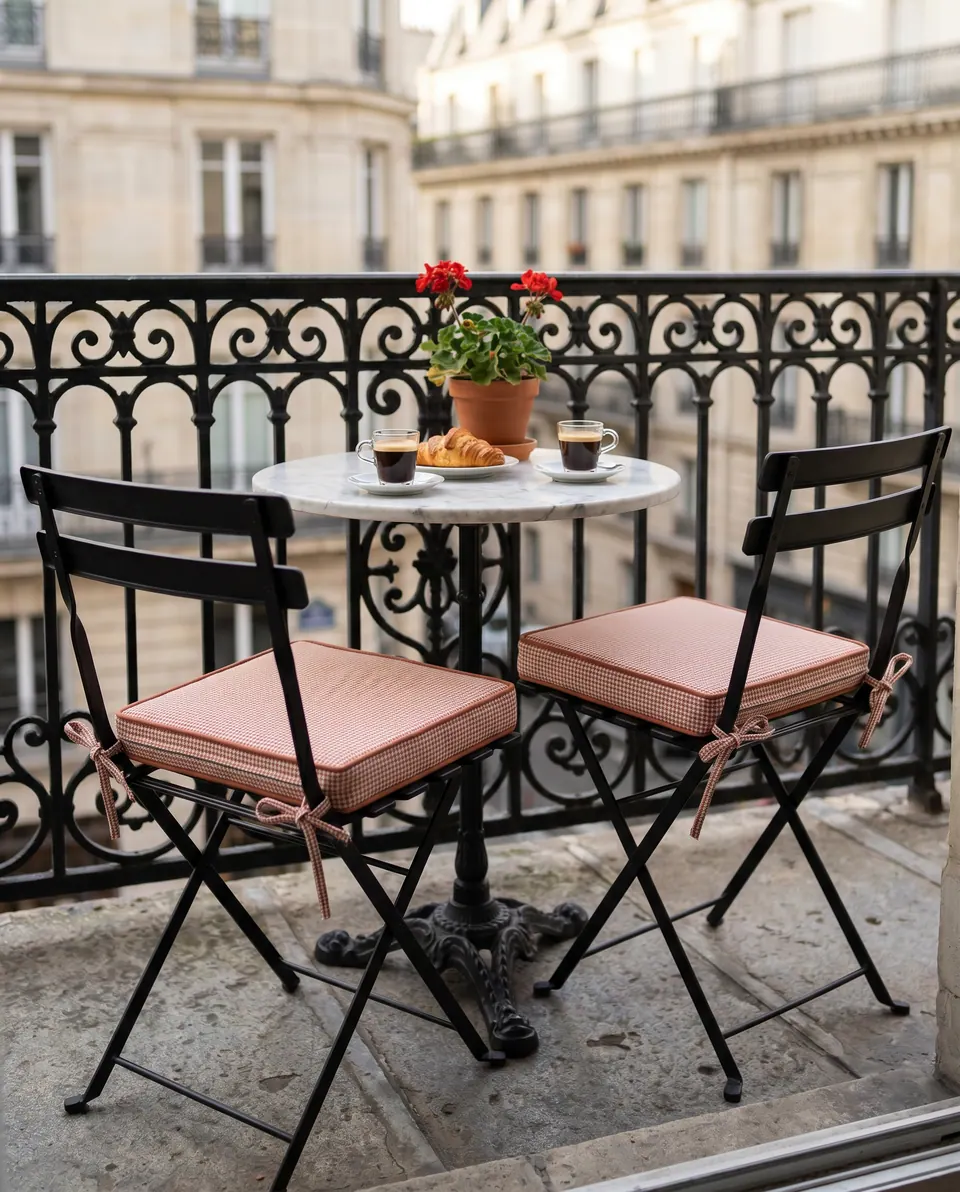
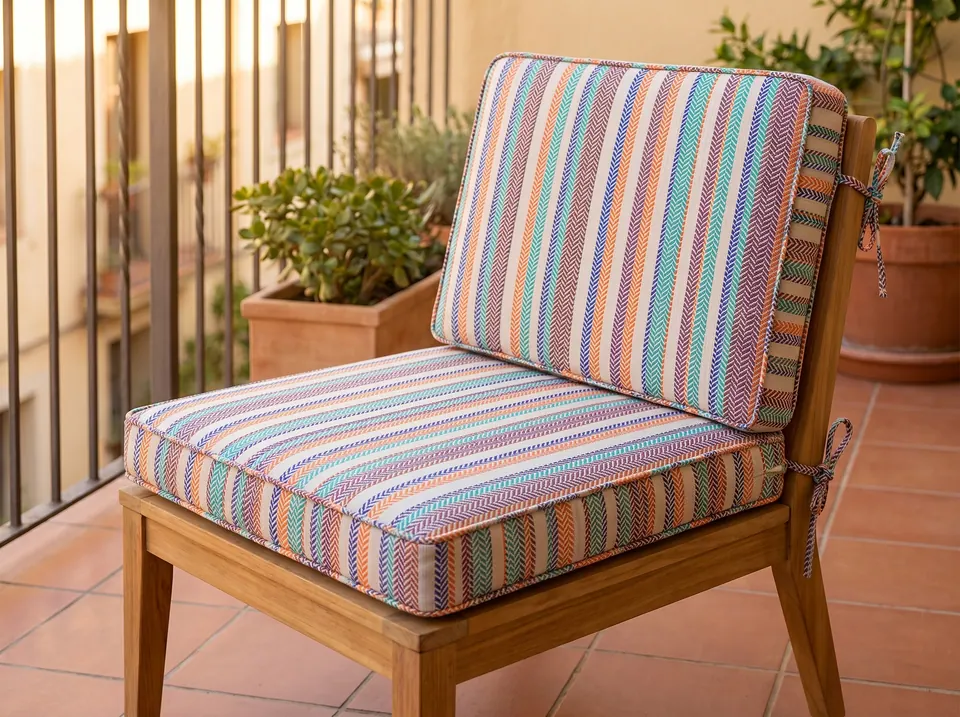
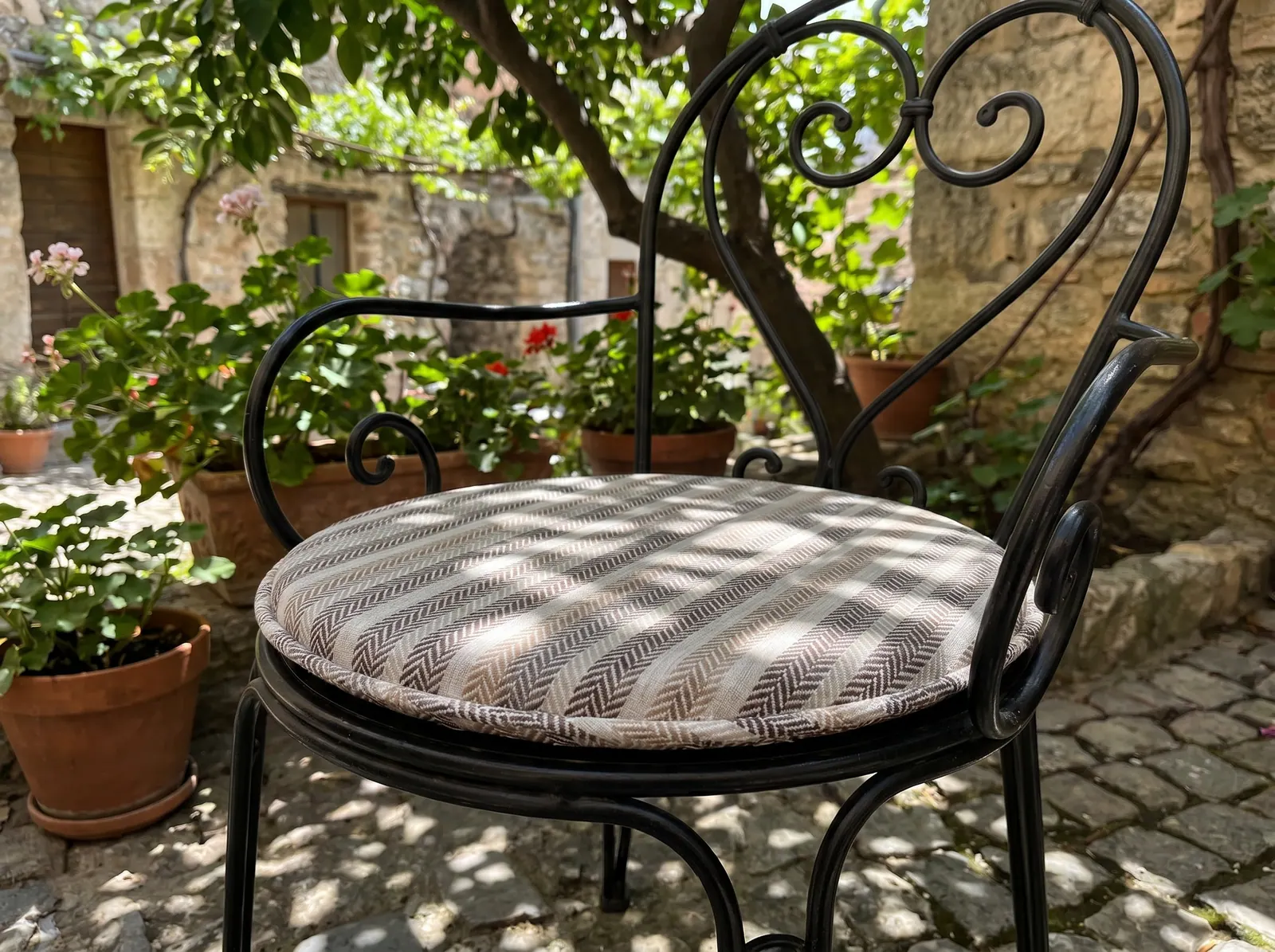
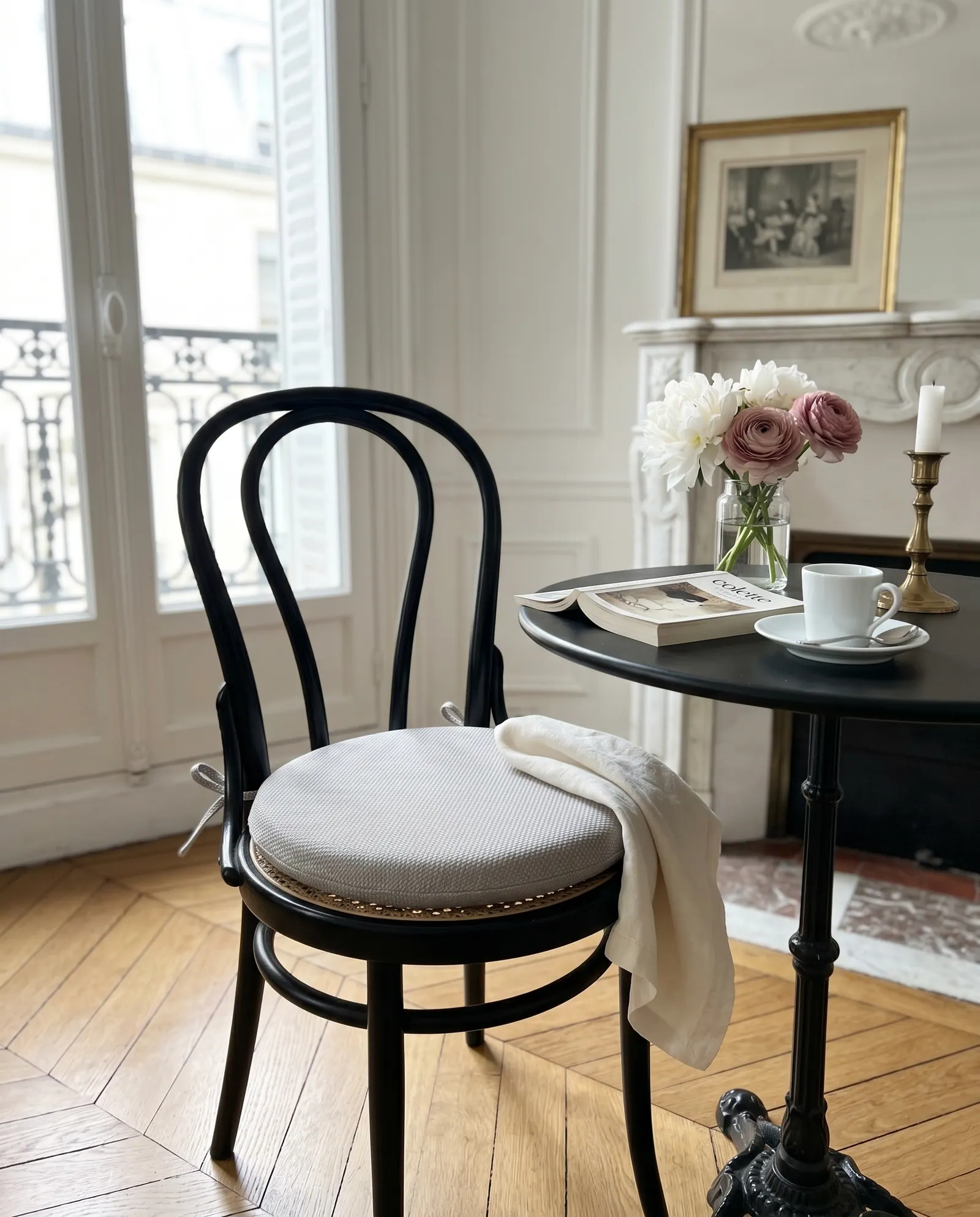
SaveA round herringbone-stripe cushion cut to fit the seat ring of a black iron bistro chair in dappled shade.
The quick answer
A chair cushion with ties is a thin pad, often 2 in (5 cm) of foam, cut to the seat and held to the chair frame by fabric ties sewn into the seam. Measure the front width, back width and straight depth of each seat to the nearest 1/4 in, and write the tie count, position and length in the order note, because ties are added only on request.
A dining chair pad is a small cushion that usually comes in sets: four, six, eight, one for every chair at the table. It softens a hard wooden or rattan seat, puts a line of color at table height and, with ties, stays put while people slide in and out for dinner.
The same pads go on bistro chairs, bar stools, folding balcony chairs and kitchen ladder-backs. If your chairs share a table with a built-in bench, match them to it; see banquette cushions and the kitchen nook room.
Square, tapered, round or U-shaped
Plenty of dining seats aren't square. They're trapezoids, wider at the front, and a pad cut as a rectangle hangs off the back corners or leaves bare wood at the front. Give both widths and the depth, and the pad follows the seat. For the geometry, see trapezoid cushions.
Round bistro seats take a round pad with ties at the back. U-shaped and horseshoe seats need a drawing: a subtle U described in numbers alone can come out looking nearly square, and one buyer told the workshop exactly that. Mark where each curve starts and ends and how deep it runs, or trace the seat onto paper.
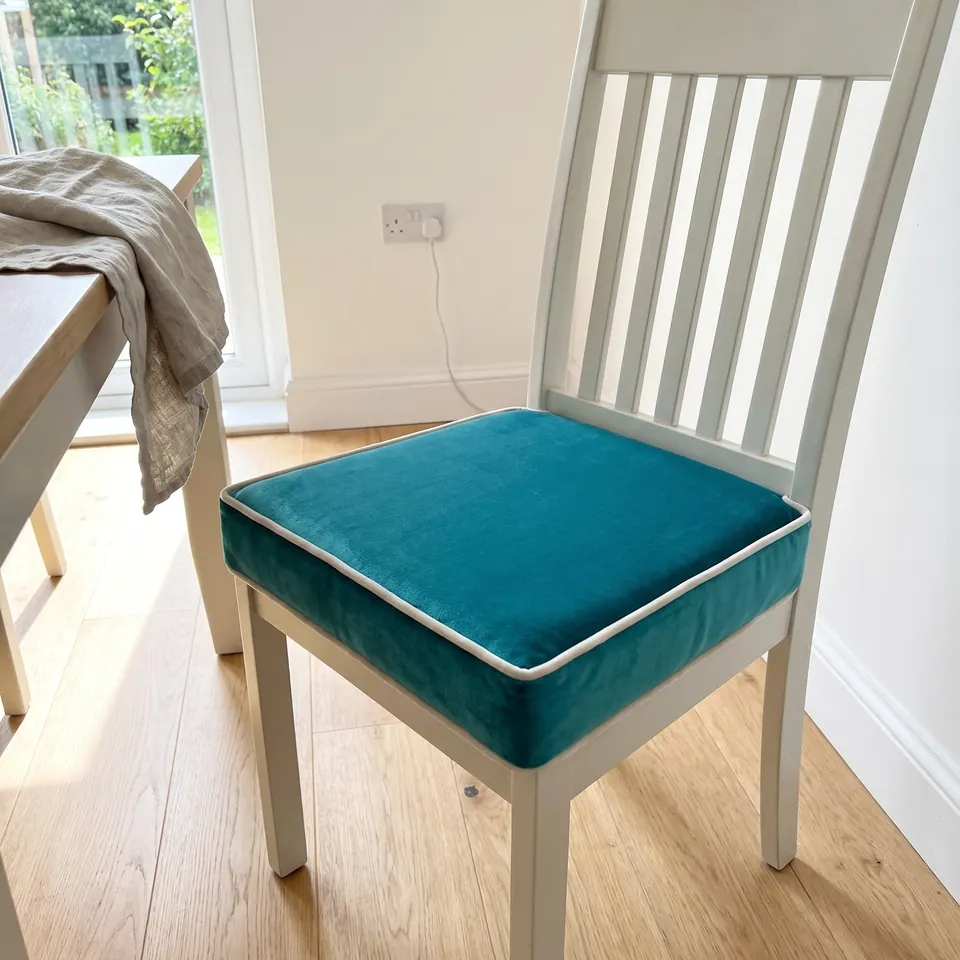
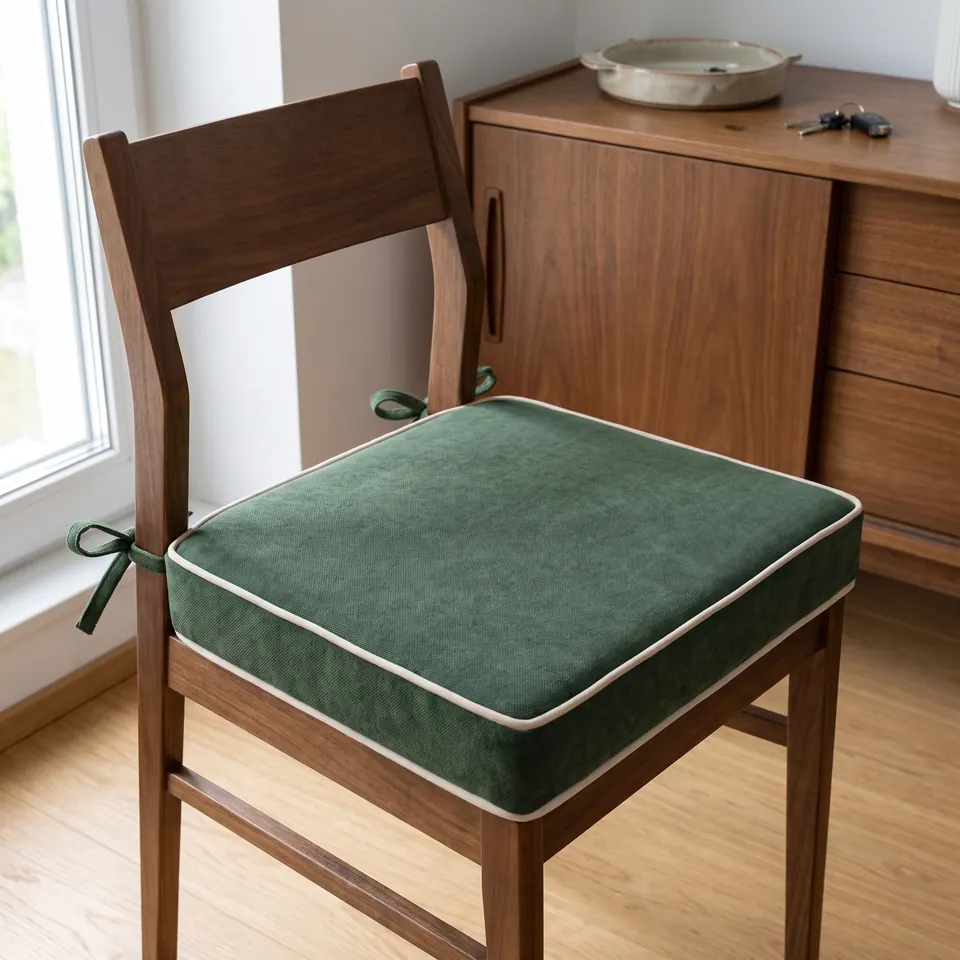
Edges: a box edge with piping gives a tailored, upright pad; a knife edge sits flatter and more casual. Piping is included either way, and a contrast color from the chart costs nothing extra.
Fabrics for a seat that sees every meal
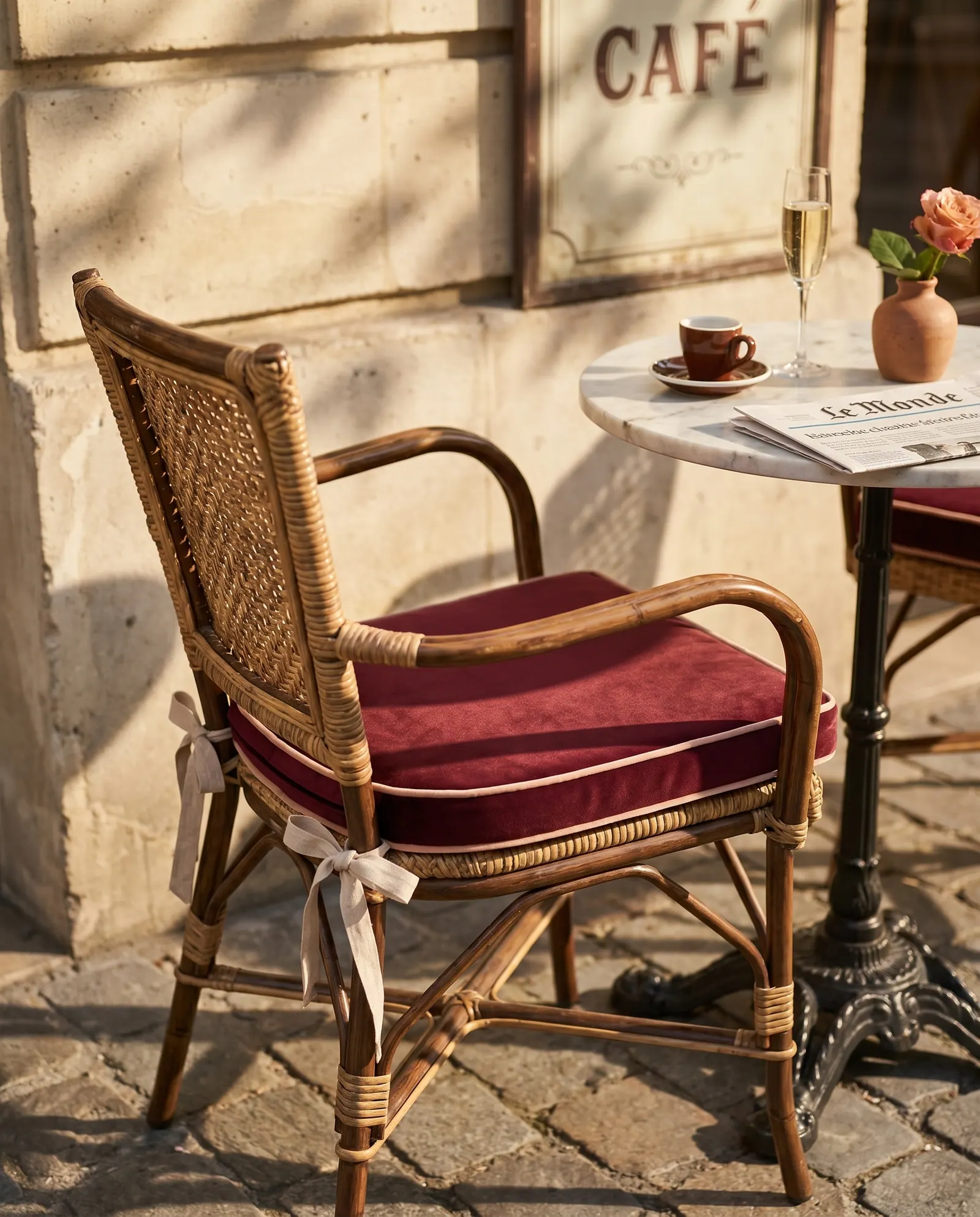
Velvet wears handsomely at the table; brown velvet with cream piping and cream ties is one of the prettiest sets I've watched go out the door.
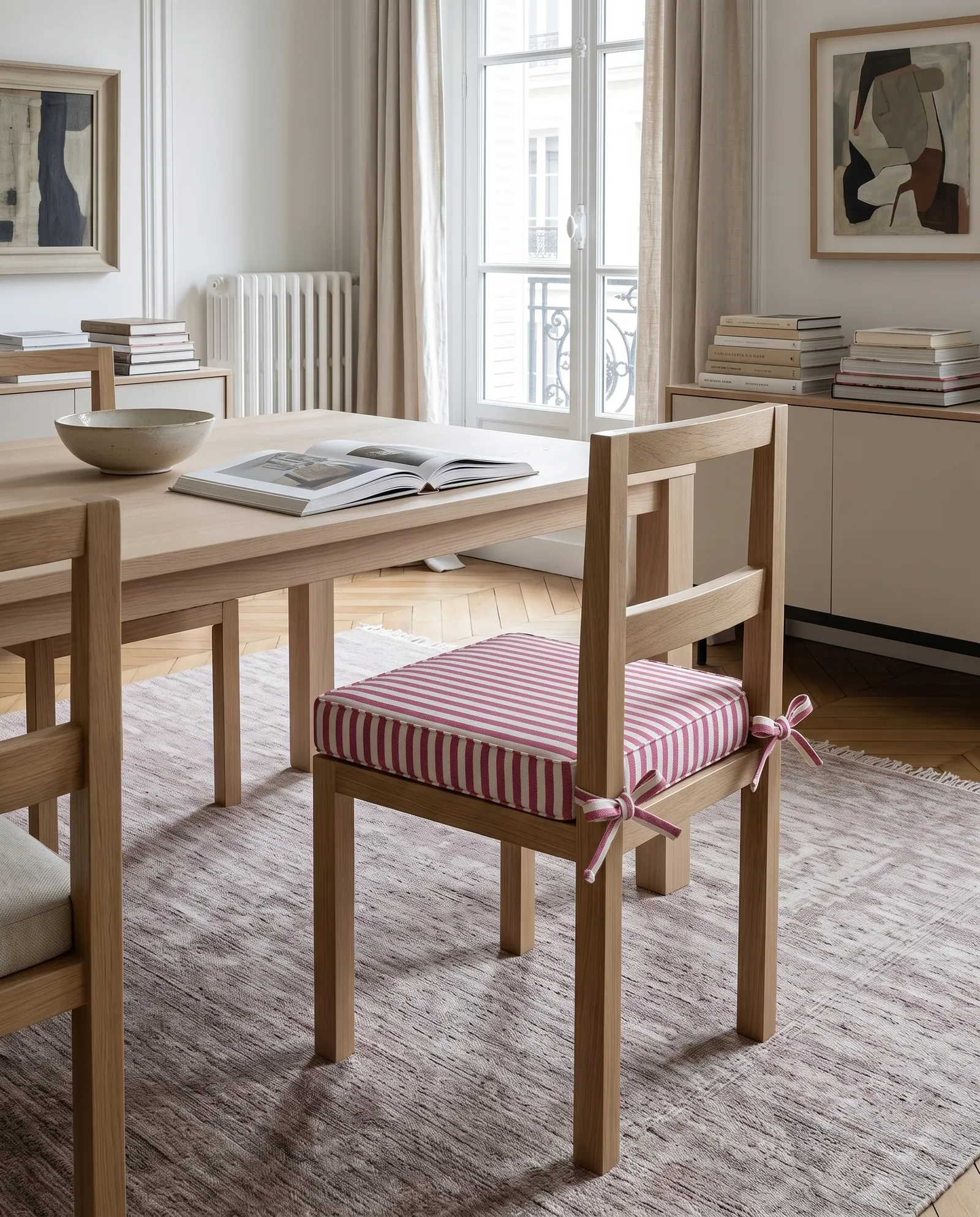
Striped cotton and ticking is the farmhouse classic, and a stripe tells you at once if a pad sits crooked.
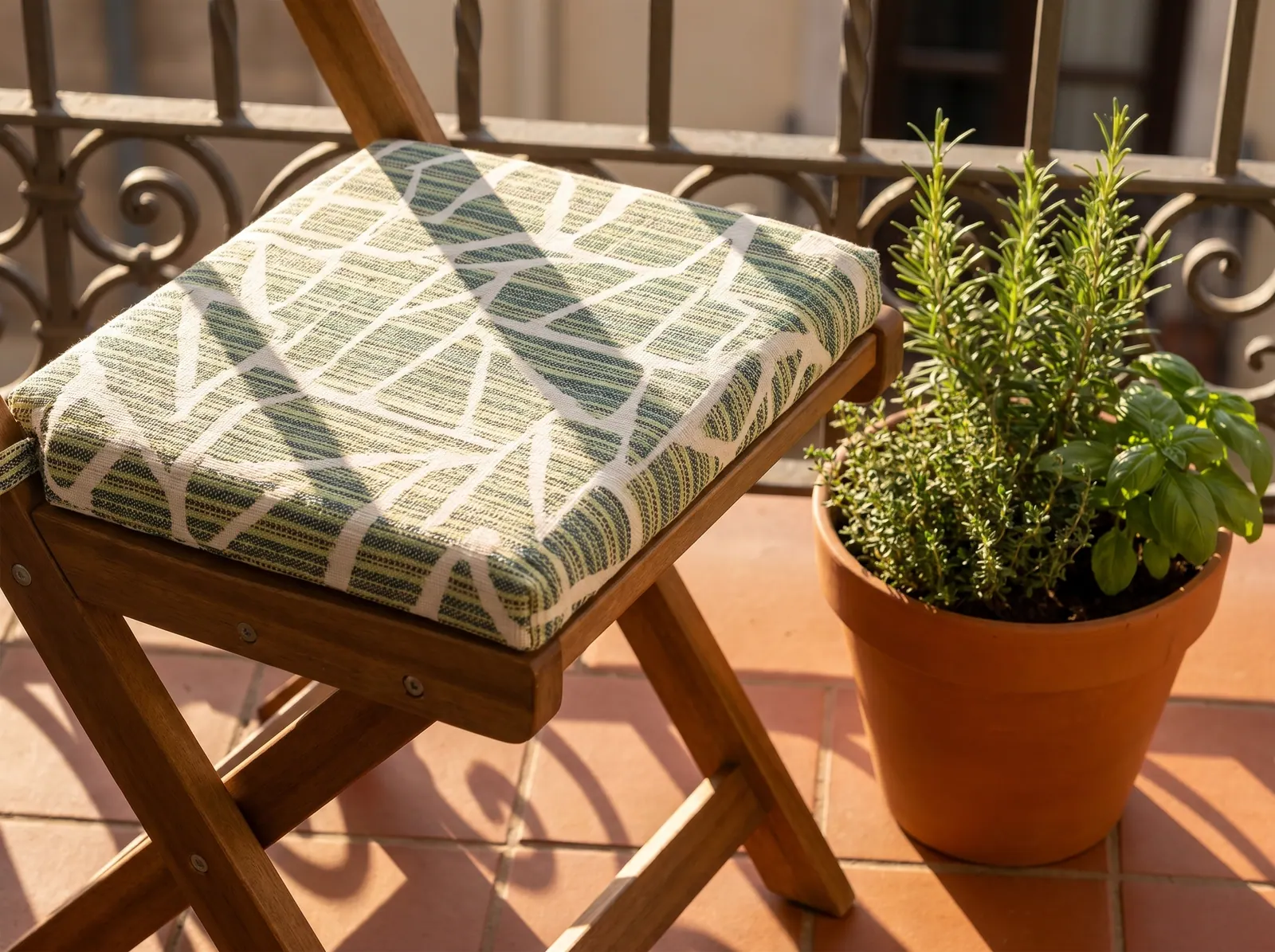
For balcony and patio chairs, most pads can be made in the outdoor range: pick a code from the outdoor chart, and your chair pads and outdoor bench come out in one fabric. See outdoor acrylic.
The count is how many published readings use each family. Open a family for its swatch book, care notes and neighbors.
Foam: thin enough for the table, thick enough to matter
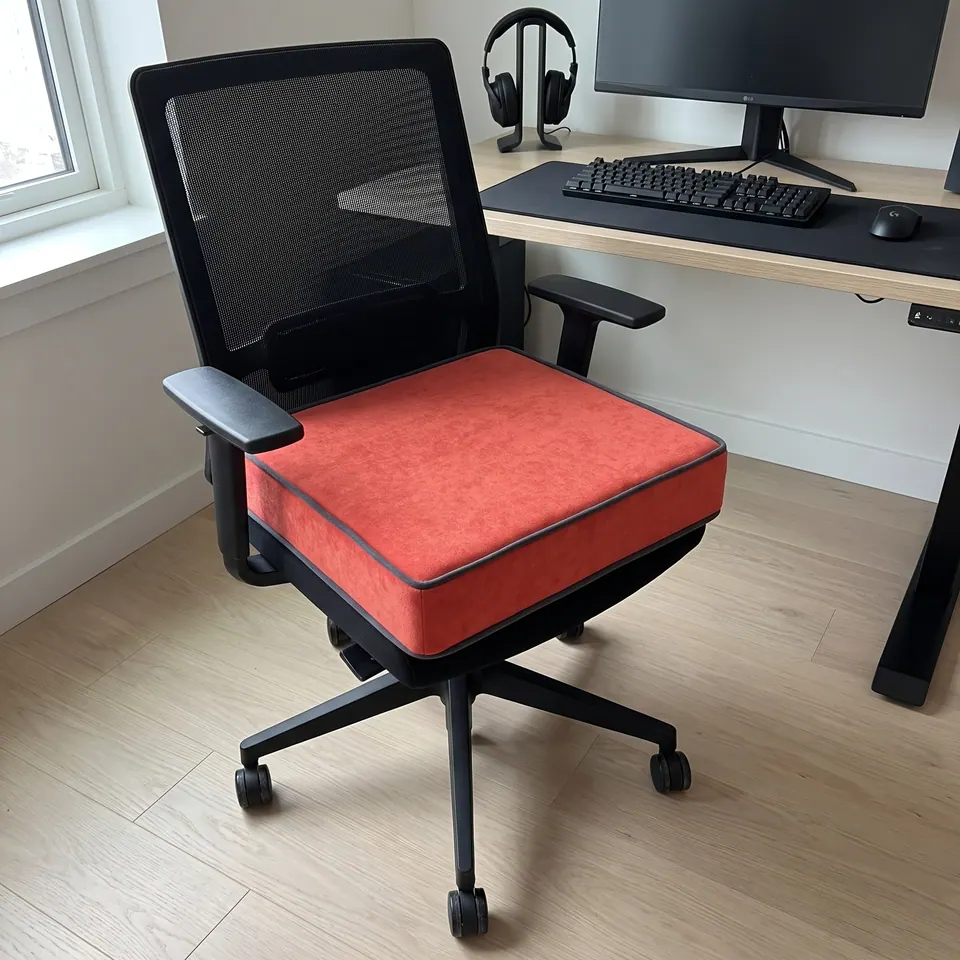
At the dining table, thickness is knee room. A 2 in pad is the usual answer: it softens the seat without lifting you toward the tabletop. Medium-firm foam is available if you'd rather feel supported than cushioned. Armchairs and lounge seats can go thicker; a rattan armchair seat of 24 x 21.25 in was made just under 3 in.
Pads thinner than 2 in can be made, but only without piping. Before you order anything thicker, check the new seat height with the seat height calculator.
A real project
Six tapered seats and one photo slot
A buyer in the US had a new kitchen set with six trapezoid chairs: 18 in at the front, 16 in at the back and 17 in deep. The order form allowed only one photo, so she merged her three measurement photos into a single image, uploaded it, and sent it by message as well. Clever woman.
She chose brown velvet with cream piping and matching cream ties. With all three numbers on one picture, the workshop had nothing to guess.
Measured
18 in front, 16 in back, 17 in deep (46/41/43 cm); six pads with ties
What it taught
When the upload field takes one photo, merge your measurement photos into one image and send it by message too.
Mistakes I've watched happen at the dining table
Typing 'with ties' into the size box, where it gets missed. Put the ties, their position, length and color in the order note, then confirm by message.
Measuring depth along a slanted side. The side of a tapered seat is always longer than the true depth.
Describing a U-shaped seat in numbers alone. Send a drawing or a traced template, or expect something close to square.
Ordering a thick pad for a table chair without checking knee room.
Ordering a back cushion for a curved rattan frame on guesswork. The seat pad is easy; the back pressed into the curve is where the fit risk lives.
Ordering eight pads the week of the party. A batch of eight needed about two weeks.
Photographs from the workbench
Open any photograph large; each one has its own link and a Save button.
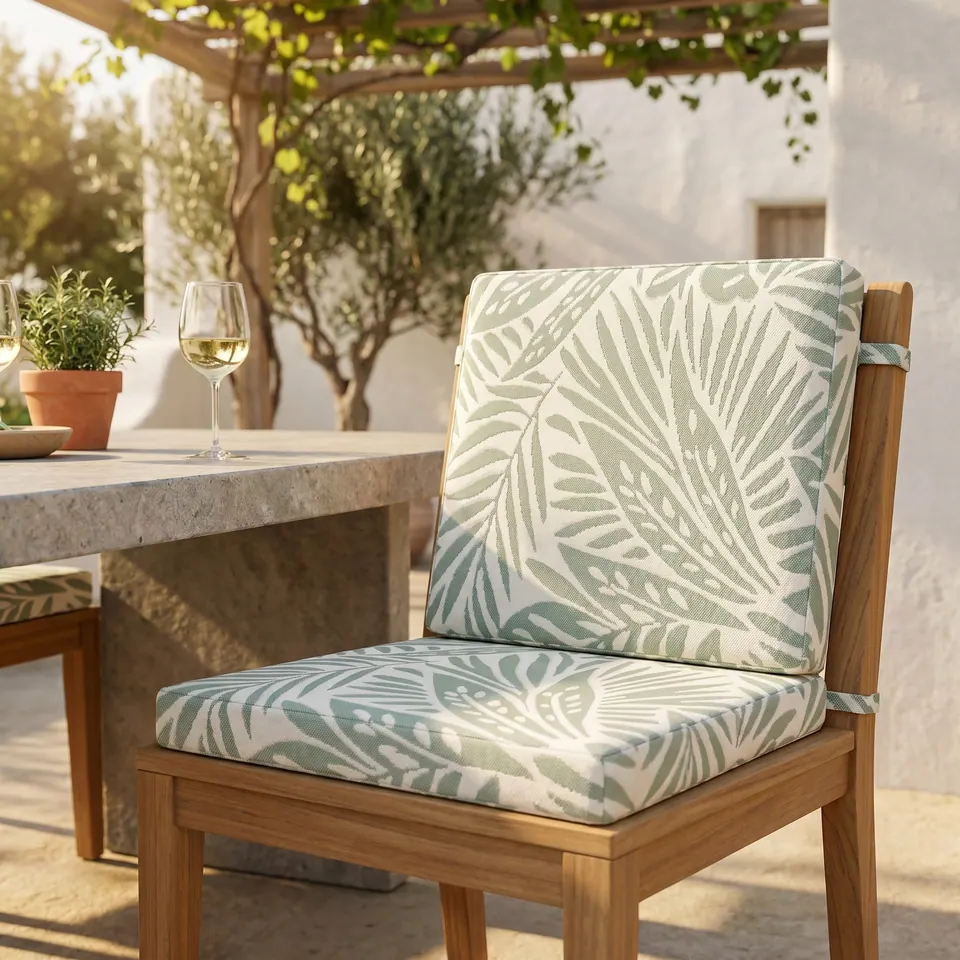
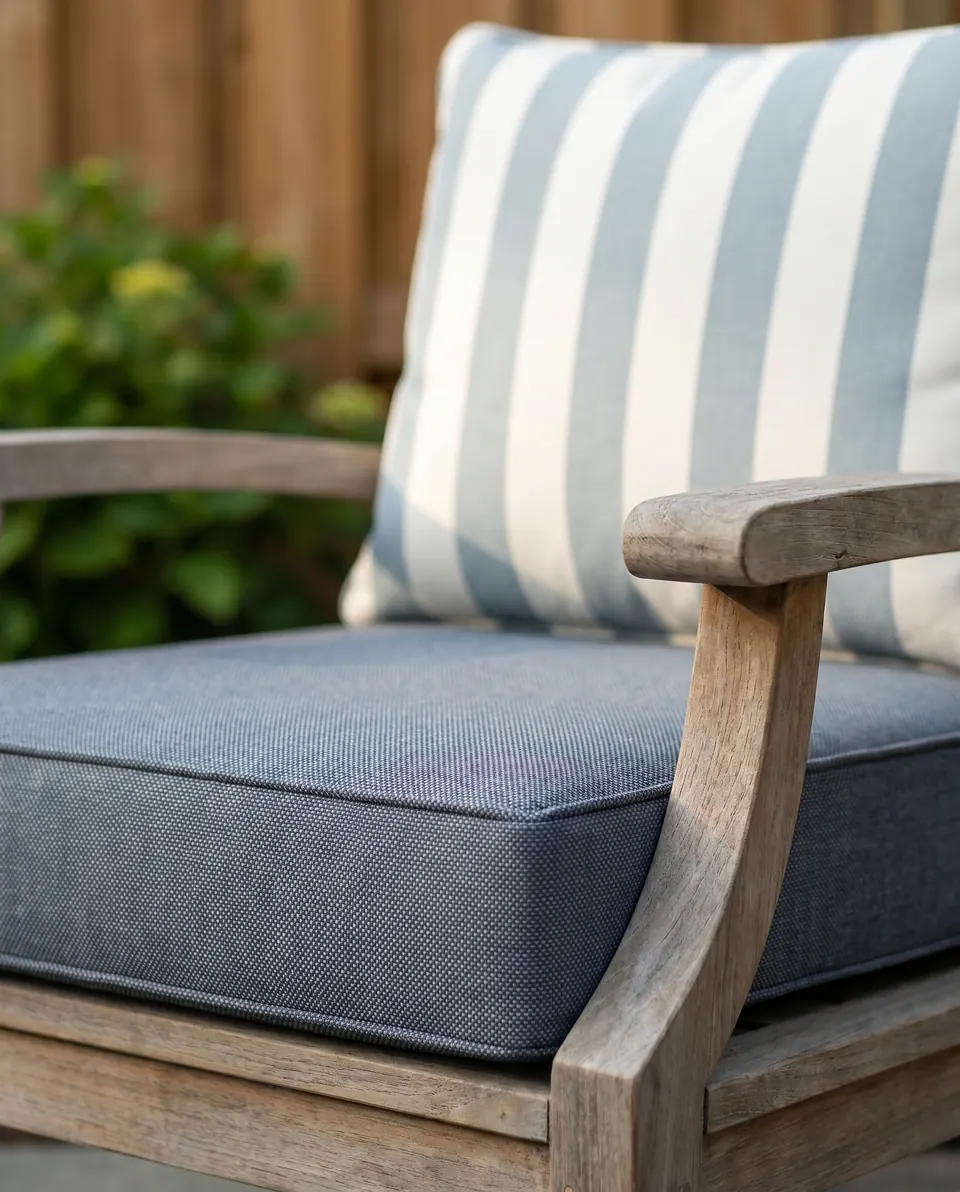
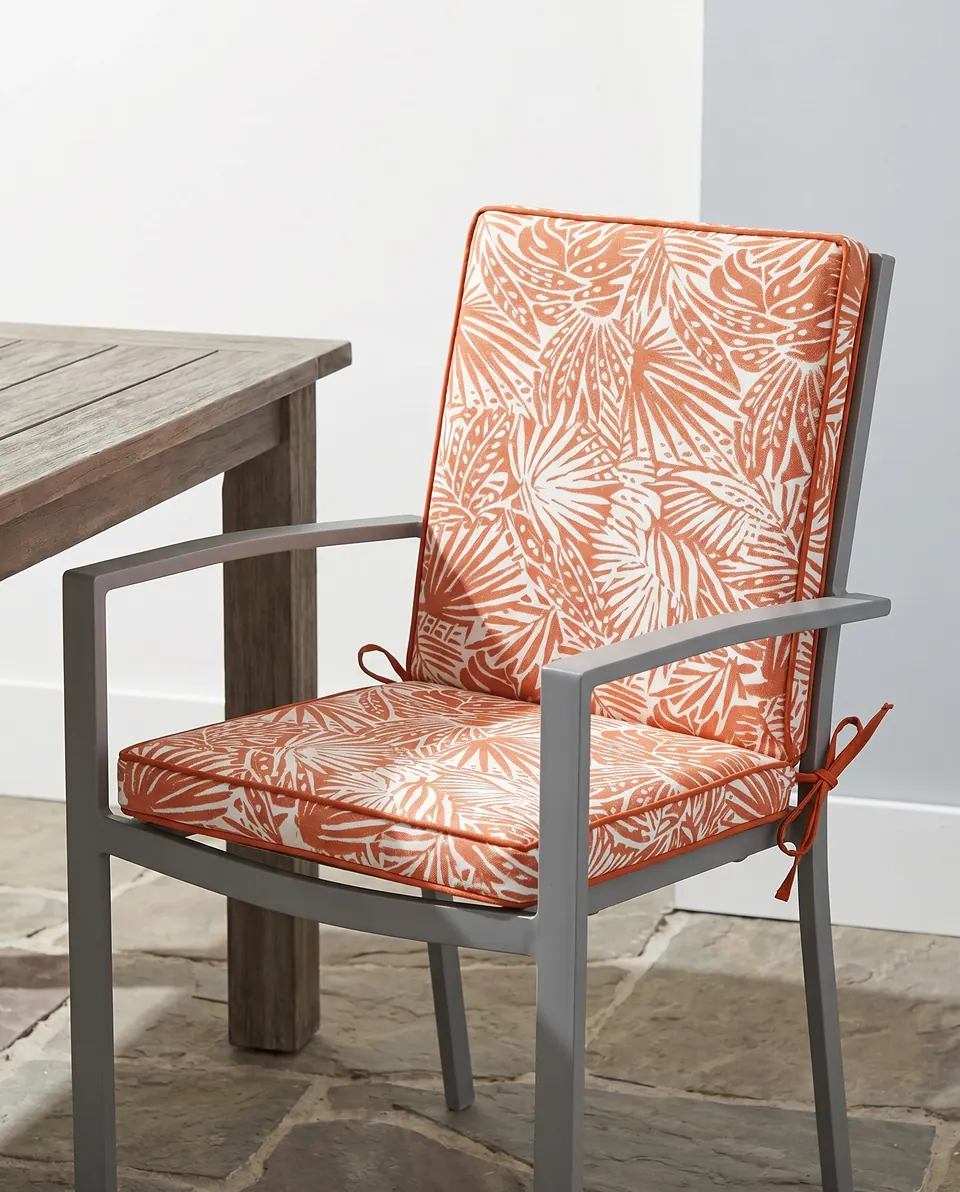
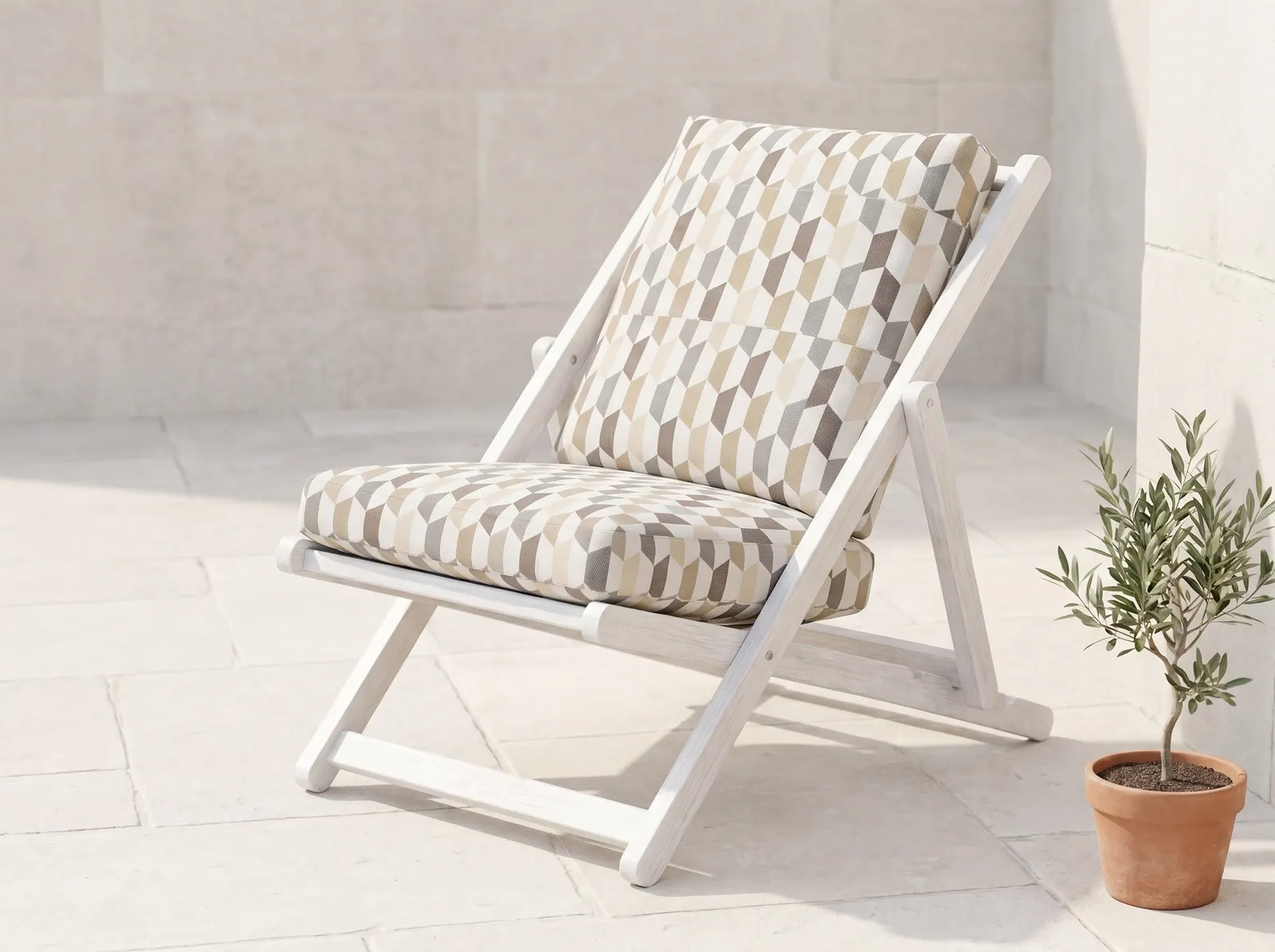
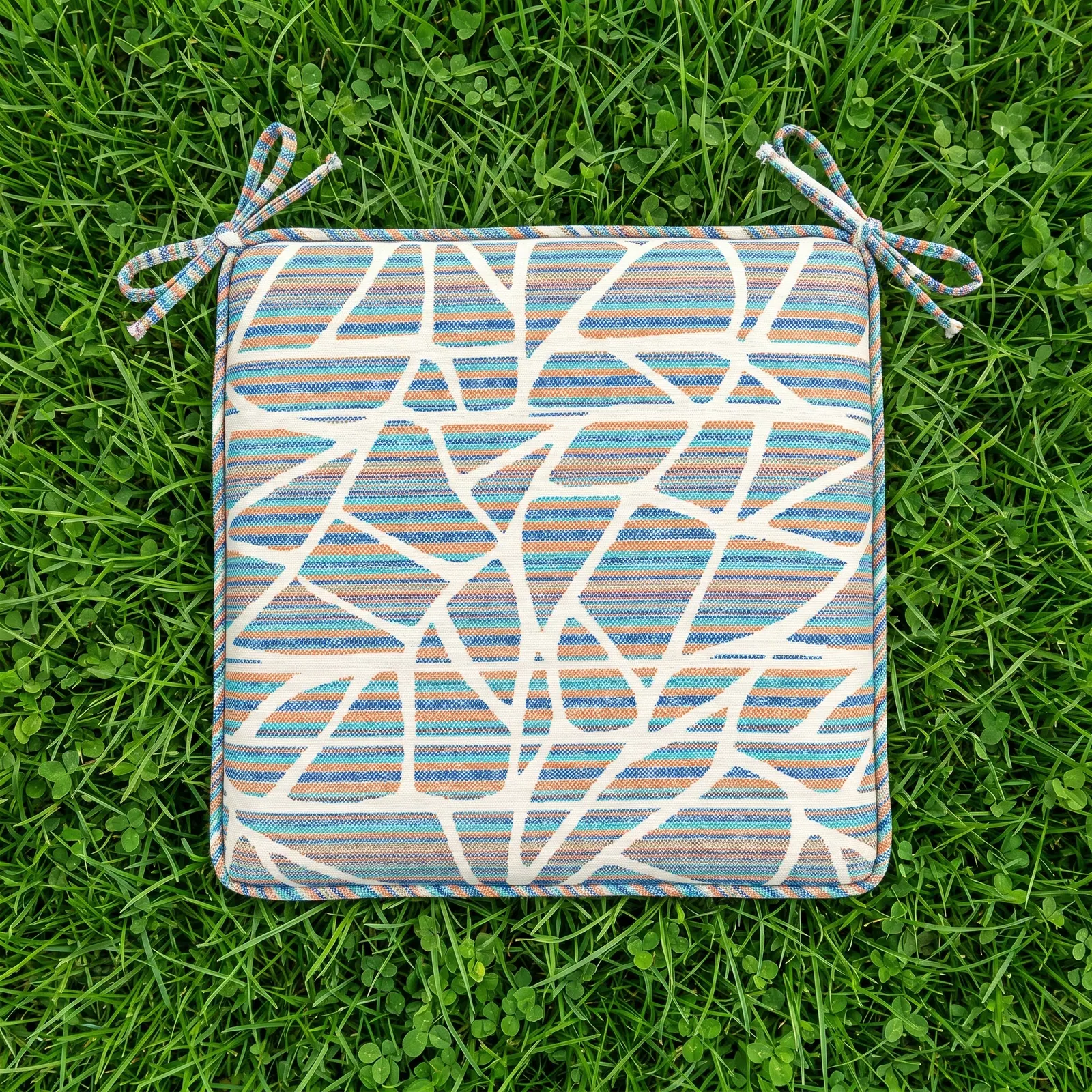
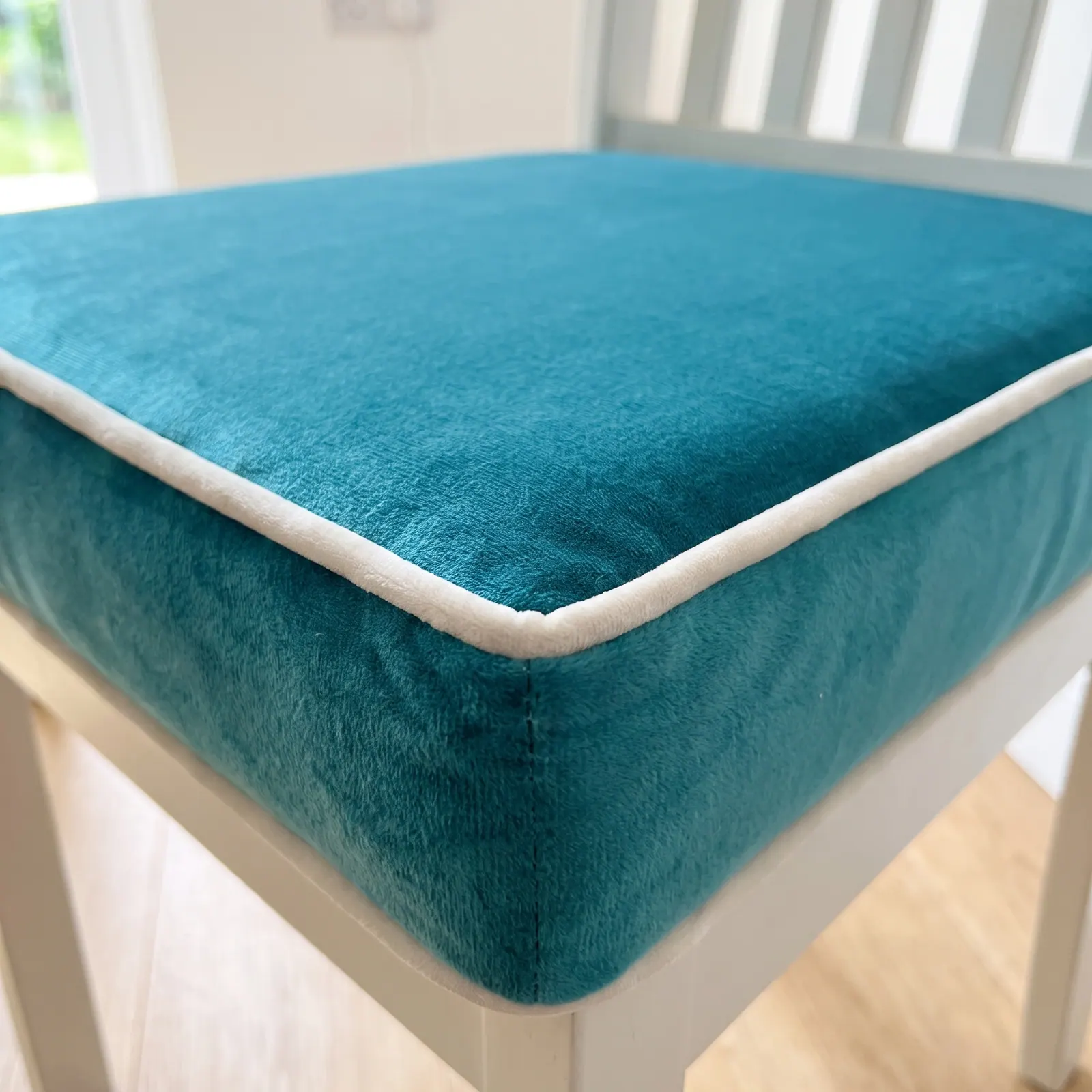
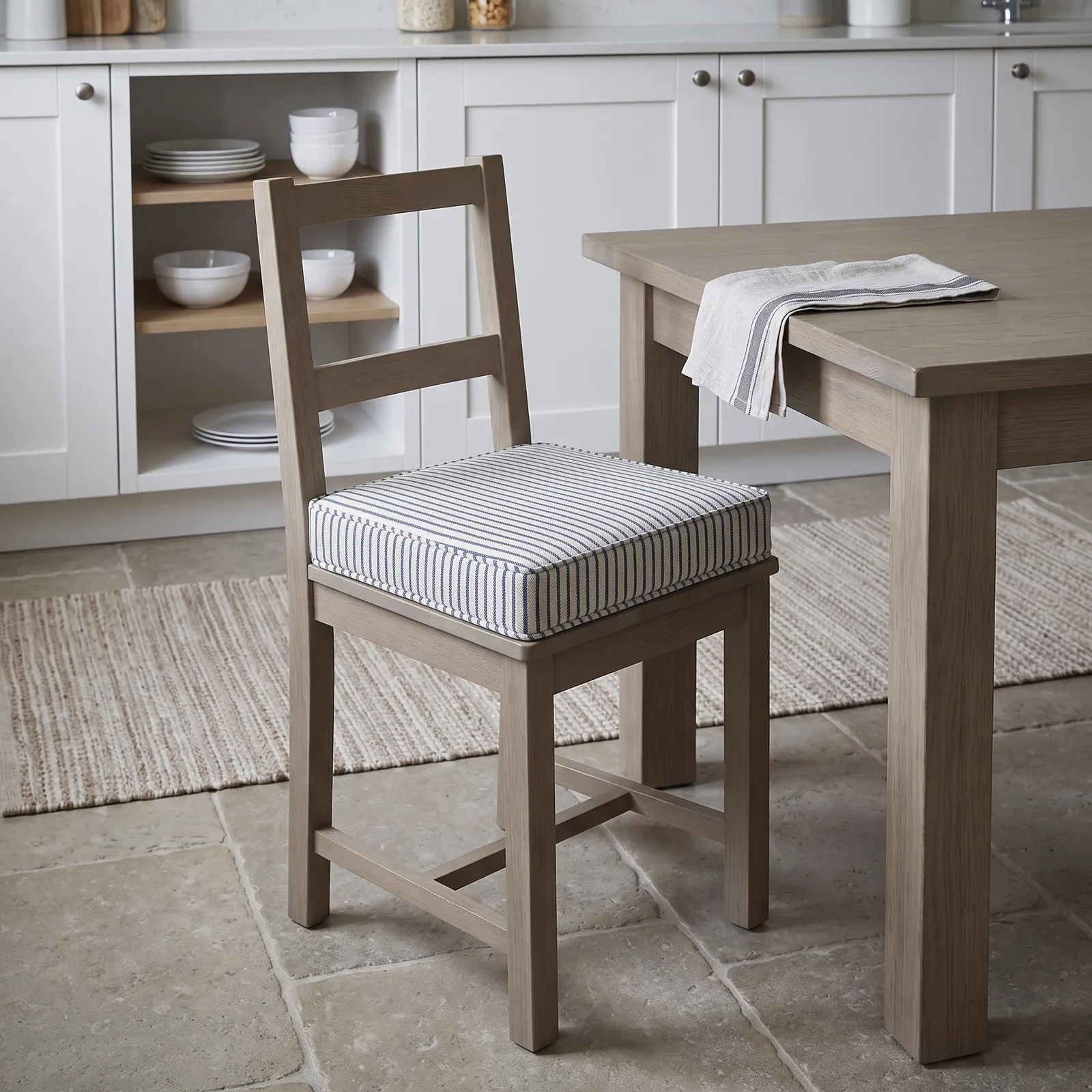
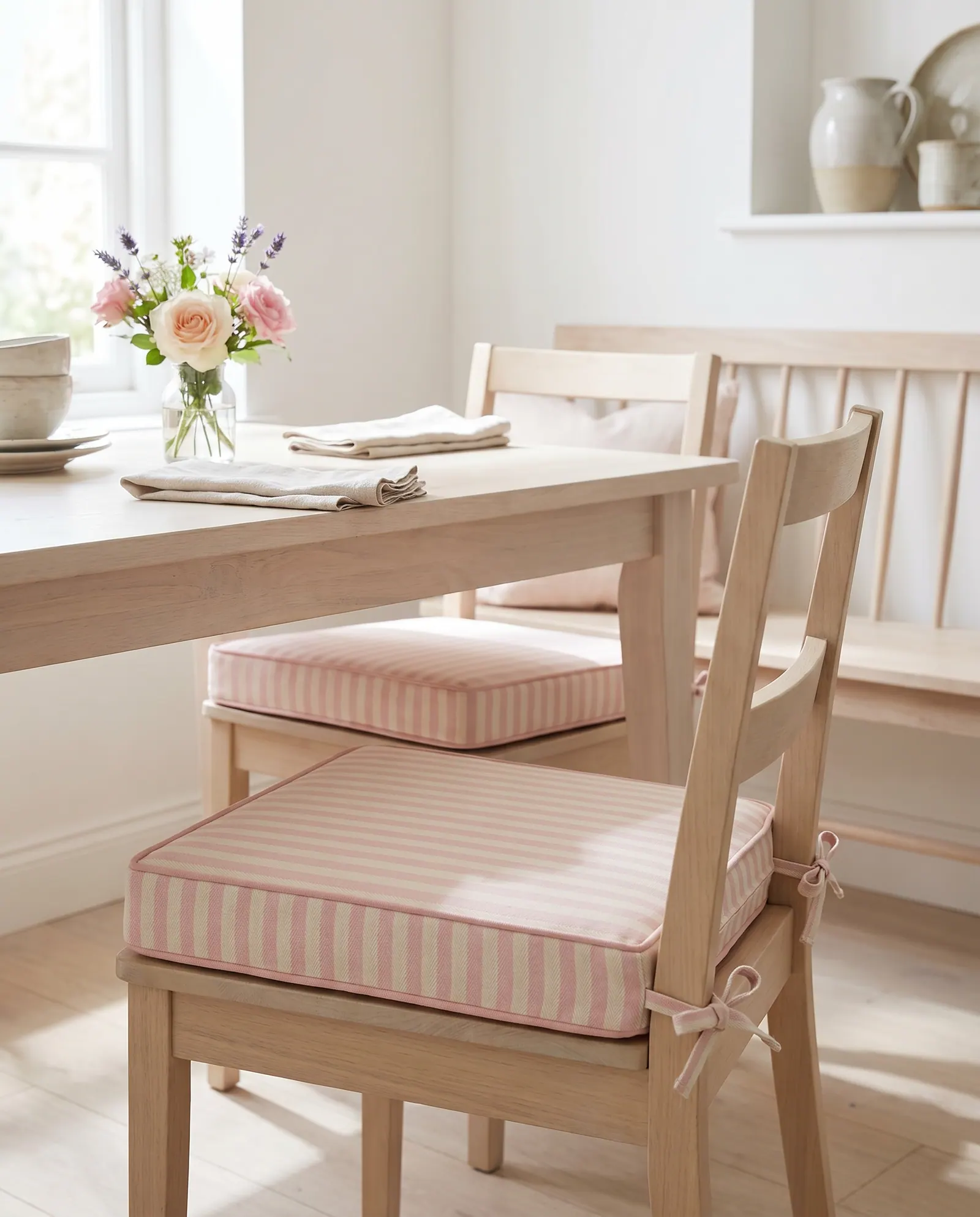
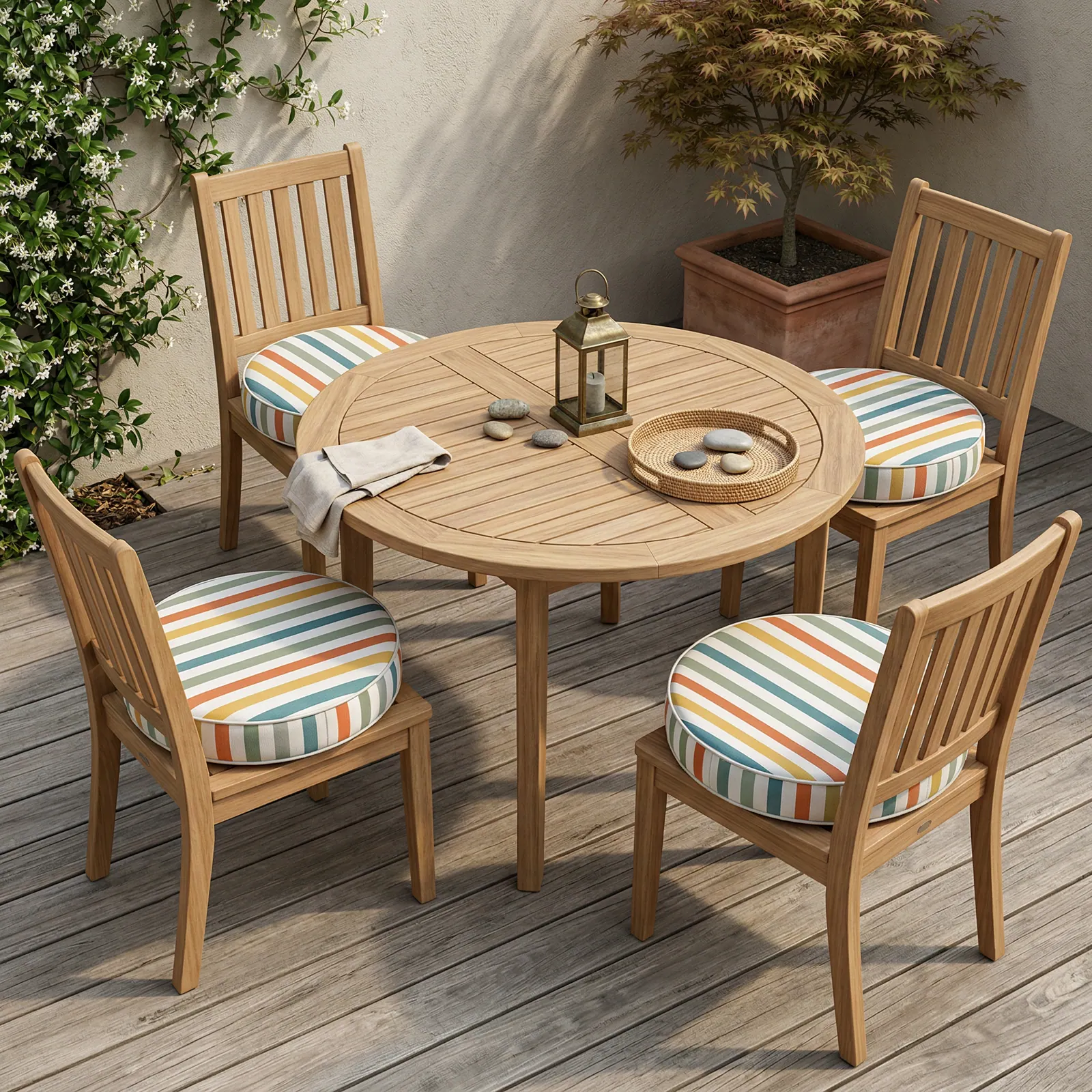
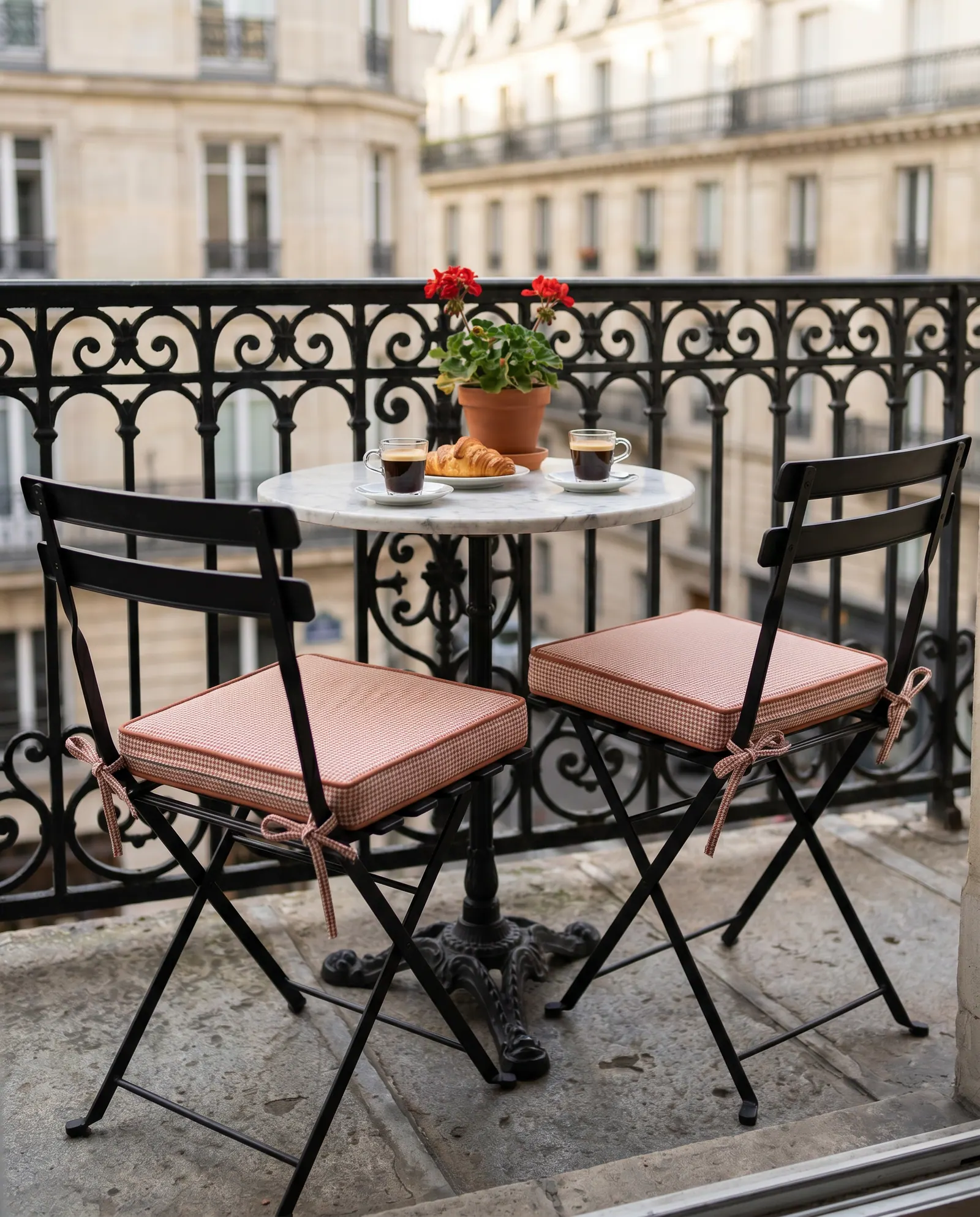
SaveA square box pad softens a folding wooden balcony chair, with the leaf-vein pattern echoing the rosemary beside it.SaveTwo soft neutral cushions turn a simple folding deck chair into a proper place to lounge.SaveSeen from above, this square tie-on pad shows its full footprint and where the ties sit.SaveThe vertical corner seam sits exactly under the piping turn, a small sign of careful cutting.SaveIndigo ticking softens a weathered ladder-back chair on a limestone kitchen floor.SaveBox-edge chair pads in a blush stripe, tied at the back posts, bring a soft cottage note to a pale oak dining table.SaveA round seat pad with ties softens a cane bentwood chair in a Parisian salon with herringbone parquet.SaveRound box cushions in a bright stripe echo the round teak table and soften four slatted chairs.SaveA burgundy velvet pad with blush piping dresses up a rattan bistro chair. Long ribbon ties hold it in place on the smooth cane.SaveTwo tie-on pads in a salmon micro-check soften folding bistro chairs for a slow balcony breakfast.SaveRose-striped chair pads tied with bows bring gentle color to a pale oak table beside tall French windows.
Chair cushion ties are sewn on only when requested. Write how many, where they go and how long they are in the order note, never in the size box.
Dear, a set of chair pads is a row of little flags down both sides of a table. Pick the piping from something that already lives in the room, a rug border or the stripe in a tablecloth, and repeat it on the bench cushion if the table has one. Bows at the back look sweet on ladder-backs and spindle-back chairs; short ties tucked out of sight suit modern chairs.
My seat size isn't in the dropdown. How do I get an exact size like 18.5 inches?
The workshop's answer
Choose the range that covers your widest and deepest measurement; it only sets the price. Then type the exact size, thickness and fabric code in the personalization box, and that is what gets cut. Fractions such as 18.5 or 19 3/8 in are fine, and centimeters too. For eight identical chairs, set the quantity; if the sizes differ, send each one and the workshop makes a custom order link.
A common question
Is piping extra on chair pads?
The workshop's answer
No. Piping is included, and a contrast piping color from the chart is free as well; the price is the same with or without it. Single piping is standard and double can be requested. Ties and a non-slip bottom are the paid extras you choose on the listing. Leave the piping blank and the workshop checks with you before cutting.
A common question
My stool seat is smaller than your smallest option. Can you still make a pad?
The workshop's answer
Yes. Select the smallest option and write your real size in the personalization box, whether that's 11 in wide or a 14 x 14 in (35 x 35 cm) pad; it's cut to your numbers. The price can't drop below the smallest option, but several small pads ordered together earn a discount.
A common question
Will the zipper show on a chair pad?
The workshop's answer
No. Every cover gets a zipper at no charge, hidden on the back edge against the chair back or on the underside. If an order doesn't make the back edge clear, the workshop asks first. If you can see the zipper on top, the pad is probably upside down.
A common question
How are custom chair pads priced, and how long does a set take?
The workshop's answer
By size and thickness, and the chair pattern is checked with the craftsmen before quoting. Medium-firm foam is available. On one order, a set of four took 7-9 days to make plus 3-5 days in delivery. Full sets have been quoted as one package; one or two pads rarely were.
A common question
Can my balcony chair pads be made in outdoor fabric if the listing shows only indoor fabrics?
The workshop's answer
Yes. Most cushions can be made in outdoor fabric. Pick a code from the outdoor chart, which is on the outdoor bench cushion listing or sent on request, and write it in the personalization box of the listing you order from. That way the chair pads and an outdoor bench cushion match.
Have it made
Have your chair cushion with ties made — ask Maggie’s workshop
Have the tape measure handy when they call. Old cushions shrink and sag; the seat underneath does not. — Maggie
Leave your details and the workshop will call you to confirm measurements, fabric, foam and piping. No prices, dates or payment on this page: it is a request, not an order.
Fabric · Foam · Pipingwhat the workshop will confirm with you
Where they meet the frame. Ties can be sewn into the seam at the corners or along the back edge, in any position, so a pair at each back corner can wrap the uprights of a ladder-back. Send a photo of the chair so the ties land on wood, not in a gap.
Ties or a non-slip base: which holds a chair pad better?
Ties fix the pad to the frame and suit spindle, ladder-back and bistro chairs. A non-slip base replaces the whole bottom panel with a grippy fabric that holds by friction; it isn't adhesive or rubber and is safe on wood, so it suits solid seats with nothing to tie to. The washable version takes longer; ask for the current lead time.
Can one order cover chairs that are slightly different sizes?
Yes. Send each size with a photo of the chair, and the workshop makes one custom order link for the set. Label every measurement with the chair it belongs to so no pad ends up on the wrong seat.
Can I order new covers for chair pads I already own?
Yes, if the foam is still good. Order covers only and write the foam's exact length, width and thickness plus your fabric code. The cover is sewn to those numbers, zippered and removable, and machine washes at 86°F (30°C) on a delicate cycle.
Does a full set of chair pads cost less per pad?
Often, yes. Send the full list of sizes, fabrics and quantities, and the workshop quotes one package price for the set rather than adding up single listings. The quote shows what the set comes to.
How do I measure a round or curved chair seat?
Trace it. Lay paper on the seat, draw the edge, cut it out and photograph it flat beside a tape measure. Or sketch the seat with total width and depth, where each curve starts and ends, and how deep it runs. Curves aren't read from numbers alone.
Is 2 inches thick enough for a dining chair cushion?
For most dining chairs, yes. Guides warn that pads thinner than that compress quickly, while much thicker pads push you up toward the table. The workshop's 2 in (5 cm) pads use firm 32-density foam that holds up; 3 in (7.5 cm) adds comfort if the table height allows. Check the gap between seat and tabletop before going thicker.
Can kitchen chair cushions be made non-slip without ties?
Yes. A non-slip base replaces the whole bottom panel of the cover with a grippy fabric that holds by friction, leaves no residue and is safe on wood, so it suits chairs with nothing to tie to. It's an add-on you request in the order note. On spindle or ladder backs, ties at the back corners still hold a pad more firmly.
Should a chair pad be foam or fiberfill?
Foam, for a pad that gets sat on daily. Chair cushion guides note that fiberfill flattens and shifts, while foam keeps its shape longer, and undersized pads that slide around are the most common buying mistake. The workshop's chair pads use firm high-density foam, about 2.0 lb/ft³ (32 kg/m³), cut to the seat, in 2 in (5 cm) or thicker.
Stitch straight — Maggie
Share this atlas entry
Readings
Photographs read by the masters: dining chair cushions & pads
Real cushions made for real rooms, each read for proportion, fabric and fit.

 Save
 Save
 Save
 Save
 Save
 Save
 Save
 Save
 Save
 Save
 Save
 Save