 Save
A Reading by MaggieDining Chair Cushions & Pads
Two blues on a silvered teak armchair, and how to measure a chair cushion with ties for it
Maggie reads a slate seat and a striped back on a weathered teak armchair, then walks the tape through the four measurements people most often get wrong on an outdoor chair.
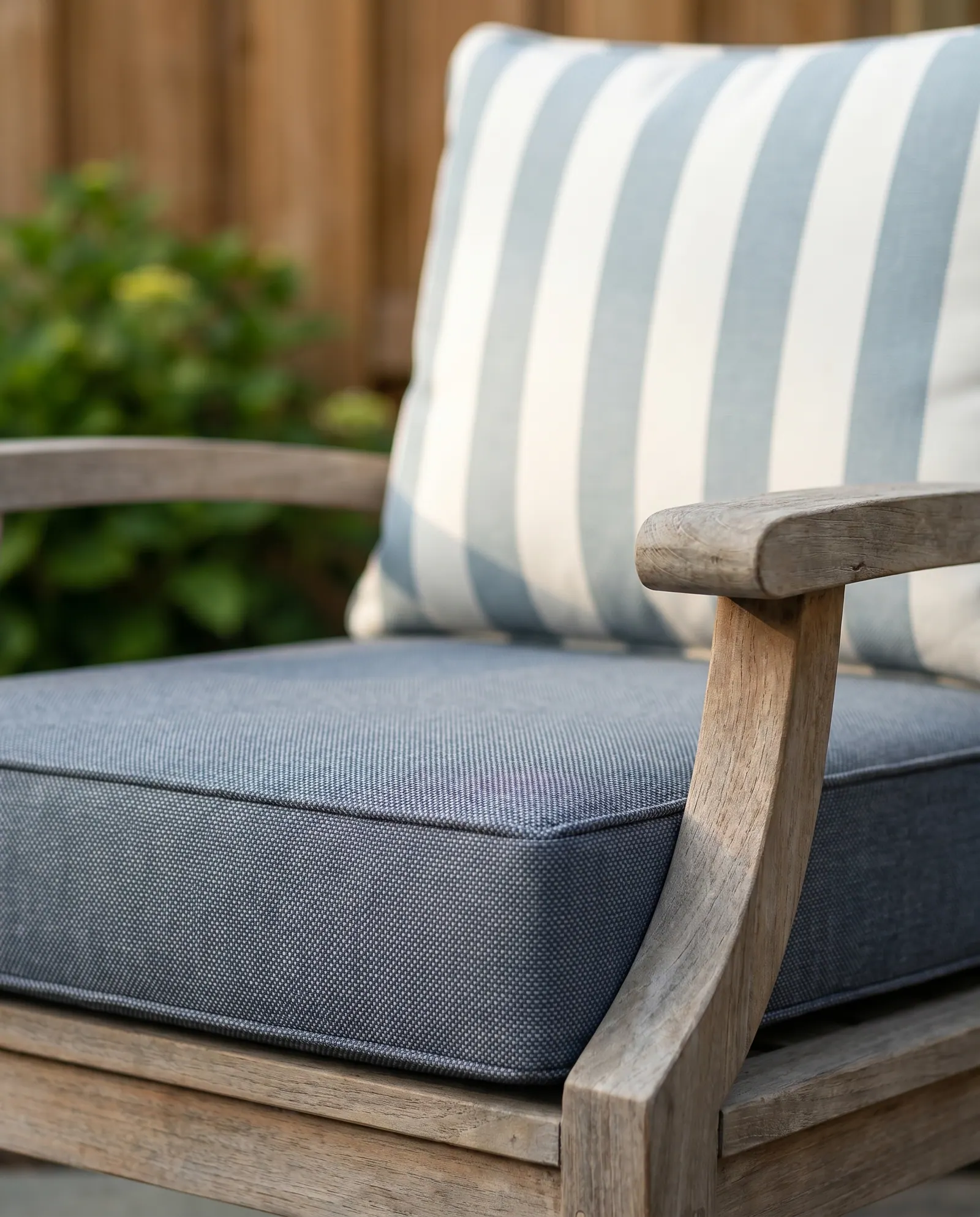
Solid slate seat, striped back: a two-fabric outdoor chair set in shades of blue.

The quick answer
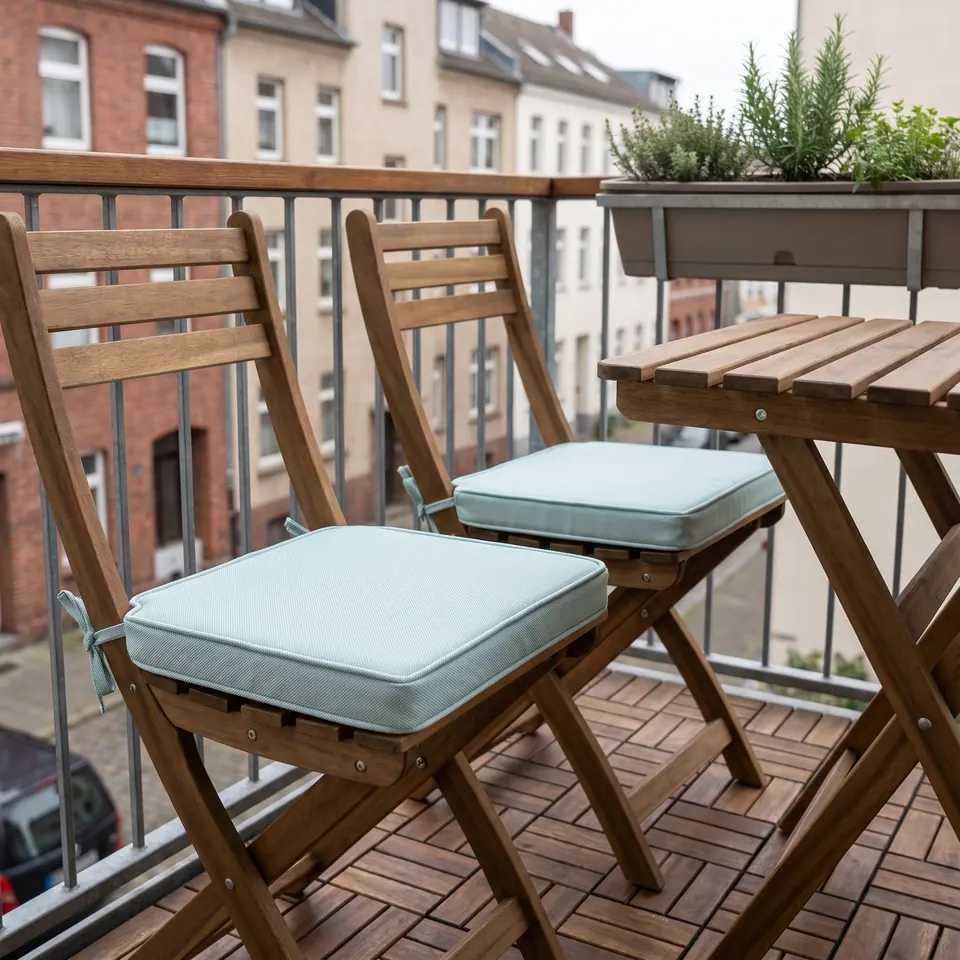
To order a chair cushion with ties for an armchair, measure the seat inside the arms at the front and at the back, the depth from the front edge to the back slats, and the back from the seat frame to where the cushion should stop, minus the seat cushion's thickness. Then note which posts the ties wrap. Measure the chair, never the old cushion.
A two-fabric armchair, read from the front rail up
The most expensive mistake on an outdoor armchair happens before the tape measure leaves the drawer: people measure the old cushion instead of the chair. Old cushions shrink, slump and fib. The chair does not.
This weathered teak armchair, silvered by a few summers, holds a two-fabric set. The seat is a textured slate blue solid, the back a powder blue and white stripe. Both blues share a gray undertone, so the pair looks calm rather than busy, and the slate on the seat picks up the darkest band in the stripe. That is the trick worth copying: put the solid where the wear is and the pattern where the eye is.
The seat is a box cushion with self piping, and the piping earns its keep on the front edge, where the backs of your legs rest. A straight welt is a kind of honesty, and this one stays straight because the cushion was cut to the frame, not guessed.
The props are few and chosen. Silvered teak arms frame the blues and keep the look relaxed rather than nautical. The cedar slat fence behind is warm, which makes the cool blues look crisper. A flowering shrub softens the fence line, and soft evening shade keeps the colors honest.
Both fabrics come from the water-repellent membrane family. Water-repellent is not waterproof, and the difference between the two matters if the chair lives uncovered. More seats in this shape sit with the dining chair cushions and the patio and porch cushions. What does your chair measure inside the arms, dear?
Pinned by Maggie
Follow the pins from the slate seat and its piped front edge up to the striped back, the silvered teak arm and the cedar fence behind.
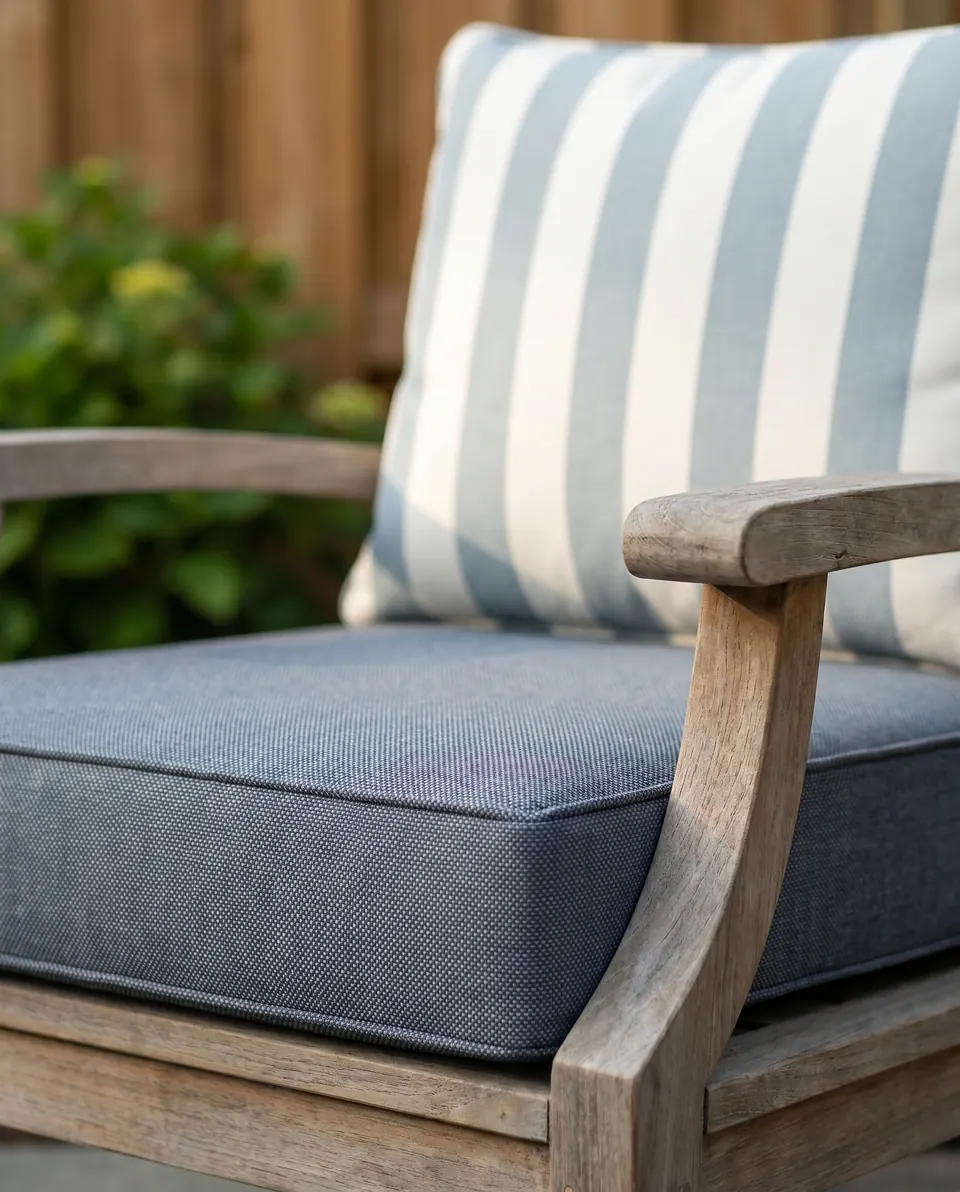
- Slate blue seat
A textured slate solid on the seat hides marks and matches the stripe's darker band.
- Piped front edge
Self piping keeps the front edge crisp where legs rest against it.
- Blue stripe back
The powder-blue stripe on the back is the pattern you notice from across the garden.
- Silvered teak armrest
Weathered teak arms frame the two blues and keep the look relaxed.
- Cedar fence behind
Warm cedar in the background makes the cool blues look crisper.
- Slate blue seatA textured slate solid on the seat hides marks and matches the stripe's darker band.
- Piped front edgeSelf piping keeps the front edge crisp where legs rest against it.
- Blue stripe backThe powder-blue stripe on the back is the pattern you notice from across the garden.
- Silvered teak armrestWeathered teak arms frame the two blues and keep the look relaxed.
- Cedar fence behindWarm cedar in the background makes the cool blues look crisper.
Four measurements, and the slip that spoils each one
Seat width, taken twice
Measure inside the arms at the front rail, then at the back slats. If the numbers differ, you need a tapered pad, and the trapezoid cushion calculator turns them into a shape. The usual slip: measuring outside the arms.
Depth to the slats, down the middle
From the front edge of the seat to the back slats, along the center line. The usual slip: measuring along an arm.
Back height, minus the seat
Measure from the seat frame to where the back cushion should stop, then subtract the seat cushion's thickness, because the back stands on the seat. The usual slip: a back that rides above the top rail.
Tie points, written down
Note which posts each tie wraps and how far it sits from the nearest corner, seat and back. The usual slip: listing ties for one cushion only. The tie placement pattern covers chairs and swings.
A mustard floor sofa that arrived in two dye lots
A grandparent in the US ordered a mustard floor sofa for the grandchildren's sleepovers: a 23 x 40 in (58 x 102 cm) seat, plus an extra 23 x 40 in cushion for the base, with ties at the corners so the two could be tied together into a bed.
The seats arrived; the backrest and bolsters sat in transit for a month. The replacement backrest then came from a different dye lot, a mustard that disagreed with the seat. The workshop remade a matching backrest and bolsters. Then it turned out the ties had been left off the second cushion, so ties and matching thread went out as well.
Two lessons, as true for a pair of chair cushions as for a sofa. Cut every piece of a set from the same dye lot and ship it together. And list the ties on every piece in the order, not only on the first.
Buyer questions: photos, piping and a chair made from a sofa
- A common question
The order form only takes one photo, but I have three measurement shots. How do I get them all to you?
The workshop's answerUpload the one photo the form allows and write 'drawings sent via message' in the personalization box. Then send all three photos in the conversation. Merging them into a single image before uploading works too.
- A common question
Could my dining cushions have a tough outdoor fabric body with velvet piping for a softer look?
The workshop's answerIt can be made, but the workshop advises against mixing an outdoor fabric and an indoor fabric on the same cushion. If durability is the real goal, it recommends one of the indoor upholstery fabrics built to stand up to heavy use instead.
- A common question
Is there a single-seat chair version of the modular floor sofa?
The workshop's answerYes. An ottoman with a backrest works as a lounge chair. Its layers are connected, so it lies flat or folds back up into a chair, and you give the color you want in the order note.
On the cutting table: the teak armchair pair
| Pieces | Seat cushion and a separate back cushion |
|---|---|
| Seat fabric | Textured slate blue solid, water-repellent outdoor weave |
| Back fabric | Powder blue and white stripe from the same family |
| Edge | Box edge on both pieces |
| Piping | Self piping; keeps the front edge crisp where legs rest |
| Fastening | Ties at the back posts, positions measured from the corners |
| Measure | Front width, back width, depth to the slats, back height minus seat thickness |
| Fabric rule | Outdoor body with outdoor piping; no indoor velvet trim |
| Best for | Teak and hardwood armchairs on a patio or porch |

Have it made
Have this made — ask Maggie’s workshop
Numbers first, fabric second, piping last. Jot down what you have, and the workshop will go down the list with you, item by item. — Maggie
Leave your details and the workshop will call you to confirm measurements, fabric, foam and piping. No prices, dates or payment on this page: it is a request, not an order.
On an outdoor armchair, measure the back cushion from the seat frame, then subtract the seat cushion's thickness: the back stands on the seat, not on the wood.
Maggie
Questions buyers ask next
Should the seat and back of a two-fabric patio chair set match exactly?
They should share an undertone rather than match. Here the slate seat picks up the darkest band of the powder blue stripe, so the pair reads as one set. Put the solid on the seat, where wear shows most, and the pattern on the back, where it is seen.
How can I tell whether my armchair seat needs a tapered cushion?
Measure the width inside the arms at the front rail and again at the back slats. If the two numbers differ, the pad is a trapezoid, not a rectangle. Give both widths and the depth, and the cushion is cut to that shape.
Can a water-repellent teak chair cushion stay out in a summer storm?
Water-repellent fabric sheds light rain and spills, but it is not a sealed waterproof cover, and water can still find its way in at the seams during a long downpour. Stand the cushions on edge after a shower and bring them under cover for wet spells.
Stitch straight — Maggie