A Reading by MaggieDining Chair Cushions & Pads
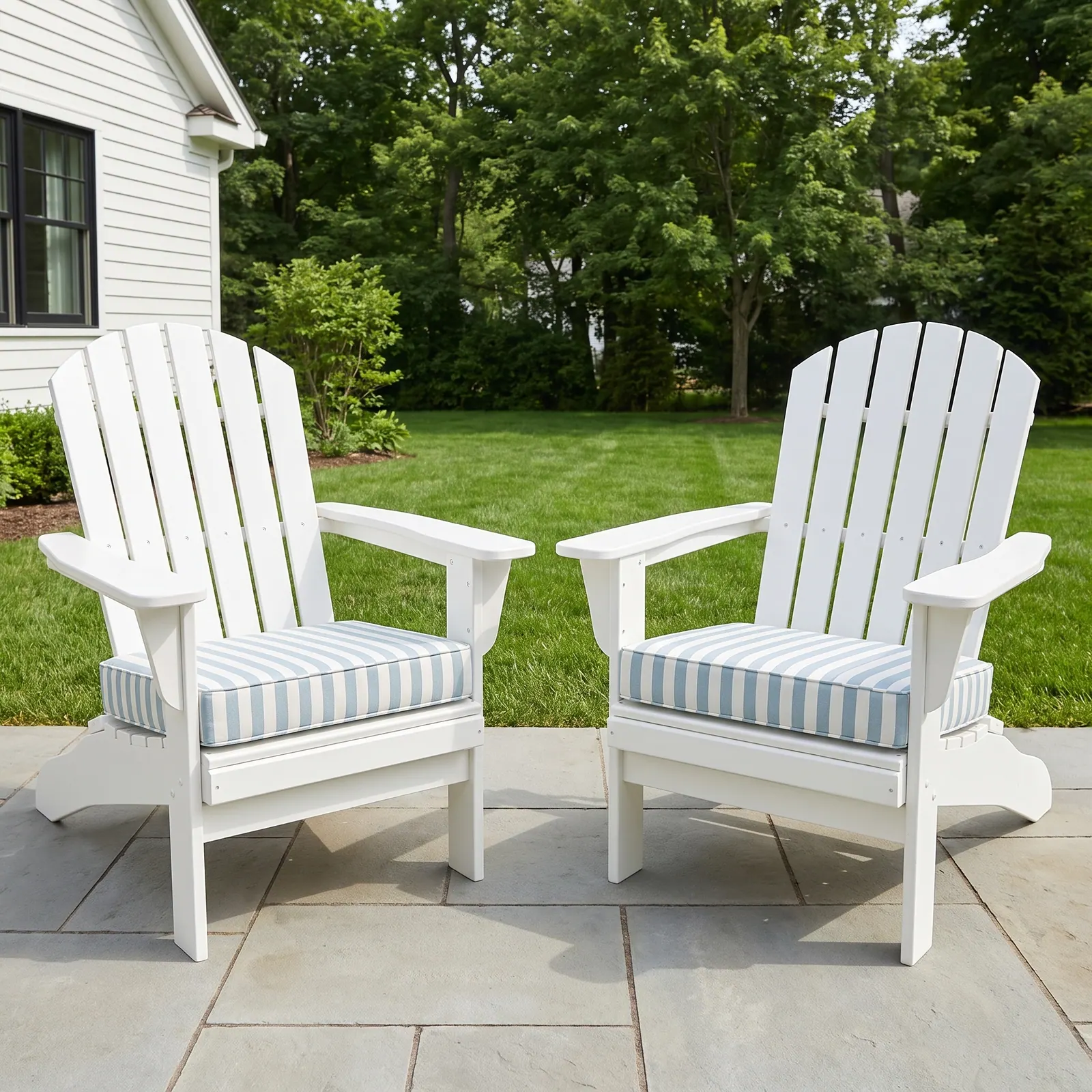
Powder blue striped chair pads on two white Adirondack chairs
Maggie answers three chair-pad letters first, then reads a backyard pair: striped box pads, white clapboard, bluestone paving and a lawn that does half the color work.

 Save
The quick answer
A chair cushion with ties in powder blue and white stripe suits white Adirondack chairs because the blue echoes gray-blue bluestone and the white repeats the chairs and clapboard. Use firm box pads of moderate thickness to level the sloping slats, run the stripes front to back on both chairs, and tie them at the back. The fabric is water-repellent, not waterproof.
Buyer questions
- A common question
Could you make soft, slouchy seat pads that drape over the chair like the ones in my photo?
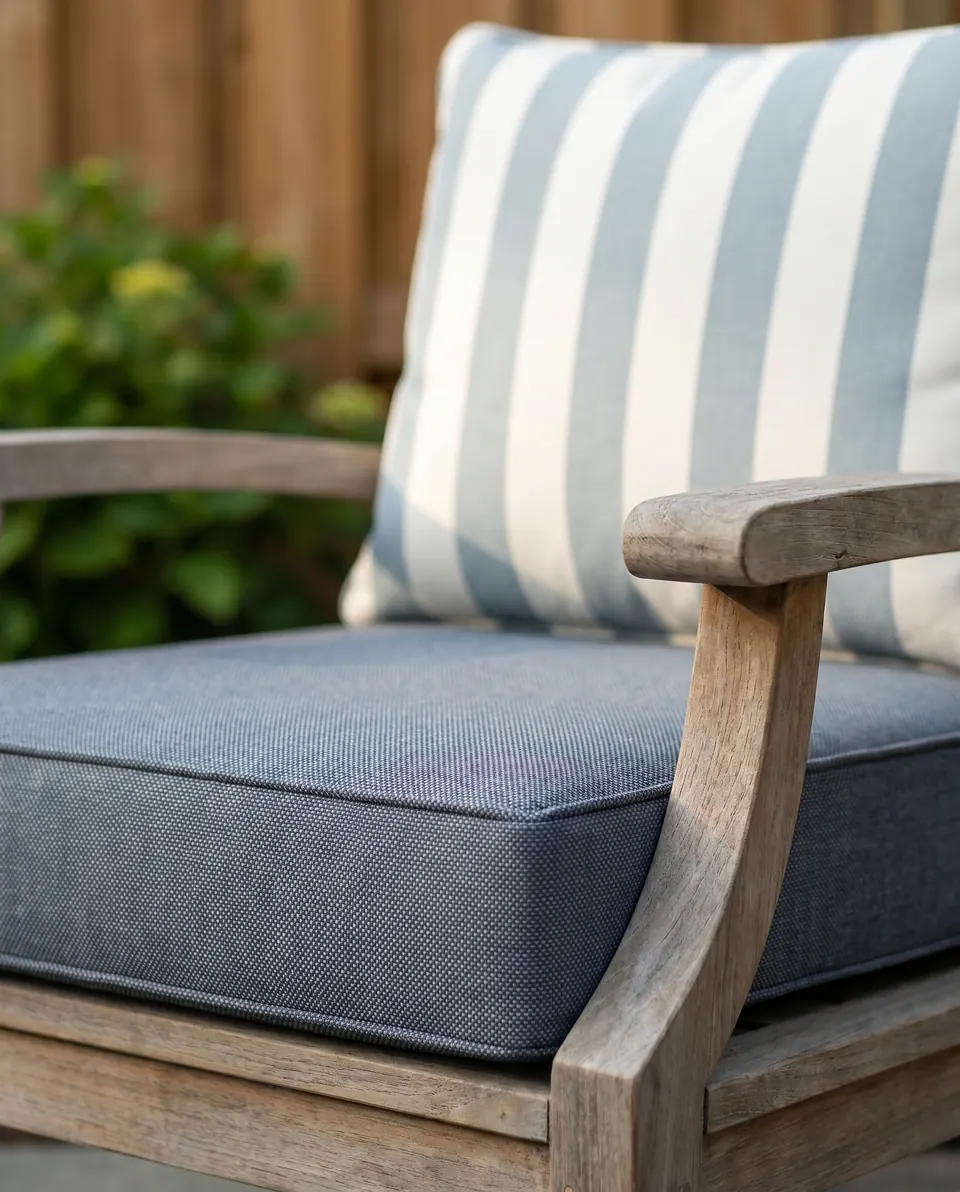
The workshop's answerNot that style. Those pads use a different inner filling, and the workshop builds only with 32-density long-life firm foam, which will not drape. The shop said so before production rather than promise a look it could not deliver.
- A common question
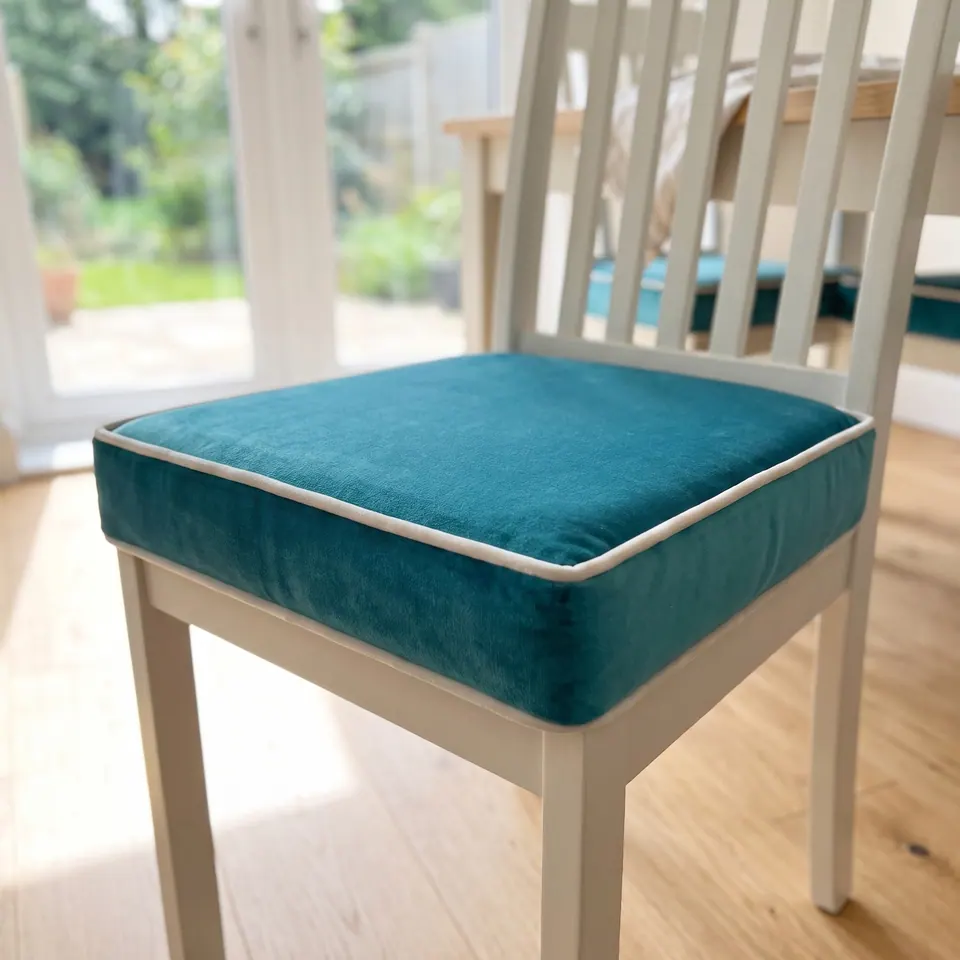
My dining chairs have back supports. Can the pads have notches for them, or an arched back edge instead?
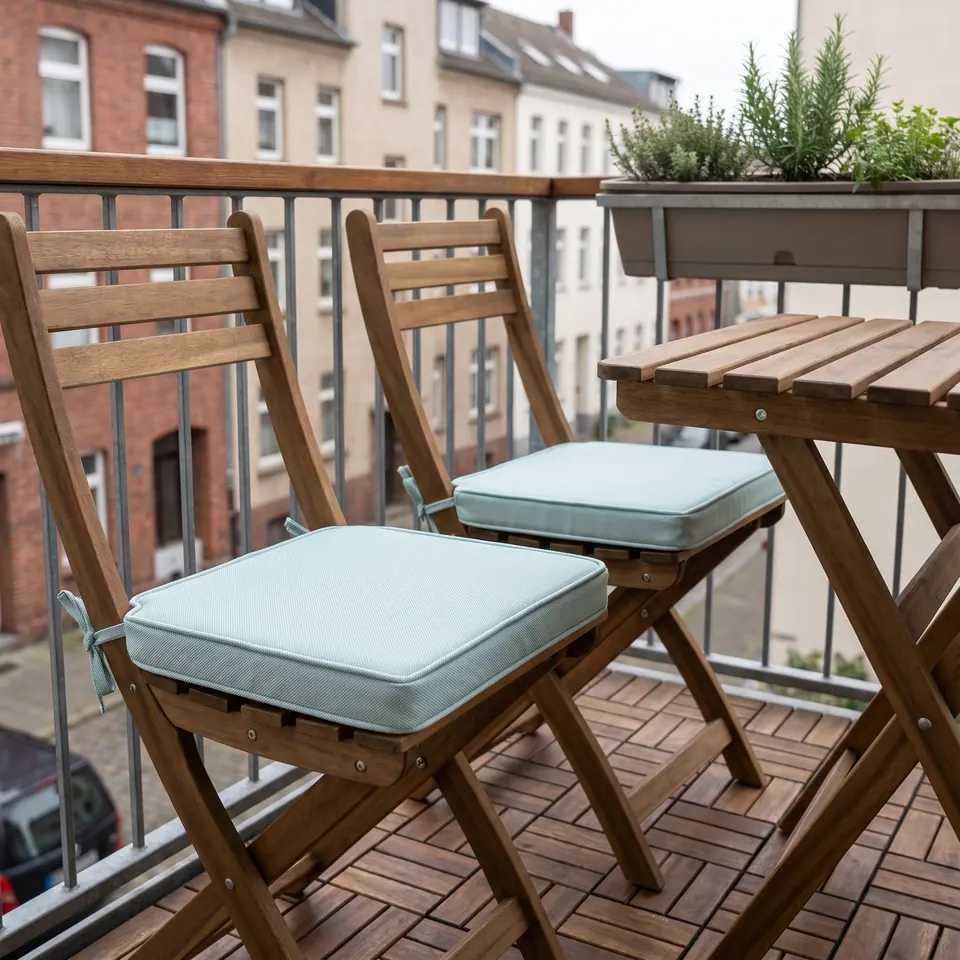
The workshop's answerNotches cannot be made reliably from a distance, so the shop suggested an arched back. It checked the drawing, a 20 in (51 cm) chord on a 12.5 in (32 cm) radius for a 5 in (13 cm) arc height, and confirmed sharp corners where the arc meets the sides, about 1 in (2.5 cm) rounded front corners, the zipper along the arc, ties inset 4.5 in (11.5 cm) and a non-slip base.
- A common question
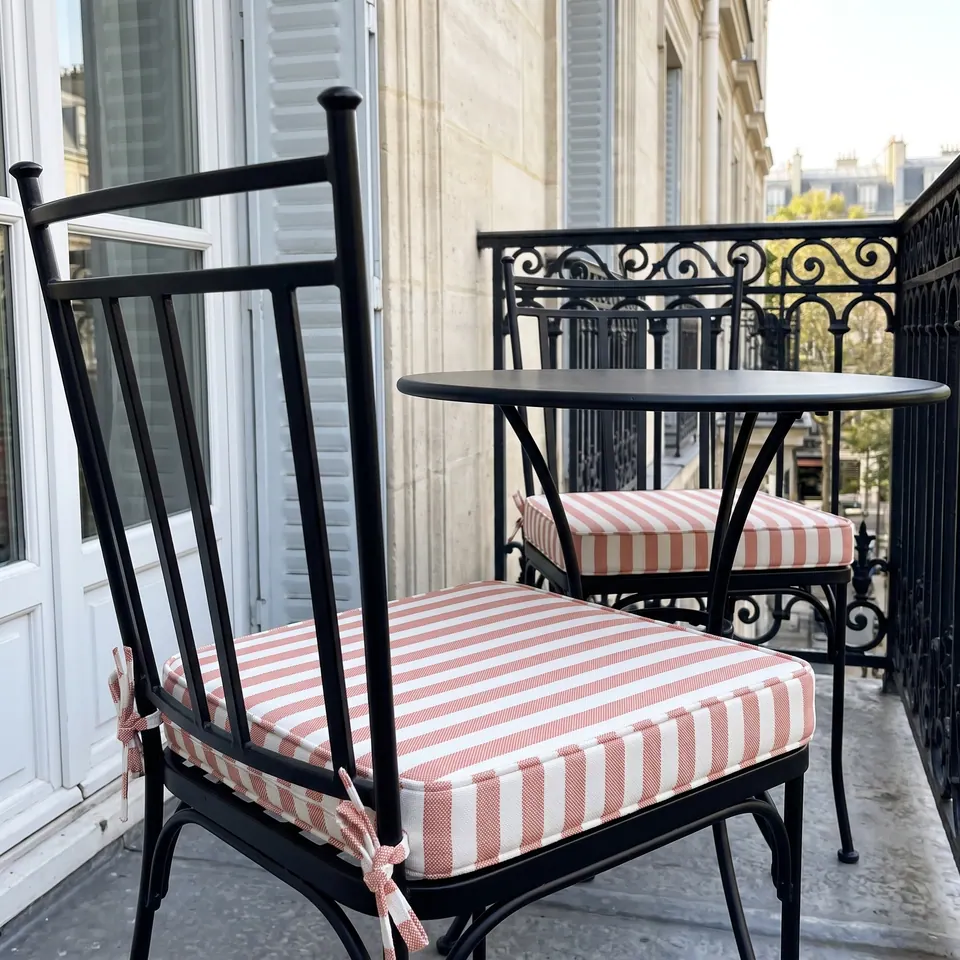
I need a chair cushion with ties at the back, about 5 inches thick. Can you do that?
The workshop's answerYes. The shop asked for a photo of the chair and its measurements, a 21.5 in (55 cm) seat base in that case, then sent close-up photos of smoke, beige, brown and mint, plus a linen swatch card to choose from.
Now, the reading
Where the powder blue comes from
Right, then. Before anyone chose a stripe, this backyard had already picked its palette: white clapboard, white Adirondack chairs, gray-blue bluestone underfoot and a great deal of green. The pads only had to agree.
Powder blue agrees with the bluestone. Step back and paving and stripe share the same cool, chalky note, so the pads look as if they belong to the patio rather than to a delivery box. The white stripe repeats the chair paint and the siding. The lawn and boxwood sit opposite blue on the color wheel, which is why the pads look fresher against grass than they would against brick.
Light matters as much as paint. These chairs sit in bright summer shade, which holds a pale blue steady. In hard afternoon sun, powder blue can read almost white from the kitchen window. If your chairs face full sun, go one step deeper, toward cornflower, and the stripe will still show at four o'clock. I have learned that the embarrassing way, dear.
Pinned by Maggie: the backyard pair
Start at the left pad and follow the pins across the matching chair, the front rail and the clapboard, then out to the lawn.
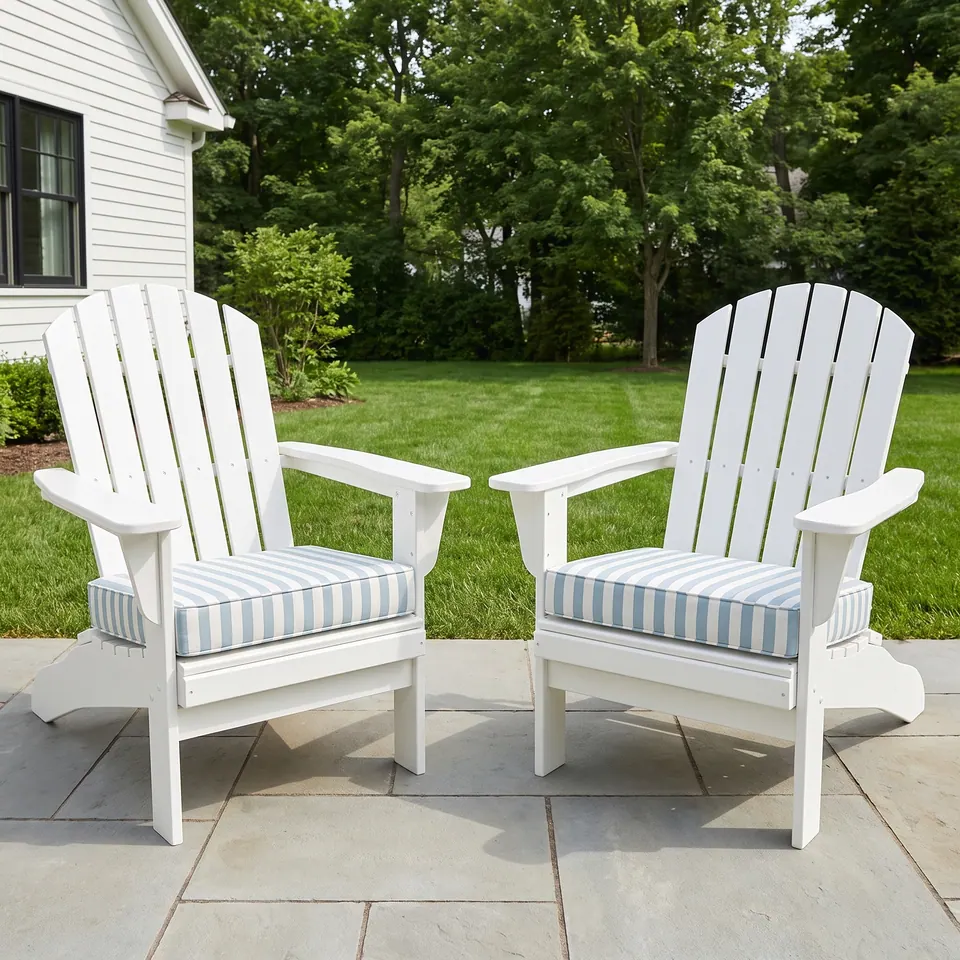
- Left seat pad
A firm box pad evens out the sloping slats without pushing the sitter forward.
- Matching right pad
Stripes run the same direction on both chairs so the pair reads as a set.
- Seat front edge
The pad stops at the front rail, leaving the white chair frame visible.
- White clapboard wall
Powder blue and white stripes suit painted clapboard and white furniture.
- Open lawn backdrop
With only lawn and trees behind, the stripes become the focal point.
- Left seat padA firm box pad evens out the sloping slats without pushing the sitter forward.
- Matching right padStripes run the same direction on both chairs so the pair reads as a set.
- Seat front edgeThe pad stops at the front rail, leaving the white chair frame visible.
- White clapboard wallPowder blue and white stripes suit painted clapboard and white furniture.
- Open lawn backdropWith only lawn and trees behind, the stripes become the focal point.
Slats, stripes and the front rail
Now the shape. Adirondack seats slope backward and the slats dip. A firm box pad of moderate thickness fills the dip and levels the seat without tipping the sitter forward. Too thick, and the chair arms end up at your elbows; too thin, and you count slats.
Each pad stops at the front rail, so a band of white frame still shows. The chair keeps its outline, and the stripe gets a clean edge to end against. Self piping follows the box edge in the same stripe.
The stripes run front to back on both chairs. That lengthens the seat to the eye and, more to the point, makes two pads read as a pair. Mismatched stripe direction on a pair is the thing everyone notices and nobody can name.
The fabric is a water-repellent membrane cloth: it sheds dew and a passing shower, but water-repellent is not waterproof, so bring pads in when storms roll through. The tie placement pattern covers slatted chairs, and the chair pad atlas has more shapes. Which way do your slats run?
Sage that turned olive, and three-quarters of an inch gone
One buyer wrote in about a large sage linen floor cushion with red piping. In person the sage read more olive and the red darker than she wanted, so the shop made new covers with the dark red she chose from the chart.
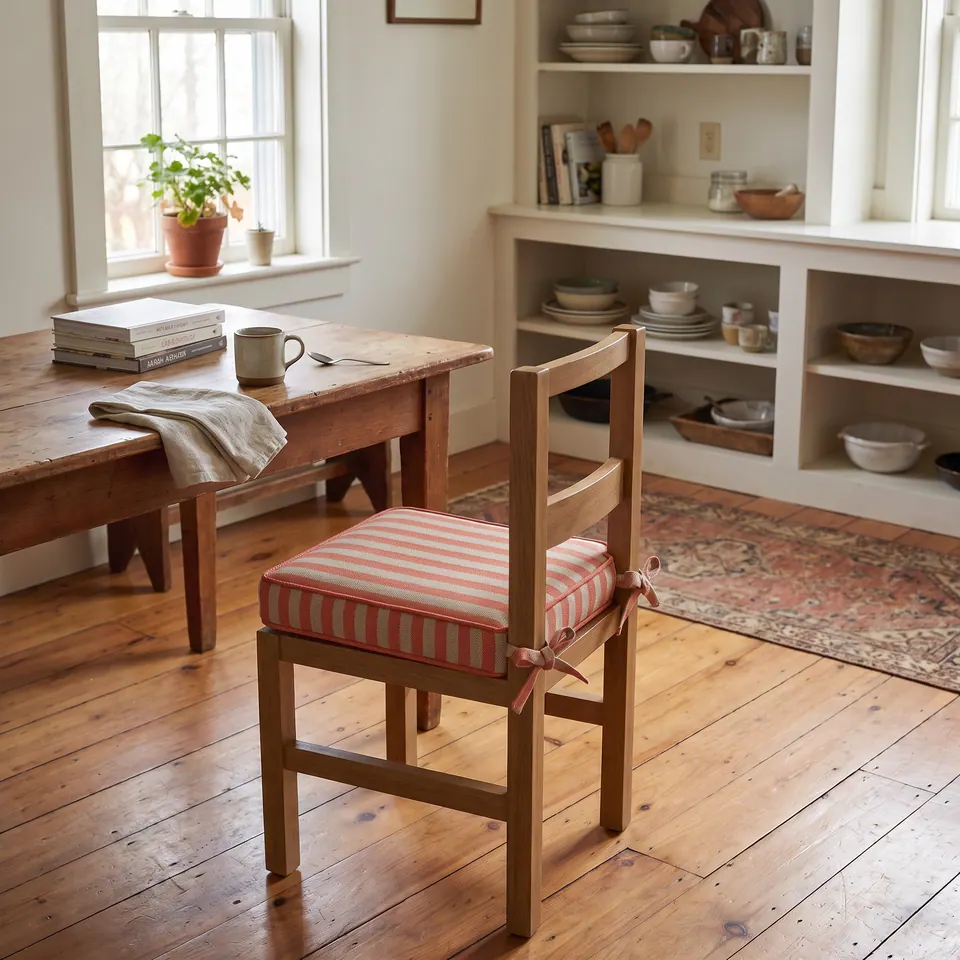
Then she ordered eight covers for dining chair pads she already owned: slightly trapezoid, rounded front corners, about 17¾ x 17 x 19¾ x 17 in (45 x 43 x 50 x 43 cm) and 1½ in (4 cm) thick, with bow ties. They arrived about ¾ in (2 cm) short on each side, with piping that looked like the neighboring shade and ties too short to bow. The shop remade them ½ to ¾ in (1 to 2 cm) larger with the right piping. Failed deliveries added weeks.
Three lessons for your pinboard: - Measure the bare foam, then add ½ to ¾ in (1 to 2 cm) of ease. - Write tie length and tie color in the note. - Ask for a daylight close-up of the piping beside the main fabric.
The covers for existing foam pattern has the rest.
On the cutting table: the Adirondack pads
| Piece | Pair of box seat pads for Adirondack chairs |
|---|---|
| Fabric | Powder blue and white stripe, water-repellent membrane |
| Stripe direction | Front to back, identical on both pads |
| Edge | Firm box edge, moderate thickness |
| Piping | Self piping in the stripe |
| Fit | Stops at the front rail; white frame stays visible |
| Fastening | Ties at the back, positions written in the order note |
| Foam | 32-density firm foam; no soft, draped pads |
| Best for | Sloped wooden chairs on a patio or porch |

Have it made
Have this made — ask Maggie’s workshop
I once cut a lovely cushion two inches short, and I have not forgotten it. That is why the workshop goes over your measurements with you on the phone. — Maggie
Leave your details and the workshop will call you to confirm measurements, fabric, foam and piping. No prices, dates or payment on this page: it is a request, not an order.
On a pair of Adirondack chairs, stripes must run front to back on both pads, or two matching cushions look like strangers.
Maggie
Questions buyers ask next
What color cushions suit white Adirondack chairs?
Look down and across before you choose. Powder blue suits gray-blue stone and white siding, a deeper blue holds up better in full sun, and green lawn flatters almost any blue. Keep some white in the fabric so it ties back to the chair paint.
Should stripes run front to back or side to side on a chair pad?
Front to back lengthens the seat and flows toward the chair back, which suits a long, sloped Adirondack seat. Whichever you pick, write it in the order note and keep it identical on every chair in the set.
Will water-repellent fabric keep an Adirondack pad dry in a storm?
No. Water-repellent fabric makes dew and light rain bead up and run off, but it is not sealed against a downpour, and the foam inside is not quick-dry. Keep pads under cover in heavy weather and store them inside for the off-season.
Stitch straight — Maggie