The Cutting Table · a checklist answer
Can you make a chair cushion that's wider at the front than the back?
Also asked as:My chair seats are wider at the front than the back.Trapezoid seat cushion, 21 in front, 19 in back?
Yes, and it is one of the friendlier odd shapes. Five lengths, a thickness and a photo with the tape in it, and the trapezoid draws itself.

 Save
The quick answer
A tapered chair cushion that is wider at the front than the back is routine work. Send five measurements on a sketch: front width, back width, depth and both side edges, plus the thickness and a photo with a tape measure in it. The workshop checks the numbers against the photo and flags fit problems before anything is cut.
Get a quote for a chair cushion with ties
Key facts
- Tapered (trapezoid) chair cushions are routine work.
- Needed: front width, back width, depth, both side edges and thickness.
- Tape-measure photos are reviewed and fit issues flagged before production.
- The trapezoid seat and a rectangular back cushion go on their own listings.
- Back cushion height = seat-to-top distance minus seat thickness.
- Non-tufted construction, a back zipper and a non-slip base are options.
- Reversible cushions are made without the non-slip bottom.

Have it made
Have Nate’s workshop cut this for you
Send the numbers in inches: length × depth × thickness, plus any angle. The workshop checks them with you, because foam has no undo button. — Nate
Leave your details and the workshop will call you to confirm measurements, fabric, foam and piping. No prices, dates or payment on this page: it is a request, not an order.
Five lengths for a seat wider at the front
Front width
Straight across the front edge, where the knees sit. On one Danish-style chair: 23 in (58 cm).
Back width
Across the back edge, against the chair back: 22 in (56 cm) on the same chair.
Depth
From the back edge to the front edge, down the middle: 24 in (61 cm).
Both side edges
Each slanted side on its own, written on the sketch beside its edge.
Thickness and a photo
Choose the thickness, e.g. 4 in (10 cm), then photograph the seat with the tape lying across it.
Options worth writing in the note
- Non-tufted construction
- A zipper along the back edge
- A non-slip base for slick seats
- Reversible faces, made without the non-slip bottom
The back cushion is one subtraction
Angles are just lengths in disguise, partner, and a tapered seat needs no protractor: five lengths draw it. The back cushion is simpler. Its height is the seat-to-top distance minus the seat thickness: 19 in (48 cm) minus a 3 in (7.5 cm) seat gives 16 in (41 cm).
Order the seat on the trapezoid listing and the back on the rectangle listing. The trapezoid cushion calculator checks your numbers, and dining chair cushions has more seats. What does your front edge measure?
The gap the photo caught
A buyer in the US sent tapered seat measurements with photos showing the tape. Checking one against the other, the workshop saw the depth given would leave empty space at the front. It flagged the gap before cutting; the buyer agreed, and the cushion was made flush with the front edge.
Back cushion height for a chair is the seat-to-top distance minus the seat thickness: 19 in minus a 3 in seat cushion gives a 16 in back.
Nate
Buyer questions
- A common question
My wooden chair seats are wider at the front. Can you make cushions for them?
The workshop's answerYes, tapered cushions are no problem. Order through the chair cushion listing and upload a simple sketch or photo marked with the front width, back width and depth, so the shape comes out exactly right.
- A common question
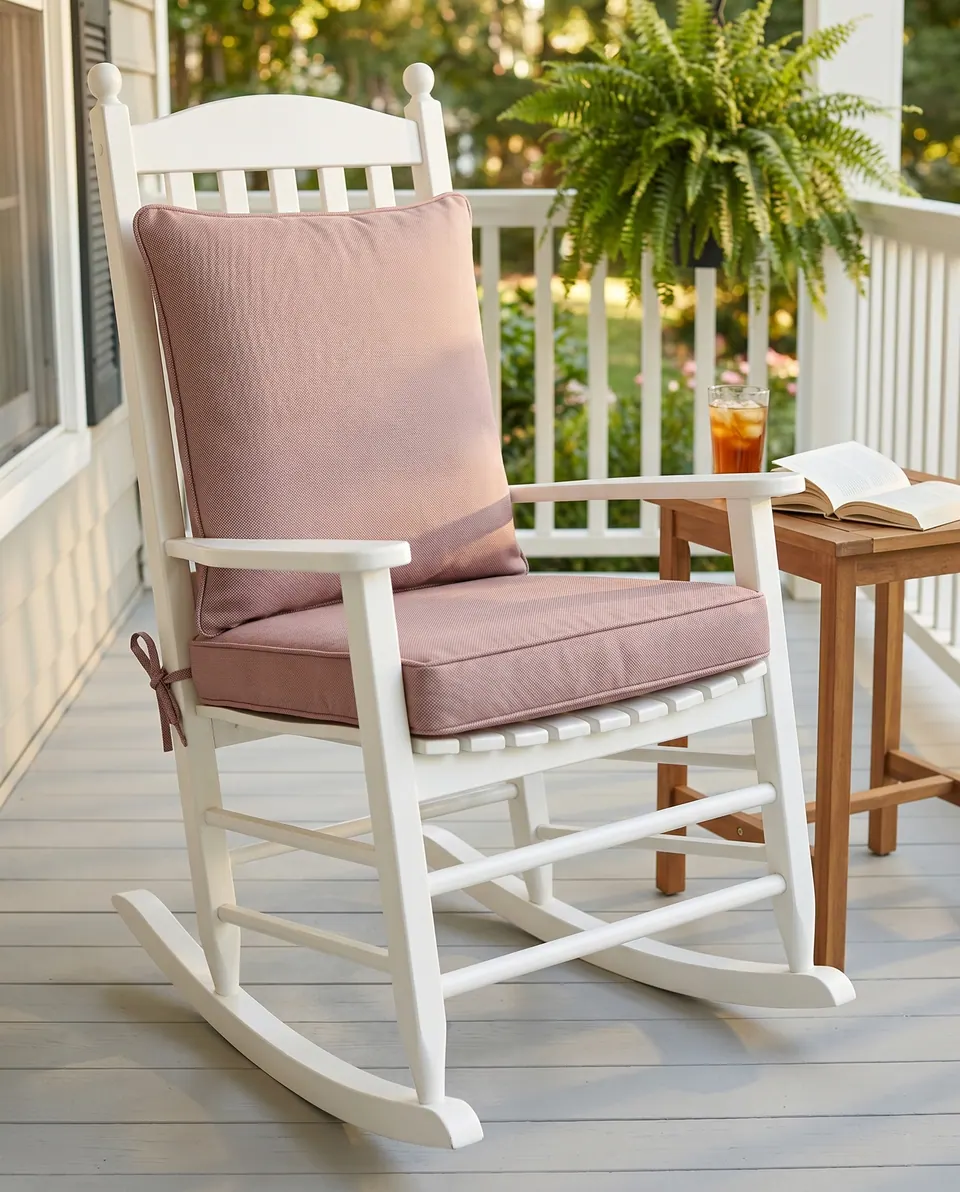
Can you make a tapered seat and a back cushion for a covered outdoor chair?
The workshop's answerYes. Send a drawing with the back edge, front edge, depth and both side edges written on it, plus the back cushion size and the thickness you want. The back can be the seat-to-top distance minus the seat thickness.
- A common question
How do I order a trapezoid seat and a rectangular back for a Danish-style chair?
The workshop's answerSeat on the trapezoid listing: 23 in front, 22 in back, 24 in deep, 4 in thick, non-tufted, zipper at the back. Back on the rectangle listing: 22 x 19 in, 3 in thick. Reversible cushions come without a non-slip bottom.
Questions buyers ask next
Can I trace my chair seat instead of measuring it?
Yes. Trace the seat onto paper, cut it out, write the widest width and depth on it and photograph it from above beside a tape measure. That works well when the sides curve rather than run straight.
Should tapered dining chair cushions be reversible?
Only if two usable faces matter more than grip. Reversible cushions are made without the non-slip bottom, so on slick wooden seats a one-sided cushion with a non-slip base may stay put better.
Is a sketch really needed, or are numbers enough?
Send the sketch. A drawing with each edge labeled, plus a tape-measure photo, shows which number belongs to which side, so a fit problem can be flagged before production.