A Reading by MaggieDining Chair Cushions & Pads
Reading a teal velvet chair cushion face-on: gusset, welt and where the ties go
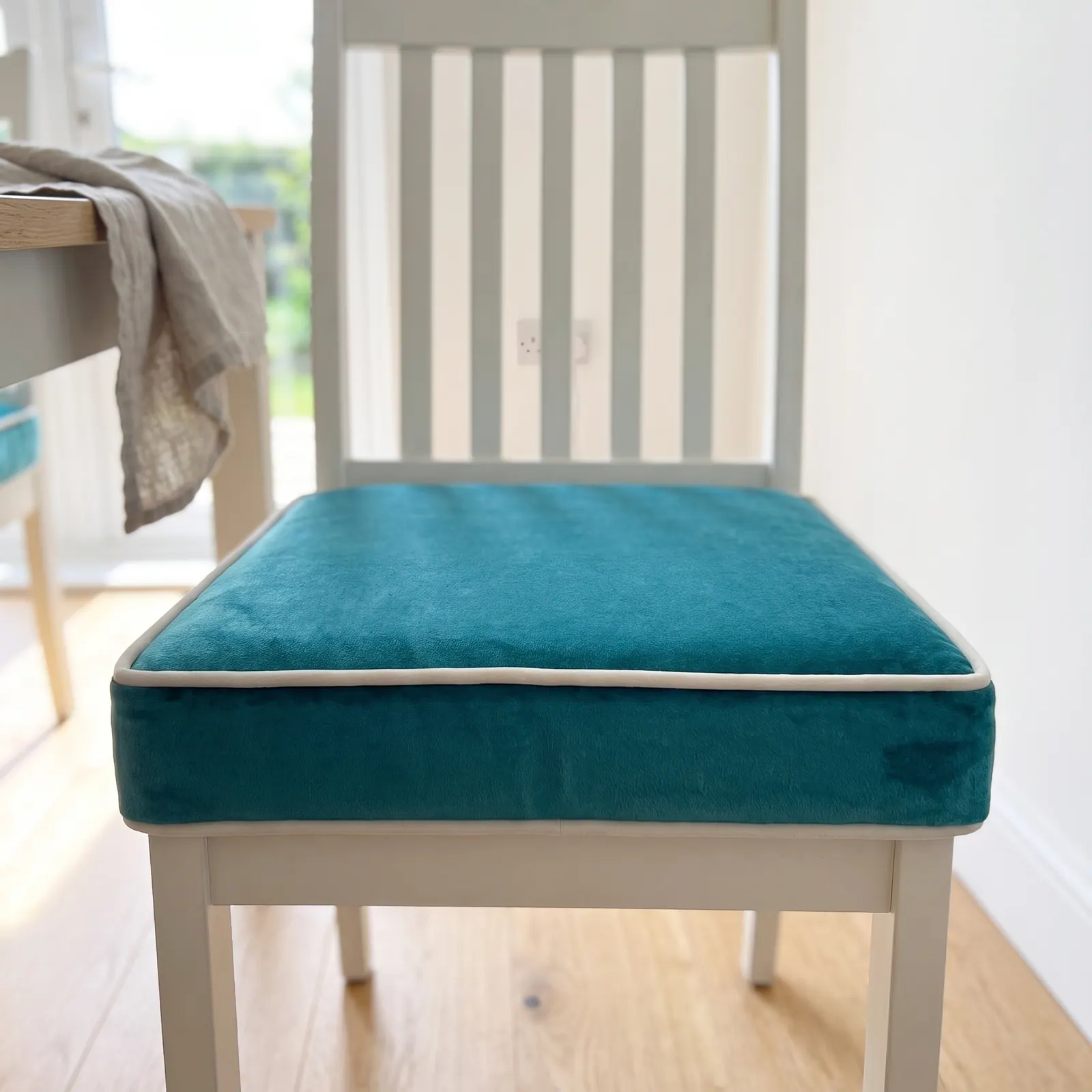
The flattering three-quarter shot hides things. Maggie reads the plain front view, where a welt has nowhere to wander, and works out the fastening from there.

 Save
The quick answer
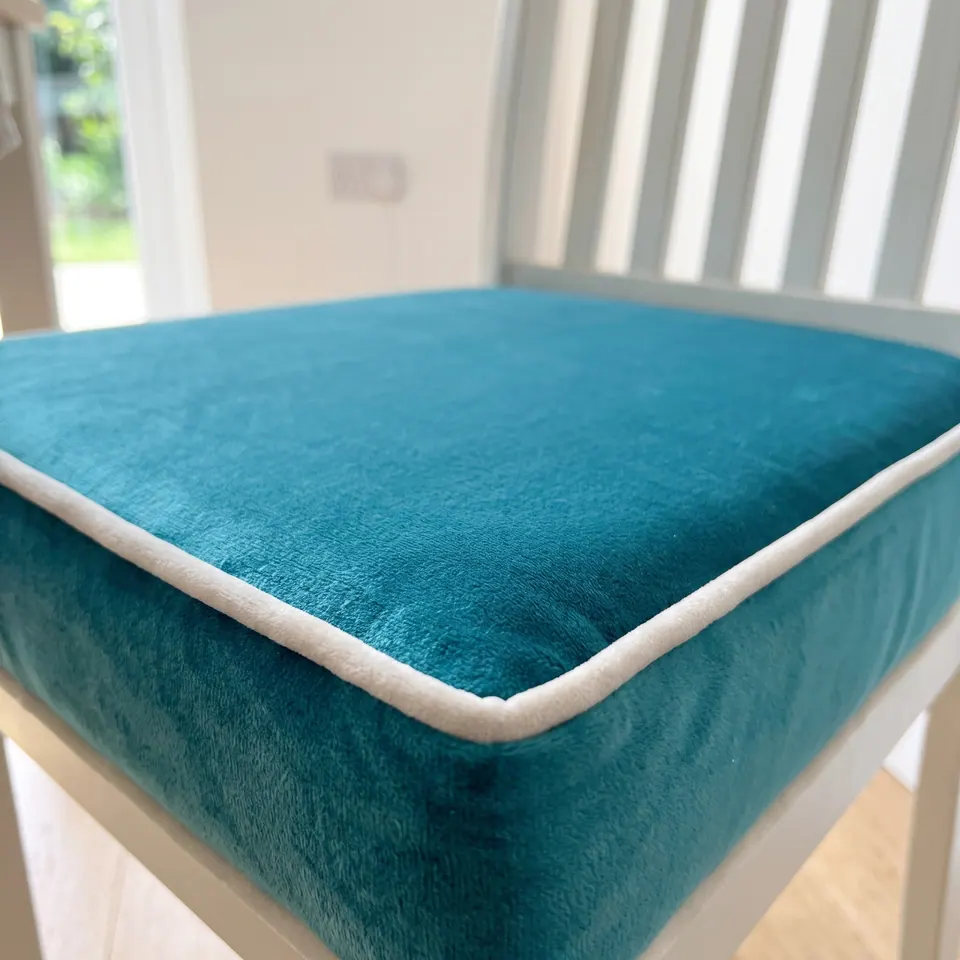
A chair cushion with ties is easiest to judge from a straight-on photo: the front gusset shows its height against the seat rail, and the top welt must run level from corner to corner. On this teal velvet box cushion with off-white piping, the ties belong at the two back corners around the chair posts and the zipper on the back gusset, so the front stays clean.
Face-on, a welt has nowhere to hide
Right, then. A three-quarter photo flatters everybody. A straight-on shot like this one is the tailor's elevation, and it is the view I trust.
Thickness comes in 2, 3, 4 and 5 in, and a handmade cushion can land about 0.5-1 in off its ordered size, so the welt tells you whether the cut ran true. The foam inside is 32-density, about 2.0 lb/ft3, firm enough to keep that front band square, and the zippered cover washes at up to 86°F (30°C), velvet included.
Start with the gusset, the band between top and bottom. Here it stands about as tall as the chair's apron, so a plain white slat chair gets a generous, almost sofa-like seat. Hold that height against the white seat rail below and you can read the thickness without a tape measure.
Then the welt. Off-white contrast piping on teal velvet is unforgiving; any dip shows. This one runs dead level from corner to corner, which tells you the filling sits evenly in the cover. I once shipped a window seat with a welt that sagged a hair in the middle, and the owner spotted it from the hallway. I have photographed every cushion face-on since.
The velvet pile catches the hazy daylight in faint vertical marks on the gusset, and the slats above repeat them. The linen throw draped on the left breaks a very symmetrical frame, and the garden behind the glass door keeps a deep teal from feeling heavy.
Now the fastening, since this photo shows none. On a slat-back chair, the ties go at the two back corners and knot around the back posts, cut from the body fabric so they vanish. The zipper belongs on the back gusset, facing the chair back, never on the front band you just admired. If the seat underneath is slick, weigh ties against a non-slip base or Velcro before you order.
More seats are in dining chair cushions, and the cloth lives on the velvet shelf.
Pinned by Maggie: five checks on one chair
Five pins, from the front gusset and the level welt to the white seat rail that works as a free ruler.
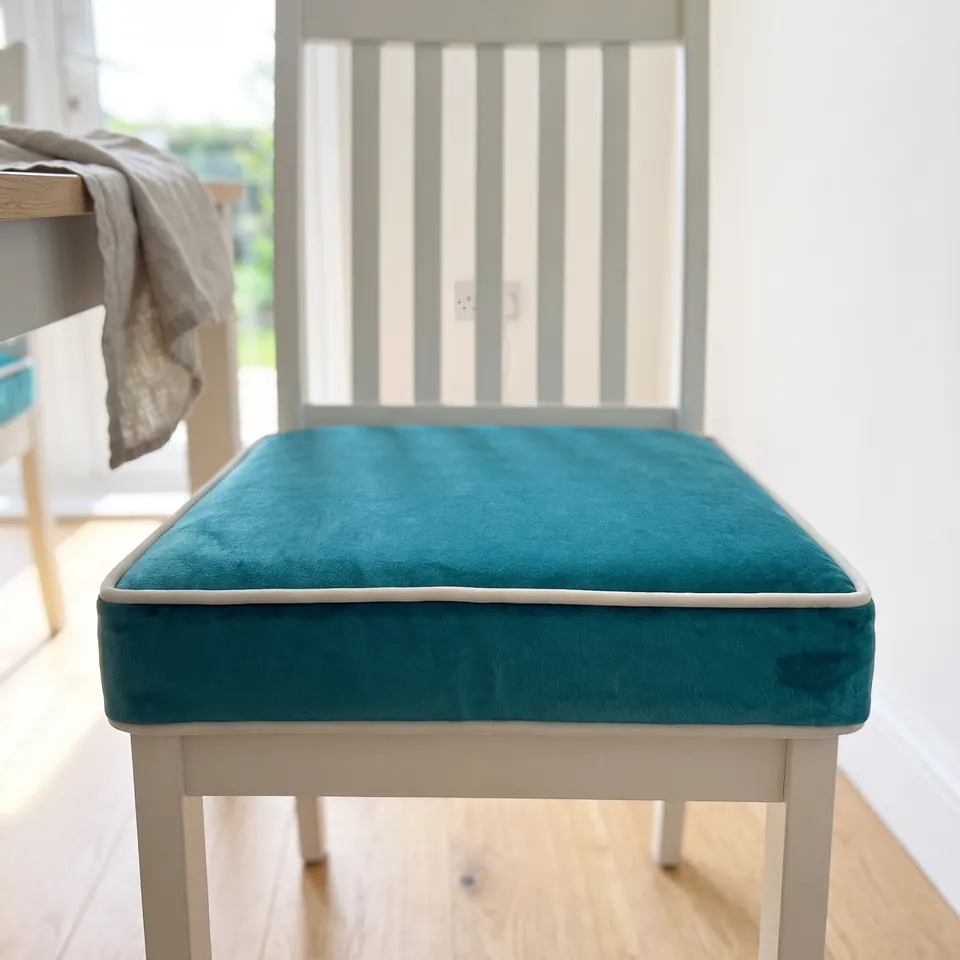
- Front gusset
The gusset is about as tall as the chair's apron, giving a generous, sofa-like seat.
- Level top welt
Face-on, you can check the welt runs dead level from corner to corner.
- Linen throw
A soft drape breaks an otherwise very symmetrical frame.
- Slatted chair back
Vertical slats above echo the vertical nap marks on the gusset.
- White seat rail
Comparing cushion height with the rail is the easiest way to judge thickness.
- Front gussetThe gusset is about as tall as the chair's apron, giving a generous, sofa-like seat.
- Level top weltFace-on, you can check the welt runs dead level from corner to corner.
- Linen throwA soft drape breaks an otherwise very symmetrical frame.
- Slatted chair backVertical slats above echo the vertical nap marks on the gusset.
- White seat railComparing cushion height with the rail is the easiest way to judge thickness.
My notebook check before any chair pad order
Shoot it straight on
Crouch to seat height and photograph the chair face-on, not from above.
Hold a ruler to the rail
A ruler against the seat rail in the photo settles thickness faster than guessing.
Measure the seat, then subtract
Measure the real seat front, back and depth, then take off any frame you want to leave showing.
Mark the tie points
Note where the back posts sit, measured from one stated corner, so the ties land where they can knot.
Say where the zipper goes
Ask for it on the back gusset so the front band stays clean.
Cesca-style chairs and the wood that had to show
A buyer messaged the workshop about Cesca-style chairs. They wanted cushions a little smaller than the seat, so the wood trim around the edge would stay in view.
The shop's answer was practical: product pages rarely list seat dimensions, so measure the seat by hand and size down by as much frame as you want to keep. It pointed them to the chair cushion listing, which takes a drawing upload for seats that aren't rectangles.
Measure the chair you own, dear, not the one in the catalog. The dining chair pad measuring guide walks through it, and the chair cushion builder lets you try a smaller footprint first.
Buyer questions: rounded corners, a modern classic and outdoor codes
- A common question
My chair seats have slightly rounded corners. Can the cushions follow that shape?
The workshop's answerYes. The workshop makes custom seat cushions with rounded corners, and matching back cushions too. Send your measurements and photos of the seats so the fit can be confirmed before cutting.
- A common question
Do you make cushions for a Barcelona-style chair?
The workshop's answerYes, on request. The design is intricate and the work detailed, so it costs more and isn't listed. Send reference photos, your fabric choice and exact dimensions for a custom quote on the seat and backrest cushions.
- A common question
The chair cushion listing doesn't show outdoor fabrics. How do I match my chairs to the outdoor bench cushion I already chose?
The workshop's answerOrder the chair cushions on the chair listing and write the outdoor fabric code you picked in the personalization note. Every piece is then made in that same outdoor fabric, so chairs and bench match.
On the cutting table: the teal chair pad
| Product | Box-edge chair cushion for a slat-back dining chair |
|---|---|
| Fabric | Teal velvet |
| Piping | Contrast off-white welt |
| Edge | Box edge with a deep front gusset |
| Ties | Two, at the back corners, around the back posts |
| Zipper | Back gusset, facing the chair back |
| Thickness check | Gusset height against the seat rail in a straight-on photo |
| Best for | Kitchen nooks and dining chairs seen from the front |

Have it made
Have this made — ask Maggie’s workshop
I once cut a lovely cushion two inches short, and I have not forgotten it. That is why the workshop goes over your measurements with you on the phone. — Maggie
Leave your details and the workshop will call you to confirm measurements, fabric, foam and piping. No prices, dates or payment on this page: it is a request, not an order.
A straight-on photo is the honest test of a chair cushion: the welt must run level corner to corner, and the gusset height reads against the seat rail.
Maggie
Questions buyers ask next
Where do the ties go on a slat-back dining chair cushion?
At the two back corners, where they can knot around the back posts or the outer slats. Cut them from the body fabric so they disappear from the front, and note the post positions from one stated corner when you order.
Where should the zipper sit on a box-edge chair pad?
On the back gusset, facing the chair back. The front band is the part everyone sees, so it should carry nothing but fabric and piping, while the cover still slips off for washing from behind.
How can I judge cushion thickness from a photo of my chair?
Photograph the chair straight on at seat height and compare the front gusset with the seat rail or apron below. A gusset about as tall as the apron gives a generous seat; hold a ruler against the rail to put a number on it.
Stitch straight — Maggie