 Save
A Reading by MaggieDining Chair Cushions & Pads
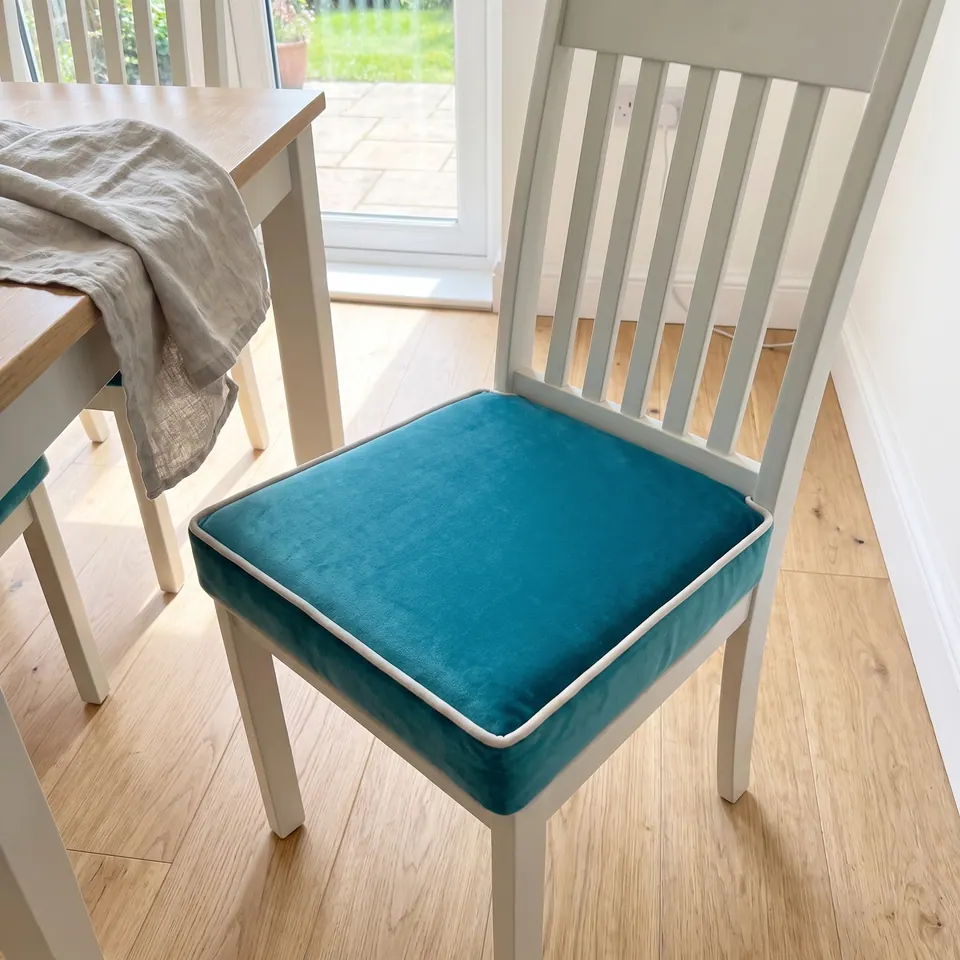
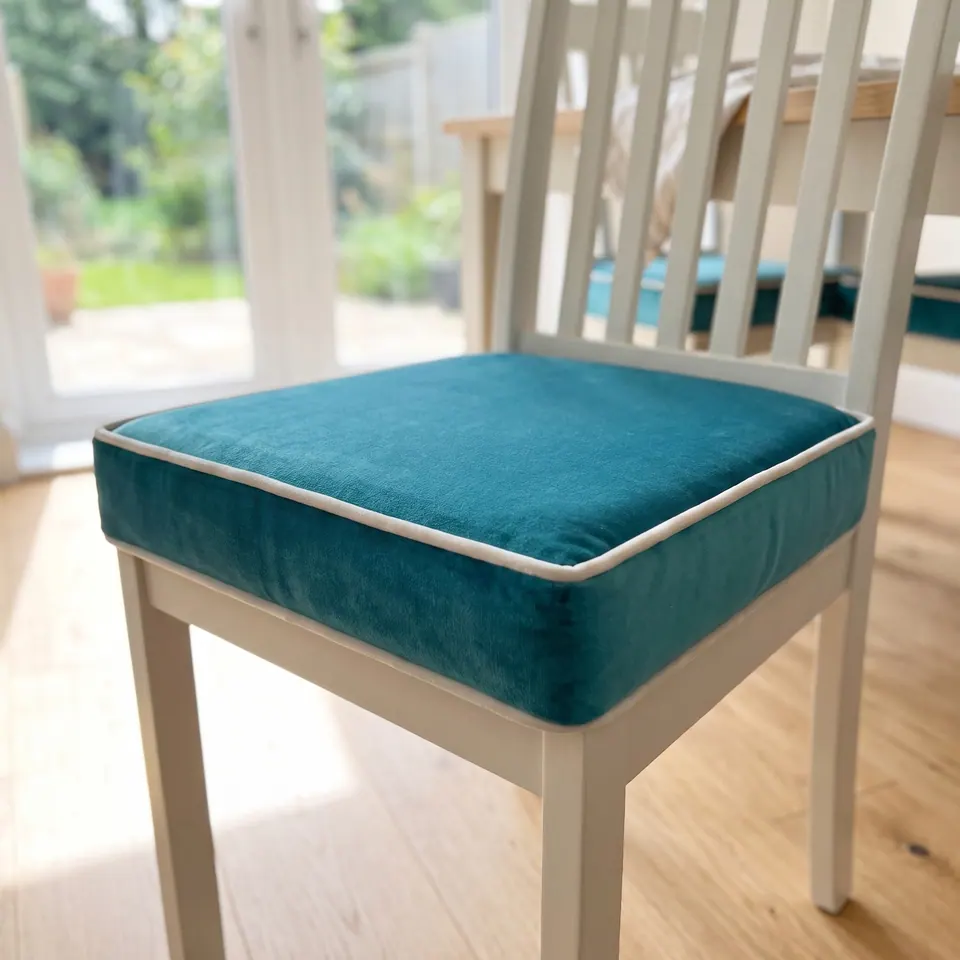
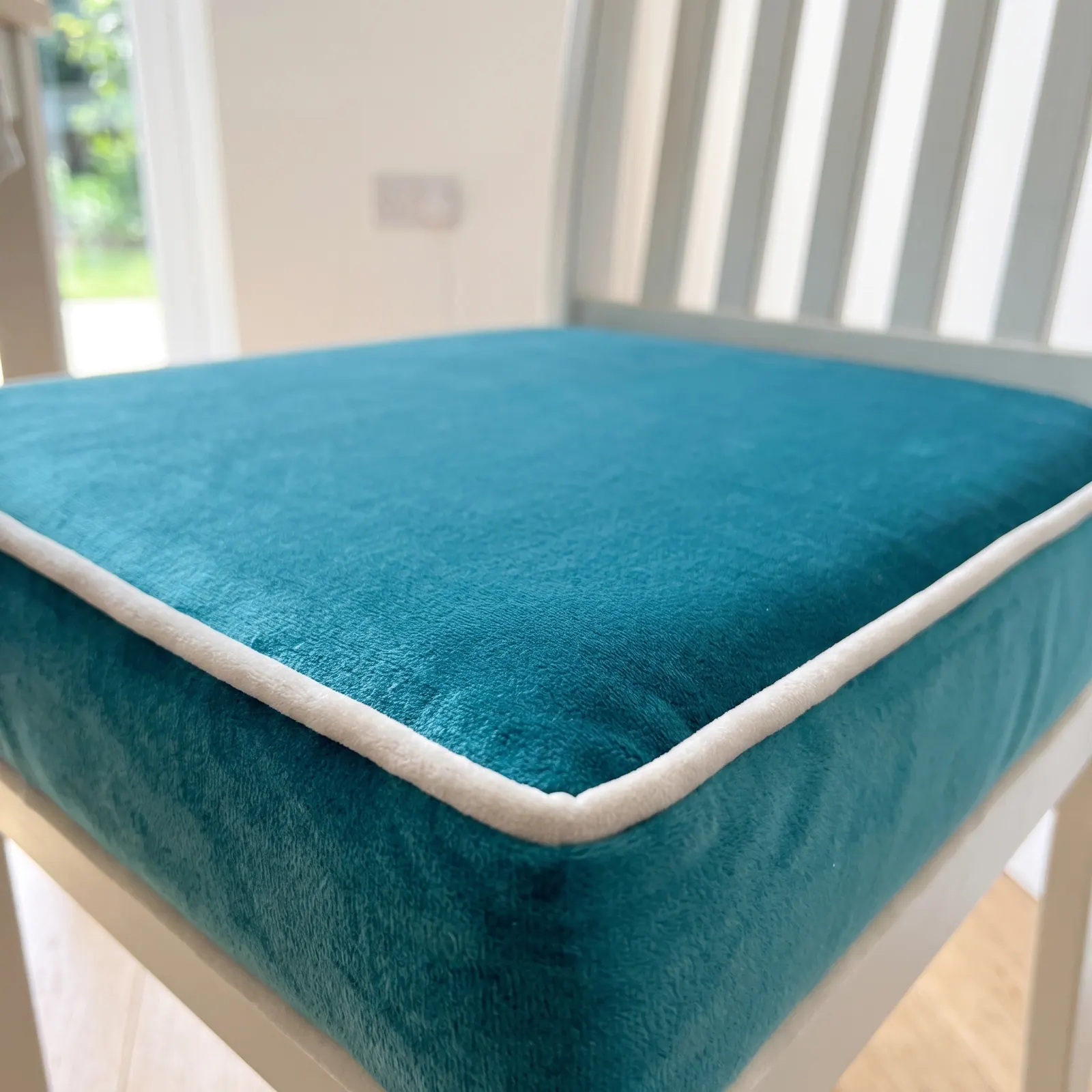
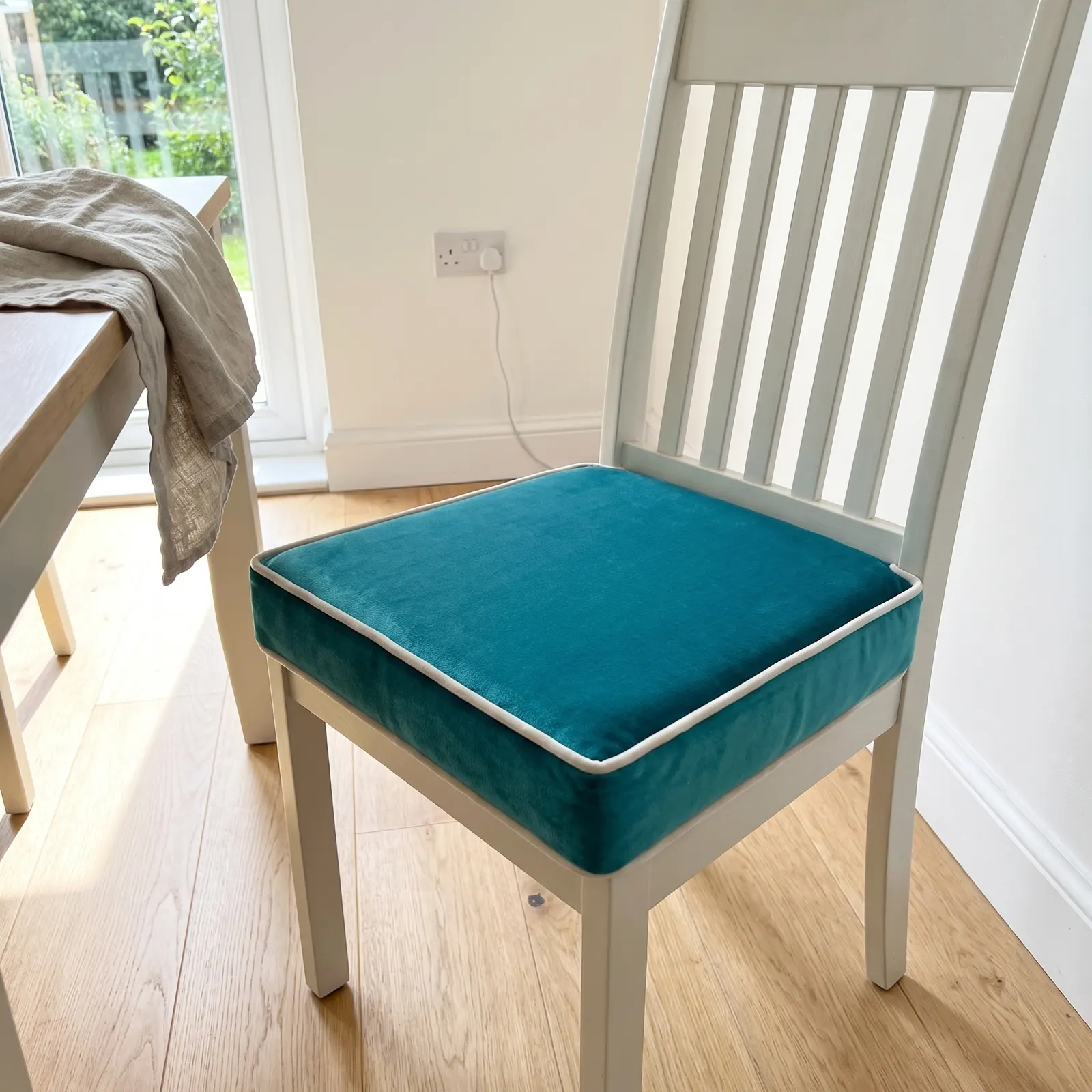
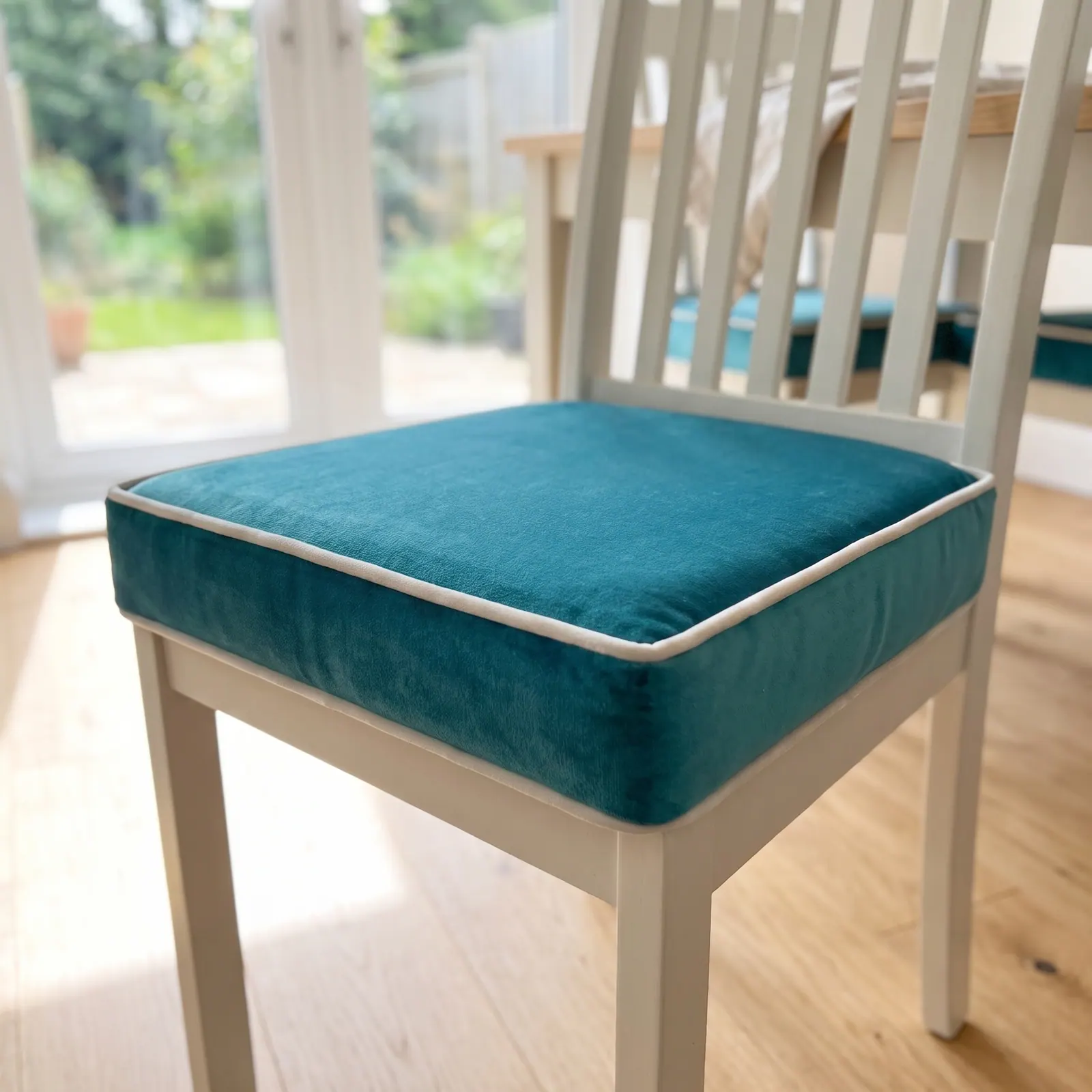
A turquoise velvet chair cushion from seat height, and the tapered seats behind it
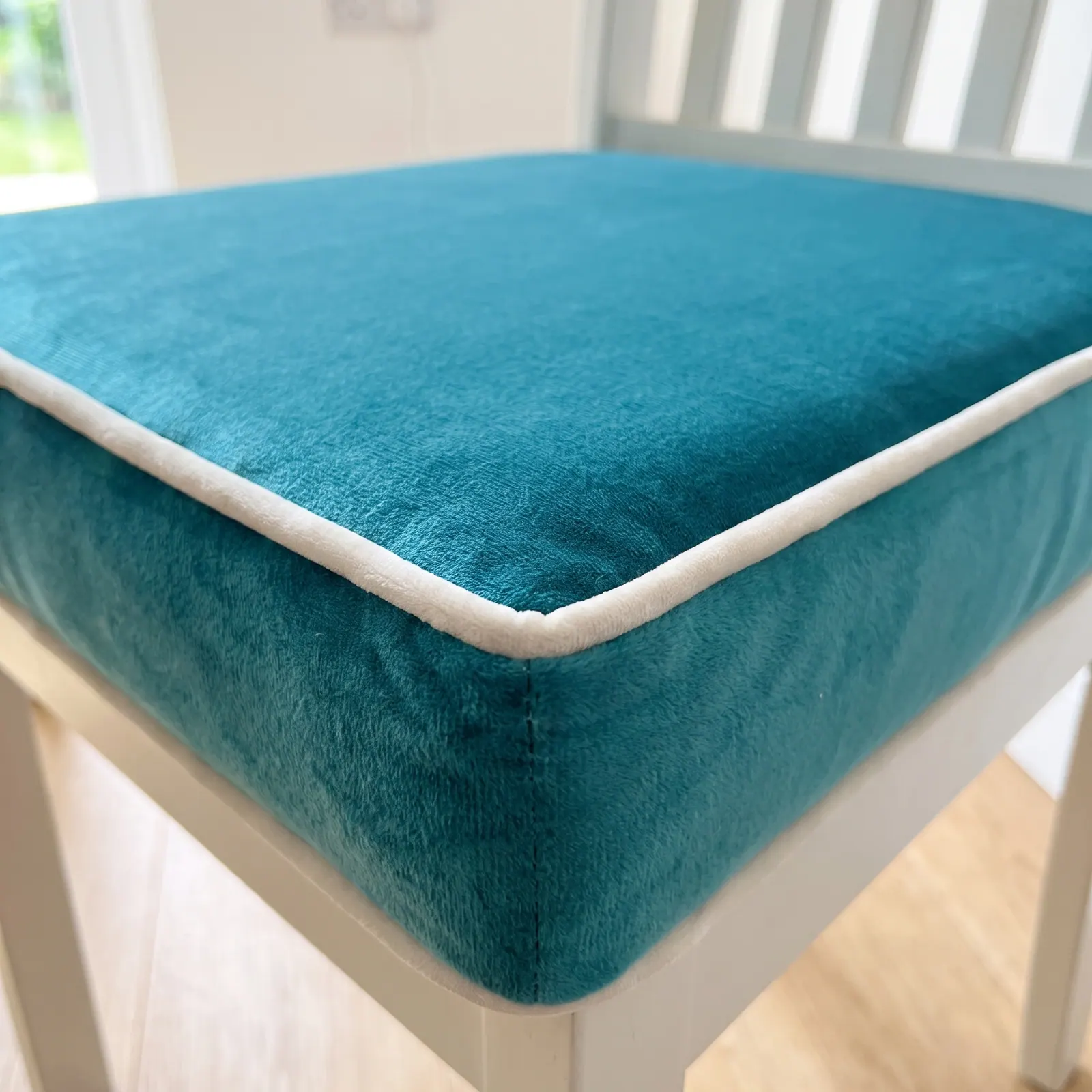
Maggie retells one buyer's velvet seat project, narrower at the back than the front, and reads a low close-up for the three things that show good sewing.
From seat level the velvet pile catches the light unevenly, which gives it that deep, shifting teal.

The quick answer
Most old chair seats are tapered, so measure the front width, the back width and the depth separately before ordering a velvet chair cushion. One buyer's chair seats were 21 in deep, 20.5 in across the front and 19 in across the back; the shop drew a sketch from those numbers and waited for confirmation before cutting.
Why I read a chair cushion from seat height
Most people photograph a chair cushion from above. I get down to seat height, and so did whoever took this one. From there you can judge the three things that tell you whether a cushion was sewn with care.
First, the gusset. From this low angle you see the full depth of the side wall, which is the honest thickness of the cushion. A flattering top-down shot can hide a thin one. This view can't.
Second, the welt at the corner. The off-white piping turns the top corner without a pucker, and the corner stays square instead of rounding off. A straight welt is a kind of honesty, and corners are where the dishonest ones give up.
Third, the pile. The turquoise teal goes light and dark in patches. That isn't a flaw. It's plush velvet with its pile lying in different directions, catching daylight that rakes in from the garden door. Patches like these are a normal trait of the cloth.
The color plan is simple. White painted slats, an off-white welt, and the velvet as the only strong color in the frame. Nothing competes.
For a dining chair cushion like it, compare velvet swatches in daylight and ask the maker for one low photo before you commit. Ordering a chair cushion with ties? Decide where they go before you measure; the tie placement pattern helps.
Two leather armchairs, a sofa, and seats that weren't square
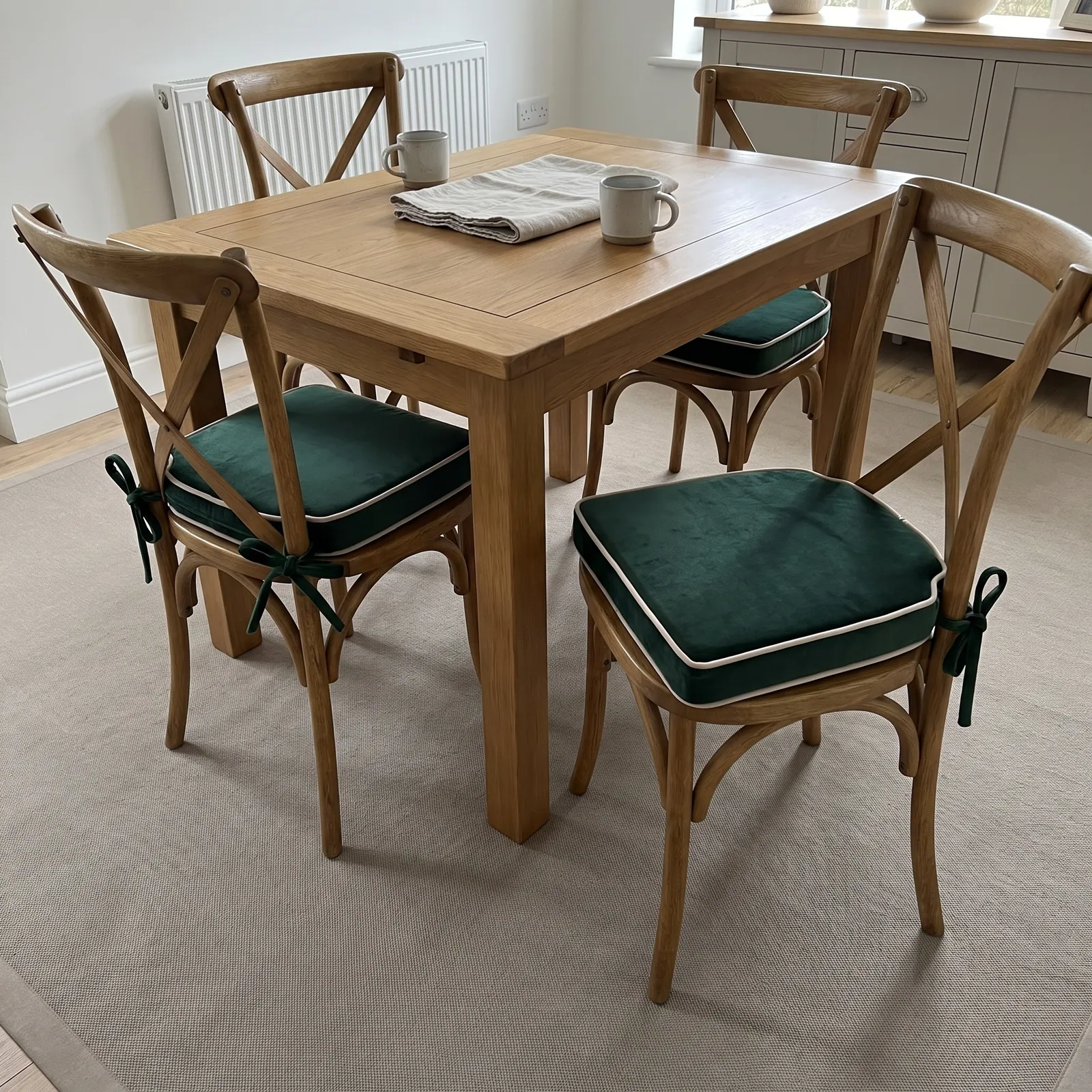
A buyer wrote to the workshop wanting luxurious velvet seats in dusky rose for two old leather armchairs, and later for a two-seater sofa. They also asked about a feather layer on top of the foam.
Then came the tape measure. The chair seats turned out to be tapered: 21 in (53 cm) deep, 20.5 in (52 cm) across the front and 19 in (48 cm) across the back. The sofa seat was 21 in (53 cm) deep, 41 in (104 cm) at the front and 40 in (102 cm) at the back.
The personalization box kept dropping their text at checkout, so they sent the sizes by message instead. Sensible. The shop drew a measurement sketch from those numbers and waited for the buyer to confirm it before a single cut.
Most old chair seats are tapered. The difference on these chairs was only 1.5 in (4 cm), which is exactly the sort of number people round away. More on this in tapered dining chair pads.
How the sizes were settled
Measure three lines, not two
Front width, back width and depth, each on its own. On these chairs: 20.5 in front, 19 in back, 21 in deep.
Put the numbers where they can't vanish
If the personalization box drops your text at checkout, send the sizes by message.
Check the sketch
The shop draws the tapered shape with your numbers on each edge. Confirm it, or correct it, before cutting.
Then choose the finish
Color, piping and ties come last, once the shape is agreed. Contrast piping, like the off-white welt here, shows off a crisp corner.
Pinned by Maggie
Four pins from seat height: the welted corner, the velvet pile, the deep side gusset and the white slats that leave the teal alone.
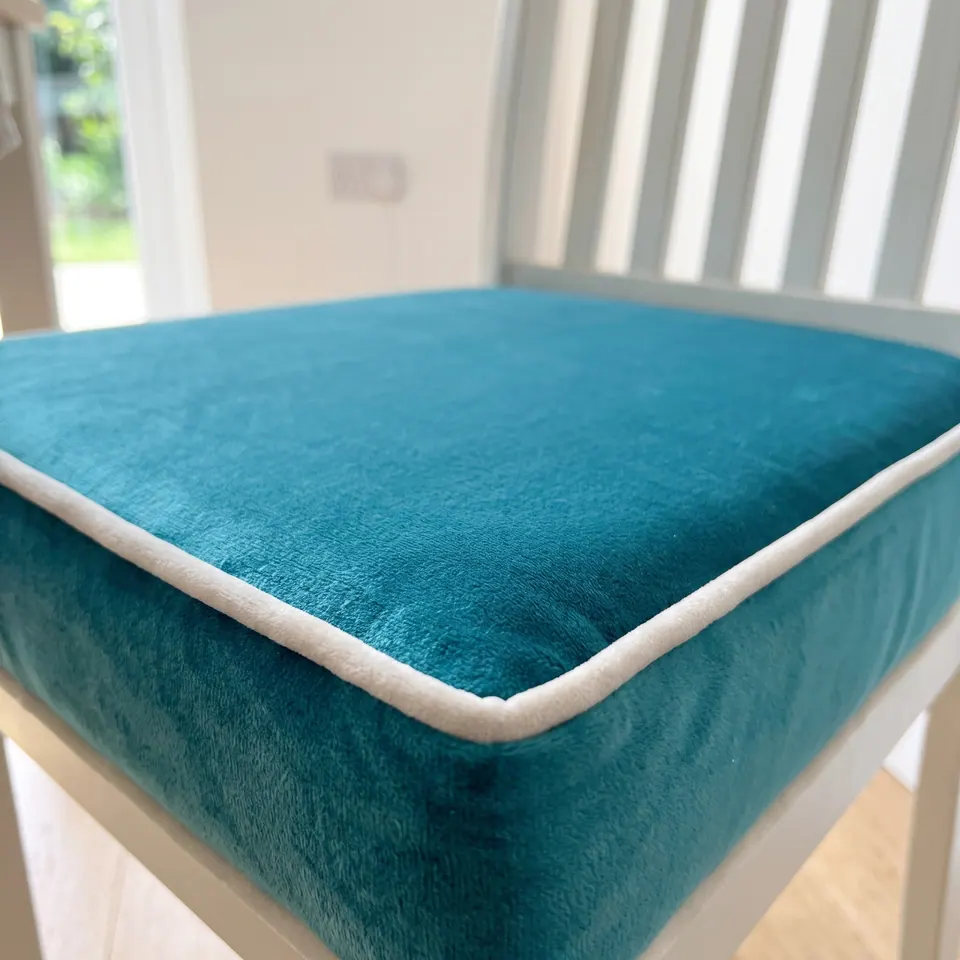
- Welted top corner
The piping turns the corner without puckering, the first sign of careful sewing.
- Velvet pile
Light and dark patches show the pile lying in different directions, normal for plush velvet.
- Deep side gusset
From seat height you can judge the full cushion thickness.
- White chair slats
A white frame and white welt leave the velvet as the only color.
- Welted top cornerThe piping turns the corner without puckering, the first sign of careful sewing.
- Velvet pileLight and dark patches show the pile lying in different directions, normal for plush velvet.
- Deep side gussetFrom seat height you can judge the full cushion thickness.
- White chair slatsA white frame and white welt leave the velvet as the only color.
Buyer questions: standard thickness, stool covers and a single small seat
- A common question
How thick is your standard velvet seat cushion, and could I order four small ones?
The workshop's answerThe standard velvet seat cushion is about 4 in (10 cm) thick, and sizes are made to order. Four cushions of about 14.5 x 16.5 in (37 x 42 cm) were quoted together, in any fabric from the charts.
- A common question
Can you make small square covers for bar stools, with no cushion inside?
The workshop's answerYes. Covers of roughly 14 x 14 in (36 x 36 cm) can be made without foam in the fabric you choose. Just say how many you need.
- A common question
I only need one little cushion, about 15 x 15 in. Will you make just one?
The workshop's answerYes. Choose the smallest size on the listing and write your exact size and colors in the note. Shipping makes up a big share of the cost of a small item, so the price can't go below the smallest listing price, but several small cushions ordered together earn a discount. One buyer ordered a single 14 x 14 in (35 x 35 cm) cushion, 2 to 3 in (5 to 8 cm) thick, for a stone stool.
On the cutting table: the turquoise seat pad
| Product | Dining chair cushion, box pad |
|---|---|
| Fabric | Velvet in turquoise teal |
| Piping | Contrast piping in off-white |
| Edge | Box edge with a deep gusset |
| Corner | Square, welt turned without puckering |
| Chair | White painted slat-back |
| Pile | Light and dark patches, normal for plush velvet |
| Taper check | Measure front, back and depth separately |
| Best for | A bright breakfast corner or garden-room dining set |

Have it made
Have this made — ask Maggie’s workshop
I once cut a lovely cushion two inches short, and I have not forgotten it. That is why the workshop goes over your measurements with you on the phone. — Maggie
Leave your details and the workshop will call you to confirm measurements, fabric, foam and piping. No prices, dates or payment on this page: it is a request, not an order.
Most old chair seats are tapered: measure the front width, the back width and the depth separately, even when they differ by only 1.5 in.
Maggie
Questions buyers ask next
Why does turquoise velvet look patchy in some photos?
The pile lies in different directions, and raking light catches each direction differently, so you see lighter and darker patches. It is a normal trait of plush velvet, not a stain or a defect, and it gives the color its depth.
Is an off-white welt a good idea on a white painted chair?
Yes, if you want the velvet to be the only strong color. The off-white piping repeats the painted frame, so the eye reads one colored seat inside a white outline, and a clean welt shows off a square corner.
My chair seat is wider at the front than the back. What do I send?
Three numbers: front width, back width and depth. One buyer's seats were 20.5 in (52 cm) at the front, 19 in (48 cm) at the back and 21 in (53 cm) deep, and the shop drew a sketch for approval before cutting.
Stitch straight — Maggie
More photographs to read
 Save
 Save
 Save
 Save
 Save
 Save